
Shrimp Fajita
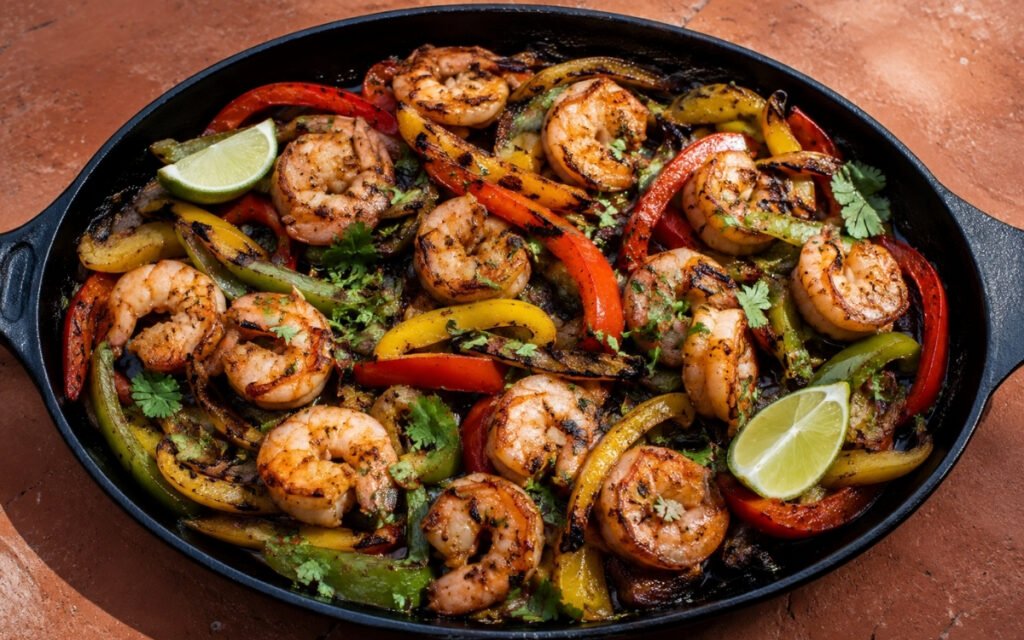
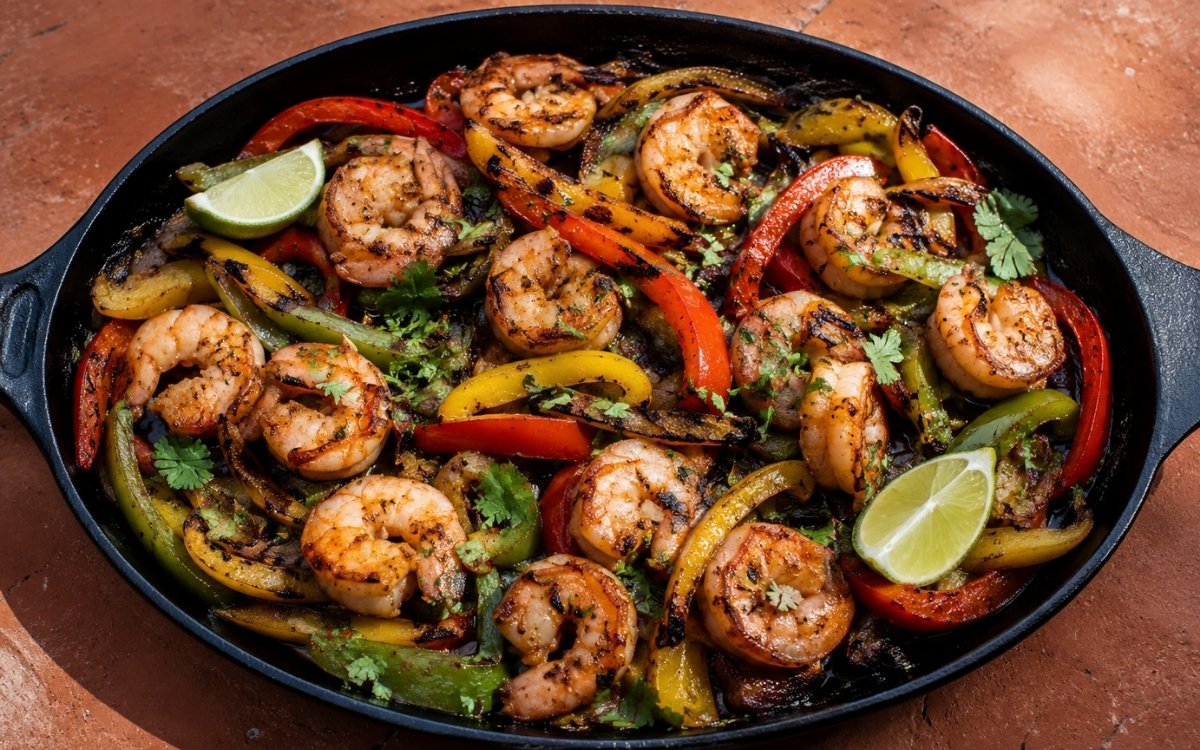
The shrimp fajita is the fastest version in the fajita collection — the same smoky smoked paprika, cumin, and lime marinade as the Chicken Fajita, the same charred tri-colour peppers and caramelised onions, but shrimp’s dramatically shorter cooking window changes everything about the technique. Thirty to forty-five seconds per side, out of the pan immediately, and the rest of the time goes to the vegetables while the shrimp wait. The result is sweet, smoky, perfectly cooked shrimp with charred vegetables that carry every flavour compound left in the pan. Perfect for rice bowls, burritos, and tacos, and at its best alongside Classic Guacamole, Pico de Gallo, Salsa Verde, or Salsa Roja.
Prep Time : 15 min
Cook Time : 15 min
Servings : 4
15 min
15 min
4
Ingredients
For the Shrimp
• 600g large shrimp, peeled and deveined
For the Vegetables
• 3 bell peppers, one each of green, yellow, and red, sliced into strips
• 3 medium white onions, sliced into feathers
• Olive oil, for the pan
For the Fajita Marinade
• 2 tbsp extra-virgin olive oil — this one on Amazon
• 2 tsp smoked paprika
• 1 tsp dried oregano
• 2 tsp ground cumin — this one on Amazon
• 6g salt, about 1 tsp
• Juice of 1 lime
• 1 tsp lime zest
• 2 tsp garlic powder
This post may contain affiliate links. As an Amazon Associate I earn from qualifying purchases, at no additional cost to you.
Directions
- Make the Marinade and Marinate the Shrimp
In a medium bowl, combine the smoked paprika, dried oregano, ground cumin, salt, garlic powder, lime zest, lime juice, and olive oil. Whisk together until evenly combined — the marinade should look like a uniform, fragrant spiced oil with the lime juice distributed throughout. The spice blend is identical to the chicken and steak fajita versions — the same smoked paprika, cumin, and lime profile that defines fajita character across all three proteins. The only meaningful difference is the marinating time, and this is not a minor detail: the marinating window for shrimp is 15–30 minutes at room temperature only, and this limit is strictly functional rather than a suggestion. Shrimp flesh is composed of loosely structured muscle proteins that are significantly more delicate than chicken or beef. The lime juice’s citric acid begins denaturing — effectively cooking — these proteins almost immediately on contact. At 15 minutes the acid has lightly penetrated the surface and the spices have begun to adhere. At 30 minutes the acid has worked further and the shrimp is at the maximum marinating benefit. Beyond 30 minutes, the acid continues cooking the proteins progressively — the shrimp’s surface begins to turn white and opaque as if heat-cooked, the texture tightens and becomes rubbery, and by 60 minutes the shrimp is essentially ceviche without ever having touched a pan. Add the shrimp to the marinade and toss thoroughly to coat every surface. Leave at room temperature for 15–30 minutes. - Slice the Onions into Feathers
Peel the white onions and cut the top and root ends off each one. Halve each onion from root to tip, then place each half flat on the cutting board and slice vertically from top to bottom following the natural lines of the onion’s layers — producing long, thin feather-shaped strips rather than rings. The vertical feather cut is the correct technique for fajita vegetables: the strips char at their thin ends while remaining juicy in the thicker middle sections, and they collapse and weave together with the pepper strips in the finished dish rather than sitting as separate rigid pieces. Combine all three onions in a large bowl after slicing. - Slice the Peppers
Cut the top and bottom from each bell pepper. Stand each upright and slice the four curved walls of flesh away from the central seed column, producing four flat pieces per pepper. Trim any remaining white pith or seed membrane from the inside of each wall piece — the pith contributes bitterness and should be removed. Slice each flat wall piece into strips of consistent thickness matching the onion feathers, approximately 5–7mm wide. Slice the bottom pieces the same way, removing any seed attachment. Mix all sliced pepper strips with the onion feathers and toss together. The three-colour combination is a deliberate flavour decision: green peppers bring a slightly bitter, more vegetal note from being the least ripe; yellow peppers bring a mild, moderate sweetness; red peppers bring the highest sugar content and the most pronounced caramelised sweetness when charred. All three together produce a more complex, layered vegetable component than any single colour could achieve. - Sear the Shrimp — Fast and in Batches
Heat a large cast iron skillet, carbon steel pan, or stainless steel skillet over high heat for 2–3 minutes until genuinely hot and the oil added to the surface shimmers and begins to smoke at the edges. Cast iron is the preferred material because its heat retention maintains the pan temperature through the brief contact time of each shrimp batch — a temperature drop during shrimp cooking means the shrimp begins to steam in its own moisture rather than searing. Lay the shrimp in a single layer without crowding — each shrimp needs its own space on the pan surface to sear rather than steam against its neighbours. Work in two or three batches without hesitation. The timing from this point forward is the single most critical technique in the entire recipe: sear each shrimp for 30–45 seconds on the first side without moving. The shrimp is ready to flip when the underside has turned pink from grey and a faint golden-brown sear mark is visible at the contact points with the pan. Flip each shrimp and cook the second side for 30–45 seconds. Remove from the pan immediately when the shrimp has turned completely pink and opaque with just the faintest translucency remaining at the very thickest point of the body. This last fraction of translucency is the safety margin — the residual heat in the shrimp will continue cooking it for another 30–60 seconds after it leaves the pan, and pulling at just-opaque produces a shrimp that is perfectly cooked through by the time it is served. Pulling at fully opaque throughout produces a shrimp that is slightly over-cooked and beginning to tighten. Pulling at still-grey and translucent produces one that is under-cooked. Transfer cooked shrimp immediately to a bowl — do not leave them in the hot pan even for 30 seconds, as the residual heat of the cast iron will continue cooking them past the ideal point. Repeat with remaining shrimp. - Cook the Peppers and Onions in the Same Pan
Without cleaning the pan — the residual shrimp marinade fond caramelised onto the surface is concentrated spiced flavour — add the sliced pepper and onion mixture. The moisture released by the vegetables as they begin to cook will deglaze the pan and lift every caramelised bit of the fond, incorporating it into the vegetable mixture. This is the reason the vegetables always follow the protein in the same pan: all the flavour left behind by the shrimp transfers to the vegetables. Stir frequently over high heat for 6–8 minutes. You can and should allow the vegetables to char more aggressively than feels intuitively correct — push the onion feather tips and pepper edges to genuinely dark spots. When the vegetables are subsequently combined with the shrimp and rest together, any accumulated moisture and steam softens and distributes the char character throughout the mixture, lightening the intensity at any single point and spreading it as a background smokiness across the entire dish. Work in batches if the pan is not large enough to cook all the vegetables simultaneously — a crowded pan steams rather than chars. If any marinade remains in the shrimp bowl, pour it over the vegetables — it will sizzle, caramelise, and contribute its full spice profile to the vegetable char. - Combine and Rest
When all the vegetables are cooked, transfer them to the bowl with the cooked shrimp. Toss everything together once to combine — the shrimp juices and the vegetable fond will mix into a light, unified sauce that coats every component. Cover loosely and allow to rest for 5 minutes before serving. The rest allows the temperatures to equalise between the hot vegetables and the cooled shrimp, the juices to redistribute, and all the flavour elements — spiced marinade, caramelised vegetable fond, lime, and shrimp’s own natural sweetness — to integrate into a cohesive, unified fajita rather than separately-cooked components placed together.
*Notes :
- Shrimp size matters significantly for fajita cooking. Large shrimp — 21–25 per pound — provide enough mass to develop a sear on the outside before the interior over-cooks. Very small shrimp cook through so quickly that the window between raw and over-cooked is measured in seconds rather than the 30–45 second range given here. Very large shrimp (16–20 per pound or larger) need an additional 15–20 seconds per side. If your shrimp are pre-cooked — a common supermarket preparation — they need only 20–30 seconds total contact with the hot pan to warm through and pick up some surface colour. Any longer and they will be rubbery.
- The marinade limit of 30 minutes is the most important technical note in this recipe and applies specifically to any acid-containing marinade used with shrimp. Lime juice, lemon juice, vinegar, and any other acid will begin denaturing shrimp proteins within minutes of contact. This is the same process used to make ceviche, which requires only 15–20 minutes of lime acid contact to produce what appears to be heat-cooked shrimp. For a fajita, the goal is raw shrimp that sears properly in the pan — not shrimp pre-cooked by acid. Time the marinating carefully.
- If using frozen shrimp — the most commonly available and entirely appropriate choice — thaw overnight in the refrigerator or in a bowl of cold running water for 15–20 minutes immediately before marinating. Never thaw in warm water, which raises the surface temperature and begins bacterial activity. Pat completely dry with paper towels after thawing — surface moisture on shrimp in a hot pan creates steam that prevents searing.
Why This Recipe Works
This recipe works because it applies the fajita technique to shrimp’s specific requirements without compromising either. The marinade time is strictly limited to prevent acid-cooking. The searing time is precisely calibrated to the 30–45 second window that produces a surface sear without over-cooking the delicate flesh. The shrimp are pulled immediately from the pan at the just-opaque stage so residual heat finishes them correctly.
The vegetables go into the same pan to pick up all the spiced fond. The 5-minute rest integrates all the components. Every timing and technique decision is calibrated for shrimp’s delicate, fast-cooking nature — the same decisions that work for chicken or steak would destroy shrimp within minutes.
Ingredient Breakdown
Large Shrimp (600g)
Sweet, naturally delicate protein — the fastest-cooking option in the fajita collection, requiring a strictly limited marinade time and a 30–45 second per side sear.
Smoked Paprika
The warm, slightly smoky foundation of the marinade — the same as the chicken and steak fajita versions, producing the flavour continuity of the fajita collection across different proteins.
Ground Cumin
The earthy, warm backbone — essential to Tex-Mex seasoning, provides the savory depth that bridges the shrimp’s natural sweetness to the charred vegetables.
Lime Juice and Zest
The acid brightener and aromatic element — effective at only 15–30 minutes for shrimp before it begins chemically cooking the protein. Provides the clean citrus top note that defines the finished dish.
Three-Colour Bell Peppers
The sweet-bitter vegetable range — green for bitterness, yellow for mild sweetness, red for caramelised sweetness under high heat.
White Onion (Feather Cut)
Long strips that char at the ends and remain juicy throughout — pick up the shrimp’s marinade fond from the pan and carry it through the dish.
Flavor Structure Explained
This fajita follows a layered balance model:
- Sweet delicate core (shrimp)
- Spiced crust (marinade, cumin)
- Charred vegetable layer (peppers, onions)
- Bright acidity (lime)
- Light cohesive profile (overall balance)
Shrimp defines the foundation with clean, slightly briny sweetness that leads the profile. The marinade forms a spiced crust, adding warmth, smokiness, and earthy depth that supports without overpowering. Charred vegetables contribute caramelised sweetness and slight bitterness, creating contrast and complexity. Lime runs through all components, sharpening and lifting the entire dish. The overall structure stays lighter and fresher than meat-based versions, with sweetness and brightness dominating over richness.
Common Mistakes to Avoid
- Marinating for More Than 30 Minutes – The most consequential error specific to shrimp fajita. Acid in the marinade begins cooking the shrimp proteins within minutes — 30 minutes is the absolute maximum. Over-marinated shrimp will be rubbery and over-cooked before they touch the pan.
- Overcrowding the Pan – The fastest route to steamed, grey, rubbery shrimp rather than seared, golden, juicy ones. Shrimp need space to sear individually. Cook in batches of one layer only.
- Leaving Shrimp in the Pan After the Signal – Shrimp cook in 30–45 seconds per side. Transfer immediately when done — the hot cast iron will continue cooking them even off the burner.
- Pulling Too Late – Shrimp pulled when fully opaque throughout are slightly over-cooked. Pull when just-opaque with the faintest translucency remaining — residual heat finishes the job.
- Not Drying Thawed Frozen Shrimp – Surface moisture on shrimp in a hot pan creates instant steam that prevents searing. Always pat completely dry before marinating.
- Washing the Pan Between Shrimp and Vegetables – The fond from the shrimp marinade is concentrated flavour. The vegetables go into the same pan to absorb it.
Variations
Chicken Fajita
The same marinade and vegetable preparation — but chicken thighs require a longer sear of 3–4 minutes per side and can tolerate up to 24 hours of marinating. The key technique difference is managing a longer cook on thicker meat rather than the rapid 30–45 second sear required for shrimp. Full recipe and technique details at Chicken Fajita.
Steak Fajita
The same marinade and vegetables again — but flank or skirt steak is seared as a whole piece rather than individual pieces, pulled at 57°C for medium-rare, rested for 5 minutes, and sliced against the grain after cooking. Full recipe and technique details at Skirt Steak Fajita.
Chipotle Shrimp Fajita
Add 2 tbsp of finely minced chipotle in adobo to the marinade for a smokier, deeper, more assertively spiced version that pushes the character of the dish toward Mexican rather than Tex-Mex.
Garlic Butter Finish
After combining the shrimp and vegetables in the bowl, add 20g of butter and 2 tsp of minced garlic and toss while the residual heat melts the butter — producing a garlic butter sauce that coats every component and adds richness that makes the shrimp version more substantial.
Storage & Make-Ahead
Cooked fajita mixture can be refrigerated in an airtight container for up to 2 days. Shrimp does not keep as well as chicken or steak, and its texture softens in the refrigerator, so it is best eaten on the day it is cooked. To reheat, warm it gently in a pan for 1 to 2 minutes, just until it reaches serving temperature without cooking the shrimp further.
Marinated raw shrimp should be used within 30 minutes. The lime juice continues to work during refrigeration and will gradually begin to cook the shrimp protein if left too long.
Sliced raw vegetables can be prepared up to 24 hours in advance and stored in a sealed container in the refrigerator. They will cook the same way as freshly sliced vegetables.
Freezing is not recommended for this dish, since cooked shrimp tends to become rubbery and watery after being frozen and thawed. For the best result, make it fresh and eat it the same day.
Frequently Asked Questions
What size shrimp should I use?
Large shrimp — approximately 21–25 per pound — provide the best searing-to-cooking ratio for this recipe. Small shrimp cook through before any surface sear can develop; jumbo shrimp need an additional 15–20 seconds per side. Large is the sweet spot.
Should I use fresh or frozen shrimp?
Frozen shrimp is entirely appropriate and is often fresher than what is labelled “fresh” at the fish counter, which has typically been thawed from frozen. Thaw overnight in the refrigerator or in cold running water for 15 minutes, pat completely dry, then marinate and cook as directed.
How do I know when the shrimp is done?
The shrimp is cooked correctly when it has turned fully pink on all surfaces and curled into a loose C-shape. An over-cooked shrimp curls into a tight O-shape — the tighter the curl, the more over-cooked. Pull at the C-shape stage, still with faint translucency at the thickest point, and residual heat will finish it correctly.
What should I serve shrimp fajita with?
The natural condiment pairings are Classic Guacamole, Pico de Gallo, Salsa Verde, and Salsa Roja alongside warm tortillas — either flour tortillas or corn tortillas. For bowls, serve over Cilantro Lime Jasmine Rice with black beans for a complete shrimp burrito bowl.
Can I cook this without a cast iron pan?
Yes — carbon steel and stainless steel both work well at high heat. Avoid non-stick pans, which cannot be safely heated to the temperatures required for searing and do not develop the fond that the vegetables pick up in the subsequent step.
Nutrition Facts
( per serving )
Calories
~290 kcal
Protein
38 g
Fat
10 g
Carbs
15 g
Calories
~290 kcal
Protein
38 g
Fat
10 g
Carbs
15 g
Related Recipes
Related Recipes

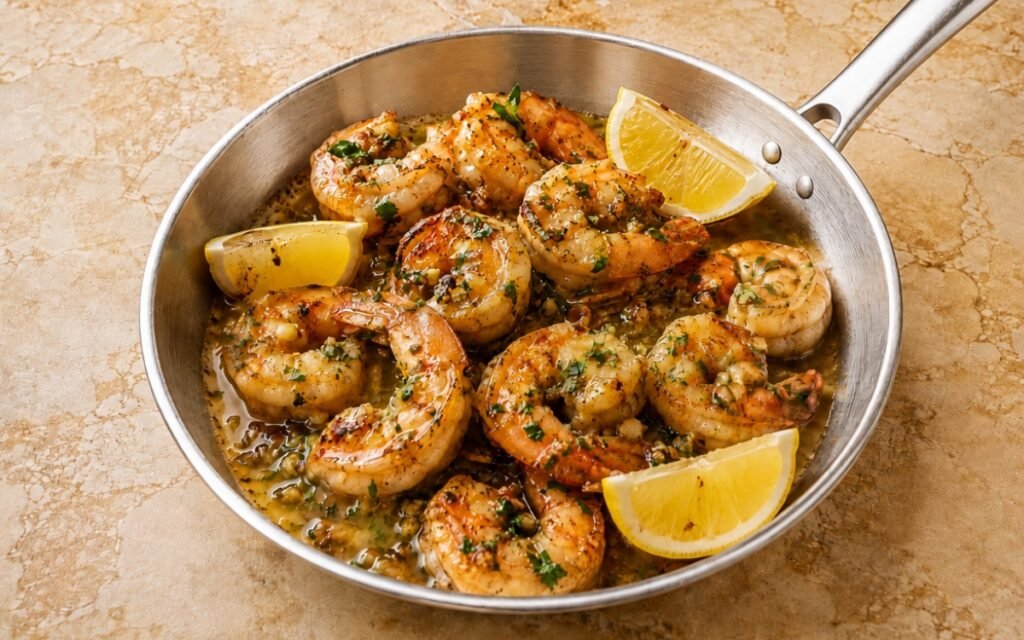
Garlic Butter Shrimp Skillet
Hard-seared shrimp finished gently in a glossy garlic butter sauce with lemon, parsley, and chili flakes.
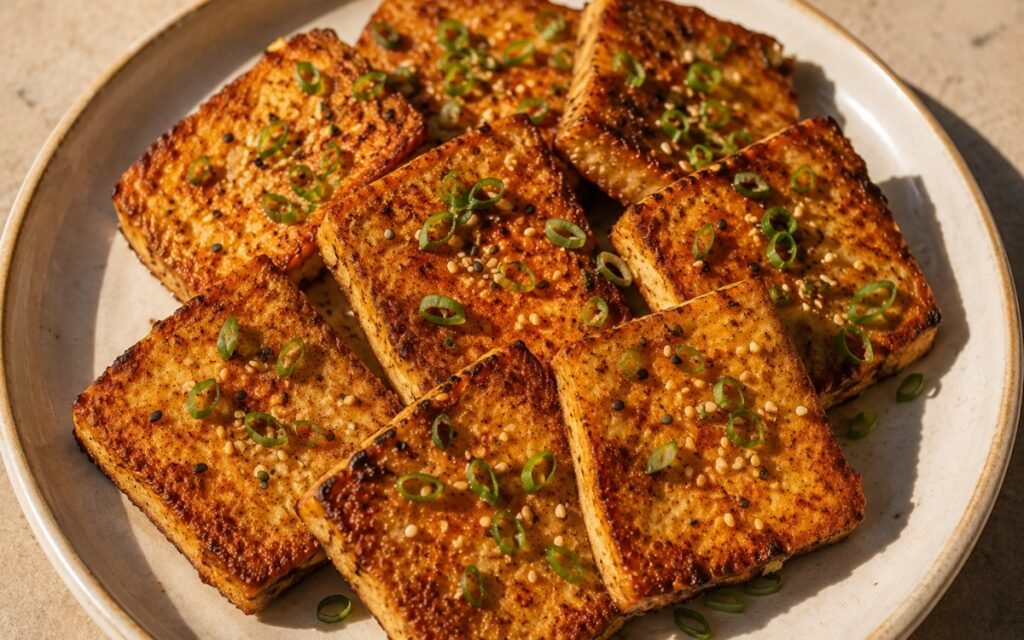
Crispy Tofu Steaks
Tofu pressed thoroughly, marinated in soy, sesame, garlic, ginger, coated in cornstarch, fried until golden. Crisp and umami-packed.
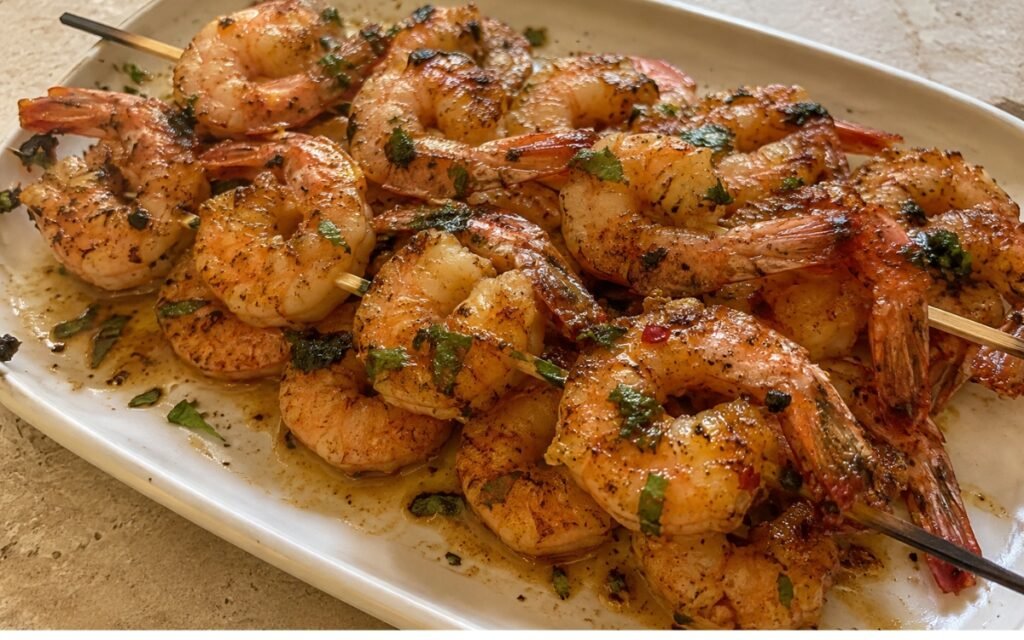
Garlic Shrimp Skewers
Shrimp marinated 30 minutes in garlic herb butter, threaded on double skewers, grilled fast with fresh butter basting until charred. Juicy and garlicky.
You might also like
You might also like
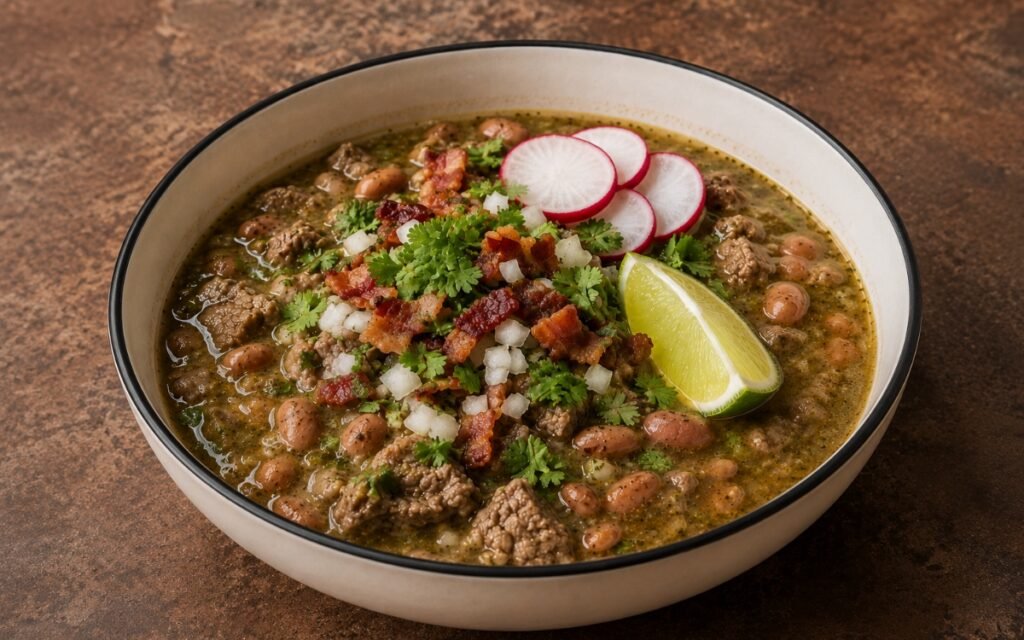
Carne en su Jugo
Finely chopped, batch-browned beef simmered briefly in a savory tomatillo broth with pinto beans, topped with crispy bacon and fresh garnishes.
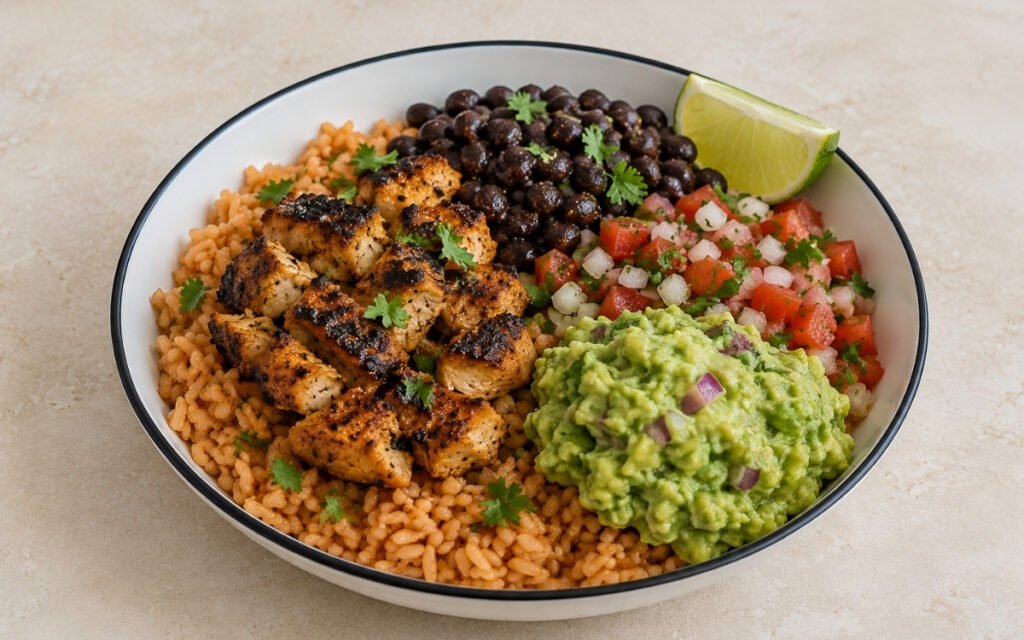
Classic Chicken Burrito Bowl
Smoked paprika marinated chicken seared golden over Mexican rice — with spiced black beans, pico de gallo, charred corn salad, guacamole, and Mexican cheese blend. The full burrito in a bowl.
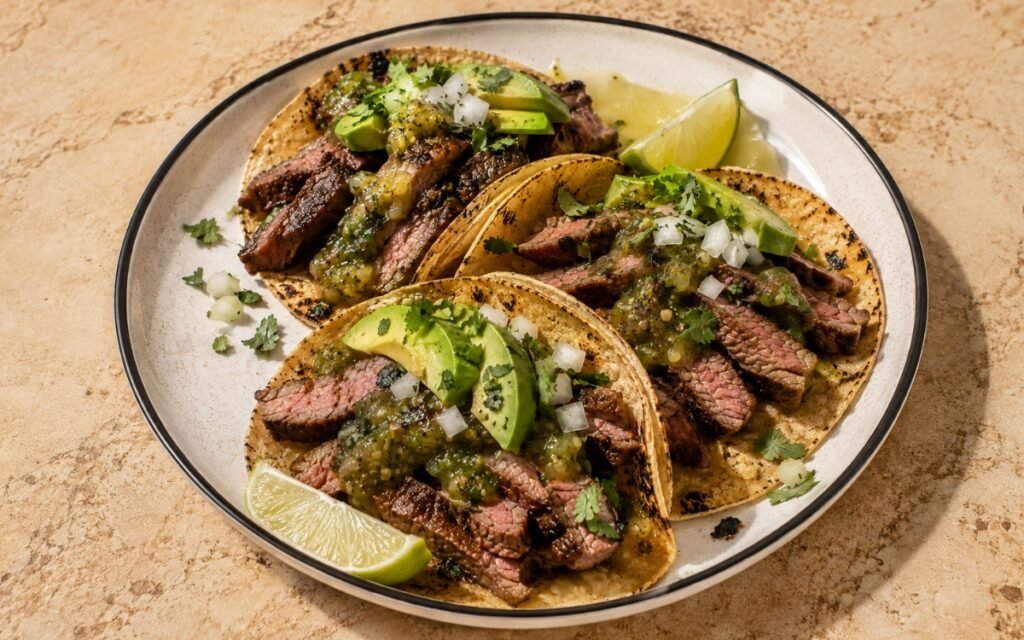
Steak Tacos with Salsa Verde
Dry-brined, hard-seared steak, rested and sliced thin against the grain, in warm homemade corn tortillas with salsa verde, onion, and avocado.
Shrimp Fajita
Ingredients
Method
- In a medium bowl, combine the smoked paprika, dried oregano, ground cumin, salt, garlic powder, lime zest, lime juice, and olive oil. Whisk together until evenly combined — the marinade should look like a uniform, fragrant spiced oil with the lime juice distributed throughout. The spice blend is identical to the chicken and steak fajita versions — the same smoked paprika, cumin, and lime profile that defines fajita character across all three proteins. The only meaningful difference is the marinating time, and this is not a minor detail: the marinating window for shrimp is 15–30 minutes at room temperature only, and this limit is strictly functional rather than a suggestion. Shrimp flesh is composed of loosely structured muscle proteins that are significantly more delicate than chicken or beef. The lime juice’s citric acid begins denaturing — effectively cooking — these proteins almost immediately on contact. At 15 minutes the acid has lightly penetrated the surface and the spices have begun to adhere. At 30 minutes the acid has worked further and the shrimp is at the maximum marinating benefit. Beyond 30 minutes, the acid continues cooking the proteins progressively — the shrimp’s surface begins to turn white and opaque as if heat-cooked, the texture tightens and becomes rubbery, and by 60 minutes the shrimp is essentially ceviche without ever having touched a pan. Add the shrimp to the marinade and toss thoroughly to coat every surface. Leave at room temperature for 15–30 minutes.
- Peel the white onions and cut the top and root ends off each one. Halve each onion from root to tip, then place each half flat on the cutting board and slice vertically from top to bottom following the natural lines of the onion’s layers — producing long, thin feather-shaped strips rather than rings. The vertical feather cut is the correct technique for fajita vegetables: the strips char at their thin ends while remaining juicy in the thicker middle sections, and they collapse and weave together with the pepper strips in the finished dish rather than sitting as separate rigid pieces. Combine all three onions in a large bowl after slicing.
- Cut the top and bottom from each bell pepper. Stand each upright and slice the four curved walls of flesh away from the central seed column, producing four flat pieces per pepper. Trim any remaining white pith or seed membrane from the inside of each wall piece — the pith contributes bitterness and should be removed. Slice each flat wall piece into strips of consistent thickness matching the onion feathers, approximately 5–7mm wide. Slice the bottom pieces the same way, removing any seed attachment. Mix all sliced pepper strips with the onion feathers and toss together. The three-colour combination is a deliberate flavour decision: green peppers bring a slightly bitter, more vegetal note from being the least ripe; yellow peppers bring a mild, moderate sweetness; red peppers bring the highest sugar content and the most pronounced caramelised sweetness when charred. All three together produce a more complex, layered vegetable component than any single colour could achieve.
- Heat a large cast iron skillet, carbon steel pan, or stainless steel skillet over high heat for 2–3 minutes until genuinely hot and the oil added to the surface shimmers and begins to smoke at the edges. Cast iron is the preferred material because its heat retention maintains the pan temperature through the brief contact time of each shrimp batch — a temperature drop during shrimp cooking means the shrimp begins to steam in its own moisture rather than searing. Lay the shrimp in a single layer without crowding — each shrimp needs its own space on the pan surface to sear rather than steam against its neighbours. Work in two or three batches without hesitation. The timing from this point forward is the single most critical technique in the entire recipe: sear each shrimp for 30–45 seconds on the first side without moving. The shrimp is ready to flip when the underside has turned pink from grey and a faint golden-brown sear mark is visible at the contact points with the pan. Flip each shrimp and cook the second side for 30–45 seconds. Remove from the pan immediately when the shrimp has turned completely pink and opaque with just the faintest translucency remaining at the very thickest point of the body. This last fraction of translucency is the safety margin — the residual heat in the shrimp will continue cooking it for another 30–60 seconds after it leaves the pan, and pulling at just-opaque produces a shrimp that is perfectly cooked through by the time it is served. Pulling at fully opaque throughout produces a shrimp that is slightly over-cooked and beginning to tighten. Pulling at still-grey and translucent produces one that is under-cooked. Transfer cooked shrimp immediately to a bowl — do not leave them in the hot pan even for 30 seconds, as the residual heat of the cast iron will continue cooking them past the ideal point. Repeat with remaining shrimp.
- Without cleaning the pan — the residual shrimp marinade fond caramelised onto the surface is concentrated spiced flavour — add the sliced pepper and onion mixture. The moisture released by the vegetables as they begin to cook will deglaze the pan and lift every caramelised bit of the fond, incorporating it into the vegetable mixture. This is the reason the vegetables always follow the protein in the same pan: all the flavour left behind by the shrimp transfers to the vegetables. Stir frequently over high heat for 6–8 minutes. You can and should allow the vegetables to char more aggressively than feels intuitively correct — push the onion feather tips and pepper edges to genuinely dark spots. When the vegetables are subsequently combined with the shrimp and rest together, any accumulated moisture and steam softens and distributes the char character throughout the mixture, lightening the intensity at any single point and spreading it as a background smokiness across the entire dish. Work in batches if the pan is not large enough to cook all the vegetables simultaneously — a crowded pan steams rather than chars. If any marinade remains in the shrimp bowl, pour it over the vegetables — it will sizzle, caramelise, and contribute its full spice profile to the vegetable char.
- When all the vegetables are cooked, transfer them to the bowl with the cooked shrimp. Toss everything together once to combine — the shrimp juices and the vegetable fond will mix into a light, unified sauce that coats every component. Cover loosely and allow to rest for 5 minutes before serving. The rest allows the temperatures to equalise between the hot vegetables and the cooled shrimp, the juices to redistribute, and all the flavour elements — spiced marinade, caramelised vegetable fond, lime, and shrimp’s own natural sweetness — to integrate into a cohesive, unified fajita rather than separately-cooked components placed together.