
Pomegranate Lemonade
Pomegranate lemonade is the most structurally direct of the fresh-juice fruit lemonade preparations — built around pure pomegranate juice rather than the dual-extraction approach of the raspberry and blackberry preparations or the cooked-syrup approach of the strawberry and peach versions. Pomegranate juice already contains both registers — the warm, concentrated, wine-adjacent depth and the vivid, tart, specifically pomegranate aromatic character — in a single raw cold-pressed ingredient. The preparation’s simplicity is its honesty: high-quality pomegranate juice, either fresh-pressed from seeded arils or from a trusted bottled source, combined with the honey-lemon syrup, fresh lemon juice, and cold water in the proportions that allow the pomegranate’s complex, specifically grown-up character to be the unmistakable primary flavour while the lemon provides the structural brightness that turns it from pomegranate juice into specifically lemonade. Pomegranate’s ellagitannin content — particularly punicalagin, one of the most potent antioxidant compounds in the human diet — gives the juice a specifically dry, complex, tannic quality that is its distinguishing characteristic: more austere than raspberry, more specifically mineral than blackberry, and more immediately identifiable as specifically pomegranate. The honey-lemon syrup rather than a fruit-in-sugar syrup because the pomegranate juice itself provides all the fruit depth required; the syrup’s only functions are sweetening and aromatic citrus integration.
Prep Time : 10 min
Cook Time : 5 min
Servings : 8
10 min
5 min
8
Ingredients
For the Lemon Structure
• Clean pulp or segments from 2–3 lemons — seeds and tough membranes removed; no white pith
For the Honey-Lemon Syrup
• 180ml water
• 90–110g mild honey — start with 90g — this one on Amazon
• Zest of 1 lemon — yellow part only; added off heat
For the Lemonade Base
• 240ml fresh lemon juice — approximately 5–6 lemons
• 500ml pomegranate juice — fresh-pressed from ripe pomegranate arils, or high-quality bottled juice
• 120–150ml honey-lemon syrup — from above; start with 120ml
• 750ml–1 litre ice-cold water — adjust after tasting; start with 750ml
• Pinch of fine sea salt
For Serving
• Ice cubes
• Lemon slices
• Fresh pomegranate arils — optional
This post may contain affiliate links. As an Amazon Associate I earn from qualifying purchases, at no additional cost to you.
Directions
- Make the Honey-Lemon Syrup
Combine the 180ml of water and 90g of honey in a small saucepan over low heat. Stir gently until the honey is completely dissolved into the water — the liquid should be clear, slightly golden, and uniformly mixed without any visible honey remaining as a separate, more viscous layer. Do not bring to a boil — honey’s aromatic volatile compounds, which are specifically what honey adds over white sugar in this preparation, diminish at sustained higher temperatures. Remove from the heat. Add the zest of 1 lemon. Cover and steep for 5–8 minutes. The lemon zest’s aromatic oils integrate into the honey-water medium during this off-heat period — the same approach as the raspberry, blackberry, and blueberry lemonade preparations. In this preparation the lemon zest infusion is specifically important because the syrup is providing the entire citrus aromatic depth contribution; there is no berry syrup with its own fruit character to carry aromatic complexity. The zest-infused honey syrup bridges the fresh lemon juice’s sharp, bright acidity and the pomegranate juice’s deep, tart, complex character. Strain and cool completely. - Juice the Pomegranate (If Using Fresh)
Fresh pomegranate juice, if making from scratch, is extracted from the arils by placing them in a bowl and pressing firmly with a potato masher or the back of a large spoon — the arils release their juice readily under moderate pressure, leaving the bitter white pith seeds intact. Strain through a fine-mesh sieve to remove the pressed aril skins and seeds. The freshly pressed pomegranate juice should be vivid ruby-red and specifically tart with the distinctively complex, slightly dry, pomegranate-specific character that distinguishes fresh from bottled. For bottled pomegranate juice: quality varies significantly. The finest quality pomegranate juices — from single-variety Persian or Turkish pomegranates, pressed and packaged without added water or sugar — produce a finished lemonade comparable to fresh. Blended or sweetened pomegranate beverages (often labelled as pomegranate drinks or pomegranate cocktails rather than 100% pomegranate juice) produce a significantly milder, sweeter result. Always check the label: 100% pomegranate juice with no added sugar is the correct specification. - Prepare the Lemon Pulp and Build the Lemonade
Segment 2–3 lemons, removing seeds and membranes with clean pulp retained. Remove all white pith. Add to the large pitcher and mash gently. Add the 240ml of fresh lemon juice, 500ml of pomegranate juice, 120ml of the cooled honey-lemon syrup, 750ml of ice-cold water, and the pinch of fine sea salt. Stir thoroughly. The salt performs a specifically interesting function in pomegranate lemonade that it does not in any other preparation in this collection. Pomegranate’s ellagitannin compounds — the specific tannins responsible for its characteristic dry, slightly astringent finish — are specifically modified in their perceived intensity by sodium ions at sub-threshold concentration. The salt’s sodium does not reduce the tannin concentration but specifically reduces the perception of the tannin’s astringent quality, making the pomegranate’s complexity taste more specifically fruity and less specifically dry-bitter. The same anti-astringency mechanism that makes salt specifically improve the palatability of red wine applies to pomegranate’s comparable ellagitannin profile. Taste carefully. Pomegranate’s acidity and natural sweetness vary significantly by variety and season — pomegranates at peak ripeness (October-December in the Northern Hemisphere) have a higher natural sugar content and a more specifically complex, balanced character than out-of-season fruit. The balance assessment: the lemonade should taste specifically tart, with the lemon’s bright citric sharpness and the pomegranate’s drier, more ellagitannin-driven tartness together producing the layered complexity that makes this preparation specifically grown-up. If the pomegranate character is beginning to overwhelm the lemon’s structural acid, a small splash of additional lemon juice restores the balance. If additional sweetness is needed, the remaining syrup added incrementally. - Chill and Serve
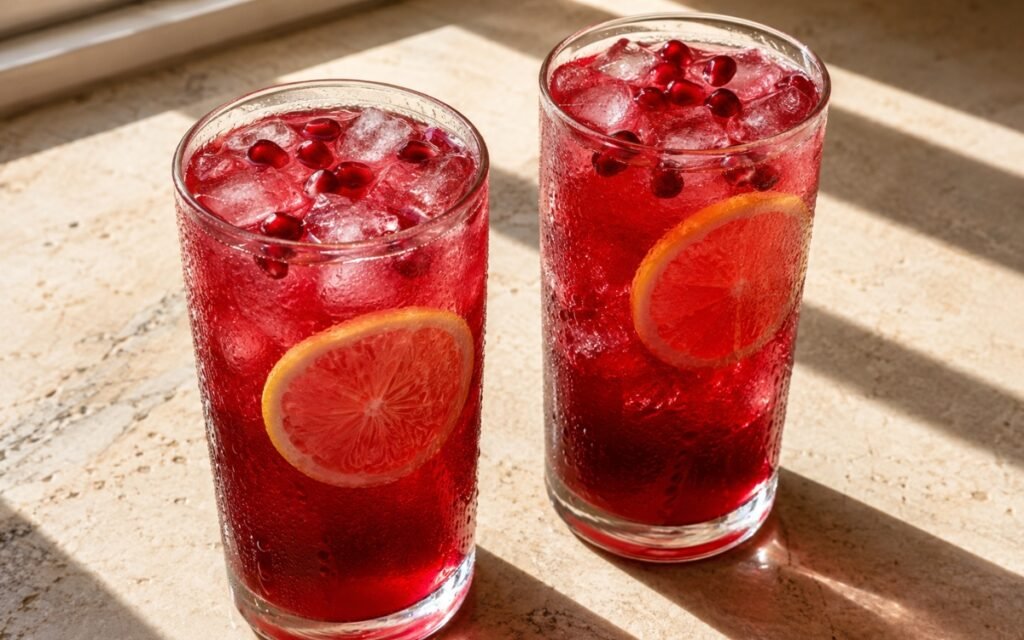
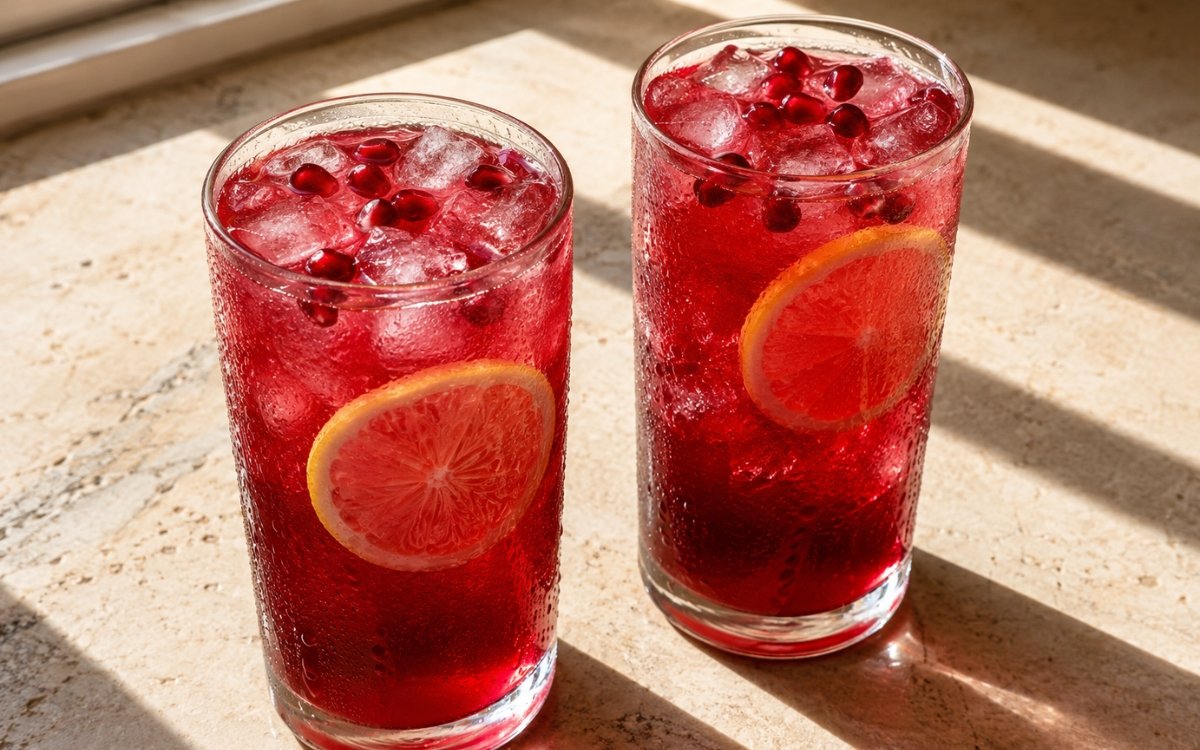
Refrigerate for 1–2 hours. The pomegranate-lemon integration specifically improves during the cold rest — pomegranate’s ellagitannin compounds integrate more smoothly with the honey syrup and lemon juice over time, producing a more specifically unified, more cohesive result than the immediately combined version. Fill glasses with ice. Pour the chilled pomegranate lemonade over the ice. Garnish with a lemon slice and, if available, a few pomegranate arils — their vivid ruby colour and jewel-like appearance providing the visual signature of the pomegranate’s origin. Serve immediately.
*Notes :
- Pomegranate varieties affect the finished lemonade significantly. Persian pomegranates (Punica granatum varieties common in Iran, Turkey, and the Levant), particularly the Wonderful and Hicaznar varieties, produce the most specifically complex, most balanced juice with high sugar and high acid simultaneously. Californian pomegranates (predominantly Wonderful variety) are widely available and produce excellent results. Indian pomegranates have a more specifically tart profile with higher acid and lower sugar, requiring additional honey for balance. All varieties produce excellent pomegranate lemonade; the honey quantity should always be adjusted after tasting the specific batch.
- Pomegranate’s ellagitannin compounds — primarily punicalagin — are the subject of significant nutritional research for their antioxidant activity. They are also responsible for the dry, slightly astringent finish that makes pomegranate juice specifically more interesting and more adult-tasting than most berry juices. The sub-threshold salt’s anti-astringency effect makes this preparation specifically smoother than unsalted pomegranate lemonade without reducing the pomegranate’s complexity.
Why This Recipe Works
This recipe works because the pomegranate juice’s pre-extracted character makes the dual-extraction approach unnecessary — the juice already contains both the warm depth and the vivid aromatic freshness.
The honey-lemon syrup provides the sweetening and the integrated citrus aromatic depth that bridges the pomegranate and lemon.
The salt specifically modifies the perception of the ellagitannin astringency at sub-threshold concentration. And the lemon’s structural acid is precisely balanced against the pomegranate’s own complex tartness.
Ingredient Breakdown
500ml Pomegranate Juice (Primary Flavour Vehicle)
The deep, complex, tart, wine-adjacent character — ellagitannin complexity, vivid anthocyanin colour, and pomegranate’s specific aromatic profile all contained in the raw juice.
Honey-Lemon Syrup (No Fruit in the Syrup)
The pure sweetening-and-citrus-aromatic preparation — lemon zest off heat integrating the citrus depth into the honey medium that bridges pomegranate and lemon.
Sub-Threshold Salt (Ellagitannin Anti-Astringency Function)
The specifically important amplifier — sodium’s anti-astringency effect at sub-threshold concentration reducing perceived tannin sharpness while making the pomegranate’s fruity character more specifically vivid.
Lemon as Structural Acid Against Pomegranate’s Complexity
The citric brightness that makes the drink lemonade rather than diluted pomegranate juice — specifically important to hold up against pomegranate’s own complex acid character.
Flavor Structure Explained
This Pomegranate lemonade follows a layered balance model:
- Deep tart fruit core (pomegranate)
- Bright citrus contrast (lemon juice)
- Warm aromatic sweetness (honey and lemon zest)
- Flavor-sharpening salinity (pinch of salt)
- Dry sophisticated finish (tannin-acid balance)
Pomegranate defines the foundation with layered tartness, subtle tannic dryness, and a dark fruit complexity that feels more mature and wine-like than most fruit-based lemonades. Lemon juice provides the sharp acidic backbone that keeps the drink energetic and refreshing instead of dense or heavy. Honey softens the tartness with warm floral sweetness, while lemon zest contributes aromatic citrus oils that deepen the overall structure. A small amount of salt reduces the perception of astringency while simultaneously making the fruit flavor feel clearer and more vivid. The result is a lemonade with notable depth and dryness, balancing richness, acidity, and refinement in a distinctly adult style.
Common Mistakes to Avoid
- Using Pomegranate Drink Rather Than 100% Pomegranate Juice – Sweetened pomegranate beverages with added water produce a significantly milder, more one-dimensionally sweet result. Always 100% pure pomegranate juice.
- Not Adding Salt – Pomegranate’s ellagitannin astringency is specifically modified by sub-threshold salt — the anti-astringency effect makes a specifically detectable difference in this preparation. Always include it.
- Adding Too Much Honey Before Tasting – Pomegranate’s natural sweetness varies significantly. Always 90g to start and adjust after tasting the specific batch.
- Skipping the Chill – Pomegranate’s ellagitannin compounds integrate specifically more smoothly with the honey and lemon during the cold rest. Always allow the full 1–2 hours.
- Not Keeping the Lemon Structurally Present – Pomegranate’s depth can obscure the lemon’s structural acid. Always taste specifically for the lemon’s presence.
Variations
With Ginger
Add 10g of thinly sliced fresh ginger to the saucepan alongside the honey during the syrup preparation — removed during straining. The ginger’s sharp warmth alongside pomegranate’s tartness is the Pomegranate Ginger Sparkler direction.
With Rosemary
Add 1 small rosemary sprig to the honey-water off-heat alongside the lemon zest during the 5–8 minute steep. The rosemary’s dry, botanical depth specifically complements pomegranate’s own dry complexity.
With Orange
Replace 100ml of the cold water with 100ml of fresh orange juice — the orange’s warm sweetness rounding the pomegranate’s dry tartness into a more specifically approachable, slightly warmer direction.
Sparkling Version
Build the base without water, chill, and add sparkling water right before serving — the carbonation amplifies pomegranate’s aromatic compounds and makes the vivid ruby colour visually more dramatic.
Storage & Make-Ahead
Honey-lemon syrup can be refrigerated in a sealed jar for up to 2 weeks.
Once assembled, pomegranate lemonade can be refrigerated for up to 3 days. During storage, the ellagitannins from the pomegranate continue to integrate and develop, which often makes the flavor at 24 to 48 hours even better than when freshly mixed. Stir the lemonade before serving, as slight separation may occur over time.
Assembled glasses are not suitable for storage and should be served immediately.
Frequently Asked Questions
Why does the salt matter more in this preparation than in some others?
Pomegranate’s ellagitannin compounds — particularly punicalagin — produce a characteristically dry, slightly astringent finish that is specifically modified by sodium ions at sub-threshold concentration. The salt reduces the perceived astringency without reducing the ellagitannin concentration, making the pomegranate’s complex character taste more specifically fruity and less specifically drying. The same mechanism makes salt specifically beneficial in red wine service.
Why honey rather than white sugar for the syrup?
Honey’s aromatic compounds specifically complement pomegranate’s complex aromatic profile in the same way they complement raspberry’s. The rounded, floral warmth of a mild honey provides a sweetness that integrates with the pomegranate’s depth rather than simply correcting its tartness.
Why no fruit in the syrup unlike the berry lemonade preparations?
Pomegranate juice in good quality form already contains both the warm concentrated depth and the vivid aromatic freshness that the raspberry and blackberry preparations had to achieve through dual extraction. Adding pomegranate to the syrup would produce only additional cooked-fruit depth that the raw juice already provides; the honey-lemon syrup performs only the sweetening and citrus aromatic bridging functions.
What other complex, tart, bold preparations share this direction?
The Pomegranate Ginger Sparkler Mocktail shares the pomegranate as primary flavour in a sparkling format with ginger’s warmth providing the counterpoint — a more complex, more assertively aromatic direction. The Cherry Lemonade shares the deep ruby colour and the specifically tart, complex dark-fruit-and-lemon combination — cherry’s wine-adjacent character the closest structural parallel to pomegranate’s depth. The Pink Grapefruit Lemonade shares the specifically grown-up, dry-leaning, acid-forward character — grapefruit’s naringenin bitterness providing a different but comparably adult quality against the lemon’s structural backbone.
Nutrition Facts
( per serving )
Calories
~85 kcal
Protein
0 g
Fat
0 g
Carbs
22 g
Calories
~85 kcal
Protein
0 g
Fat
0 g
Carbs
22 g
Related Recipes
Related Recipes

Cranberry Orange Lemonade
Cold-extracted lemon zest and juice combined with gently extracted cranberries cooked in orange juice for a vivid red-orange, tart lemonade.
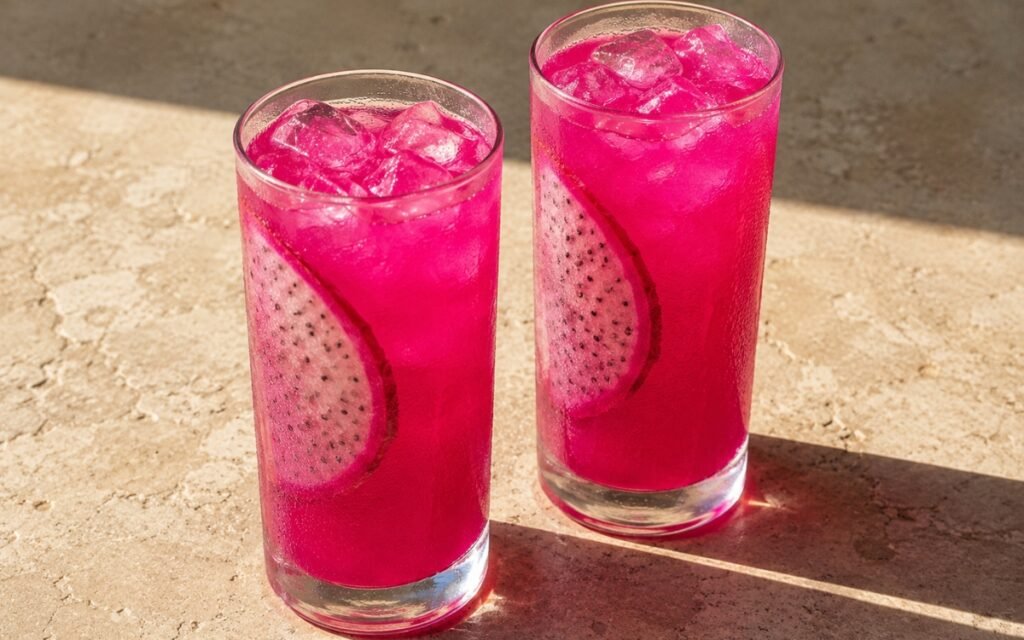
Dragon Fruit Lemonade
Cold-extracted lemon zest and juice combined with blended red dragon fruit for a vivid magenta-pink, clean-tasting lemonade.
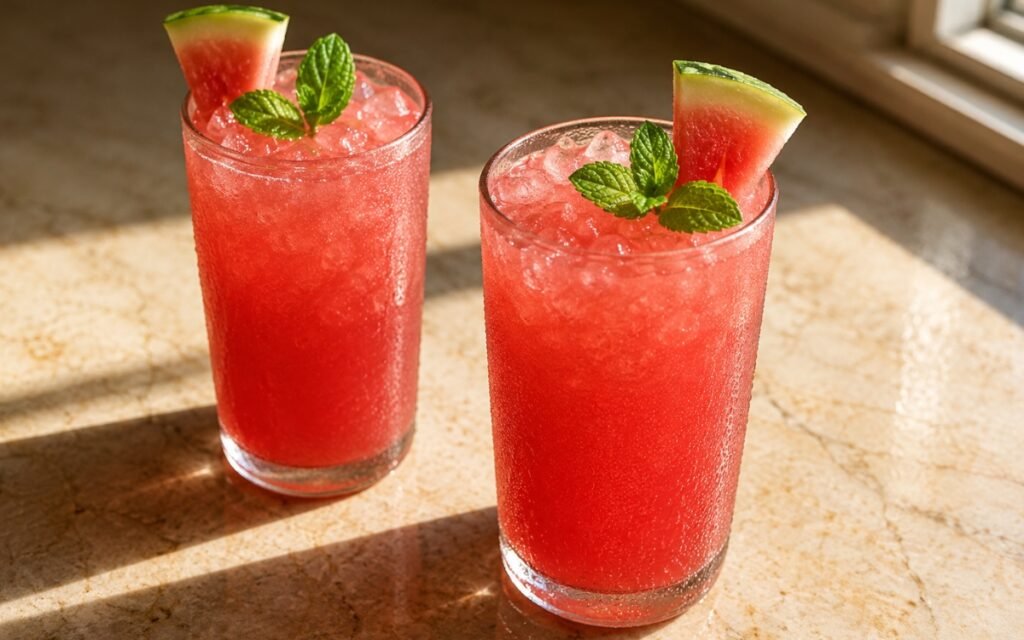
Fresh Watermelon Lemonade
Watermelon blended and strained cold, simple syrup separate — lemon juice, zest, and salt added cold, chilled. Vivid pink, crisp, and hydrating.

You might also like
You might also like
Green Apple Ginger Mint Fizz Mocktail
Skin-on green apples pressed with lime, raw ginger cold-infused in honey — topped with club soda. Sharp, pale green, and crisp.
Classic Iced Black Tea
Black tea at 90–95°C for 2½–3 minutes, honey dissolved warm, lemon peel infused cold 5–10 minutes — chilled. Crisp, clean, timeless.
Peach White Tea Spritzer Mocktail
Peaches simmered in thin slices, white tea steeped at 70–85°C with thyme — honey dissolved while warm, topped with club soda. Light, floral, and refined.


Pomegranate Lemonade
Ingredients
Method
- Combine the 180ml of water and 90g of honey in a small saucepan over low heat. Stir gently until the honey is completely dissolved into the water — the liquid should be clear, slightly golden, and uniformly mixed without any visible honey remaining as a separate, more viscous layer. Do not bring to a boil — honey’s aromatic volatile compounds, which are specifically what honey adds over white sugar in this preparation, diminish at sustained higher temperatures. Remove from the heat. Add the zest of 1 lemon. Cover and steep for 5–8 minutes. The lemon zest’s aromatic oils integrate into the honey-water medium during this off-heat period — the same approach as the raspberry, blackberry, and blueberry lemonade preparations. In this preparation the lemon zest infusion is specifically important because the syrup is providing the entire citrus aromatic depth contribution; there is no berry syrup with its own fruit character to carry aromatic complexity. The zest-infused honey syrup bridges the fresh lemon juice’s sharp, bright acidity and the pomegranate juice’s deep, tart, complex character. Strain and cool completely.
- Fresh pomegranate juice, if making from scratch, is extracted from the arils by placing them in a bowl and pressing firmly with a potato masher or the back of a large spoon — the arils release their juice readily under moderate pressure, leaving the bitter white pith seeds intact. Strain through a fine-mesh sieve to remove the pressed aril skins and seeds. The freshly pressed pomegranate juice should be vivid ruby-red and specifically tart with the distinctively complex, slightly dry, pomegranate-specific character that distinguishes fresh from bottled. For bottled pomegranate juice: quality varies significantly. The finest quality pomegranate juices — from single-variety Persian or Turkish pomegranates, pressed and packaged without added water or sugar — produce a finished lemonade comparable to fresh. Blended or sweetened pomegranate beverages (often labelled as pomegranate drinks or pomegranate cocktails rather than 100% pomegranate juice) produce a significantly milder, sweeter result. Always check the label: 100% pomegranate juice with no added sugar is the correct specification.
- Segment 2–3 lemons, removing seeds and membranes with clean pulp retained. Remove all white pith. Add to the large pitcher and mash gently. Add the 240ml of fresh lemon juice, 500ml of pomegranate juice, 120ml of the cooled honey-lemon syrup, 750ml of ice-cold water, and the pinch of fine sea salt. Stir thoroughly. The salt performs a specifically interesting function in pomegranate lemonade that it does not in any other preparation in this collection. Pomegranate’s ellagitannin compounds — the specific tannins responsible for its characteristic dry, slightly astringent finish — are specifically modified in their perceived intensity by sodium ions at sub-threshold concentration. The salt’s sodium does not reduce the tannin concentration but specifically reduces the perception of the tannin’s astringent quality, making the pomegranate’s complexity taste more specifically fruity and less specifically dry-bitter. The same anti-astringency mechanism that makes salt specifically improve the palatability of red wine applies to pomegranate’s comparable ellagitannin profile. Taste carefully. Pomegranate’s acidity and natural sweetness vary significantly by variety and season — pomegranates at peak ripeness (October-December in the Northern Hemisphere) have a higher natural sugar content and a more specifically complex, balanced character than out-of-season fruit. The balance assessment: the lemonade should taste specifically tart, with the lemon’s bright citric sharpness and the pomegranate’s drier, more ellagitannin-driven tartness together producing the layered complexity that makes this preparation specifically grown-up. If the pomegranate character is beginning to overwhelm the lemon’s structural acid, a small splash of additional lemon juice restores the balance. If additional sweetness is needed, the remaining syrup added incrementally.
- Refrigerate for 1–2 hours. The pomegranate-lemon integration specifically improves during the cold rest — pomegranate’s ellagitannin compounds integrate more smoothly with the honey syrup and lemon juice over time, producing a more specifically unified, more cohesive result than the immediately combined version. Fill glasses with ice. Pour the chilled pomegranate lemonade over the ice. Garnish with a lemon slice and, if available, a few pomegranate arils — their vivid ruby colour and jewel-like appearance providing the visual signature of the pomegranate’s origin. Serve immediately.