Ingredients
Method
Make the Honey-Lemon Syrup
- Combine the 180ml of water and 90g of honey in a small saucepan over low heat. Stir gently until the honey is completely dissolved into the water — the liquid should be clear, slightly golden, and uniformly mixed without any visible honey remaining as a separate, more viscous layer. Do not bring to a boil — honey's aromatic volatile compounds, which are specifically what honey adds over white sugar in this preparation, diminish at sustained higher temperatures. Remove from the heat. Add the zest of 1 lemon. Cover and steep for 5–8 minutes. The lemon zest's aromatic oils integrate into the honey-water medium during this off-heat period — the same approach as the raspberry, blackberry, and blueberry lemonade preparations. In this preparation the lemon zest infusion is specifically important because the syrup is providing the entire citrus aromatic depth contribution; there is no berry syrup with its own fruit character to carry aromatic complexity. The zest-infused honey syrup bridges the fresh lemon juice's sharp, bright acidity and the pomegranate juice's deep, tart, complex character. Strain and cool completely.
Juice the Pomegranate (If Using Fresh)
- Fresh pomegranate juice, if making from scratch, is extracted from the arils by placing them in a bowl and pressing firmly with a potato masher or the back of a large spoon — the arils release their juice readily under moderate pressure, leaving the bitter white pith seeds intact. Strain through a fine-mesh sieve to remove the pressed aril skins and seeds. The freshly pressed pomegranate juice should be vivid ruby-red and specifically tart with the distinctively complex, slightly dry, pomegranate-specific character that distinguishes fresh from bottled. For bottled pomegranate juice: quality varies significantly. The finest quality pomegranate juices — from single-variety Persian or Turkish pomegranates, pressed and packaged without added water or sugar — produce a finished lemonade comparable to fresh. Blended or sweetened pomegranate beverages (often labelled as pomegranate drinks or pomegranate cocktails rather than 100% pomegranate juice) produce a significantly milder, sweeter result. Always check the label: 100% pomegranate juice with no added sugar is the correct specification.
Prepare the Lemon Pulp and Build the Lemonade
- Segment 2–3 lemons, removing seeds and membranes with clean pulp retained. Remove all white pith. Add to the large pitcher and mash gently. Add the 240ml of fresh lemon juice, 500ml of pomegranate juice, 120ml of the cooled honey-lemon syrup, 750ml of ice-cold water, and the pinch of fine sea salt. Stir thoroughly. The salt performs a specifically interesting function in pomegranate lemonade that it does not in any other preparation in this collection. Pomegranate's ellagitannin compounds — the specific tannins responsible for its characteristic dry, slightly astringent finish — are specifically modified in their perceived intensity by sodium ions at sub-threshold concentration. The salt's sodium does not reduce the tannin concentration but specifically reduces the perception of the tannin's astringent quality, making the pomegranate's complexity taste more specifically fruity and less specifically dry-bitter. The same anti-astringency mechanism that makes salt specifically improve the palatability of red wine applies to pomegranate's comparable ellagitannin profile. Taste carefully. Pomegranate's acidity and natural sweetness vary significantly by variety and season — pomegranates at peak ripeness (October-December in the Northern Hemisphere) have a higher natural sugar content and a more specifically complex, balanced character than out-of-season fruit. The balance assessment: the lemonade should taste specifically tart, with the lemon's bright citric sharpness and the pomegranate's drier, more ellagitannin-driven tartness together producing the layered complexity that makes this preparation specifically grown-up. If the pomegranate character is beginning to overwhelm the lemon's structural acid, a small splash of additional lemon juice restores the balance. If additional sweetness is needed, the remaining syrup added incrementally.
Chill and Serve
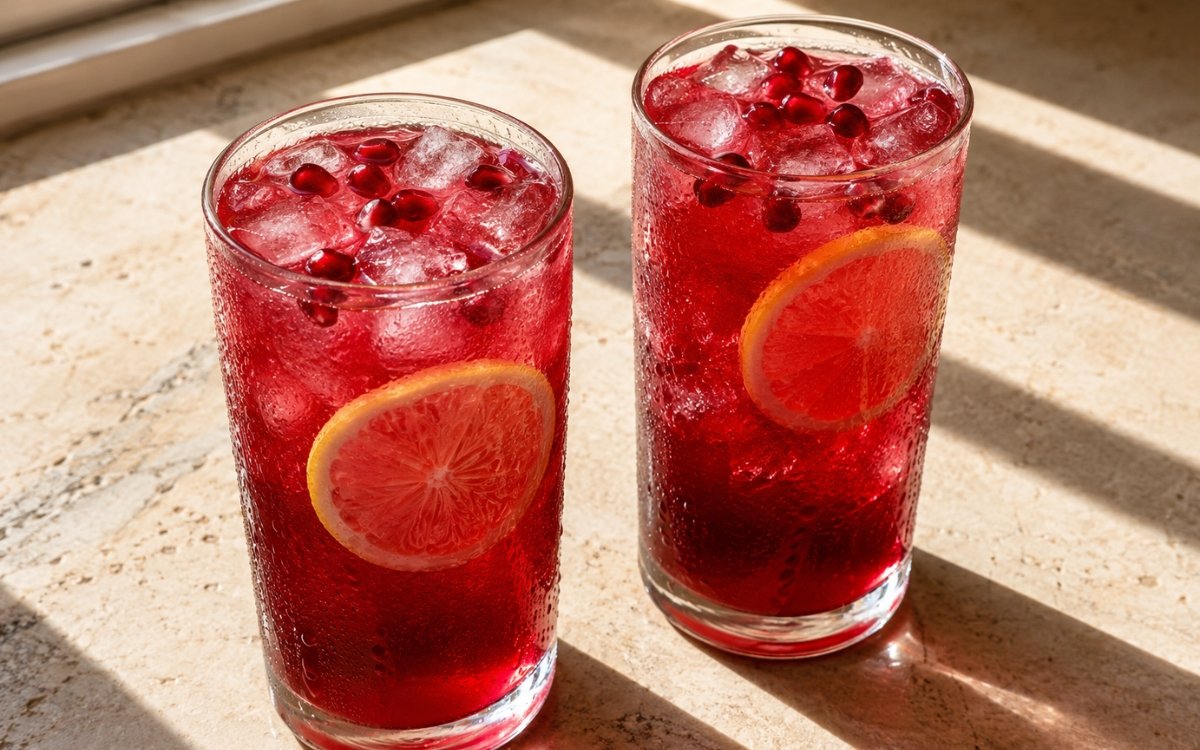
- Refrigerate for 1–2 hours. The pomegranate-lemon integration specifically improves during the cold rest — pomegranate's ellagitannin compounds integrate more smoothly with the honey syrup and lemon juice over time, producing a more specifically unified, more cohesive result than the immediately combined version. Fill glasses with ice. Pour the chilled pomegranate lemonade over the ice. Garnish with a lemon slice and, if available, a few pomegranate arils — their vivid ruby colour and jewel-like appearance providing the visual signature of the pomegranate's origin. Serve immediately.
Notes
Pomegranate varieties affect the finished lemonade significantly. Persian pomegranates (Punica granatum varieties common in Iran, Turkey, and the Levant), particularly the Wonderful and Hicaznar varieties, produce the most specifically complex, most balanced juice with high sugar and high acid simultaneously. Californian pomegranates (predominantly Wonderful variety) are widely available and produce excellent results. Indian pomegranates have a more specifically tart profile with higher acid and lower sugar, requiring additional honey for balance. All varieties produce excellent pomegranate lemonade; the honey quantity should always be adjusted after tasting the specific batch.
Pomegranate's ellagitannin compounds — primarily punicalagin — are the subject of significant nutritional research for their antioxidant activity. They are also responsible for the dry, slightly astringent finish that makes pomegranate juice specifically more interesting and more adult-tasting than most berry juices. The sub-threshold salt's anti-astringency effect makes this preparation specifically smoother than unsalted pomegranate lemonade without reducing the pomegranate's complexity.