
Cherry Lemonade
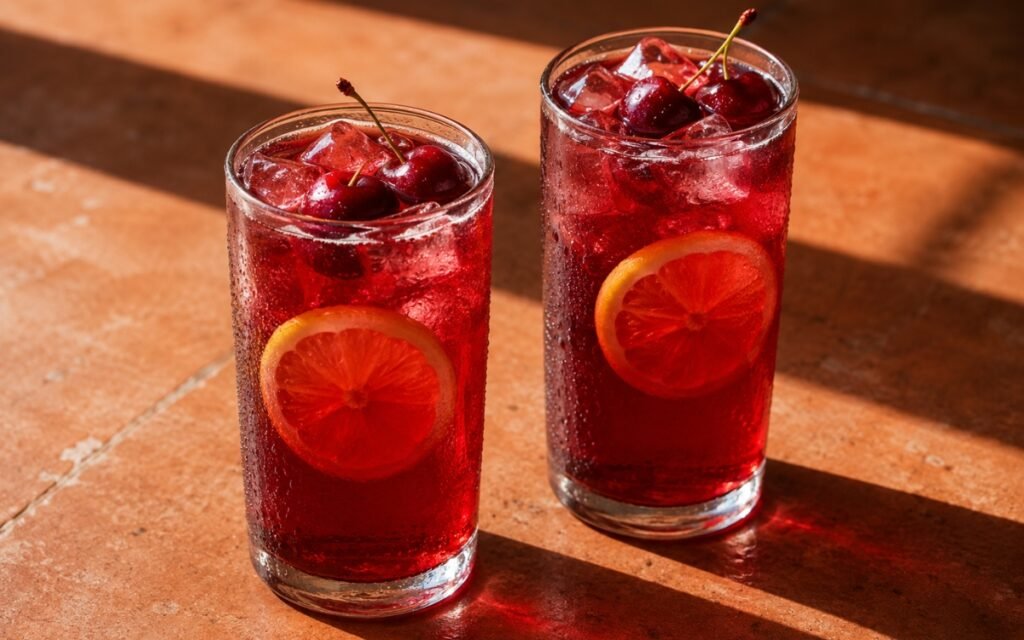
Cherry lemonade uses a single-extraction approach rather than the dual-extraction of the raspberry and blackberry preparations — a deliberate choice that reflects cherry’s different aromatic chemistry. Where raspberry’s pleasant volatile esters and blackberry’s deep fruity compounds each benefit from being divided between a cooked fraction and a cold-pressed fraction, cherry’s primary aromatic compound — benzaldehyde, the specifically warm, almond-adjacent, wine-like note responsible for cherry’s immediately identifiable character — is specifically more stable under gentle heat than raspberry’s more volatile esters. Cherry’s benzaldehyde extracts efficiently from the cooked fruit into the honey syrup during the gentle 8–10 minute simmer and remains meaningful in the cooled, strained preparation rather than evaporating during cooking. The single syrup extraction is therefore the specifically most efficient approach for cherry: all the fruit goes into the honey syrup; the syrup provides both the warm depth and the characteristic cherry aromatic; and the preparation is correspondingly simpler. The lemon zest steeps for 10 minutes off heat — longer than the typical 5–8 minutes of other preparations in this collection — because cherry’s deeper, warmer aromatic character specifically benefits from the more thorough lemon zest integration, the citrus oil depth in the syrup providing a more complete bridge between the warm honey-cherry and the sharp lemon juice. Rich, vibrant, and specifically more grown-up than its deep ruby colour suggests.
Prep Time : 15 min
Cook Time : 10 min
Servings : 8
15 min
10 min
8
Ingredients
For the Lemon Structure
• Pulp of 3 lemons — seeds and tough membranes removed; no white pith
For the Honey-Cherry Syrup
• 300g fresh cherries — pitted and halved
• 120ml water
• 110g mild honey — this one on Amazon
• Zest of 1 lemon — yellow part only; added off heat; steeped 10 minutes
For the Lemonade Base
• 240ml fresh lemon juice — approximately 5–6 lemons
• 120–150ml honey-cherry syrup — from above; start with 120ml
• Pinch of fine sea salt
• 1 litre ice-cold water
For Serving
• Ice cubes
• Lemon slices
• Fresh cherries — optional
This post may contain affiliate links. As an Amazon Associate I earn from qualifying purchases, at no additional cost to you.
Directions
- Make the Honey-Cherry Syrup
Combine the 300g of halved and pitted cherries, 120ml of water, and 110g of honey in a small saucepan. Place over medium-low heat and stir gently until the honey has completely dissolved into the warming water. Bring to a gentle simmer and cook for 8–10 minutes, pressing the cherries lightly with the back of a spoon as they soften to encourage juice release. The liquid should remain fluid and vivid ruby throughout — the same extraction-not-reduction principle applied across all the berry and fruit syrup preparations in this collection. If the liquid is visibly reducing in volume or thickening significantly, lower the heat or add a small splash of water. The extraction goal at 8–10 minutes: cherries that are fully softened, partially broken down, with the surrounding liquid vivid deep ruby and specifically fragrant with cherry’s benzaldehyde character — the warm, slightly almond-adjacent, specifically cherry aromatic that is the fruit’s primary compound. The smell is the accurate indicator of correct extraction: the syrup should smell specifically of cooked cherry — warm, sweet, fruity, and wine-adjacent — rather than of hot sugar water or of overcooked fruit preserves. Remove from the heat. Add the lemon zest immediately and cover. Allow to steep for 10 minutes — the longer off-heat steep in this preparation specifically serves the integration of the lemon zest’s aromatic oils into the warm cherry-honey medium. Cherry’s deeper, more specifically warm aromatic character requires a more thorough citrus oil integration during the steep than lighter, more volatile fruits like peach or raspberry. The 10-minute window produces a specifically more unified cherry-and-citrus aromatic depth in the syrup itself. Strain through a fine-mesh sieve, pressing lightly on the cherry solids — light rather than firm pressing, consistent with the approach for fruits where tannin extraction is a concern. Cherry’s skin and stone residues contain tannin compounds that firm pressing would extract into the syrup at unwanted concentration. Allow to cool completely. - Build the Lemon Structure
Add the pulp of 3 lemons to the large pitcher and gently muddle just until the fibres loosen and a small amount of juice releases. The 3-lemon pulp quantity — rather than the 2–3 lemon range of most other preparations — is deliberate: cherry’s deep, warm character benefits from a slightly stronger textural citrus presence in the glass that reinforces the lemon’s structural role against the warmer, more specifically rich berry character. - Assemble and Adjust
Add the 240ml of fresh lemon juice, 120ml of cooled honey-cherry syrup, the pinch of fine sea salt, and the 1 litre of ice-cold water to the pitcher. Stir thoroughly. Taste with the cherry-lemonade assessment: citrus-forward, with cherry’s deep, wine-adjacent warmth as the clearly present secondary register — not dessert-sweet, not syrupy, and specifically not jammy. The combination should taste specifically of two separate flavours that complement each other: lemon’s bright, clean citric acidity and cherry’s deep, warm, slightly almond-adjacent fruitiness. If the cherry’s warmth is too dominant and the lemon’s structural brightness is insufficient, a small additional amount of lemon juice sharpens the balance. If additional cherry character and sweetness is needed, more syrup in 10ml increments. The salt’s function — specifically sharpening the cherry’s benzaldehyde-driven aromatic character at sub-threshold concentration — is particularly important in this preparation. - Chill and Serve
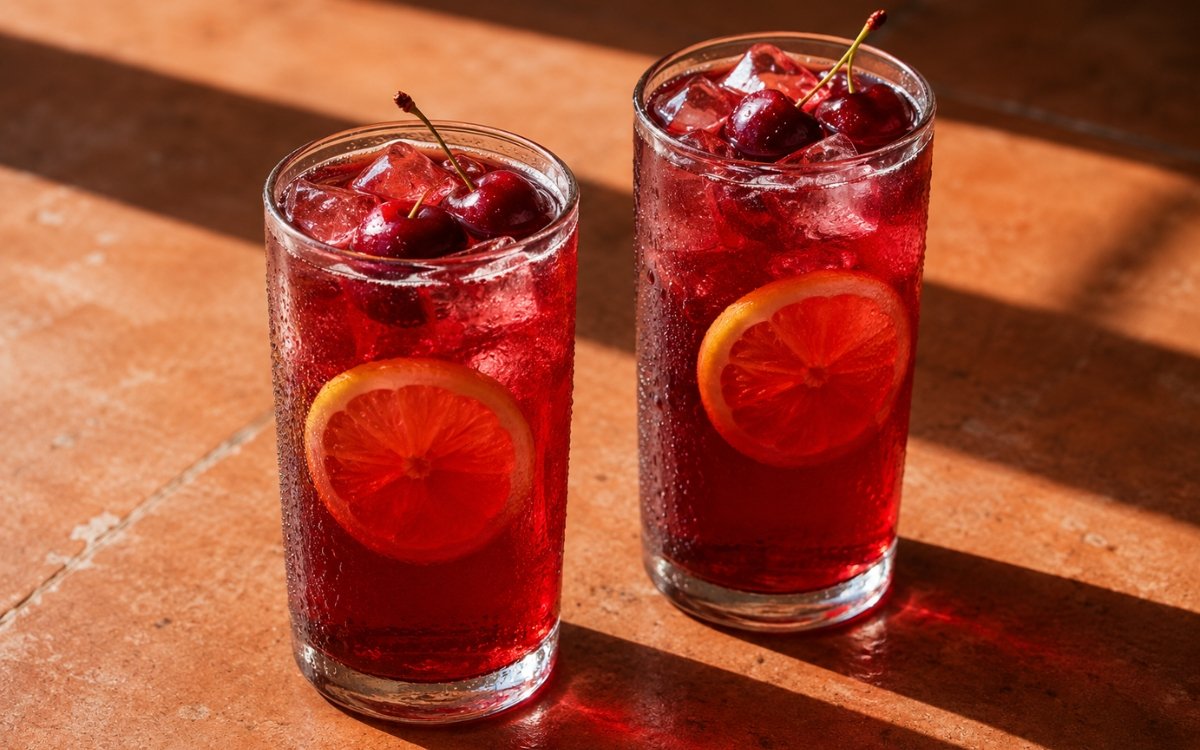
Cover and refrigerate for at least 1 hour, ideally 2 hours. Cherry’s benzaldehyde aromatic specifically benefits from the cold integration period — the compound’s distribution through the lemon and honey medium during the cold rest produces a specifically more cohesive, more unified result than the immediately combined version where cherry and lemon remain somewhat distinct. Fill glasses with ice. Pour the chilled cherry lemonade over the ice. Garnish with lemon slices and optional fresh cherries. Serve very cold.
*Notes :
- Cherry variety affects the finished lemonade significantly. Sour cherries — Morello, Montmorency — have higher citric acid content, more assertive tartness, and a more specifically complex, more wine-adjacent character. Sweet cherries — Bing, Royal Ann, Lapins — have higher natural sugar, more specifically warm and round flavour, and require less honey in the syrup. Both produce excellent cherry lemonade; the honey quantity should be adjusted accordingly — closer to 90g for Morello’s natural tartness, and the full 110g for sweet varieties’ lower natural acid.
- The benzaldehyde character that makes cherry specifically identifiable is present in higher concentration in darker cherry varieties than lighter ones. Black cherries and dark Bing varieties produce the most vivid, most specifically wine-adjacent honey syrup; lighter varieties produce a more subtle, more specifically sweet result.
Why This Recipe Works
This recipe works because cherry’s benzaldehyde aromatic is heat-stable enough to survive the gentle 8–10 minute extraction in the honey syrup without significant evaporative loss — allowing the single-extraction approach rather than dual-extraction.
The 10-minute off-heat lemon zest steep specifically integrates the citrus oils into the warm cherry-honey medium more thoroughly than the standard 5–8 minutes.
The extraction-not-reduction discipline keeps the syrup fluid, aromatic, and specifically tart. And the salt specifically amplifies the benzaldehyde’s character at sub-threshold concentration.
Ingredient Breakdown
Cherry Single Extraction (8–10 Minute Gentle Simmer)
The benzaldehyde-stable extraction — cherry’s primary aromatic survives gentle heat better than raspberry’s esters; single syrup captures full character.
110g Honey (Calibrated for Cherry’s Moderate-to-High Natural Sugar)
The aromatic-resonant sweetener — honey’s warmth specifically complementary to cherry’s own warm, almond-adjacent benzaldehyde character.
10-Minute Lemon Zest Off-Heat Steep (Longer Than Standard)
The thorough citrus-cherry integration — cherry’s deeper, warmer aromatic profile specifically requires more integration time than lighter fruits.
Light Pressing During Straining
The tannin management — cherry skin and stone residue contains tannin compounds; light pressing extracts the coloured juice without the astringent fraction.
1 Litre Cold Water
The full dilution calibration — cherry’s deep, concentrated syrup character at the standard syrup quantity requires the full litre for the correct drinking strength.
Flavor Structure Explained
This Cherry lemonade follows a layered balance model:
- Bright tart citrus core (lemon juice)
- Warm cherry depth (cooked cherry syrup)
- Floral rounded sweetness (honey)
- Flavor-enhancing salinity (pinch of salt)
- Rich refreshing finish (fruit-acid balance)
Lemon defines the structural backbone with vivid citric acidity that keeps the drink lively and refreshing. Cherry provides the defining secondary character through deep fruitiness and its characteristic almond-like warmth, giving the lemonade a richer and more mature profile than lighter berries. Honey contributes floral sweetness that blends naturally with the cherry’s warmth, softening the acidity without flattening the drink. A small amount of salt subtly intensifies the cherry’s aromatic compounds, making its distinctive flavor more expressive and recognizable. The result is a lemonade where tart citrus brightness and warm dark-fruit depth remain in constant balance.
Common Mistakes to Avoid
- Reducing the Syrup – Thick, reduced cherry syrup produces a dessert-adjacent, jammy result rather than the bright, fluid, aromatic preparation. Always extraction not reduction.
- Using Only 5 Minutes for the Lemon Zest Steep – The standard 5-minute window is insufficient for cherry’s deeper aromatic character. Always 10 minutes for the more thorough integration.
- Pressing the Cherry Solids Firmly – Cherry skin and stone residue releases tannins under firm pressing. Always light pressure.
- Not Chilling for the Full 1–2 Hours – Cherry’s benzaldehyde integration specifically requires the cold rest. Always the full minimum chill.
- Using Heavily Sweetened Cherry Products – Canned cherries in heavy syrup or maraschino-style preserved cherries produce a one-dimensional, sugar-dominated result. Always fresh or quality frozen cherries.
Variations
With Vanilla
Add ¼ tsp of pure vanilla extract to the cooled honey-cherry syrup before combining with lemon juice — vanilla’s warm aromatic sweetness alongside cherry’s benzaldehyde produces a specifically more dessert-adjacent, more luxurious direction.
With Almond
Add a drop of pure almond extract (not imitation almond flavouring) to the cooled syrup — the almond’s benzaldehyde-rich character specifically resonates with and amplifies cherry’s own benzaldehyde, producing a more intensely cherry-tasting result through the amplification of the shared compound.
With Sparkling Water
Replace the ice-cold still water with chilled sparkling water added right before serving — the carbonation amplifies the benzaldehyde aromatic at each sip.
With Lime
Replace the lemon juice with lime juice at the same quantity — the Cherry Lime Rickey Mocktail direction in lemonade format.
Storage & Make-Ahead
Honey-cherry syrup can be refrigerated in a sealed jar for up to 4 days. Its characteristic almond-like benzaldehyde aroma is at its most vivid within the first 48 hours.
Once assembled, cherry lemonade can be refrigerated for up to 3 days. For the brightest cherry flavor and aroma, it is best enjoyed within 48 hours, as the fruit’s aromatic character gradually softens during extended storage.
Frequently Asked Questions
Why single extraction rather than the dual extraction of the raspberry and blackberry lemonades?
Cherry’s primary aromatic compound — benzaldehyde — is specifically more heat-stable than raspberry’s volatile esters or blackberry’s comparable compounds. Benzaldehyde survives the gentle 8–10 minute simmer in the honey syrup without significant evaporative loss, meaning the single cooked-syrup approach captures the full character of the fruit without requiring a cold-pressed raw fraction to preserve the volatile components. The dual-extraction approach is specifically required when the most pleasant aromatic compounds are heat-sensitive; cherry’s are not.
Why 10 minutes for the lemon zest steep rather than the standard 5–8?
Cherry’s deep, warm, specifically wine-adjacent aromatic character requires a more thorough lemon zest oil integration for the syrup to achieve the unified cherry-and-citrus aromatic depth that makes the finished lemonade specifically cohesive. The standard 5–8 minute window leaves the lemon zest’s contribution at a lighter, slightly more separate register against cherry’s depth; 10 minutes produces the specifically integrated aromatic bridge.
Why does salt specifically matter more in cherry lemonade?
Cherry’s primary aromatic is benzaldehyde — a compound whose perception is specifically enhanced by sodium at sub-threshold concentration. The salt specifically sharpens the benzaldehyde character into greater vividness and more precise cherry identity in the same way it sharpens pomegranate’s ellagitannin complexity and lavender’s linalool fragrance.
What other cherry-based preparations share this direction?
The Cherry Lime Rickey Mocktail shares the cherry as primary fruit in a sparkling format with lime rather than lemon providing the structural acid — a more assertive, more specifically tart preparation with the additional complexity of white verjus. The Raspberry Lemonade shares the honey-fruit-syrup-and-lemon structure with the dual-extraction technique that cherry specifically does not require — the most structurally comparable preparation in a different fruit direction. The Hibiscus Strawberry Lemonade shares the deep ruby colour and the vivid fruit-and-lemon combination — a different fruit and botanical pairing producing a comparably bold visual and flavour impact.
Nutrition Facts
( per serving )
Calories
~85 kcal
Protein
0 g
Fat
0 g
Carbs
22 g
Calories
~85 kcal
Protein
0 g
Fat
0 g
Carbs
22 g
Related Recipes
Related Recipes

Honey Lemonade
Fresh lemon juice and honey-infused lemon zest combined with cold water for a simple, golden lemonade.
Yuzu Lemonade
Cold-extracted lemon zest and juice combined with yuzu juice and gently added sparkling water for a bright, lightly effervescent lemonade.
Mint Lemonade — Blended
Lemon zest syrup off heat, mint added last to blender — blended 15–25 seconds maximum, served immediately for slushy icy texture. Aromatic, cool, and bright.
You might also like
You might also like
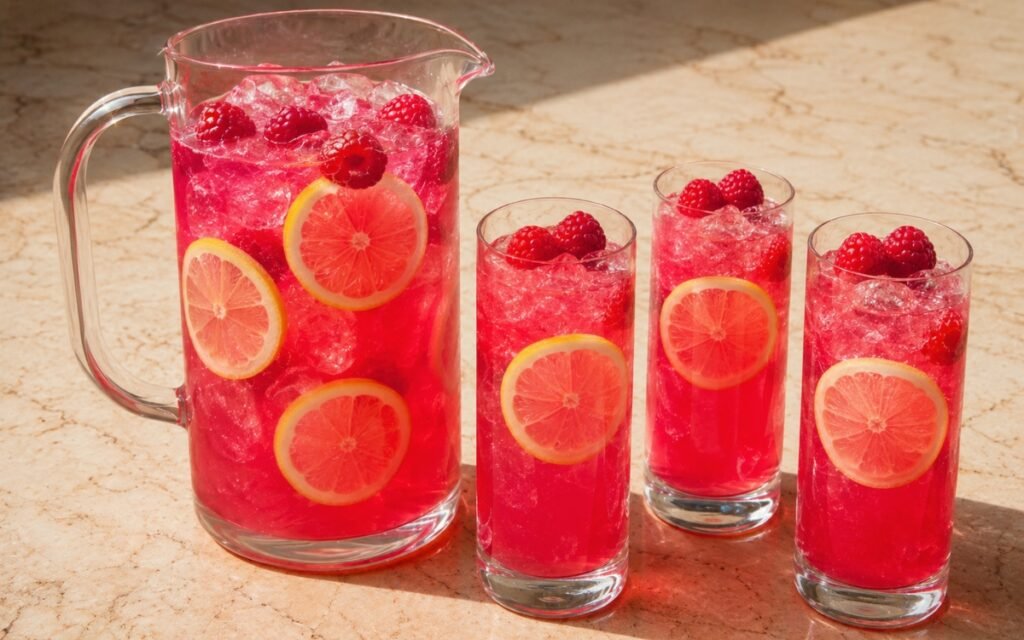
Raspberry Lemonade Pitcher Drink
Honey-raspberry syrup with lemon zest plus fresh raspberries cold-strained — combined with 300ml lemon juice for structural acid, salt, cold water. Vivid and crowd-ready.
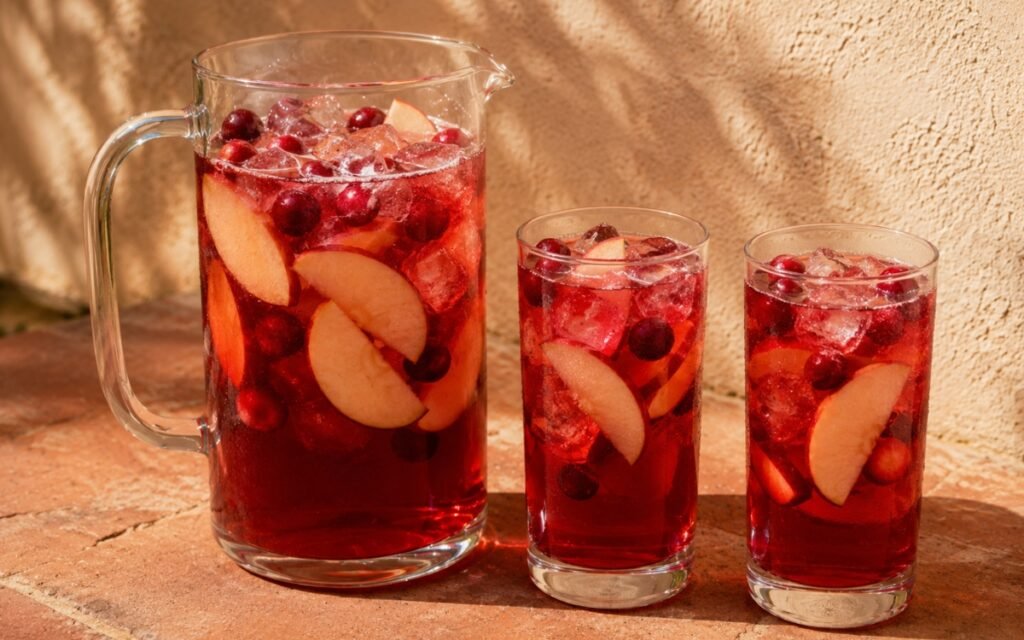
Apple Cranberry Pitcher Drink
Ruby-red apple and cranberry pitcher drink infused with cinnamon, with crisp apple slices and fresh cranberries.
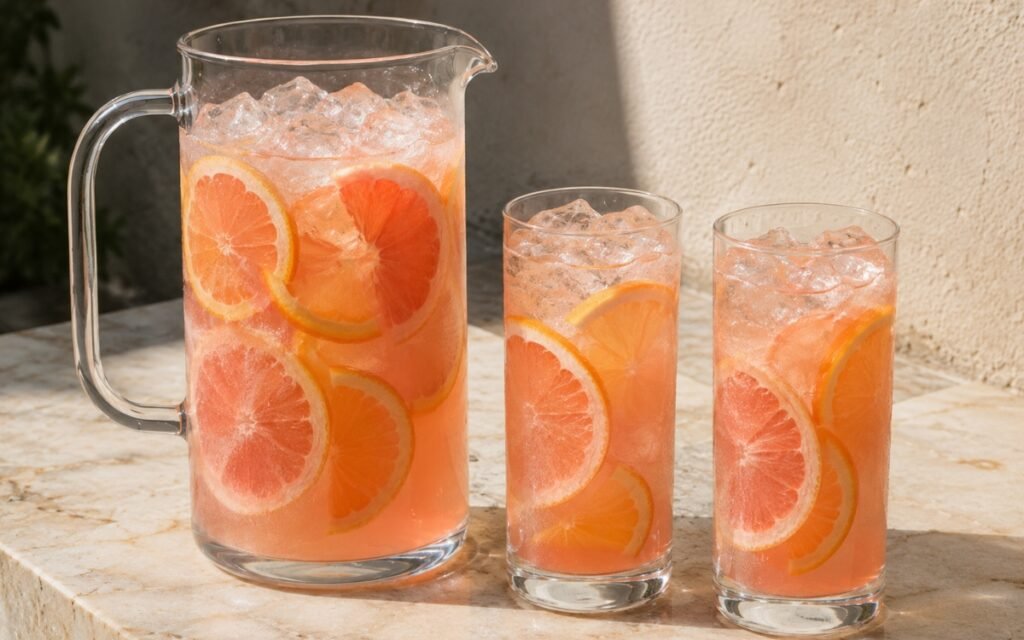
Grapefruit Orange Pitcher Drink
Brown sugar syrup with grapefruit and orange zest steeped 5–8 minutes maximum — 500ml each juice, salt, cold water, chilled. Bright, lightly bitter, and grown-up.
Cherry Lemonade
Ingredients
Method
- Combine the 300g of halved and pitted cherries, 120ml of water, and 110g of honey in a small saucepan. Place over medium-low heat and stir gently until the honey has completely dissolved into the warming water. Bring to a gentle simmer and cook for 8–10 minutes, pressing the cherries lightly with the back of a spoon as they soften to encourage juice release. The liquid should remain fluid and vivid ruby throughout — the same extraction-not-reduction principle applied across all the berry and fruit syrup preparations in this collection. If the liquid is visibly reducing in volume or thickening significantly, lower the heat or add a small splash of water. The extraction goal at 8–10 minutes: cherries that are fully softened, partially broken down, with the surrounding liquid vivid deep ruby and specifically fragrant with cherry’s benzaldehyde character — the warm, slightly almond-adjacent, specifically cherry aromatic that is the fruit’s primary compound. The smell is the accurate indicator of correct extraction: the syrup should smell specifically of cooked cherry — warm, sweet, fruity, and wine-adjacent — rather than of hot sugar water or of overcooked fruit preserves. Remove from the heat. Add the lemon zest immediately and cover. Allow to steep for 10 minutes — the longer off-heat steep in this preparation specifically serves the integration of the lemon zest’s aromatic oils into the warm cherry-honey medium. Cherry’s deeper, more specifically warm aromatic character requires a more thorough citrus oil integration during the steep than lighter, more volatile fruits like peach or raspberry. The 10-minute window produces a specifically more unified cherry-and-citrus aromatic depth in the syrup itself. Strain through a fine-mesh sieve, pressing lightly on the cherry solids — light rather than firm pressing, consistent with the approach for fruits where tannin extraction is a concern. Cherry’s skin and stone residues contain tannin compounds that firm pressing would extract into the syrup at unwanted concentration. Allow to cool completely.
- Add the pulp of 3 lemons to the large pitcher and gently muddle just until the fibres loosen and a small amount of juice releases. The 3-lemon pulp quantity — rather than the 2–3 lemon range of most other preparations — is deliberate: cherry’s deep, warm character benefits from a slightly stronger textural citrus presence in the glass that reinforces the lemon’s structural role against the warmer, more specifically rich berry character.
- Add the 240ml of fresh lemon juice, 120ml of cooled honey-cherry syrup, the pinch of fine sea salt, and the 1 litre of ice-cold water to the pitcher. Stir thoroughly. Taste with the cherry-lemonade assessment: citrus-forward, with cherry’s deep, wine-adjacent warmth as the clearly present secondary register — not dessert-sweet, not syrupy, and specifically not jammy. The combination should taste specifically of two separate flavours that complement each other: lemon’s bright, clean citric acidity and cherry’s deep, warm, slightly almond-adjacent fruitiness. If the cherry’s warmth is too dominant and the lemon’s structural brightness is insufficient, a small additional amount of lemon juice sharpens the balance. If additional cherry character and sweetness is needed, more syrup in 10ml increments. The salt’s function — specifically sharpening the cherry’s benzaldehyde-driven aromatic character at sub-threshold concentration — is particularly important in this preparation.
- Cover and refrigerate for at least 1 hour, ideally 2 hours. Cherry’s benzaldehyde aromatic specifically benefits from the cold integration period — the compound’s distribution through the lemon and honey medium during the cold rest produces a specifically more cohesive, more unified result than the immediately combined version where cherry and lemon remain somewhat distinct. Fill glasses with ice. Pour the chilled cherry lemonade over the ice. Garnish with lemon slices and optional fresh cherries. Serve very cold.