Ingredients
Method
Make the Honey-Cherry Syrup
- Combine the 300g of halved and pitted cherries, 120ml of water, and 110g of honey in a small saucepan. Place over medium-low heat and stir gently until the honey has completely dissolved into the warming water. Bring to a gentle simmer and cook for 8–10 minutes, pressing the cherries lightly with the back of a spoon as they soften to encourage juice release. The liquid should remain fluid and vivid ruby throughout — the same extraction-not-reduction principle applied across all the berry and fruit syrup preparations in this collection. If the liquid is visibly reducing in volume or thickening significantly, lower the heat or add a small splash of water. The extraction goal at 8–10 minutes: cherries that are fully softened, partially broken down, with the surrounding liquid vivid deep ruby and specifically fragrant with cherry's benzaldehyde character — the warm, slightly almond-adjacent, specifically cherry aromatic that is the fruit's primary compound. The smell is the accurate indicator of correct extraction: the syrup should smell specifically of cooked cherry — warm, sweet, fruity, and wine-adjacent — rather than of hot sugar water or of overcooked fruit preserves. Remove from the heat. Add the lemon zest immediately and cover. Allow to steep for 10 minutes — the longer off-heat steep in this preparation specifically serves the integration of the lemon zest's aromatic oils into the warm cherry-honey medium. Cherry's deeper, more specifically warm aromatic character requires a more thorough citrus oil integration during the steep than lighter, more volatile fruits like peach or raspberry. The 10-minute window produces a specifically more unified cherry-and-citrus aromatic depth in the syrup itself. Strain through a fine-mesh sieve, pressing lightly on the cherry solids — light rather than firm pressing, consistent with the approach for fruits where tannin extraction is a concern. Cherry's skin and stone residues contain tannin compounds that firm pressing would extract into the syrup at unwanted concentration. Allow to cool completely.
Build the Lemon Structure
- Add the pulp of 3 lemons to the large pitcher and gently muddle just until the fibres loosen and a small amount of juice releases. The 3-lemon pulp quantity — rather than the 2–3 lemon range of most other preparations — is deliberate: cherry's deep, warm character benefits from a slightly stronger textural citrus presence in the glass that reinforces the lemon's structural role against the warmer, more specifically rich berry character.
Assemble and Adjust
- Add the 240ml of fresh lemon juice, 120ml of cooled honey-cherry syrup, the pinch of fine sea salt, and the 1 litre of ice-cold water to the pitcher. Stir thoroughly. Taste with the cherry-lemonade assessment: citrus-forward, with cherry's deep, wine-adjacent warmth as the clearly present secondary register — not dessert-sweet, not syrupy, and specifically not jammy. The combination should taste specifically of two separate flavours that complement each other: lemon's bright, clean citric acidity and cherry's deep, warm, slightly almond-adjacent fruitiness. If the cherry's warmth is too dominant and the lemon's structural brightness is insufficient, a small additional amount of lemon juice sharpens the balance. If additional cherry character and sweetness is needed, more syrup in 10ml increments. The salt's function — specifically sharpening the cherry's benzaldehyde-driven aromatic character at sub-threshold concentration — is particularly important in this preparation.
Chill and Serve
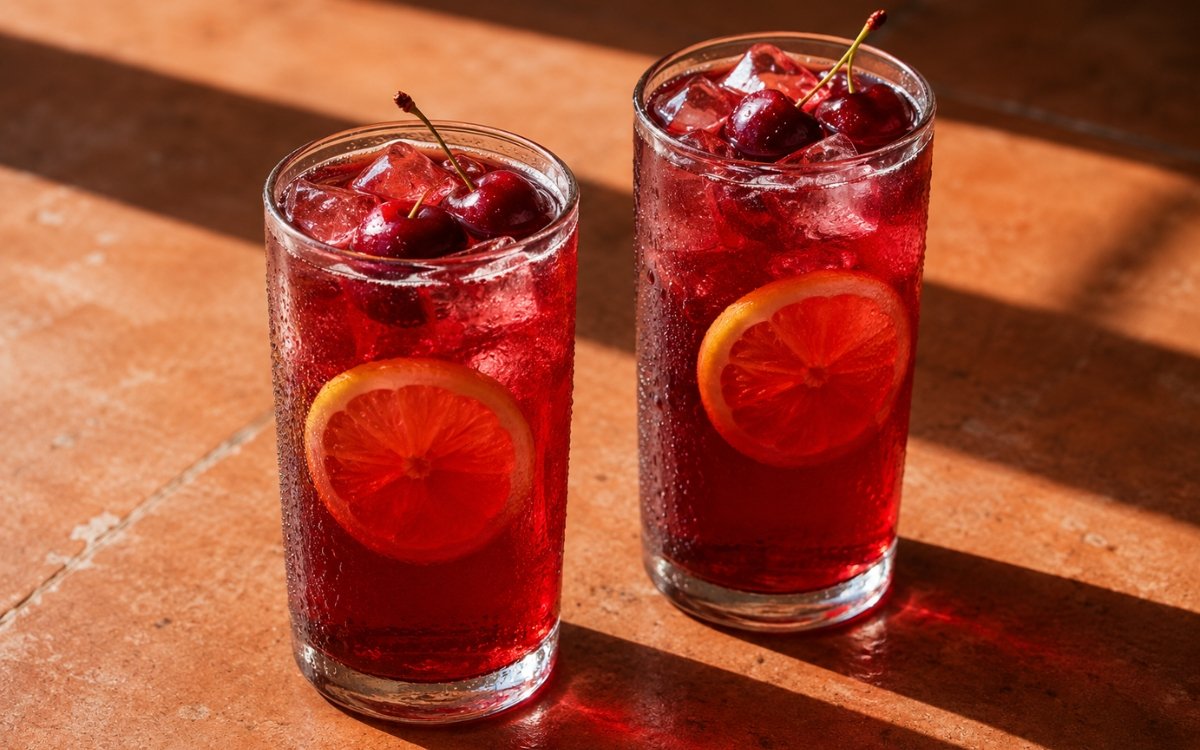
- Cover and refrigerate for at least 1 hour, ideally 2 hours. Cherry's benzaldehyde aromatic specifically benefits from the cold integration period — the compound's distribution through the lemon and honey medium during the cold rest produces a specifically more cohesive, more unified result than the immediately combined version where cherry and lemon remain somewhat distinct. Fill glasses with ice. Pour the chilled cherry lemonade over the ice. Garnish with lemon slices and optional fresh cherries. Serve very cold.
Notes
Cherry variety affects the finished lemonade significantly. Sour cherries — Morello, Montmorency — have higher citric acid content, more assertive tartness, and a more specifically complex, more wine-adjacent character. Sweet cherries — Bing, Royal Ann, Lapins — have higher natural sugar, more specifically warm and round flavour, and require less honey in the syrup. Both produce excellent cherry lemonade; the honey quantity should be adjusted accordingly — closer to 90g for Morello's natural tartness, and the full 110g for sweet varieties' lower natural acid.
The benzaldehyde character that makes cherry specifically identifiable is present in higher concentration in darker cherry varieties than lighter ones. Black cherries and dark Bing varieties produce the most vivid, most specifically wine-adjacent honey syrup; lighter varieties produce a more subtle, more specifically sweet result.