
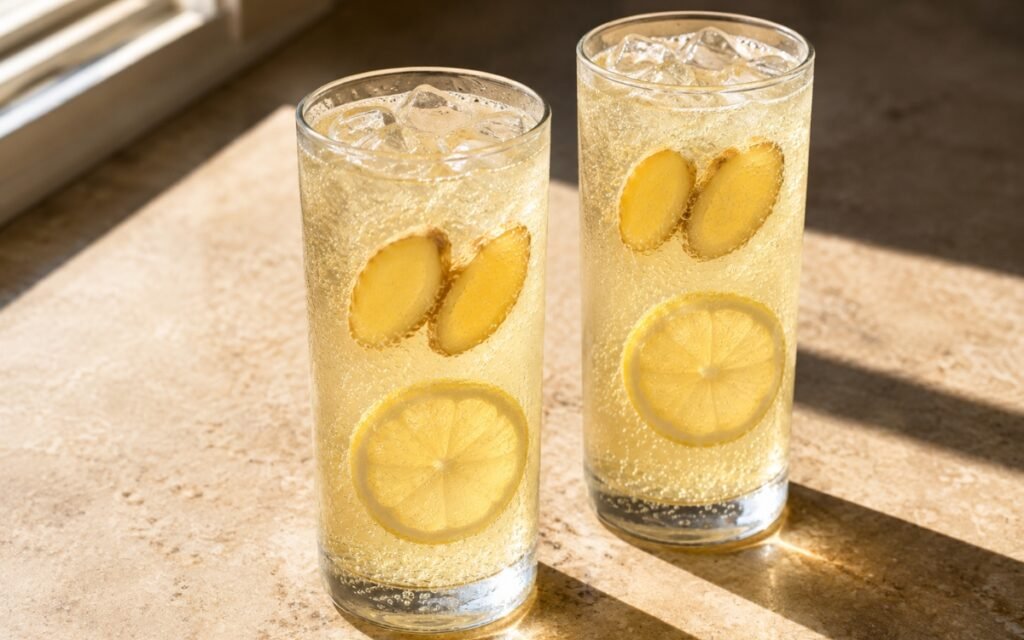
Sparkling Ginger Lemonade
Ginger and carbonation are one of the most specifically compatible flavour-format pairings in this collection — not coincidentally, since the historic ginger beer and ginger ale tradition is built on exactly this combination. Carbonation specifically amplifies ginger’s primary heat compound, gingerol, in the same way it amplifies all aromatic volatile compounds: the rising bubbles carry gingerol molecules to the surface and into the immediate airspace, making each sip’s first impression more specifically warming and more immediately ginger-forward than still preparations at equivalent concentration. The same mechanism makes the sparkling ginger lemonade taste more vividly of ginger than an identical still version — which is why the ginger syrup’s calibration range (35–50g fresh ginger) is specifically wider here than in still preparations, allowing the preparation to be adjusted for the combined effect of carbonation-amplification and raw ginger intensity. The ginger is fully simmered for 8–10 minutes rather than briefly steeped off heat — producing the cooked-ginger character where some gingerols have converted to the warmer, more rounded shogaols, combined with the still-active raw gingerol character of the remaining unconverted fraction. The base chilled separately before the club soda is added at the last possible moment — the same carbonation-preservation protocol from the Classic Sparkling Lemonade. Sharp, lively, and specifically unapologetically alive.
Prep Time : 15 min
Cook Time : 8–10 min
Servings : 8
15 min
8–10 min
8
Ingredients
For the Lemon Structure
• Clean pulp or segments from 2–3 lemons — seeds and tough membranes removed; no white pith
For the Ginger-Honey Syrup
• 240ml water
• 90–110g mild honey — start with 90g; adjust for ginger heat level — this one on Amazon
• 35–50g fresh ginger — thinly sliced; 35g for a gentler warming heat, 50g for assertive spice
• Zest of 1 lemon — yellow part only; added off heat
For the Lemonade Base
• 240ml fresh lemon juice — approximately 5–6 lemons
• 120–150ml ginger-honey syrup — from above; start with 120ml
• Pinch of fine sea salt
For Serving — Added Right Before Serving
• 900ml–1 litre ice-cold club soda — poured with side pour and single gentle stir
• Ice cubes
• Lemon slices
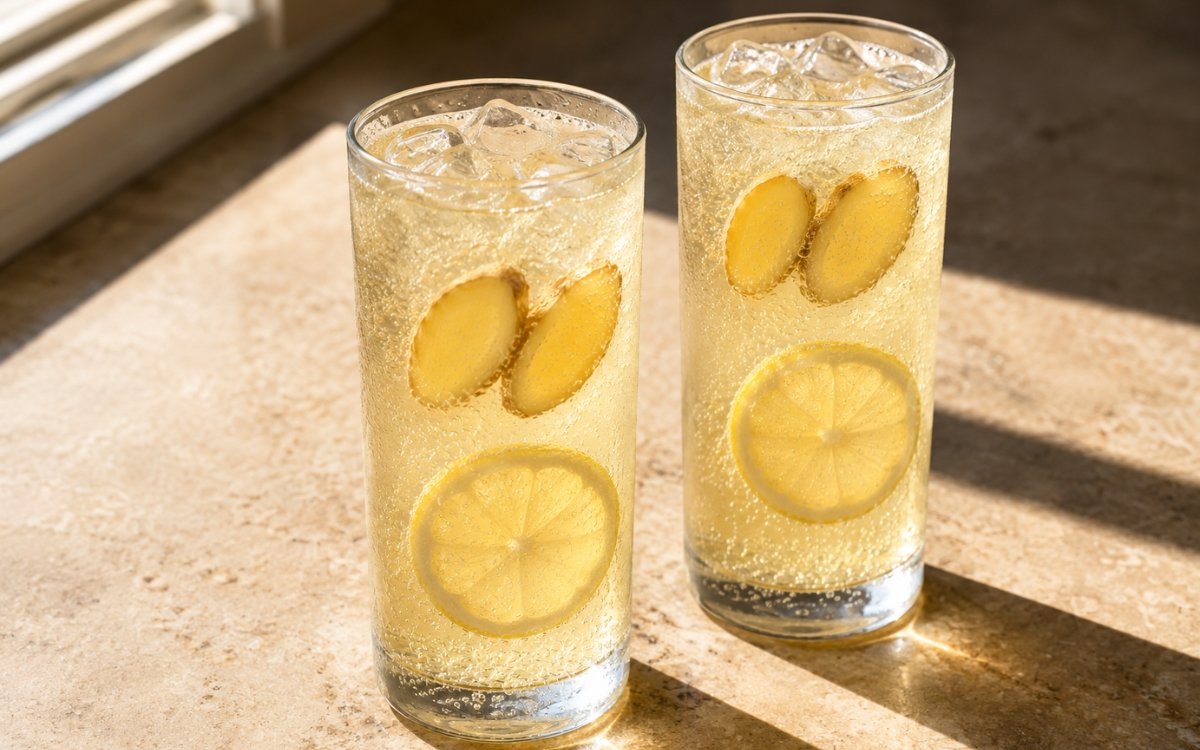
• Thin fresh ginger slices — optional
This post may contain affiliate links. As an Amazon Associate I earn from qualifying purchases, at no additional cost to you.
Directions
- Make the Ginger-Honey Syrup
Combine the 240ml of water, 90g of honey, and the thinly sliced fresh ginger in a small saucepan. The ginger must be thinly sliced — approximately 2–3mm — rather than roughly chopped or grated; thin slices maximise the surface area available for extraction during the simmer while allowing complete, easy removal during straining and avoiding the fine ginger fibres that result from grating blending into the finished syrup. Bring to a gentle simmer over medium-low heat. Cook for 8–10 minutes — the full cooking treatment applied to ginger in preparations throughout this collection where cooked ginger character is the specific goal. At 8–10 minutes of gentle simmering, a meaningful proportion of the raw gingerols (responsible for ginger’s sharp, raw, biting heat) have converted to shogaols (responsible for ginger’s warmer, more rounded, building heat) through the heat-catalysed dehydration reaction. The finished syrup contains both the remaining unconverted gingerol fraction and the newly formed shogaols — a more complex, warmer, more rounded ginger character than either raw ginger alone or exhaustively cooked ginger would produce. The ginger’s aroma should be clearly present, specifically spicy, and specifically fresh-ginger rather than the flat dried-ginger character of over-cooked preparations. Remove from the heat. Add the lemon zest immediately and cover. Steep for 5–8 minutes. Strain through a fine-mesh sieve, pressing gently but firmly on the ginger slices to extract the maximum flavoured syrup. Allow to cool completely. - Prepare the Lemon Pulp and Build the Concentrated Base
Segment 2–3 lemons, removing all seeds, membranes, and pith. Add to the large pitcher and mash gently. Add the 240ml of fresh lemon juice, 120ml of the cooled ginger-honey syrup, and the pinch of fine sea salt. Stir. Note the base construction: there is no still water in this preparation. The entire liquid volume is the lemon juice and the syrup — a deliberately concentrated base that will only reach the correct drinking dilution when the club soda is added at serving. This is specifically different from the Classic Sparkling Lemonade where a small amount of still water is included in the base; the ginger syrup’s larger volume provides enough liquid for an even consistency in the pitcher while maintaining the higher concentration appropriate for dilution with the full volume of sparkling water. Taste the concentrated base: it should taste very sharp, very intensely gingery, and much more concentrated than a comfortable-to-drink lemonade — this is correct. The intensity at this stage is the tell that the base is properly calibrated for club soda dilution. - Chill the Base
Refrigerate for 1–2 hours until completely cold. The base must be completely cold before the club soda is added — the same temperature management principle as the Classic Sparkling Lemonade. Cold base plus cold club soda maintains maximum carbonation from the moment of combination through the moment of serving. - Add Club Soda and Serve Immediately
Immediately before serving, remove the chilled base from the refrigerator. Pour the 900ml of ice-cold club soda gently down the side of the pitcher — the side pour dispersing the soda’s kinetic energy against the pitcher wall rather than directly into the concentrated base, minimising the CO₂ release from impact. Stir once or twice only with a single slow movement. Taste: the ginger heat should arrive immediately and build slightly through the sip; the lemon’s bright acidity should be clearly present; the carbonation should be lively and fully present. If the ginger heat is more aggressive than desired, a small additional amount of club soda (up to 100ml more) dilutes it while maintaining the carbonation. If additional sweetness is needed, a small amount of the remaining ginger syrup stirred in with a single pulse corrects the balance. Fill glasses with ice. Pour the sparkling ginger lemonade from close range — not from height, which releases carbonation during the fall. Garnish with a lemon slice and an optional thin fresh ginger slice for visual reference and the initial aromatic impression of fresh ginger at the rim. Serve immediately.
*Notes :
- Fresh ginger selection affects the finished syrup’s character significantly. Young ginger — available in spring and early summer — has a thinner, more papery skin, lower fibre content, and a milder, more specifically fresh, more citrus-adjacent heat character than mature ginger. Mature ginger — the standard supermarket variety year-round — has a more assertive, more specifically hot, more fully developed gingerol and shogaol profile. Both work well in this preparation; the quantity calibration should be adjusted for the specific intensity — typically 35g of mature ginger achieves what 50g of young ginger would provide.
- The carbonation’s specific enhancement of ginger heat is the preparation’s most interesting sensory feature. The mechanism involves two simultaneous effects: the CO₂ bubbles carry gingerol and shogaol molecules to the surface as they rise, increasing aromatic exposure at each sip; and the carbonic acid formed by dissolved CO₂ specifically activates TRPV1 pain receptors — the same receptors activated by capsaicin (chili) and gingerols — in combination with the ginger’s own TRPV1 activity, producing a more specifically stimulating warm sensation per unit of ginger concentration than still liquid at equivalent ginger content.
Why This Recipe Works
This recipe works because the ginger is fully simmered for the 8–10 minutes that develop both shogaol warmth and remaining gingerol sharpness simultaneously. The carbonation-preservation protocol — cold base, cold soda, side pour, single stir, immediate service — maintains maximum CO₂ through every glass.
The honey’s warm, rounded sweetness is specifically appropriate against ginger’s heat. And the no-still-water construction means the base provides the concentrated flavour that the club soda dilutes to exactly the correct drinking strength.
Ingredient Breakdown
Fresh Ginger Simmered 8–10 Minutes (Cooked Ginger Character)
The warm, building heat — gingerol-to-shogaol conversion producing rounded warmth; remaining gingerol fraction providing fresh ginger bite.
No Still Water in the Base
The concentration calibration — the entire dilution is performed by the club soda at serving; base is intentionally concentrated.
Cold Base + Cold Soda + Side Pour + Single Stir
The carbonation preservation protocol — same four-point approach as Classic Sparkling Lemonade.
Honey as the Syrup Sweetener
The rounded, warm sweetness — specifically appropriate against ginger’s heat; honey’s warmth tonally compatible with cooked ginger’s shogaol character.
Carbonation Amplifying Ginger Heat
The specific synergy — CO₂ bubble transport of gingerols to the surface plus carbonic acid’s TRPV1 receptor co-activation producing more specifically warming effect per unit of ginger.
Flavor Structure Explained
This Sparkling ginger lemonade follows a high-energy balance model:
- Sharp citrus core (fresh lemon juice)
- Immediate warming spice (ginger)
- Rounded balancing sweetness (honey)
- Lively sparkling structure (carbonation)
- Flavor-intensifying salinity (pinch of salt)
Lemon and ginger define the foundation together, both delivering assertive sharpness that builds intensity rather than softening one another. Lemon contributes vivid citric brightness, while ginger adds immediate warmth followed by lingering heat that expands across the palate. Honey provides the essential counterbalance, smoothing the sharper edges without muting the drink’s energetic character. Carbonation transforms the profile further by amplifying both the citrus brightness and the ginger’s spice, making the drink feel physically lively and stimulating. A small amount of salt intensifies the clarity of both ingredients, sharpening the lemon’s acidity and increasing the aromatic impact of the ginger.
Common Mistakes to Avoid
- Adding Club Soda in Advance – The carbonation depletes progressively. Always add at the last possible moment before serving.
- Pouring Club Soda Directly Into the Centre of the Base – The kinetic energy impact releases CO₂ rapidly. Always side pour.
- Serving Warm Base – Cold base combined with cold soda specifically maintains carbonation. Always chill completely.
- Under-Simmering the Ginger – Brief steeping produces a sharp, raw ginger note; 8–10 minutes of simmering develops the rounded shogaol warmth that makes the preparation specifically more complex. Always the full simmer.
- Not Adjusting for Ginger Variety – Young ginger is milder per gram than mature. Always calibrate the quantity to the specific ginger’s intensity.
Variations
Extra Heat Version
Increase the ginger to 60–70g and reduce the honey to 80g — the concentrated heat against the sharper sweetness produces the most assertively spiced version.
With Fresh Mint
Add 12 lightly clapped fresh mint leaves to the chilled base for 15 minutes before adding the soda — removed before the soda addition. The mint’s cool freshness alongside ginger’s warming heat is a specifically stimulating combination.
With Lime
Replace the lemon juice with lime juice at the same quantity — lime’s sharper, more tropical acid produces a specifically more assertive, more specifically refreshing result alongside the ginger.
With Turmeric
Add ¼ tsp of ground turmeric to the saucepan alongside the ginger during the simmer — the turmeric’s earthy warmth alongside ginger produces a more complex, more specifically anti-inflammatory-direction version.
Storage & Make-Ahead
Ginger-honey syrup can be refrigerated in a sealed jar for up to 1 week. Its ginger flavor is at its brightest and most vibrant within the first 3 to 4 days.
The concentrated lemon base, without the club soda, can be refrigerated in a sealed container for up to 2 days. For the best carbonation and freshness, add the club soda immediately before serving.
Once assembled, sparkling ginger lemonade is not suitable for storage and should be served within minutes of adding the club soda.
Frequently Asked Questions
Why does carbonation specifically enhance ginger heat?
Two mechanisms work simultaneously: CO₂ bubbles rising through the drink carry gingerol and shogaol molecules to the surface, increasing aromatic exposure at each sip. And carbonic acid (formed by dissolved CO₂) specifically activates TRPV1 heat receptors in the mouth — the same receptors activated by ginger’s gingerols — in combination with the ginger’s own heat, producing a more stimulating warming sensation than still liquid at equivalent ginger concentration.
Why is ginger simmered for 8–10 minutes here rather than briefly steeped as in some other preparations?
This preparation specifically wants the cooked-ginger character where gingerols have partially converted to shogaols through the heat-catalysed dehydration reaction. Shogaols have a warmer, more rounded, more building heat than raw gingerols’ sharper, more immediate bite. The 8–10 minute simmer produces both fractions — remaining gingerol sharpness and newly formed shogaol warmth — in a specifically more complex combination than either brief cold infusion or extended high-heat cooking would produce.
Why no still water in the base?
The entire dilution of the concentrated base occurs when the club soda is added at serving. Including still water would dilute the base ahead of the soda, producing a more dilute concentration at the moment of serving rather than the precisely calibrated concentration that the soda dilutes to the correct strength.
What other ginger and lemon-forward preparations share this character?
The Classic Sparkling Lemonade shares the sparkling format with the same carbonation-preservation protocol — the direct structural comparison without the ginger’s heat. The Lemon Ginger Tonic Mocktail shares the lemon-and-ginger combination with tonic water’s specific quinine bitterness rather than club soda’s neutral carbonation — a more adult, more dry-finishing direction. The Apple Ginger Mint Fizz Mocktail shares the ginger-forward sparkling direction with green apple’s sharp acidity and mint’s cool freshness alongside the ginger’s heat.
Nutrition Facts
( per serving )
Calories
~65 kcal
Protein
0 g
Fat
0 g
Carbs
17 g
Calories
~65 kcal
Protein
0 g
Fat
0 g
Carbs
17 g
Related Recipes
Related Recipes

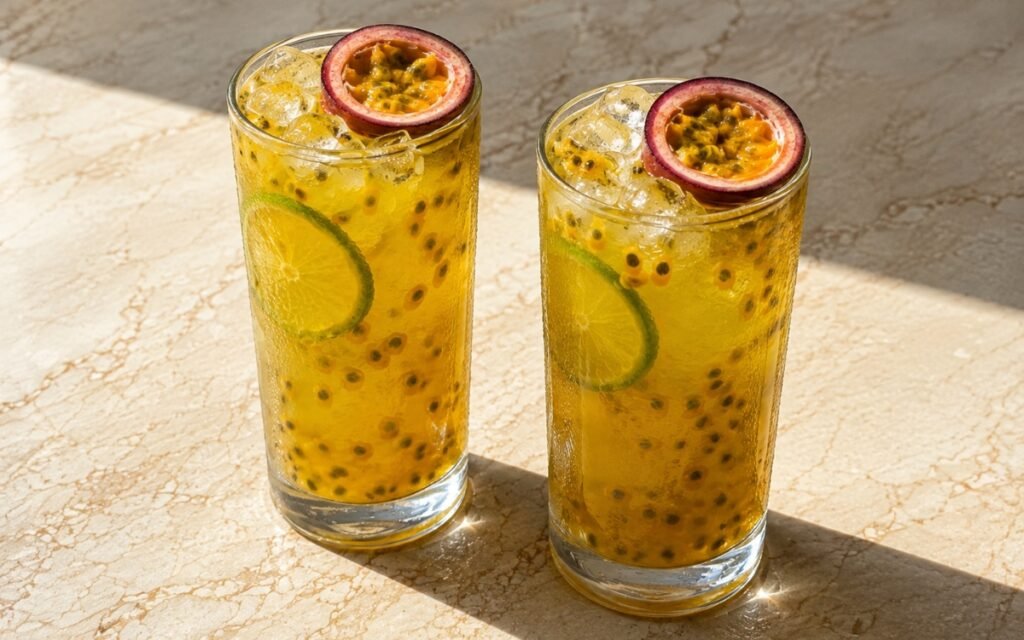
Passion Fruit Lime Lemonade
Fresh lemon and lime juice combined with entirely uncooked passion fruit pulp for a bright, tart, vivid tropical lemonade.
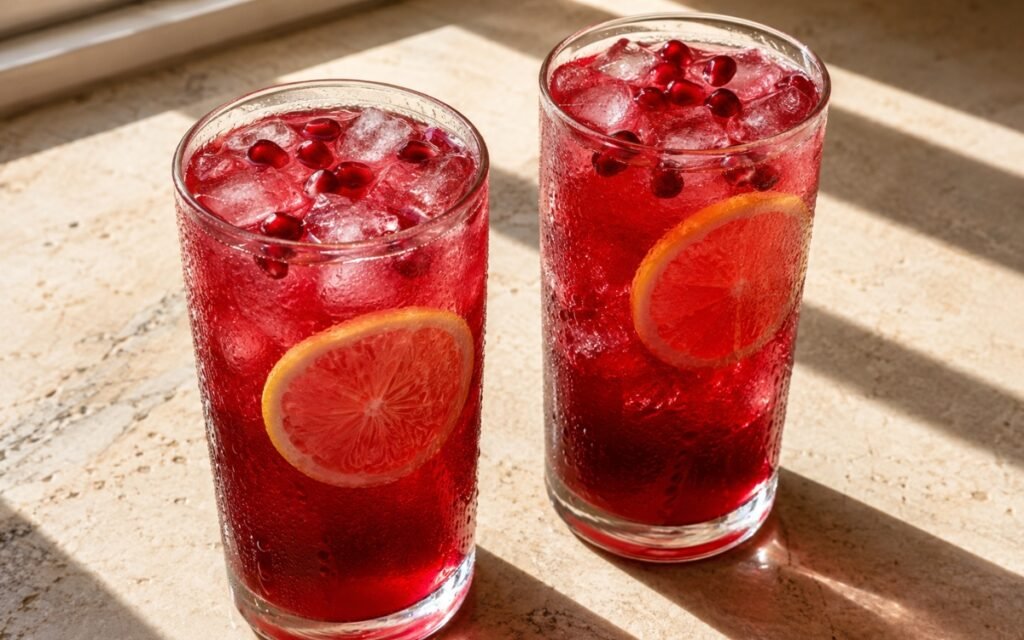
Pomegranate Lemonade
Honey-lemon syrup with zest off heat, 500ml pure pomegranate juice — fresh lemon, salt for anti-astringency, cold water, chilled. Ruby-red and grown-up.
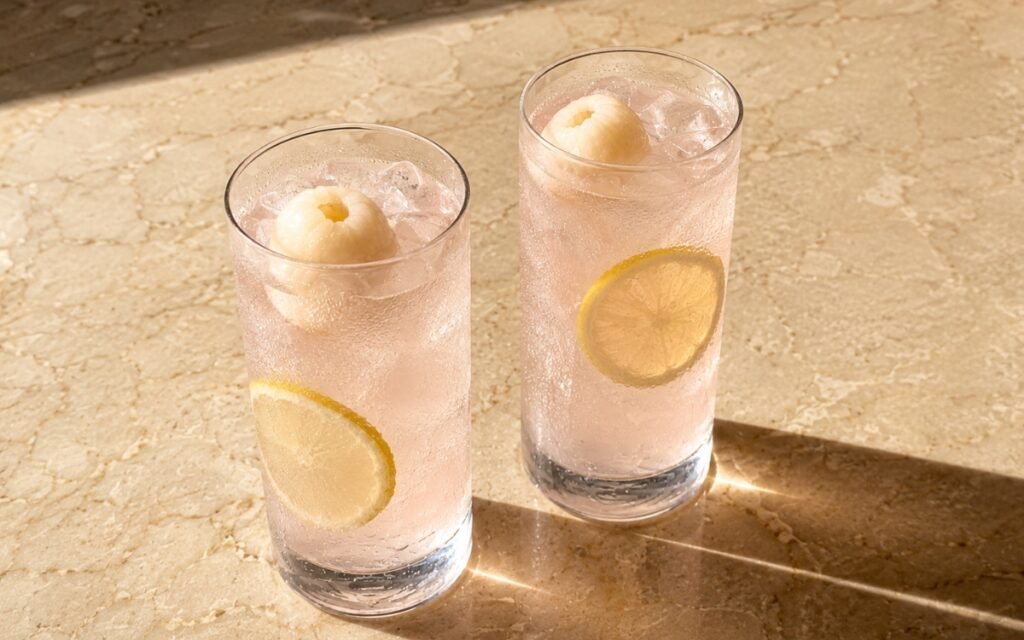
Lychee Lemonade
Cold-extracted lemon zest and juice combined with blended, twice-strained lychee for a pale, delicate, floral lemonade.
You might also like
You might also like
Southern Sweet Tea (Light Version)
Black tea at full boil for 5 minutes, white sugar dissolved into hot brew immediately — cooled, chilled 1–2 hours. Classic Southern character, lighter and more drinkable.
Lemon Iced Tea Pitcher Drink
Ceylon tea at 90–95°C for 3 minutes, lemon zest off heat for aromatic oils — cold lemon juice for structural acid, cold water, chilled. Tea-forward and lemon-bright.
Green Tea Citrus Pitcher
Green tea at 75–80°C for 2–2½ minutes, dual citrus zest off heat — 500ml orange juice for body, lemon juice, salt, cold water, chilled. Delicate and citrus-bright.
Sparkling Ginger Lemonade
Ingredients
Method
- Combine the 240ml of water, 90g of honey, and the thinly sliced fresh ginger in a small saucepan. The ginger must be thinly sliced — approximately 2–3mm — rather than roughly chopped or grated; thin slices maximise the surface area available for extraction during the simmer while allowing complete, easy removal during straining and avoiding the fine ginger fibres that result from grating blending into the finished syrup. Bring to a gentle simmer over medium-low heat. Cook for 8–10 minutes — the full cooking treatment applied to ginger in preparations throughout this collection where cooked ginger character is the specific goal. At 8–10 minutes of gentle simmering, a meaningful proportion of the raw gingerols (responsible for ginger’s sharp, raw, biting heat) have converted to shogaols (responsible for ginger’s warmer, more rounded, building heat) through the heat-catalysed dehydration reaction. The finished syrup contains both the remaining unconverted gingerol fraction and the newly formed shogaols — a more complex, warmer, more rounded ginger character than either raw ginger alone or exhaustively cooked ginger would produce. The ginger’s aroma should be clearly present, specifically spicy, and specifically fresh-ginger rather than the flat dried-ginger character of over-cooked preparations. Remove from the heat. Add the lemon zest immediately and cover. Steep for 5–8 minutes. Strain through a fine-mesh sieve, pressing gently but firmly on the ginger slices to extract the maximum flavoured syrup. Allow to cool completely.
- Segment 2–3 lemons, removing all seeds, membranes, and pith. Add to the large pitcher and mash gently. Add the 240ml of fresh lemon juice, 120ml of the cooled ginger-honey syrup, and the pinch of fine sea salt. Stir. Note the base construction: there is no still water in this preparation. The entire liquid volume is the lemon juice and the syrup — a deliberately concentrated base that will only reach the correct drinking dilution when the club soda is added at serving. This is specifically different from the Classic Sparkling Lemonade where a small amount of still water is included in the base; the ginger syrup’s larger volume provides enough liquid for an even consistency in the pitcher while maintaining the higher concentration appropriate for dilution with the full volume of sparkling water. Taste the concentrated base: it should taste very sharp, very intensely gingery, and much more concentrated than a comfortable-to-drink lemonade — this is correct. The intensity at this stage is the tell that the base is properly calibrated for club soda dilution.
- Refrigerate for 1–2 hours until completely cold. The base must be completely cold before the club soda is added — the same temperature management principle as the Classic Sparkling Lemonade. Cold base plus cold club soda maintains maximum carbonation from the moment of combination through the moment of serving.
- Immediately before serving, remove the chilled base from the refrigerator. Pour the 900ml of ice-cold club soda gently down the side of the pitcher — the side pour dispersing the soda’s kinetic energy against the pitcher wall rather than directly into the concentrated base, minimising the CO₂ release from impact. Stir once or twice only with a single slow movement. Taste: the ginger heat should arrive immediately and build slightly through the sip; the lemon’s bright acidity should be clearly present; the carbonation should be lively and fully present. If the ginger heat is more aggressive than desired, a small additional amount of club soda (up to 100ml more) dilutes it while maintaining the carbonation. If additional sweetness is needed, a small amount of the remaining ginger syrup stirred in with a single pulse corrects the balance. Fill glasses with ice. Pour the sparkling ginger lemonade from close range — not from height, which releases carbonation during the fall. Garnish with a lemon slice and an optional thin fresh ginger slice for visual reference and the initial aromatic impression of fresh ginger at the rim. Serve immediately.