
Green Apple Ginger Mint Fizz Mocktail
Two preparations built in parallel: the honey infused cold with ginger, lime zest, mint, and salt for 30 minutes — the cold infusion technique specifically preserving the ginger’s sharpest, freshest aromatic edge rather than the rounded, cooked-warm character that heat produces, while keeping the mint’s contribution clean and fresh rather than herbal. Simultaneously, the green apples processed skin-on with lime juice and water until smooth, then pressed through cheesecloth with maximum force until the pulp is dry — producing the clear, vivid, specifically sharp apple juice that carries the entire flavour of a Granny Smith or other green variety without any fibrous pulp texture. The two bases combined and strained once more. Green apple’s specific combination of high malic acid and low sugar — the sharpest, most bright of all apple varieties — providing the primary flavour register that makes this specifically more compelling than a sweet, mild apple drink. The fizz that is crisp, cold, and completely refreshing from the first sip.
Prep Time : 15 min
Cook Time : 0 min
Servings : 4
15 min
0 min
4
Ingredients
For the Green Apple Base
• 3 green apples — approximately 500g total, cores removed, cut into small pieces — skin on
• 30ml fresh lime juice
• 30ml water
• 60g honey — this one on Amazon
• 20g fresh ginger, thinly sliced
• Zest of 1 lime
• 10 fresh mint leaves — gently clapped before adding
• Pinch of fine sea salt
For the Garnish
• 4 thin slices green apple — cut immediately before serving to prevent browning
• 4 small fresh mint sprigs
This post may contain affiliate links. As an Amazon Associate I earn from qualifying purchases, at no additional cost to you.
Directions
- Cold-Infuse the Honey Base
Combine the 60g of honey, 20g of thinly sliced fresh ginger, zest of 1 lime, and a pinch of fine sea salt in a bowl or sealed container. Clap the 10 fresh mint leaves between your palms and add immediately. Stir the mixture well — working the ginger slices and lime zest through the honey to ensure contact between the aromatic surfaces and the honey’s sugar matrix. Cover and refrigerate for 30 minutes. The cold infusion technique applied to ginger here produces a specifically different ginger character than the simmered ginger in the pomegranate sparkler, pear ginger preparation, and other cooked-ginger preparations in this collection. Cold-extracted ginger retains the maximum concentration of gingerol — the raw pungent compound responsible for fresh ginger’s sharp, bright, specifically biting heat — without the heat-conversion of gingerols into the softer, more rounded shogaols that cooking produces. The result is a ginger character that is sharper, more immediate, and more specifically like freshly bitten raw ginger — specifically appropriate here because the green apple’s own sharpness requires a ginger note of comparable vividness rather than the rounded warmth that would disappear against the apple’s malic acid. Honey’s viscosity allows it to act as the infusion medium for the aromatic compounds from the ginger, lime zest, and mint over the 30-minute period — the fat-soluble terpene compounds from the lime zest and the volatile aromatic oils from the clapped mint leaves absorbing into the honey’s sugar matrix in a way that watery liquid would not retain as effectively. - Process and Press the Green Apples
While the honey infusion refrigerates, prepare the apple juice. Cut the 3 green apples — skin on, cores removed — into rough 3–4cm pieces. Green apple skin contributes the concentrated aromatic compounds alongside the flesh and the additional malic acid that makes the skin-on juice more vividly sharp than peeled. Add to a food processor or high-speed blender with the 30ml of fresh lime juice and 30ml of water. Process at high speed for 60–90 seconds until the mixture is completely smooth — a pale green, slightly frothy purée with no visible apple chunks. Transfer the processed apple mixture to a cheesecloth-lined sieve or a clean, lint-free kitchen towel set over a large bowl. Gather the cloth into a bundle and twist firmly, progressively tightening the twist until maximum pressure is applied to the apple pulp. Squeeze and press until the pulp inside feels nearly dry and no more liquid drips. The extraction is deliberately forceful — unlike the light pressing used for elderflower zest or cherry solids, the apple pulp requires the full mechanical force of twisting to extract its juice completely. An electric juicer, if available, produces an equivalent result with less physical effort — though the food processor-and-cheesecloth method extracts the fine aromatic compounds from the skin surface particularly effectively through the brief processing period. The fresh apple juice should be a clear-to-slightly-cloudy pale green, specifically fragrant — the sharp, bright, distinctly Granny Smith-adjacent malic acid character present from the first smell. - Combine, Strain, and Chill
After the 30-minute cold infusion, strain the honey-ginger mixture through a fine-mesh sieve over a clean bowl — pressing lightly on the ginger slices and discarding all solids including the mint and lime zest. The strained honey infusion should be slightly runnier than plain honey from the moisture it has absorbed and specifically fragrant — ginger’s sharp heat, lime’s aromatic brightness, and mint’s clean freshness all present as a unified aromatic. Pour the pressed green apple juice into the strained honey infusion. Stir well until the honey infusion is completely dissolved into the apple juice — no visible honey residue remaining. Strain the combined mixture once more through the fine-mesh sieve for the cleaner, smoother texture that the second straining provides — removing any remaining pulp particles or ginger fibres. Transfer to the refrigerator and chill completely before serving. - Assemble and Serve
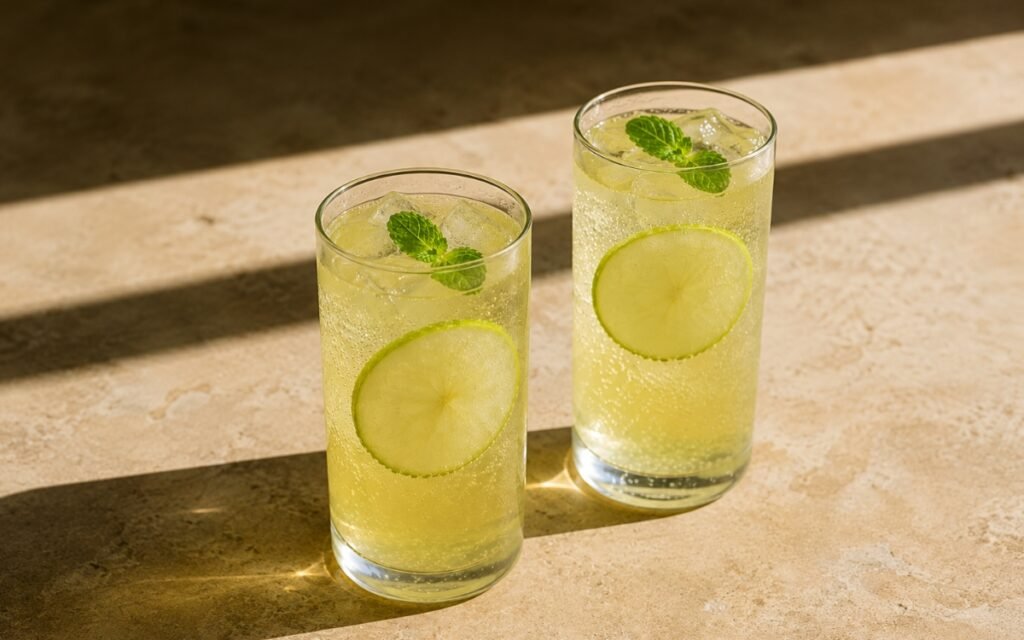
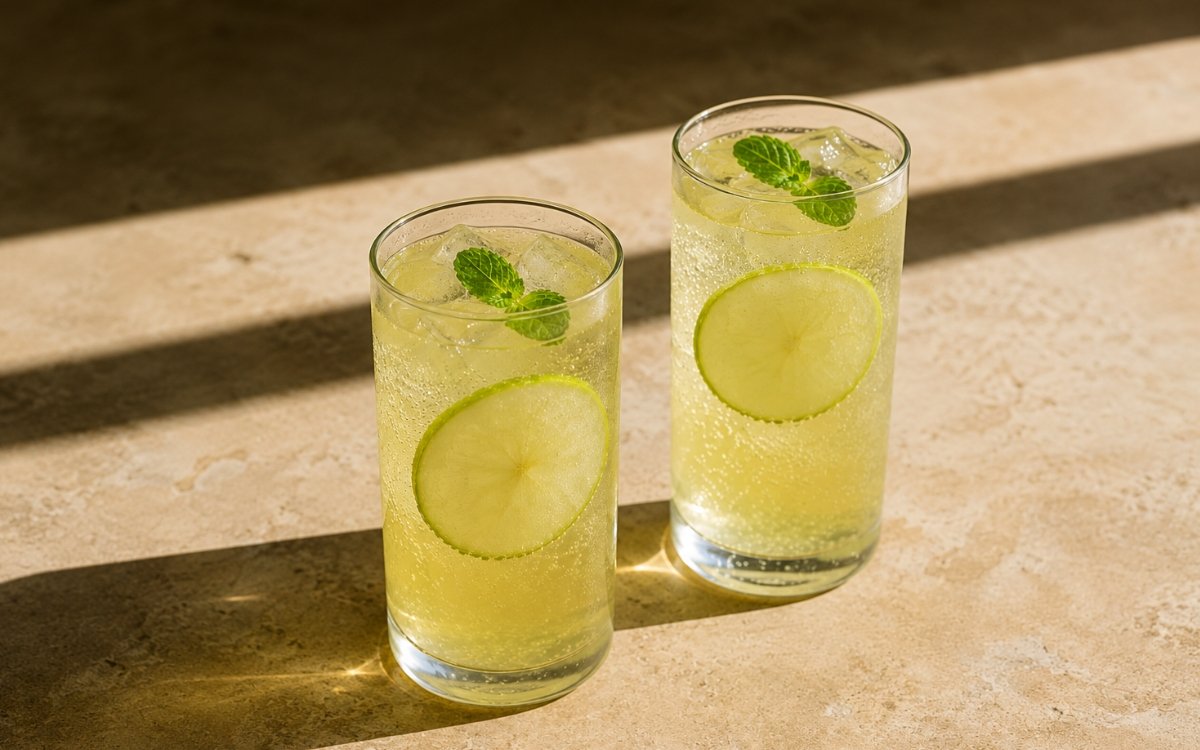
Slice the garnish apple immediately before assembling the glasses — green apple oxidises rapidly and turns brown within 5 minutes of cutting. A brief dip in cold water with a squeeze of lime juice delays the browning if garnishing needs to be prepared slightly ahead. Fill four tall glasses generously with ice. Divide the chilled green apple base evenly — approximately 80–85ml per glass. Stir briefly against the ice. Top each glass with approximately 125ml of chilled club soda, pouring gently down the inner side. Stir once or twice gently. Slip a thin green apple slice beneath the ice in each glass — the skin’s green edge visible against the pale liquid. Place a small mint sprig on top of the ice. Serve immediately.
*Notes :
- Green apple variety selection is the most consequential choice in this recipe. Granny Smith — the archetypal green apple — has the highest malic acid concentration of any widely available apple variety and the lowest sugar content, producing the sharpest, most specifically vivid apple juice of any apple. The resulting base is specifically bright and tart rather than sweet and mild. Bramley apples, where available, have an even higher acidity but are primarily a cooking variety; Golden Delicious or Gala in their green-unripe form are milder and less specifically sharp. Always the sharpest, most acidic green apple available for this preparation.
- The cold infusion approach for the honey base — rather than the heated syrup approach — is specifically appropriate for this preparation because the green apple’s malic acid character is sharp and vivid without any cooked or concentrated quality. A warm ginger syrup’s rounded, cooked-warm ginger character would be tonally inconsistent with the raw, sharp apple; cold-extracted ginger’s bright, biting freshness matches and amplifies the apple’s own sharp character.
Why This Mocktail Works
This recipe works because the cold honey infusion preserves ginger’s raw, biting freshness — the tonally correct counterpart to green apple’s malic acid sharpness — while the cheesecloth pressing of skin-on food-processed apple produces the maximum yield of clear, vivid juice from the sharpest apple variety available.
Ingredient Breakdown
Green Apples Skin-On (Food Processor then Cheesecloth-Pressed)
The primary sharp, vivid flavour — skin-on for concentrated aromatic compounds; processed-and-pressed for the maximum juice yield.
Cold Honey Infusion (Ginger, Lime Zest, Mint, Salt, 30 Minutes)
The aromatic base — cold extraction preserving ginger’s raw, biting sharpness that specifically complements green apple’s acidity.
Ginger Cold-Extracted (Not Cooked)
The specifically sharp aromatic — gingerol retained at maximum concentration through cold infusion rather than converted to the softer shogaols of cooking.
Honey as the Infusion Medium
The flavour-retaining sugar matrix — absorbing fat-soluble aromatic compounds from ginger skin, lime zest, and mint more effectively than watery liquid.
Second Straining After Combining
The texture refinement — removing remaining pulp and ginger fibres for the clean, smooth flowing base that a sparkling drink requires.
Flavor Structure Explained
This green apple ginger mint fizz follows a layered balance model:
- Crisp tart fruit core (green apple)
- Sharp warming spice (ginger)
- Cool herbal freshness (mint)
- Gentle floral sweetness (honey)
- Bright sparkling finish (club soda)
Green apple defines the foundation with vivid acidity, crisp freshness, and a clean tartness that immediately makes the drink feel cold and refreshing. Ginger provides a contrasting layer of raw warmth and subtle heat, creating tension between sharp fruit and spice. Mint softens that contrast with cooling aromatic freshness that lingers quietly in the background. Honey rounds the sharper edges of both apple and ginger with smooth floral sweetness, preventing the drink from becoming overly aggressive. Club soda completes the structure with crisp carbonation that heightens the apple’s freshness and keeps the entire profile lively and refreshing.
Common Mistakes to Avoid
- Using Sweet, Mild Apple Varieties – Red Delicious, Fuji, or Gala varieties produce a sweet, mild apple drink rather than the specifically sharp, vivid result. Always the sharpest, most acidic green apple available.
- Not Pressing the Cheesecloth Firmly Enough – Insufficient pressing leaves a significant proportion of the juice in the pulp. Always twist to maximum pressure until the pulp feels nearly dry.
- Heating the Ginger Rather Than Cold-Infusing – Cooked ginger’s rounded warmth is tonally inconsistent with green apple’s raw sharpness. Always cold-infuse for 30 minutes.
- Preparing the Apple Garnish Too Early – Green apple oxidises rapidly. Always slice immediately before assembly.
- Not Straining Twice – The second strain removes residual pulp particles that produce cloudiness and a slightly fibrous texture in the finished drink.
Variations
With Cucumber
Add 80g of roughly chopped cucumber to the food processor with the apples — the cucumber’s cool, slightly vegetal freshness amplifies the apple’s own cool character and produces a more specifically spa-adjacent, cooling result.
With Jalapeño
Add 2–3 thin jalapeño slices to the honey infusion alongside the ginger for the cold 30-minute period — the chili’s heat alongside the ginger’s sharpness produces a more assertively spiced version.
With Elderflower
Add 5g of dried elderflowers to the honey infusion alongside the ginger for the same 30-minute cold infusion — the elderflower’s delicate floral character extracted into the honey produces a specifically more complex, more sophisticated base.
With Tonic Water
Replace the club soda with tonic water — the quinine’s dry, bittersweet finish providing the adult counterpoint that makes the green apple and ginger combination specifically more grown-up.
Storage & Make-Ahead
Green apple base is best prepared and used immediately, since fresh apple juice oxidizes quickly. Even under refrigeration, the bright pale green color gradually turns brown and slightly cloudy within 4 to 6 hours. If you need to prepare it ahead on the same day, it can be made up to 3 hours in advance and stored in a sealed jar in the refrigerator.
The honey cold infusion, without the apple juice, can be prepared up to 24 hours ahead and kept refrigerated. Strain it and combine it with freshly pressed apple juice immediately before serving for the best flavor and appearance.
Once assembled, the drinks are not suitable for storage and should be served immediately.
Frequently Asked Questions
Why cold-infuse the ginger rather than simmer it?
Green apple’s malic acid produces a raw, bright, immediately sharp character. Cold-extracted ginger retains its maximum gingerol concentration — the raw, biting, specifically fresh ginger heat that is tonally consistent with the apple’s own rawness. Simmered ginger converts gingerols into the softer, rounder shogaols that would be mismatched against the fresh apple’s sharpness.
Why food-process and press rather than just juice the apples?
A food processor is available in most home kitchens; a juicer is not universal. The food processor-and-cheesecloth method produces a specifically equivalent result — processing the apple to a fine purée to break down the cell walls before pressing extracts the juice as completely as a centrifugal juicer at the cost of more physical pressing effort.
Why press with maximum force?
Apple pulp retains a meaningful proportion of its juice in the fibre structure — inadequate pressing produces a lower yield and a higher-pulp, more fibrous base. Maximum force through the cheesecloth is required for both maximum volume and the cleanest juice quality.
Why does the apple garnish need to be cut immediately?
Green apple’s phenolic compounds oxidise rapidly when the flesh is exposed to oxygen — the same reaction that turns cut apple brown within minutes. The lime juice in the base delays but does not prevent this. Always cut the garnish immediately before assembly.
What other apple and ginger fizz preparations share this flavour character?
The Fuji Apple Ginger Fizz Mocktail shares the apple-and-ginger combination in a specifically sweeter, milder direction — Fuji’s higher sugar content producing a gentler, more rounded result where this green apple version is sharper, more vivid, and more specifically refreshing. The Ginger Lime Beer Mocktail shares the sharp ginger and lime character in a non-alcoholic beer-style format — the ginger and lime combination without the fruit base producing a more assertively spiced, more specifically beer-adjacent result.
Nutrition Facts
( per serving )
Calories
~80 kcal
Protein
0 g
Fat
0 g
Carbs
21 g
Calories
~80 kcal
Protein
0 g
Fat
0 g
Carbs
21 g
Related Recipes
Related Recipes

White Sangria Mocktail
Citrus-forward white sangria mocktail with honey and verjus, light, aromatic, refreshingly dry, and wine-like.
Brazilian Lemonade
Creamy lime-zest lemonade with condensed milk, bright and smooth, rich yet refreshing without bitterness.
Orange Blossom Fizz Mocktail
Fresh citrus and honey with orange blossom water over club soda — floral and pale gold.
You might also like
You might also like
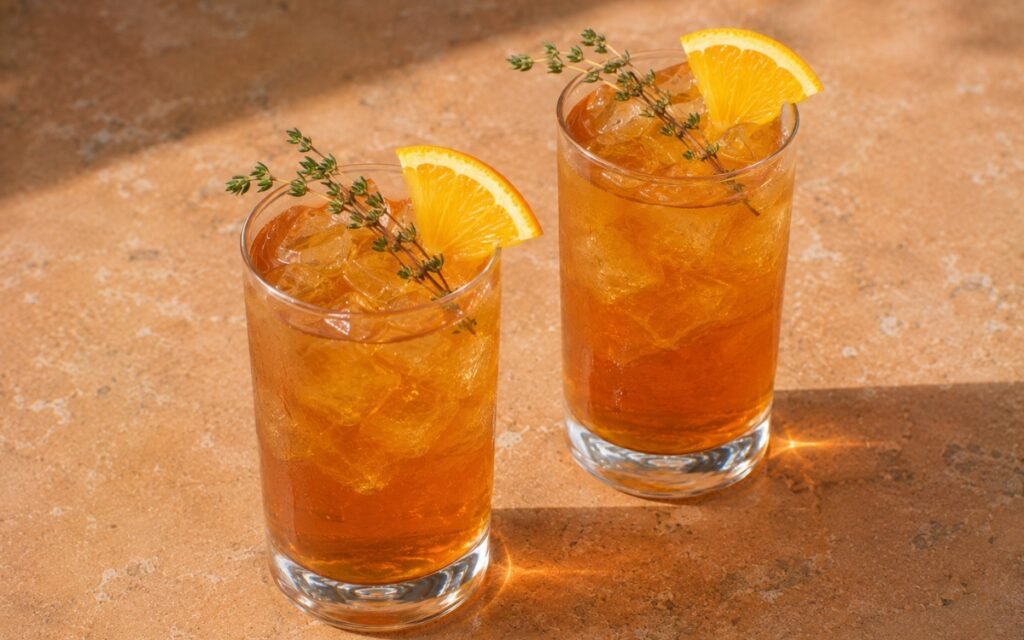
Thyme Orange Iced Tea
Black tea at 90–95°C for 2½–3 minutes, thyme clapped and infused cold, orange peel and fresh orange juice — chilled. Dry-leaning, aromatic, lightly sweet.
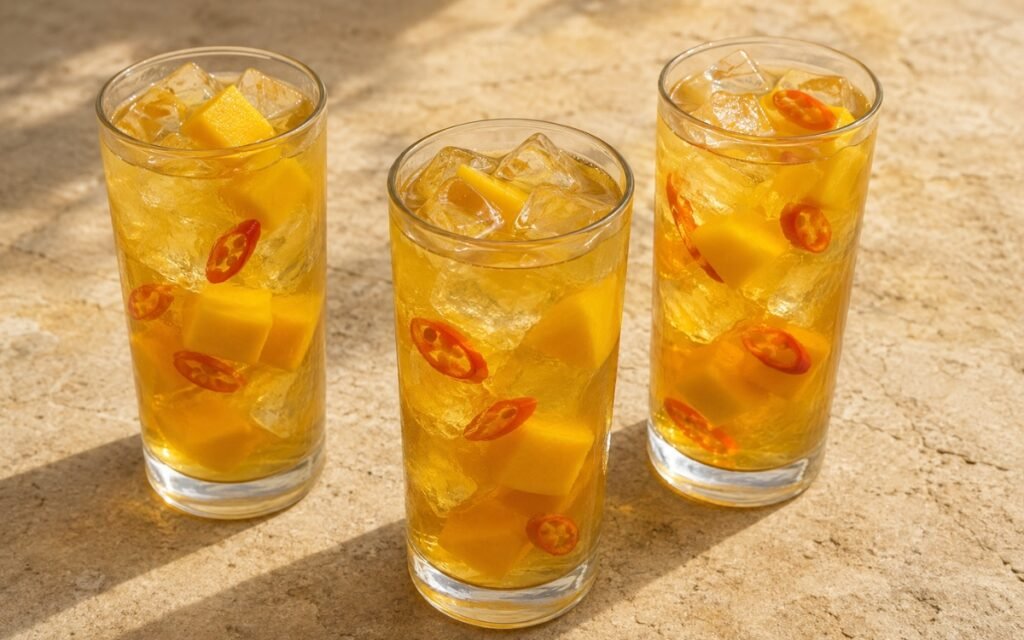
Mango Iced Green Tea
Green tea at 75–80°C for 2–3 minutes, mango simmered into a light unreduced syrup, deseeded chili infused cold 3–5 minutes — chilled. Bright, tropical, gently edged.
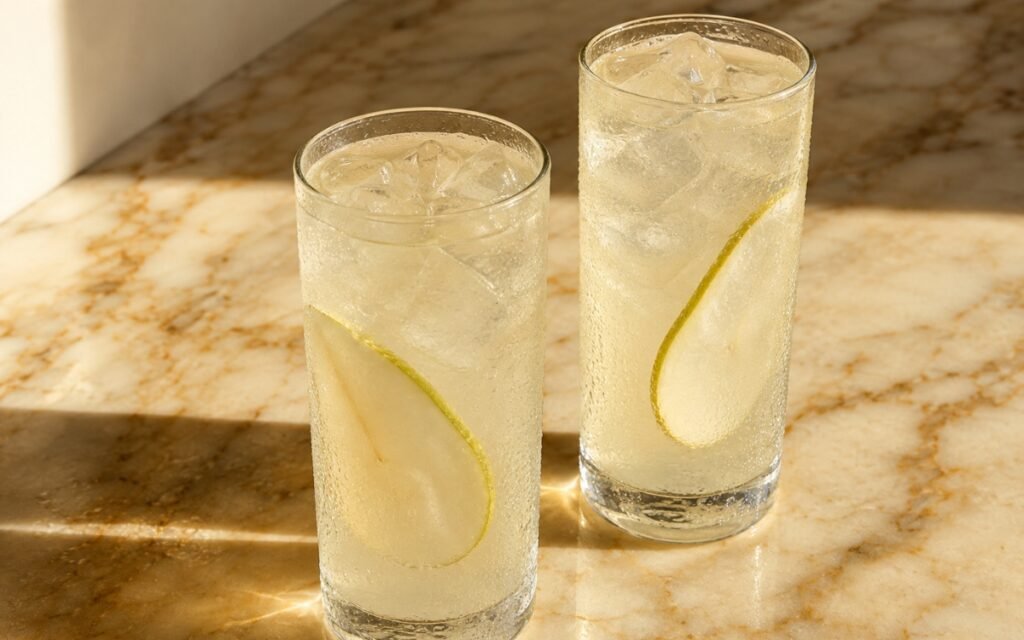
Pear Lemonade
Ripe pears at low heat with honey, lemon zest off heat — 150ml lemon only so pear leads, salt, cold water, chilled. Pale, delicate, and pear-forward.
Green Apple Ginger Mint Fizz Mocktail
Ingredients
Method
- Combine the 60g of honey, 20g of thinly sliced fresh ginger, zest of 1 lime, and a pinch of fine sea salt in a bowl or sealed container. Clap the 10 fresh mint leaves between your palms and add immediately. Stir the mixture well — working the ginger slices and lime zest through the honey to ensure contact between the aromatic surfaces and the honey’s sugar matrix. Cover and refrigerate for 30 minutes. The cold infusion technique applied to ginger here produces a specifically different ginger character than the simmered ginger in the pomegranate sparkler, pear ginger preparation, and other cooked-ginger preparations in this collection. Cold-extracted ginger retains the maximum concentration of gingerol — the raw pungent compound responsible for fresh ginger’s sharp, bright, specifically biting heat — without the heat-conversion of gingerols into the softer, more rounded shogaols that cooking produces. The result is a ginger character that is sharper, more immediate, and more specifically like freshly bitten raw ginger — specifically appropriate here because the green apple’s own sharpness requires a ginger note of comparable vividness rather than the rounded warmth that would disappear against the apple’s malic acid. Honey’s viscosity allows it to act as the infusion medium for the aromatic compounds from the ginger, lime zest, and mint over the 30-minute period — the fat-soluble terpene compounds from the lime zest and the volatile aromatic oils from the clapped mint leaves absorbing into the honey’s sugar matrix in a way that watery liquid would not retain as effectively.
- While the honey infusion refrigerates, prepare the apple juice. Cut the 3 green apples — skin on, cores removed — into rough 3–4cm pieces. Green apple skin contributes the concentrated aromatic compounds alongside the flesh and the additional malic acid that makes the skin-on juice more vividly sharp than peeled. Add to a food processor or high-speed blender with the 30ml of fresh lime juice and 30ml of water. Process at high speed for 60–90 seconds until the mixture is completely smooth — a pale green, slightly frothy purée with no visible apple chunks. Transfer the processed apple mixture to a cheesecloth-lined sieve or a clean, lint-free kitchen towel set over a large bowl. Gather the cloth into a bundle and twist firmly, progressively tightening the twist until maximum pressure is applied to the apple pulp. Squeeze and press until the pulp inside feels nearly dry and no more liquid drips. The extraction is deliberately forceful — unlike the light pressing used for elderflower zest or cherry solids, the apple pulp requires the full mechanical force of twisting to extract its juice completely. An electric juicer, if available, produces an equivalent result with less physical effort — though the food processor-and-cheesecloth method extracts the fine aromatic compounds from the skin surface particularly effectively through the brief processing period. The fresh apple juice should be a clear-to-slightly-cloudy pale green, specifically fragrant — the sharp, bright, distinctly Granny Smith-adjacent malic acid character present from the first smell.
- After the 30-minute cold infusion, strain the honey-ginger mixture through a fine-mesh sieve over a clean bowl — pressing lightly on the ginger slices and discarding all solids including the mint and lime zest. The strained honey infusion should be slightly runnier than plain honey from the moisture it has absorbed and specifically fragrant — ginger’s sharp heat, lime’s aromatic brightness, and mint’s clean freshness all present as a unified aromatic. Pour the pressed green apple juice into the strained honey infusion. Stir well until the honey infusion is completely dissolved into the apple juice — no visible honey residue remaining. Strain the combined mixture once more through the fine-mesh sieve for the cleaner, smoother texture that the second straining provides — removing any remaining pulp particles or ginger fibres. Transfer to the refrigerator and chill completely before serving.
- Slice the garnish apple immediately before assembling the glasses — green apple oxidises rapidly and turns brown within 5 minutes of cutting. A brief dip in cold water with a squeeze of lime juice delays the browning if garnishing needs to be prepared slightly ahead. Fill four tall glasses generously with ice. Divide the chilled green apple base evenly — approximately 80–85ml per glass. Stir briefly against the ice. Top each glass with approximately 125ml of chilled club soda, pouring gently down the inner side. Stir once or twice gently. Slip a thin green apple slice beneath the ice in each glass — the skin’s green edge visible against the pale liquid. Place a small mint sprig on top of the ice. Serve immediately.