
Watermelon Lemonade Pitcher — For a Crowd
Watermelon lemonade at crowd scale is structurally the most different of the pitcher preparations from the rest of the collection — watermelon is not a syrup ingredient, not a cold-pressed juice component, and not a cooked extraction. It is blended in its entirety and becomes the primary liquid of the pitcher itself. One kilogram of blended seedless watermelon produces approximately 900ml of vivid pink liquid that is already, without any additional water, the majority of the pitcher’s total volume. This is specifically why the added water quantity (1–1.5 litres) is less than half the quantity used in the berry and peach crowd preparations: the watermelon is performing both the flavour and the dilution functions simultaneously. The structural note — do not skip the fresh lemon juice — is the sharpest statement of any note in this collection, and specifically because watermelon’s own composition makes this warning necessary at crowd scale: watermelon is 92% water, minimally acidic, and has a natural sugar-to-acid ratio that at dilution produces exactly the sweet, flat, slightly thin result that the warning describes. The lemon’s citric acid provides the specific structural acid backbone and the flavour contrast that makes watermelon specifically lemonade rather than pink water. The honey-lemon syrup — without any fruit component because the watermelon provides all the fruit character directly — bridges the sweetness and the lemon’s zest-aromatic depth. The preparation’s 24-hour best-use window is the shortest of any crowd preparation, reflecting watermelon’s specific aromatic compound behaviour post-blending: the volatile (Z,Z)-3,6-nonadienal aldehydes that give fresh watermelon its characteristic cool, vivid, specifically summery aroma begin dissipating progressively once the cells are fully disrupted by blending.
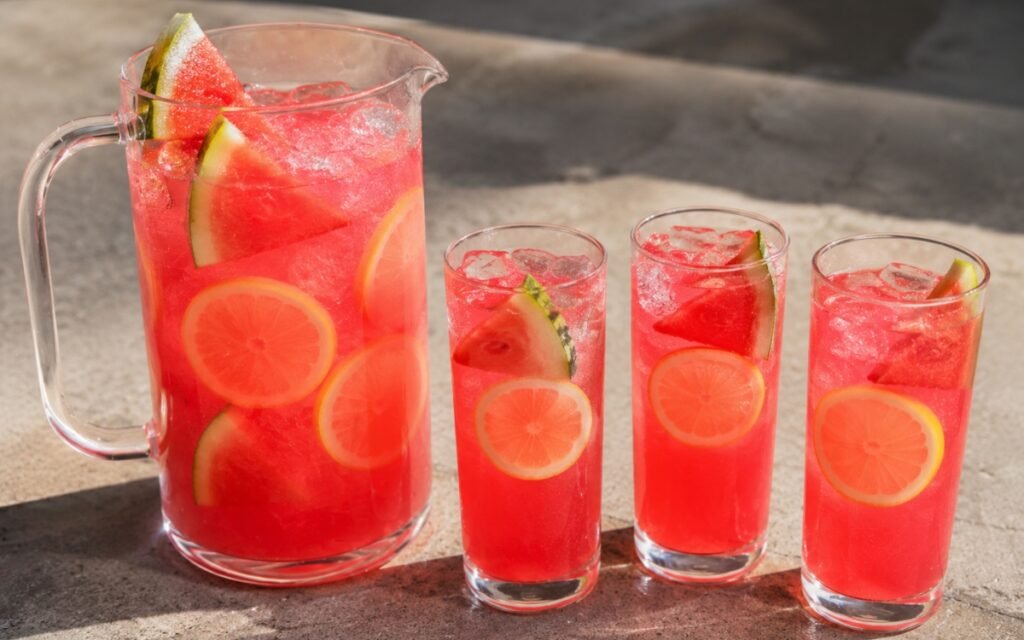
Prep Time : 10 min
Cook Time : 0 min
Servings : 8
10 min
0 min
8
Ingredients
For the Lemon Base
• Clean pulp or segments from 2–3 lemons — seeds and tough membranes removed; no white pith
For the Watermelon Base
• 1kg seedless watermelon — cubed and blended until smooth; approximately ¼ of a medium watermelon
For the Lemon-Honey Syrup
• 120–160g mild honey — start with 120g — this one on Amazon
• 240ml water
• Zest of 2 lemons — yellow part only; added off heat
For the Final Build
• 240–300ml fresh lemon juice — approximately 5–7 lemons
• 1–1.5 litres ice-cold water — start with 1 litre
• 2 pinches fine sea salt
For Serving
• Ice cubes
• Lemon slices
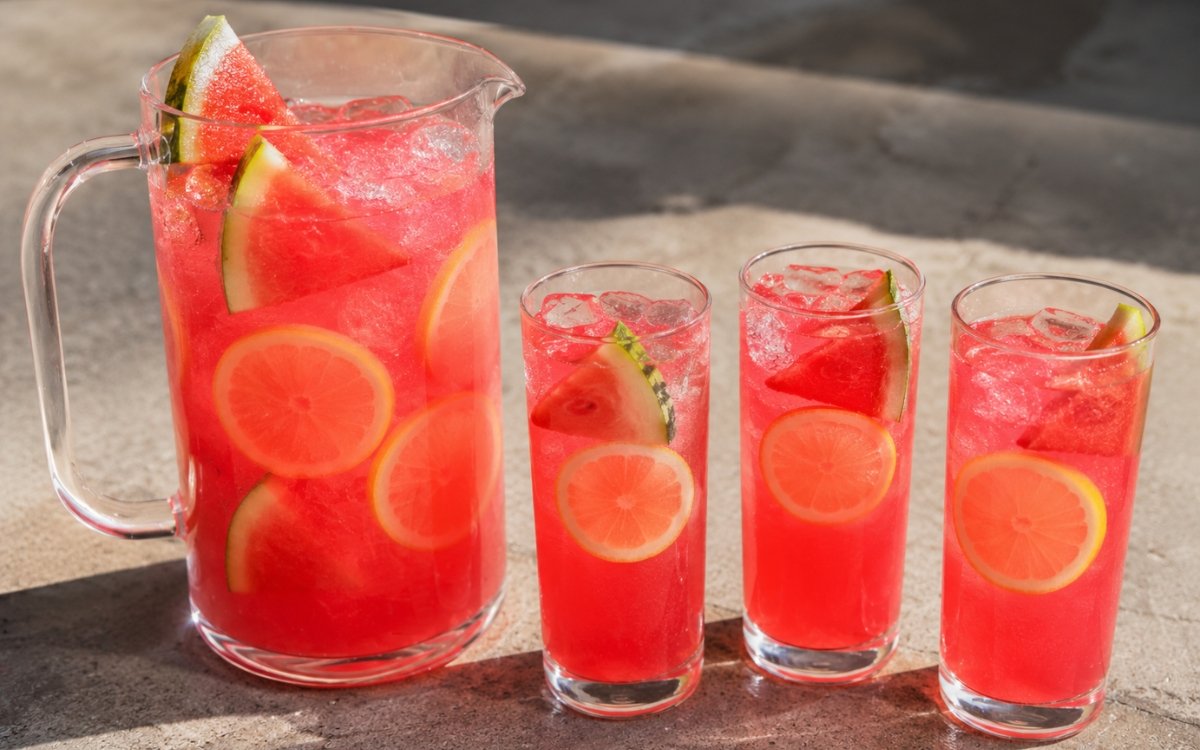
• Thin watermelon slices — added immediately before service
This post may contain affiliate links. As an Amazon Associate I earn from qualifying purchases, at no additional cost to you.
Directions
- Make the Lemon-Honey Syrup
Combine the 240ml of water and 120g of honey in a small saucepan over low heat. Stir until completely dissolved without boiling. Remove from heat. Add the zest of 2 lemons. Cover and steep for 5–8 minutes. Strain and allow to cool completely. The lemon-honey syrup here is specifically a sweetener-and-aromatic-bridge rather than a fruit-extraction vehicle — its function is providing the honey’s warm sweetness and the lemon zest’s integrated aromatic oil depth rather than extracting any fruit character. This makes it the simplest syrup in the crowd-format collection and the most quickly prepared. - Blend the Watermelon
Cut the 1kg of seedless watermelon into rough cubes, removing any remaining seeds and the rind. Place in a blender and blend at medium-high speed until completely smooth — approximately 30–40 seconds. Unlike the infused water preparation where blending was specifically avoided, full blending is the correct approach at lemonade scale: the preparation’s character is specifically a vivid watermelon lemonade rather than a subtle infusion, and the blended watermelon produces the vivid colour, the concentrated aromatic presence, and the full juice volume that the pitcher requires. The blended result is approximately 900ml of vivid pink, fully liquid watermelon base. For a cleaner-looking pitcher — where the liquid is more translucent and less opaque — strain through a fine-mesh sieve, pressing the watermelon flesh to extract the juice and remove the fine fibre. For a fuller, more specifically juicy, more textured result, pour directly into the pitcher without straining. Both produce good results; the unstrained version tastes more specifically of fresh watermelon while the strained version produces a cleaner visual at the cost of some body. - Build the Pitcher
Add the lemon pulp from 2–3 lemons (seeds, membranes, and pith removed; clean pulp) to the large pitcher. Muddle gently. Add the blended watermelon, cooled lemon-honey syrup, 240ml of fresh lemon juice, 1 litre of ice-cold water, and the 2 pinches of fine sea salt. Stir gently rather than aggressively — watermelon’s blended structure disperses through the combined liquid with gentle stirring; aggressive mixing introduces air bubbles that affect the visual clarity. Taste with the specific watermelon-lemonade crowd assessment. The correctly built pitcher should taste immediately of watermelon with lemon’s clean acid brightness simultaneously present — neither dominating the other, the watermelon providing the warm, sweet, juicy primary character and the lemon providing the crisp, refreshing dimension that makes it specifically a lemonade. If the result tastes specifically of sweet watermelon without a lemon dimension — insufficient lemon juice; add in 30ml increments up to 300ml. If it tastes specifically of lemon without sufficient watermelon character — the melon was under-ripe; the honey quantity can be increased slightly but the watermelon character cannot be fully compensated at this scale. The structural note from the brief — watermelon already dilutes the drink — means the added water adjustment is particularly consequential here. One litre in addition to the 900ml of watermelon juice produces a significantly less dilute result than starting at 1.5 litres; always start at 1 litre and assess before adding more. - Chill, Stir Before Service, and Serve
Cover and refrigerate for 1–2 hours. Watermelon settles distinctly during the refrigerator rest — the blended watermelon’s larger-molecule solids concentrate at the bottom while the clearer liquid rises. This is expected and normal. Always stir the pitcher once before the first pour and briefly between pours during service to maintain the consistent vivid colour and even watermelon character throughout all 16 servings. Prepare the watermelon garnish slices immediately before service. Thin watermelon slices brown at their cut edges within 30–40 minutes of cutting; always prepare immediately before service. Fill glasses with ice. Pour over the chilled watermelon lemonade. Garnish. Serve immediately.
*Notes :
- Watermelon ripeness at crowd scale (1kg) is the single most important quality variable — under-ripe watermelon at this quantity produces a pitcher that is pale, flat, minimally aromatic, and specifically lacking the vivid, summer-fresh character that makes watermelon lemonade specifically worth making. A correctly ripe watermelon: heavy for its size, with a cream-to-yellow ground spot, a hollow thump when tapped, and a specific watermelon fragrance at the stem end. At 1kg of cubed flesh, a correctly ripe melon produces a vivid, deeply pink, specifically aromatic blended juice; an under-ripe melon produces a pale, mild, flat result.
- The 24-hour best-use window applies at crowd scale for two simultaneous reasons: watermelon’s primary aromatic aldehydes evaporate progressively post-blending; and the blended solids’ progressive settling over extended refrigerator storage produces a more significantly separated pitcher that requires more aggressive stirring and produces less consistent results at the later glasses.
Why This Recipe Works
This recipe works because the watermelon is blended to full juice — providing both the flavour and the majority of the liquid volume. The lemon-honey syrup’s integrated zest aromatic depth bridges the watermelon’s warm sweet register and the lemon’s clean acid.
The structural lemon juice at 240–300ml provides the acid backbone that prevents ice dilution from turning the preparation flat. The salt specifically amplifies watermelon’s delicate aromatic compound perception. And the stir-before-service protocol maintains consistent quality across all 16 pours.
Ingredient Breakdown
1kg Blended Watermelon (Primary Liquid)
The flavour and volume simultaneously — approximately 900ml of vivid pink juice providing both the watermelon character and the majority of the pitcher’s liquid.
Less Added Water (1–1.5L vs 2+ Litres for Berry)
The watermelon-volume calibration — 900ml of melon juice means less added water for the same total volume and concentration.
Lemon-Honey Syrup Without Fruit
The pure bridge function — sweetening and integrated zest aromatic depth without fruit extraction.
240–300ml Lemon Juice (Structural Acid)
The anti-flat provision — lemon’s citric acid specifically making watermelon taste refreshing rather than sweet and flat.
Salt Amplifying Watermelon’s Volatile Aldehydes
The most specific aromatic amplification — sub-threshold salt specifically vivifying watermelon’s delicate character.
Flavor Structure Explained
This Watermelon lemonade follows a layered balance model:
- Juicy summer-fruit core (watermelon)
- Bright citrus backbone (lemon juice)
- Flavor-enhancing salinity (pinch of salt)
- Fresh hydrating character (high watermelon concentration)
- Clean refreshing finish (sweet-acid balance)
Watermelon defines the foundation with vivid sweetness, clean fruit freshness, and the unmistakable character of ripe summer melon. Its naturally juicy profile gives the drink an immediate sense of refreshment and makes it one of the most seasonally expressive lemonade variations. Lemon juice provides the structural acidity that keeps the sweetness lively, creating the contrast necessary for the watermelon to feel bright and refreshing rather than merely sugary. A small amount of salt subtly intensifies the melon’s aromatic compounds, making its flavor more focused and recognizable. The result is a crowd-sized lemonade built around freshness, hydration, and the pure taste of summer fruit.
Common Mistakes to Avoid
- Skipping the Fresh Lemon Juice – Without structural acid, blended watermelon in water is sweet pink water. Always 240ml minimum.
- Starting at 1.5 Litres of Water – The watermelon provides 900ml of liquid. Starting at 1.5L produces an over-dilute result. Always start at 1L and taste.
- Using Under-Ripe Watermelon – The most important quality variable at crowd scale. Always a ripe, fragrant, deeply coloured melon.
- Not Stirring Before Each Pour – Watermelon settles significantly during refrigerator rest. Always stir before service and between pours.
- Preparing Watermelon Garnish in Advance – Cut edges brown within 30–40 minutes. Always cut immediately before service.
Variations
With Mint
Add 20 lightly clapped fresh mint leaves to the completed pitcher before chilling — steep cold for 20 minutes then remove. The Watermelon Mint Fizz direction in crowd still-lemonade format.
With Lime
Replace 100ml of the lemon juice with lime juice for a more tropical, sharper acid profile alongside the watermelon.
Sparkling Watermelon Lemonade Pitcher
Build without still water; refrigerate; add ice-cold sparkling water right before serving.
With Jalapeño
Add 2 thinly sliced jalapeños to the pitcher during chilling — remove before serving. The heat contrast with watermelon’s cool sweetness and lemon’s brightness is the most assertively interesting version.
Storage & Make-Ahead
Lemon-honey syrup can be refrigerated for up to 2 weeks, making it an excellent component to prepare well in advance.
Once assembled, the pitcher is best enjoyed within 24 hours. After that point, the watermelon’s fresh aromatic character gradually fades, and natural settling becomes more noticeable. Stir well before serving if the mixture has been standing.
Frequently Asked Questions
Why does the watermelon lemonade have a shorter best-use window than berry lemonade pitchers?
Watermelon’s primary pleasant aromatic compounds — (Z,Z)-3,6-nonadienal and related volatile aldehydes — are present in the fully disrupted cells of blended watermelon at much higher concentration than in intact pieces, but the fully disrupted cells also mean these compounds begin evaporating and dissipating progressively from the moment of blending. The 24-hour window is when the aromatic character is vivid; beyond this the flavour becomes progressively flat and the colour less vivid.
Why only 1–1.5 litres of added water when other crowd preparations use 2+ litres?
One kilogram of blended watermelon produces approximately 900ml of liquid. The total volume from watermelon plus syrup plus lemon juice already exceeds 1.4 litres before any added water; adding 2 litres more would produce a 3.4-litre pitcher that is specifically over-dilute. Always account for the watermelon’s juice volume as part of the total dilution calculation.
Why blend rather than cold-press the watermelon?
At lemonade scale — as opposed to infused water scale where a subtle aromatic contribution was the goal — blending extracts the full juice, colour, and aromatic character needed for a vivid, fruit-forward crowd lemonade. The infused water preparation specifically avoided blending to stay in the restrained, barely-flavoured register; the lemonade preparation specifically uses blending to achieve the full-flavour register appropriate for a crowd drink.
What other watermelon preparations share this direction?
The Watermelon Agua Fresca shares the blended-watermelon-as-primary-liquid approach in the most traditional agua fresca format. The Watermelon Lime Infused Water shares the watermelon at the opposite end of the processing spectrum — the most restrained, barely-flavoured cold-infusion approach. The Watermelon Mint Fizz Mocktail shares the blended watermelon direction in a sparkling, mint-forward single-serve format.
Nutrition Facts
( per serving )
Calories
~65 kcal
Protein
0 g
Fat
0 g
Carbs
17 g
Calories
~65 kcal
Protein
0 g
Fat
0 g
Carbs
17 g
Related Recipes
Related Recipes

Strawberry Lime Infused Water
Strawberries lightly mashed and cold-infused with lime slices in 3L water — removed after 4 hours before lime peel turns bitter. Fresh, vivid, and hydrating.
Watermelon Lime Infused Water
Watermelon lightly pressed and cold-infused with lime slices in 3L water — removed after 4 hours before lime peel turns bitter. Cool, fresh, and summer-aromatic.
Green Tea Citrus Pitcher
Green tea at 75–80°C for 2–2½ minutes, dual citrus zest off heat — 500ml orange juice for body, lemon juice, salt, cold water, chilled. Delicate and citrus-bright.
You might also like
You might also like
Pink Grapefruit Lemonade
Grapefruit and orange peels steeped off heat in syrup — pulp mashed in the pitcher, fresh grapefruit juice, restrained sugar, salt. Bold, bitter-dry, and vibrant.
Hibiscus Strawberry Lemonade
Hibiscus tea steeped 5–7 minutes, strawberries blended with hibiscus tea — honey dissolved warm, lemon cold, rested 30 minutes. Vivid ruby, tart, and fruity.
Elderflower Lemonade
Elderflower steeped in warm syrup exactly 6–8 minutes, lightly strained — fresh lemon juice, salt, cold water, chilled 1–2 hours. Honeyed-floral and elegantly clean.

Watermelon Lemonade Pitcher for a Crowd
Ingredients
Method
- Combine the 240ml of water and 120g of honey in a small saucepan over low heat. Stir until completely dissolved without boiling. Remove from heat. Add the zest of 2 lemons. Cover and steep for 5–8 minutes. Strain and allow to cool completely. The lemon-honey syrup here is specifically a sweetener-and-aromatic-bridge rather than a fruit-extraction vehicle — its function is providing the honey’s warm sweetness and the lemon zest’s integrated aromatic oil depth rather than extracting any fruit character. This makes it the simplest syrup in the crowd-format collection and the most quickly prepared.
- Cut the 1kg of seedless watermelon into rough cubes, removing any remaining seeds and the rind. Place in a blender and blend at medium-high speed until completely smooth — approximately 30–40 seconds. Unlike the infused water preparation where blending was specifically avoided, full blending is the correct approach at lemonade scale: the preparation’s character is specifically a vivid watermelon lemonade rather than a subtle infusion, and the blended watermelon produces the vivid colour, the concentrated aromatic presence, and the full juice volume that the pitcher requires. The blended result is approximately 900ml of vivid pink, fully liquid watermelon base. For a cleaner-looking pitcher — where the liquid is more translucent and less opaque — strain through a fine-mesh sieve, pressing the watermelon flesh to extract the juice and remove the fine fibre. For a fuller, more specifically juicy, more textured result, pour directly into the pitcher without straining. Both produce good results; the unstrained version tastes more specifically of fresh watermelon while the strained version produces a cleaner visual at the cost of some body.
- Add the lemon pulp from 2–3 lemons (seeds, membranes, and pith removed; clean pulp) to the large pitcher. Muddle gently. Add the blended watermelon, cooled lemon-honey syrup, 240ml of fresh lemon juice, 1 litre of ice-cold water, and the 2 pinches of fine sea salt. Stir gently rather than aggressively — watermelon’s blended structure disperses through the combined liquid with gentle stirring; aggressive mixing introduces air bubbles that affect the visual clarity. Taste with the specific watermelon-lemonade crowd assessment. The correctly built pitcher should taste immediately of watermelon with lemon’s clean acid brightness simultaneously present — neither dominating the other, the watermelon providing the warm, sweet, juicy primary character and the lemon providing the crisp, refreshing dimension that makes it specifically a lemonade. If the result tastes specifically of sweet watermelon without a lemon dimension — insufficient lemon juice; add in 30ml increments up to 300ml. If it tastes specifically of lemon without sufficient watermelon character — the melon was under-ripe; the honey quantity can be increased slightly but the watermelon character cannot be fully compensated at this scale. The structural note from the brief — watermelon already dilutes the drink — means the added water adjustment is particularly consequential here. One litre in addition to the 900ml of watermelon juice produces a significantly less dilute result than starting at 1.5 litres; always start at 1 litre and assess before adding more.
- Cover and refrigerate for 1–2 hours. Watermelon settles distinctly during the refrigerator rest — the blended watermelon’s larger-molecule solids concentrate at the bottom while the clearer liquid rises. This is expected and normal. Always stir the pitcher once before the first pour and briefly between pours during service to maintain the consistent vivid colour and even watermelon character throughout all 16 servings. Prepare the watermelon garnish slices immediately before service. Thin watermelon slices brown at their cut edges within 30–40 minutes of cutting; always prepare immediately before service. Fill glasses with ice. Pour over the chilled watermelon lemonade. Garnish. Serve immediately.