
Strawberry Lemonade Pitcher — For a Crowd
The crowd format introduces two structural changes from the single-batch strawberry lemonade preparation: scale, and the dual-strawberry approach that the single batch’s simpler extraction doesn’t require. At 16 servings the preparation warrants the additional effort of splitting the 600g of total strawberries into two components — a honey-infused syrup batch providing the warm, deep, concentrated strawberry character that cooking at gentle heat develops, and a blended-and-strained fresh juice batch providing the volatile aromatic freshness that raw strawberry’s compounds specifically produce and that cooking specifically destroys. The same two-temperature-extraction logic from the raspberry lemonade applies at the strawberry scale: cooking captures the heat-stable, deeper, more concentrated fruit character; raw extraction preserves the bright, vivid, specifically fresh strawberry top-note. The crowd format also requires specific attention to presentation quality — the note against leaving mashed pulp in the pitcher addresses a specific party-serving concern that does not arise in an 8-serving preparation for fewer people: pulp that settles at the bottom of a large pitcher over a serving period of 2+ hours produces a progressively degraded visual and flavour quality for later portions. The clean, strained, combined approach produces a consistently vivid, consistently clear, specifically lemonade result throughout the entire serving period. Mild honey as the sweetener rather than white sugar applies at double scale for the same aromatic-resonance reason as the single batch’s comparable preparations.
Prep Time : 10 min
Cook Time : 8–10 min
Servings : 16
10 min
8–10 min
16
Ingredients
For the Lemon-Strawberry Base
• Clean pulp or segments from 2–3 lemons — seeds and tough membranes removed; no white pith
For the Honey-Strawberry Syrup
• 300g fresh strawberries — hulled and thinly sliced
• 140–160g mild honey — this one on Amazon
• 240ml water
• Zest of 2 lemons — yellow part only; added off heat
For the Fresh Strawberry Juice
• 300g fresh strawberries — hulled and roughly chopped; for blending and straining
For the Final Build
• 300ml fresh lemon juice — approximately 6–7 lemons
• 2–2.5 litres ice-cold water — start with 2 litres; adjust after tasting
• 2 pinches fine sea salt
For Serving
• Ice cubes
• Lemon slices
• Fresh strawberry slices
This post may contain affiliate links. As an Amazon Associate I earn from qualifying purchases, at no additional cost to you.
Directions
- Make the Honey-Strawberry Syrup
Combine the 300g of thinly sliced strawberries, 140g of honey, and 240ml of water in a saucepan. Warm over low to medium-low heat, stirring gently until the honey dissolves and the strawberries begin softening. Simmer for 8–10 minutes — the extraction window that develops the strawberry’s warmer, more concentrated, specifically cooked-fruit depth while keeping the liquid specifically fluid and vivid rather than approaching the thick, jammy result of a reduction. The liquid should remain clearly pourable and flowing at the end of the cooking period. Remove from the heat. Add the zest of 2 lemons and cover. Steep for 5–8 minutes. The double-lemon-zest infusion at this larger scale provides the integrated citrus aromatic depth proportionate to the preparation’s volume. Strain through a fine-mesh sieve, pressing gently but firmly on the cooked strawberry solids. Allow to cool completely. - Extract the Fresh Strawberry Juice
Add the 300g of hulled, roughly chopped fresh strawberries to a blender or food processor. Blend for approximately 10 seconds at medium speed — just enough to produce a uniform strawberry purée without incorporating excessive air. Alternatively, mash thoroughly with a fork or potato masher until liquid. Strain through a fine-mesh sieve into a bowl, pressing the purée firmly to extract the maximum clean juice. At 300g of fresh strawberries the sieve-pressing yields approximately 150–180ml of vivid, specifically fresh, volatile-compound-rich raw strawberry juice. The two-component extraction philosophy established in the raspberry lemonade applies directly here: strawberry’s most pleasant aromatic compounds — primarily the furanone-family compounds responsible for its vivid, warm, specifically fresh-fruit character — exist in two categories with opposite heat responses. The cooked fraction captures the heat-stable depth; the raw fraction preserves the volatile freshness. Both are present in the finished pitcher, producing a more complete strawberry flavour than either alone. - Build the Pitcher
Add the lemon pulp from 2–3 lemons (seeds, membranes, and pith removed; clean pulp only) to the large pitcher and muddle gently. Add the 300ml of fresh lemon juice, the cooled honey-strawberry syrup, the strained fresh strawberry juice, 2 litres of ice-cold water, and the 2 pinches of fine sea salt. Stir thoroughly. Taste with the crowd-format assessment: the drink should be bright, clearly structured as lemonade, and specifically strawberry-flavoured without being dominated by either component at the expense of the other. The 300ml of lemon juice at this volume provides the structural acid backbone for 16 servings; if the strawberry character feels specifically stronger than the lemon, additional lemon juice (rather than additional water) sharpens the balance. If the concentration is too intense for the gathering’s taste profile, additional cold water up to 2.5 litres brings it to the lighter end of the range. The mild honey note is specifically important at this scale: 140–160g of a strongly flavoured honey (buckwheat, manuka, or heather) in a pitcher this size is sufficient to specifically overpower the strawberry and lemon’s aromatic profiles. Always a mild acacia, clover, or orange blossom honey. - Chill and Serve
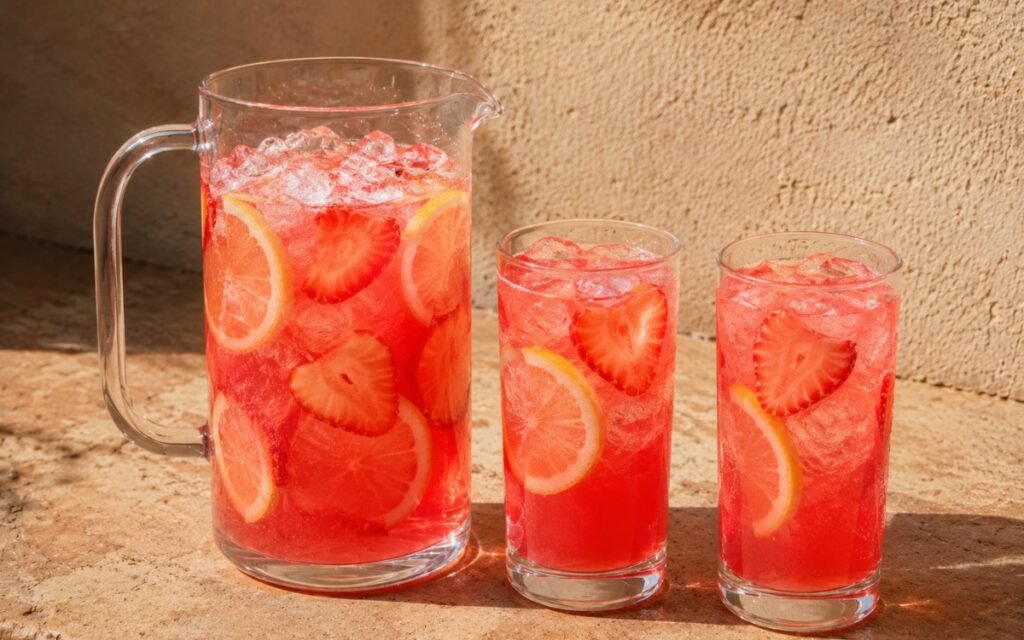
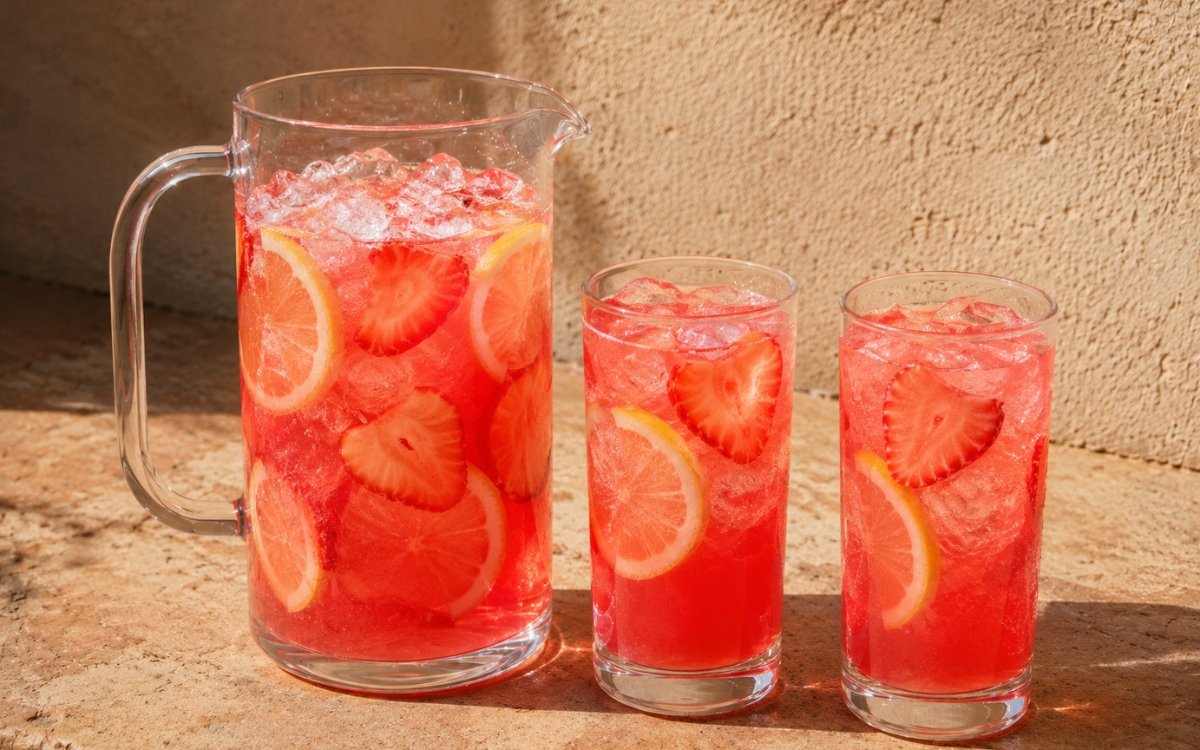
Refrigerate for 1–2 hours. Fill glasses with ice. Pour the chilled strawberry lemonade over the ice. Garnish with lemon slices and fresh strawberry slices on each glass rim. Serve immediately.
*Notes :
- Use fresh citrus whenever possible. Older fruit loses aromatic oils and For outdoor parties or extended serving periods, the honey-strawberry syrup and fresh strawberry juice can be combined in a sealed container and refrigerated up to 24 hours ahead — add the lemon juice, water, and salt at the time of building the pitcher. This allows the most time-sensitive component (the fresh strawberry juice) to be freshly combined while the cooked syrup is made ahead.
- Honey should act as a rounding agent rather than a dominant sweetener. For serving at parties where the pitcher will sit at room temperature for extended periods, add the ice to the pitcher rather than individual glasses for self-serve settings — this maintains the temperature throughout service.
- The visual garnish specifically at the crowd scale matters: the large pitcher with visible strawberry slices and lemon rounds at serving time produces a significantly more appealing first impression than a pitcher filled only with liquid. Replace or refresh the garnish halfway through service if the original slices have been sitting for more than 2 hours.
Why This Recipe Works
This recipe works because the dual-strawberry extraction captures both the heat-stable concentrated depth from the cooked honey syrup and the volatile aromatic freshness from the raw strained juice — providing more complete strawberry flavour than a single extraction at any scale.
The full straining of both components ensures the pitcher remains visually clean throughout the service period. The honey’s mild character specifically avoids competing with the strawberry and lemon. And the lemon juice quantity (300ml for 16 servings) is calibrated to maintain structural acid presence at the crowd scale.
Ingredient Breakdown
Dual-Strawberry (300g Cooked Honey Syrup + 300g Raw Strained Juice)
The two-temperature extraction — cooked depth and concentrated sweetness from the syrup; volatile aromatic freshness from the raw extraction.
140–160g Mild Honey
The aromatic-resonant sweetener at crowd scale — mild variety specifically required to avoid overpowering the strawberry and lemon at this concentration.
Zest of 2 Lemons Off Heat (Double)
The scaled citrus aromatic integration — double the zest for double the volume; same integrated bridge function.
Full Straining of Both Components
The crowd-quality requirement — no settling pulp producing visual degradation over extended service.
2L Starting Water (Adjust to 2.5L)
The crowd-format calibration — start at the stronger end and dilute to preference rather than starting too dilute.
Flavor Structure Explained
This Strawberry lemonade Pitcher follows a layered balance model:
- Multi-layered strawberry core (cooked and fresh strawberry)
- Bright citrus backbone (lemon juice)
- Warm rounded sweetness (honey syrup)
- Structured refreshing acidity (lemon architecture)
- Clean crowd-pleasing finish (fruit-acid balance)
Strawberry defines the foundation through two complementary expressions of the fruit. The cooked strawberry-honey syrup contributes concentrated sweetness, depth, and a richer berry character, while the fresh juice supplies bright aromatics and vivid fruit freshness. Together they create a fuller and more complex strawberry profile than either approach alone. Lemon juice provides the structural backbone, supplying enough acidity to maintain a true lemonade identity and keep the drink refreshing rather than becoming a fruit punch. The honey syrup rounds the acidity with gentle warmth, helping the fruit and citrus integrate seamlessly. The result is a large-format lemonade that preserves the same balance, brightness, and layered fruit character as the smaller-batch version while remaining clean and refreshing at scale.
Common Mistakes to Avoid
- Leaving Strawberry Pulp in the Pitcher – Pulp settles, produces visual degradation, and creates inconsistent flavour throughout service. Always fully strain.
- Using Strong Honey – At 140–160g in a pitcher, a strongly flavoured honey specifically overwhelms. Always mild honey.
- Starting at 2.5L Water – Always start at 2L and taste before adding more. Over-diluted crowd lemonade is not correctable at the pitcher scale.
- Building the Pitcher Without Tasting – The proportional adjustments are more impactful at this scale. Always taste and adjust before refrigerating.
- Refrigerating Without a Cover – An open pitcher absorbs other refrigerator aromas during the chill period and the fresh strawberry juice’s volatile compounds diminish. Always cover.
Variations
Sparkling Version
Build the pitcher without water; refrigerate; add ice-cold sparkling water right before serving at the same total quantity.
With Mint
Add 20 lightly clapped fresh mint leaves to the completed pitcher before chilling — steep cold for 20 minutes then remove. The mint’s cool freshness with strawberry at crowd scale is specifically refreshing.
With Basil
Add 12 lightly clapped fresh basil leaves instead of mint — the anise-adjacent warmth of basil alongside strawberry and lemon is the Raspberry Basil direction in strawberry format.
With Rose
Add 1 tsp of food-grade dried rose petals to the honey-strawberry syrup during the off-heat steep alongside the lemon zest — the rose’s geraniol character alongside strawberry produces a more specifically aromatic, more floral crowd version.
Storage & Make-Ahead
Honey-strawberry syrup can be refrigerated for up to 4 days. It can be prepared in advance and combined with the other ingredients when assembling the pitcher.
Raw strawberry juice is best used within 4 to 6 hours of pressing to preserve its freshest and most vibrant aroma.
Once assembled, the pitcher can be refrigerated for up to 2 days. For the brightest flavor and freshest character, it is best enjoyed within 24 hours.
Frequently Asked Questions
Why dual-extraction at the crowd scale when the single-batch uses a simpler approach?
At 16 servings the additional effort of two components is proportionally justified — the dual extraction specifically produces a more layered, more complete strawberry flavour that is specifically worth the extra step at party scale where the preparation is the centrepiece drink. For 8 servings the simpler approach is appropriate; for 16 servings the complexity investment is worthwhile.
Why 300ml of lemon juice for 16 servings rather than simply double the 8-serving amount?
300ml is approximately the doubled quantity (240ml × 2 = 480ml would be excessive at this volume) adjusted for the dilution effect of the larger water volume. The crowd format’s 2–2.5L water range requires proportionally calibrating the lemon juice for structural acid presence rather than mechanically doubling every ingredient.
Why mild honey specifically at this scale?
At 140–160g in 3.3 litres of combined liquid, a strongly flavoured honey is present at a concentration where it is specifically perceptible as a competing flavour rather than a background sweetener. Buckwheat, manuka, or dark forest honeys at this quantity will be identifiable above the strawberry and lemon. Always a mild, neutrally flavoured variety.
What other crowd-format berry and citrus preparations share this direction?
The Raspberry Lemonade Pitcher Drink shares the dual-extraction berry lemonade approach in a raspberry-forward crowd format — the most directly comparable large-batch preparation. The Strawberry Lime Infused Water shares the strawberry as the primary fruit in the most restrained, minimally flavoured end of the spectrum. The Mixed Berry Citrus Pitcher Drink shares the crowd-format berry-and-citrus direction with a multi-berry combination.
Nutrition Facts
( per serving )
Calories
~80 kcal
Protein
0 g
Fat
0 g
Carbs
21 g
Calories
~80 kcal
Protein
0 g
Fat
0 g
Carbs
21 g
Related Recipes
Related Recipes

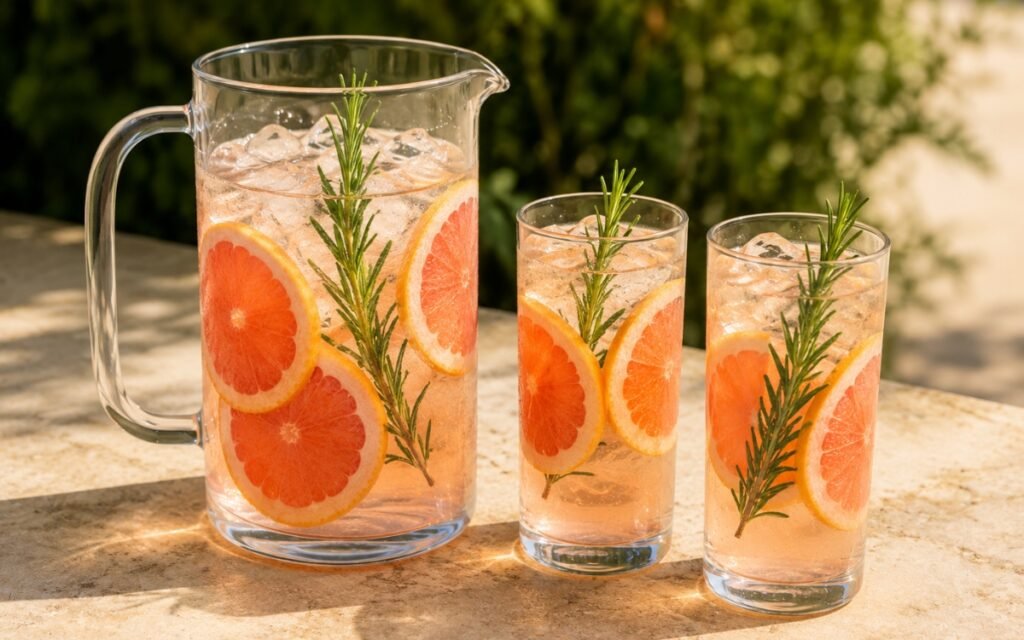
Grapefruit Rosemary Infused Water
Grapefruit pulp pith-free and mashed, rosemary rolled lightly — grapefruit slices cold-infused in 3L water for 1–4 hours, removed. Clean-bitter, herbal, and grown-up.
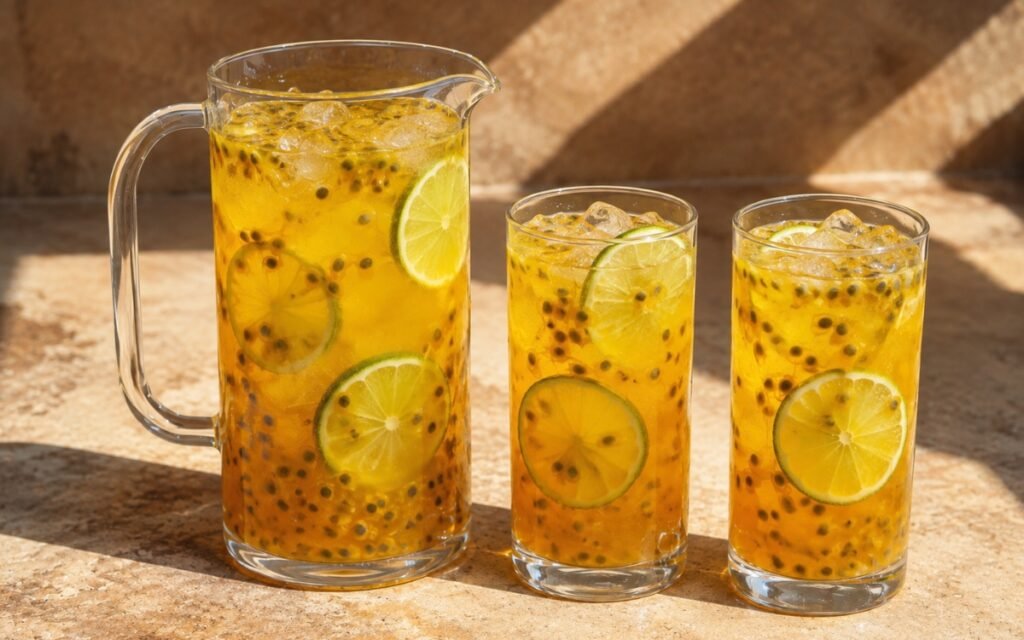
Passion Fruit Lime Pitcher Drink
Gently mashed passion fruit pulp combined with fresh lime juice and sliced limes for a bright golden, tropical, double-lime pitcher drink.
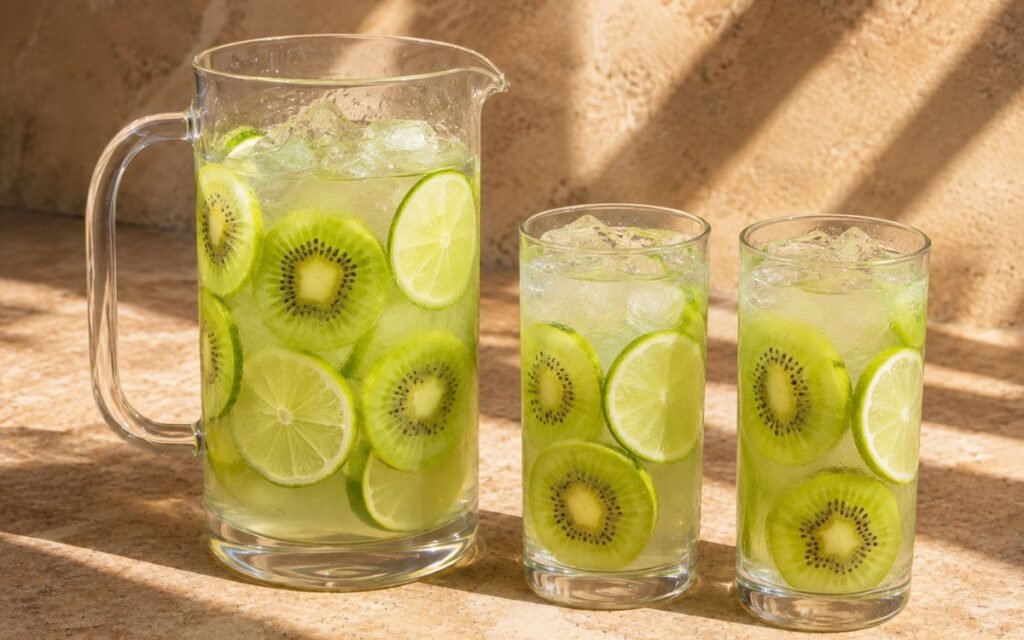
Kiwi Lime Infused Water
Thin peeled kiwi slices and fresh sliced lime infused cold for a very clean, light, bright, almost clear water.
You might also like
You might also like
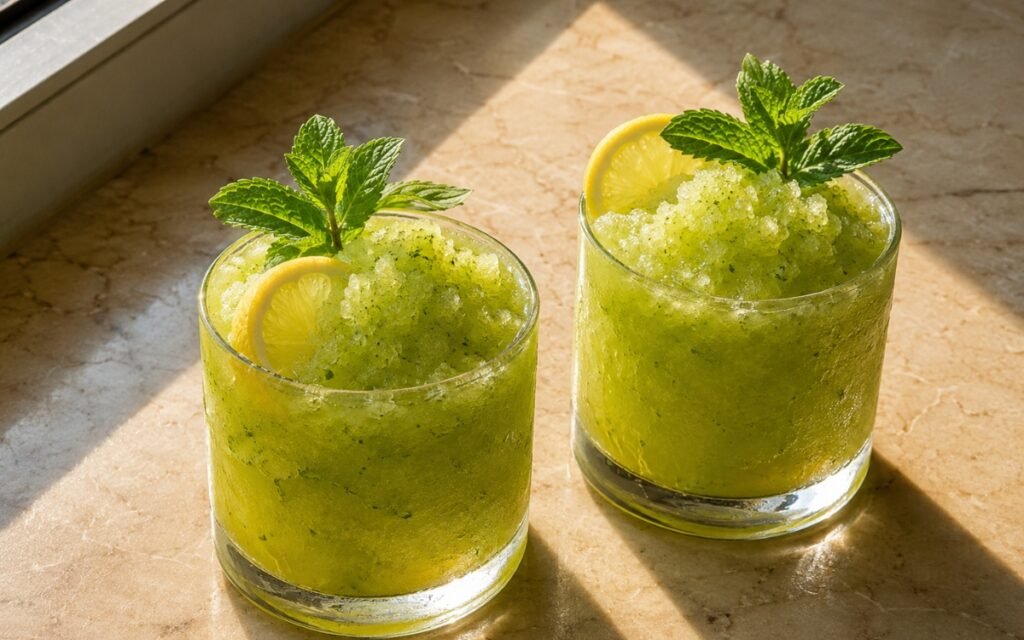
Mint Lemonade — Blended
Lemon zest syrup off heat, mint added last to blender — blended 15–25 seconds maximum, served immediately for slushy icy texture. Aromatic, cool, and bright.
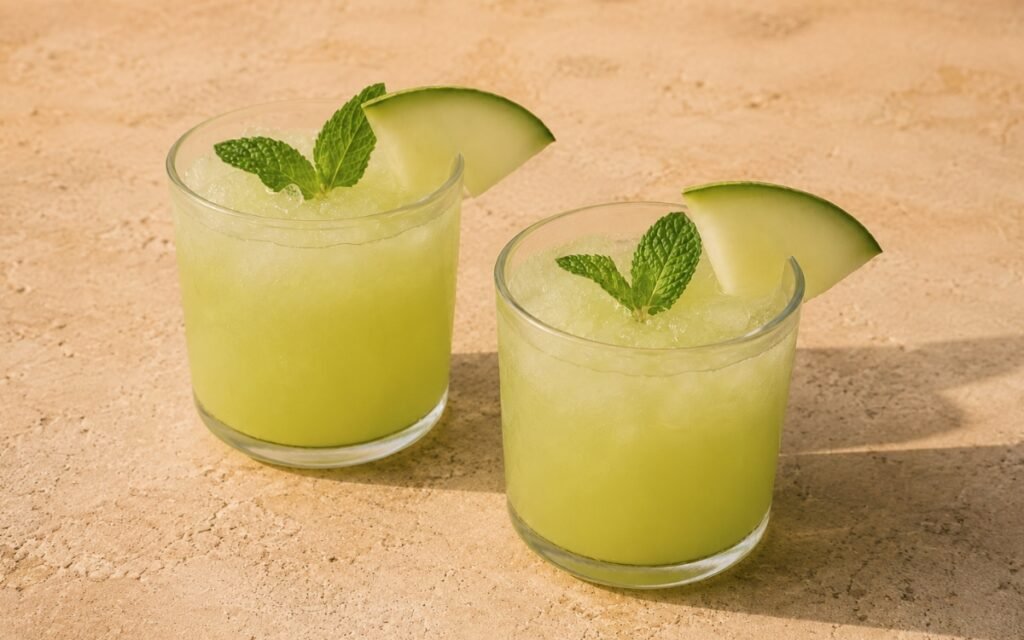
Melon Mint Agua Fresca Mocktail
Ripe honeydew blended with lime and honey, mint cold-infused — still, pale green, and cooling.
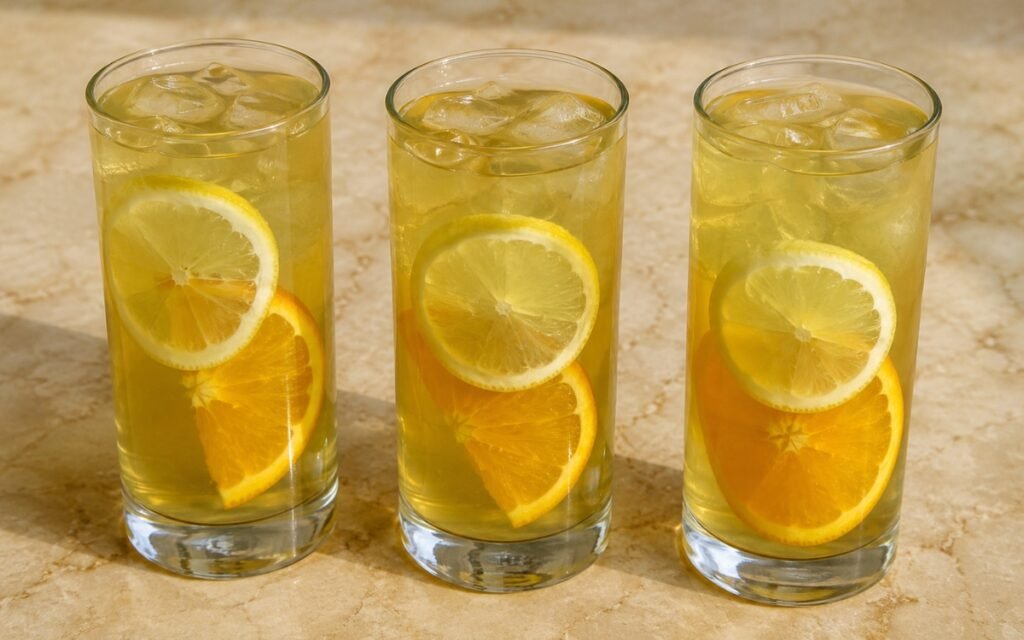
Fresh Citrus Green Iced Tea
Green tea at 75–80°C for 2–3 minutes, thin peel-on citrus slices cold-infused 15–20 minutes — strained promptly, honey, chilled. Light, bright, and clean.
Strawberry Lemonade Pitcher for a Crowd
Ingredients
Method
- Combine the 300g of thinly sliced strawberries, 140g of honey, and 240ml of water in a saucepan. Warm over low to medium-low heat, stirring gently until the honey dissolves and the strawberries begin softening. Simmer for 8–10 minutes — the extraction window that develops the strawberry’s warmer, more concentrated, specifically cooked-fruit depth while keeping the liquid specifically fluid and vivid rather than approaching the thick, jammy result of a reduction. The liquid should remain clearly pourable and flowing at the end of the cooking period. Remove from the heat. Add the zest of 2 lemons and cover. Steep for 5–8 minutes. The double-lemon-zest infusion at this larger scale provides the integrated citrus aromatic depth proportionate to the preparation’s volume. Strain through a fine-mesh sieve, pressing gently but firmly on the cooked strawberry solids. Allow to cool completely.
- Add the 300g of hulled, roughly chopped fresh strawberries to a blender or food processor. Blend for approximately 10 seconds at medium speed — just enough to produce a uniform strawberry purée without incorporating excessive air. Alternatively, mash thoroughly with a fork or potato masher until liquid. Strain through a fine-mesh sieve into a bowl, pressing the purée firmly to extract the maximum clean juice. At 300g of fresh strawberries the sieve-pressing yields approximately 150–180ml of vivid, specifically fresh, volatile-compound-rich raw strawberry juice. The two-component extraction philosophy established in the raspberry lemonade applies directly here: strawberry’s most pleasant aromatic compounds — primarily the furanone-family compounds responsible for its vivid, warm, specifically fresh-fruit character — exist in two categories with opposite heat responses. The cooked fraction captures the heat-stable depth; the raw fraction preserves the volatile freshness. Both are present in the finished pitcher, producing a more complete strawberry flavour than either alone.
- Add the lemon pulp from 2–3 lemons (seeds, membranes, and pith removed; clean pulp only) to the large pitcher and muddle gently. Add the 300ml of fresh lemon juice, the cooled honey-strawberry syrup, the strained fresh strawberry juice, 2 litres of ice-cold water, and the 2 pinches of fine sea salt. Stir thoroughly. Taste with the crowd-format assessment: the drink should be bright, clearly structured as lemonade, and specifically strawberry-flavoured without being dominated by either component at the expense of the other. The 300ml of lemon juice at this volume provides the structural acid backbone for 16 servings; if the strawberry character feels specifically stronger than the lemon, additional lemon juice (rather than additional water) sharpens the balance. If the concentration is too intense for the gathering’s taste profile, additional cold water up to 2.5 litres brings it to the lighter end of the range. The mild honey note is specifically important at this scale: 140–160g of a strongly flavoured honey (buckwheat, manuka, or heather) in a pitcher this size is sufficient to specifically overpower the strawberry and lemon’s aromatic profiles. Always a mild acacia, clover, or orange blossom honey.
- Refrigerate for 1–2 hours. Fill glasses with ice. Pour the chilled strawberry lemonade over the ice. Garnish with lemon slices and fresh strawberry slices on each glass rim. Serve immediately.