
Lemon Balm Strawberry Green Iced Tea
Lemon Balm Strawberry Green Iced Tea layers a brief lemon balm infusion and a light fresh strawberry syrup over a carefully brewed green tea base — one of the most naturally balanced drinks in this collection and one of the easiest to get exactly right on the first attempt, provided the green tea’s temperature is respected without exception. Green tea brewed above 80°C turns bitter and harsh in a way that no amount of strawberry sweetness or lemon balm freshness can correct afterward, which is why this recipe holds firmly to the same 75–80°C, 2–3 minute discipline used throughout the green tea preparations in this collection. The strawberry syrup is made entirely separately, simmered gently and strained without pressing to keep it clean and bright rather than starchy or jammy. Lemon balm is the most delicate herb handled in this entire collection — more fragile than mint or basil — and it specifically requires clapping rather than tearing or muddling, since aggressive handling releases bitter, grassy compounds even before the infusion has properly begun. The strawberry syrup quantity is deliberately variable, since ripeness affects natural sweetness and intensity significantly, and the recipe is built to be tasted and adjusted rather than measured rigidly. The result is clean, gently citrusy, and softly fruity — botanical without being assertive, sweet without being obvious.
Prep Time : 20 min
Cook Time : 10 min
Servings : 8
20 min
10 min
8
Ingredients
For the Green Tea Base
• 1.65 litres water
• 6–7 green tea bags — Sencha or China Green — this one on Amazon
For the Light Strawberry Syrup
• 250g fresh strawberries — hulled and halved
• ¼ cup (50g) white sugar
• ¾ cup (180ml) water
For the Botanical Flavoring
• 1 packed cup fresh lemon balm leaves — about 15–20g
• 1–2 Tbsp mild honey — to taste; start with 1 Tbsp — this one on Amazon
For Serving
• Ice
• Fresh lemon balm leaves
• Strawberry slices
This post may contain affiliate links. As an Amazon Associate I earn from qualifying purchases, at no additional cost to you.
Directions
- Brew the Green Tea
Heat the 1.65 litres of water to 75–80°C — do not boil. Green tea brewed at boiling temperature turns bitter and harsh, overwhelming both the lemon balm and the strawberry syrup before they even enter the glass. No thermometer? Boil, then rest uncovered for 4–5 minutes. Add the 6–7 green tea bags and steep for 2–3 minutes maximum. Remove gently without squeezing and cool to lukewarm. - Make the Light Strawberry Syrup
Combine the hulled and halved strawberries, sugar, and water in a small saucepan over medium-low heat. Bring to a gentle simmer and cook for 8–10 minutes — just until the berries have fully softened and released their juice and aroma. Keep the heat low throughout. Aggressive boiling reduces the syrup too quickly and pushes the strawberry flavour from fresh and bright toward cooked and jammy. - Strain the Syrup
Pour through a fine-mesh sieve into a bowl or measuring jug. Allow to drain naturally — do not press the solids. Pressing introduces starchy, pulpy liquid that muddies the syrup’s clean colour and delicate flavour. Discard the spent strawberries. Cool completely to room temperature before using. - Sweeten the Tea
While the tea is still slightly warm, stir in 100ml of the cooled strawberry syrup and taste carefully. The strawberry should read as soft and supportive — present in the background, not leading. Add up to 40ml more only if the fruit character is barely detectable. Follow with 1 tablespoon of mild honey, stirring until fully dissolved. Add a second tablespoon only if the balance genuinely needs it. - Infuse the Lemon Balm
Rinse the lemon balm leaves and gently clap them between your palms until the essential oils are clearly released — you should smell them immediately. Add the leaves to the cooled, sweetened tea base. Refrigerate and infuse for 6–10 minutes only, tasting at the 6-minute mark. Remove all leaves promptly the moment a clean, lemony herbal aroma develops. Lemon balm turns grassy and flat quickly — always pull early. - Chill and Serve
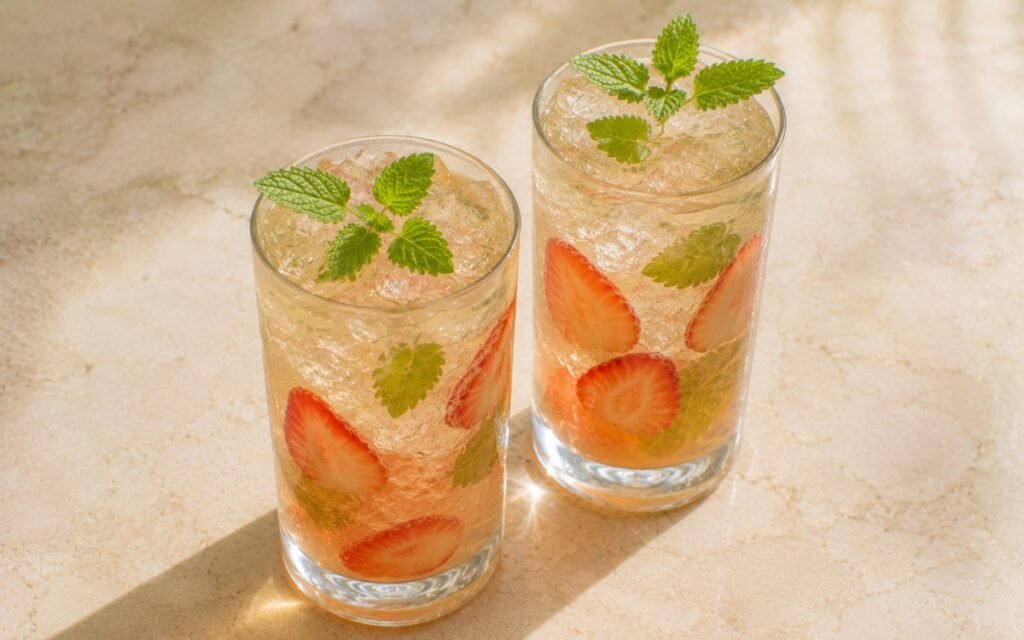
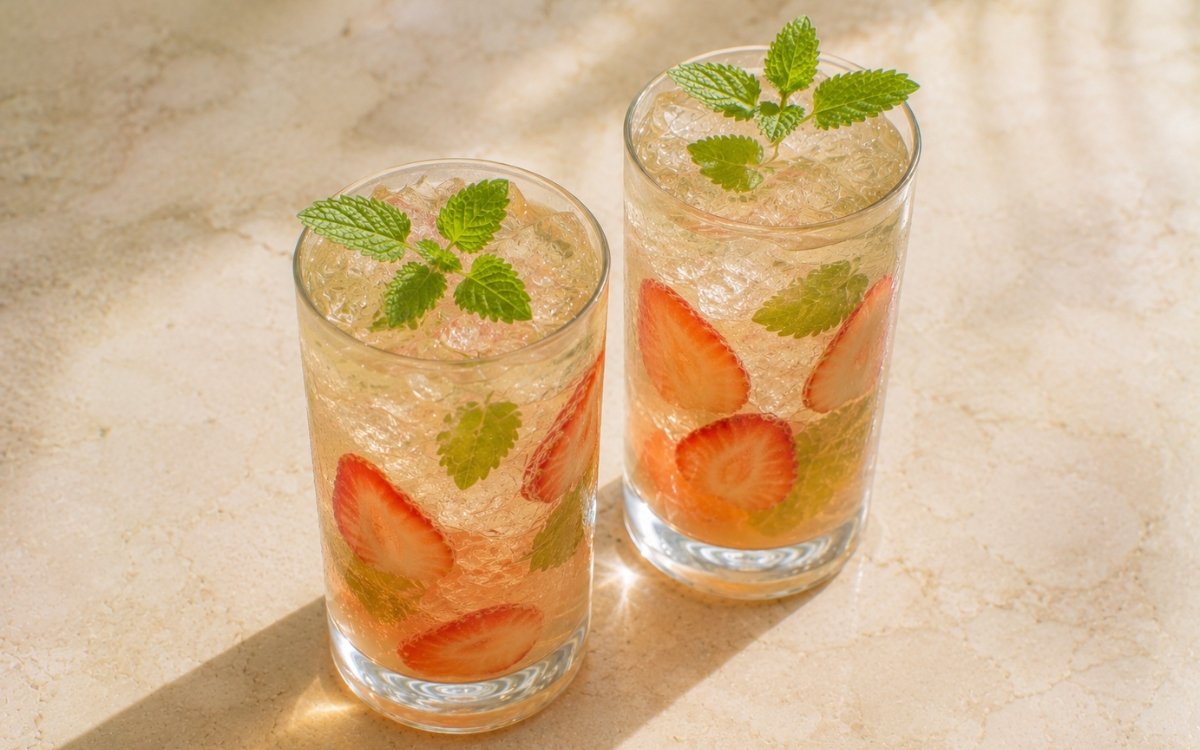
Continue chilling for 1–2 hours until completely cold and fully integrated. Fill glasses with ice, pour, and garnish with fresh lemon balm leaves and strawberry slices. Serve immediately while the herbal aroma is at its cleanest.
*Notes :
- Lemon balm is more delicate than most herbs used in cold tea infusions and requires gentler handling than mint or basil. Clapping rather than tearing or muddling is the correct preparation — it releases the aromatic oils without rupturing the leaf structure and releasing the bitter, grassy compounds that aggressive handling produces even before the infusion begins.
- Strawberry syrup quantity is variable by design because strawberry ripeness affects natural sweetness and intensity significantly. Start at 100ml, taste, and add more only if the fruit is barely present. Ripe, peak-season berries need less syrup to register clearly; underripe or frozen fruit may need the full 140ml plus the honey adjustment.
- Green tea temperature is the most technically critical step and the one most likely to determine whether the finished drink tastes clean or bitter. Water above 80°C extracts harsh compounds that no amount of strawberry sweetness or lemon balm freshness can correct. Brew carefully, cool patiently, and everything else in this recipe becomes easy.
- Best enjoyed within 24 hours. Remove all lemon balm leaves completely before storing — even small residue continues infusing and turns grassy by the following day.
Why This Recipe Works
This recipe works because green tea is brewed within a strict low-temperature window, avoiding bitterness that nothing added afterward could fix. The strawberry syrup is made entirely separately and strained without pressing, keeping it clean rather than starchy.
Lemon balm is clapped rather than torn or muddled, respecting how easily it turns bitter and grassy under rougher handling. And both the syrup quantity and honey are added gradually and tasted, since strawberry ripeness varies enough to make a fixed measurement unreliable.
Ingredient Breakdown
Green Tea Brewed at 75–80°C for 2–3 Minutes
The clean, delicate backbone — the single most technically critical step in the entire recipe.
Light Strawberry Syrup, Strained Without Pressing
The soft fruit sweetness — variable in quantity, tasted rather than measured rigidly.
Lemon Balm Clapped, Infused Cold for 6–10 Minutes
The gentle citrusy herbal lift — more delicate than mint or basil, pulled early to avoid a grassy shift.
1–2 Tbsp Mild Honey
The final rounding touch — added only as much as the balance genuinely needs.
Flavor Structure Explained
This Lemon Balm Strawberry Green Iced Tea follows a layered balance model:
- Fresh tea core (green tea)
- Soft fruit character (strawberry)
- Gentle citrus-herbal lift (lemon balm)
- Integrated balancing sweetness (honey)
- Clean delicate finish (tea-fruit-herb harmony)
Green tea defines the foundation with clean grassy notes and a light, refreshing structure that remains free of bitterness through careful preparation. Strawberry contributes a subtle fruit layer, adding gentle sweetness and soft berry aromatics that support rather than dominate the tea. Lemon balm provides the drink’s distinguishing herbal character, offering a delicate citrus-like freshness that is lighter and more refined than stronger herbs such as mint, basil, or rosemary. Honey smooths the transitions between the tea, fruit, and herbal elements, creating cohesion without becoming a noticeable source of sweetness. The result is an iced tea built around freshness, subtlety, and balance, where each component enhances the others without competing for attention.
Common Mistakes to Avoid
- Boiling the Water for Green Tea – Extracts harsh compounds that nothing added afterward can correct. Always 75–80°C.
- Pressing the Strawberry Syrup Solids – Introduces starchy, pulpy liquid. Always let it drain naturally.
- Tearing or Muddling the Lemon Balm – Releases bitter, grassy compounds before infusion even begins. Always clap gently instead.
- Leaving the Lemon Balm In Too Long – Turns flat and grassy quickly. Always pull at the first sign of clean, lemony aroma.
- Using a Fixed Syrup Quantity Regardless of Berry Ripeness – Strawberry intensity varies too much for a rigid measurement. Always taste and adjust.
Variations
With Basil
Replace the lemon balm with fresh basil, clapped the same way, for a warmer, sweeter herbal direction, in the spirit of the Basil Strawberry White Iced Tea.
With Rosemary
Replace the lemon balm with a small rosemary sprig for a drier, more piney finish, as in the Strawberry Rosemary White Tea.
With Mint
Replace the lemon balm with fresh mint, clapped the same way, for a cooler, more menthol-forward result.
Sparkling Version
Build the tea at a slightly higher syrup concentration, chill, and top with cold sparkling water just before serving.
Storage & Make-Ahead
Light strawberry syrup can be refrigerated in a sealed jar for up to 3 days.
Unsweetened brewed green tea can be refrigerated for up to 1 day.
Once assembled, the tea is best enjoyed within 24 hours, when the lemon balm aroma is at its most vibrant and fresh.
Frequently Asked Questions
Why is lemon balm treated as more delicate than mint or basil in this collection?
Lemon balm’s pleasant aromatic oils sit closer to the surface of the leaf and its structure is more easily damaged than mint’s or basil’s. Tearing or muddling releases bitter, grassy compounds even before the infusion has properly started, which is why clapping — gentle enough to release oils without rupturing the leaf — is the only correct handling here.
Why is the strawberry syrup quantity given as a range rather than a fixed amount?
Strawberry ripeness varies significantly in natural sweetness and aromatic intensity. Peak-season, fully ripe berries need less syrup to register clearly in the finished tea, while underripe or frozen fruit produces a milder syrup that needs more volume, plus a touch more honey, to reach the same balance.
Why is green tea’s temperature described as the most critical step in the whole recipe?
Green tea’s bitter compounds extract aggressively above 80°C, and once they’re in the liquid, neither the strawberry syrup nor the lemon balm can mask them. Every other careful step in this recipe only matters if the tea base itself starts out clean.
What other strawberry and herbal tea preparations share this approach?
The Basil Strawberry White Iced Tea shares the strawberry syrup technique on a white tea base with basil’s warmer, sweeter herbal character in place of lemon balm. The Strawberry Rosemary White Tea shares the strawberry-and-herb pairing with rosemary’s drier, more piney lift. The White Tea Strawberry Pitcher shares the same careful white tea and strawberry foundation at crowd scale, without an added herb.
Nutrition Facts
( per serving )
Calories
~35 kcal
Protein
0 g
Fat
0 g
Carbs
9 g
Calories
~35 kcal
Protein
0 g
Fat
0 g
Carbs
9 g
Related Recipes
Related Recipes

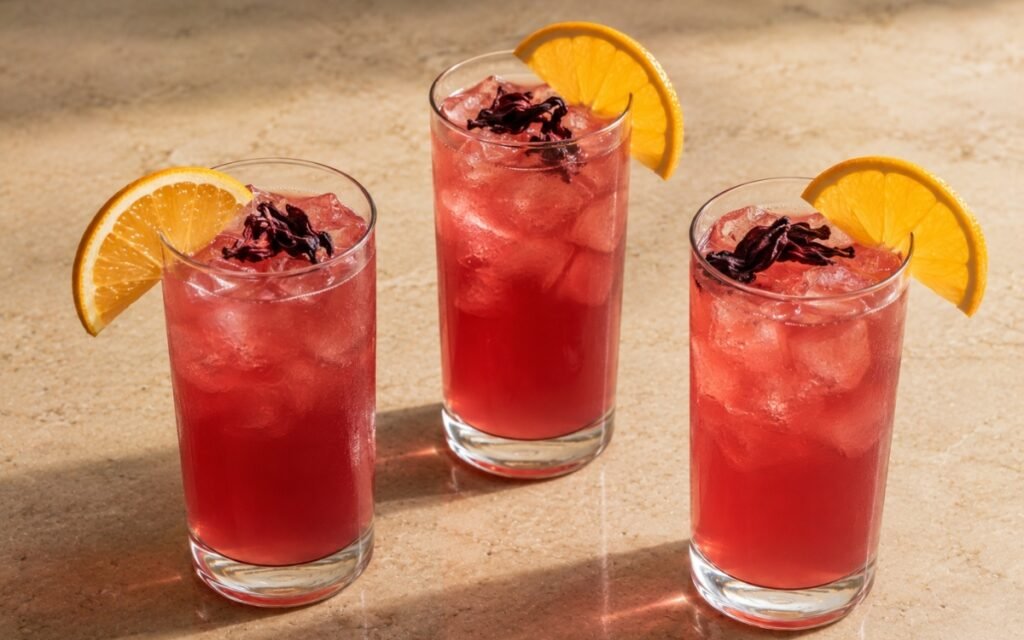
Hibiscus Ginger Orange White Tea Cooler
White tea at 75–80°C for 3–4 minutes, hibiscus and ginger infused together 6–8 minutes — orange juice as the structural bridge, honey, chilled. Vivid, tart, balanced.
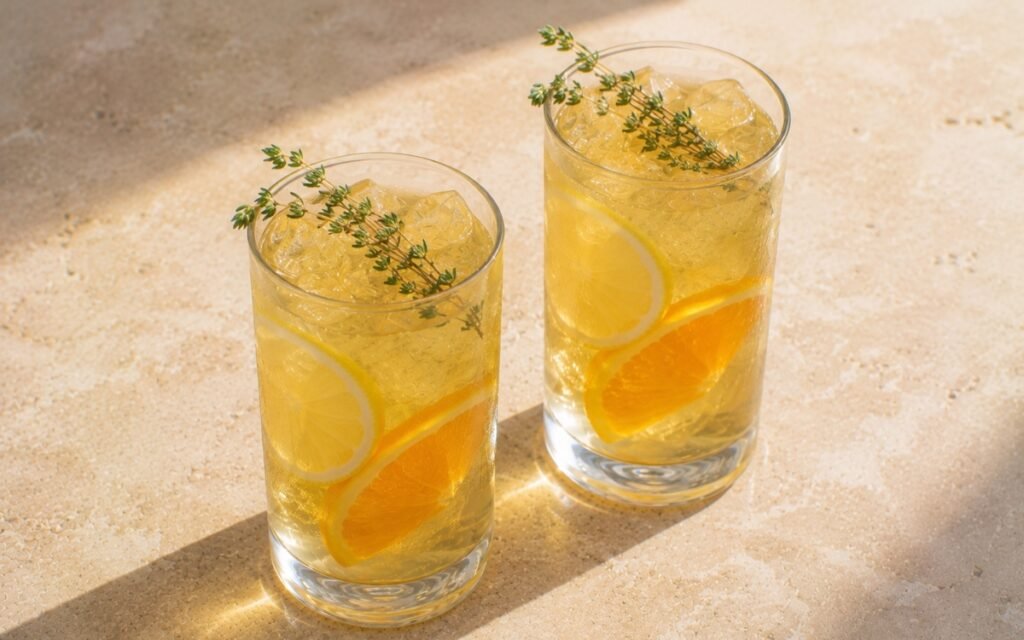
Thyme Lemon Orange Green Tea Cooler
Green tea at 75–80°C for 2–3 minutes, thyme clapped and infused cold — orange juice for softness, lemon juice for sharpness, honey, chilled. Bright and lightly herbal.
Light Hibiscus Mint Cooler
Hibiscus steeped at 95°C, honey while warm, exactly 1 tsp orange blossom water — mint cold-infused 10–15 minutes, chilled. Vivid ruby and floral.

You might also like
You might also like
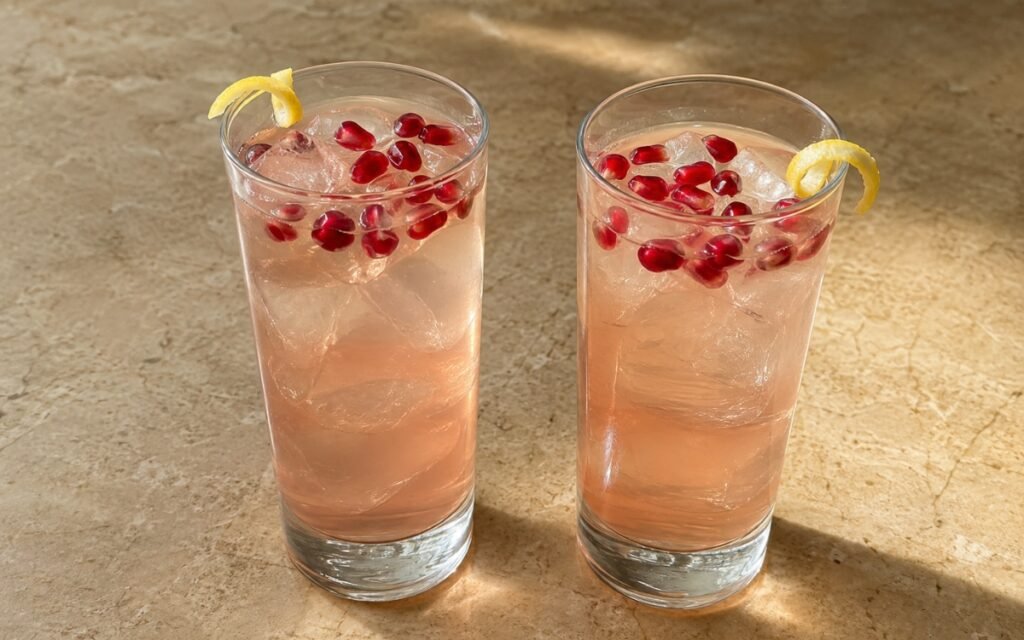
Pomegranate Iced Green Tea
Green tea at 75–80°C for 2–3 minutes, lemon peel infused cold, pomegranate arils gently fork-pressed and lightly strained — chilled. Bright, crisp, lightly fruity.
Fresh Peach Iced Tea
Black tea at 90–95°C for 2½–3 minutes, raw peach slices cold-infused 45–60 minutes — strained cleanly, honey, chilled. Bright, fresh, fruit-forward.
Strawberry Iced Black Tea
Black tea at 90–95°C for 2½–3 minutes, strawberries simmered into a light unreduced syrup, lemon peel infused cold 5 minutes — chilled. Fresh, crisp, restrained.


Lemon Balm Strawberry Green Iced Tea
Ingredients
Method
- Heat the 1.65 litres of water to 75–80°C — do not boil. Green tea brewed at boiling temperature turns bitter and harsh, overwhelming both the lemon balm and the strawberry syrup before they even enter the glass. No thermometer? Boil, then rest uncovered for 4–5 minutes. Add the 6–7 green tea bags and steep for 2–3 minutes maximum. Remove gently without squeezing and cool to lukewarm.
- Combine the hulled and halved strawberries, sugar, and water in a small saucepan over medium-low heat. Bring to a gentle simmer and cook for 8–10 minutes — just until the berries have fully softened and released their juice and aroma. Keep the heat low throughout. Aggressive boiling reduces the syrup too quickly and pushes the strawberry flavour from fresh and bright toward cooked and jammy.
- Pour through a fine-mesh sieve into a bowl or measuring jug. Allow to drain naturally — do not press the solids. Pressing introduces starchy, pulpy liquid that muddies the syrup’s clean colour and delicate flavour. Discard the spent strawberries. Cool completely to room temperature before using.
- While the tea is still slightly warm, stir in 100ml of the cooled strawberry syrup and taste carefully. The strawberry should read as soft and supportive — present in the background, not leading. Add up to 40ml more only if the fruit character is barely detectable. Follow with 1 tablespoon of mild honey, stirring until fully dissolved. Add a second tablespoon only if the balance genuinely needs it.
- Rinse the lemon balm leaves and gently clap them between your palms until the essential oils are clearly released — you should smell them immediately. Add the leaves to the cooled, sweetened tea base. Refrigerate and infuse for 6–10 minutes only, tasting at the 6-minute mark. Remove all leaves promptly the moment a clean, lemony herbal aroma develops. Lemon balm turns grassy and flat quickly — always pull early.
- Continue chilling for 1–2 hours until completely cold and fully integrated. Fill glasses with ice, pour, and garnish with fresh lemon balm leaves and strawberry slices. Serve immediately while the herbal aroma is at its cleanest.