
Blackberry Lemonade
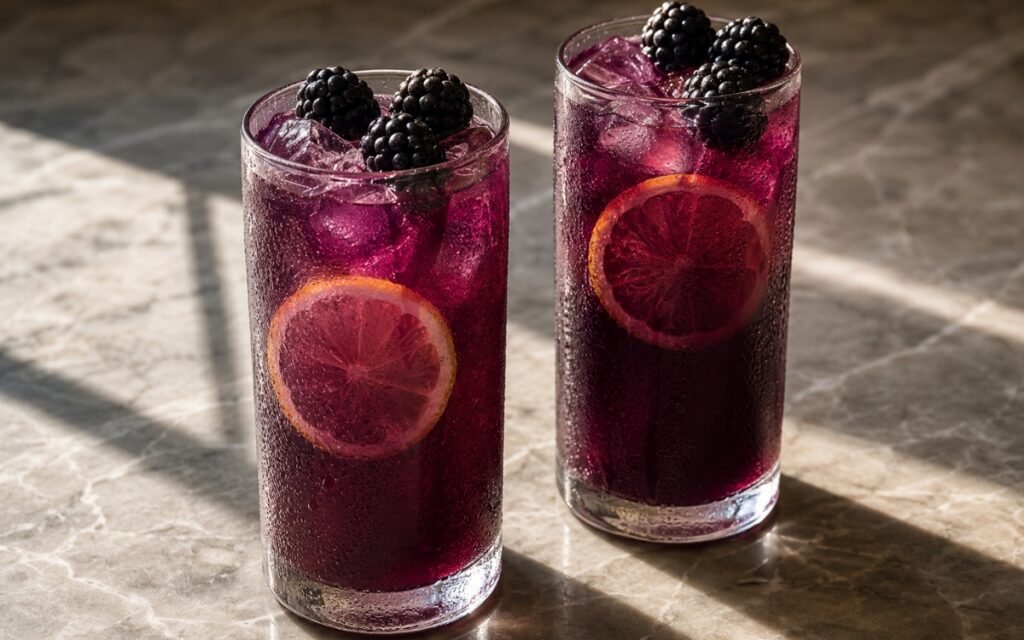
Blackberry lemonade and raspberry lemonade share the same dual-extraction structure — cooked honey syrup plus cold-strained fresh juice — but blackberry’s fundamentally different flavour character requires specific adjustments in approach and specific expectations in the finished result. Blackberry is deeper, more specifically wine-adjacent, more tannic, and more darkly complex than raspberry. Its primary anthocyanin pigments — particularly cyanidin-3-glucoside — produce a more intense, more specifically inky-purple colour and a more specifically earthy, wine-like depth alongside the bright fruitiness that raspberry provides more cleanly. The tannin difference is the most consequential technical variable: blackberry’s higher tannin content means the pressing approach during both the syrup straining and the raw juice extraction requires more specific care than raspberry does. Firm pressing of the cooked blackberry solids or the raw mashed seeds produces a noticeably more astringent, more bitter note than firm pressing of the equivalent raspberry material — the tannin fraction extracted under mechanical pressure contributing a specifically more aggressive character. The honey-blackberry syrup’s off-heat lemon zest is the same integrated aromatic approach applied across this collection’s fruit syrup preparations. The result: a dark, vivid, specifically deep purple lemonade with the kind of fruit character that people who find raspberry lemonade too bright specifically prefer.
Prep Time : 15 min
Cook Time : 5–8 min
Servings : 8
15 min
5–8 min
8
Ingredients
For the Fruit Structure
• Clean pulp or segments from 2–3 lemons — seeds and tough membranes removed; no white pith
For the Honey-Blackberry Syrup
• 150g fresh blackberries
• 120ml water
• 90–110g mild honey — start with 90g — this one on Amazon
• Zest of 1 lemon — yellow part only; added off heat
For the Fresh Blackberry Juice
• 150g fresh blackberries — kept raw; mashed and cold-strained
For the Lemonade Base
• 240ml fresh lemon juice — approximately 5–6 lemons
• 120–150ml honey-blackberry syrup — start with 120ml
• All the strained fresh blackberry juice — from the cold extraction above
• 750ml–1 litre ice-cold water — start with 750ml, adjust after tasting
• Pinch of fine sea salt
For Serving
• Ice cubes
• Lemon slices
• Fresh blackberries
This post may contain affiliate links. As an Amazon Associate I earn from qualifying purchases, at no additional cost to you.
Directions
- Make the Honey-Blackberry Syrup
Combine the 150g of blackberries, 120ml of water, and 90g of honey in a small saucepan over low heat. Stir gently until the honey dissolves and the blackberries begin releasing their deeply pigmented juice — the liquid shifting rapidly from clear to a dark, inky purple-black. Cook for 5–8 minutes at the lowest effective simmer, pressing the blackberries gently as they soften. The blackberry’s greater tannin content compared to raspberry means the cooking temperature and time management is specifically important. At a full rolling boil or at sustained simmering, blackberry releases significantly more of its tannin compounds into the liquid — producing a prepared syrup that is more astringent and less cleanly fruity than the correct low-heat approach. The low heat produces the same concentrated flavour extraction while keeping the tannin contribution at the level where it provides pleasant depth rather than noticeable bitterness. Remove from the heat. Add the lemon zest — off heat, for the same integrated fat-soluble aromatic oil extraction into the warm syrup applied across the blueberry, mango, and raspberry lemonade preparations. Cover and steep for 5–8 minutes. Strain through a fine-mesh sieve with gentle but firm pressing — enough to extract the maximum dark syrup from the cooked berry solids without forcing the dry residue through. The blackberry’s higher pectin and tannin content means the strained solids will feel slightly more resistant under pressing than raspberry’s — press firmly but stop before the pressing produces a noticeably more astringent note in the syrup. Allow to cool completely. - Extract the Fresh Blackberry Juice
Add the remaining 150g of fresh blackberries to a bowl. Mash very gently with a fork — lighter than the raspberry preparation’s mashing because blackberry’s higher tannin content means the raw seeds and skin fragments release more astringent compounds under mechanical pressure than raspberry’s equivalent. The goal is to break the berries sufficiently to release their juice without creating a fine-grained mash that will press the seed tannnins into the strained juice. Strain through a fine-mesh sieve, pressing lightly — more lightly than even the raspberry preparation’s light press. The fresh blackberry’s cold-extracted juice should be a vivid, dark, inky-purple and specifically fragrant — the volatile aromatic compounds that distinguish fresh blackberry from cooked preserved in the cold extraction. The tannin management during this pressing is the single most consequential technique decision in the entire preparation. - Build the Lemonade
Add the lemon pulp to the large pitcher and mash gently. Add the 240ml of fresh lemon juice, 120ml of the cooled honey-blackberry syrup, all of the cold-strained fresh blackberry juice, 750ml of ice-cold water, and the pinch of fine sea salt. Stir thoroughly. Taste with the specific blackberry-lemonade assessment: the drink should taste deeply, specifically of blackberry — warm and concentrated from the syrup, vivid and bright from the fresh juice — with the lemon’s clean acid providing the structural backbone that makes it specifically a lemonade rather than blackberry juice. The darker, more wine-adjacent, slightly more earthy character of blackberry means the correct balance point is slightly different from raspberry lemonade: the lemon’s structural acid needs to be clearly present and specifically vivid to counteract the deeper, more specifically complex blackberry flavour. If the blackberry’s depth is overwhelming the lemon’s structural character, a small additional amount of lemon juice restores the balance. - Chill and Serve
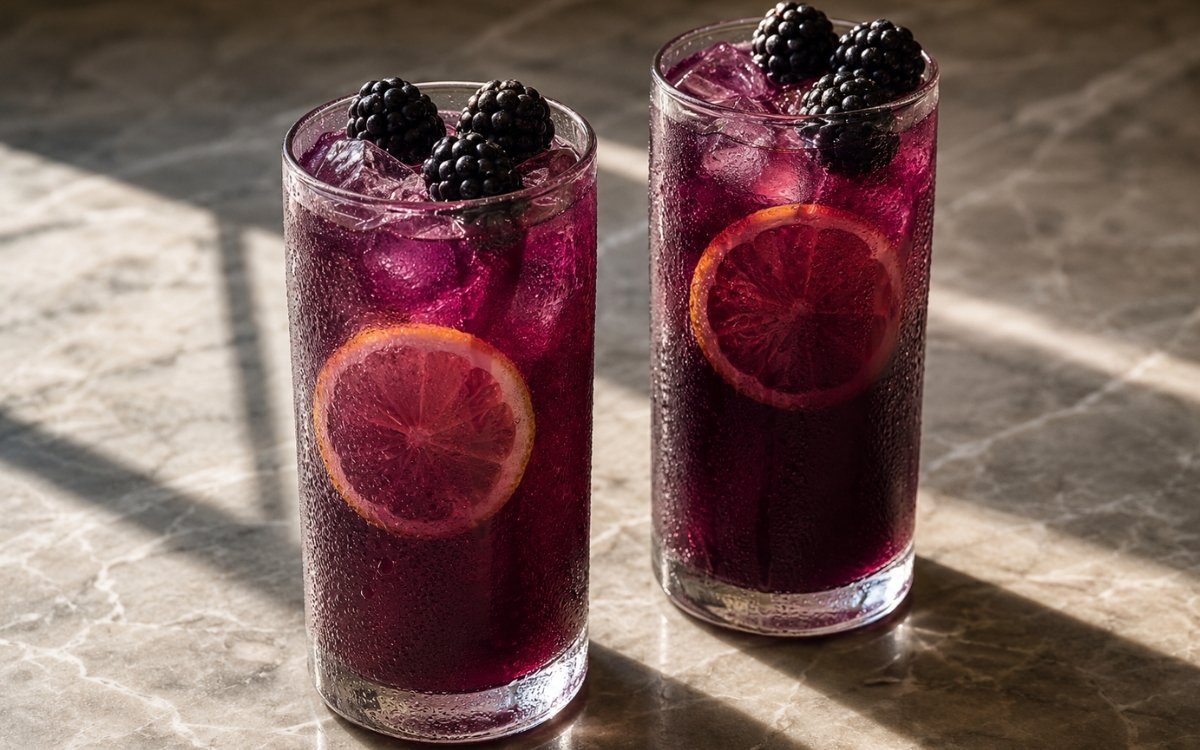
Refrigerate for 1–2 hours. Fill glasses with ice. Pour the chilled blackberry lemonade over the ice. Garnish with a lemon slice and several fresh blackberries. Serve immediately.
*Notes :
- Blackberry season in the Northern Hemisphere is typically July through September — the period when field-picked wild blackberries and cultivated varieties are at their most flavourful and most specifically aromatic. Wild blackberries, smaller and more intensely flavoured than cultivated varieties, produce a more specifically complex, more wine-adjacent syrup and fresh juice. Cultivated blackberries produce a milder, more uniformly sweet result. Both work well; the honey quantity should be adjusted for the natural sweetness of the specific berries.
- Frozen blackberries are an excellent substitute for fresh when out of season and often produce an even more vivid colour from the pre-ruptured cell walls, but the fresh juice extraction step from frozen-thawed berries will be wetter and may require slightly less water in the lemonade base to compensate.
Why This Recipe Works
This recipe works because the dual-extraction approach simultaneously captures the heat-stable concentrated depth from the low-heat honey syrup and the volatile aromatic brightness from the cold-strained fresh juice.
The tannin management — low heat for the syrup, light pressing for both straining steps — keeps the blackberry’s more assertive tannin content at the level of pleasant depth rather than astringency.
Honey provides the aromatically resonant sweetness alongside blackberry’s complex profile. And the lemon’s structural acid is specifically calibrated to hold up against blackberry’s deeper, more wine-adjacent character.
Ingredient Breakdown
Dual-Blackberry Approach (Cooked Honey Syrup + Cold-Strained Raw Juice)
The same two-temperature extraction as raspberry — warm concentrated depth and cold volatile brightness — with the higher-tannin management requirement at every pressing stage.
Low Heat Throughout (Tannin Management)
The blackberry-specific requirement — higher tannin content than raspberry means lower heat produces better flavour-to-astringency ratio.
Light Pressing at Both Straining Stages
The tannin-minimisation approach — more specifically important for blackberry than raspberry’s equivalent pressing care.
Honey With Lemon Zest Off Heat
The warm-deep-resonant sweetener alongside the integrated citrus aromatic depth — the same approach as raspberry lemonade.
Flavor Structure Explained
This Blackberry lemonade follows a layered balance model:
- Deep berry core (blackberry)
- Bright citrus backbone (lemon juice)
- Warm rounded sweetness (honey)
- Fresh aromatic lift (raw blackberry juice)
- Structured refreshing finish (dark-fruit acidity balance)
Blackberry defines the foundation with rich berry depth, subtle earthiness, and a darker fruit character that feels more mature and wine-like than brighter berries such as raspberry. Lemon juice provides the essential acidic structure that keeps the drink refreshing and prevents the blackberry’s density from becoming heavy. Honey contributes warm, rounded sweetness that naturally complements the berry’s darker flavor profile instead of merely masking tartness. Fresh cold-strained blackberry juice introduces volatile aromatics and brightness that lift the deeper cooked fruit tones, creating contrast within the berry character itself. The result is a lemonade that balances richness and freshness while maintaining a distinctly sophisticated fruit profile.
Common Mistakes to Avoid
- Pressing the Blackberry Solids Firmly (Either Stage) – Blackberry’s higher tannin content means firm pressing produces noticeably more astringent results than raspberry’s equivalent pressing. Always specifically lighter pressing than feels instinctive.
- Cooking at Medium or High Heat – Blackberry’s tannin extraction increases significantly with temperature. Always low heat for the syrup.
- Not Balancing the Lemon Against Blackberry’s Depth – Blackberry’s deeper, more wine-adjacent character pulls the perception further away from the lemon’s structural acid than raspberry does. Always taste specifically for the lemon’s presence and add more if needed.
- Using Only Cooked or Only Raw Blackberry – Each captures a different compound category. Always both components for the complete layered character.
Variations
With Thyme
Add 2 small fresh thyme sprigs to the saucepan alongside the blackberries during the syrup preparation — removed with the solids during straining. Thyme’s warm herbal depth is a specifically beautiful pairing with blackberry’s wine-adjacent character.
With Vanilla
Add ¼ tsp of pure vanilla extract to the cooled honey-blackberry syrup — the vanilla’s warm aromatic sweetness alongside blackberry’s depth produces a specifically more luxurious direction.
With Lime
Replace the lemon juice in the base with lime juice at the same quantity — lime’s sharper, more specifically tropical acid produces a different balance against blackberry’s depth, more assertive and more specifically tart.
Sparkling Version
Build the blackberry-lemon base without water, chill separately, and add sparkling water right before serving — the carbonation amplifies both the volatile compounds from the fresh juice and the dark colour’s visual impact.
Storage & Make-Ahead
Honey-blackberry syrup can be refrigerated in a sealed jar for up to 4 days. Its deep color remains vibrant throughout storage, and the flavor is at its best within the first 48 hours.
Fresh cold-strained blackberry juice is best used within 4 to 6 hours to preserve its brightest and most delicate aromatic qualities.
Once assembled, blackberry lemonade can be refrigerated for up to 2 days. For the freshest flavor and aroma, it is best enjoyed within 24 hours.
Frequently Asked Questions
Why is the tannin management more important than in the raspberry lemonade?
Blackberry contains significantly more tannin compounds — particularly ellagitannins and condensed proanthocyanidins — than raspberry. Under heat or mechanical pressing pressure, these compounds extract at a more aggressive rate, producing noticeable astringency and bitterness that obscures the deep fruity character. Low heat and light pressing at every stage specifically keep the tannin contribution at the depth-providing level rather than the astringency level.
Why does the lemon’s structural role matter more here than in the raspberry version?
Blackberry’s deeper, more wine-adjacent, more earthy flavour character pulls more strongly against the perception of the lemon’s clean citric acid than raspberry’s brighter, cleaner fruitiness. The lemon’s structural acid needs to be more specifically present and more specifically vivid to maintain the lemonade’s identity against blackberry’s depth — without it the drink shifts toward blackberry juice territory rather than specifically a lemonade.
What makes blackberry’s character “wine-adjacent”?
Blackberry contains cyanidin-3-glucoside as its primary anthocyanin pigment — the same compound that produces the deep purple-red colour and the earthy, complex depth found in deeply coloured red wines made from grapes with similar anthocyanin profiles. This specific compound contributes the fruity depth, the slight earthiness, and the specifically more complex aromatic character that distinguishes blackberry from the cleaner brightness of raspberry.
What other blackberry and berry-acid preparations share this direction?
The Blackberry Lemonade — the classic version available on the site — shares the blackberry-and-lemon combination in a more direct preparation. The Fresh Strawberry Lemonade shares the berry-and-lemon structure with strawberry’s warmer, sweeter, more immediately accessible fruitiness — the closest structural comparison without the wine-adjacent depth. The Blackberry Mojito Mocktail shares the blackberry as primary fruit with lime and mint providing the aromatic freshness — a sparkling, specifically cocktail-structured preparation built on the same deep-berry-and-citrus foundation.
Nutrition Facts
( per serving )
Calories
~80 kcal
Protein
0 g
Fat
0 g
Carbs
21 g
Calories
~80 kcal
Protein
0 g
Fat
0 g
Carbs
21 g
Related Recipes
Related Recipes

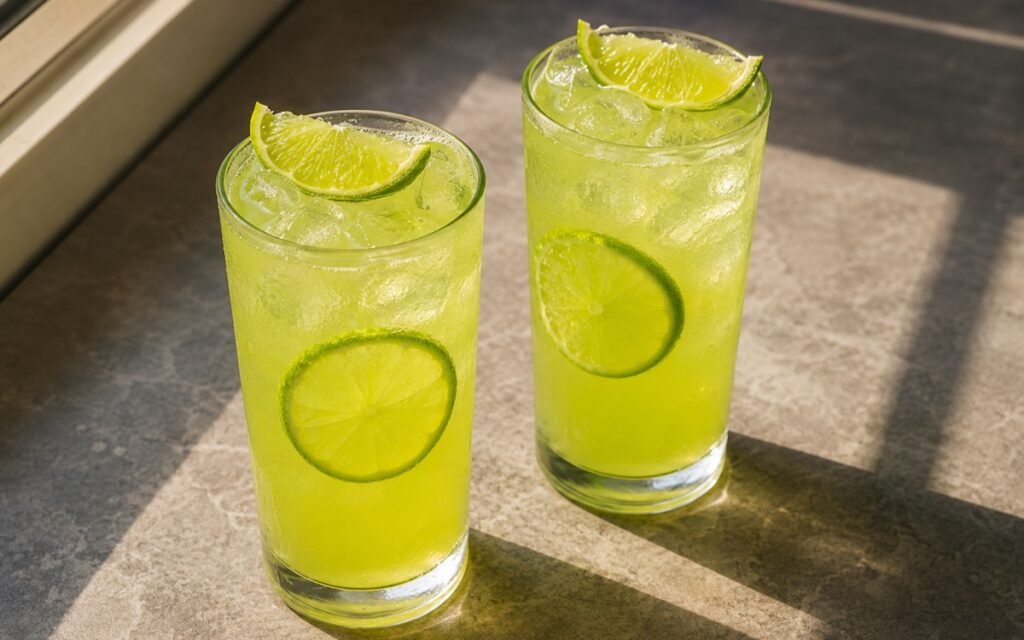
Lime Lemonade — Limenade
Lime zest steeped off heat exactly 8–10 minutes, clean pulp mashed with all pith removed — fresh lime juice, sugar calibrated for lime’s acid, salt. Sharp and bold.
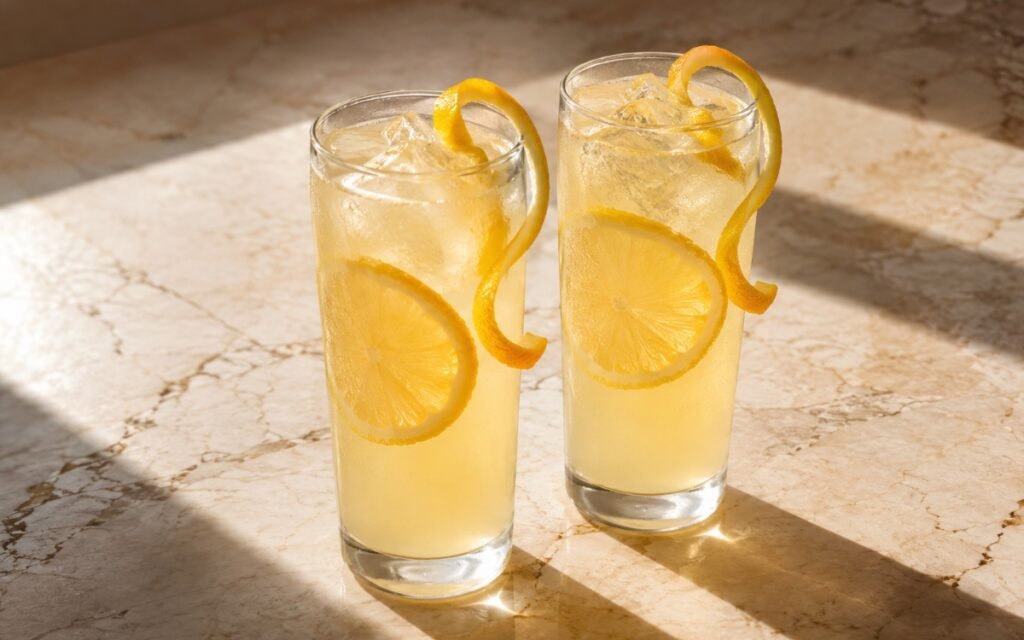
Meyer Lemon Lemonade
Meyer lemon zest steeped 8–10 minutes for floral aromatics, syrup starting at 100ml for natural sweetness — fresh juice, salt, chilled. Soft, floral, and elegantly balanced.
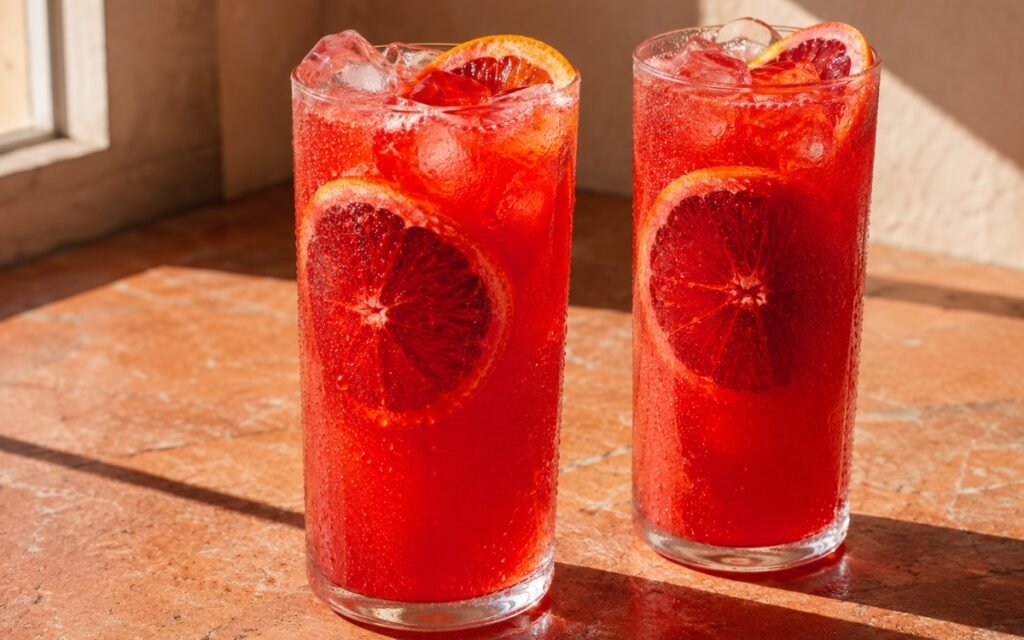
Blood Orange Lemonade
Orange and lemon peels steeped off heat exactly 10–12 minutes, pulp mashed in pitcher — blood orange juice, optional lemon, salt, cold water. Vivid ruby and citrusy.
You might also like
You might also like
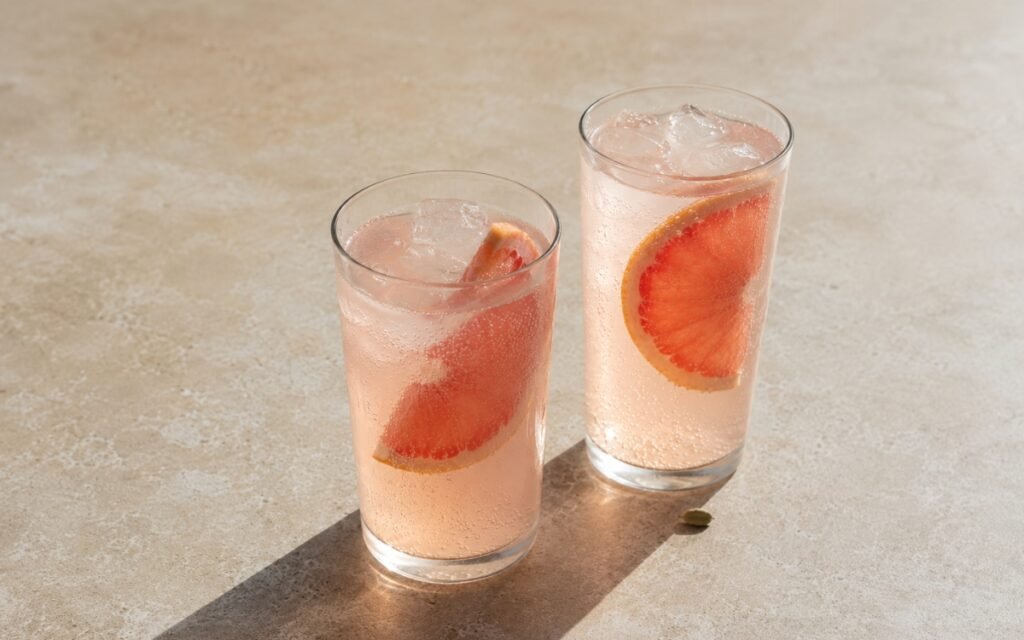
Grapefruit Cardamom Tonic Mocktail
Fresh grapefruit with cardamom warmth over tonic water — pale blush, bitter, and aromatic.
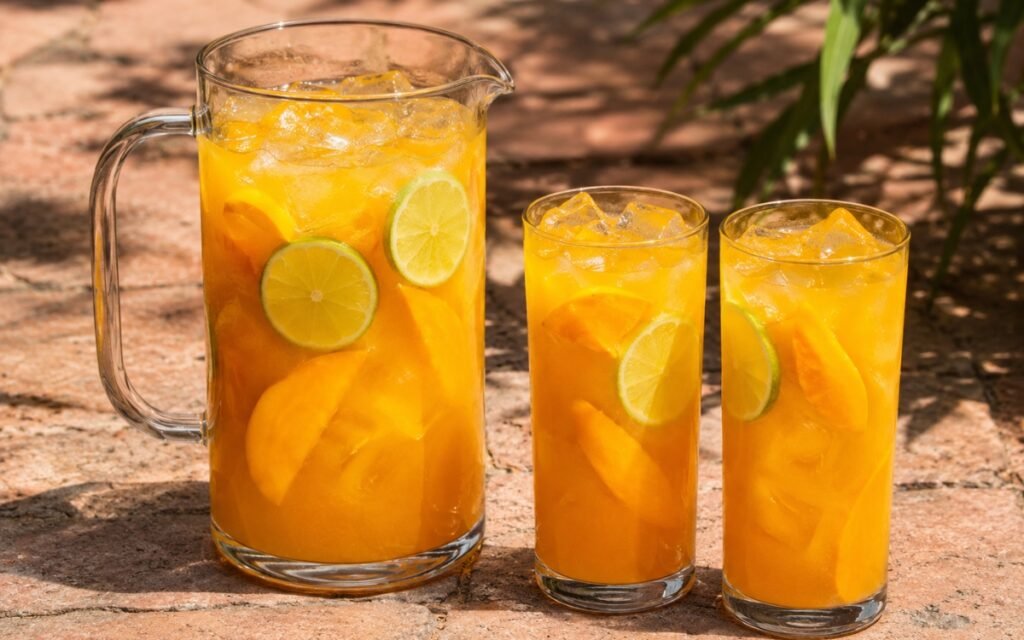
Mango Lime Pitcher Drink
Ripe mango in light brown sugar syrup with lime zest and chili off heat — pressed firmly, combined with fresh lime juice, salt, cold water, chilled. Tropical and lightly warm.
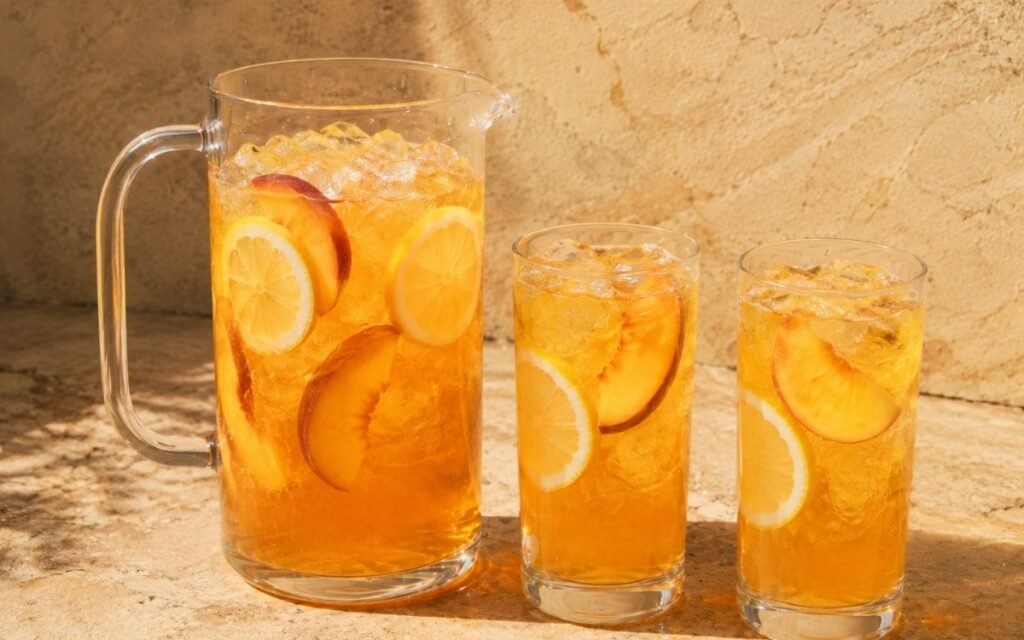
Peach Lemonade Pitcher Drink
900g skin-on ripe peaches in honey syrup with lemon zest off heat — combined with 300–360ml lemon juice, salt, cold water, chilled. Warm, floral, and crowd-ready.
Blackberry Lemonade
Ingredients
Method
- Combine the 150g of blackberries, 120ml of water, and 90g of honey in a small saucepan over low heat. Stir gently until the honey dissolves and the blackberries begin releasing their deeply pigmented juice — the liquid shifting rapidly from clear to a dark, inky purple-black. Cook for 5–8 minutes at the lowest effective simmer, pressing the blackberries gently as they soften. The blackberry’s greater tannin content compared to raspberry means the cooking temperature and time management is specifically important. At a full rolling boil or at sustained simmering, blackberry releases significantly more of its tannin compounds into the liquid — producing a prepared syrup that is more astringent and less cleanly fruity than the correct low-heat approach. The low heat produces the same concentrated flavour extraction while keeping the tannin contribution at the level where it provides pleasant depth rather than noticeable bitterness. Remove from the heat. Add the lemon zest — off heat, for the same integrated fat-soluble aromatic oil extraction into the warm syrup applied across the blueberry, mango, and raspberry lemonade preparations. Cover and steep for 5–8 minutes. Strain through a fine-mesh sieve with gentle but firm pressing — enough to extract the maximum dark syrup from the cooked berry solids without forcing the dry residue through. The blackberry’s higher pectin and tannin content means the strained solids will feel slightly more resistant under pressing than raspberry’s — press firmly but stop before the pressing produces a noticeably more astringent note in the syrup. Allow to cool completely.
- Add the remaining 150g of fresh blackberries to a bowl. Mash very gently with a fork — lighter than the raspberry preparation’s mashing because blackberry’s higher tannin content means the raw seeds and skin fragments release more astringent compounds under mechanical pressure than raspberry’s equivalent. The goal is to break the berries sufficiently to release their juice without creating a fine-grained mash that will press the seed tannnins into the strained juice. Strain through a fine-mesh sieve, pressing lightly — more lightly than even the raspberry preparation’s light press. The fresh blackberry’s cold-extracted juice should be a vivid, dark, inky-purple and specifically fragrant — the volatile aromatic compounds that distinguish fresh blackberry from cooked preserved in the cold extraction. The tannin management during this pressing is the single most consequential technique decision in the entire preparation.
- Add the lemon pulp to the large pitcher and mash gently. Add the 240ml of fresh lemon juice, 120ml of the cooled honey-blackberry syrup, all of the cold-strained fresh blackberry juice, 750ml of ice-cold water, and the pinch of fine sea salt. Stir thoroughly. Taste with the specific blackberry-lemonade assessment: the drink should taste deeply, specifically of blackberry — warm and concentrated from the syrup, vivid and bright from the fresh juice — with the lemon’s clean acid providing the structural backbone that makes it specifically a lemonade rather than blackberry juice. The darker, more wine-adjacent, slightly more earthy character of blackberry means the correct balance point is slightly different from raspberry lemonade: the lemon’s structural acid needs to be clearly present and specifically vivid to counteract the deeper, more specifically complex blackberry flavour. If the blackberry’s depth is overwhelming the lemon’s structural character, a small additional amount of lemon juice restores the balance.
- Refrigerate for 1–2 hours. Fill glasses with ice. Pour the chilled blackberry lemonade over the ice. Garnish with a lemon slice and several fresh blackberries. Serve immediately.