Ingredients
Method
Make the Honey-Blackberry Syrup
- Combine the 150g of blackberries, 120ml of water, and 90g of honey in a small saucepan over low heat. Stir gently until the honey dissolves and the blackberries begin releasing their deeply pigmented juice — the liquid shifting rapidly from clear to a dark, inky purple-black. Cook for 5–8 minutes at the lowest effective simmer, pressing the blackberries gently as they soften. The blackberry's greater tannin content compared to raspberry means the cooking temperature and time management is specifically important. At a full rolling boil or at sustained simmering, blackberry releases significantly more of its tannin compounds into the liquid — producing a prepared syrup that is more astringent and less cleanly fruity than the correct low-heat approach. The low heat produces the same concentrated flavour extraction while keeping the tannin contribution at the level where it provides pleasant depth rather than noticeable bitterness. Remove from the heat. Add the lemon zest — off heat, for the same integrated fat-soluble aromatic oil extraction into the warm syrup applied across the blueberry, mango, and raspberry lemonade preparations. Cover and steep for 5–8 minutes. Strain through a fine-mesh sieve with gentle but firm pressing — enough to extract the maximum dark syrup from the cooked berry solids without forcing the dry residue through. The blackberry's higher pectin and tannin content means the strained solids will feel slightly more resistant under pressing than raspberry's — press firmly but stop before the pressing produces a noticeably more astringent note in the syrup. Allow to cool completely.
Extract the Fresh Blackberry Juice
- Add the remaining 150g of fresh blackberries to a bowl. Mash very gently with a fork — lighter than the raspberry preparation's mashing because blackberry's higher tannin content means the raw seeds and skin fragments release more astringent compounds under mechanical pressure than raspberry's equivalent. The goal is to break the berries sufficiently to release their juice without creating a fine-grained mash that will press the seed tannnins into the strained juice. Strain through a fine-mesh sieve, pressing lightly — more lightly than even the raspberry preparation's light press. The fresh blackberry's cold-extracted juice should be a vivid, dark, inky-purple and specifically fragrant — the volatile aromatic compounds that distinguish fresh blackberry from cooked preserved in the cold extraction. The tannin management during this pressing is the single most consequential technique decision in the entire preparation.
Build the Lemonade
- Add the lemon pulp to the large pitcher and mash gently. Add the 240ml of fresh lemon juice, 120ml of the cooled honey-blackberry syrup, all of the cold-strained fresh blackberry juice, 750ml of ice-cold water, and the pinch of fine sea salt. Stir thoroughly. Taste with the specific blackberry-lemonade assessment: the drink should taste deeply, specifically of blackberry — warm and concentrated from the syrup, vivid and bright from the fresh juice — with the lemon's clean acid providing the structural backbone that makes it specifically a lemonade rather than blackberry juice. The darker, more wine-adjacent, slightly more earthy character of blackberry means the correct balance point is slightly different from raspberry lemonade: the lemon's structural acid needs to be clearly present and specifically vivid to counteract the deeper, more specifically complex blackberry flavour. If the blackberry's depth is overwhelming the lemon's structural character, a small additional amount of lemon juice restores the balance.
Chill and Serve
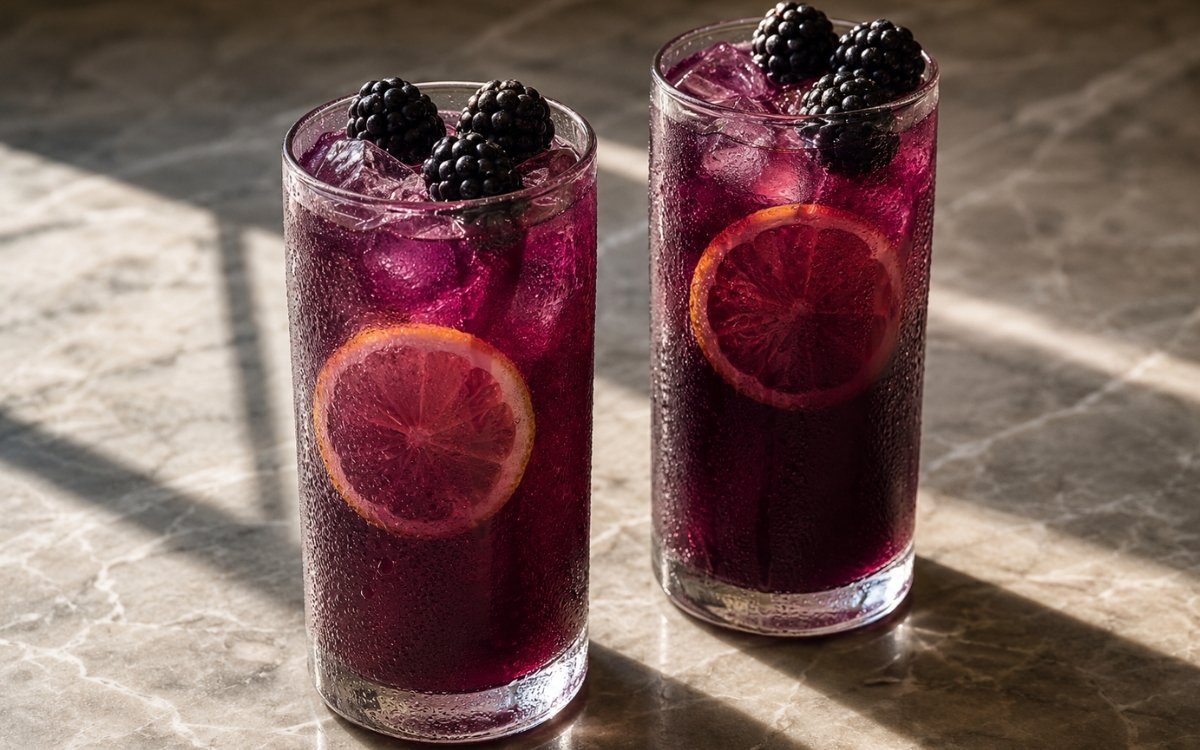
- Refrigerate for 1–2 hours. Fill glasses with ice. Pour the chilled blackberry lemonade over the ice. Garnish with a lemon slice and several fresh blackberries. Serve immediately.
Notes
Blackberry season in the Northern Hemisphere is typically July through September — the period when field-picked wild blackberries and cultivated varieties are at their most flavourful and most specifically aromatic. Wild blackberries, smaller and more intensely flavoured than cultivated varieties, produce a more specifically complex, more wine-adjacent syrup and fresh juice. Cultivated blackberries produce a milder, more uniformly sweet result. Both work well; the honey quantity should be adjusted for the natural sweetness of the specific berries.
Frozen blackberries are an excellent substitute for fresh when out of season and often produce an even more vivid colour from the pre-ruptured cell walls, but the fresh juice extraction step from frozen-thawed berries will be wetter and may require slightly less water in the lemonade base to compensate.