
Classic Sparkling Lemonade
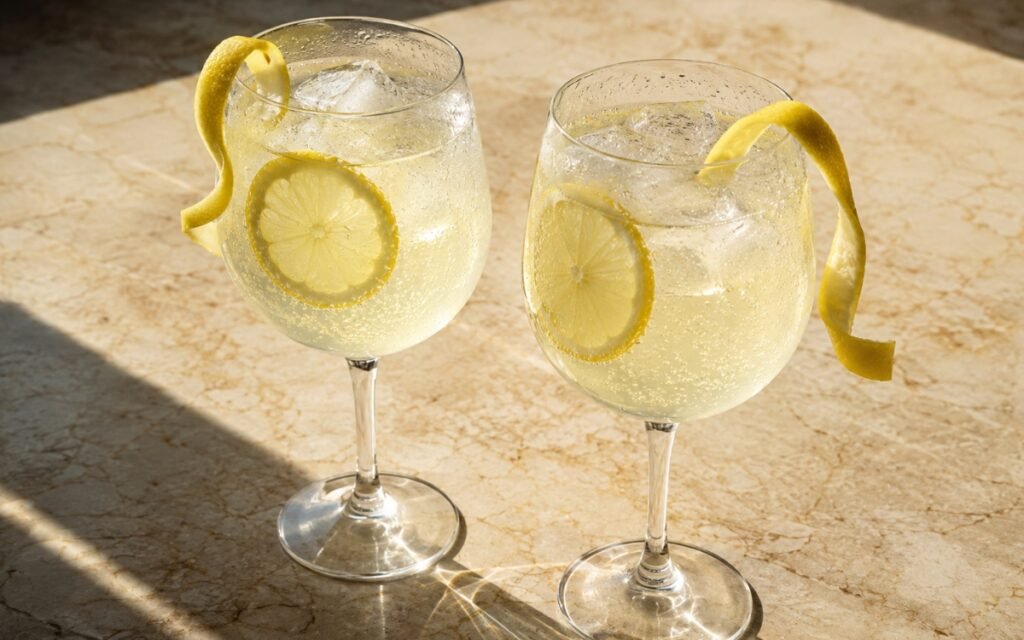
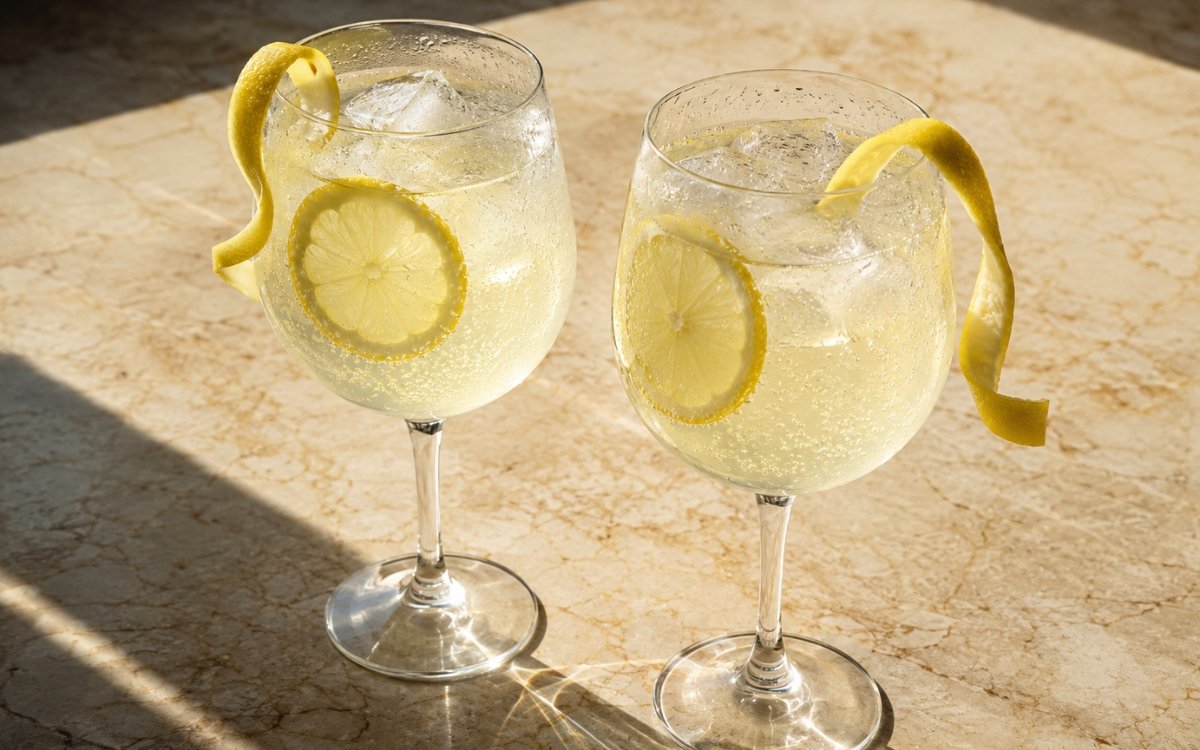
Classic sparkling lemonade is fresh lemon juice, a light syrup of sugar and water, and a pinch of salt built into a chilled lemon base, then lengthened with ice-cold sparkling water at the last moment for a crisp, lively glass. Building and chilling the concentrated lemon base completely, rather than mixing everything in the pitcher ahead of time, is the technique this whole drink depends on for real carbonation in the glass — cold sparkling water poured gently onto a cold base keeps far more of its bubbles than water added early, stirred hard or poured onto a warm base, the same build-the-base-first principle used elsewhere in this collection whenever a drink is finished with something fizzy. A gentle pour along the side of the pitcher and only one or two slow stirs are what keep the bubbles intact while the base spreads evenly through the sparkling water. A light syrup of 65g sugar to 240ml water, added at two-thirds with the rest held back, is what keeps this version deliberately light and easy to adjust. The payoff is a sparkling lemonade with real, bright lift — lively bubbles, crisp lemon, clean light sweetness and a sharp, refreshing finish.
Prep Time : 15 min
Cook Time : 5 min
Servings : 8
15 min
5 min
8
Ingredients
For the Sparkling Lemonade
• 220–250ml fresh lemon juice — approximately 5–6 medium lemons; start with 220ml
• 65g white granulated sugar — this one on Amazon
• 240ml water — for the simple syrup
• 1–1.2 litres ice-cold sparkling water — added right before serving; start with 1 litre
• ⅛ tsp fine sea salt
For Serving
• Ice cubes
• Lemon slices
This post may contain affiliate links. As an Amazon Associate I earn from qualifying purchases, at no additional cost to you.
Directions
- Make the Simple Syrup Without Reduction
Combine the 65g of white sugar and 240ml of water in a small saucepan. Stir over medium heat until the sugar is completely dissolved and the liquid is clear, which takes no more than about 5 minutes, then remove from the heat immediately — no simmering and no reduction. This is a light syrup of roughly 1 part sugar to 3.7 parts water by weight, and with no meaningful evaporation it yields about 280–285ml. If a few crystals remain on the base of the pan, stir off the heat for a few seconds until they disappear. Allow the syrup to cool completely before it meets the lemon juice. That unreduced, fully cooled syrup is what gives a predictable sweetness per millilitre, so the two-thirds measure and any later adjustment behave exactly as expected. - Juice the Lemons
While the syrup cools, juice the lemons until you have 220–250ml of fresh juice — approximately 5–6 medium lemons. Roll each lemon firmly on the counter before cutting to make juicing easier, then strain out the seeds and any large pieces of pulp. The juice should smell bright and fragrant rather than flat. Plan to start the base with 220ml, and use up to 250ml only if your lemons taste noticeably mild. That freshly squeezed juice is the entire flavour of this drink, so its quality decides how vivid the finished glass tastes. - Build and Chill the Lemon Base
In a pitcher, combine the 220ml of lemon juice, approximately two-thirds of the cooled light syrup — about 190ml — and the ⅛ tsp of fine sea salt. Stir well until the salt has dissolved. This concentrated base carries roughly 43g of the original 65g of sugar; the remaining syrup, about 90–95ml, is reserved for sweetness adjustment, so cover it and refrigerate it alongside the base. The base should taste sharper and more assertive than a comfortable drink, because the sparkling water will dilute it substantially. Transfer the pitcher to the refrigerator and chill for 1–2 hours, until completely cold. Do not add any sparkling water at this stage. That fully chilled base is what lets the cold sparkling water hold its carbonation, since carbon dioxide stays dissolved far better in cold liquid than in warm. - Add the Sparkling Water
Remove the chilled lemon base from the refrigerator immediately before serving. Pour the 1 litre of ice-cold sparkling water gently down the side of the pitcher rather than directly into the centre, so it slides along the wall into the base instead of plunging through it. Stir once or twice only, very gently, with a single slow movement — just enough to spread the concentrated base evenly through the sparkling water. Avoid vigorous mixing, which releases carbonation quickly and leaves the drink noticeably flatter. That side pour and minimal stir are what keep the drink lively, because every bit of agitation drives dissolved carbon dioxide out as bubbles that never reach the glass. - Taste and Adjust
Taste immediately. If the acidity feels too aggressive, add a small amount of the reserved light syrup, pouring it gently along the side of the pitcher and stirring once; add more only after tasting again. If the lemonade tastes too intense, add a splash more ice-cold sparkling water, up to 1.2 litres in total, pouring it down the side in the same way. Keep each adjustment small and quick, since the drink loses carbonation the longer it stands open. That brief, measured adjustment is what fits the balance to your particular lemons without stirring the bubbles away. - Serve Immediately
Fill the glasses with ice cubes as soon as the lemonade is balanced. Pour the sparkling lemonade over the ice from close range rather than from a height, since a long fall releases carbonation before the drink reaches the glass. Garnish each glass with a lemon slice and serve straight away, while the lemonade is cold and fully fizzy. Pour the whole pitcher promptly rather than leaving it to stand between rounds. That short gap between adding the sparkling water and drinking is what decides how much carbonation remains in each glass.
*Notes :
- Chilling the lemon base completely before the sparkling water arrives deserves genuine recognition as the technique most directly responsible for whether this lemonade reaches the glass fully fizzy. Carbon dioxide stays dissolved far better in cold liquid than in warm, so cold sparkling water meeting a warm base starts losing its bubbles immediately — which is why the base chills for 1–2 hours and the sparkling water goes in only at the last moment.
- The gentle side pour and the single slow stir deserve the same attention this technique receives throughout this collection’s other sparkling drinks, because agitation is the other main cause of carbonation loss. Every vigorous stir, every pour from height and every minute in an open pitcher releases more carbon dioxide — so the sparkling water slides down the pitcher wall, is stirred once or twice at most, and is served straight away.
- The light syrup deserves genuine respect as the detail most directly responsible for how predictable the sweetness is — 65g of sugar in 240ml of water, roughly 1:3.7 by weight, gives about 280–285ml of syrup. Adding only about two-thirds of it, around 190ml carrying roughly 43g of sugar, keeps the starting glass deliberately light, and the reserved third lets each batch be sweetened further to taste rather than over-sweetened from the start.
- Carbonation deserves attention as a genuine part of the drink’s structure rather than simply added volume. It changes the drink’s sensory profile, adding lively bubbles and a sharper, more refreshing finish — which is why this version intentionally uses its own lighter formulation instead of simply topping up the Classic Fresh Lemonade with sparkling water, and why the reserved syrup is there to adjust the sweetness to taste.
Why This Recipe Works
This recipe works because the lemon base is built and chilled completely before any sparkling water goes in, so the cold base and cold sparkling water hold as much carbonation as possible once combined.
The side pour and one or two slow stirs then combine them evenly while releasing as few bubbles as possible. The light syrup, with only about two-thirds added to start, keeps the sweetness clean and deliberately light, while the reserved syrup allows adjustment to taste.
A small pinch of salt sharpens the lemon’s character without tasting salty. Served immediately over ice, the result is crisp, bright and fully fizzy.
Ingredient Breakdown
Fully Chilled Lemon Base
The critical technique — built first and chilled for 1–2 hours, so it meets the cold sparkling water without driving out its carbonation.
Side Pour and Single Stir
The critical technique — sparkling water slid down the pitcher wall and stirred once or twice, combining evenly with minimal carbonation loss.
Light Syrup (65g Sugar, 240ml Water)
The critical ingredient choice — roughly 1:3.7 by weight, about 280–285ml, cooled completely for predictable, easily adjustable sweetness.
Two-Thirds of the Syrup to Start (About 190ml)
The critical timing technique — roughly 43g of the 65g sugar enters the base, with the rest reserved for adjusting.
Fresh Lemon Juice (220–250ml)
The flavour foundation — freshly squeezed juice gives the bright, sharp citrus core; start with 220ml for the standard balance.
⅛ tsp Fine Sea Salt
The finishing touch — a tiny amount that sharpens the lemon’s character and makes it taste brighter without reading as salty.
Flavor Structure Explained
This classic sparkling lemonade follows a layered balance model:
- Bright citrus core (fresh lemon juice)
- Clean, light sweetness (two-thirds of the light syrup)
- Flavour-enhancing salinity (pinch of fine sea salt)
- Lively sparkling structure (ice-cold sparkling water)
- Cold, crisp finish (ice cubes and lemon slices)
Lemon defines the foundation with sharp citric acidity and vivid freshness that remain the drink’s central identity. The light syrup balances that acidity with clean sweetness while staying neutral enough to let the lemon lead. A small amount of salt subtly intensifies the citrus, making it taste brighter and more precise. Carbonation adds lively bubbles and a sharper, more refreshing finish, while the ice and lemon slices keep each glass cold and crisp — the final layer that ties this sparkling lemonade together.
Common Mistakes to Avoid
- Adding Sparkling Water in Advance – This leaves the drink noticeably less fizzy, since even 30 minutes in the pitcher releases carbonation before serving. Always add the sparkling water right before serving.
- Stirring Vigorously After Adding Sparkling Water – This drives out dissolved carbon dioxide, and more than two gentle stirs leaves the lemonade flatter. Always use one or two slow, gentle stirs.
- Pouring from Height – This releases carbonation as the lemonade falls into the glass, flattening each serving before the first sip. Always pour over the ice from close range.
- Using the Still Lemonade’s Sugar Quantity – This makes a much sweeter drink than this deliberately light sparkling version is designed to be. Always use 65g of sugar and start with two-thirds of the syrup.
- Adding Sparkling Water to a Warm Base – This makes the sparkling water lose its bubbles quickly, because carbon dioxide escapes faster from warmer liquid. Always chill the lemon base completely first.
Variations
Fresh Ginger Syrup Version
Add a few thin slices of fresh ginger to the saucepan with the sugar and water, then strain out the ginger once the syrup has cooled and before building the lemon base, for a gentle warmth under the lemon.
Honey Version
eplace the white sugar with 50g of mild honey dissolved in the 240ml of water, adding an aromatic, floral warmth that sits alongside the lemon for a more complex sparkling glass.
Mint Version
Add 10 lightly clapped fresh mint leaves to the chilled lemon base for 15 minutes, then remove them before the sparkling water goes in, for a cool, minimal herbal lift.
Elderflower Cordial Version
Add 30ml of good elderflower cordial to the lemon base and start with about 130ml of the light syrup instead of 190ml, balancing the cordial’s sweetness with a floral, French-aperitif-style character.
Storage & Make-Ahead
The lemon base, without the sparkling water, can be refrigerated in a sealed container for up to 2 days, so it can be built ahead and kept fully chilled until the moment of serving.
Keep the reserved third of the light syrup, about 90–95ml, covered in the refrigerator alongside the base, ready for adjusting the sweetness once the sparkling water has gone in.
Keep the sparkling water sealed and refrigerated until the last moment, because an opened or warm bottle has already started losing the carbonation that this drink depends on.
Once the sparkling water has been added, the lemonade is not suitable for storage and should be served immediately, since the carbonation fades steadily the longer it stands in the pitcher.
For a party, set out the ice, lemon slices and glasses before combining, so the time between adding the sparkling water and pouring the first glass is as short as possible.
Frequently Asked Questions
Why does this sparkling version use less sugar than the Classic Fresh Lemonade?
It is a deliberately different, lighter formulation: 65g of sugar made into a light syrup, with only about two-thirds of it, roughly 43g of sugar, added to start. Carbonation adds lively bubbles and a sharper finish, and the reserved syrup lets you sweeten to taste.
Why add the sparkling water at the last possible moment?
Carbonation is carbon dioxide dissolved under pressure, and once the bottle is opened it escapes progressively — faster with warmth, agitation and time. Adding the sparkling water just before serving keeps the most carbonation in the finished glass.
Why pour along the side of the pitcher rather than directly into the base?
A direct pour drives the sparkling water’s fall straight into the base, causing a rush of bubbles and real carbonation loss. A side pour lets it slide down the pitcher wall and enter the base with minimal agitation.
Why is only two-thirds of the light syrup added to the lemon base?
The syrup yields about 280–285ml, and two-thirds — about 190ml — carries roughly 43g of the 65g of sugar. Lemons vary in acidity, so starting lighter and adding reserved syrup after tasting avoids an over-sweet batch.
What other homemade lemonade recipes can I try?
Classic Fresh Lemonade is the still version of this drink, with its own sweeter formulation and no carbonation, while Sparkling Ginger Lemonade keeps the sparkling format and adds a ginger-infused syrup for warmth. Yuzu Lemonade brings a gentle floral note, Blood Orange Lemonade a deeper colour and rounder citrus character, and the Mint Lemonade Spritz — French Style Mocktail adds mint, honey and white verjus for a more elevated sparkling glass.
Nutrition Facts
( per serving )
Calories
~28 kcal
Protein
0 g
Fat
0 g
Carbs
7 g
Calories
~28 kcal
Protein
0 g
Fat
0 g
Carbs
7 g
Related Recipes
Related Recipes

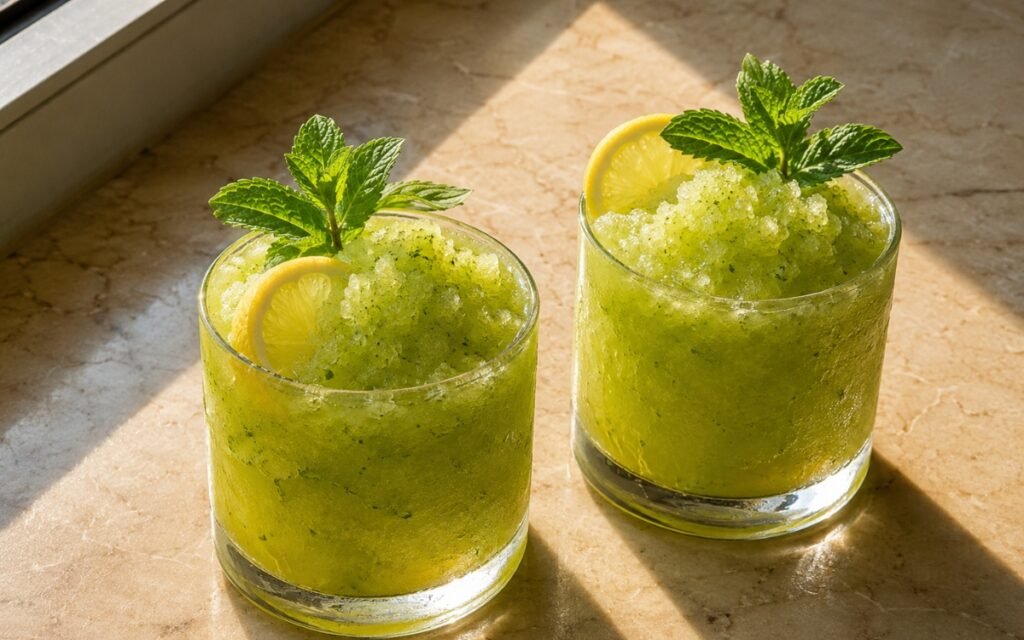
Mint Lemonade — Blended
Lemon zest syrup off heat, mint added last to blender — blended 15–25 seconds maximum, served immediately for slushy icy texture. Aromatic, cool, and bright.
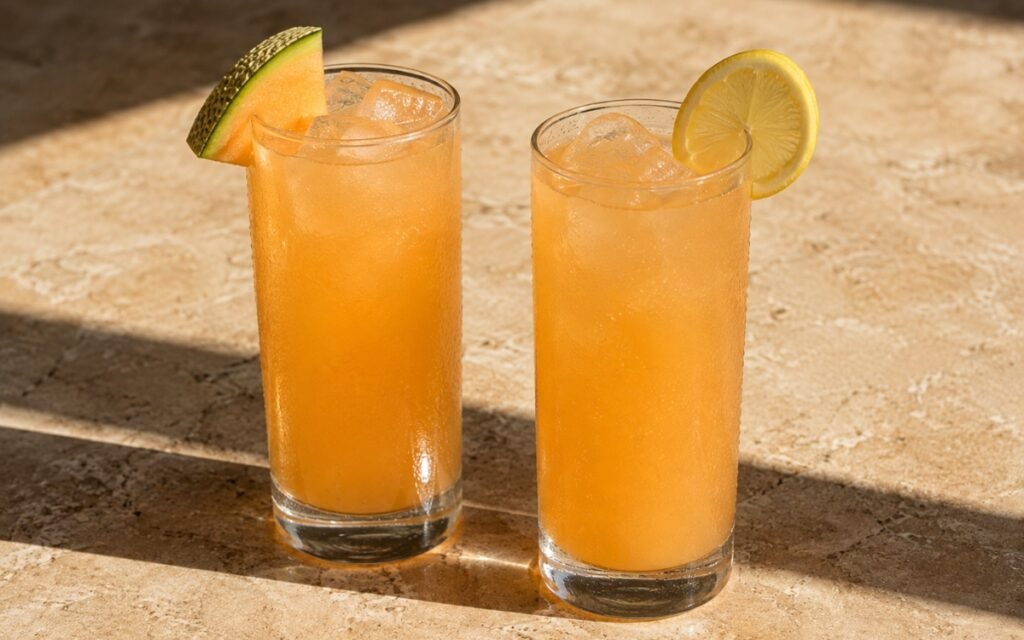
Cantaloupe Lemonade
Cold-extracted lemon zest and juice combined with blended ripe cantaloupe for a soft orange, smooth, melon-forward lemonade.
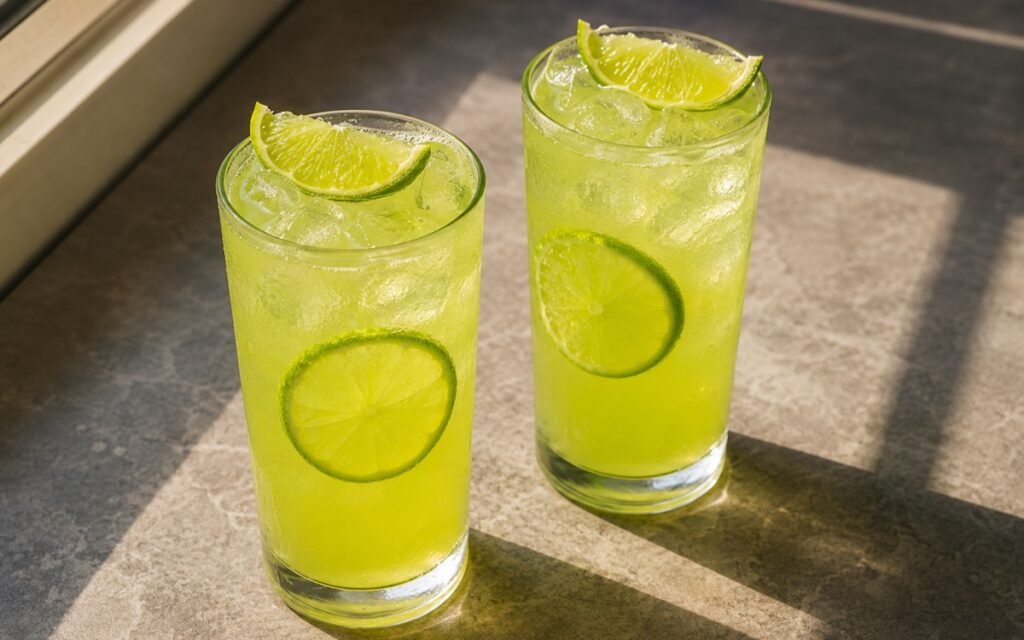
Lime Lemonade — Limenade
Lime zest steeped off heat exactly 8–10 minutes, clean pulp mashed with all pith removed — fresh lime juice, sugar calibrated for lime’s acid, salt. Sharp and bold.
You might also like
You might also like
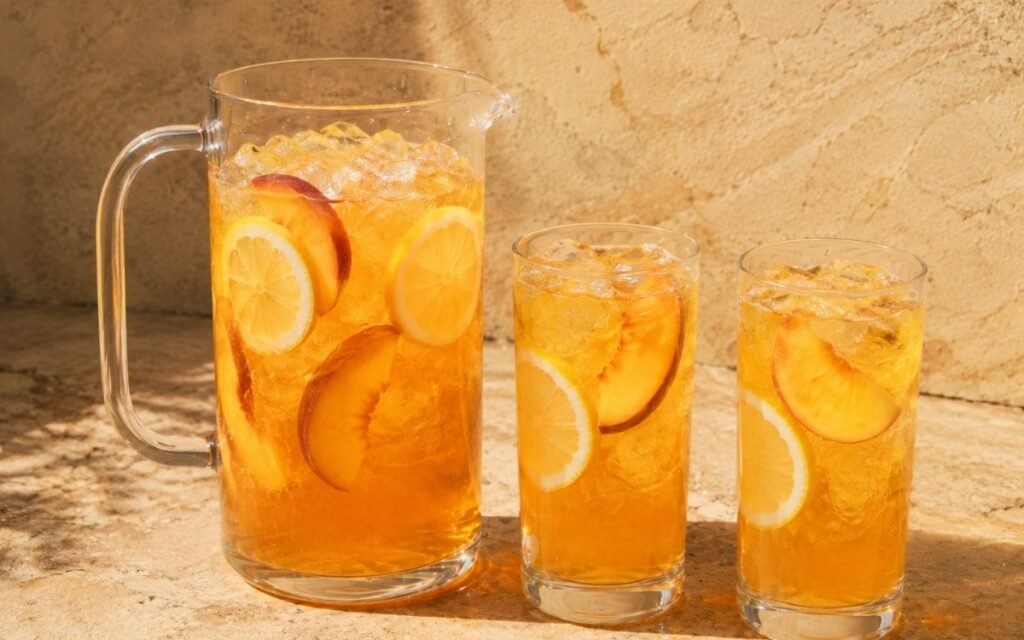
Peach Lemonade Pitcher Drink
900g skin-on ripe peaches in honey syrup with lemon zest off heat — combined with 300–360ml lemon juice, salt, cold water, chilled. Warm, floral, and crowd-ready.
Yuzu Green Iced Tea (with Honey)
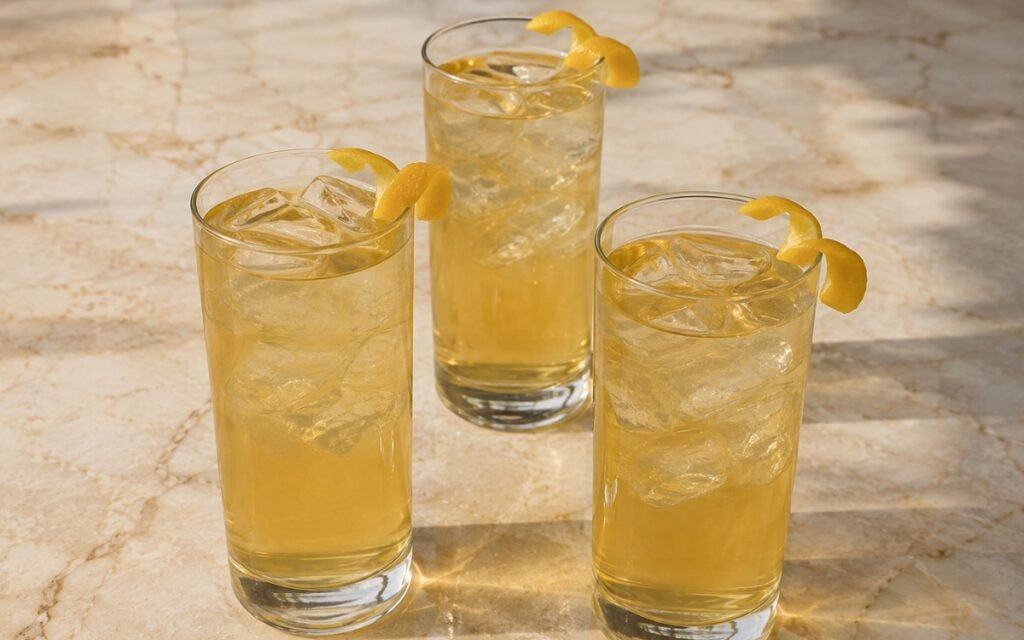
Green tea at 75–80°C for 2–3 minutes, yuzu peel infused cold 4–5 minutes — honey dissolved warm, yuzu juice for lift, chilled. Crisp, complex, citrus-forward.
Green Tea Citrus Pitcher
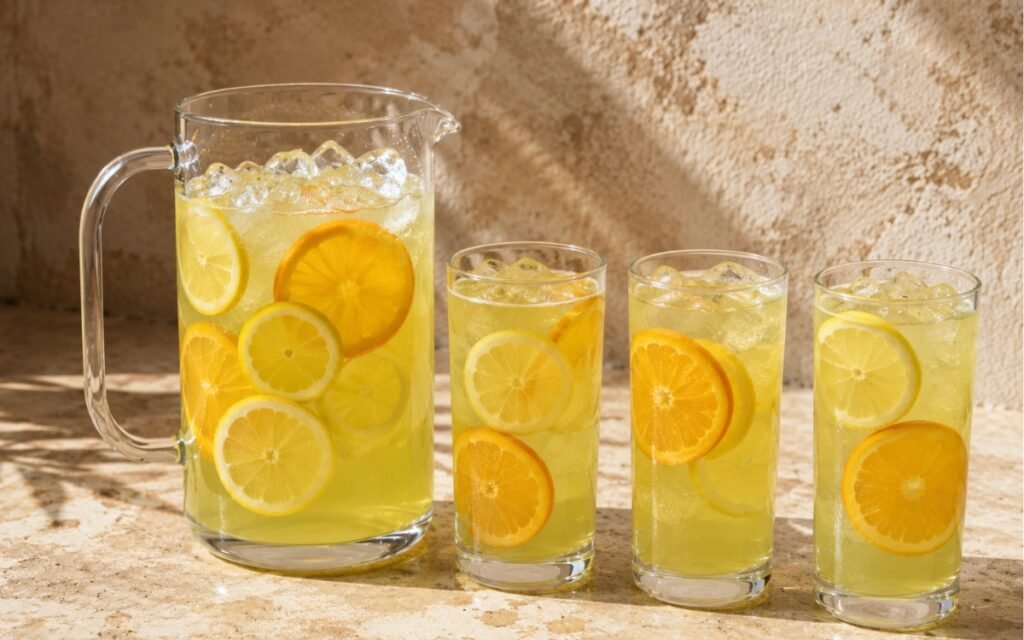
Green tea at 75–80°C for 2–2½ minutes, dual citrus zest off heat — 500ml orange juice for body, lemon juice, salt, cold water, chilled. Delicate and citrus-bright.
Classic Sparkling Lemonade
Ingredients
Method
- Combine the 65g of white sugar and 240ml of water in a small saucepan. Stir over medium heat until the sugar is completely dissolved and the liquid is clear, which takes no more than about 5 minutes, then remove from the heat immediately — no simmering and no reduction. This is a light syrup of roughly 1 part sugar to 3.7 parts water by weight, and with no meaningful evaporation it yields about 280–285ml. If a few crystals remain on the base of the pan, stir off the heat for a few seconds until they disappear. Allow the syrup to cool completely before it meets the lemon juice. That unreduced, fully cooled syrup is what gives a predictable sweetness per millilitre, so the two-thirds measure and any later adjustment behave exactly as expected.
- While the syrup cools, juice the lemons until you have 220–250ml of fresh juice — approximately 5–6 medium lemons. Roll each lemon firmly on the counter before cutting to make juicing easier, then strain out the seeds and any large pieces of pulp. The juice should smell bright and fragrant rather than flat. Plan to start the base with 220ml, and use up to 250ml only if your lemons taste noticeably mild. That freshly squeezed juice is the entire flavour of this drink, so its quality decides how vivid the finished glass tastes.
- In a pitcher, combine the 220ml of lemon juice, approximately two-thirds of the cooled light syrup — about 190ml — and the ⅛ tsp of fine sea salt. Stir well until the salt has dissolved. This concentrated base carries roughly 43g of the original 65g of sugar; the remaining syrup, about 90–95ml, is reserved for sweetness adjustment, so cover it and refrigerate it alongside the base. The base should taste sharper and more assertive than a comfortable drink, because the sparkling water will dilute it substantially. Transfer the pitcher to the refrigerator and chill for 1–2 hours, until completely cold. Do not add any sparkling water at this stage. That fully chilled base is what lets the cold sparkling water hold its carbonation, since carbon dioxide stays dissolved far better in cold liquid than in warm.
- Remove the chilled lemon base from the refrigerator immediately before serving. Pour the 1 litre of ice-cold sparkling water gently down the side of the pitcher rather than directly into the centre, so it slides along the wall into the base instead of plunging through it. Stir once or twice only, very gently, with a single slow movement — just enough to spread the concentrated base evenly through the sparkling water. Avoid vigorous mixing, which releases carbonation quickly and leaves the drink noticeably flatter. That side pour and minimal stir are what keep the drink lively, because every bit of agitation drives dissolved carbon dioxide out as bubbles that never reach the glass.
- Taste immediately. If the acidity feels too aggressive, add a small amount of the reserved light syrup, pouring it gently along the side of the pitcher and stirring once; add more only after tasting again. If the lemonade tastes too intense, add a splash more ice-cold sparkling water, up to 1.2 litres in total, pouring it down the side in the same way. Keep each adjustment small and quick, since the drink loses carbonation the longer it stands open. That brief, measured adjustment is what fits the balance to your particular lemons without stirring the bubbles away.
- Fill the glasses with ice cubes as soon as the lemonade is balanced. Pour the sparkling lemonade over the ice from close range rather than from a height, since a long fall releases carbonation before the drink reaches the glass. Garnish each glass with a lemon slice and serve straight away, while the lemonade is cold and fully fizzy. Pour the whole pitcher promptly rather than leaving it to stand between rounds. That short gap between adding the sparkling water and drinking is what decides how much carbonation remains in each glass.