Ingredients
Method
Make the Light Syrup
- Combine the 65g of white sugar and 240ml of water in a small saucepan. Stir over medium heat until the sugar is completely dissolved and the liquid is clear, which takes no more than about 5 minutes, then remove from the heat immediately — no simmering and no reduction. This is a light syrup of roughly 1 part sugar to 3.7 parts water by weight, and with no meaningful evaporation it yields about 280–285ml. If a few crystals remain on the base of the pan, stir off the heat for a few seconds until they disappear. Allow the syrup to cool completely before it meets the lemon juice. That unreduced, fully cooled syrup is what gives a predictable sweetness per millilitre, so the two-thirds measure and any later adjustment behave exactly as expected.
Juice the Lemons
- While the syrup cools, juice the lemons until you have 220–250ml of fresh juice — approximately 5–6 medium lemons. Roll each lemon firmly on the counter before cutting to make juicing easier, then strain out the seeds and any large pieces of pulp. The juice should smell bright and fragrant rather than flat. Plan to start the base with 220ml, and use up to 250ml only if your lemons taste noticeably mild. That freshly squeezed juice is the entire flavour of this drink, so its quality decides how vivid the finished glass tastes.
Build and Chill the Lemon Base
- In a pitcher, combine the 220ml of lemon juice, approximately two-thirds of the cooled light syrup — about 190ml — and the ⅛ tsp of fine sea salt. Stir well until the salt has dissolved. This concentrated base carries roughly 43g of the original 65g of sugar; the remaining syrup, about 90–95ml, is reserved for sweetness adjustment, so cover it and refrigerate it alongside the base. The base should taste sharper and more assertive than a comfortable drink, because the sparkling water will dilute it substantially. Transfer the pitcher to the refrigerator and chill for 1–2 hours, until completely cold. Do not add any sparkling water at this stage. That fully chilled base is what lets the cold sparkling water hold its carbonation, since carbon dioxide stays dissolved far better in cold liquid than in warm.
Add the Sparkling Water
- Remove the chilled lemon base from the refrigerator immediately before serving. Pour the 1 litre of ice-cold sparkling water gently down the side of the pitcher rather than directly into the centre, so it slides along the wall into the base instead of plunging through it. Stir once or twice only, very gently, with a single slow movement — just enough to spread the concentrated base evenly through the sparkling water. Avoid vigorous mixing, which releases carbonation quickly and leaves the drink noticeably flatter. That side pour and minimal stir are what keep the drink lively, because every bit of agitation drives dissolved carbon dioxide out as bubbles that never reach the glass.
Taste and Adjust
- Taste immediately. If the acidity feels too aggressive, add a small amount of the reserved light syrup, pouring it gently along the side of the pitcher and stirring once; add more only after tasting again. If the lemonade tastes too intense, add a splash more ice-cold sparkling water, up to 1.2 litres in total, pouring it down the side in the same way. Keep each adjustment small and quick, since the drink loses carbonation the longer it stands open. That brief, measured adjustment is what fits the balance to your particular lemons without stirring the bubbles away.
Serve Immediately
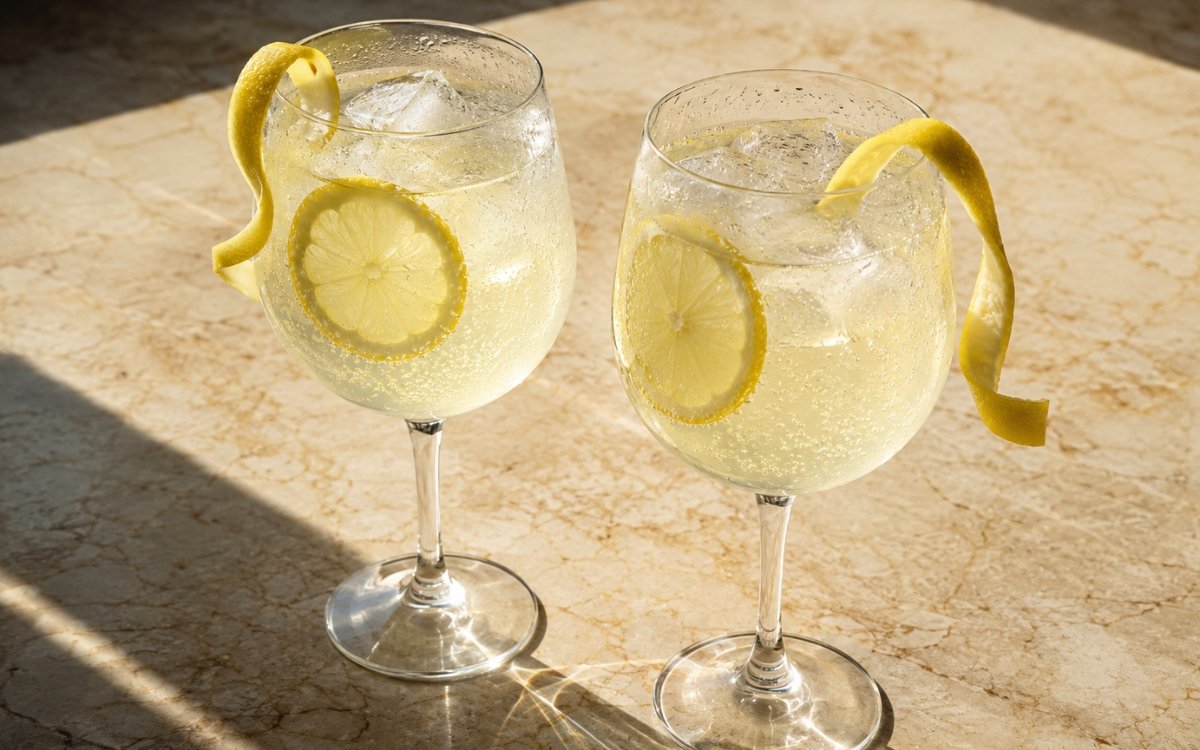
- Fill the glasses with ice cubes as soon as the lemonade is balanced. Pour the sparkling lemonade over the ice from close range rather than from a height, since a long fall releases carbonation before the drink reaches the glass. Garnish each glass with a lemon slice and serve straight away, while the lemonade is cold and fully fizzy. Pour the whole pitcher promptly rather than leaving it to stand between rounds. That short gap between adding the sparkling water and drinking is what decides how much carbonation remains in each glass.
Notes
Chilling the lemon base completely before the sparkling water arrives deserves genuine recognition as the technique most directly responsible for whether this lemonade reaches the glass fully fizzy. Carbon dioxide stays dissolved far better in cold liquid than in warm, so cold sparkling water meeting a warm base starts losing its bubbles immediately — which is why the base chills for 1–2 hours and the sparkling water goes in only at the last moment.
The gentle side pour and the single slow stir deserve the same attention this technique receives throughout this collection's other sparkling drinks, because agitation is the other main cause of carbonation loss. Every vigorous stir, every pour from height and every minute in an open pitcher releases more carbon dioxide — so the sparkling water slides down the pitcher wall, is stirred once or twice at most, and is served straight away.
The light syrup deserves genuine respect as the detail most directly responsible for how predictable the sweetness is — 65g of sugar in 240ml of water, roughly 1:3.7 by weight, gives about 280–285ml of syrup. Adding only about two-thirds of it, around 190ml carrying roughly 43g of sugar, keeps the starting glass deliberately light, and the reserved third lets each batch be sweetened further to taste rather than over-sweetened from the start.
Carbonation deserves attention as a genuine part of the drink's structure rather than simply added volume. It changes the drink's sensory profile, adding lively bubbles and a sharper, more refreshing finish — which is why this version intentionally uses its own lighter formulation instead of simply topping up the Classic Fresh Lemonade with sparkling water, and why the reserved syrup is there to adjust the sweetness to taste.