
White Tea Lemonade
White tea lemonade is the final and most specifically delicate preparation in this collection’s tea lemonade trilogy — and the one where the tea’s contribution is so subtle that it requires a specific recalibration of both the brewing temperature and the lemon juice quantity. The temperature is the lowest of the three: 70–75°C rather than green tea’s 75–80°C or black tea’s 90–95°C, because white tea’s primary pleasant aromatic compounds — the same geraniol and linalool fractions discussed throughout this collection’s white tea preparations — are among the most volatile in the Camellia sinensis plant and begin evaporating at even modestly elevated temperatures. The steep time is longer than green tea’s 2–2½ minutes at 3–4 minutes, specifically because the lower temperature requires more time to reach meaningful aromatic extraction despite the lower heat. The lemon juice quantity drops to 180ml — lower than either of the other tea lemonade preparations — because white tea’s character is specifically the most delicate of any tea available, and even the green tea lemonade’s standard 240ml of lemon juice would specifically overwhelm white tea’s barely-there, faintly floral contribution. The result is a lemonade that is specifically the palest, the most refined, and the most lemon-forward of the three tea preparations — the tea present as a specific improvement over plain lemonade that most drinkers would describe as the lemonade tasting specifically better without necessarily knowing why.

Prep Time : 15 min
Cook Time : 5 min
Servings : 8
15 min
5 min
8
Ingredients
For the Lemon Structure
• Clean pulp or segments from 2–3 lemons — seeds and tough membranes removed; no white pith
For the Honey-Lemon Syrup
• 180ml water
• 90–110g mild honey — start with 90g — this one on Amazon
• Zest of 1 lemon — yellow part only; added off heat
For the White Tea Component
• 500ml water
• 2–3 white tea bags — Silver Needle, Bai Mu Dan, or comparable high-quality white tea; 2 bags for an almost-imperceptible floral depth, 3 for a more clearly present white tea character
For the Lemonade Base
• 180ml fresh lemon juice — deliberately lower than the black and green tea lemonade preparations; approximately 4–5 lemons
• 120–150ml honey-lemon syrup — start with 120ml
• 500ml ice-cold water
• Pinch of fine sea salt
For Serving
• Ice cubes
• Lemon slices
This post may contain affiliate links. As an Amazon Associate I earn from qualifying purchases, at no additional cost to you.
Directions
- Make the Honey-Lemon Syrup
Combine the 180ml of water and 90g of honey in a small saucepan over low heat. Stir until completely dissolved without boiling. Remove from heat. Add the lemon zest. Cover and steep for 5–8 minutes. Strain and cool completely. - Brew the White Tea at the Lowest Effective Temperature
Heat the 500ml of water to 70–75°C. This is the lowest temperature used for any tea preparation in this entire collection — including the white tea preparations in the mocktail and iced tea sections. The reason is the same established throughout: white tea’s characteristic compounds are specifically the most temperature-sensitive in the Camellia sinensis family, and the window between pleasant aromatic extraction and harsh tannin development is narrower than either green or black tea at their respective temperature ranges. 70–75°C can be achieved by bringing water to a full boil and allowing to cool for 10–12 minutes at room temperature, or by using a temperature-controlled kettle. Without a thermometer, water at this temperature feels hot but not scalding when a clean finger is dipped briefly — significantly cooler than the steam-producing temperatures of green and black tea preparation. Add the white tea bags. Steep for 3–4 minutes. The longer steep time relative to green tea compensates for the lower temperature — at 70–75°C, the extraction rate of white tea’s pleasant aromatic compounds is slower than at 75–80°C, requiring additional time for equivalent aromatic development. Despite the lower temperature and longer time, the tannin extraction in this temperature range remains minimal — white tea at 70–75°C for 4 minutes produces a dramatically less tannic result than black tea at 90–95°C for 2½ minutes. Remove the bags without squeezing. Allow to cool completely. - Build the White Tea Lemonade
Segment 2–3 lemons, removing all seeds, membranes, and pith. Add to the pitcher and mash gently. Add the 180ml of fresh lemon juice, 120ml of cooled honey-lemon syrup, the 500ml of completely cooled white tea, and the 500ml of ice-cold water. Add the salt. Stir thoroughly. The 180ml of lemon juice is the specific preparation’s most important structural decision — 60ml lower than the black and green tea versions. White tea’s contribution to lemonade is specifically at the threshold of perceptibility: it does not announce itself as tea, it does not contribute warmth or tannin depth, it is not a supporting flavour character in the same way that Ceylon’s warm tannins support black tea lemonade. It is more specifically a quality-improvement to the lemonade that makes the drink taste specifically more refined, more aromatic, and more specifically beautiful without the consumer being able to identify why. At 240ml of lemon juice, this contribution is completely overwhelmed; at 180ml it is specifically perceptible to those tasting attentively and specifically present in the drink’s character even to those who are not. Taste with the most specific attention of any tea lemonade assessment — looking for a specifically different quality in the lemonade rather than a clearly identifiable tea character. The correctly made white tea lemonade should taste specifically better than the same lemonade without the tea, with a specific aromatic softness and floral dimension that plain lemon-and-honey-and-water cannot achieve alone. If no difference from plain lemonade is perceptible, the tea extraction was too light; brew a fresh batch with 3 bags at the full 4 minutes. If the tea is perceptible as a specific bitter or tannic note, the temperature was too high or the steep too long; dilute with cold water. - Chill and Serve
Refrigerate for 1–2 hours — the white tea-lemon-honey integration most specifically requires the full cold rest of any of the three tea preparations. The delicate aromatic compounds from the white tea distribute through the cold medium over time in a way that is the most specifically improved by the refrigerator rest rather than simply chilled. Fill glasses with ice. Pour the chilled white tea lemonade over the ice. Garnish with a lemon slice. Serve immediately.
*Notes :
- White tea’s specific varieties affect the character meaningfully. Silver Needle (Baihao Yinzhen) — produced exclusively from unopened tea buds before the leaves emerge — is the most delicate, most specifically floral, most honey-adjacent white tea available. Two bags of Silver Needle provide barely more than a whisper of tea character in a lemonade; three bags provide a soft floral depth. Bai Mu Dan (White Peony) — produced from buds and the first two young leaves — has slightly more body and slightly more visible tea character while remaining specifically gentle and floral. Both are appropriate; Silver Needle produces the most specifically beautiful result for those who can find it.
- The honey-lemon syrup’s floral compounds specifically resonate with white tea’s geraniol and linalool character in the same way they resonate with rose and elderflower in the floral lemonade preparations. The honey’s contribution to white tea lemonade is specifically more synergistic than its contribution to the black tea version — the two floral aromatic profiles amplifying each other.
Why This Recipe Works
This recipe works because the white tea is brewed at the lowest temperature in the collection, protecting the most volatile aromatic compounds. The steep time is longer to compensate for the lower extraction rate.
The lemon juice quantity is reduced to 180ml specifically to allow white tea’s barely-there character to remain perceptible. And the honey’s floral aromatic compounds specifically resonate with white tea’s own geraniol-and-linalool profile.
Ingredient Breakdown
White Tea at 70–75°C (3–4 Minutes)
The most temperature-sensitive preparation — protecting the most volatile floral aromatic compounds while extracting sufficient pleasant character in the longer steep window.
180ml Lemon Juice (Lower Than Black and Green Tea Versions)
The white-tea-perceptibility calibration — 60ml less than the other tea lemonades specifically to allow white tea’s barely-perceptible contribution to remain detectable.
Honey (Floral Resonance With White Tea’s Geraniol Profile)
The specifically synergistic sweetener — the same floral compound overlap as the rose and elderflower preparations.
Silver Needle or Bai Mu Dan
The variety-specific selection — the most delicate, most floral, most specifically appropriate tea for a barely-perceptible supporting role.
Flavor Structure Explained
This White tea lemonade follows a restrained balance model:
- Bright citrus core (fresh lemon juice)
- Delicate floral refinement (white tea)
- Warm floral sweetness (honey)
- Flavor-enhancing salinity (pinch of salt)
- Clean elegant finish (subtle tea integration)
Lemon defines the foundation with sharp citric acidity and the unmistakable brightness associated with classic lemonade. White tea contributes only a faint floral softness and delicate aromatic depth, functioning less as a distinct flavor and more as an overall refinement to the drink’s texture and elegance. Honey reinforces those floral qualities with gentle warmth that integrates naturally into both the citrus and tea. A small amount of salt subtly sharpens the lemon’s vividness, making the citrus feel clearer and more precise. The result is a lemonade whose sophistication comes from restraint — the tea is sensed more as refinement and softness than as a recognizable ingredient.
Common Mistakes to Avoid
- Brewing Above 75°C – Even a few degrees above this window significantly accelerates white tea’s tannin extraction beyond the pleasant threshold. Always the strict 70–75°C range.
- Using the Standard 240ml Lemon Juice – The additional 60ml overwhelms white tea’s contribution completely. Always 180ml for the white tea version.
- Expecting the Tea’s Character to Be Identifiable – White tea in this preparation is specifically below the threshold of identification as a separate flavour. The correct result is a lemonade that tastes specifically better than plain lemonade, not a lemonade that tastes of lemon and white tea simultaneously.
- Skipping the Full Chill – White tea’s integration during the cold rest is the most pronounced of the three tea lemonades. Always the full 1–2 hours.
Variations
With Jasmine White Tea
Use jasmine-scented white tea bags in place of plain white tea — jasmine’s specifically floral, warm aromatic character alongside lemon produces a more specifically identifiable, more specifically beautiful floral note in the finished lemonade.
With Peach
Add 100ml of honey-peach syrup (from the Peach Thyme Iced Tea preparation) alongside the honey-lemon syrup — the peach’s warm, fragrant fruitiness alongside white tea’s floral delicacy is the White Tea Strawberry Pitcher direction in lemonade format.
With Rose
Add 5ml of food-grade rose water to the finished combined base before chilling — the rose’s geraniol resonance with white tea’s own floral compounds producing a specifically layered floral depth.
Sparkling Version
Build the base without still water, chill, and add sparkling water right before serving.
Storage & Make-Ahead
Honey-lemon syrup can be refrigerated for up to 2 weeks.
The white tea base can be refrigerated for up to 2 days. Its delicate floral character is at its most vibrant within the first 24 hours after preparation.
Once assembled, white tea lemonade can be refrigerated for up to 3 days. For the freshest flavor and aroma, it is best enjoyed within 48 hours.
Frequently Asked Questions
Why 70–75°C rather than the green tea’s 75–80°C?
White tea’s primary pleasant aromatic compounds — the floral volatile terpenes including geraniol and linalool — are specifically more heat-sensitive than green tea’s comparable pleasant compounds. They begin evaporating meaningfully at temperatures where green tea’s equivalent fraction is still stable. The lowest effective brewing temperature in this collection specifically protects white tea’s unique aromatic contribution.
Why a longer steep time (3–4 minutes) than green tea (2–2½ minutes) despite a lower temperature?
The lower temperature reduces the extraction rate of both the pleasant and unpleasant fractions. To achieve meaningful extraction of the pleasant aromatic compounds at 70–75°C, the longer time is required to compensate for the slower extraction rate. The 3–4 minute window at this temperature produces comparable pleasant aromatic extraction to 2–2½ minutes at 75–80°C while extracting significantly less tannin than either of those conditions.
Why does white tea lemonade use less lemon juice than the other two?
White tea’s contribution to the lemonade is specifically at the threshold of perceptibility — it does not provide the clearly detectable tannic backbone of Ceylon black tea or the clearly identifiable grassy freshness of Sencha. At 240ml of lemon juice, white tea’s contribution is completely overwhelmed. At 180ml, it is specifically perceptible to attentive tasting and present as a quality-improving influence even to those not specifically looking for it.
What other preparations share white tea’s delicate tea character?
The Iced Tea Lemonade shares the tea-lemonade structure with Ceylon black tea’s warmer, more assertively tannic, more clearly present backbone — the most different in flavour from this preparation. The Green Tea Lemonade shares the delicate tea-and-lemon approach with Sencha’s grassy, cool herbal character — midway between black tea’s assertiveness and white tea’s near-invisibility. The White Tea Strawberry Pitcher shares the white tea base in a larger format with strawberry’s warm, vivid fruitiness as the primary flavour.
Nutrition Facts
( per serving )
Calories
~60 kcal
Protein
0 g
Fat
0 g
Carbs
16 g
Calories
~60 kcal
Protein
0 g
Fat
0 g
Carbs
16 g
Related Recipes
Related Recipes

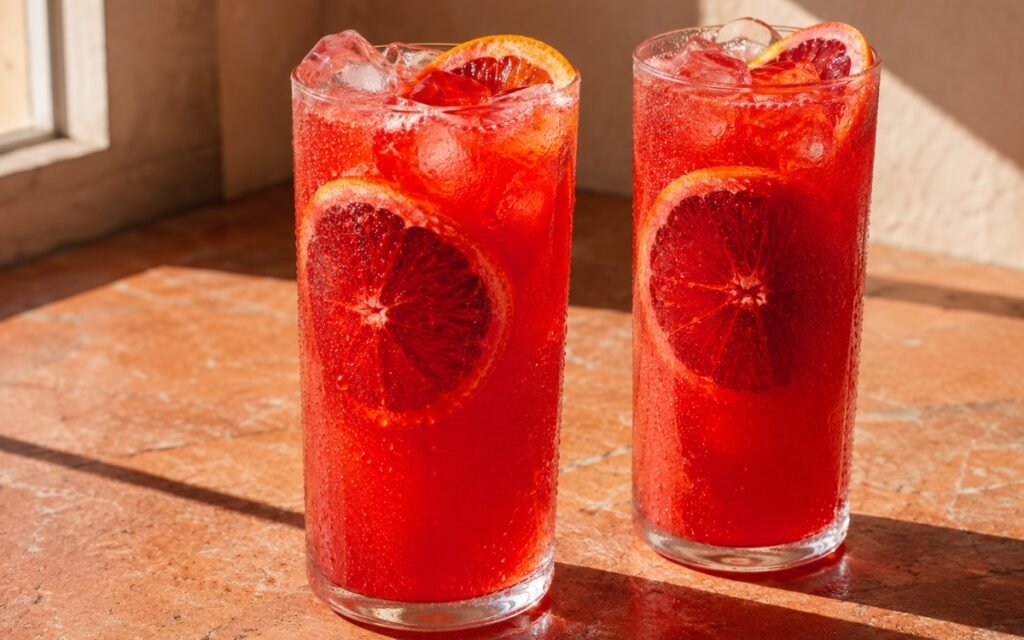
Blood Orange Lemonade
Orange and lemon peels steeped off heat exactly 10–12 minutes, pulp mashed in pitcher — blood orange juice, optional lemon, salt, cold water. Vivid ruby and citrusy.
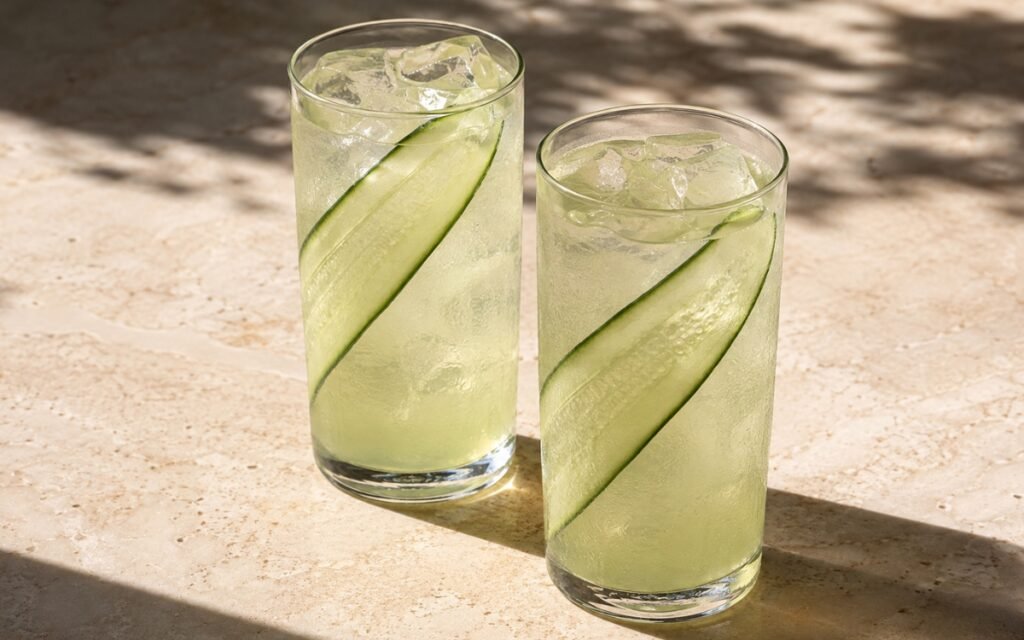
Cucumber Lemonade
Cold-extracted lemon zest and juice combined with smooth strained cucumber juice for a light, pale green, refreshing lemonade.
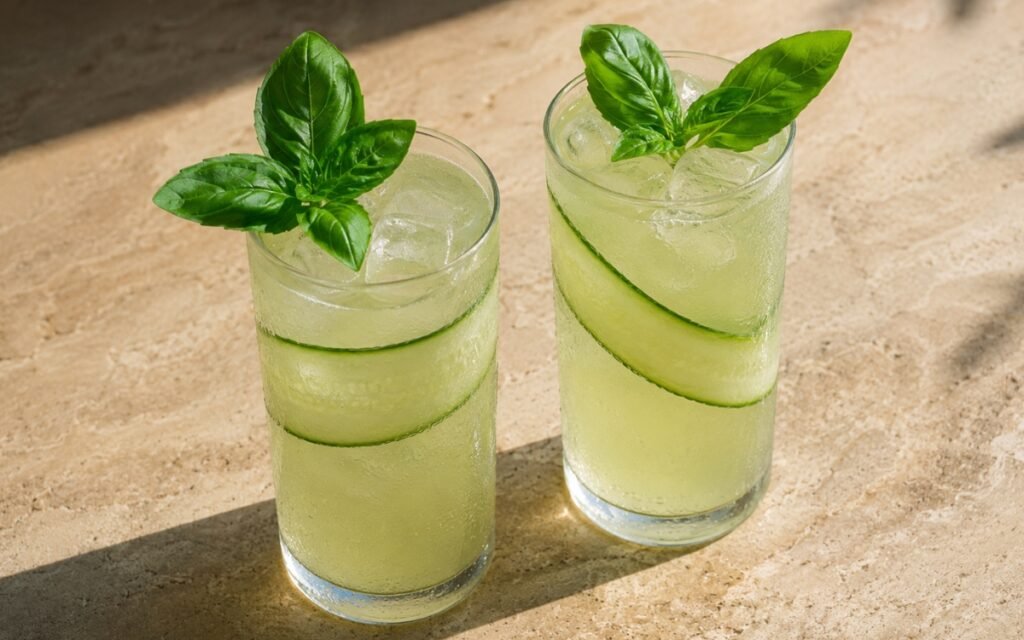
Cucumber Basil Lemonade
Cold-extracted lemon zest and juice combined with strained cucumber juice and a gentle cold basil infusion for a clean, pale green, garden-fresh lemonade.
You might also like
You might also like
Basil Lemon Iced Tea
Ceylon black tea at 90–95°C for 2½–3 minutes, basil clapped and infused cold 10–15 minutes — lemon peel and juice, honey, chilled. Dry, green, and fresh.
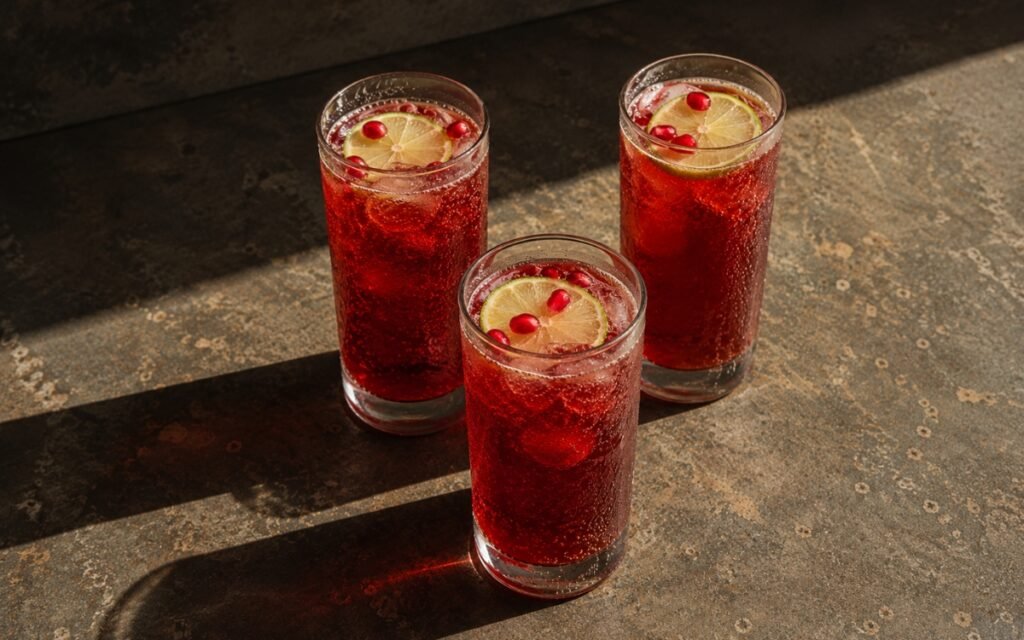
Pomegranate Ginger Sparkler Mocktail
Deep ruby pomegranate and rounded ginger warmth with lime over club soda — tart and dramatic.
Hibiscus Raspberry Ginger Cooler
Off-heat steeped hibiscus and ginger combined with cold-macerated raspberries and fresh lime juice for a vivid ruby-red, tart cooler.

White Tea Lemonade
Ingredients
Method
- Combine the water and honey in a small saucepan and heat gently over low heat, stirring just until fully dissolved without boiling, then remove from heat, add the lemon zest, cover, and let steep for about 10 minutes before straining and cooling completely.
- Heat 500 ml of water to about 70–75°C, remove from heat, add the white tea bags, and steep for 3–4 minutes to extract flavor without overwhelming its delicate profile, then remove the bags gently and let the tea cool completely.
- Add the lemon pulp to a large pitcher and gently muddle just until the juice is released and a light structural base forms, keeping the texture loose and avoiding a purée.
- Add the fresh lemon juice, about 120 ml of the cooled honey–lemon syrup, the pinch of fine sea salt, the cooled white tea, and the ice-cold water, then stir well until fully combined and taste, adjusting with more syrup for sweetness or a splash of water if the tea begins to compete with the lemon.
- Refrigerate for 1–2 hours until fully cold and fully integrated.
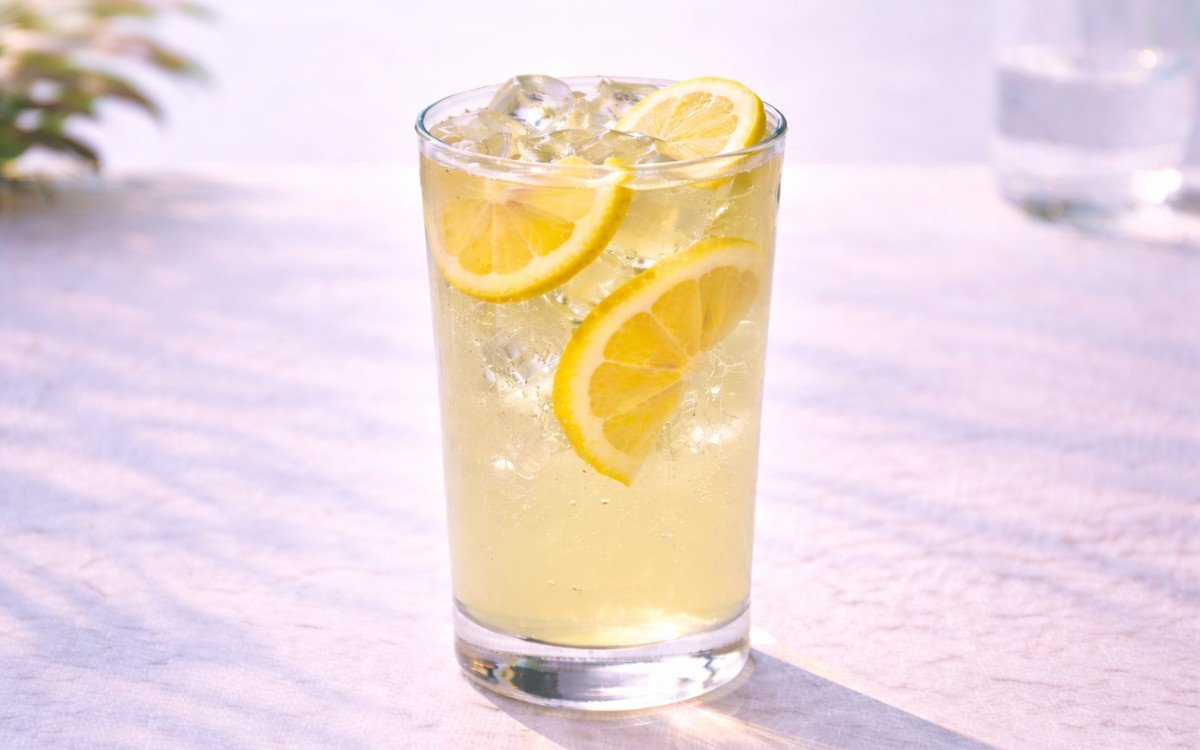
- Fill glasses with ice, pour over the white tea lemonade, and garnish with lemon slices.
Notes
- White tea is about nuance — too hot or too long and you destroy it.
- Lemonade must stay dominant; white tea adds softness and texture, not weight.
- Honey complements white tea far better than sugar, keeping the profile round and light.
- Salt is invisible but critical — it sharpens citrus and stabilizes gentle bitterness.
- Keeps well refrigerated for up to 48 hours.