
Raspberry Lemonade
The most structurally sophisticated of the fruit lemonades in this collection — built on a dual-raspberry approach that distinguishes between what heat extracts from raspberries and what cold extraction preserves. The honey-raspberry syrup, cooked gently at low heat, develops a specifically warm, concentrated, deep raspberry flavour — the heat drawing out the anthocyanin pigments and the richer flavour compounds from the berry flesh and releasing them into the honey medium with a warmth and depth that raw raspberry cannot produce. The fresh raspberry juice, separately mashed and cold-strained, preserves the volatile ester compounds responsible for fresh raspberry’s specifically bright, vivid, almost floral fruitiness — the aromatic character that distinguishes a fresh raspberry from a cooked one. Both components are present in the finished pitcher: the syrup providing warm depth and structure, the fresh juice providing volatile aromatic brightness. Honey rather than white sugar for the syrup — honey’s warm, rounded, slightly floral character specifically complements raspberry’s own aromatic profile in a way white sugar’s neutral sweetness does not. Lemon zest added off heat into the warm raspberry-honey syrup for the same integrated citrus depth applied in the blueberry and fresh mango lemonade preparations. Fruit-forward without losing lemonade identity.
Prep Time : 15 min
Cook Time : 5–8 min
Servings : 8
15 min
5–8 min
8
Ingredients
For the Fruit Structure
• Clean pulp or segments from 2–3 lemons — seeds and tough membranes removed; no white pith
For the Honey-Raspberry Syrup
• 150g fresh raspberries
• 120ml water
• 90–110g mild honey — adjust based on raspberry sweetness — this one on Amazon
• Zest of 1 lemon — yellow part only; added off heat
For the Fresh Raspberry Juice
• 150g fresh raspberries — kept raw, mashed and cold-strained
For the Lemonade Base
• 240ml fresh lemon juice — approximately 5–6 lemons
• 120–150ml honey-raspberry syrup — from above; start with 120ml
• All the strained fresh raspberry juice — from above
• 750ml–1 litre ice-cold water — start with 750ml, adjust after tasting
• Pinch of fine sea salt
For Serving
• Ice cubes
• Lemon slices
• Fresh raspberries
This post may contain affiliate links. As an Amazon Associate I earn from qualifying purchases, at no additional cost to you.
Directions
- Make the Honey-Raspberry Syrup
Combine the 150g of raspberries, 120ml of water, and 90g of honey in a small saucepan. Place over low heat — specifically low rather than medium or medium-low, consistent with the extraction-not-reduction principle applied to the cranberry, blueberry, and pink lemonade preparations. Stir gently until the honey is completely dissolved into the warming liquid and the raspberries begin releasing their juice. Cook for 5–8 minutes, pressing the raspberries gently with the back of a spoon as they soften to encourage juice release. The liquid should remain fluid and vivid ruby-red; no reduction in volume should be visible. Honey’s choice over white sugar in this syrup is specific to raspberry’s aromatic profile. Honey’s primary constituent sugars — fructose and glucose — are identical to white sugar’s breakdown products and provide the same sweetening effect. However, honey retains trace aromatic compounds from the nectar sources visited by the bees, and mild honeys (acacia, clover, or orange blossom) specifically share geraniol and linalool compounds with raspberry’s own aromatic profile — producing a specific aromatic resonance that white sugar cannot. The sweetness tastes warmer and more rounded alongside raspberry’s fruitiness. Remove from the heat. Add the lemon zest and cover. Allow to steep for 5–8 minutes. The lemon zest’s aromatic oils integrating into the warm raspberry-honey medium produce the same specifically unified citrus-fruit aromatic depth as in the blueberry and mango lemonade preparations. Strain through a fine-mesh sieve, pressing gently but firmly — firm enough to extract the maximum ruby-coloured syrup from the cooked raspberry solids, but not forcing dry pulp or seeds through. Discard solids. Allow to cool completely. - Extract the Fresh Raspberry Juice
Add the second 150g of raspberries to a separate bowl. Using a fork, mash gently until the berries have broken down and released their juice — soft pressing rather than aggressive crushing. Strain through a fine-mesh sieve, pressing lightly on the seeds to extract the bright, fresh, volatile-compound-rich raw raspberry juice while keeping the seeds out of the finished drink. Press lightly rather than firmly — the goal is fresh, aromatic juice rather than maximum yield, and the seeds’ tannins are more specifically present in the pressed residue from raw berries than from cooked ones. The distinction between the two raspberry preparations is the key to this lemonade’s specific character. The honey syrup’s cooked raspberries have developed a warm, deep, specifically concentrated fruity richness — the heat conversion of some volatile esters into more stable, warmer-tasting compounds. The fresh strained juice retains raspberry’s specifically vivid, bright, almost floral fruitiness — the volatile aromatic esters (principally α-ionone, α-terpineol, and various furanones) that are responsible for fresh raspberry’s characteristic bright, vivid character and that evaporate rapidly at cooking temperatures. Both together produce the specifically layered raspberry flavour that neither alone provides. - Build the Lemonade
Add the lemon pulp to the large pitcher and mash gently until juice is released. Add the 240ml of fresh lemon juice, 120ml of the cooled honey-raspberry syrup, all of the fresh raspberry juice, 750ml of ice-cold water, and the pinch of fine sea salt. Stir thoroughly. Taste carefully with attention to the balance between raspberry and lemon. The correctly built base should be immediately identifiable as lemonade — the lemon’s bright, clean, structural acid present throughout — while the raspberry’s vivid, layered fruity character (warm depth from the syrup, bright freshness from the raw juice) provides the primary fruit register. If the raspberry has taken over to the point where the lemon’s structural function is not perceptible, a small splash of additional lemon juice restores the balance. If the flavour is flat, more honey-raspberry syrup provides additional depth; the fresh juice can also be increased by mashing and straining an additional 50g of raspberries. - Chill and Serve
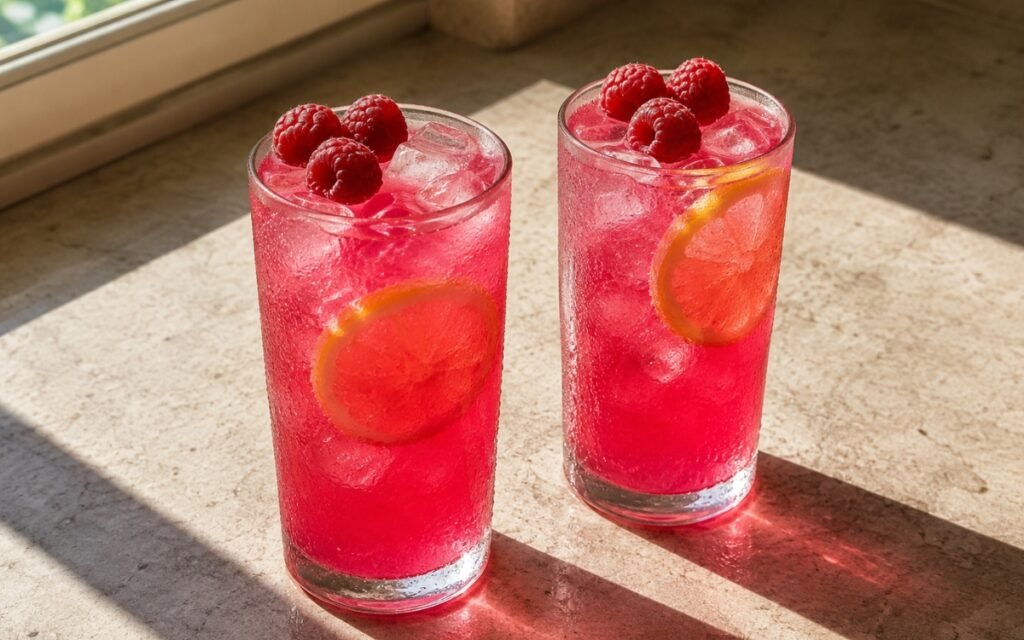
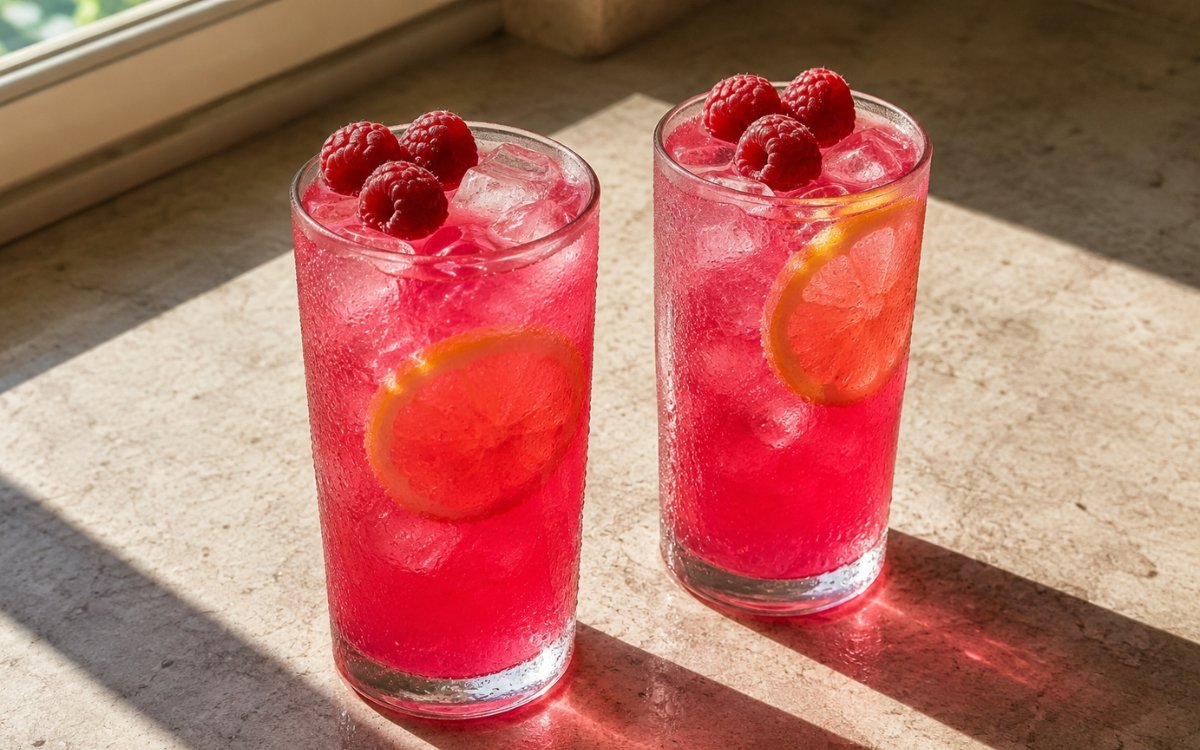
Refrigerate for 1–2 hours. Fill glasses with ice. Pour the chilled raspberry lemonade over the ice. Garnish with a lemon slice and several fresh raspberries resting on the ice. Serve immediately.
*Notes :
- The dual-extraction approach — cooked syrup plus raw cold-pressed juice — is the most technically considered preparation in this collection, and its rationale is the clearest possible illustration of why temperature matters in fruit drink preparation: raspberry’s most pleasant aromatic character contains two distinct categories of compounds with opposite heat responses.
- The pigment-carrying anthocyanins and the larger flavour compounds that provide warm, concentrated, deeply fruity richness are heat-stable and extract efficiently at low simmering temperature. The volatile esters responsible for raspberry’s vivid, bright, specifically fresh aromatic character are heat-sensitive and evaporate rapidly. By splitting the raspberries into two preparations — one cooked, one raw — both categories of compounds are preserved in the finished drink in a way that neither a fully cooked nor a fully raw preparation achieves alone.
Why This Recipe Works
This recipe works because the dual-raspberry approach simultaneously captures the heat-stable warm depth from the cooked honey syrup and the volatile aromatic freshness from the cold-strained raw juice. Honey provides a sweeter, more aromatically resonant character alongside raspberry than white sugar.
The lemon zest integrates into the warm syrup for unified aromatic depth. And the two separate raspberry components together produce a layered fruit character that neither preparation alone provides.
Ingredient Breakdown
Dual-Raspberry Approach (Cooked Honey Syrup + Raw Cold-Strained Juice)
The two-temperature extraction — cooked depth and warm concentrated richness from the syrup; volatile aromatic freshness from the raw juice; both categories of raspberry’s primary flavour compounds present simultaneously.
Honey Rather Than White Sugar
The aromatic-resonant sweetener — honey’s geraniol and linalool compounds specifically complementary to raspberry’s own aromatic profile.
Lemon Zest Off Heat in Warm Syrup
The integrated citrus aromatic depth — the same approach as blueberry and mango lemonade preparations.
Lemon as the Structural Foundation
The lemonade-identity preservation — the citrus backbone that prevents the raspberry from making the drink a raspberry drink with lemon juice rather than specifically a raspberry lemonade.
Flavor Structure Explained
This Raspberry lemonade follows a layered balance model:
- Multi-layered berry core (cooked and fresh raspberry)
- Bright citrus backbone (lemon juice)
- Warm aromatic sweetness (honey)
- Structured refreshing acidity (lemon architecture)
- Deep yet vivid fruit finish (dual raspberry expression)
Raspberry defines the foundation through two different expressions of the fruit: cooked raspberry contributes concentrated warmth and depth, while fresh strained raspberry adds vivid aromatic brightness and volatility. Together they create a fuller and more complex berry profile than either form alone could provide. Lemon juice supplies the structural acidity that keeps the drink refreshing and prevents the rich raspberry character from becoming heavy or dessert-like. Honey adds rounded sweetness and floral warmth that naturally resonate with the raspberry’s own aromatic qualities instead of merely balancing acidity. The result is a lemonade where fruit depth, brightness, and freshness all coexist simultaneously.
Common Mistakes to Avoid
- Using Only Cooked Raspberry – The cooked-only approach produces a warm, concentrated, jam-adjacent result without the bright volatile freshness that makes this specifically raspberry lemonade rather than cooked raspberry drink with lemon. Always include the fresh cold-strained juice.
- Using Only Raw Raspberry – Raw-only produces a bright, vivid, specifically fresh result without the warm depth that gives the preparation its structure. Always include the cooked syrup component.
- Boiling Rather Than Gently Warming – Hard boiling produces a flat, jam-adjacent cooked-fruit flavour and rapidly depletes volatile aromatic compounds. Always low heat for the gentle extraction.
- Pressing the Raw Seeds Aggressively – Raw raspberry seeds pressed firmly release more tannin compounds than gently pressed ones. Always light pressing for the cold-extracted juice.
- Over-Adding Raspberry Syrup – If the raspberry dominates the lemon’s structural acid presence, the drink loses its lemonade identity. Always small incremental additions with tasting.
Variations
With Basil
Add 10g of lightly clapped fresh basil leaves to the pitcher after combining all components — steep cold for 10 minutes then remove. The basil’s sweet, anise-adjacent character alongside raspberry is the Raspberry Basil Lemonade direction in a more structured, dual-extraction format.
With Ginger
Add 8g of thinly sliced fresh ginger to the saucepan with the raspberries during the syrup preparation — removed during straining. The ginger’s sharp warmth alongside raspberry produces a more assertive, more adult direction.
With Mint
Add 12 lightly clapped fresh mint leaves to the combined pitcher — steep cold for 10 minutes then remove. The mint’s cool freshness alongside raspberry is the classic combination.
Sparkling Version
Build the raspberry-lemon base without water, chill separately, and add sparkling water right before serving — the carbonation specifically amplifies the volatile aromatic compounds from the raw raspberry juice.
Storage & Make-Ahead
Honey-raspberry syrup can be refrigerated in a sealed jar for up to 4 days. Its flavor is at its brightest and most vibrant within the first 48 hours.
Fresh cold-strained raspberry juice is best used within 4 hours of pressing, since its delicate aromatic compounds gradually begin to fade soon after preparation.
Once assembled, raspberry lemonade can be refrigerated for up to 2 days. The fresh aromatic quality of the raw raspberry juice slowly diminishes during storage, while the cooked syrup maintains its flavor well. For the freshest and most vibrant result, it is best enjoyed within 24 hours.
Frequently Asked Questions
Why two separate raspberry components?
Raspberry’s flavour character consists of two categories of compounds with opposite heat responses. The heat-stable compounds — anthocyanin pigments and larger flavour molecules that provide warm, concentrated, deeply fruity depth — extract efficiently at low simmering temperature. The heat-sensitive compounds — volatile ester aromatics responsible for fresh raspberry’s bright, vivid, almost floral fruitiness — evaporate rapidly at cooking temperature. Splitting the raspberries into a cooked honey syrup and a raw cold-strained juice captures both categories simultaneously in a way that neither preparation alone achieves.
Why honey rather than white sugar?
Mild honey’s aromatic compounds include geraniol and linalool — terpene alcohols present in many floral nectars that specifically share aromatic chemistry with raspberry’s own aromatic profile. The result is an aromatic resonance — the honey’s warmth amplifying the raspberry’s character — that white sugar’s neutral sweetness cannot produce.
Why add lemon zest off heat to the warm syrup?
The same reasoning as the blueberry lemonade and mango lemonade preparations: lemon zest’s fat-soluble aromatic terpene oils integrate into the warm raspberry-honey medium at off-heat temperature, producing a specifically unified raspberry-citrus aromatic depth in the syrup itself that cold-added lemon juice cannot replicate.
What other raspberry-forward preparations share this acid-and-berry direction?
The Raspberry Lemon Shrub shares raspberry’s vivid fruitiness with the specifically more complex, more adult vinegar-based acid approach — tartaric acid from white wine vinegar providing a rounder, more wine-adjacent acidity alongside lemon. The Raspberry Mojito Mocktail shares raspberry and lemon in a sparkling, mint-forward, cocktail-structure preparation — the same primary fruit in a specifically more complex, more herbally driven format. The Raspberry Basil Lemonade shares the raspberry-and-citrus base with basil’s herbal aromatic contribution and lime rather than lemon providing the structural acid.
Nutrition Facts
( per serving )
Calories
~80 kcal
Protein
0 g
Fat
0 g
Carbs
21 g
Calories
~80 kcal
Protein
0 g
Fat
0 g
Carbs
21 g
Related Recipes
Related Recipes

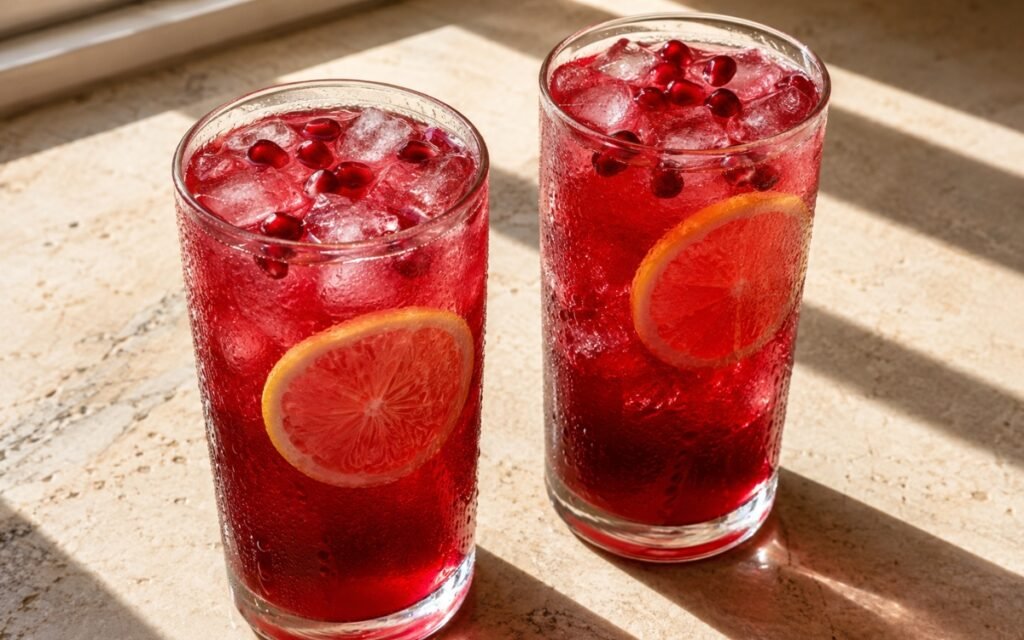
Pomegranate Lemonade
Honey-lemon syrup with zest off heat, 500ml pure pomegranate juice — fresh lemon, salt for anti-astringency, cold water, chilled. Ruby-red and grown-up.
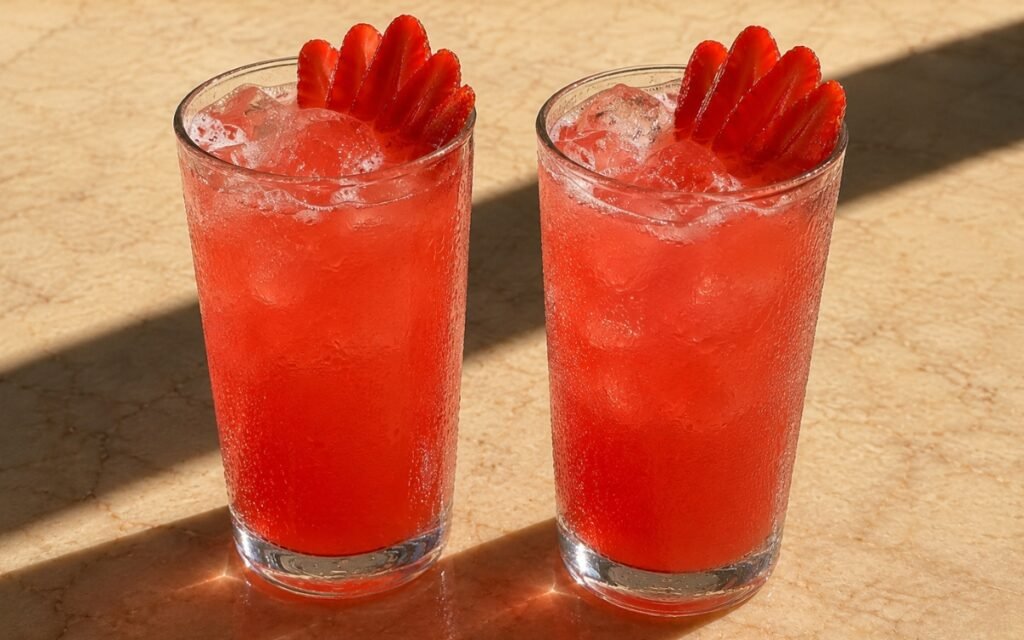
Strawberry Rhubarb Lemonade
Cold-extracted lemon zest and juice combined with a gently cooked strawberry-rhubarb base for a bright pink-red, vivid, tart lemonade.
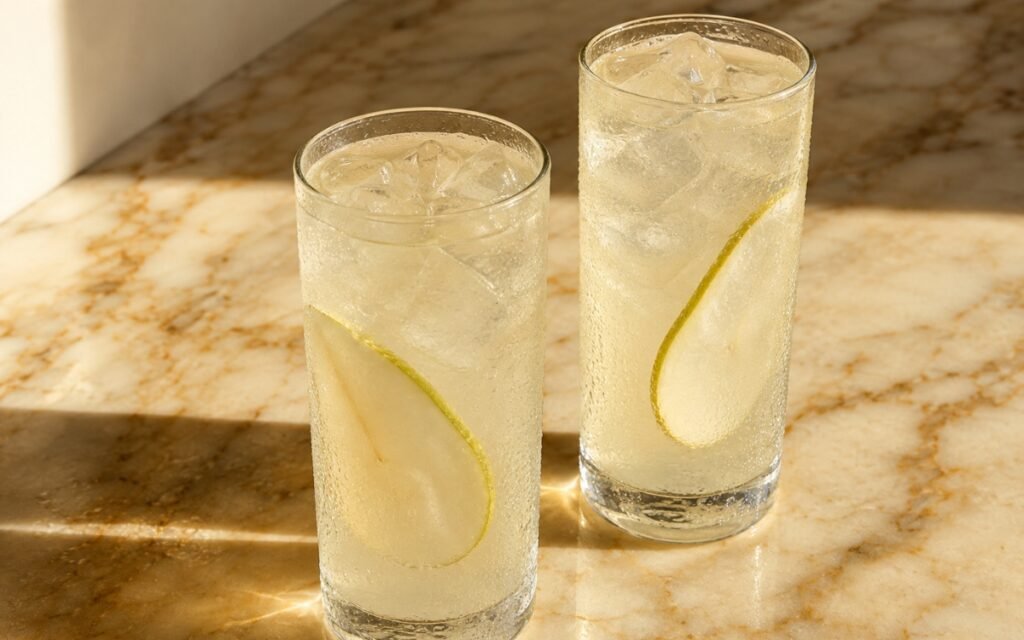
Pear Lemonade
Ripe pears at low heat with honey, lemon zest off heat — 150ml lemon only so pear leads, salt, cold water, chilled. Pale, delicate, and pear-forward.
You might also like
You might also like
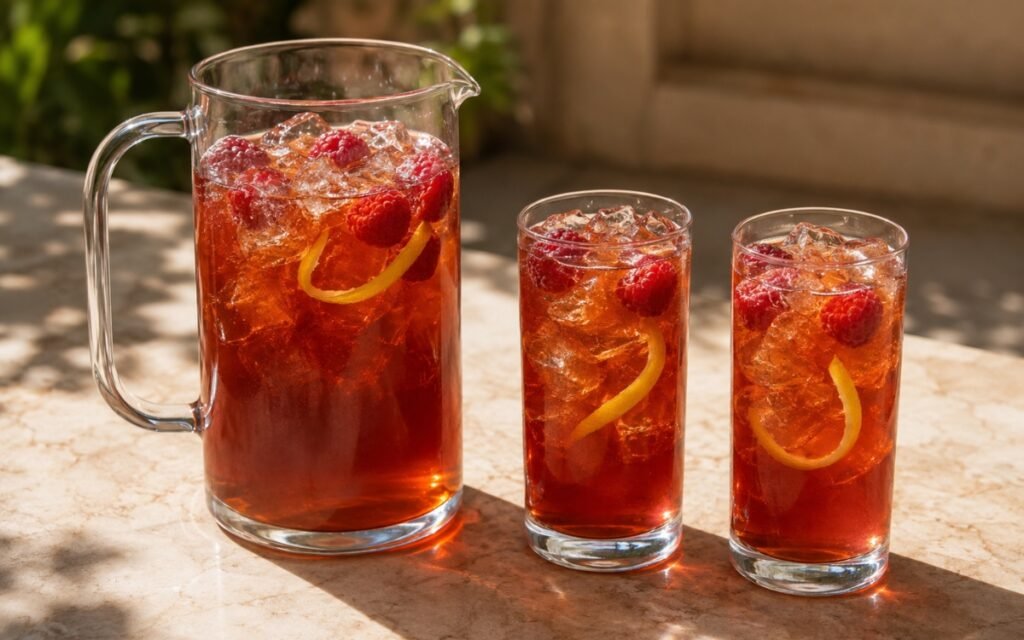
Raspberry Iced Tea Pitcher
Ruby-red raspberry iced tea made with Ceylon black tea, fresh raspberries, and lemon peel, served chilled over ice.
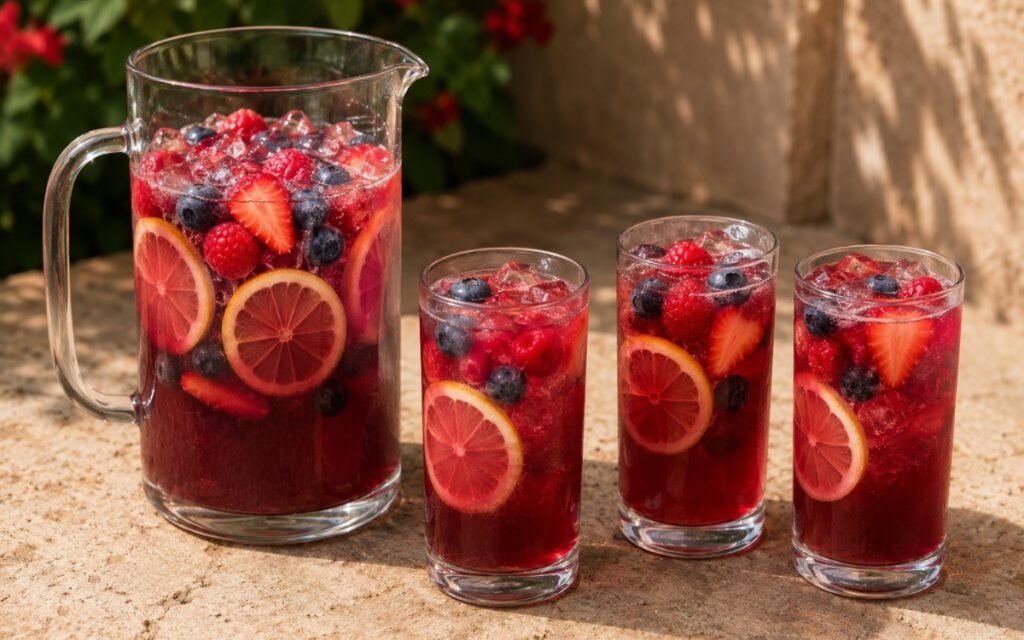
Mixed Berry Citrus Pitcher Drink
Three berries at 150g each warmed 2–3 minutes maximum in light brown sugar syrup — lemon zest off heat, combined with cold water, chilled. Vivid and multi-register.
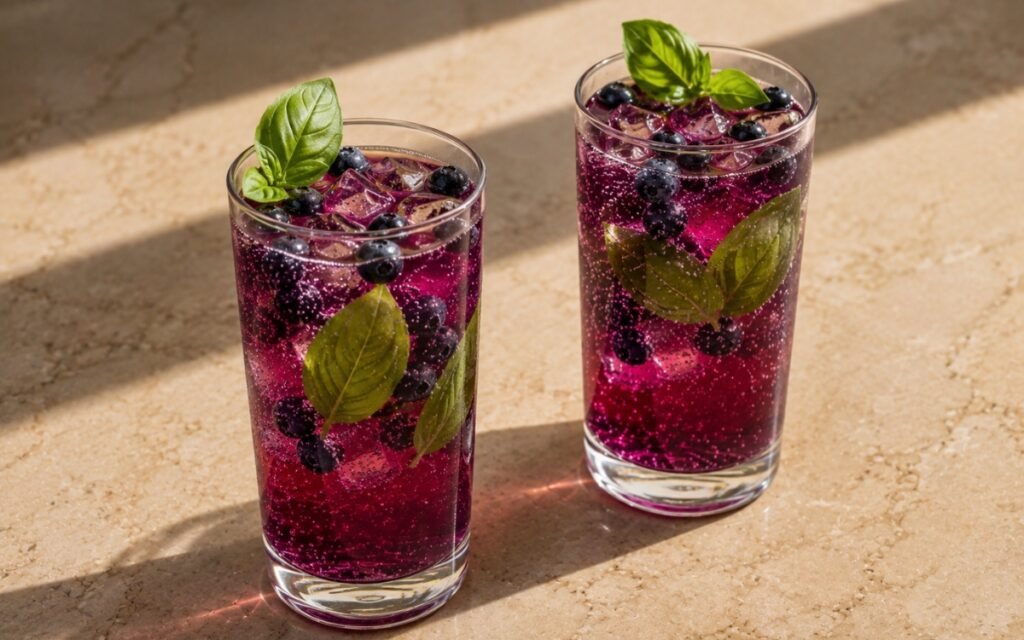
Basil Blueberry Sparkling Herbal Cooler
Concentrated white tea, basil blended into blueberries and strained — combined with the tea, finished with gentle club soda, chilled. Herbal and lively.
Raspberry Lemonade
Ingredients
Method
- Combine the 150g of raspberries, 120ml of water, and 90g of honey in a small saucepan. Place over low heat — specifically low rather than medium or medium-low, consistent with the extraction-not-reduction principle applied to the cranberry, blueberry, and pink lemonade preparations. Stir gently until the honey is completely dissolved into the warming liquid and the raspberries begin releasing their juice. Cook for 5–8 minutes, pressing the raspberries gently with the back of a spoon as they soften to encourage juice release. The liquid should remain fluid and vivid ruby-red; no reduction in volume should be visible. Honey’s choice over white sugar in this syrup is specific to raspberry’s aromatic profile. Honey’s primary constituent sugars — fructose and glucose — are identical to white sugar’s breakdown products and provide the same sweetening effect. However, honey retains trace aromatic compounds from the nectar sources visited by the bees, and mild honeys (acacia, clover, or orange blossom) specifically share geraniol and linalool compounds with raspberry’s own aromatic profile — producing a specific aromatic resonance that white sugar cannot. The sweetness tastes warmer and more rounded alongside raspberry’s fruitiness. Remove from the heat. Add the lemon zest and cover. Allow to steep for 5–8 minutes. The lemon zest’s aromatic oils integrating into the warm raspberry-honey medium produce the same specifically unified citrus-fruit aromatic depth as in the blueberry and mango lemonade preparations. Strain through a fine-mesh sieve, pressing gently but firmly — firm enough to extract the maximum ruby-coloured syrup from the cooked raspberry solids, but not forcing dry pulp or seeds through. Discard solids. Allow to cool completely.
- Add the second 150g of raspberries to a separate bowl. Using a fork, mash gently until the berries have broken down and released their juice — soft pressing rather than aggressive crushing. Strain through a fine-mesh sieve, pressing lightly on the seeds to extract the bright, fresh, volatile-compound-rich raw raspberry juice while keeping the seeds out of the finished drink. Press lightly rather than firmly — the goal is fresh, aromatic juice rather than maximum yield, and the seeds’ tannins are more specifically present in the pressed residue from raw berries than from cooked ones. The distinction between the two raspberry preparations is the key to this lemonade’s specific character. The honey syrup’s cooked raspberries have developed a warm, deep, specifically concentrated fruity richness — the heat conversion of some volatile esters into more stable, warmer-tasting compounds. The fresh strained juice retains raspberry’s specifically vivid, bright, almost floral fruitiness — the volatile aromatic esters (principally α-ionone, α-terpineol, and various furanones) that are responsible for fresh raspberry’s characteristic bright, vivid character and that evaporate rapidly at cooking temperatures. Both together produce the specifically layered raspberry flavour that neither alone provides.
- Add the lemon pulp to the large pitcher and mash gently until juice is released. Add the 240ml of fresh lemon juice, 120ml of the cooled honey-raspberry syrup, all of the fresh raspberry juice, 750ml of ice-cold water, and the pinch of fine sea salt. Stir thoroughly. Taste carefully with attention to the balance between raspberry and lemon. The correctly built base should be immediately identifiable as lemonade — the lemon’s bright, clean, structural acid present throughout — while the raspberry’s vivid, layered fruity character (warm depth from the syrup, bright freshness from the raw juice) provides the primary fruit register. If the raspberry has taken over to the point where the lemon’s structural function is not perceptible, a small splash of additional lemon juice restores the balance. If the flavour is flat, more honey-raspberry syrup provides additional depth; the fresh juice can also be increased by mashing and straining an additional 50g of raspberries.
- Refrigerate for 1–2 hours. Fill glasses with ice. Pour the chilled raspberry lemonade over the ice. Garnish with a lemon slice and several fresh raspberries resting on the ice. Serve immediately.