
Fresh Watermelon Lemonade
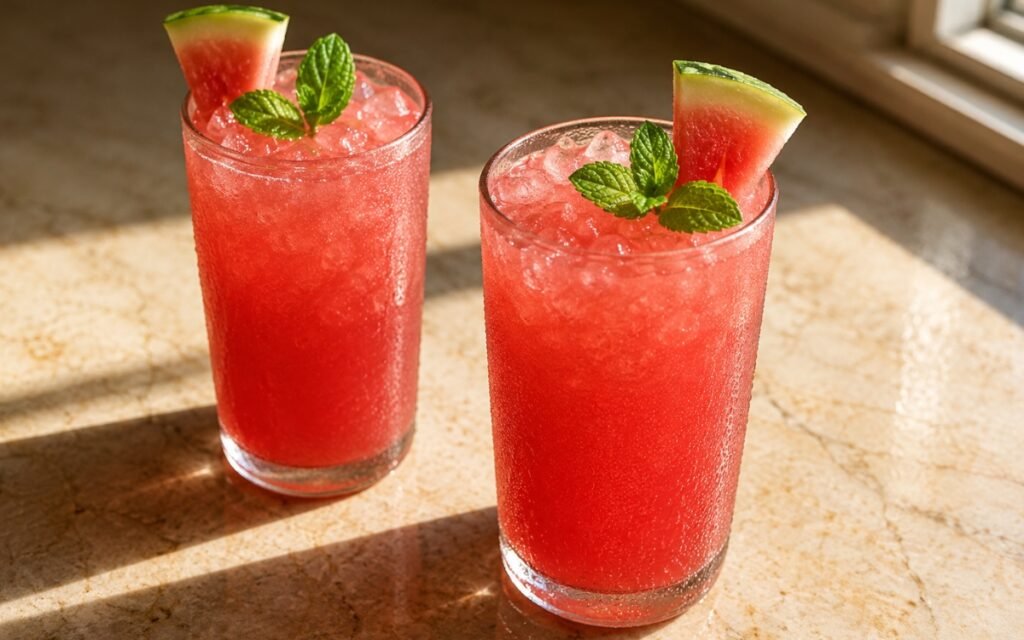
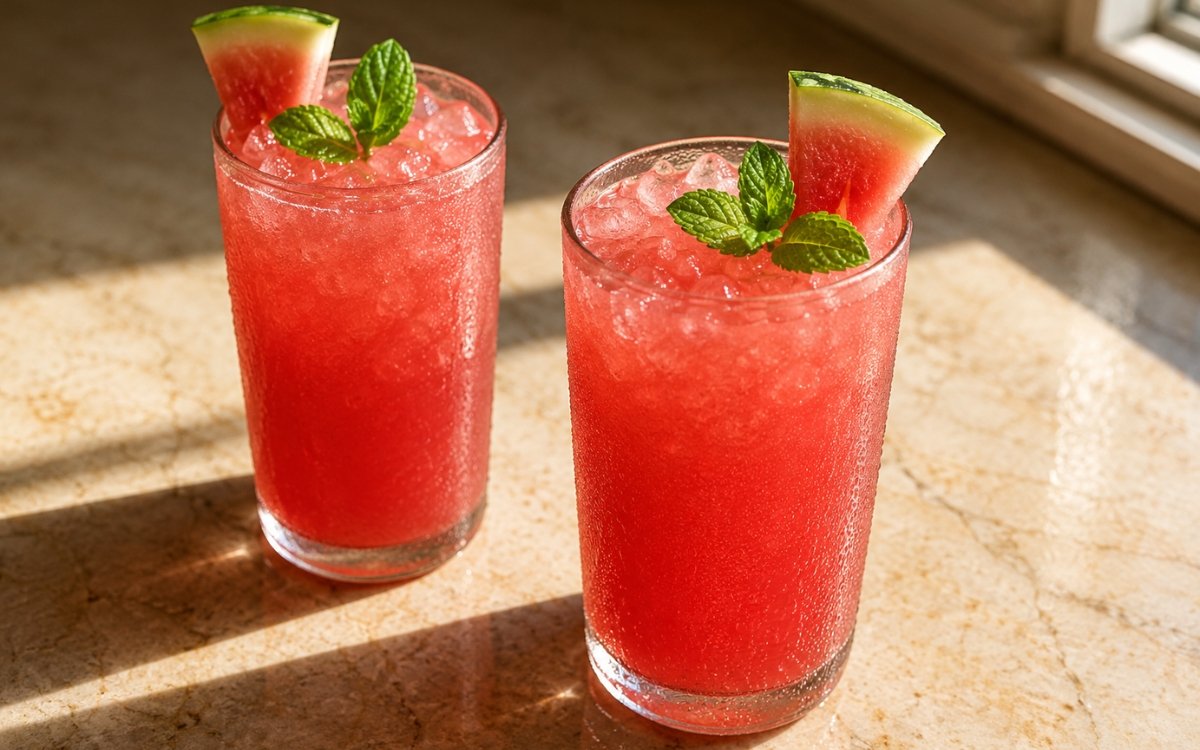
Watermelon is the specific fruit in this lemonade collection that cannot be cooked — its flavour character is entirely in the raw juice’s aromatic volatile compounds, and the application of any heat produces the flat, slightly cooked, almost melon-water taste of watermelon that has lost what makes it specifically watermelon. The preparation is accordingly the simplest structurally: blend, strain, combine with a separately made simple syrup, add lemon juice and lemon zest cold, chill. The simple syrup made separately rather than cooking the fruit in the sugar-water as in the strawberry and peach preparations — the clean, neutral syrup providing the sweetness without any fruit interaction during cooking. Lemon zest added directly to the cold combined base rather than infused in a warm syrup — its aromatic oils integrating with the watermelon’s delicate volatile compounds during the refrigerator chill rather than through heat extraction. The pinch of salt specifically needed here because watermelon’s natural sweetness has an almost entirely sweet register without the natural acid that strawberry or peach provide — the salt’s sub-threshold amplification makes the watermelon’s flavour taste more specifically of itself rather than vaguely sweet. The lemonade that is most importantly stirred well before serving — watermelon juice contains a high proportion of large-molecule compounds that separate rapidly, producing a layer of clear liquid above a denser, more coloured lower layer.
Prep Time : 15 min
Cook Time : 5 min
Servings : 8
15 min
5 min
8
Ingredients
For the Watermelon Lemonade
• 1.2kg fresh watermelon flesh — cubed, seeds removed
• 80–100g white granulated sugar — this one on Amazon
• 240ml water — for the simple syrup
• 1 tsp fresh lemon zest — yellow part only, no white pith
• ⅛ tsp fine sea salt
• 240–300ml fresh lemon juice — approximately 5–7 lemons; start with 240ml
• 300–600ml ice-cold water — for dilution; start with 300ml, adjust after tasting
For Serving
• Ice cubes
For the Garnish
• Lemon slices
• Fresh watermelon wedges
This post may contain affiliate links. As an Amazon Associate I earn from qualifying purchases, at no additional cost to you.
Directions
- Blend and Strain the Watermelon
Cut the watermelon and remove as many seeds as possible — a seedless variety is specifically convenient here; for seeded varieties, the blend-and-strain step will catch any remaining seeds in the sieve. Add the 1.2kg of cubed watermelon flesh to a blender in batches if necessary. Blend at high speed for 30–40 seconds until completely smooth — a vivid, deeply pink-red juice with some natural foam from the blending. Watermelon is approximately 92% water, and the blending produces a liquid rather than a purée almost immediately. Strain through a fine-mesh sieve into a large pitcher or jug, pressing gently on the foam and pulp. The pressing is specifically gentle here — watermelon’s very high water content means the strained juice is already mostly liquid; firm pressing extracts more of the very fine pulp particles that would increase the slight cloudiness without adding meaningful flavour. The finished strained juice should be a clear, vivid, specifically deep pink-red — watermelon’s characteristic colour present without the thick, pulpy texture of unstrained juice. Set aside while making the syrup. - Make the Simple Syrup Separately
Combine the 80g of white sugar and 240ml of water in a small saucepan. Place over medium heat and stir continuously until the sugar has fully dissolved. Bring just to the point of dissolution and remove from heat immediately — no simmering reduction is required or beneficial. Allow to cool completely. The separate simple syrup approach is specifically different from the strawberry and peach lemonade preparations where the fruit was cooked in the sugar-water. Watermelon cannot be cooked without losing its characteristically fresh, vivid aromatic character — cooking watermelon produces a muted, vaguely sweet liquid without the specific volatile compounds responsible for watermelon’s immediately recognisable aroma and flavour. The simple syrup is therefore made completely separately and added to the raw watermelon juice at the cold combination stage. - Combine All Components Cold
In the large pitcher containing the strained watermelon juice, add the cooled simple syrup, 240ml of fresh lemon juice, the 1 tsp of lemon zest, ⅛ tsp of fine sea salt, and 300ml of ice-cold water. Stir thoroughly. The lemon zest is added directly to the cold combined base in this preparation rather than infused in a warm syrup as in the strawberry lemonade — because there is no warm syrup for the zest to infuse into. Cold infusion of lemon zest over the 1–2 hour refrigerator chill produces a slower but similarly effective release of its aromatic oils into the surrounding liquid, integrating the citrus depth during the chilling period. The pinch of salt at ⅛ tsp in the full volume is the same sub-threshold amplifier used throughout this collection. Watermelon’s natural flavour profile is almost entirely sweet with minimal natural acid — the combination of the lemon juice’s brightness and the salt’s below-detection-threshold amplification is what prevents the finished lemonade from tasting vaguely sweet rather than specifically of watermelon. Taste and adjust: if the watermelon character is vivid and the balance needs only brightening, add more lemon juice up to 300ml total; if the concentration is too intense, add more cold water up to 600ml total; if the watermelon was particularly mild or under-ripe, add additional simple syrup. The correctly balanced watermelon lemonade should taste crisp, clean, clearly of fresh watermelon, and refreshingly tart from the lemon. - Chill and Serve
Refrigerate for 1–2 hours. Before serving, stir the pitcher thoroughly — watermelon juice’s natural large-molecule compounds (primarily large sugar molecules and light plant pigments) separate progressively during storage, creating a clear upper layer above a more coloured, denser lower layer. This separation is natural and correct; stirring before each serving reintegrates the components. Fill glasses with ice. Pour over the chilled watermelon lemonade, stirring the pitcher gently between each pour to maintain even distribution. Garnish with a lemon slice and a small watermelon wedge if desired. Serve immediately.
*Notes :
- Seedless watermelon varieties — the dominant commercially available type — are specifically convenient for this preparation because the seed removal step in the blending process is eliminated. The flavour quality between seeded and seedless varieties at comparable ripeness is not meaningfully different; the preparation works equally well with either.
- Watermelon’s peak flavour season in the Northern Hemisphere is July through September — the period when field-ripened watermelons have the highest lycopene concentration and the most vivid, most specifically aromatic flavour. Out of season, watermelons grown in artificial conditions or shipped long distances often have a significantly milder flavour and higher water content — producing a paler, less specifically watermelon-flavoured lemonade. The amount of ice-cold water added should be reduced when working with milder out-of-season watermelons.
Why This Recipe Works
This recipe works because the watermelon is never cooked — its heat-sensitive volatile aromatic compounds are preserved completely by the blend-and-strain cold process. The simple syrup is made separately to provide the sweetness without any fruit-heat interaction.
The lemon zest infuses its aromatic oils during the cold chilling period rather than requiring warm extraction. The salt specifically amplifies watermelon’s predominantly sweet flavour register. And the stir-before-serving instruction addresses the natural separation that makes serving unstirred watermelon lemonade an uneven experience.
Ingredient Breakdown
Watermelon Blended and Strained Cold (No Cooking)
The fundamental technique decision — heat-sensitive volatile aromatic compounds preserved completely; raw juice approach specifically required for watermelon.
Separate Simple Syrup (Not Fruit-Cooked-in-Sugar)
The sweetness-without-heat-interaction approach — neutral sugar syrup added to raw juice rather than cooking the fruit.
Lemon Zest Cold-Infused in the Combined Base
The integrated citrus depth — slow cold-infusion during refrigerator chilling integrating aromatic oils without requiring warm extraction.
⅛ tsp Salt (Sub-Threshold Amplification)
The specifically necessary flavour intensifier — watermelon’s predominantly sweet, low-acid profile requires the sub-threshold salt more than other fruits in this collection.
Stir Before Each Serving
The separation management technique — watermelon juice’s natural molecular composition requiring active stirring before each pour for even distribution.
Flavor Structure Explained
This Fresh watermelon lemonade follows a layered balance model:
- Clean sweet fruit core (watermelon)
- Bright citrus contrast (lemon juice and zest)
- Flavor-enhancing salinity (pinch of salt)
- Fresh hydrating character (no-cook watermelon base)
- Crisp cooling finish (light fruit-acid balance)
Watermelon defines the foundation with juicy sweetness, delicate floral freshness, and the unmistakable clean flavor associated with fresh summer fruit. Because the preparation avoids heat, the watermelon retains its bright, raw aromatic quality instead of developing cooked sweetness. Lemon juice introduces sharp acidity that keeps the fruit vivid and refreshing, while lemon zest adds aromatic citrus depth. A small amount of salt subtly amplifies the watermelon’s natural sweetness and makes its flavor more precise and expressive. The result is a drink built around freshness, hydration, and clarity rather than richness or intensity.
Common Mistakes to Avoid
- Cooking the Watermelon – Any heat applied to watermelon destroys the volatile aromatic compounds responsible for its characteristic flavour. Never cook watermelon for this preparation.
- Not Stirring Before Serving – Watermelon juice separates rapidly — serving unstirred produces an uneven drink where some glasses receive mostly clear liquid and others mostly concentrated juice. Always stir before each pour.
- Adding Plain Sugar for Sweetness Adjustments – Plain sugar in cold liquid will not dissolve cleanly. Always use additional simple syrup.
- Pressing the Strained Solids Firmly – Watermelon’s very high water content means gentle pressing is appropriate — firm pressing extracts more fine pulp particles that cloud rather than flavour the finished drink.
- Not Adding Salt – Watermelon’s predominantly sweet profile specifically benefits from the sub-threshold salt amplification more than any other fruit in this collection. Always include the ⅛ tsp.
Variations
With Mint
Add 12 lightly clapped fresh mint leaves to the combined lemonade before chilling — steep cold for 15–20 minutes then strain. The mint’s cool freshness alongside watermelon is the classic summer combination.
With Sparkling Water
Replace all the ice-cold still water component with chilled sparkling water — add right before serving for maximum carbonation. The sparkling version is the closest preparation to the Watermelon Mint Fizz Mocktail format.
With Basil
Add 10g of lightly clapped fresh basil leaves to the combined base before chilling — steep 15 minutes then strain. Basil’s sweet, aromatic character alongside watermelon is a specifically contemporary summer pairing.
With Lime Instead of Lemon
Replace the lemon juice and zest with lime juice and lime zest at the same quantities — lime’s sharper, more tropical character produces a specifically different, more Mexican-influenced direction that references the watermelon agua fresca tradition.
Storage & Make-Ahead
Strained watermelon juice is best used within 4 to 6 hours of pressing for the freshest flavor and brightest color. Over time, the juice gradually oxidizes and loses some of its aromatic character.
Once assembled, the watermelon lemonade can be refrigerated for up to 2 days. The color deepens slightly during storage as the pigments concentrate, while the flavor remains especially vibrant during the first 24 hours. Stir the pitcher before each serving, as separation may occur.
Assembled glasses are not suitable for storage and should be served immediately.
Frequently Asked Questions
Why is the watermelon never cooked?
Watermelon’s characteristic flavour comes from specific volatile aromatic compounds — primarily (Z,Z)-3,6-nonadienal and various other aldehydes — that are specifically responsible for its fresh, vivid, immediately recognisable aroma and that evaporate rapidly at cooking temperatures. Unlike strawberry or peach where a brief simmer concentrates flavour while preserving enough aromatic character, cooking watermelon produces a flat, muted liquid that tastes vaguely sweet rather than specifically of watermelon.
Why does the lemonade need to be stirred before serving?
Watermelon juice contains a high proportion of large-molecule compounds — primarily large-chain sugars and light plant pigments — that settle progressively during storage due to their molecular weight. The result is visible separation: clear liquid above a more concentrated, more coloured lower layer. This is natural and does not indicate spoilage; stirring immediately before serving and between pours reintegrates the components evenly.
Why is the salt more important here than in other preparations?
Watermelon’s natural flavour profile is almost entirely sweet with minimal natural acid — unlike strawberry, raspberry, or peach which all have significant natural tartness alongside their sweetness. The sub-threshold salt specifically amplifies watermelon’s sweet register, making it taste more specifically of itself rather than generically sweet. Without it, watermelon lemonade can taste mildly pleasant but vague; with it, the watermelon character is noticeably more vivid and more defined.
What other watermelon-based preparations share this direction?
The Watermelon Agua Fresca shares the raw-blended-and-strained watermelon approach in the even simpler agua fresca format — watermelon, sugar, and water without the lemon’s acid dimension. The Melon Mint Agua Fresca Mocktail shares the raw-blended melon format with honeydew and cold-infused mint rather than watermelon and lemon. The Watermelon Mint Fizz Mocktail shares the raw watermelon juice base in a sparkling, mint-infused format — the same primary ingredient in a specifically more elevated, more herbally complex sparkling presentation.
Nutrition Facts
( per serving )
Calories
~75 kcal
Protein
0 g
Fat
0 g
Carbs
20 g
Calories
~75 kcal
Protein
0 g
Fat
0 g
Carbs
20 g
Related Recipes
Related Recipes

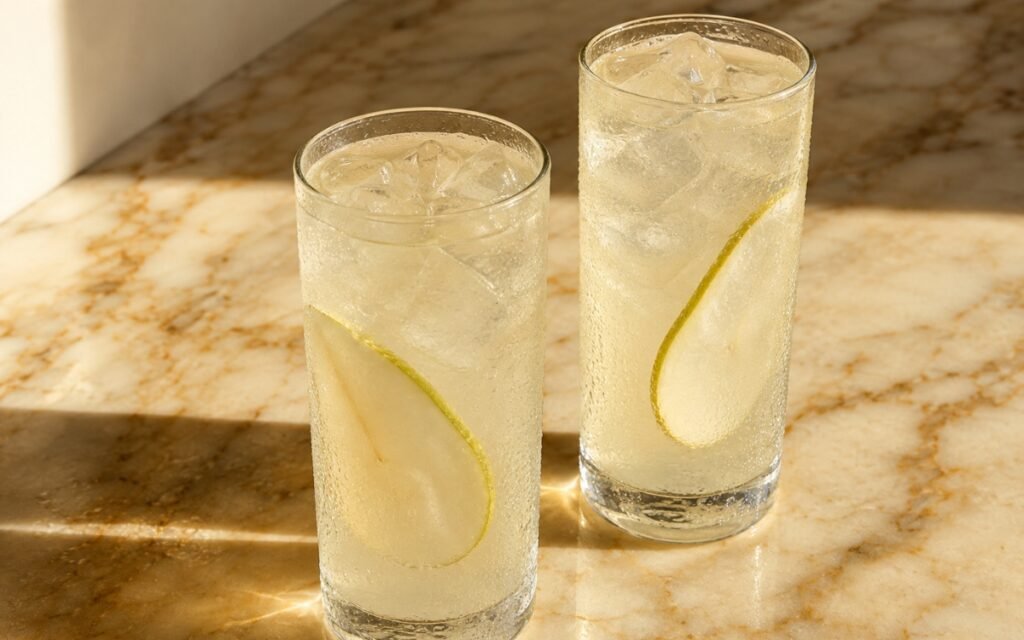
Pear Lemonade
Ripe pears at low heat with honey, lemon zest off heat — 150ml lemon only so pear leads, salt, cold water, chilled. Pale, delicate, and pear-forward.
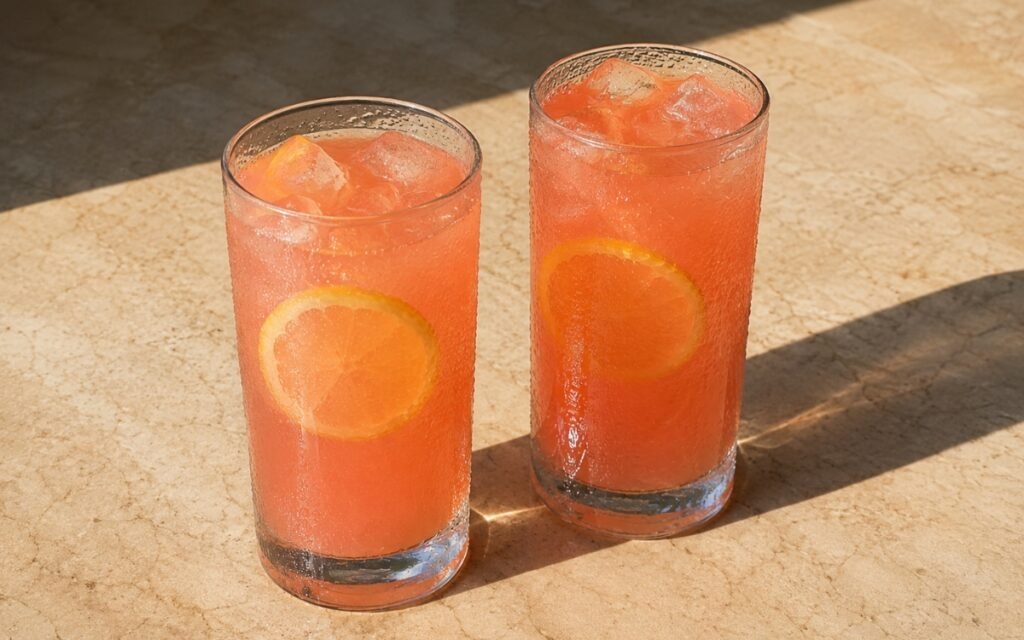
Orange Lemonade
Orange and lemon zest steeped off heat 8–10 minutes, pulp mashed — fresh orange juice with 120ml lemon for structural acid, salt, cold water. Juicy and structured.
Guava Lemonade
Cold-extracted lemon zest and juice combined with pink guava nectar for a smooth, fragrant, pink-orange tropical lemonade.

You might also like
You might also like
Peach Rosemary Sparkling Mocktail
Sweet golden peach, rosemary depth, and lemon zest over sparkling water — warm and refreshing.
Lemon Iced Tea Pitcher Drink
Ceylon tea at 90–95°C for 3 minutes, lemon zest off heat for aromatic oils — cold lemon juice for structural acid, cold water, chilled. Tea-forward and lemon-bright.
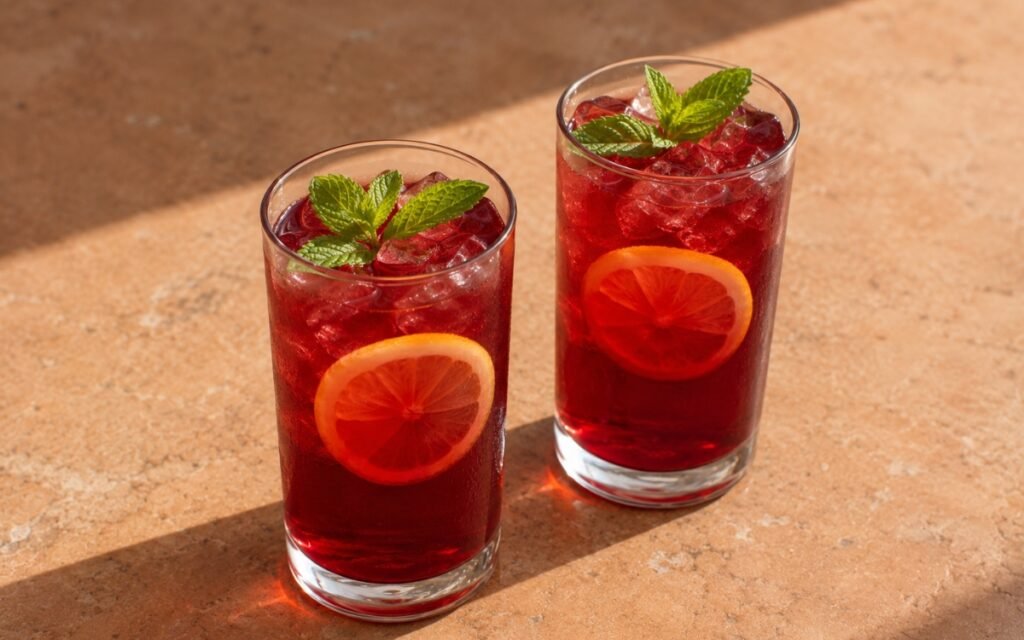
Light Hibiscus Mint Cooler
Hibiscus steeped at 95°C, honey while warm, exactly 1 tsp orange blossom water — mint cold-infused 10–15 minutes, chilled. Vivid ruby and floral.


Fresh Watermelon Lemonade
Ingredients
Method
- Cut the watermelon and remove as many seeds as possible — a seedless variety is specifically convenient here; for seeded varieties, the blend-and-strain step will catch any remaining seeds in the sieve. Add the 1.2kg of cubed watermelon flesh to a blender in batches if necessary. Blend at high speed for 30–40 seconds until completely smooth — a vivid, deeply pink-red juice with some natural foam from the blending. Watermelon is approximately 92% water, and the blending produces a liquid rather than a purée almost immediately. Strain through a fine-mesh sieve into a large pitcher or jug, pressing gently on the foam and pulp. The pressing is specifically gentle here — watermelon’s very high water content means the strained juice is already mostly liquid; firm pressing extracts more of the very fine pulp particles that would increase the slight cloudiness without adding meaningful flavour. The finished strained juice should be a clear, vivid, specifically deep pink-red — watermelon’s characteristic colour present without the thick, pulpy texture of unstrained juice. Set aside while making the syrup.
- Combine the 80g of white sugar and 240ml of water in a small saucepan. Place over medium heat and stir continuously until the sugar has fully dissolved. Bring just to the point of dissolution and remove from heat immediately — no simmering reduction is required or beneficial. Allow to cool completely. The separate simple syrup approach is specifically different from the strawberry and peach lemonade preparations where the fruit was cooked in the sugar-water. Watermelon cannot be cooked without losing its characteristically fresh, vivid aromatic character — cooking watermelon produces a muted, vaguely sweet liquid without the specific volatile compounds responsible for watermelon’s immediately recognisable aroma and flavour. The simple syrup is therefore made completely separately and added to the raw watermelon juice at the cold combination stage.
- In the large pitcher containing the strained watermelon juice, add the cooled simple syrup, 240ml of fresh lemon juice, the 1 tsp of lemon zest, ⅛ tsp of fine sea salt, and 300ml of ice-cold water. Stir thoroughly. The lemon zest is added directly to the cold combined base in this preparation rather than infused in a warm syrup as in the strawberry lemonade — because there is no warm syrup for the zest to infuse into. Cold infusion of lemon zest over the 1–2 hour refrigerator chill produces a slower but similarly effective release of its aromatic oils into the surrounding liquid, integrating the citrus depth during the chilling period. The pinch of salt at ⅛ tsp in the full volume is the same sub-threshold amplifier used throughout this collection. Watermelon’s natural flavour profile is almost entirely sweet with minimal natural acid — the combination of the lemon juice’s brightness and the salt’s below-detection-threshold amplification is what prevents the finished lemonade from tasting vaguely sweet rather than specifically of watermelon. Taste and adjust: if the watermelon character is vivid and the balance needs only brightening, add more lemon juice up to 300ml total; if the concentration is too intense, add more cold water up to 600ml total; if the watermelon was particularly mild or under-ripe, add additional simple syrup. The correctly balanced watermelon lemonade should taste crisp, clean, clearly of fresh watermelon, and refreshingly tart from the lemon.
- Refrigerate for 1–2 hours. Before serving, stir the pitcher thoroughly — watermelon juice’s natural large-molecule compounds (primarily large sugar molecules and light plant pigments) separate progressively during storage, creating a clear upper layer above a more coloured, denser lower layer. This separation is natural and correct; stirring before each serving reintegrates the components. Fill glasses with ice. Pour over the chilled watermelon lemonade, stirring the pitcher gently between each pour to maintain even distribution. Garnish with a lemon slice and a small watermelon wedge if desired. Serve immediately.