
Blueberry Lavender Lemonade
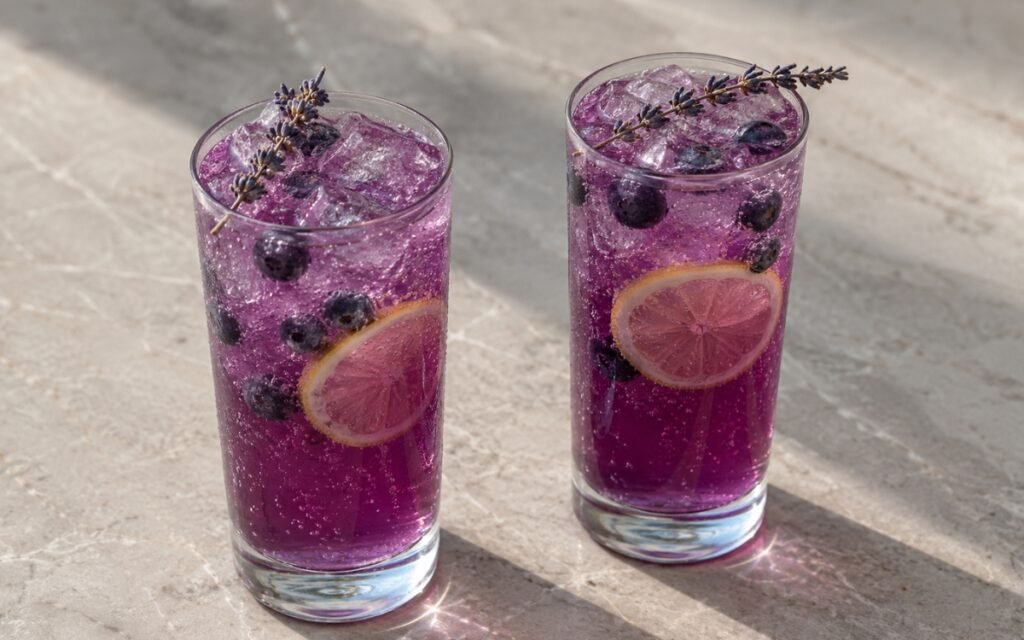
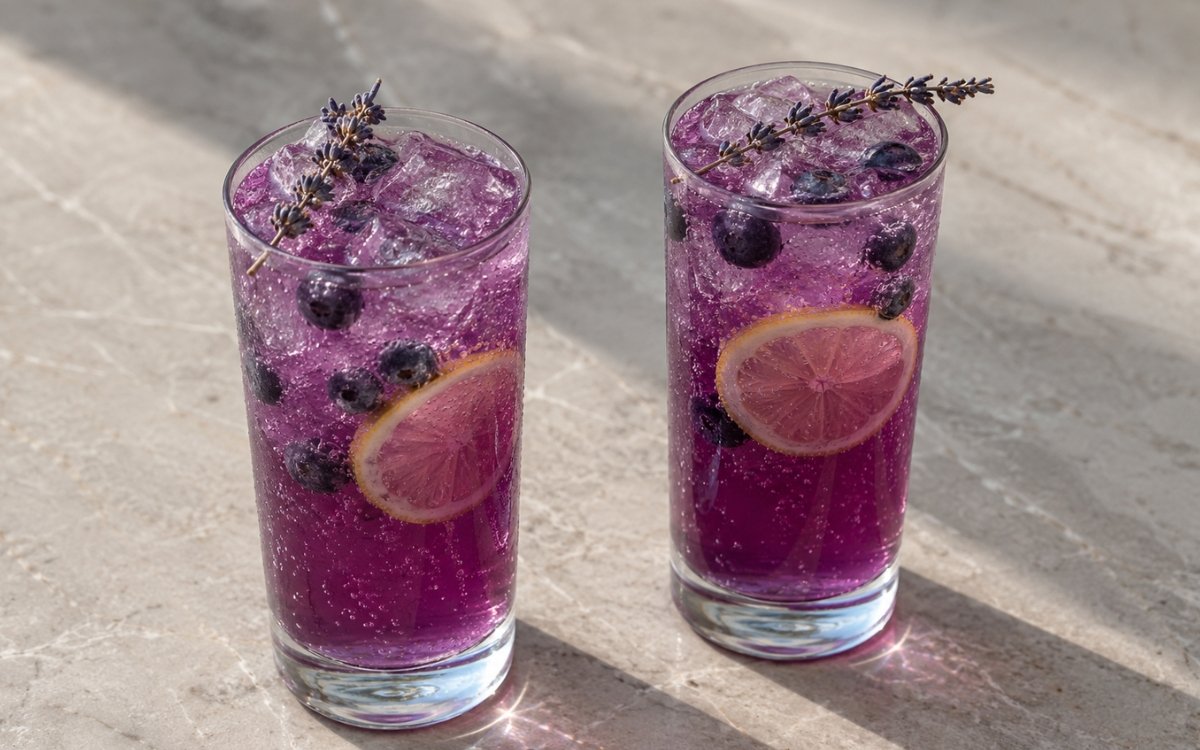
Lavender is the herb that has the narrowest pleasant-to-unpleasant infusion window of any botanical in this collection — at the correct steep time it provides a specifically clean, sweet, floral aromatic depth that amplifies blueberry and lemon into something more complex and more specifically beautiful; at even modestly extended steep times it shifts into the soapy, medicinal, slightly perfumed character that has given lavender-flavoured food and drink an undeserved reputation for being unpleasant. The 15–25 minute off-heat steep in the warm syrup is the specifically calibrated window where the pleasant linalool and linalyl acetate compounds extract ahead of the camphor and eucalyptol compounds that produce the soapy note. The blueberries blended with the lemon juice — the acid protecting the vivid purple anthocyanin colour during blending in the same way the lime juice protected the raspberry colour in the Raspberry Basil Limeade. Deep purple, lightly floral, tart, and refreshing without tipping into perfumed or sugary territory. Easy enough for a weekday afternoon, beautiful enough for a summer table.
Prep Time : 10 min
Cook Time : 5 min
Servings : 8
10 min
5 min
8
Ingredients
For the Homemade Lavender Syrup
• 100g granulated sugar
• 120ml water
• 1 tbsp dried edible lavender flowers — food-grade — this one on Amazon
For the Blueberry Lavender Lemonade Base
• 150g fresh blueberries
• 180ml fresh lemon juice — approximately 5–6 lemons
• 120ml lavender syrup — from the recipe above
• 300–400ml cold water — start with 300ml, adjust after tasting
For Serving
• 900–1000ml chilled club soda — added right before serving
• Ice cubes
For the Garnish
• fresh blueberries
• Lemon wheels
• Fresh lavender sprigs
This post may contain affiliate links. As an Amazon Associate I earn from qualifying purchases, at no additional cost to you.
Directions
- Make the Lavender Syrup
Combine the 100g of granulated sugar, 120ml of water, and 1 tbsp of dried edible lavender flowers in a small saucepan over medium-low heat. Stir continuously until the sugar is completely dissolved and the syrup just begins to steam from the surface — there is no need to bring it to a full simmer. The goal is a sugar syrup sufficiently warm to infuse the lavender rather than a reduction. Remove from the heat immediately once steaming begins. Add the lavender flowers — if making the syrup with the lavender already in the pan — or pour the hot syrup over the lavender in a separate bowl if preferring to control the extraction more precisely. Allow to steep covered for 15–25 minutes. The 15-minute point produces a clean, specifically floral lavender character with clear sweetness; 25 minutes produces a more assertively floral result that is still pleasant. Do not leave the lavender in the syrup for hours — and specifically do not return it to heat during the steep. Lavender’s primary pleasant aromatic compounds (linalool, linalyl acetate) extract ahead of the camphor, eucalyptol, and terpene compounds responsible for the soapy, medicinal character at the lower temperatures of the off-heat steep; prolonged steeping or elevated temperatures extract progressively more of the unpleasant compounds until the syrup tastes specifically of laundry detergent. The difference between a 20-minute lavender syrup and an over-steeped one is one of the most dramatic preparation-outcome differences in this collection. Strain through a fine-mesh sieve and discard the lavender flowers. Allow the syrup to cool completely before using. - Blend and Strain the Blueberries with Lemon
Add the 150g of fresh blueberries and 180ml of fresh lemon juice to a blender. Blend at high speed for 30–40 seconds until completely smooth. The blueberries should be fully broken down and the liquid deeply, vividly purple — the lemon juice’s acidity protecting the anthocyanin pigments from oxidation during blending and helping maintain the specifically vivid purple colour. For a smoother, cleaner lemonade matching the image’s clear, vivid appearance: strain through a fine-mesh sieve into a large pitcher, pressing firmly on the blueberry solids to extract as much vivid liquid as possible. Discard the dry skin and seed solids. The strained base should be a clear, specifically vivid deep purple. For a more rustic, textured lemonade: leave unstrained — the blueberry pulp suspended in the liquid produces a slightly thicker, more fruit-present result. Both are correct; the strained version is more visually refined. - Combine and Adjust
Stir the 120ml of lavender syrup and 300ml of cold water into the strained blueberry-lemon base. Stir well until completely combined. Taste the base — it should be tart from the lemon, specifically floral from the lavender, fruity and vivid from the blueberry, and more concentrated than the intended final drink. If it tastes too intense, add up to 100ml more cold water. If the lemon is too aggressive, add a small additional amount of lavender syrup. If the floral character is insufficient, the syrup can be increased by a tablespoon. The base should taste assertively flavoured — the ice and club soda will dilute it significantly at serving. Refrigerate for 30 minutes if time allows — the chill improves both the flavour integration and the visual clarity of the strained base. - Add Club Soda Right Before Serving
Immediately before serving, add the 900–1000ml of chilled club soda to the pitcher — pouring gently down the side of the pitcher. Stir once or twice gently. Fill glasses with ice and pour the sparkling lemonade over the top. Garnish each glass with several fresh blueberries, a lemon wheel, and a small fresh lavender sprig resting on the ice. Serve immediately while cold, vivid, and fizzy.
*Notes :
- The lavender steep time is the single most consequential technique variable in this recipe — more so than in any other herbal preparation in this collection. Lavender’s specific aromatic chemistry explains why: its most pleasant compounds (linalool and linalyl acetate) are present in high concentration and extract readily into warm water. Its less pleasant compounds — camphor (responsible for the mothball/soapy note) and eucalyptol (responsible for the medicinal note) — are present at lower concentrations but extract progressively with time and heat. At 15–25 minutes in an off-heat warm syrup, the pleasant compounds dominate significantly; at extended steeping the ratio shifts. The instruction to not steep for hours is not a conservative suggestion but a flavour preservation necessity.
- Granulated white sugar rather than honey is specifically the correct sweetener for the lavender syrup in this preparation. Honey’s own aromatic compounds — while complementary to lavender in some preparations — would compete with the lavender’s aromatic clarity in this combination where the goal is a specifically clean, floral lavender note against the blueberry and lemon. White sugar’s neutral sweetness provides the lavender with the aromatic space to be the sole floral character.
Why This Recipe Works
This recipe works because the lavender is steeped within the precise 15–25 minute window that extracts its pleasant linalool character before the soapy camphor compounds develop.
The blueberries are blended with the lemon juice to protect the vivid purple colour through the acid-anthocyanin interaction. And the club soda is added right before serving to preserve the full carbonation through every glass.
Ingredient Breakdown
Lavender Syrup (15–25 Minute Maximum Steep Off Heat)
The floral character component — the most time-sensitive infusion in this collection; pleasant linalool character extracted within the window before camphor and eucalyptol dominate.
Blueberries Blended with Lemon Juice
The vivid purple base — lemon juice’s acidity protecting anthocyanin colour during blending; both ingredients processed together for maximum colour preservation.
Granulated White Sugar (Rather Than Honey)
The neutral sweetener — specifically allowing the lavender’s aromatic clarity to be the sole floral character rather than competing with honey’s own florality.
Club Soda Added Right Before Serving
The carbonation preservation technique — added at the last possible moment for full fizz through every glass.
Flavor Structure Explained
This Blueberry lavender lemonade follows a layered balance model:
- Tart fruit-citrus core (blueberry and lemon)
- Floral aromatic lift (lavender)
- Balanced sweetness (lavender syrup)
- Deep berry richness (blueberry base)
- Crisp sparkling finish (club soda)
Blueberry and lemon define the foundation together, combining deep berry sweetness with vivid citrus acidity to create a bright, fruit-forward profile. Lavender adds the defining aromatic layer, contributing floral sweetness and herbal elegance that transform the drink from simple lemonade into something more refined and composed. The syrup’s sugar balances the sharpness of both lemon and blueberry, softening the acidity without flattening the freshness. Club soda finishes the structure with lively carbonation that lifts the floral and fruit aromatics, giving the drink a crisp, refreshing finish.
Common Mistakes to Avoid
- Over-Steeping the Lavender – The single most common error. Beyond 25 minutes the soapy, medicinal character develops. Always strain precisely within the 15–25 minute window.
- Using Decorative Rather Than Edible Lavender – Non-food-grade lavender may contain pesticides. Always food-grade dried culinary lavender.
- Adding Club Soda in Advance – Carbonation depletes progressively. Always add right before serving.
- Using Too Much Lavender – More lavender does not produce more pleasant floral flavour — it produces more camphor bitterness. Always the specified 1 tbsp quantity.
- Not Pressing the Blueberry Solids Firmly – The vivid colour and flavour is concentrated in the strained juice — the skins and pulp retain a proportion. Always press firmly.
Variations
With Basil
Add 10g of fresh basil leaves — clapped and cold-infused for 5–10 minutes in the finished, cooled base — for the sweet, anise-adjacent herbal freshness that is specifically complementary to both blueberry and lavender.
With Honey Instead of Sugar in the Syrup
Replace the granulated sugar with 80g of mild honey (acacia or clover) — the honey’s warmth adds additional aromatic complexity; appropriate for those who want a more complex sweetness. Note that strong honey flavours will compete with the lavender.
With Blackberries
Replace the blueberries with an equal weight of blackberries — the blackberry’s deeper, more complex, slightly wine-adjacent fruitiness with the lavender produces a more specifically adult flavour direction.
Still Version
Replace the club soda with 900ml of cold still water for a non-sparkling blueberry lavender lemonade.
Storage & Make-Ahead
Lavender syrup can be refrigerated in a sealed jar for up to 2 weeks. Its floral flavor remains bright and stable throughout the storage period.
Blueberry lemonade base, without the club soda, can be refrigerated for up to 3 days. The color stays vibrant because of the high anthocyanin content in the blueberries, although the fresh aromatic quality of the lemon gradually becomes less pronounced during storage.
Once assembled, the drinks are not suitable for storage and should be served immediately after the base and club soda are combined.
Frequently Asked Questions
Why is the lavender steep time so specifically limited?
Lavender’s aromatic chemistry contains both pleasant compounds (linalool, linalyl acetate — responsible for the clean, sweet, specifically floral character) and less pleasant ones (camphor, eucalyptol — responsible for the soapy, medicinal note). At off-heat steeping temperature, the pleasant compounds extract ahead of the unpleasant ones. Within 15–25 minutes the ratio heavily favours the pleasant. With extended steeping the ratio shifts progressively toward the unpleasant.
Why blend blueberries with lemon juice rather than with water?
The lemon juice’s citric acid creates an acidic environment that specifically stabilises the anthocyanin pigments responsible for blueberry’s vivid purple colour. In a neutral or alkaline pH environment anthocyanins shift toward blue-purple and then brown; in acidic conditions they remain specifically vivid red-purple. Blending with lemon juice produces a more vivid, more stable colour than blending with water.
Why granulated white sugar rather than honey for the lavender syrup?
Honey’s own floral aromatic compounds — including geraniol and linalool — would overlap with lavender’s primary aromatic compounds and compete for the same aromatic register in the finished drink. White sugar’s neutral sweetness provides lavender with the aromatic space to be the specific and sole floral character rather than one floral note competing with another.
Can I use fresh lavender instead of dried?
Yes — use 2 tablespoons of fresh lavender flowers at the same steeping temperature and time. Fresh lavender has a slightly more vivid, more specifically aromatic character than dried. The same 15–25 minute time limit applies.
What other blueberry-based drinks share this flavour direction?
The Blueberry Lemon Thyme Spritzer Mocktail shares the blueberry-and-citrus-and-herb combination with thyme rather than lavender — a warmer, more specifically herbal direction than lavender’s floral character. The Fresh Blueberry Lemonade shares the blueberry-lemon foundation without the herbal floral element — the same primary fruit and acid combination in its simplest form. The Blackberry Lemonade shares the dark berry-and-lemon structure with blackberry’s deeper, more complex fruitiness in the same refreshing lemonade format.
Nutrition Facts
( per serving )
Calories
~80 kcal
Protein
0 g
Fat
0 g
Carbs
20 g
Calories
~80 kcal
Protein
0 g
Fat
0 g
Carbs
20 g
Related Recipes
Related Recipes

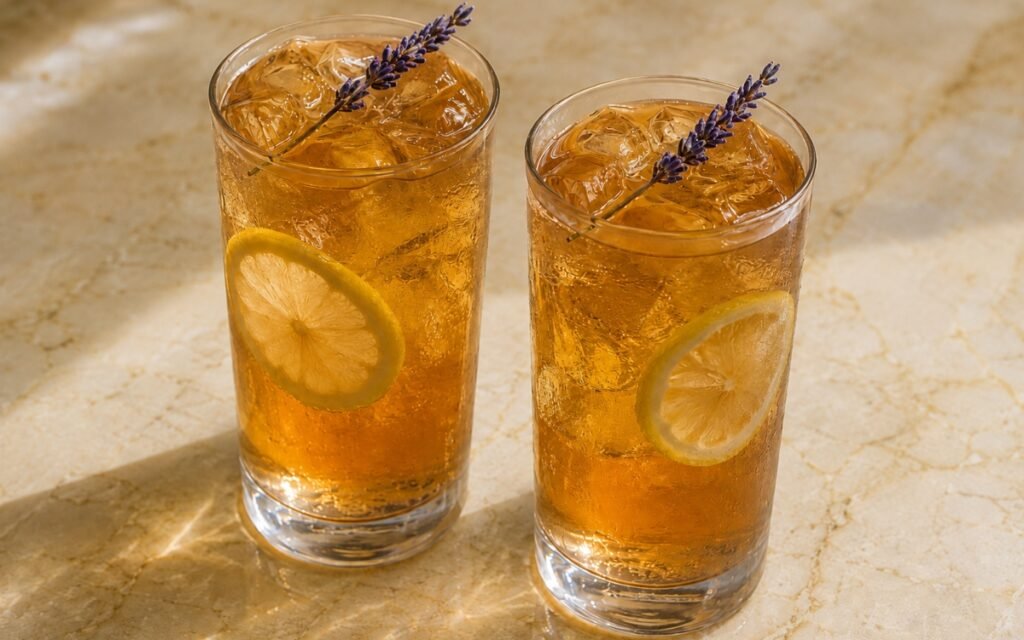
Lavender Lemon Iced Black Tea
Pale amber iced black tea with lavender and lemon peel, lightly honeyed, served over ice with a lavender sprig.
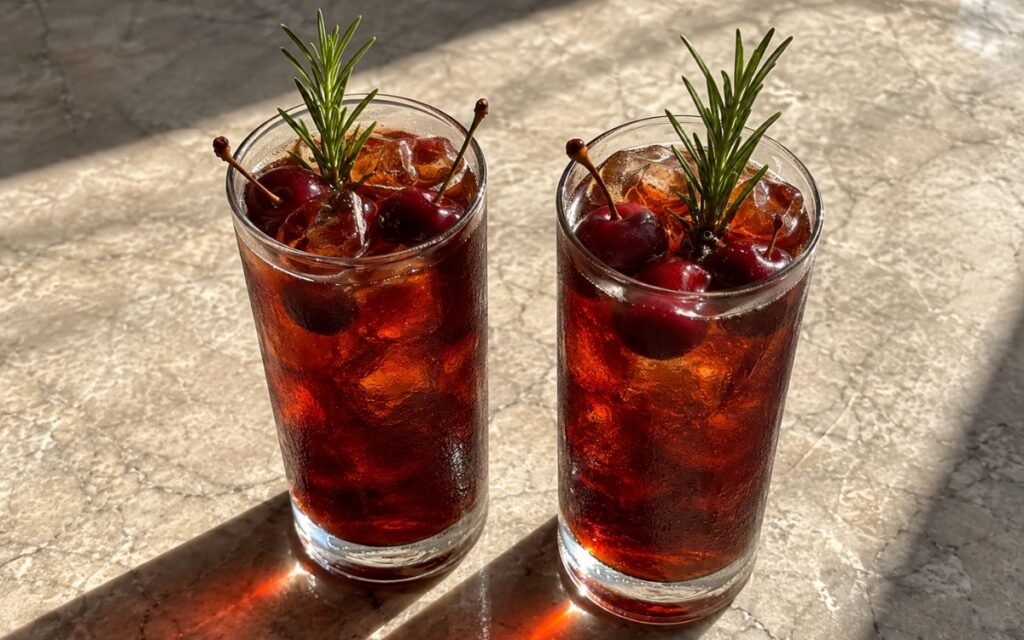
Cherry Rosemary Black Iced Tea
Properly brewed black tea layered with a gently simmered cherry concentrate and an off-heat rosemary infusion for a deep, fruity iced tea.
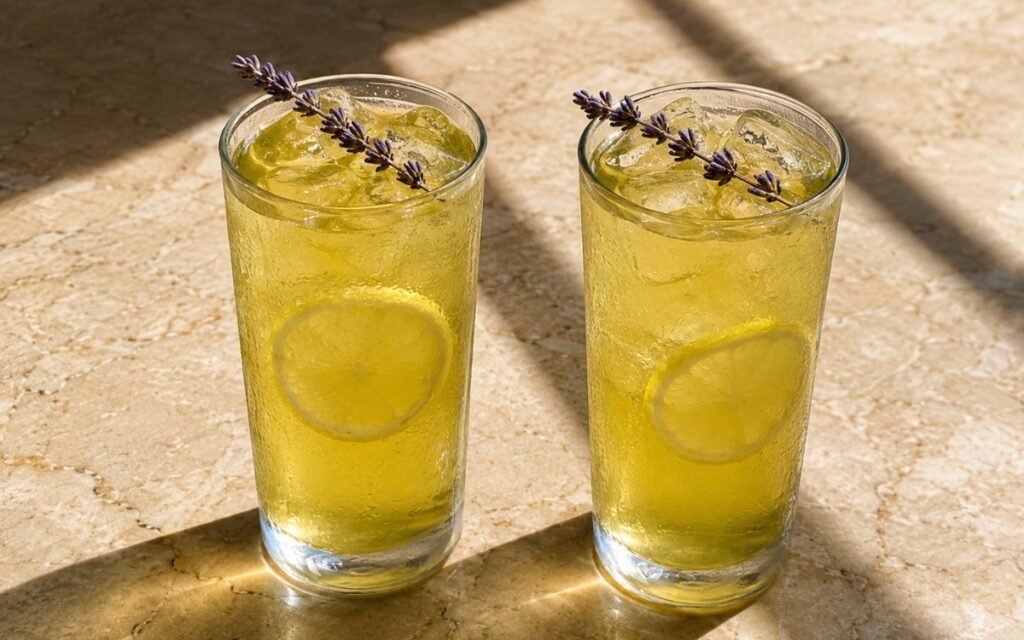
Lavender Honey Green Iced Tea
Properly brewed green tea combined with a carefully extracted lavender-honey infusion for a pale golden-green, floral, lightly sweet iced tea.
You might also like
You might also like
Orange Blossom Fizz Mocktail
Fresh citrus and honey with orange blossom water over club soda — floral and pale gold.
Strawberry Iced Black Tea
Black tea at 90–95°C for 2½–3 minutes, strawberries simmered into a light unreduced syrup, lemon peel infused cold 5 minutes — chilled. Fresh, crisp, restrained.
Raspberry Lemon Shrub Fizz Mocktail
Cold-process raspberry and white wine vinegar with fresh lemon over club soda — sharp and complex.
Blueberry Lavender Lemonade
Ingredients
Method
- Combine the 100g of granulated sugar, 120ml of water, and 1 tbsp of dried edible lavender flowers in a small saucepan over medium-low heat. Stir continuously until the sugar is completely dissolved and the syrup just begins to steam from the surface — there is no need to bring it to a full simmer. The goal is a sugar syrup sufficiently warm to infuse the lavender rather than a reduction. Remove from the heat immediately once steaming begins. Add the lavender flowers — if making the syrup with the lavender already in the pan — or pour the hot syrup over the lavender in a separate bowl if preferring to control the extraction more precisely. Allow to steep covered for 15–25 minutes. The 15-minute point produces a clean, specifically floral lavender character with clear sweetness; 25 minutes produces a more assertively floral result that is still pleasant. Do not leave the lavender in the syrup for hours — and specifically do not return it to heat during the steep. Lavender’s primary pleasant aromatic compounds (linalool, linalyl acetate) extract ahead of the camphor, eucalyptol, and terpene compounds responsible for the soapy, medicinal character at the lower temperatures of the off-heat steep; prolonged steeping or elevated temperatures extract progressively more of the unpleasant compounds until the syrup tastes specifically of laundry detergent. The difference between a 20-minute lavender syrup and an over-steeped one is one of the most dramatic preparation-outcome differences in this collection. Strain through a fine-mesh sieve and discard the lavender flowers. Allow the syrup to cool completely before using.
- Add the 150g of fresh blueberries and 180ml of fresh lemon juice to a blender. Blend at high speed for 30–40 seconds until completely smooth. The blueberries should be fully broken down and the liquid deeply, vividly purple — the lemon juice’s acidity protecting the anthocyanin pigments from oxidation during blending and helping maintain the specifically vivid purple colour. For a smoother, cleaner lemonade matching the image’s clear, vivid appearance: strain through a fine-mesh sieve into a large pitcher, pressing firmly on the blueberry solids to extract as much vivid liquid as possible. Discard the dry skin and seed solids. The strained base should be a clear, specifically vivid deep purple. For a more rustic, textured lemonade: leave unstrained — the blueberry pulp suspended in the liquid produces a slightly thicker, more fruit-present result. Both are correct; the strained version is more visually refined.
- Stir the 120ml of lavender syrup and 300ml of cold water into the strained blueberry-lemon base. Stir well until completely combined. Taste the base — it should be tart from the lemon, specifically floral from the lavender, fruity and vivid from the blueberry, and more concentrated than the intended final drink. If it tastes too intense, add up to 100ml more cold water. If the lemon is too aggressive, add a small additional amount of lavender syrup. If the floral character is insufficient, the syrup can be increased by a tablespoon. The base should taste assertively flavoured — the ice and club soda will dilute it significantly at serving. Refrigerate for 30 minutes if time allows — the chill improves both the flavour integration and the visual clarity of the strained base.
- Immediately before serving, add the 900–1000ml of chilled club soda to the pitcher — pouring gently down the side of the pitcher. Stir once or twice gently. Fill glasses with ice and pour the sparkling lemonade over the top. Garnish each glass with several fresh blueberries, a lemon wheel, and a small fresh lavender sprig resting on the ice. Serve immediately while cold, vivid, and fizzy.