Ingredients
Method
Make the Lavender Syrup
- Combine the 100g of granulated sugar, 120ml of water, and 1 tbsp of dried edible lavender flowers in a small saucepan over medium-low heat. Stir continuously until the sugar is completely dissolved and the syrup just begins to steam from the surface — there is no need to bring it to a full simmer. The goal is a sugar syrup sufficiently warm to infuse the lavender rather than a reduction. Remove from the heat immediately once steaming begins. Add the lavender flowers — if making the syrup with the lavender already in the pan — or pour the hot syrup over the lavender in a separate bowl if preferring to control the extraction more precisely. Allow to steep covered for 15–25 minutes. The 15-minute point produces a clean, specifically floral lavender character with clear sweetness; 25 minutes produces a more assertively floral result that is still pleasant. Do not leave the lavender in the syrup for hours — and specifically do not return it to heat during the steep. Lavender's primary pleasant aromatic compounds (linalool, linalyl acetate) extract ahead of the camphor, eucalyptol, and terpene compounds responsible for the soapy, medicinal character at the lower temperatures of the off-heat steep; prolonged steeping or elevated temperatures extract progressively more of the unpleasant compounds until the syrup tastes specifically of laundry detergent. The difference between a 20-minute lavender syrup and an over-steeped one is one of the most dramatic preparation-outcome differences in this collection. Strain through a fine-mesh sieve and discard the lavender flowers. Allow the syrup to cool completely before using.
Blend and Strain the Blueberries with Lemon
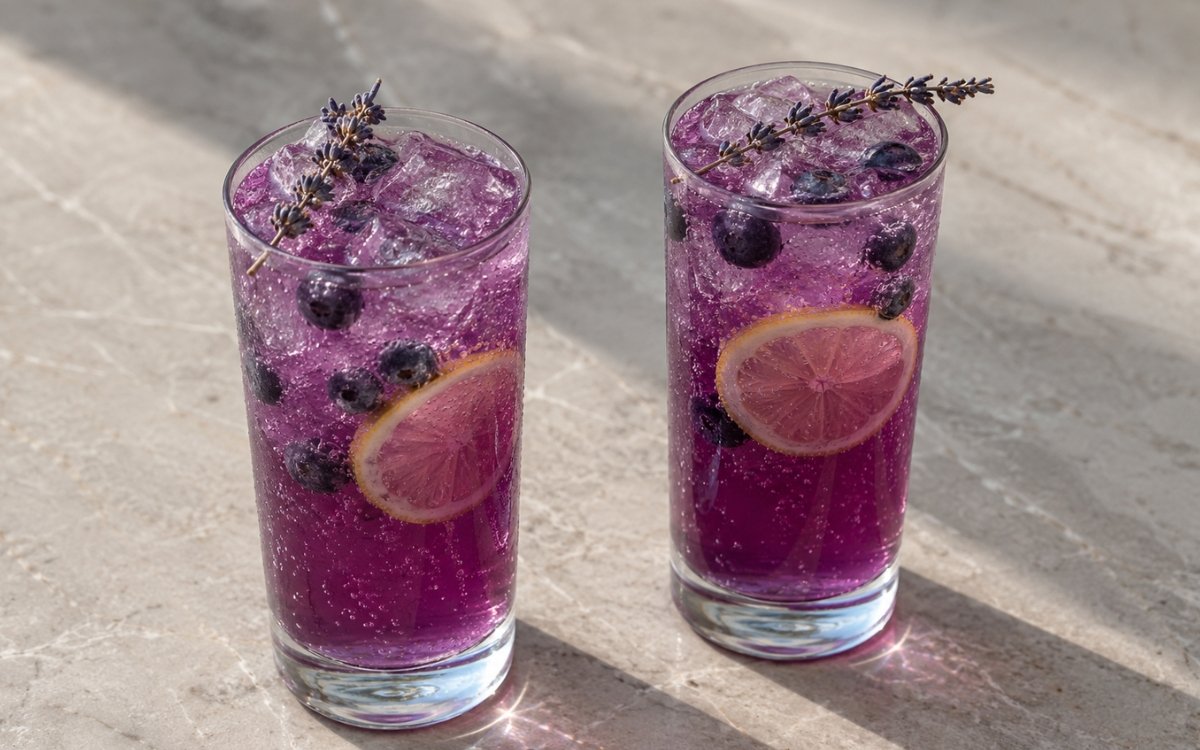
- Add the 150g of fresh blueberries and 180ml of fresh lemon juice to a blender. Blend at high speed for 30–40 seconds until completely smooth. The blueberries should be fully broken down and the liquid deeply, vividly purple — the lemon juice's acidity protecting the anthocyanin pigments from oxidation during blending and helping maintain the specifically vivid purple colour. For a smoother, cleaner lemonade matching the image's clear, vivid appearance: strain through a fine-mesh sieve into a large pitcher, pressing firmly on the blueberry solids to extract as much vivid liquid as possible. Discard the dry skin and seed solids. The strained base should be a clear, specifically vivid deep purple. For a more rustic, textured lemonade: leave unstrained — the blueberry pulp suspended in the liquid produces a slightly thicker, more fruit-present result. Both are correct; the strained version is more visually refined.
Combine and Adjust
- Stir the 120ml of lavender syrup and 300ml of cold water into the strained blueberry-lemon base. Stir well until completely combined. Taste the base — it should be tart from the lemon, specifically floral from the lavender, fruity and vivid from the blueberry, and more concentrated than the intended final drink. If it tastes too intense, add up to 100ml more cold water. If the lemon is too aggressive, add a small additional amount of lavender syrup. If the floral character is insufficient, the syrup can be increased by a tablespoon. The base should taste assertively flavoured — the ice and club soda will dilute it significantly at serving. Refrigerate for 30 minutes if time allows — the chill improves both the flavour integration and the visual clarity of the strained base.
Add Club Soda Right Before Serving
- Immediately before serving, add the 900–1000ml of chilled club soda to the pitcher — pouring gently down the side of the pitcher. Stir once or twice gently. Fill glasses with ice and pour the sparkling lemonade over the top. Garnish each glass with several fresh blueberries, a lemon wheel, and a small fresh lavender sprig resting on the ice. Serve immediately while cold, vivid, and fizzy.
Notes
The lavender steep time is the single most consequential technique variable in this recipe — more so than in any other herbal preparation in this collection. Lavender's specific aromatic chemistry explains why: its most pleasant compounds (linalool and linalyl acetate) are present in high concentration and extract readily into warm water. Its less pleasant compounds — camphor (responsible for the mothball/soapy note) and eucalyptol (responsible for the medicinal note) — are present at lower concentrations but extract progressively with time and heat. At 15–25 minutes in an off-heat warm syrup, the pleasant compounds dominate significantly; at extended steeping the ratio shifts. The instruction to not steep for hours is not a conservative suggestion but a flavour preservation necessity.
Granulated white sugar rather than honey is specifically the correct sweetener for the lavender syrup in this preparation. Honey's own aromatic compounds — while complementary to lavender in some preparations — would compete with the lavender's aromatic clarity in this combination where the goal is a specifically clean, floral lavender note against the blueberry and lemon. White sugar's neutral sweetness provides the lavender with the aromatic space to be the sole floral character.