
Fresh Blueberry Lemonade
Blueberry lemonade done with the same commitment to extraction over reduction applied to the cranberry syrup — the blueberries cooked at a gentle simmer for 8–10 minutes until their anthocyanin-rich juice is fully released into the surrounding sugar-water, specifically not reduced into a thick, sweet, jam-adjacent concentrate. The lemon zest strip added to the saucepan during the cooking period and removed before straining — integrating the zest’s fat-soluble aromatic oils directly into the warm blueberry syrup at the cooking temperature where they release most readily, producing a specifically more complex citrus-blueberry depth in the syrup itself that plain lemon juice added cold to the finished pitcher cannot replicate. The salt cooked directly into the syrup alongside the blueberries rather than added separately to the pitcher — at this stage the salt’s function is both the standard sub-threshold flavour amplification and specifically the enhancement of blueberry’s anthocyanin colour stability, which is pH and ion-sensitive; the salt’s sodium ions help maintain the specifically vivid purple-blue of well-made blueberry syrup throughout the preparation and storage. Clean, deeply refreshing, and naturally the most vivid purple-blue colour of any lemonade in this collection.
Prep Time : 20 min
Cook Time : 8–10 min
Servings : 8
20 min
8–10 min
8
Ingredients
For the Blueberry Syrup
• 350–400g fresh blueberries — start with 350g; 400g for more intense colour and flavour
• 100g white granulated sugar — adjust slightly based on berry sweetness — this one on Amazon
• 240ml water
• 1 strip fresh lemon zest — yellow part only, no white pith; added during cooking
• ⅛ tsp fine sea salt — added during cooking
For the Blueberry Lemonade
• 180–240ml blueberry syrup — from above; start with 180ml, adjust after tasting
• 240–300ml fresh lemon juice — approximately 5–7 lemons; start with 240ml
• 750ml–1 litre ice-cold water — start with 750ml, adjust after tasting
• 2–3 tbsp plain simple syrup — optional; only if needed
For Serving
• Ice cubes
For the Garnish
• Lemon slices
• Fresh blueberries
This post may contain affiliate links. As an Amazon Associate I earn from qualifying purchases, at no additional cost to you.
Directions
- Build the Blueberry Syrup
Combine the 350–400g of blueberries, 100g of white sugar, 240ml of water, 1 strip of lemon zest, and ⅛ tsp of fine sea salt in a medium saucepan. The lemon zest and salt enter the saucepan at the beginning rather than being held back as additions — the lemon zest’s aromatic oils release at cooking temperature into the surrounding blueberry-and-sugar medium, integrating with the blueberry’s aromatic character in a way that cold-addition to the finished pitcher cannot produce. The salt’s presence from the beginning of cooking specifically contributes to colour stability in the blueberry’s anthocyanin pigments — sodium ions in the cooking medium help maintain the vivid blue-purple of the pigments through the thermal extraction process. Place over medium heat and bring to a gentle simmer. Cook for 8–10 minutes, stirring occasionally. During the first 2–3 minutes the blueberries will begin swelling and the first few will burst, releasing the intensely purple juice. By 5–6 minutes the majority of the berries should have burst. By 8–10 minutes all should be fully collapsed and the surrounding liquid should be a vivid, deeply purple, specifically fluid syrup. The same extraction principle from the cranberry syrup applies: the volume should not have reduced meaningfully, the liquid should remain flowing and relatively fluid, and the colour should be specifically vivid rather than a dark, thick, concentrated preparation. Remove the lemon zest strip and discard it immediately. Its aromatic contribution has been extracted during the cooking period; leaving it in during straining or cooling would continue extracting the less pleasant bitter pith-adjacent compounds even though the pith itself is absent. - Strain the Blueberry Syrup
Strain through a fine-mesh sieve into a clean bowl or measuring jug, pressing firmly on the blueberry skins and solids. Blueberry skins contain a high concentration of the anthocyanin pigments even after bursting — firm pressing extracts both the maximum colour and the maximum flavour from the cooked berries. The finished strained syrup should be a clear, vivid, deeply purple liquid — more specifically purple than red due to the anthocyanin’s specific pH response at the syrup’s slightly acidic pH. Allow to cool completely. - Build the Lemonade
In a large pitcher, combine 180ml of the cooled blueberry syrup, 240ml of fresh lemon juice, and 750ml of ice-cold water. Stir thoroughly. Taste and assess. The lemon juice is added cold in the same approach used throughout this collection — preserving the fresh aromatic character. The combination of the blueberry syrup’s integrated lemon-zest depth and the cold-added lemon juice’s bright aromatic acidity produces a specifically more layered citrus character than either alone. The blueberry syrup’s natural acid from the berries and the salt’s amplification should make the combined base already pleasantly tart; the lemon juice provides the additional bright, clean acidity that makes it specifically refreshing. Adjust after tasting: more blueberry syrup up to 240ml for deeper colour and more pronounced berry character; more lemon juice up to 300ml for additional brightness; more cold water up to 1 litre for a lighter preparation; optional simple syrup only if the combined acidity is genuinely too aggressive rather than pleasantly sharp. - Chill and Serve
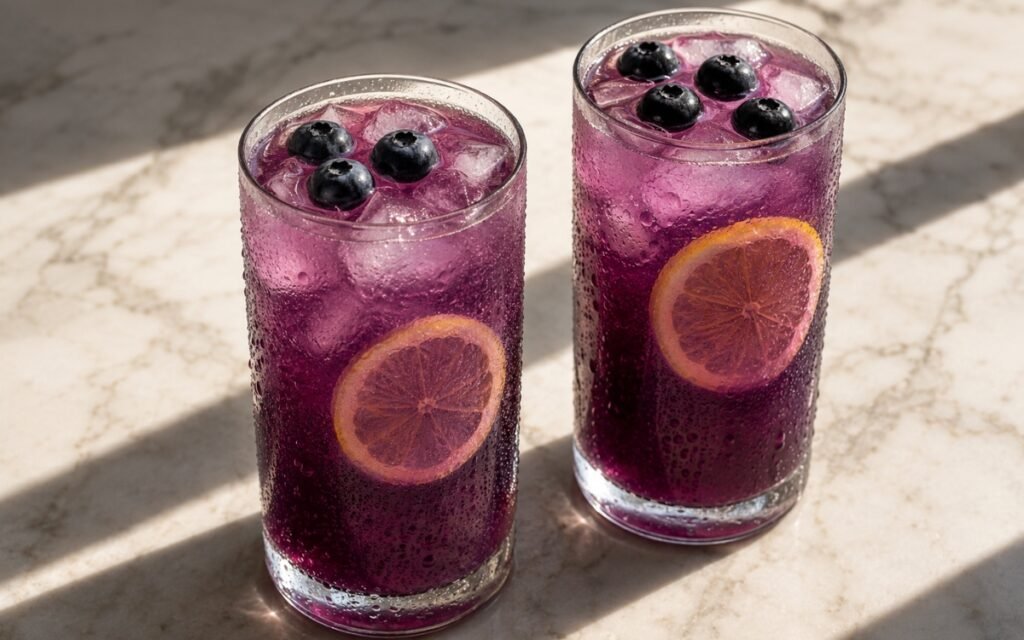
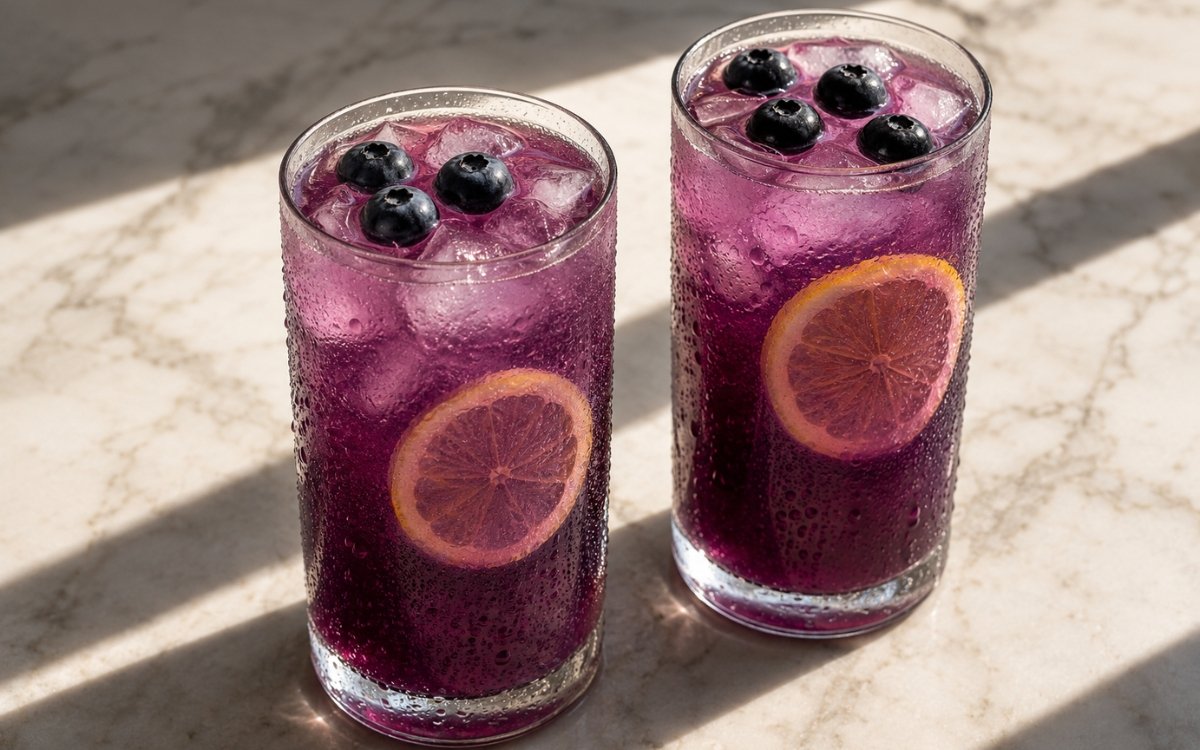
Refrigerate for 1–2 hours until completely cold. An interesting colour transformation occurs during this period — the lemonade’s colour shifts from the vivid purple of the warm syrup toward the more red-pink direction as the lemon juice’s citric acid shifts the anthocyanin pigments’ pH response over the chilling period. Both colours are natural and correct; the shifted cooled colour is the more specifically pink-purple visual of blueberry lemonade. Fill glasses with ice. Pour the chilled blueberry lemonade over the ice. Garnish with a lemon slice and several fresh blueberries resting on the ice. Serve immediately.
*Notes :
- Blueberry’s anthocyanin pigments are specifically pH-responsive — their colour changes across the pH spectrum from red at lower pH values (more acidic) through purple at moderate pH to blue at higher pH values (more alkaline). The finished lemonade’s colour depends on the combined pH of the blueberry syrup and the lemon juice, which shifts the anthocyanins toward the red-pink register of the pH spectrum. This is why blueberry lemonade looks pink-purple rather than the vivid blue-purple of blueberries themselves — the lemon juice’s acidity shifts the pigments’ colour appearance. This colour shift is completely natural and is the correct appearance of the finished drink.
- The 100g of white sugar in this syrup is calibrated for average-sweetness fresh blueberries. Cultivated blueberries (the large, sweet commercial variety) contain more natural sugar than wild blueberries (smaller, more intensely flavoured, more tart); for wild blueberries, the sugar may need to be increased to 120g.
Why This Recipe Works
This recipe works because the lemon zest is cooked into the blueberry syrup for integrated citrus-blueberry aromatic depth that cold-added lemon juice cannot produce. The salt is added during cooking for both sub-threshold flavour amplification and anthocyanin colour stability.
The syrup is built for extraction rather than reduction for the correct acid-to-sugar ratio. And the lemon juice is added cold for preserved fresh acidity alongside the cooked syrup’s integrated depth.
Ingredient Breakdown
Lemon Zest Cooked Into the Blueberry Syrup
The integrated citrus depth — fat-soluble aromatic oils extracted at cooking temperature into the blueberry-sugar medium; producing a more cohesive blueberry-citrus flavour profile throughout.
Salt Added During Cooking (Not After)
The dual function — standard sub-threshold amplification combined with sodium ions’ role in anthocyanin colour stability during the thermal extraction.
Extraction Not Reduction (8–10 Minutes, Gentle Simmer)
The correct acid-to-sugar ratio — fluid, bright, specifically tart syrup rather than concentrated, sweet, thick reduction.
Firm Pressing of Blueberry Solids
The maximum colour extraction — blueberry skins’ high anthocyanin concentration requires firm pressing to achieve the most vivid purple-blue result.
Lemon Juice Added Cold to Combined Base
The preserved brightness — fresh aromatic character protected alongside the syrup’s integrated citrus depth.
Flavor Structure Explained
This Fresh blueberry lemonade follows a layered balance model:
- Sweet berry core (blueberry)
- Bright tart citrus contrast (lemon juice)
- Integrated aromatic citrus depth (lemon zest)
- Flavor-enhancing salinity (pinch of salt)
- Clean refreshing finish (balanced fruit-acid structure)
Blueberry defines the foundation with soft sweetness, gentle berry warmth, and concentrated fruit character developed through extraction from both the fruit and skins. Lemon juice introduces clean acidity that keeps the sweeter blueberry profile lively and refreshing instead of heavy. Lemon zest adds aromatic citrus oils that weave through the entire drink, creating a more unified flavor structure than simply combining fruit syrup and lemon juice separately. A small amount of salt subtly intensifies the blueberry’s natural sweetness and sharpens its identity, making the fruit taste more vivid and expressive. The result is a balanced lemonade built around clean berry flavor, bright acidity, and integrated citrus depth.
Common Mistakes to Avoid
- Reducing Rather Than Extracting – A thickened, reduced blueberry syrup is sweet and jam-forward rather than tart and clean. Always maintain fluid consistency throughout the 8–10 minutes.
- Leaving the Lemon Zest During Straining – The zest’s aromatic contribution is complete during cooking; continued contact extracts harsher compounds. Always remove immediately after cooking.
- Not Pressing the Blueberry Solids Firmly – Blueberry skins hold a high proportion of the colour and flavour. Always press firmly until solids are dry and pale.
- Adding Plain Sugar to the Cold Lemonade – Will not dissolve cleanly. Always use simple syrup for post-chilling sweetness adjustments.
- Adding Simple Syrup Before Tasting Cold – The combined acidity should be specifically tart. Only add if genuinely necessary after a proper cold-state tasting.
Variations
With Lavender
Add 1 tsp of food-grade dried lavender to the saucepan alongside the blueberries for the first 5 minutes of cooking — removed with the lemon zest strip before straining. The lavender’s floral depth alongside blueberry is the Blueberry Lavender Lemonade’s direction in this collection.
With Thyme
Add 2 fresh thyme sprigs to the saucepan for the last 3 minutes of cooking — removed before straining. The thyme’s warm herbal depth alongside blueberry produces a specifically more complex, more herbally interesting result.
Sparkling Version
Replace the ice-cold still water with chilled sparkling water — add right before serving. The carbonation makes the vivid colour more visually dynamic and amplifies the blueberry and lemon aromatic compounds.
With Basil
Add 10g of lightly clapped fresh basil leaves to the combined pitcher before chilling — steep cold for 15 minutes then strain. Basil’s sweet anise-adjacent character is specifically complementary to blueberry.
Storage & Make-Ahead
Blueberry syrup can be refrigerated in a sealed jar for up to 1 week. Its vibrant color remains stable throughout storage, while the aromatic contribution from the lemon zest gradually softens over time.
Once assembled, the blueberry lemonade can be refrigerated for up to 3 days. The color may shift slightly during storage as the anthocyanin pigments continue reacting to the acidity level, although the flavor remains especially vibrant during the first 48 hours.
Assembled glasses are not suitable for storage and should be served immediately.
Frequently Asked Questions
Why does blueberry lemonade look pink-purple rather than blue?
Blueberry’s anthocyanin pigments are pH-responsive — their colour shifts across the pH spectrum from blue-purple in neutral or alkaline conditions toward red-pink in acidic conditions. The lemon juice’s citric acid makes the combined lemonade more acidic, shifting the anthocyanin colour toward the red-pink register. This is a natural chemical response and the correct colour of properly made blueberry lemonade.
Why add the lemon zest to the saucepan rather than adding lemon juice at the end?
The lemon zest contains fat-soluble aromatic compounds — limonene, beta-pinene, and various terpenes — that release at cooking temperature into the surrounding sugar-blueberry medium and integrate specifically into the syrup’s aromatic character. Cold-added lemon juice provides citric acid and volatile water-soluble aromatics; neither can replicate the integrated depth from the zest cooked in the syrup. Both are present in this preparation — the zest’s depth in the syrup and the juice’s brightness added cold.
Why add salt during cooking rather than to the finished lemonade?
Salt’s presence during the thermal extraction serves a secondary function beyond its standard sub-threshold flavour amplification: the sodium ions in the cooking medium help stabilise the anthocyanin pigments’ colour during the heating process. This maintains the most vivid possible colour in the finished syrup.
What other blueberry-based preparations share this direction?
The Blueberry Lavender Lemonade shares this preparation’s blueberry lemonade structure with lavender’s floral depth as the botanical addition — a more specifically floral, more complex version. The Lavender Blueberry Iced Tea shares the blueberry as primary fruit in a tea-based still format — lavender and black tea providing depth and structure rather than lemon’s acidity. The Blueberry Lemon Thyme Spritzer Mocktail shares the blueberry-and-citrus combination in a sparkling format with thyme’s herbal warmth — a specifically more complex, more botanical sparkling preparation.
Nutrition Facts
( per serving )
Calories
~75 kcal
Protein
0 g
Fat
0 g
Carbs
20 g
Calories
~75 kcal
Protein
0 g
Fat
0 g
Carbs
20 g
Related Recipes
Related Recipes

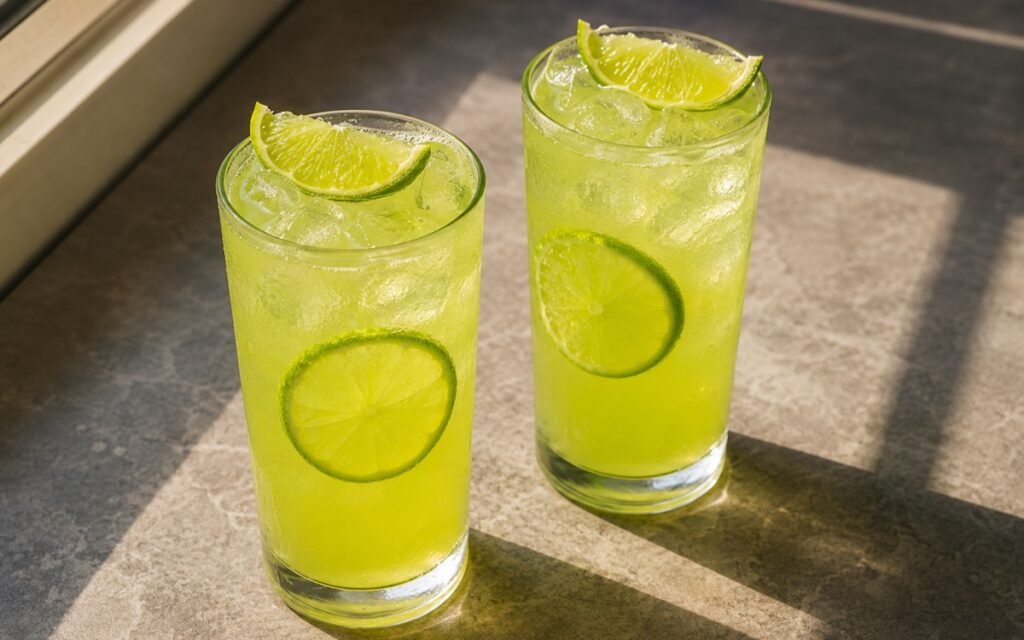
Lime Lemonade — Limenade
Lime zest steeped off heat exactly 8–10 minutes, clean pulp mashed with all pith removed — fresh lime juice, sugar calibrated for lime’s acid, salt. Sharp and bold.
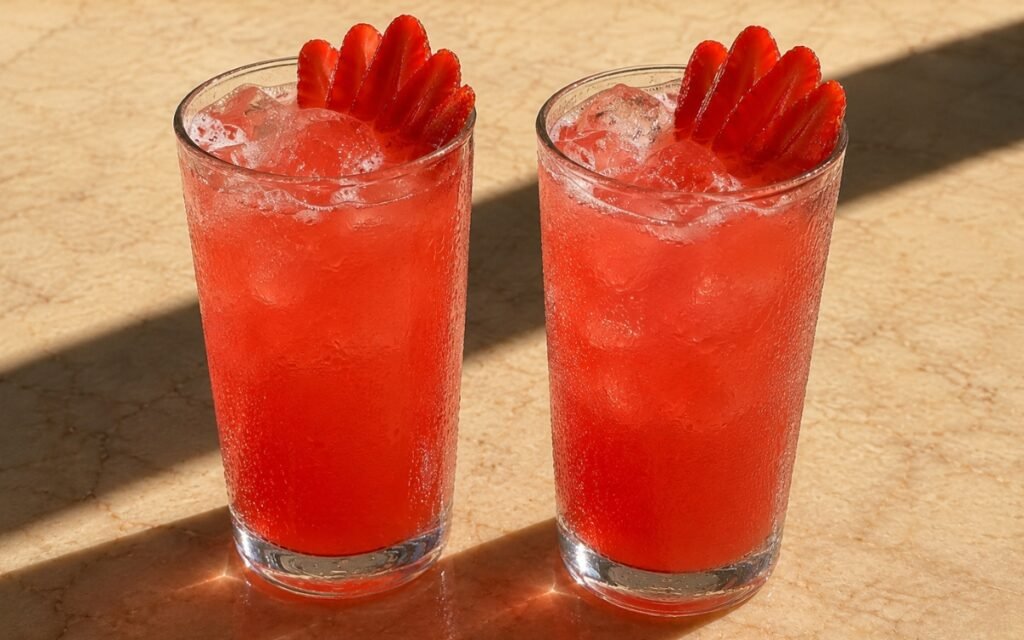
Strawberry Rhubarb Lemonade
Cold-extracted lemon zest and juice combined with a gently cooked strawberry-rhubarb base for a bright pink-red, vivid, tart lemonade.
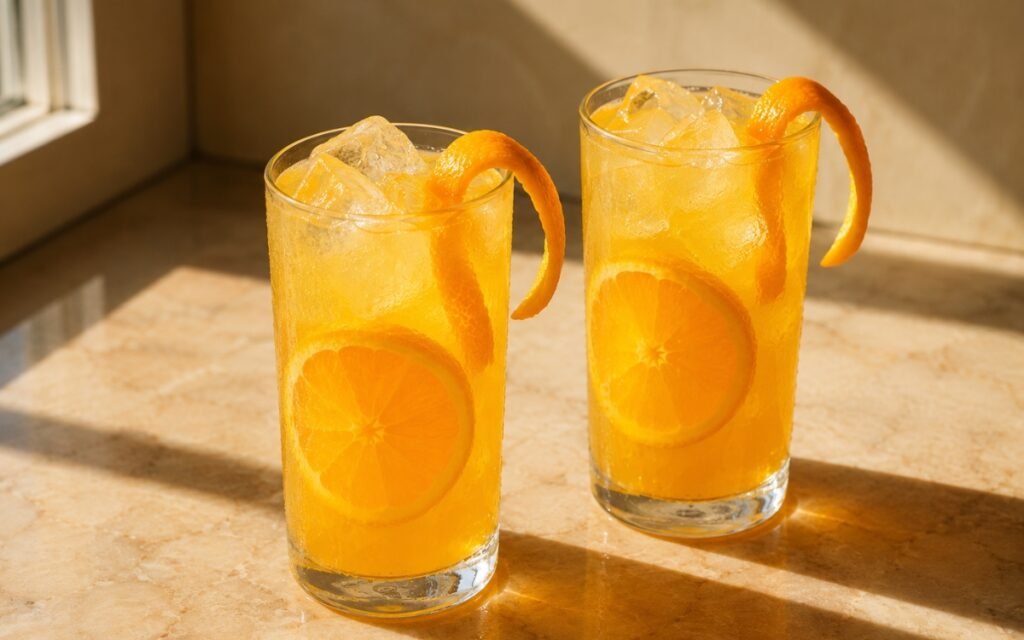
Orange Lemonade
Orange and lemon zest steeped off heat 8–10 minutes, pulp mashed — fresh orange juice with 120ml lemon for structural acid, salt, cold water. Juicy and structured.
You might also like
You might also like
Passion Fruit White Iced Tea
White tea at 75–80°C for 3–4 minutes, lemon peel infused cold, passion fruit gently strained and added gradually — honey, chilled. Bright, tropical, refined.
Hibiscus Peach White Iced Tea
White tea at 75–80°C for 3–4 minutes, hibiscus infused 6–8 minutes for vivid ruby color, light peach syrup made separately and strained — chilled. Floral and softly fruity.
Grapefruit Orange Pitcher Drink
Brown sugar syrup with grapefruit and orange zest steeped 5–8 minutes maximum — 500ml each juice, salt, cold water, chilled. Bright, lightly bitter, and grown-up.
Fresh Blueberry Lemonade
Ingredients
Method
- Combine the 350–400g of blueberries, 100g of white sugar, 240ml of water, 1 strip of lemon zest, and ⅛ tsp of fine sea salt in a medium saucepan. The lemon zest and salt enter the saucepan at the beginning rather than being held back as additions — the lemon zest’s aromatic oils release at cooking temperature into the surrounding blueberry-and-sugar medium, integrating with the blueberry’s aromatic character in a way that cold-addition to the finished pitcher cannot produce. The salt’s presence from the beginning of cooking specifically contributes to colour stability in the blueberry’s anthocyanin pigments — sodium ions in the cooking medium help maintain the vivid blue-purple of the pigments through the thermal extraction process. Place over medium heat and bring to a gentle simmer. Cook for 8–10 minutes, stirring occasionally. During the first 2–3 minutes the blueberries will begin swelling and the first few will burst, releasing the intensely purple juice. By 5–6 minutes the majority of the berries should have burst. By 8–10 minutes all should be fully collapsed and the surrounding liquid should be a vivid, deeply purple, specifically fluid syrup. The same extraction principle from the cranberry syrup applies: the volume should not have reduced meaningfully, the liquid should remain flowing and relatively fluid, and the colour should be specifically vivid rather than a dark, thick, concentrated preparation. Remove the lemon zest strip and discard it immediately. Its aromatic contribution has been extracted during the cooking period; leaving it in during straining or cooling would continue extracting the less pleasant bitter pith-adjacent compounds even though the pith itself is absent.
- Strain through a fine-mesh sieve into a clean bowl or measuring jug, pressing firmly on the blueberry skins and solids. Blueberry skins contain a high concentration of the anthocyanin pigments even after bursting — firm pressing extracts both the maximum colour and the maximum flavour from the cooked berries. The finished strained syrup should be a clear, vivid, deeply purple liquid — more specifically purple than red due to the anthocyanin’s specific pH response at the syrup’s slightly acidic pH. Allow to cool completely.
- In a large pitcher, combine 180ml of the cooled blueberry syrup, 240ml of fresh lemon juice, and 750ml of ice-cold water. Stir thoroughly. Taste and assess. The lemon juice is added cold in the same approach used throughout this collection — preserving the fresh aromatic character. The combination of the blueberry syrup’s integrated lemon-zest depth and the cold-added lemon juice’s bright aromatic acidity produces a specifically more layered citrus character than either alone. The blueberry syrup’s natural acid from the berries and the salt’s amplification should make the combined base already pleasantly tart; the lemon juice provides the additional bright, clean acidity that makes it specifically refreshing. Adjust after tasting: more blueberry syrup up to 240ml for deeper colour and more pronounced berry character; more lemon juice up to 300ml for additional brightness; more cold water up to 1 litre for a lighter preparation; optional simple syrup only if the combined acidity is genuinely too aggressive rather than pleasantly sharp.
- Refrigerate for 1–2 hours until completely cold. An interesting colour transformation occurs during this period — the lemonade’s colour shifts from the vivid purple of the warm syrup toward the more red-pink direction as the lemon juice’s citric acid shifts the anthocyanin pigments’ pH response over the chilling period. Both colours are natural and correct; the shifted cooled colour is the more specifically pink-purple visual of blueberry lemonade. Fill glasses with ice. Pour the chilled blueberry lemonade over the ice. Garnish with a lemon slice and several fresh blueberries resting on the ice. Serve immediately.