Ingredients
Method
Build the Blueberry Syrup
- Combine the 350–400g of blueberries, 100g of white sugar, 240ml of water, 1 strip of lemon zest, and ⅛ tsp of fine sea salt in a medium saucepan. The lemon zest and salt enter the saucepan at the beginning rather than being held back as additions — the lemon zest's aromatic oils release at cooking temperature into the surrounding blueberry-and-sugar medium, integrating with the blueberry's aromatic character in a way that cold-addition to the finished pitcher cannot produce. The salt's presence from the beginning of cooking specifically contributes to colour stability in the blueberry's anthocyanin pigments — sodium ions in the cooking medium help maintain the vivid blue-purple of the pigments through the thermal extraction process. Place over medium heat and bring to a gentle simmer. Cook for 8–10 minutes, stirring occasionally. During the first 2–3 minutes the blueberries will begin swelling and the first few will burst, releasing the intensely purple juice. By 5–6 minutes the majority of the berries should have burst. By 8–10 minutes all should be fully collapsed and the surrounding liquid should be a vivid, deeply purple, specifically fluid syrup. The same extraction principle from the cranberry syrup applies: the volume should not have reduced meaningfully, the liquid should remain flowing and relatively fluid, and the colour should be specifically vivid rather than a dark, thick, concentrated preparation. Remove the lemon zest strip and discard it immediately. Its aromatic contribution has been extracted during the cooking period; leaving it in during straining or cooling would continue extracting the less pleasant bitter pith-adjacent compounds even though the pith itself is absent.
Strain the Blueberry Syrup
- Strain through a fine-mesh sieve into a clean bowl or measuring jug, pressing firmly on the blueberry skins and solids. Blueberry skins contain a high concentration of the anthocyanin pigments even after bursting — firm pressing extracts both the maximum colour and the maximum flavour from the cooked berries. The finished strained syrup should be a clear, vivid, deeply purple liquid — more specifically purple than red due to the anthocyanin's specific pH response at the syrup's slightly acidic pH. Allow to cool completely.
Build the Lemonade
- In a large pitcher, combine 180ml of the cooled blueberry syrup, 240ml of fresh lemon juice, and 750ml of ice-cold water. Stir thoroughly. Taste and assess. The lemon juice is added cold in the same approach used throughout this collection — preserving the fresh aromatic character. The combination of the blueberry syrup's integrated lemon-zest depth and the cold-added lemon juice's bright aromatic acidity produces a specifically more layered citrus character than either alone. The blueberry syrup's natural acid from the berries and the salt's amplification should make the combined base already pleasantly tart; the lemon juice provides the additional bright, clean acidity that makes it specifically refreshing. Adjust after tasting: more blueberry syrup up to 240ml for deeper colour and more pronounced berry character; more lemon juice up to 300ml for additional brightness; more cold water up to 1 litre for a lighter preparation; optional simple syrup only if the combined acidity is genuinely too aggressive rather than pleasantly sharp.
Chill and Serve
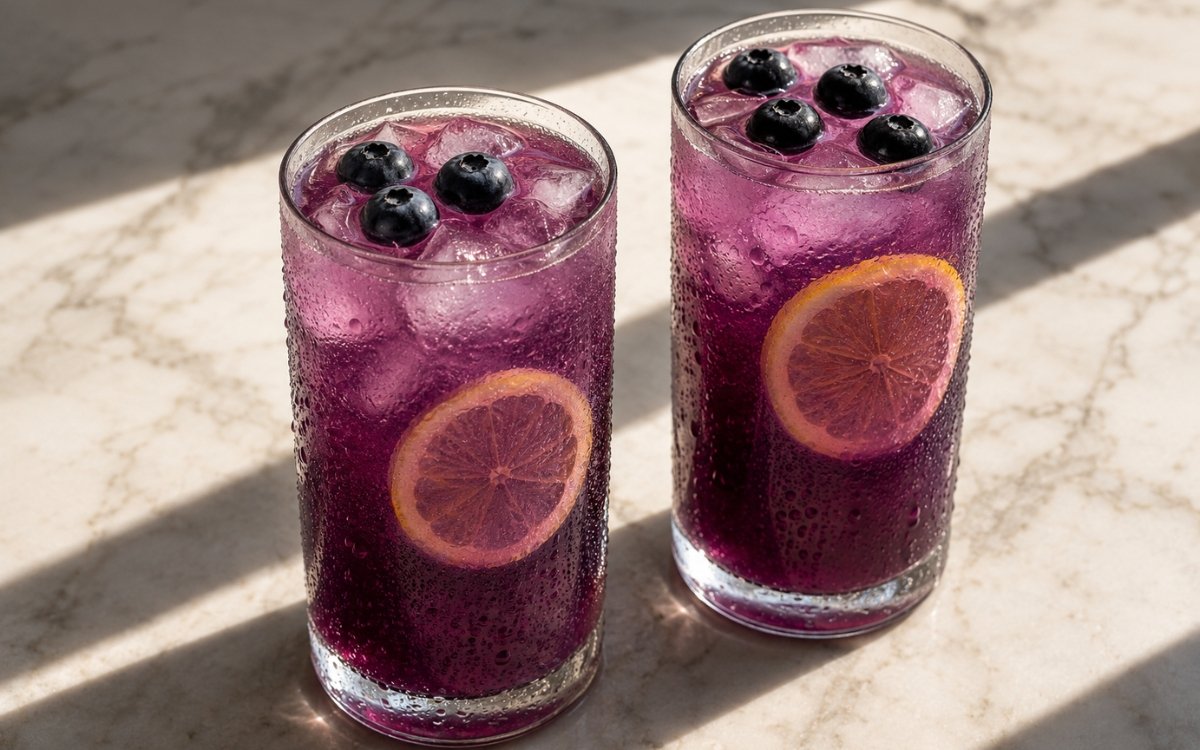
- Refrigerate for 1–2 hours until completely cold. An interesting colour transformation occurs during this period — the lemonade's colour shifts from the vivid purple of the warm syrup toward the more red-pink direction as the lemon juice's citric acid shifts the anthocyanin pigments' pH response over the chilling period. Both colours are natural and correct; the shifted cooled colour is the more specifically pink-purple visual of blueberry lemonade. Fill glasses with ice. Pour the chilled blueberry lemonade over the ice. Garnish with a lemon slice and several fresh blueberries resting on the ice. Serve immediately.
Notes
Blueberry's anthocyanin pigments are specifically pH-responsive — their colour changes across the pH spectrum from red at lower pH values (more acidic) through purple at moderate pH to blue at higher pH values (more alkaline). The finished lemonade's colour depends on the combined pH of the blueberry syrup and the lemon juice, which shifts the anthocyanins toward the red-pink register of the pH spectrum. This is why blueberry lemonade looks pink-purple rather than the vivid blue-purple of blueberries themselves — the lemon juice's acidity shifts the pigments' colour appearance. This colour shift is completely natural and is the correct appearance of the finished drink.
The 100g of white sugar in this syrup is calibrated for average-sweetness fresh blueberries. Cultivated blueberries (the large, sweet commercial variety) contain more natural sugar than wild blueberries (smaller, more intensely flavoured, more tart); for wild blueberries, the sugar may need to be increased to 120g.