
Orange Lemonade
The specific challenge of orange lemonade is the one stated precisely in this preparation’s brief: it should taste like structured orange lemonade rather than orange juice diluted with water. Orange’s natural acid concentration is the lowest of any citrus used in this collection — approximately half of lemon’s citric acid and a third of lime’s — meaning an orange-only preparation has insufficient natural acidity to produce the specifically refreshing, bright, characteristic lemonade flavour that citric acid delivers. The lemon juice’s function here is not simply to add sourness but specifically to provide the structural acid register that makes the drink read as a lemonade rather than a diluted fruit juice. One hundred and twenty millilitres of lemon juice in 400ml of orange juice at the combined dilution with water is specifically the ratio that preserves orange’s warm, juicy, sweet citrus identity as the primary flavour while the lemon provides the invisible architectural acid beneath it. The peel-infused syrup using both orange and lemon zest at the 8–10 minute maximum — the same compressed window as lime and blood orange preparations rather than grapefruit’s more generous 15 minutes, because orange peel’s flavanone content extracts toward bitterness at a comparable rate to lime. Citrus pulp from both fruits mashed gently in the pitcher for the same textural presence and natural bitterness contribution as in the blood orange and grapefruit preparations. Juicy, refreshing, structured, and unmistakably lemonade.
Prep Time : 15 min
Cook Time : 5 min
Servings : 8
15 min
5 min
8
Ingredients
For the Citrus Structure
• Clean pulp or segments from 2 oranges — seeds and tough membranes removed; no white pith
• Clean pulp or segments from 1 lemon — seeds and tough membranes removed; no white pith
For the Peel-Infused Simple Syrup
• 180ml water
• 150g white granulated sugar — this one on Amazon
• Zest of 1 orange — coloured layer only, no white pith; added off heat
• Zest of 1 lemon — coloured layer only, no white pith; added off heat
For the Lemonade Base
• 400ml fresh orange juice — approximately 4–5 medium oranges
• 120ml fresh lemon juice — approximately 3–4 lemons
• 120–150ml peel-infused simple syrup — start with 120ml, adjust after tasting
• 750ml–1 litre ice-cold water — start with 750ml, adjust after tasting
• Pinch of fine sea salt
For Serving
• Ice cubes
• Orange slices
• Lemon peel twists
This post may contain affiliate links. As an Amazon Associate I earn from qualifying purchases, at no additional cost to you.
Directions
- Make the Dual-Citrus Peel-Infused Syrup
Combine the 180ml of water and 150g of white sugar in a small saucepan over medium heat. Stir until completely dissolved and clear. Remove from the heat immediately. Add the orange and lemon zest simultaneously — both citrus peels contributing their aromatic oil profile to the same syrup. The combination of orange peel’s warm, sweet, round citrus character with lemon peel’s brighter, sharper citrus depth in the same infusion produces a specifically more unified aromatic result than using orange peel alone — the lemon peel’s terpene profile specifically bridging the orange syrup’s sweetness toward the lemon juice’s acidity in the finished pitcher. Cover and steep for 8–10 minutes. The 8–10 minute maximum applies here for the same reason as the blood orange and lime preparations: orange peel’s bitter flavanone compounds — naringin, hesperidin — extract at a faster rate than grapefruit’s primary aromatics in warm water. At 8–10 minutes in the warm off-heat syrup, both orange and lemon peels’ pleasant volatile aromatic oils are well extracted while the bitter flavanones remain below an unpleasant concentration. Beyond 10 minutes the orange peel’s bitterness specifically begins developing. Strain the zest and allow to cool. - Prepare and Mash the Citrus Pulp
Prepare clean pulp from 2 oranges and 1 lemon, removing all seeds and tough membranes from the orange segments and carefully removing all seeds and membranes from the lemon. The white pith of both is specifically excluded — the same reasoning applied throughout the citrus lemonade collection at an equal level of importance here. Orange pith’s bitter character at orange juice’s slightly higher pH (approximately 3.5–4) is less aggressively unpleasant than lime pith at lime’s lower pH, but it still contributes a specifically harsh background note that works against the warm, sweet, juicy character orange lemonade specifically requires. Add all the clean citrus pulp to the large pitcher and mash gently until juice is released and the pulp is partially broken down. The 2:1 ratio of orange to lemon pulp ensures the orange’s warmer, softer texture and flavour remains dominant in the pulp component. - Build the Orange Lemonade Base
Add the 400ml of fresh orange juice, 120ml of fresh lemon juice, 120ml of the cooled peel-infused syrup, 750ml of ice-cold water, and the pinch of fine sea salt to the pitcher. Stir thoroughly. The 400ml:120ml ratio of orange to lemon juice is specifically calibrated for the flavour objective — orange-dominant character with lemon’s structural acid beneath. At this ratio, orange is clearly identifiable as the primary flavour and lemon is specifically present as the acid architecture rather than as a competing citrus note. A 1:1 ratio would make lemon too prominent; a 500ml:60ml ratio would make the drink too specifically close to orange juice. Taste and assess. The correctly built base should taste specifically of orange with a clear acid brightness behind it — the lemon’s acidity immediately recognisable as the element that makes the drink feel like lemonade rather than orange juice, even if the lemon is not identifiable as a separate flavour. If the orange flavour dominates completely without the acid dimension being perceptible, add lemon juice in small increments; if the lemon is too prominent, a small additional amount of orange juice restores the balance. Add more syrup if sweetness is insufficient; more cold water if concentration is too intense. - Chill and Serve
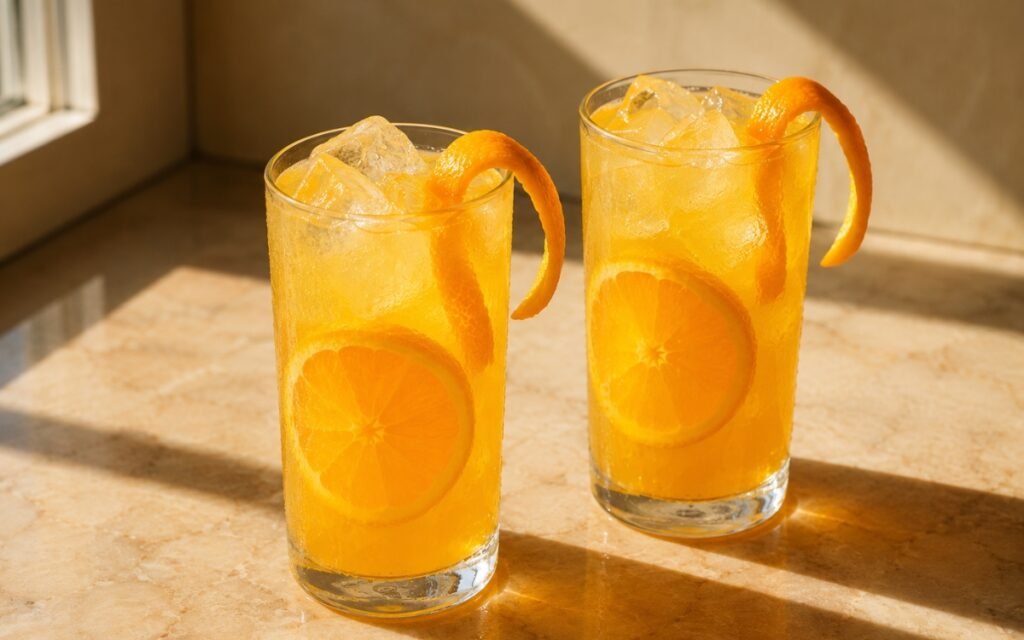
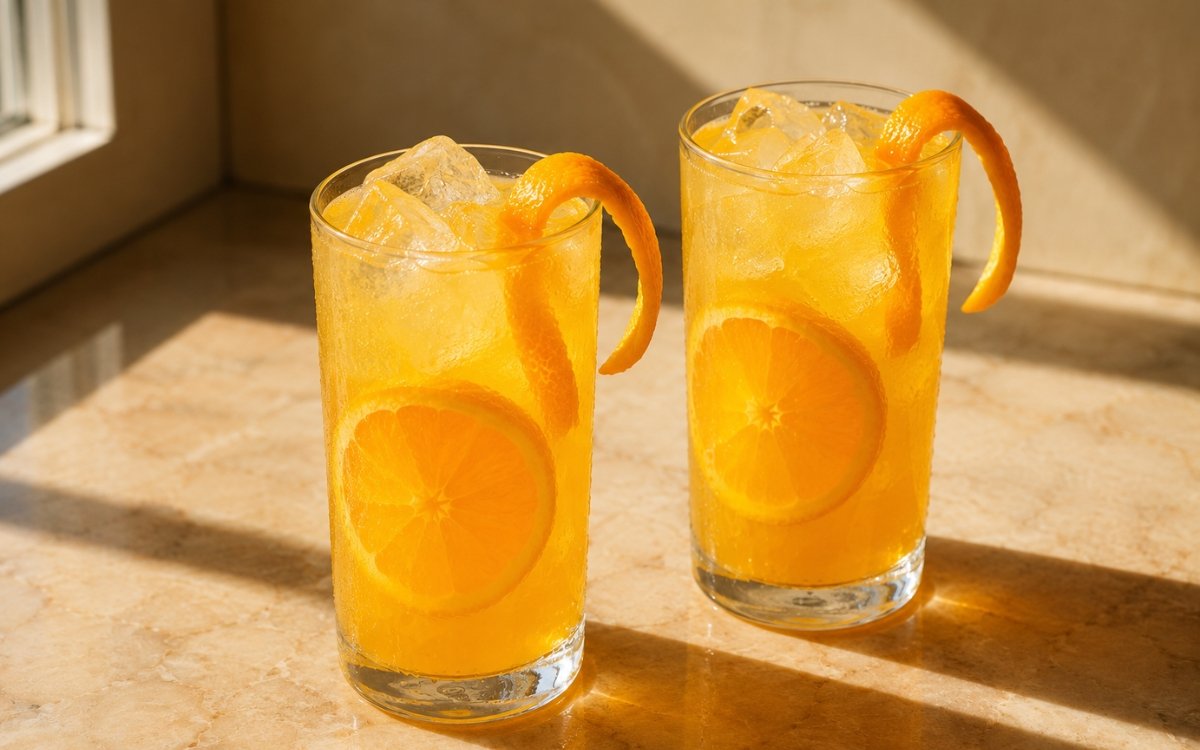
Refrigerate for 1–2 hours. Fill glasses with ice. Pour the chilled orange lemonade over the ice, including some of the mashed pulp in each glass for textural interest. Garnish with an orange slice and a lemon peel twist. Serve immediately.
*Notes :
- Orange variety affects the finished lemonade meaningfully. Navel oranges — the standard, seedless, widely available variety — produce a clean, sweet, reliably consistent orange juice with good colour. Valencia oranges — more acidic than Navel, with a slightly more complex flavour — produce a more specifically interesting orange lemonade with slightly less sweetening required. Blood oranges used in the 400ml juice role would produce the Blood Orange Lemonade preparation; the orange variety used here should be conventional sweet oranges for the clean, warm, round-sweet citrus character that defines this preparation’s specific appeal.
- The specific brief — “not orange juice diluted with water” — is the clearest possible articulation of what makes orange lemonade specifically different from other orange drinks. The peel-infused syrup’s aromatic depth and the lemon juice’s structural acid together produce a preparation that tastes more specifically composed, more specifically complex, and more specifically refreshing than simply adding water to orange juice.
Why This Recipe Works
This recipe works because the lemon juice provides the specific structural acidity that makes orange read as lemonade rather than as diluted juice.
The dual orange-and-lemon peel infusion produces a more unified aromatic bridge between the sweet orange juice and the sharp lemon juice.
The 8–10 minute peel steep prevents orange peel’s faster-extracting bitter flavanones from developing. And the salt specifically amplifies the orange’s sweet, warm, vivid character.
Ingredient Breakdown
400ml Orange Juice + 120ml Lemon Juice
The structural acid calibration — orange as primary flavour identity; lemon as the invisible acid architecture that makes the drink specifically a lemonade rather than diluted orange juice.
Dual Zest Infusion (8–10 Minutes)
The aromatic bridge — orange peel’s warm citrus depth and lemon peel’s brighter aromatic character together producing a specifically unified orange-lemon aromatic profile.
Both Fruit Pulps Mashed (2:1 Orange:Lemon)
The textural presence with orange dominance — orange providing the warmer, softer texture while lemon contributes brightness in the pulp as well as the juice.
150g Sugar (Calibrated for Orange’s Lower Natural Acid)
The sweetness calibration — orange’s lower natural acid concentration allowing slightly more sugar than the classic lemon lemonade to reach the same perceived tart-sweet balance.
Pinch of Salt
The warm-citrus amplifier — specifically brightening orange’s warm, sweet aromatic character.
Flavor Structure Explained
This Orange lemonade follows a layered balance model:
- Warm sweet citrus core (orange)
- Bright acidic backbone (lemon juice)
- Deep aromatic citrus oils (peel-infused syrup)
- Flavor-enhancing salinity (pinch of salt)
- Structured refreshing finish (balanced citrus architecture)
Orange defines the foundation with soft sweetness, juicy warmth, and an approachable citrus character that feels rounder and gentler than lemon or lime. Lemon juice provides the structural acidity that keeps the drink refreshing and gives it its true lemonade identity, even when the lemon itself is not directly noticeable. Peel-infused syrup adds concentrated citrus oils and dry aromatic complexity, making the drink feel more composed and layered than simple juice mixed with sugar. A small amount of salt subtly intensifies the orange flavor, sharpening its fruit character and making the citrus taste more vivid and precise.
Common Mistakes to Avoid
- Not Including Lemon Juice – Orange juice with sweet syrup and cold water tastes specifically of diluted orange juice. The lemon juice’s structural acidity is the preparation’s entire architectural basis.
- Steeping Peel Beyond 10 Minutes – Orange peel’s bitter flavanones extract at the same rate as lime peel. Always strain within 10 minutes.
- Including White Pith in the Mashed Pulp – Orange pith’s bitterness at any concentration competes with the warm, sweet orange character. Always remove completely.
- Using Too Much Lemon Juice – The lemon’s role is structural acid, not flavour. Beyond the 120ml threshold the lemon becomes perceptibly prominent as a competing citrus rather than as an invisible foundation. Always the specified ratio.
- Making the Preparation Too Sweet – Orange’s naturally higher sugar content means the sweet register is already well-supplied by the juice. Keep the syrup at the minimum required.
Variations
With Cardamom
Add 3 lightly crushed cardamom pods to the saucepan alongside the citrus zest during the off-heat steep — removed with the zest. The cardamom’s warm, sweet-floral depth is one of the most specifically complementary spice pairings for orange in Mediterranean and Middle Eastern confectionery.Add 3 lightly crushed cardamom pods to the saucepan alongside the citrus zest during the off-heat steep — removed with the zest. The cardamom’s warm, sweet-floral depth is one of the most specifically complementary spice pairings for orange in Mediterranean and Middle Eastern confectionery.
With Vanilla
Add ¼ tsp of pure vanilla extract to the cooled syrup before combining with the juice — the vanilla’s warm aromatic sweetness alongside orange is a specifically beautiful combination.
Sparkling Version
Build the juice base without water, chill separately, and add chilled sparkling water right before serving. The carbonation amplifies the orange’s aromatic compounds dramatically.
With Fresh Ginger
Add 8g of thinly sliced fresh ginger to the saucepan alongside the citrus zest during the off-heat steep — the ginger’s warmth alongside orange is the orange ginger lemonade direction.
Storage & Make-Ahead
Peel-infused syrup can be refrigerated in a sealed jar for up to 2 weeks.
Once assembled, orange lemonade can be refrigerated for up to 3 days. During storage, the fresh aromatic character of the orange gradually becomes slightly less pronounced, although the flavor remains good for about 48 hours.
Assembled glasses are not suitable for storage and should be served immediately.
Frequently Asked Questions
Why does this preparation use lemon juice if it is called orange lemonade?
Orange’s natural acid concentration is significantly lower than lemon’s — approximately half to a third. Without lemon juice’s structural citric acid, the preparation tastes specifically of diluted orange juice rather than lemonade: the acid dimension that produces the refreshing, bright quality characteristic of lemonade is absent. The 120ml of lemon juice provides this structure while remaining at the concentration where orange stays clearly dominant as the primary flavour.
Why 8–10 minutes for the peel infusion rather than 15?
Orange peel’s bitter flavanone compounds extract at a faster rate than grapefruit’s comparable aromatics. At 8–10 minutes in the warm off-heat syrup, the pleasant citrus-oil aromatics are fully present without the bitter flavanones having extracted to a competing level. The 15-minute maximum used for grapefruit would produce a noticeably harsh result with orange peel.
Why is the pith removal important here?
Orange pith contains bitter compounds that at orange juice’s pH (approximately 3.5–4) produce a specifically harsh background note that competes with orange’s characteristic warm, juicy sweetness. The clean, warm, round character that defines this preparation depends on pith being completely absent from the mashed pulp.
What makes this structurally different from the blood orange or grapefruit lemonade?
This preparation uses conventional sweet oranges rather than blood oranges (which contribute distinctive raspberry-floral anthocyanin character) or grapefruit (which contributes dominant bitterness from naringenin). The structural acid lemon-juice requirement is also specific to this preparation — blood orange and grapefruit both have sufficient natural acidity without lemon juice; sweet orange specifically requires the lemon addition.
What other citrus lemonade preparations share this structure?
The Blood Orange Lemonade shares the orange-as-primary-citrus approach with the distinctive raspberry-floral anthocyanin depth — a more specifically dramatic, more vivid direction with the same foundational technique. The Pink Grapefruit Lemonade shares the peel-infused-syrup-and-pulp technique in a specifically more bitter, more dry-leaning, more adult direction. The Classic Fresh Lemonade shares the three-ingredient structural approach — the foundational preparation that all citrus lemonade preparations in this collection build upon.
Nutrition Facts
( per serving )
Calories
~85 kcal
Protein
0 g
Fat
0 g
Carbs
22 g
Calories
~85 kcal
Protein
0 g
Fat
0 g
Carbs
22 g
Related Recipes
Related Recipes

Apple Lemonade
Cold-extracted lemon zest and juice combined with strained, skin-on apple purée for a crisp, pale golden lemonade.
Green Tea Lemonade
Sencha at 75–80°C for exactly 2–2½ minutes, bags not squeezed — honey-lemon syrup, fresh lemon, cold water, salt, chilled. Crisp, cool, and herbal-fresh.
Honeydew Lemonade
Cold-extracted lemon zest and juice combined with blended, genuinely ripe honeydew for a pale soft green, delicately melon-forward lemonade.
You might also like
You might also like
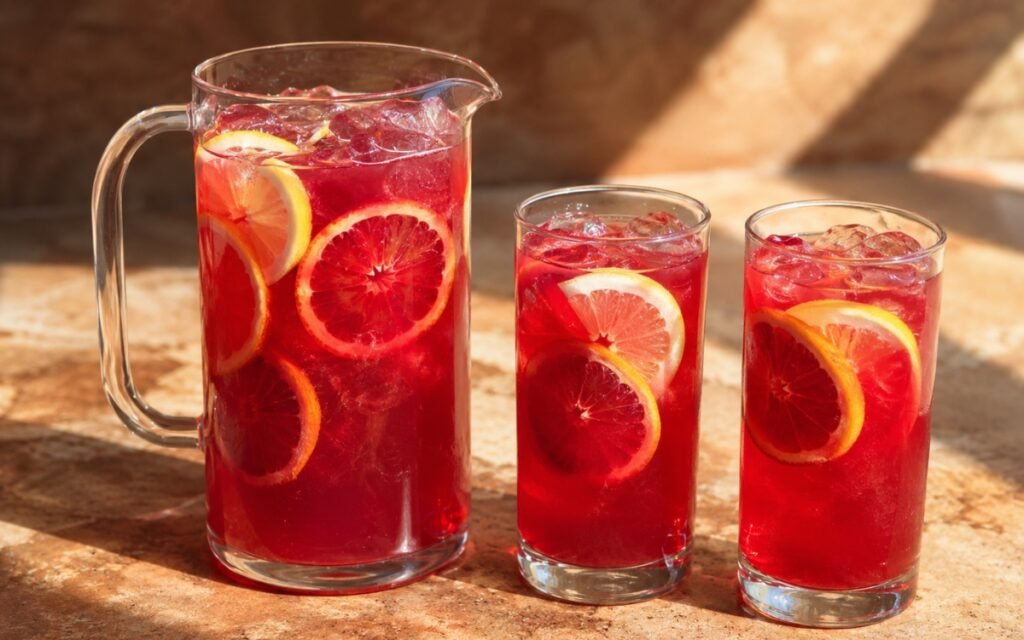
Blood Orange Citrus Pitcher
Deep ruby blood orange pitcher drink with fresh lemon juice, fragrant citrus zest, and lightly sweetened brown sugar syrup.
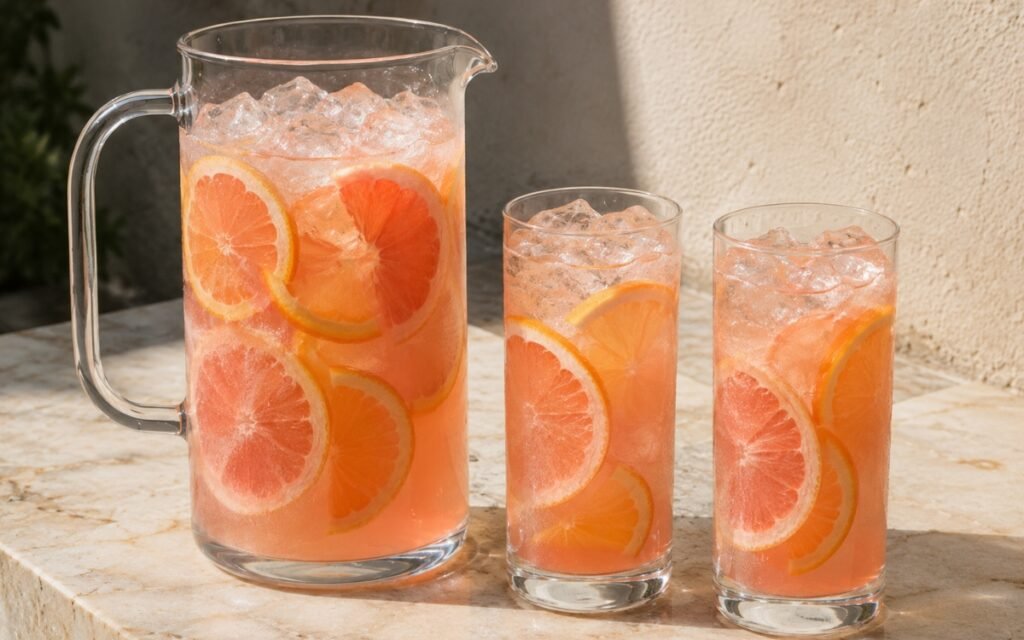
Grapefruit Orange Pitcher Drink
Brown sugar syrup with grapefruit and orange zest steeped 5–8 minutes maximum — 500ml each juice, salt, cold water, chilled. Bright, lightly bitter, and grown-up.
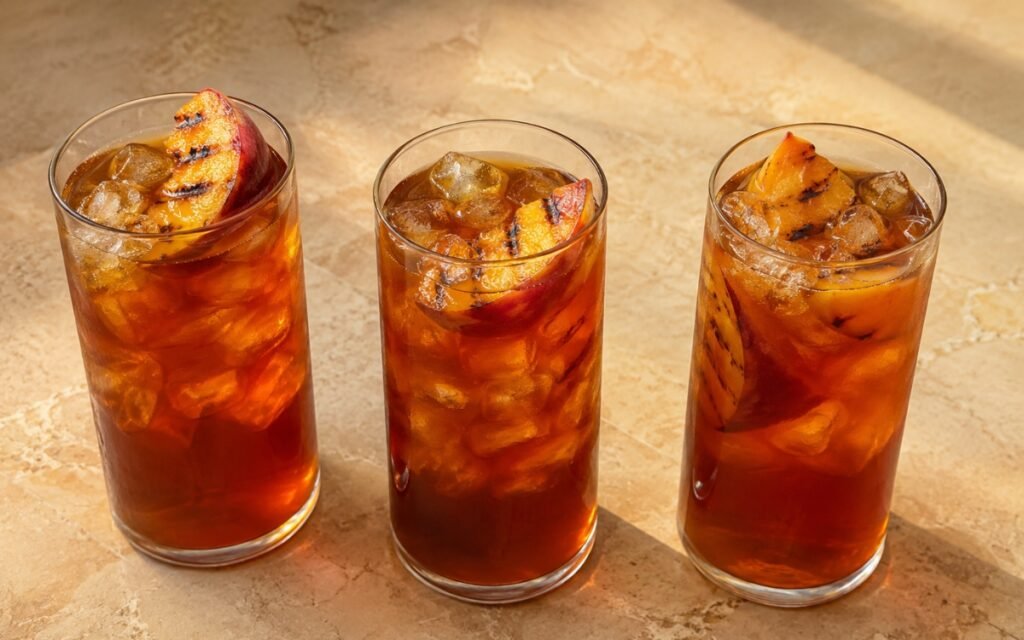
Grilled Peach Black Iced Tea
Black tea at 90–95°C for 2½–3 minutes, peaches grilled and simmered into a light unreduced syrup, warm lemon zest infusion — chilled. Warm and lightly smoky.
Orange Lemonade
Ingredients
Method
- Combine the 180ml of water and 150g of white sugar in a small saucepan over medium heat. Stir until completely dissolved and clear. Remove from the heat immediately. Add the orange and lemon zest simultaneously — both citrus peels contributing their aromatic oil profile to the same syrup. The combination of orange peel’s warm, sweet, round citrus character with lemon peel’s brighter, sharper citrus depth in the same infusion produces a specifically more unified aromatic result than using orange peel alone — the lemon peel’s terpene profile specifically bridging the orange syrup’s sweetness toward the lemon juice’s acidity in the finished pitcher. Cover and steep for 8–10 minutes. The 8–10 minute maximum applies here for the same reason as the blood orange and lime preparations: orange peel’s bitter flavanone compounds — naringin, hesperidin — extract at a faster rate than grapefruit’s primary aromatics in warm water. At 8–10 minutes in the warm off-heat syrup, both orange and lemon peels’ pleasant volatile aromatic oils are well extracted while the bitter flavanones remain below an unpleasant concentration. Beyond 10 minutes the orange peel’s bitterness specifically begins developing. Strain the zest and allow to cool.
- Prepare clean pulp from 2 oranges and 1 lemon, removing all seeds and tough membranes from the orange segments and carefully removing all seeds and membranes from the lemon. The white pith of both is specifically excluded — the same reasoning applied throughout the citrus lemonade collection at an equal level of importance here. Orange pith’s bitter character at orange juice’s slightly higher pH (approximately 3.5–4) is less aggressively unpleasant than lime pith at lime’s lower pH, but it still contributes a specifically harsh background note that works against the warm, sweet, juicy character orange lemonade specifically requires. Add all the clean citrus pulp to the large pitcher and mash gently until juice is released and the pulp is partially broken down. The 2:1 ratio of orange to lemon pulp ensures the orange’s warmer, softer texture and flavour remains dominant in the pulp component.
- Add the 400ml of fresh orange juice, 120ml of fresh lemon juice, 120ml of the cooled peel-infused syrup, 750ml of ice-cold water, and the pinch of fine sea salt to the pitcher. Stir thoroughly. The 400ml:120ml ratio of orange to lemon juice is specifically calibrated for the flavour objective — orange-dominant character with lemon’s structural acid beneath. At this ratio, orange is clearly identifiable as the primary flavour and lemon is specifically present as the acid architecture rather than as a competing citrus note. A 1:1 ratio would make lemon too prominent; a 500ml:60ml ratio would make the drink too specifically close to orange juice. Taste and assess. The correctly built base should taste specifically of orange with a clear acid brightness behind it — the lemon’s acidity immediately recognisable as the element that makes the drink feel like lemonade rather than orange juice, even if the lemon is not identifiable as a separate flavour. If the orange flavour dominates completely without the acid dimension being perceptible, add lemon juice in small increments; if the lemon is too prominent, a small additional amount of orange juice restores the balance. Add more syrup if sweetness is insufficient; more cold water if concentration is too intense.
- Refrigerate for 1–2 hours. Fill glasses with ice. Pour the chilled orange lemonade over the ice, including some of the mashed pulp in each glass for textural interest. Garnish with an orange slice and a lemon peel twist. Serve immediately.