Ingredients
Method
Make the Dual-Citrus Peel-Infused Syrup
- Combine the 180ml of water and 150g of white sugar in a small saucepan over medium heat. Stir until completely dissolved and clear. Remove from the heat immediately. Add the orange and lemon zest simultaneously — both citrus peels contributing their aromatic oil profile to the same syrup. The combination of orange peel's warm, sweet, round citrus character with lemon peel's brighter, sharper citrus depth in the same infusion produces a specifically more unified aromatic result than using orange peel alone — the lemon peel's terpene profile specifically bridging the orange syrup's sweetness toward the lemon juice's acidity in the finished pitcher. Cover and steep for 8–10 minutes. The 8–10 minute maximum applies here for the same reason as the blood orange and lime preparations: orange peel's bitter flavanone compounds — naringin, hesperidin — extract at a faster rate than grapefruit's primary aromatics in warm water. At 8–10 minutes in the warm off-heat syrup, both orange and lemon peels' pleasant volatile aromatic oils are well extracted while the bitter flavanones remain below an unpleasant concentration. Beyond 10 minutes the orange peel's bitterness specifically begins developing. Strain the zest and allow to cool.
Prepare and Mash the Citrus Pulp
- Prepare clean pulp from 2 oranges and 1 lemon, removing all seeds and tough membranes from the orange segments and carefully removing all seeds and membranes from the lemon. The white pith of both is specifically excluded — the same reasoning applied throughout the citrus lemonade collection at an equal level of importance here. Orange pith's bitter character at orange juice's slightly higher pH (approximately 3.5–4) is less aggressively unpleasant than lime pith at lime's lower pH, but it still contributes a specifically harsh background note that works against the warm, sweet, juicy character orange lemonade specifically requires. Add all the clean citrus pulp to the large pitcher and mash gently until juice is released and the pulp is partially broken down. The 2:1 ratio of orange to lemon pulp ensures the orange's warmer, softer texture and flavour remains dominant in the pulp component.
Build the Orange Lemonade Base
- Add the 400ml of fresh orange juice, 120ml of fresh lemon juice, 120ml of the cooled peel-infused syrup, 750ml of ice-cold water, and the pinch of fine sea salt to the pitcher. Stir thoroughly. The 400ml:120ml ratio of orange to lemon juice is specifically calibrated for the flavour objective — orange-dominant character with lemon's structural acid beneath. At this ratio, orange is clearly identifiable as the primary flavour and lemon is specifically present as the acid architecture rather than as a competing citrus note. A 1:1 ratio would make lemon too prominent; a 500ml:60ml ratio would make the drink too specifically close to orange juice. Taste and assess. The correctly built base should taste specifically of orange with a clear acid brightness behind it — the lemon's acidity immediately recognisable as the element that makes the drink feel like lemonade rather than orange juice, even if the lemon is not identifiable as a separate flavour. If the orange flavour dominates completely without the acid dimension being perceptible, add lemon juice in small increments; if the lemon is too prominent, a small additional amount of orange juice restores the balance. Add more syrup if sweetness is insufficient; more cold water if concentration is too intense.
Chill and Serve
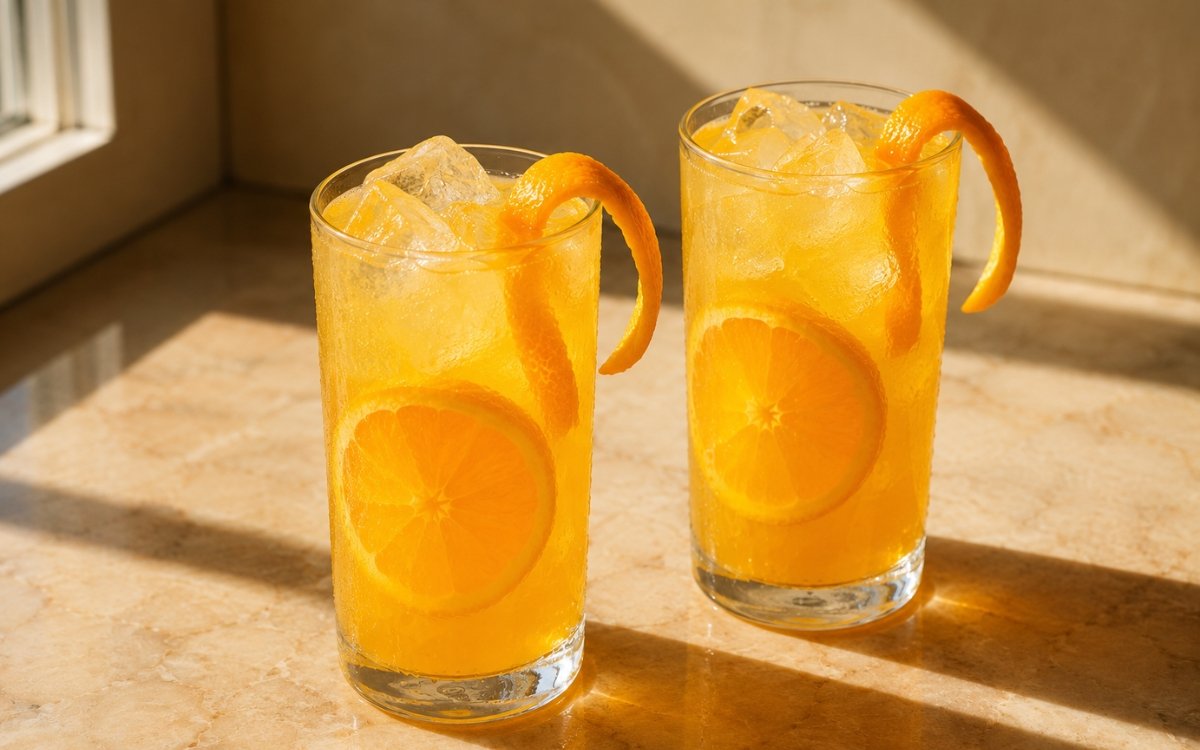
- Refrigerate for 1–2 hours. Fill glasses with ice. Pour the chilled orange lemonade over the ice, including some of the mashed pulp in each glass for textural interest. Garnish with an orange slice and a lemon peel twist. Serve immediately.
Notes
Orange variety affects the finished lemonade meaningfully. Navel oranges — the standard, seedless, widely available variety — produce a clean, sweet, reliably consistent orange juice with good colour. Valencia oranges — more acidic than Navel, with a slightly more complex flavour — produce a more specifically interesting orange lemonade with slightly less sweetening required. Blood oranges used in the 400ml juice role would produce the Blood Orange Lemonade preparation; the orange variety used here should be conventional sweet oranges for the clean, warm, round-sweet citrus character that defines this preparation's specific appeal.
The specific brief — "not orange juice diluted with water" — is the clearest possible articulation of what makes orange lemonade specifically different from other orange drinks. The peel-infused syrup's aromatic depth and the lemon juice's structural acid together produce a preparation that tastes more specifically composed, more specifically complex, and more specifically refreshing than simply adding water to orange juice.