
Hibiscus Strawberry Lemonade
Hibiscus tea provides the specifically vivid ruby colour, the tartaric-acid-driven tartness, and the intensely floral aromatic depth that makes it the most visually dramatic and one of the most specifically flavoured tea bases in this collection. Strawberry added as a fresh blended purée — a proportion of the cooled hibiscus tea blended with the strawberries first, the tea helping break down the fruit for a smoother blend while simultaneously beginning the integration of the two flavours before they enter the full pitcher. Honey dissolved while the hibiscus tea is still warm — the residual heat sufficient for complete dissolution without any additional heating. Lemon juice added to the combined, cooled base for the bright, clean acidity that keeps the drink specifically refreshing rather than one-dimensionally sweet-tart. Naturally caffeine-free, ruby-coloured from real ingredients, and refreshing enough for backyard gatherings, brunch, or a cold pitcher kept in the refrigerator. Eight glasses. Ten minutes of active preparation.
Prep Time : 10 min
Steep Time : 5–7 min
Servings : 8
10 min
5–7 min
8
Ingredients
For the Hibiscus Strawberry Lemonade Base
• 960ml water
• 4 tbsp dried hibiscus flowers — food-grade — this one on Amazon
• 150g fresh strawberries, hulled
• 120ml fresh lemon juice — approximately 3–4 lemons
• 60–80g honey — start with 60g, adjust after tasting — this one on Amazon
For Serving
• Ice cubes
For the Garnish
• Lemon slices
• Fresh strawberries, thinly sliced
This post may contain affiliate links. As an Amazon Associate I earn from qualifying purchases, at no additional cost to you.
Directions
- Brew the Hibiscus Tea
Bring the 960ml of water to a full rolling boil in a kettle or saucepan. Remove from the heat immediately — the water should be at or just below boiling when the hibiscus is added. Add the 4 tbsp of dried hibiscus flowers directly to the water. Steep for 5–7 minutes. The steep time is specifically a flavour and colour choice rather than a safety or extraction requirement: 5 minutes produces a brighter, lighter hibiscus flavour with a vivid ruby-red that is slightly more pink-leaning; 7 minutes produces a deeper, more specifically tart, more deeply ruby-coloured result with a more assertively hibiscus-forward flavour. Both are correct — the 5-minute version is lighter and more broadly accessible; the 7-minute version is more specifically tart, more vivid, and more characteristically hibiscus. Unlike the delicate white tea preparations in this collection where temperature control is critical, hibiscus flowers’ aromatic and colour compounds are heat-stable and extract efficiently at boiling temperature without the risk of harsh tannin development. Strain through a fine-mesh sieve and discard the hibiscus flowers. While the tea is still warm — not hot enough to evaporate honey’s volatile aromatics but warm enough to dissolve it smoothly — stir in 60g of honey until completely dissolved. The warm tea provides the same dissolution assistance that warm water provides in the cold-process preparations: honey dissolves readily in warm liquid without requiring the cold-process approach’s acid facilitation. Allow the sweetened hibiscus tea to cool completely to room temperature. - Blend the Strawberries with Hibiscus Tea
Add the 150g of hulled fresh strawberries to a blender with approximately 120ml of the cooled hibiscus tea. The hibiscus tea rather than plain water as the blending liquid is the specific technique that begins integrating the strawberry and hibiscus flavours during the blending process — the hibiscus tea’s tartaric acid simultaneously helping break down the strawberry’s cell walls for a smoother blend and beginning the flavour integration that makes the finished lemonade more cohesive than blending the strawberry in water and combining afterward. Blend at high speed for 30–40 seconds until completely smooth. For a rustic, textured lemonade where the strawberry’s natural pulp and occasional small seed fragments are part of the eating experience: leave the purée unstrained. For a cleaner, smoother lemonade with the clearest vivid ruby colour: strain through a fine-mesh sieve, pressing firmly on the strawberry solids. The strained version produces the most visually vivid, specifically ruby-clear result; the unstrained version has a slightly more opaque, slightly more fruit-present texture. - Combine, Taste, and Adjust
In a large pitcher, combine the remaining hibiscus tea, the blended strawberry purée, and the 120ml of fresh lemon juice. Stir thoroughly until completely combined. Taste and adjust: if the tartness is aggressive, add additional honey in small increments — tasting between each addition; if the drink tastes flat or one-dimensional, add additional lemon juice for brightness. The lemonade should taste tart, vivid, fruity, and bright — not flat, not syrupy, and not simply sweet. The balance should feel specifically refreshing rather than juice-like. Refrigerate for 30–60 minutes before serving if time allows. The hibiscus, strawberry, and lemon flavours integrate during this rest period — the immediately made version is good; the rested version is noticeably more cohesive and more unified. The colour also deepens slightly during refrigeration as the anthocyanin pigments from both hibiscus and strawberry continue distributing through the liquid. - Serve
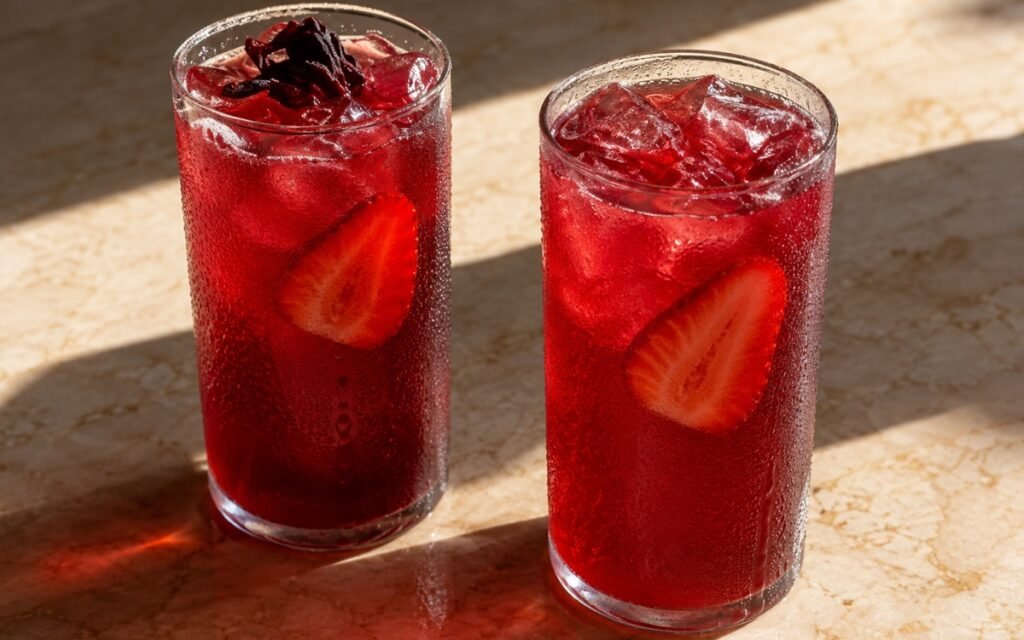
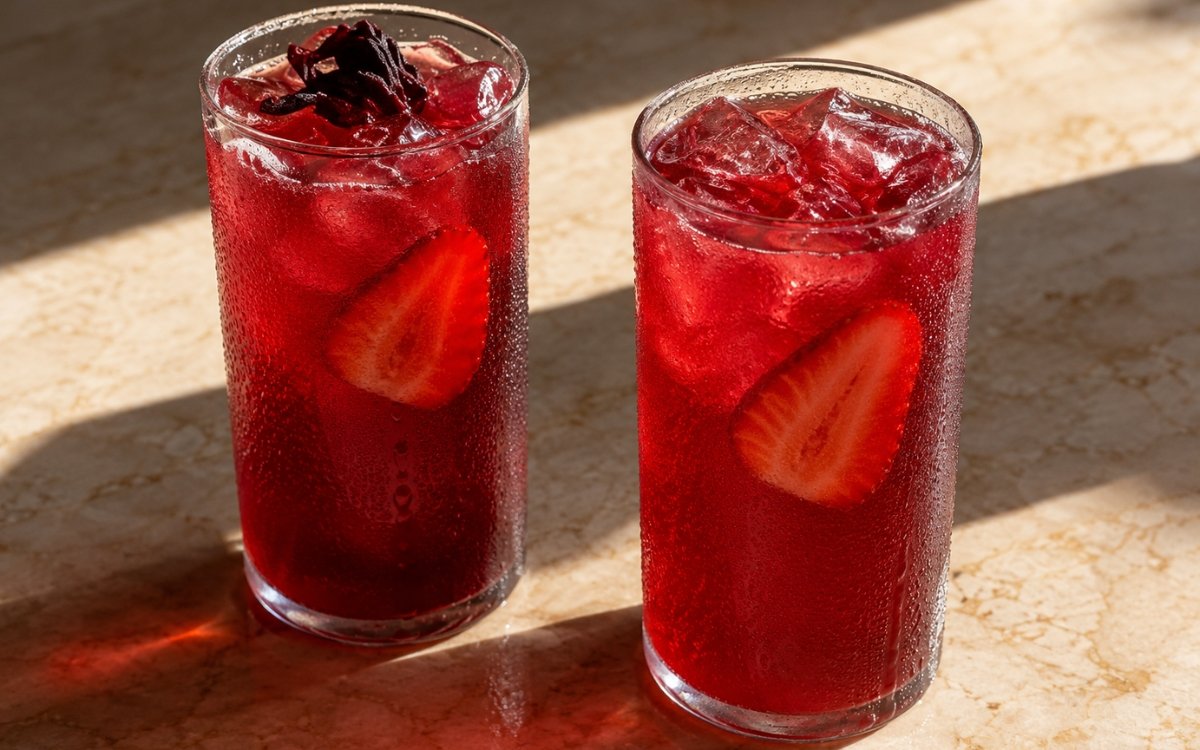
Fill glasses with ice. Pour the lemonade over the ice — no club soda is added to this preparation, which is specifically a still lemonade format rather than a sparkling one. The hibiscus’s naturally vibrant colour and the strawberry’s fruitiness carry the drink’s appeal without carbonation; the format is a classic summer lemonade pitcher rather than a spritzer. Garnish each glass with a lemon slice, a few thin strawberry slices. Serve immediately while the colour is vivid and the flavour is at its freshest.
*Notes :
- The combination of hibiscus and strawberry works specifically because both primary ingredients contribute to the same anthocyanin-based ruby colour and to a compatible tartaric-citric acid profile — hibiscus’s tartaric and citric acids harmonising with the strawberry’s own citric acid rather than competing. The result is a more complex, more specifically layered tartness than plain strawberry lemonade or plain hibiscus lemonade, with each ingredient’s character reinforcing the other’s.
- Fresh strawberries are specifically preferred over frozen for this preparation because fresh strawberries produce a more vivid, more aromatic, more specifically fresh-fruit-character purée. Frozen strawberries thaw into a slightly more watery, slightly more muted result. If only frozen strawberries are available, thaw completely and drain excess liquid before blending for the most concentrated flavour.
Why This Recipe Works
This recipe works because the hibiscus is steeped at the controlled 5–7 minute window that produces the desired colour and tartness without over-extraction. The honey is dissolved while the tea is still warm for complete, even distribution.
The strawberries are blended with a portion of the hibiscus tea to begin flavour integration. The lemon juice is added to the cooled combined base for preserved fresh acidity. And the 30–60 minute refrigerator rest allows the three flavour components to cohere.
Ingredient Breakdown
Hibiscus Flowers (5–7 Minutes, Boiling Water)
The primary colour, tartness, and floral aromatic — steep time specifically chosen for desired colour depth and tartness intensity.
Honey Dissolved While Warm
The rounded sweetener — honey’s warm dissolution in the warm tea producing complete, even distribution without additional heating.
Strawberries Blended with Hibiscus Tea
The flavour integration technique — using hibiscus tea as the blending liquid beginning the two flavours’ cohesion during the blending process.
Lemon Juice Added to Cold Combined Base
The brightness and acidity — added cold for preserved fresh character; sharpening the hibiscus and strawberry’s tartness into a specifically vivid result.
30–60 Minute Refrigerator Rest
The integration period — the flavour components cohering during refrigeration for a more unified, more specifically complete flavour.
Flavor Structure Explained
This Hibiscus strawberry lemonade follows a layered balance model:
- Layered tart core (hibiscus, strawberry, lemon)
- Sweet summer fruitiness (strawberry)
- Floral aromatic lift (hibiscus)
- Rounded sweet balance (honey)
- Bright refreshing finish (citrus-driven structure)
Hibiscus, strawberry, and lemon create the foundation together, combining multiple acid profiles into a tartness that feels layered and dynamic rather than sharply one-dimensional. Strawberry softens that intensity with warm, juicy fruit sweetness that gives the drink an approachable summer character. Hibiscus contributes the defining floral note along with its cranberry-like sharpness, making the lemonade feel more aromatic and distinctive than a standard berry version. Honey rounds the sharper acids with gentle floral sweetness, ensuring the tartness stays refreshing instead of aggressive. The result is a vivid, fruit-forward drink where floral depth, layered acidity, and balanced sweetness all remain simultaneously present.
Common Mistakes to Avoid
- Steeping Hibiscus Beyond 7 Minutes – Beyond 7 minutes the tartness becomes specifically more aggressive and less pleasant. Always time precisely.
- Using Decorative Rather Than Food-Grade Hibiscus – Non-food hibiscus may contain pesticides. Always food-grade dried culinary hibiscus.
- Adding Honey to Cold Hibiscus Tea – Cold honey resists dissolution and produces uneven sweetness. Always dissolve while the tea is warm.
- Not Allowing the Resting Period – Immediately combined lemonade tastes of its parts separately; rested lemonade tastes unified. Always allow at least 30 minutes.
- Serving Warm – Hibiscus lemonade’s colour and flavour are specifically most vivid cold. Always refrigerate before serving.
Variations
Sparkling Version
Add 700–800ml of chilled club soda to the pitcher right before serving instead of no carbonation — the sparkling version moves this preparation toward the Hibiscus Lime Fizz Mocktail format.
With Mint
Add 12 lightly clapped mint leaves to the combined lemonade and steep cold for 10–15 minutes — mint’s cool, clean freshness providing the herbal dimension that specifically complements hibiscus and strawberry.
With Ginger
Add 10g of thinly sliced fresh ginger to the hibiscus steeping water simultaneously with the hibiscus flowers — the ginger’s warm sharpness extracted into the ruby base alongside the hibiscus for a more assertive, warming direction.
With Frozen Strawberries
Thaw completely and drain excess liquid before blending at the same quantity — the result is slightly less vivid and aromatic than fresh but acceptable.
Storage & Make-Ahead
Hibiscus strawberry lemonade base can be refrigerated in a sealed pitcher for up to 3 days. Its color remains vibrant because of the high anthocyanin content, although the fresh aromatic quality of the lemon gradually fades during storage. Slight separation may occur, so stir the mixture well before serving.
Once assembled, the drinks are not suitable for storage and should be served immediately after preparation.
Frequently Asked Questions
Why use hibiscus as the tea base rather than plain water?
Hibiscus tea contributes three things that plain water cannot: the specifically vivid ruby colour from its anthocyanin concentration; the tartaric and citric acid acidity that creates the drink’s layered tartness; and the intensely floral, cranberry-adjacent aromatic character that makes hibiscus immediately identifiable. Without it the drink is simply strawberry lemonade; with it the drink is specifically more complex.
Why blend the strawberries with the hibiscus tea rather than plain water?
Using hibiscus tea as the blending liquid begins the integration of the two flavours during the blending process — the hibiscus tea’s acidity simultaneously helping break down the strawberry’s cell structure and beginning the flavour-pairing process. The result is a more cohesive combination than blending the strawberry in plain water and combining afterward.
Why honey rather than white sugar?
Honey’s own aromatic compounds — including floral volatile compounds — specifically complement hibiscus’s floral aromatic character. White sugar sweetens neutrally; honey sweetens while also amplifying the hibiscus’s floral depth. The choice is preferential rather than essential — granulated white sugar dissolved in warm tea at the same quantity is a fully acceptable alternative.
Why the 30–60 minute rest before serving?
The immediately combined lemonade has the hibiscus, strawberry, and lemon as three distinct, slightly separate flavour layers. During the refrigerator rest these layers integrate as the flavour compounds diffuse through the combined liquid — the result is a noticeably more cohesive, more unified drink.
What other hibiscus-based preparations share this tartness and colour?
The Hibiscus Lime Fizz Mocktail shares the same hibiscus tartness in a sparkling format with lime’s citrus rather than strawberry’s fruitiness — specifically more tart and more effervescent. The Hibiscus Ginger Orange White Tea Cooler shares the hibiscus base in a more complex, more warming direction — ginger’s heat and orange’s sweetness providing a specifically different secondary flavour profile. The Hibiscus Peach White Iced Tea shares the hibiscus tea base with a white tea structure and peach’s warmth rather than strawberry’s fruitiness — a more specifically tea-forward, more delicate preparation sharing the same vivid colour foundation.
Nutrition Facts
( per serving )
Calories
~70 kcal
Protein
0 g
Fat
0 g
Carbs
18 g
Calories
~70 kcal
Protein
0 g
Fat
0 g
Carbs
18 g
Related Recipes
Related Recipes

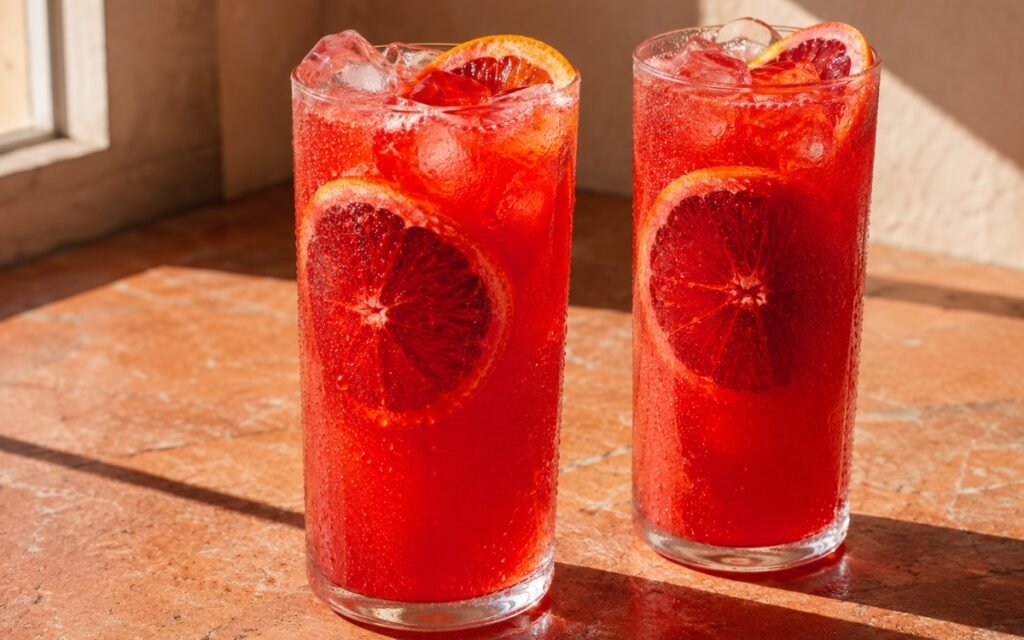
Blood Orange Lemonade
Orange and lemon peels steeped off heat exactly 10–12 minutes, pulp mashed in pitcher — blood orange juice, optional lemon, salt, cold water. Vivid ruby and citrusy.
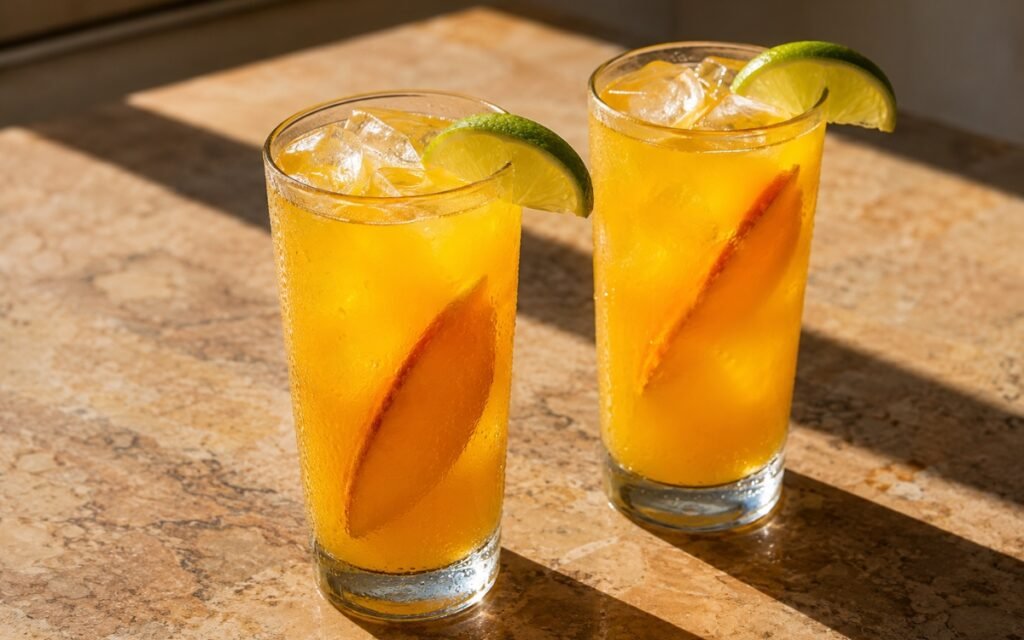
Fresh Mango Lemonade
Mango simmered at medium-low heat with lime zest, ginger off heat exactly 2 minutes — lemon and lime juice added cold, chilled. Tropical, golden, and bright.
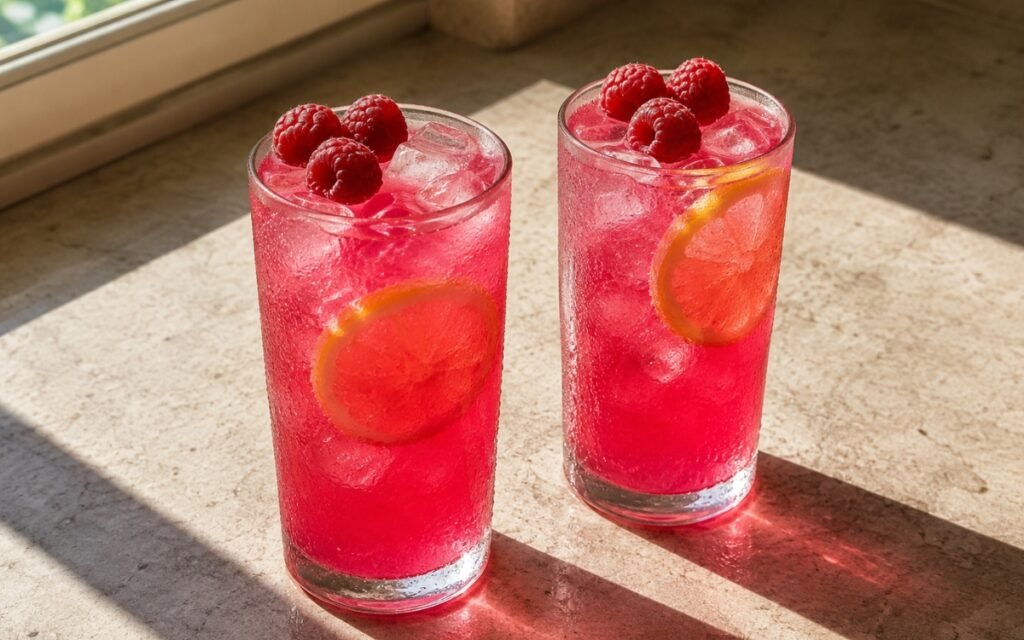
Raspberry Lemonade
Honey-raspberry syrup cooked with lemon zest off heat, fresh raspberries cold-strained for bright aromatic juice — combined with lemon, salt, cold water. Layered and vivid.
You might also like
You might also like
Mint Pineapple White Tea Cooler
White tea at 75–80°C for 3–4 minutes, fresh pineapple blended and strained — ginger infused 5–7 minutes, mint clapped and infused last, chilled. Tropical and herbal.
Peach Jasmine Iced Tea
Jasmine tea at 75–80°C for 2–3 minutes, peaches blended and strained — honey kept light, peach purée added with restraint, chilled. Floral and softly peachy.
Fresh Peach Green Iced Tea
Green tea at 75–80°C for 2–3 minutes, raw peach slices cold-infused 30–45 minutes — strained promptly, honey, chilled. Light, clean, delicately fruity.
Hibiscus Strawberry Lemonade
Ingredients
Method
- Bring the 960ml of water to a full rolling boil in a kettle or saucepan. Remove from the heat immediately — the water should be at or just below boiling when the hibiscus is added. Add the 4 tbsp of dried hibiscus flowers directly to the water. Steep for 5–7 minutes. The steep time is specifically a flavour and colour choice rather than a safety or extraction requirement: 5 minutes produces a brighter, lighter hibiscus flavour with a vivid ruby-red that is slightly more pink-leaning; 7 minutes produces a deeper, more specifically tart, more deeply ruby-coloured result with a more assertively hibiscus-forward flavour. Both are correct — the 5-minute version is lighter and more broadly accessible; the 7-minute version is more specifically tart, more vivid, and more characteristically hibiscus. Unlike the delicate white tea preparations in this collection where temperature control is critical, hibiscus flowers’ aromatic and colour compounds are heat-stable and extract efficiently at boiling temperature without the risk of harsh tannin development. Strain through a fine-mesh sieve and discard the hibiscus flowers. While the tea is still warm — not hot enough to evaporate honey’s volatile aromatics but warm enough to dissolve it smoothly — stir in 60g of honey until completely dissolved. The warm tea provides the same dissolution assistance that warm water provides in the cold-process preparations: honey dissolves readily in warm liquid without requiring the cold-process approach’s acid facilitation. Allow the sweetened hibiscus tea to cool completely to room temperature.
- Add the 150g of hulled fresh strawberries to a blender with approximately 120ml of the cooled hibiscus tea. The hibiscus tea rather than plain water as the blending liquid is the specific technique that begins integrating the strawberry and hibiscus flavours during the blending process — the hibiscus tea’s tartaric acid simultaneously helping break down the strawberry’s cell walls for a smoother blend and beginning the flavour integration that makes the finished lemonade more cohesive than blending the strawberry in water and combining afterward. Blend at high speed for 30–40 seconds until completely smooth. For a rustic, textured lemonade where the strawberry’s natural pulp and occasional small seed fragments are part of the eating experience: leave the purée unstrained. For a cleaner, smoother lemonade with the clearest vivid ruby colour: strain through a fine-mesh sieve, pressing firmly on the strawberry solids. The strained version produces the most visually vivid, specifically ruby-clear result; the unstrained version has a slightly more opaque, slightly more fruit-present texture.
- In a large pitcher, combine the remaining hibiscus tea, the blended strawberry purée, and the 120ml of fresh lemon juice. Stir thoroughly until completely combined. Taste and adjust: if the tartness is aggressive, add additional honey in small increments — tasting between each addition; if the drink tastes flat or one-dimensional, add additional lemon juice for brightness. The lemonade should taste tart, vivid, fruity, and bright — not flat, not syrupy, and not simply sweet. The balance should feel specifically refreshing rather than juice-like. Refrigerate for 30–60 minutes before serving if time allows. The hibiscus, strawberry, and lemon flavours integrate during this rest period — the immediately made version is good; the rested version is noticeably more cohesive and more unified. The colour also deepens slightly during refrigeration as the anthocyanin pigments from both hibiscus and strawberry continue distributing through the liquid.
- Fill glasses with ice. Pour the lemonade over the ice — no club soda is added to this preparation, which is specifically a still lemonade format rather than a sparkling one. The hibiscus’s naturally vibrant colour and the strawberry’s fruitiness carry the drink’s appeal without carbonation; the format is a classic summer lemonade pitcher rather than a spritzer. Garnish each glass with a lemon slice, a few thin strawberry slices. Serve immediately while the colour is vivid and the flavour is at its freshest.