Ingredients
Method
Brew the Hibiscus Tea
- Bring the 960ml of water to a full rolling boil in a kettle or saucepan. Remove from the heat immediately — the water should be at or just below boiling when the hibiscus is added. Add the 4 tbsp of dried hibiscus flowers directly to the water. Steep for 5–7 minutes. The steep time is specifically a flavour and colour choice rather than a safety or extraction requirement: 5 minutes produces a brighter, lighter hibiscus flavour with a vivid ruby-red that is slightly more pink-leaning; 7 minutes produces a deeper, more specifically tart, more deeply ruby-coloured result with a more assertively hibiscus-forward flavour. Both are correct — the 5-minute version is lighter and more broadly accessible; the 7-minute version is more specifically tart, more vivid, and more characteristically hibiscus. Unlike the delicate white tea preparations in this collection where temperature control is critical, hibiscus flowers' aromatic and colour compounds are heat-stable and extract efficiently at boiling temperature without the risk of harsh tannin development. Strain through a fine-mesh sieve and discard the hibiscus flowers. While the tea is still warm — not hot enough to evaporate honey's volatile aromatics but warm enough to dissolve it smoothly — stir in 60g of honey until completely dissolved. The warm tea provides the same dissolution assistance that warm water provides in the cold-process preparations: honey dissolves readily in warm liquid without requiring the cold-process approach's acid facilitation. Allow the sweetened hibiscus tea to cool completely to room temperature.
Blend the Strawberries with Hibiscus Tea
- Add the 150g of hulled fresh strawberries to a blender with approximately 120ml of the cooled hibiscus tea. The hibiscus tea rather than plain water as the blending liquid is the specific technique that begins integrating the strawberry and hibiscus flavours during the blending process — the hibiscus tea's tartaric acid simultaneously helping break down the strawberry's cell walls for a smoother blend and beginning the flavour integration that makes the finished lemonade more cohesive than blending the strawberry in water and combining afterward. Blend at high speed for 30–40 seconds until completely smooth. For a rustic, textured lemonade where the strawberry's natural pulp and occasional small seed fragments are part of the eating experience: leave the purée unstrained. For a cleaner, smoother lemonade with the clearest vivid ruby colour: strain through a fine-mesh sieve, pressing firmly on the strawberry solids. The strained version produces the most visually vivid, specifically ruby-clear result; the unstrained version has a slightly more opaque, slightly more fruit-present texture.
Combine, Taste, and Adjust
- In a large pitcher, combine the remaining hibiscus tea, the blended strawberry purée, and the 120ml of fresh lemon juice. Stir thoroughly until completely combined. Taste and adjust: if the tartness is aggressive, add additional honey in small increments — tasting between each addition; if the drink tastes flat or one-dimensional, add additional lemon juice for brightness. The lemonade should taste tart, vivid, fruity, and bright — not flat, not syrupy, and not simply sweet. The balance should feel specifically refreshing rather than juice-like. Refrigerate for 30–60 minutes before serving if time allows. The hibiscus, strawberry, and lemon flavours integrate during this rest period — the immediately made version is good; the rested version is noticeably more cohesive and more unified. The colour also deepens slightly during refrigeration as the anthocyanin pigments from both hibiscus and strawberry continue distributing through the liquid.
Serve
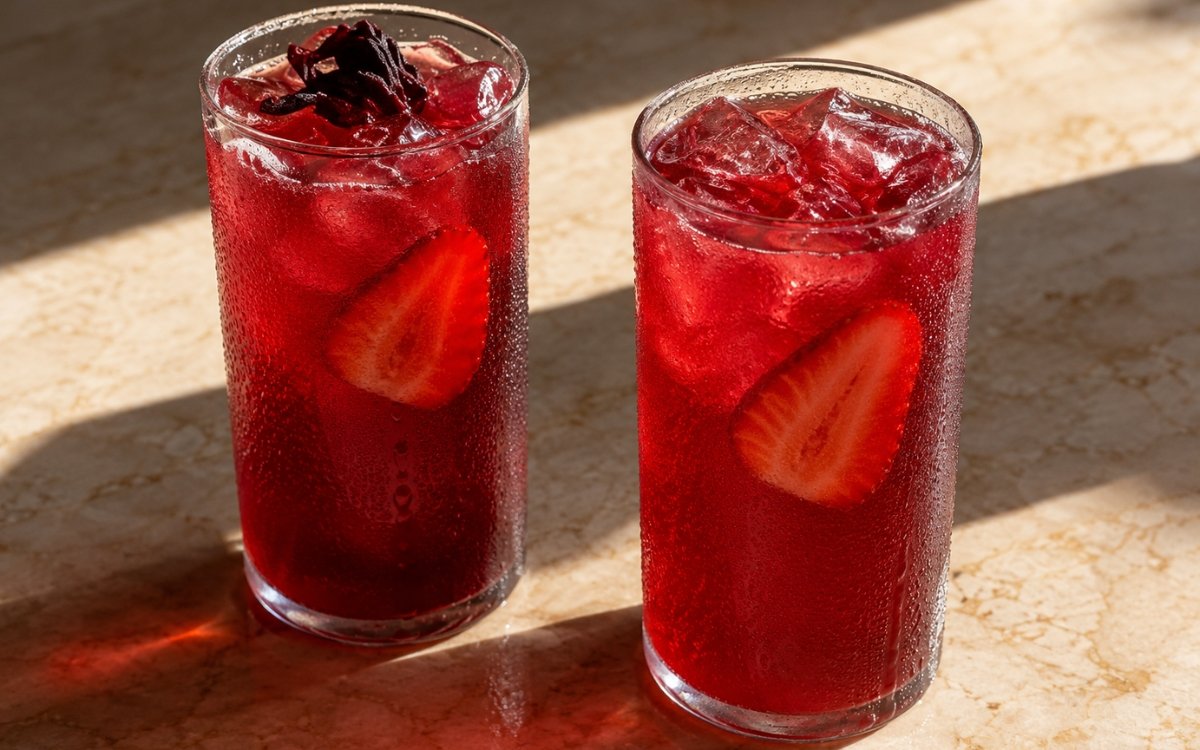
- Fill glasses with ice. Pour the lemonade over the ice — no club soda is added to this preparation, which is specifically a still lemonade format rather than a sparkling one. The hibiscus's naturally vibrant colour and the strawberry's fruitiness carry the drink's appeal without carbonation; the format is a classic summer lemonade pitcher rather than a spritzer. Garnish each glass with a lemon slice, a few thin strawberry slices. Serve immediately while the colour is vivid and the flavour is at its freshest.
Notes
The combination of hibiscus and strawberry works specifically because both primary ingredients contribute to the same anthocyanin-based ruby colour and to a compatible tartaric-citric acid profile — hibiscus's tartaric and citric acids harmonising with the strawberry's own citric acid rather than competing. The result is a more complex, more specifically layered tartness than plain strawberry lemonade or plain hibiscus lemonade, with each ingredient's character reinforcing the other's.
Fresh strawberries are specifically preferred over frozen for this preparation because fresh strawberries produce a more vivid, more aromatic, more specifically fresh-fruit-character purée. Frozen strawberries thaw into a slightly more watery, slightly more muted result. If only frozen strawberries are available, thaw completely and drain excess liquid before blending for the most concentrated flavour.