
Hibiscus Peach White Iced Tea
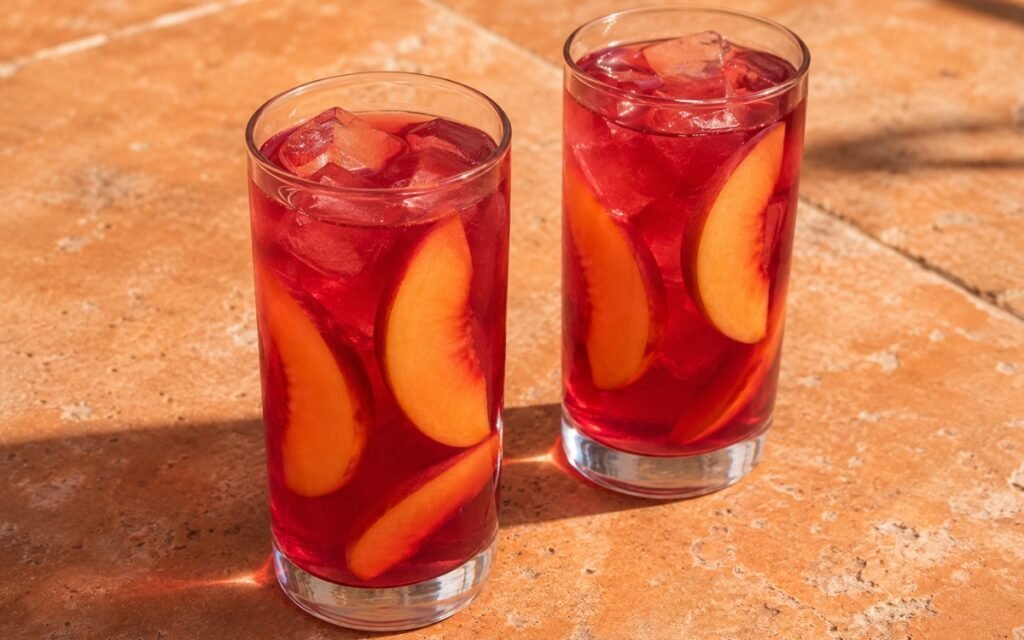
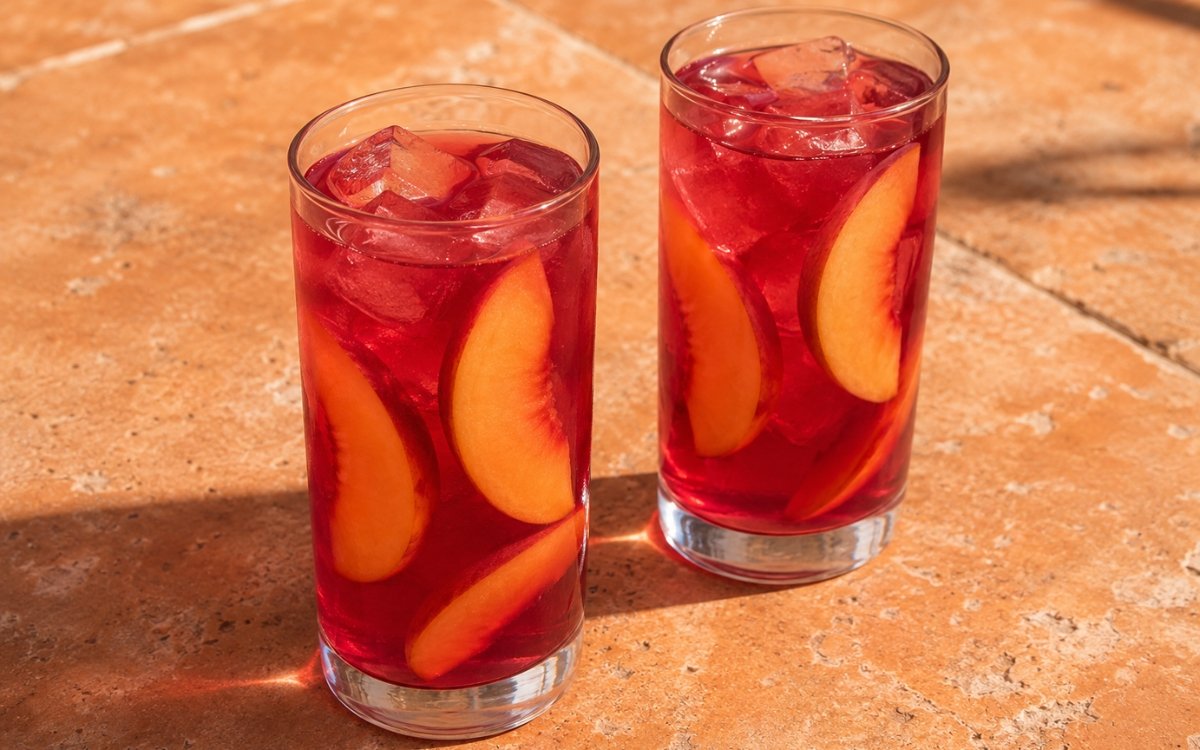
Hibiscus Peach White Iced Tea is a floral, softly fruity iced tea that layers tart hibiscus and delicate white tea with a light, fresh peach syrup made from real fruit. It is visually stunning — deep ruby with a warm peach undertone — and tastes as refined as it looks. Not sweet, not sour, just clean and botanical with a gentle fruit softness that makes it one of the most elegant make-ahead summer drinks you can prepare for a crowd. The pairing is built on contrast: hibiscus is sharp, tart, and intensely floral, while peach is soft, sweet, and gently aromatic. Each corrects the other’s most challenging quality — hibiscus prevents the drink from feeling flat or sugary, while peach rounds the hibiscus acidity into something approachable and genuinely pleasant. White tea is the right base for this combination because it is the only tea with a character gentle enough to let hibiscus and peach share the foreground without interference.
Prep Time : 20 min
Cook Time : 10 min
Servings : 8
20 min
10 min
8
Ingredients
For the White Tea Base
• 1.65 litres water
• 6 white tea bags — Pai Mu Tan (White Peony) — this one on Amazon
Liquid Components
• 3 Tbsp dried hibiscus flowers — this one on Amazon
For the Light Peach Syrup
• 2 ripe peaches — pitted and sliced; about 300g total
• ¼ cup (50g) white sugar
• ¾ cup (180ml) water
For Serving
• Ice
• Peach slices
• Dried hibiscus flowers — optional garnish
This post may contain affiliate links. As an Amazon Associate I earn from qualifying purchases, at no additional cost to you.
Directions
- Brew the White Tea Carefully
Heat the 1.65 litres of water to 75–80°C. Do not allow the water to boil — white tea is delicate, and high brewing temperatures extract bitterness that will compete directly with the hibiscus tartness and flatten the peach syrup’s gentle sweetness. No thermometer available? Bring the water to a full boil, then rest it uncovered for 4–5 minutes before brewing. Add the 6 white tea bags and steep for 3–4 minutes. Remove the bags gently without squeezing — squeezing releases harsh tannins that are difficult to balance once introduced. Allow the tea to cool to lukewarm before proceeding. - Infuse the Hibiscus
Add the 3 tablespoons of dried hibiscus flowers directly to the warm white tea. Allow the infusion to develop for 6–8 minutes, checking at the 6-minute mark. You’re looking for a deep, clear ruby colour and a clean, tart floral aroma — vivid and assertive but not aggressively sour. Strain out the hibiscus flowers promptly the moment that balance is achieved. Hibiscus is one of the most potent botanical infusion ingredients available — a few extra minutes pushes the flavour from bright and tart into sharply acidic and one-dimensional, and there is no straightforward way to correct it. When in doubt, pull early. - Make the Light Peach Syrup
Combine the sliced peaches, sugar, and water in a small saucepan. Bring to a gentle simmer over medium-low heat and cook for 8–10 minutes, just until the peaches are fully softened and their aroma is clearly present in the liquid. Keep the heat gentle throughout — aggressive boiling concentrates the syrup too quickly, pushes the peach flavour toward cooked jam rather than fresh fruit, and reduces the yield. The finished syrup should smell like ripe, fresh peaches, not peach candy or compote. - Strain the Syrup
Pour the contents of the saucepan through a fine-mesh sieve into a bowl or measuring jug. Allow the syrup to drain naturally — do not press or squeeze the peach solids. Pressing extracts starchy, cloudy liquid and can introduce a slightly bitter, cooked-fruit character that muddies the clean peach flavour. Discard the spent peach slices and allow the strained syrup to cool completely to room temperature before using. - Sweeten the Tea Base
Stir 120–160ml of the cooled peach syrup into the hibiscus white tea base. Begin with 120ml, taste carefully, and add more only if the balance needs adjustment. The drink should taste softly fruity and lightly sweet — present but restrained. The hibiscus tartness should still be clearly detectable, the white tea should remain in the background, and the peach should register as a gentle, rounded sweetness rather than a dominant flavour. If the peach syrup pushes the drink into obvious sweetness, pull back. - Chill Fully
Refrigerate for 1–2 hours until completely cold and the flavours are fully integrated. Full chilling allows the hibiscus, white tea, and peach elements to settle into each other and find their balance. Served partially chilled, the hibiscus acidity will feel sharp and the peach sweetness will taste disconnected rather than cohesive. - Serve
Fill glasses generously with ice. Pour the chilled hibiscus peach white iced tea over the ice and garnish with fresh peach slices and a dried hibiscus flower if desired. Serve immediately while the colour is vivid and the aroma is at its cleanest.
*Notes :
- Hibiscus intensity varies significantly between brands and batches — some dried flowers are noticeably more potent than others. Always begin tasting at the 6-minute mark during infusion rather than relying purely on timing. The colour is a useful secondary indicator: a deep, clear ruby with no brown or purple tones suggests a well-timed infusion. Brown or muddy tones suggest the hibiscus has been in contact too long and bitterness is developing.
- Peach syrup quality depends almost entirely on the ripeness of the fruit. Ripe, fragrant peaches in peak season produce a syrup with genuine depth, natural sweetness, and a clean floral aroma. Underripe or out-of-season peaches produce a thin, flat syrup that tastes more like sugar water than fruit. If fresh peaches are unavailable or out of season, ripe frozen peaches thawed completely before cooking are a reliable substitute that consistently outperform underripe fresh fruit.
- White tea must remain a detectable presence in the finished drink. Its role is subtle — a soft, clean backdrop that prevents the hibiscus and peach from colliding directly — but its absence is noticeable. If the white tea has completely disappeared and the drink tastes like hibiscus-peach juice, either the hibiscus infused too long, too much peach syrup was added, or both. Pai Mu Tan is the correct choice here because its natural body and sweetness give it enough presence to hold its own without being assertive.
- The quantity of peach syrup added to the tea base is a variable, not a fixed number, because fruit ripeness affects sweetness and intensity significantly. Treat the 120–160ml range as a starting point and adjust based on taste. The finished drink should lean toward restraint — this is an iced tea, not a fruit punch, and the botanical character should always lead.
Why This Recipe Works
White tea is the right base for this combination because it is the only tea with a character gentle enough to let hibiscus and peach share the foreground without interference. Its low tannin content and natural floral sweetness create a clean, neutral backdrop that supports both the tartness of hibiscus and the softness of peach syrup without competing with either. Any stronger tea base would assert itself and push the drink out of balance.
Hibiscus and peach are a precisely matched pairing built on contrast. Hibiscus is sharp, tart, and intensely floral. Peach is soft, sweet, and gently aromatic. Each corrects the other’s most challenging quality — hibiscus prevents the drink from feeling flat or sugary, while peach rounds the hibiscus acidity into something approachable and genuinely pleasant. The result is a flavour dynamic that feels natural and effortless, as though the two ingredients were always meant to be in the same glass.
The light peach syrup, made from real fruit rather than extract or concentrate, is what gives the drink its depth and authenticity. Cooking fresh peaches briefly in a small amount of sugar and water extracts the fruit’s aromatic compounds and natural sweetness in a way that no artificial flavouring can replicate. The syrup integrates into the hibiscus-white tea base rather than sitting on top of it, creating a cohesive, layered flavour profile that holds together from the first sip to the last.
Ingredient Breakdown
White Tea (Pai Mu Tan / White Peony)
Provides a soft, naturally sweet and floral foundation with minimal tannins and bitterness. Its delicate character creates space for hibiscus and peach to lead without competition, while its subtle body prevents the finished drink from tasting thin or watery.
Dried Hibiscus Flowers
Deliver the drink’s striking ruby colour, bright tartness, and intense floral complexity. Brief infusion extracts only the clean, vivid quality of hibiscus at its best — tart and floral rather than sour and astringent. The hibiscus defines the drink’s visual identity and provides the structural acidity that keeps the peach from making the profile too soft.
Fresh Ripe Peaches
The foundation of the light syrup, contributing natural fruit sweetness, a delicate floral aroma, and a soft roundness that balances the hibiscus tartness. Ripeness is everything — ripe fruit produces a genuinely aromatic syrup, while underripe fruit produces little more than sugar water.
White Sugar
Draws moisture and flavour from the peaches during cooking, creating a light, clean syrup that carries the fruit’s natural sweetness and aroma without adding any competing flavour of its own. Used in a restrained quantity to keep the syrup light rather than sweet.
Ice
Maintains the cold temperature essential for this drink’s crisp character and vivid colour, while progressive dilution as it melts gently softens the hibiscus acidity and makes the flavour more approachable over time.
Flavor Structure Explained
This Hibiscus Peach White Iced Tea follows a layered balance model:
- Delicate tea core (white tea)
- Bright tart botanical character (hibiscus)
- Soft stone-fruit sweetness (peach)
- Floral aromatic depth (peach and tea)
- Clean refreshing finish (tartness-sweetness balance)
White tea defines the foundation with subtle floral notes and gentle natural sweetness, providing a quiet structure that supports the drink without drawing attention away from the brighter flavors. Hibiscus contributes the defining visual and flavor identity, supplying vivid color, floral tartness, and the sharp acidity that gives the drink its precision and energy. Peach adds the balancing element, bringing soft fruit sweetness, floral warmth, and rounded depth that temper the hibiscus without obscuring it. The interaction between hibiscus and peach is central to the drink’s character: the hibiscus provides clarity and brightness, while the peach provides softness and cohesion. The result is an iced tea built around contrast and balance, where botanical tartness and stone-fruit warmth remain in constant harmony.
Common Mistakes to Avoid
- Infusing Hibiscus Too Long – Turns the flavour from bright and tart into aggressively sour and makes the entire base taste one-dimensional. Always strain promptly.
- Pressing the Peach Solids Through the Sieve – Introduces cloudy, starchy liquid and a cooked-fruit bitterness. Always let it drain naturally.
- Using Underripe or Out-of-Season Peaches – Produces a flat, thin syrup without enough aroma or natural sweetness to balance the hibiscus. Always use fully ripe fruit.
- Adding Too Much Peach Syrup – Overwhelms the white tea base and pushes the drink from botanical iced tea into sweet fruit punch territory. Always start at 120ml and taste.
- Brewing White Tea With Water That Is Too Hot – Extracts bitterness that fights with both the hibiscus tartness and the peach sweetness. Always 75–80°C.
- Serving Before the Tea Is Fully Chilled – Makes the hibiscus acidity feel sharp and prevents the flavours from integrating. Always chill the full 1–2 hours.
Variations
Sparkling Hibiscus Peach Iced Tea
Replace about one-third of the finished tea with ice-cold sparkling water just before serving for a lighter, effervescent version with extra refreshing lift.
Hibiscus Peach Green Tea Version
Substitute green tea for white tea as the base for a slightly more structured, grassy foundation that adds extra complexity to the hibiscus and peach layers.
Nectarine or Mango Syrup Version
Replace peaches with ripe nectarines or fresh mango for a slightly different fruit profile — nectarine produces a sharper, more citrusy sweetness, while mango contributes tropical depth and extra body.
Hibiscus Peach Lemonade
Add 3–4 tablespoons of fresh lemon juice to the finished base for a more assertively tart, citrus-forward version that leans harder into the hibiscus character.
Storage & Make-Ahead
Store the finished tea and the peach syrup separately if preparing more than a few hours in advance. The combined drink keeps well refrigerated in a sealed glass container for up to 24 hours — after that, the hibiscus colour begins to deepen and dull, and the peach aroma fades noticeably.
The peach syrup itself can be made up to 3 days ahead and stored refrigerated in a sealed jar, making it the most practical component to prepare in advance. Always remove any remaining hibiscus flowers and strain the tea fully before storing to prevent the infusion from continuing and turning sour in the refrigerator.
Add ice and fresh garnishes only at serving time. For best results, assemble the final drink the morning of serving and keep refrigerated until needed.
Frequently Asked Questions
Can I use frozen peaches instead of fresh?
Yes — fully thawed frozen peaches work well, particularly outside of peak peach season when fresh fruit is often underripe and flavourless. Thaw completely before cooking and drain any excess liquid before adding to the saucepan.
Can I use peach juice or peach nectar instead of making the syrup?
Store-bought peach juice or nectar can be used as a quick substitute, but the flavour will be noticeably flatter and more artificial. The homemade syrup extracts the fruit’s natural aroma in a way that no commercial product replicates — it is worth the 15 minutes of effort.
Why does my finished tea look brown rather than ruby red?
Brown or murky colour almost always means the hibiscus infused for too long. A well-timed hibiscus infusion produces a clear, vivid ruby colour. If the colour looks dull or brownish, the hibiscus crossed past its best point during steeping — reduce infusion time on the next batch and remove promptly.
What other hibiscus and white tea preparations share this approach?
The Hibiscus White Iced Tea shares the white tea and hibiscus foundation in its most straightforward form, without the peach syrup component. The Hibiscus Ginger Orange White Tea Cooler shares the hibiscus and white tea base with ginger’s warmth and orange’s bridging citrus in place of peach’s soft fruit sweetness. The Rosemary Peach White Iced Tea shares the same light peach syrup technique on a white tea base, with rosemary’s piney herbal character in place of hibiscus’s tartness.
Nutrition Facts
( per serving )
Calories
~35 kcal
Protein
0 g
Fat
0 g
Carbs
9 g
Calories
~35 kcal
Protein
0 g
Fat
0 g
Carbs
9 g
Related Recipes
Related Recipes

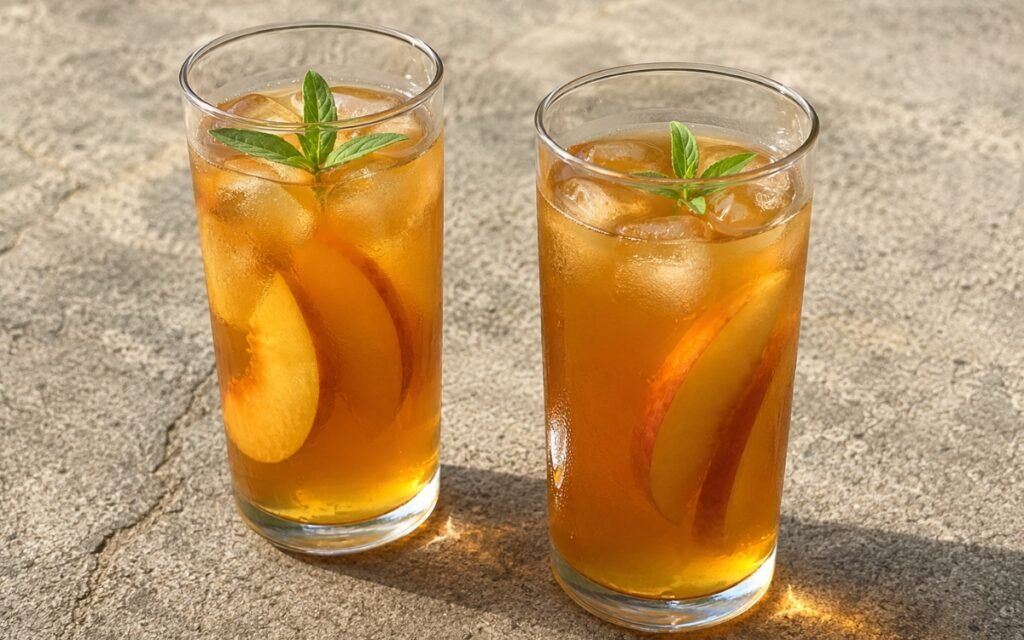
Verbena Peach Iced Black Tea
Light black tea at 90–95°C for 2½–3 minutes, peach syrup made separately, verbena clapped and infused cold 8–12 minutes — lemon peel, chilled. Floral, aromatic, softly fruity.
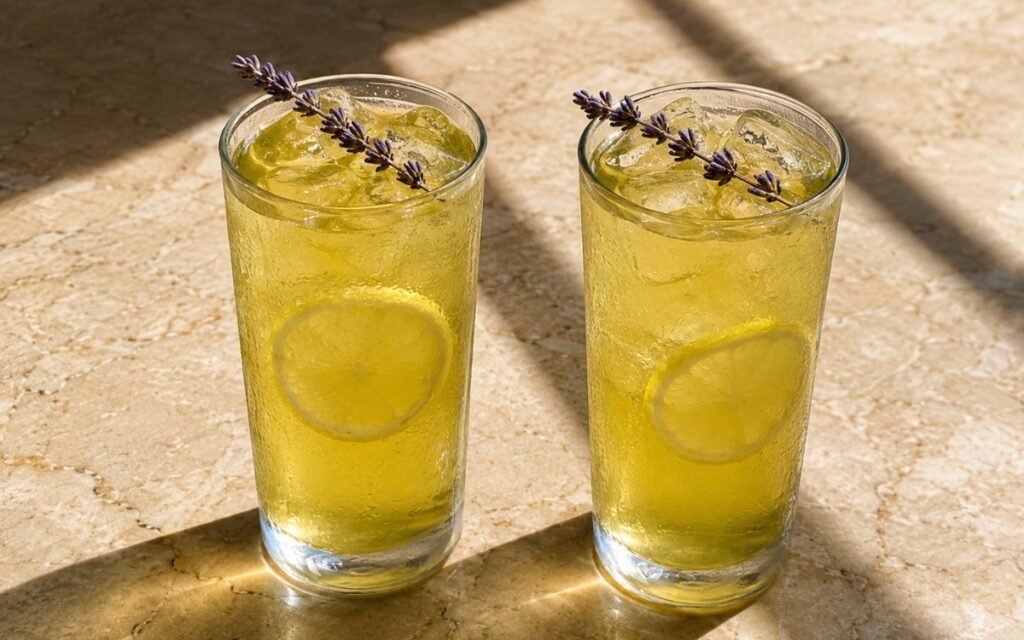
Lavender Honey Green Iced Tea
Properly brewed green tea combined with a carefully extracted lavender-honey infusion for a pale golden-green, floral, lightly sweet iced tea.
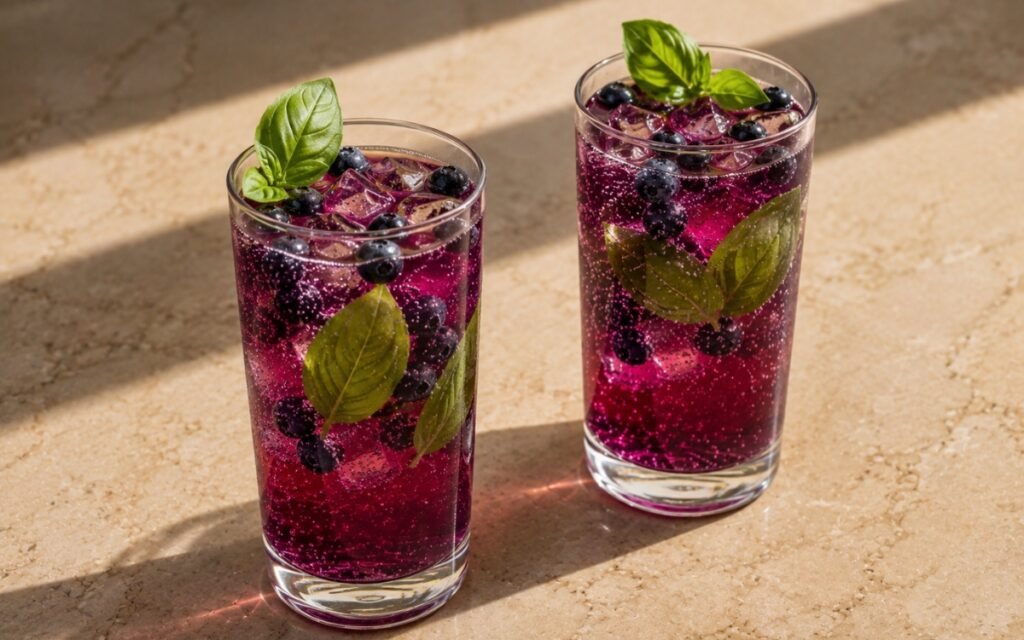
Basil Blueberry Sparkling Herbal Cooler
Concentrated white tea, basil blended into blueberries and strained — combined with the tea, finished with gentle club soda, chilled. Herbal and lively.
You might also like
You might also like
Negroni Sbagliato Style Bitter Orange Mocktail
Bitter orange cordial and black tea base over a large ice cube — sparkling water, expressed orange peel. Deep amber and fully adult.
Meyer Lemon Lemonade
Meyer lemon zest steeped 8–10 minutes for floral aromatics, syrup starting at 100ml for natural sweetness — fresh juice, salt, chilled. Soft, floral, and elegantly balanced.
Blackberry Lemonade
Honey-blackberry syrup at low heat with lemon zest off heat, fresh blackberries cold-strained lightly — both combined with lemon, salt, cold water. Deep, dark-purple, and wine-adjacent.


Hibiscus Peach White Iced Tea
Ingredients
Method
- Heat the 1.65 litres of water to 75–80°C. Do not allow the water to boil — white tea is delicate, and high brewing temperatures extract bitterness that will compete directly with the hibiscus tartness and flatten the peach syrup’s gentle sweetness. No thermometer available? Bring the water to a full boil, then rest it uncovered for 4–5 minutes before brewing. Add the 6 white tea bags and steep for 3–4 minutes. Remove the bags gently without squeezing — squeezing releases harsh tannins that are difficult to balance once introduced. Allow the tea to cool to lukewarm before proceeding.
- Add the 3 tablespoons of dried hibiscus flowers directly to the warm white tea. Allow the infusion to develop for 6–8 minutes, checking at the 6-minute mark. You’re looking for a deep, clear ruby colour and a clean, tart floral aroma — vivid and assertive but not aggressively sour. Strain out the hibiscus flowers promptly the moment that balance is achieved. Hibiscus is one of the most potent botanical infusion ingredients available — a few extra minutes pushes the flavour from bright and tart into sharply acidic and one-dimensional, and there is no straightforward way to correct it. When in doubt, pull early.
- Combine the sliced peaches, sugar, and water in a small saucepan. Bring to a gentle simmer over medium-low heat and cook for 8–10 minutes, just until the peaches are fully softened and their aroma is clearly present in the liquid. Keep the heat gentle throughout — aggressive boiling concentrates the syrup too quickly, pushes the peach flavour toward cooked jam rather than fresh fruit, and reduces the yield. The finished syrup should smell like ripe, fresh peaches, not peach candy or compote.
- Pour the contents of the saucepan through a fine-mesh sieve into a bowl or measuring jug. Allow the syrup to drain naturally — do not press or squeeze the peach solids. Pressing extracts starchy, cloudy liquid and can introduce a slightly bitter, cooked-fruit character that muddies the clean peach flavour. Discard the spent peach slices and allow the strained syrup to cool completely to room temperature before using.
- Stir 120–160ml of the cooled peach syrup into the hibiscus white tea base. Begin with 120ml, taste carefully, and add more only if the balance needs adjustment. The drink should taste softly fruity and lightly sweet — present but restrained. The hibiscus tartness should still be clearly detectable, the white tea should remain in the background, and the peach should register as a gentle, rounded sweetness rather than a dominant flavour. If the peach syrup pushes the drink into obvious sweetness, pull back.
- Refrigerate for 1–2 hours until completely cold and the flavours are fully integrated. Full chilling allows the hibiscus, white tea, and peach elements to settle into each other and find their balance. Served partially chilled, the hibiscus acidity will feel sharp and the peach sweetness will taste disconnected rather than cohesive.
- Fill glasses generously with ice. Pour the chilled hibiscus peach white iced tea over the ice and garnish with fresh peach slices and a dried hibiscus flower if desired. Serve immediately while the colour is vivid and the aroma is at its cleanest.