
Mango Green Tea Lemonade
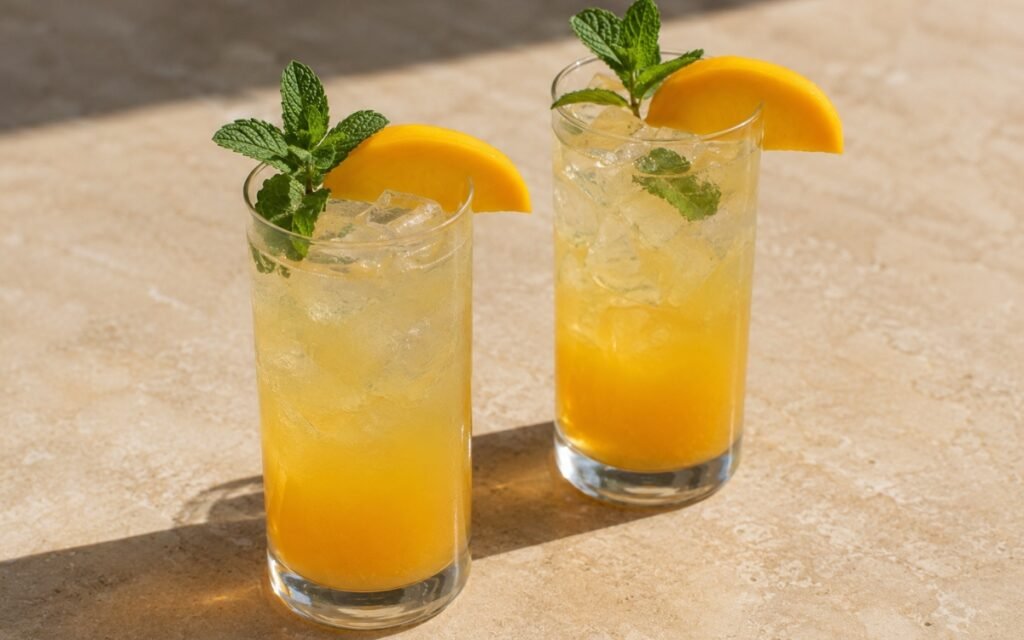
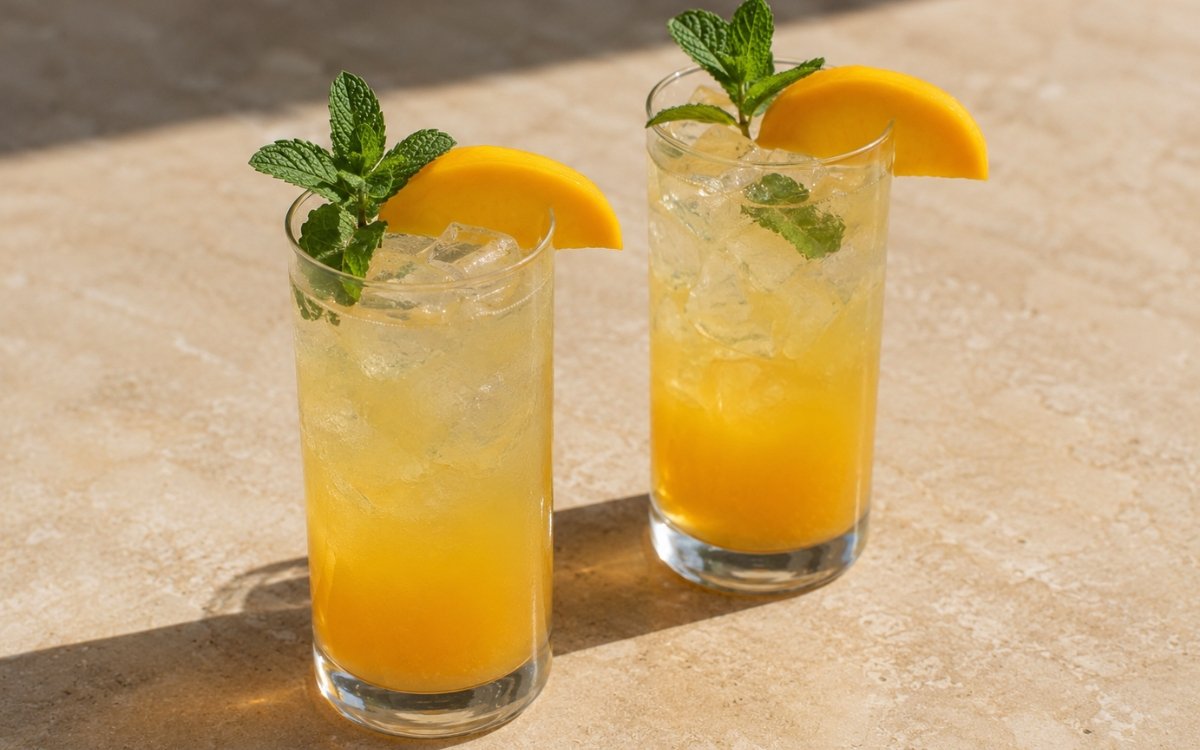
Built as two separate components — a mango green tea base and a sharp homemade lemonade — combined at serving time rather than in advance, creating the natural golden gradient in each glass that makes this preparation specifically more interesting to look at than any uniformly mixed drink. The green tea brewed at 75–80°C for 3–4 minutes only — the same careful temperature and time control from the white tea preparations applied here because green tea is comparably sensitive to high-temperature extraction: boiling water applied to green tea for more than 2–3 minutes produces a specifically bitter, harsh result that overwhelms the mango’s sweetness; water at 75–80°C for 3–4 minutes produces the delicate, slightly grassy, lightly tannic character that provides structure without competing. The mango blended with honey and a portion of the water before the green tea is added — the honey and mango integrated during blending for a uniformly sweet base. The lemonade sharp and assertively tart specifically to balance the mango’s natural sweetness. Served layered. Fruit-forward, lightly tannic, citrusy, and refreshing without becoming heavy.
Prep Time : 15 min
Cook Time : 5 min
Servings : 8
15 min
5 min
8
Ingredients
For the Mango Green Tea
• 3 green tea bags — this one on Amazon
• 720ml water — 120ml for blending with mango, 600ml for the tea
• 1 large ripe mango — approximately 300g prepared flesh, peeled and cubed
• 3 Tbsp mild honey — this one on Amazon
For the Lemonade
• 65g white granulated sugar
• 120ml water — for the syrup
• 120–150ml fresh lemon juice — approximately 3–5 lemons; start with 120ml
• 420–480ml ice-cold water — start with 420ml, adjust after tasting
For Serving
• Ice cubes
• Fresh mint sprigs
• Mango wedges — optional
This post may contain affiliate links. As an Amazon Associate I earn from qualifying purchases, at no additional cost to you.
Directions
- Blend the Mango with Honey
Peel and cube the mango, removing the stone. Add the 300g of cubed mango flesh to a blender with 120ml of the measured water and the 2 tbsp of honey. Blend at high speed for 30–40 seconds until completely smooth — specifically vivid, golden-orange in colour and intensely aromatic. If the mango is fibrous — certain varieties, particularly out-of-season or less ripe mangoes, have a fibrous flesh that blends into small thread-like strands — strain through a fine-mesh sieve pressing gently to produce a clean, smooth purée. The mango purée should taste specifically sweet, fragrant, and intensely of ripe mango rather than mild or watery. If it tastes mild, the mango was under-ripe — additional honey can compensate for sweetness but cannot add the aromatic complexity of fully ripe fruit. The honey is specifically blended with the mango rather than added to the green tea separately — the blending process fully integrating the honey into the mango purée so it dissolves completely and distributes evenly through the subsequent green tea combination without the uneven sweetness that adding honey to a large cold liquid volume produces. - Brew the Green Tea at the Correct Temperature
Heat the remaining 600ml of water to 75–80°C. A cooking thermometer confirms the correct temperature; alternatively, bring to a full boil and allow to cool for 5–7 minutes. Add the 3 green tea bags and steep for exactly 3–4 minutes. Remove the bags gently without squeezing. Green tea’s aromatic and flavour chemistry at boiling temperature undergoes a specifically rapid shift: the desirable catechins and aromatic volatiles that produce green tea’s characteristically delicate, slightly grassy, lightly tannic pleasantness extract within the first 2–3 minutes. Beyond this point at boiling temperature, the polyphenols responsible for a sharp, harsh, specifically bitter result extract progressively. At 75–80°C this shift is slower — 3–4 minutes extracts the pleasant compounds ahead of the harsh ones, producing the light, clean, specifically green tea character that provides structure in this drink without bitterness. Squeezing the tea bags when removing them releases the most concentrated, most astringent liquid from within — always remove without squeezing. Allow the green tea to cool completely to room temperature. - Combine the Mango and Green Tea, Chill
Stir the cooled green tea into the mango purée until evenly and completely combined — the mixture should be a uniform golden-amber colour rather than visibly streaked between the mango purée and the green tea. Transfer to a refrigerator-safe container or the serving pitcher and chill for at least 30 minutes. The chilling serves both the flavour and the visual purposes of the preparation: cold mango green tea produces the natural gradient when the lemonade is poured over it; the same liquid at room temperature will not layer as cleanly because the temperature differential between the two components contributes to the visual separation. - Make the Lemonade
Combine the 65g of granulated sugar and 120ml of water in a small saucepan over medium heat. Stir until the sugar is completely dissolved and the liquid is clear — bring just to the point where the sugar has dissolved without simmering the syrup for longer than necessary. Remove from heat and allow to cool completely. In a separate pitcher, combine the cooled lemon syrup, 120ml of fresh lemon juice, and 420ml of ice-cold water. Stir well and taste. The lemonade should be specifically assertively sharp — brighter and more sour-leaning than a drink that would be pleasant to consume on its own, because it will be layered with the sweet mango green tea base. A lemonade that tastes pleasantly balanced before layering will taste too mild and too sweet against the mango. If additional brightness is needed, add more lemon juice up to 150ml total. If the concentration is too aggressive, add up to 60ml more cold water. - Layer and Serve
Fill eight glasses generously with ice cubes. Pour the chilled mango green tea base into each glass until approximately half full — approximately 100ml per glass. The mango tea goes in first because it is the denser, more viscous component; the lemonade poured over it will naturally seek the interface between the denser mango tea below and the lighter lemonade above, creating the gradient. Slowly pour the lemonade over the ice — either directly against the side of the glass in a controlled, gentle pour that allows the lemonade to settle on top of the mango tea rather than immediately mixing; or over the back of a bar spoon or regular spoon held just above the mango tea surface, the spoon dispersing the lemonade’s energy as it arrives and preventing the force of the pour from stirring the layers together. The gradient will be most vivid immediately after pouring — the golden-orange mango tea below gradually transitioning to the pale, clear lemonade above. Garnish with a fresh mint sprig and an optional mango wedge. Serve immediately for the most vivid gradient.
*Notes :
- The layered presentation works because of the density difference between the mango tea and the lemonade: the mango purée adds dissolved solids that make the mango green tea slightly denser than the sugar syrup-based lemonade. This density differential is what allows the two components to maintain visible separation immediately after pouring before they inevitably mix as the drink is consumed. The gradient is not permanent — it exists in the first 2–3 minutes after pouring and is at its most vivid in the first 30 seconds. Serve immediately for the best visual impact.
- The ripe mango variety most influences the finished drink’s flavour. Alphonso mangoes — small, golden, intensely sweet and aromatic — produce the most specifically vivid, most intensely flavoured mango purée of any commonly available variety. Ataulfo (honey mango) produces a similarly excellent result. Tommy Atkins — the large, commercially dominant variety with a slightly fibrous flesh and milder, less specifically tropical flavour — produces an acceptable result but requires the straining step and has a less aromatic, less specifically mango-forward character.
Why This Recipe Works
This recipe works because the green tea is brewed at the correct temperature and for the exact time that produces delicate, pleasant tea character without bitterness.
The mango and honey are blended together to fully integrate sweetness before the green tea is combined. The lemonade is made specifically sharper than a standalone drink to balance the mango’s natural sweetness.
And the two components are kept separate until serving to produce the visual gradient and allow each component’s character to be experienced distinctly.
Ingredient Breakdown
Green Tea at 75–80°C (3–4 Minutes, Not Boiling)
The delicate, lightly tannic base — temperature-controlled for pleasant aromatic extraction ahead of harsh tannin development.
Mango Blended with Honey (120ml Water)
The integrated sweet base — honey fully distributed through the mango purée before the green tea is combined; vivid, fragrant, specifically ripe-mango character.
Lemonade Made Deliberately Sharp
The balancing counterpart — specifically more acidic than a standalone drink to counteract the mango’s sweetness in the layered glass.
Two Separate Components Combined at Serving
The visual technique — the density differential between mango tea and lemonade creating the natural gradient when poured correctly.
Flavor Structure Explained
This Mango green tea lemonade follows a layered balance model:
- Tropical fruit core (mango)
- Light tannic backbone (green tea)
- Bright citrus contrast (lemon juice)
- Layered sweetness-acidity interplay (gradient structure)
- Refreshing evolving finish (mixed and unmixed sips)
Mango defines the foundation with rich tropical sweetness, floral aromatics, and warm fruit depth that dominate the profile. Green tea provides structure through delicate tannins and subtle herbal complexity, preventing the mango from feeling overly soft or sugary. Lemon introduces sharp acidity that cuts through the sweetness and makes the tropical fruit feel brighter and more refreshing. Because the drink is layered, the flavor changes throughout the glass: early sips emphasize citrus and tea, while deeper sips become richer and more mango-forward. That shifting balance between sweet tropical fruit and bright acidity is the drink’s defining characteristic.
Common Mistakes to Avoid
- Brewing Green Tea at Boiling Temperature – Harsh tannins develop rapidly at boiling. Always 75–80°C.
- Steeping Green Tea Beyond 4 Minutes – Extended steeping at this temperature continues developing bitterness. Always remove at 3–4 minutes.
- Squeezing the Tea Bags – The most concentrated astringent liquid is released when bags are squeezed. Always remove without squeezing.
- Pouring the Lemonade Too Forcefully – An aggressive pour immediately mixes the components and destroys the gradient. Always pour slowly against the glass side or over the back of a spoon.
- Making the Lemonade Too Mild – A balanced-tasting lemonade will taste sweet and flat against the mango. Always make it specifically more tart than comfortable on its own.
Variations
With Sparkling Water
Replace the lemonade’s ice-cold still water component with chilled sparkling water for a lightly fizzy version — the carbonation adds effervescence to the lemonade layer.
With Fresh Ginger
Add 8g of thinly sliced fresh ginger to the mango blending step alongside the honey — the ginger’s warmth alongside the mango and green tea produces a specifically more complex, more warming result.
With Basil
Add 8 lightly clapped fresh basil leaves to the mango green tea after combining and steep cold for 10 minutes before straining — basil’s sweet anise-adjacent character is specifically complementary to mango’s tropical warmth.
With Lime Instead of Lemon
Replace the lemon juice with fresh lime juice at the same quantity — lime’s slightly sharper, more specifically tropical acidity pairs more specifically with mango’s tropical character.
Storage & Make-Ahead
Mango green tea base can be refrigerated in a sealed container for up to 2 days. Over longer storage, the mango’s bright color and fresh aromatic character gradually become slightly less vivid.
The lemonade base can be refrigerated for up to 3 days. Stir it before using, as slight separation may occur during storage.
Once assembled, the drinks are not suitable for storage and should be served immediately after layering to preserve the most vibrant color gradient.
Frequently Asked Questions
Why brew green tea at 75–80°C rather than boiling?
Green tea contains both desirable catechins and volatile aromatic compounds that extract rapidly at 75–80°C and harsh astringent polyphenols that extract rapidly at boiling. At 75–80°C for 3–4 minutes, the pleasant compounds extract ahead of the harsh ones. At boiling, the harsh polyphenols extract within minutes alongside the pleasant ones, producing a bitter result that overwhelms the mango.
Why blend the honey with the mango before adding the green tea?
Honey at normal concentration resists dissolution in large volumes of cold liquid — it tends to settle as viscous deposits at the bottom of a pitcher rather than distributing evenly. Blending with the mango purée fully incorporates it into the fruit’s cellular matrix where it distributes completely before the green tea is added.
Why is the lemonade meant to taste sharper than a standalone drink?
In the layered glass, the lemonade encounters the mango tea’s natural sweetness as the drink is consumed. A lemonade balanced for standalone drinking will combine with the sweet mango into a result that is too sweet and too mild. Making the lemonade specifically more assertively tart means the combined flavour in the glass is balanced.
How does the gradient work?
The mango purée adds dissolved solids that make the mango green tea slightly denser than the sugar-and-water lemonade. When the lighter lemonade is poured gently over the denser mango tea, it initially floats at the interface between the two liquids — creating the gradient. The gradient exists temporarily and progressively mixes as the drink is consumed.
What other mango-forward drinks share this direction?
The Mango Turmeric Tonic Mocktail shares the mango-as-primary-flavour approach with tonic water and turmeric providing a specifically earthy, bittersweet secondary character rather than this lemonade’s bright citrus counterpoint. The Mango Iced Green Tea shares both the mango and green tea components in a preparation that integrates them fully rather than layering — a different visual and structural approach to the same primary flavour combination. The Fresh Mango Lemonade shares the mango-and-lemon combination without the green tea’s structural contribution — the most direct, most specifically fruit-and-citrus version of the same primary flavour pairing.
Nutrition Facts
( per serving )
Calories
~80 kcal
Protein
0 g
Fat
0 g
Carbs
20 g
Calories
~80 kcal
Protein
0 g
Fat
0 g
Carbs
20 g
Related Recipes
Related Recipes

Hibiscus Raspberry Ginger Cooler
Off-heat steeped hibiscus and ginger combined with cold-macerated raspberries and fresh lime juice for a vivid ruby-red, tart cooler.
Basil Mango White Iced Tea
White tea at 75–80°C for 3–4 minutes, mango blended with basil and strained — lemon peel, light honey, chilled. Tropical, green, and clean.
Light Strawberry Rosemary Iced White Tea
White tea at 75–80°C, strawberries blended with tea and strained — rosemary syrup added gradually to taste, chilled 2–4 hours. Pale pink and botanical.


You might also like
You might also like
Fresh Peach Green Iced Tea
Green tea at 75–80°C for 2–3 minutes, raw peach slices cold-infused 30–45 minutes — strained promptly, honey, chilled. Light, clean, delicately fruity.
Grapefruit Green Iced Tea (Peel-Infused)
Green tea at 75–80°C for 2–3 minutes, grapefruit peel infused cold 3–5 minutes — honey and a pinch of salt, no juice, chilled. Bold, aromatic, acid-free.
Orange Jasmine Iced Tea
Jasmine tea at 75–80°C for 2–3 minutes, orange peel infused cold 5 minutes — fresh orange juice to soften and brighten, chilled. Floral, citrusy, restrained.



Mango Green Tea Lemonade
Ingredients
Method
- Peel and cube the mango, removing the stone. Add the 300g of cubed mango flesh to a blender with 120ml of the measured water and the 2 tbsp of honey. Blend at high speed for 30–40 seconds until completely smooth — specifically vivid, golden-orange in colour and intensely aromatic. If the mango is fibrous — certain varieties, particularly out-of-season or less ripe mangoes, have a fibrous flesh that blends into small thread-like strands — strain through a fine-mesh sieve pressing gently to produce a clean, smooth purée. The mango purée should taste specifically sweet, fragrant, and intensely of ripe mango rather than mild or watery. If it tastes mild, the mango was under-ripe — additional honey can compensate for sweetness but cannot add the aromatic complexity of fully ripe fruit. The honey is specifically blended with the mango rather than added to the green tea separately — the blending process fully integrating the honey into the mango purée so it dissolves completely and distributes evenly through the subsequent green tea combination without the uneven sweetness that adding honey to a large cold liquid volume produces.
- Heat the remaining 600ml of water to 75–80°C. A cooking thermometer confirms the correct temperature; alternatively, bring to a full boil and allow to cool for 5–7 minutes. Add the 3 green tea bags and steep for exactly 3–4 minutes. Remove the bags gently without squeezing. Green tea’s aromatic and flavour chemistry at boiling temperature undergoes a specifically rapid shift: the desirable catechins and aromatic volatiles that produce green tea’s characteristically delicate, slightly grassy, lightly tannic pleasantness extract within the first 2–3 minutes. Beyond this point at boiling temperature, the polyphenols responsible for a sharp, harsh, specifically bitter result extract progressively. At 75–80°C this shift is slower — 3–4 minutes extracts the pleasant compounds ahead of the harsh ones, producing the light, clean, specifically green tea character that provides structure in this drink without bitterness. Squeezing the tea bags when removing them releases the most concentrated, most astringent liquid from within — always remove without squeezing. Allow the green tea to cool completely to room temperature.
- Stir the cooled green tea into the mango purée until evenly and completely combined — the mixture should be a uniform golden-amber colour rather than visibly streaked between the mango purée and the green tea. Transfer to a refrigerator-safe container or the serving pitcher and chill for at least 30 minutes. The chilling serves both the flavour and the visual purposes of the preparation: cold mango green tea produces the natural gradient when the lemonade is poured over it; the same liquid at room temperature will not layer as cleanly because the temperature differential between the two components contributes to the visual separation.
- Combine the 65g of granulated sugar and 120ml of water in a small saucepan over medium heat. Stir until the sugar is completely dissolved and the liquid is clear — bring just to the point where the sugar has dissolved without simmering the syrup for longer than necessary. Remove from heat and allow to cool completely. In a separate pitcher, combine the cooled lemon syrup, 120ml of fresh lemon juice, and 420ml of ice-cold water. Stir well and taste. The lemonade should be specifically assertively sharp — brighter and more sour-leaning than a drink that would be pleasant to consume on its own, because it will be layered with the sweet mango green tea base. A lemonade that tastes pleasantly balanced before layering will taste too mild and too sweet against the mango. If additional brightness is needed, add more lemon juice up to 150ml total. If the concentration is too aggressive, add up to 60ml more cold water.
- Fill eight glasses generously with ice cubes. Pour the chilled mango green tea base into each glass until approximately half full — approximately 100ml per glass. The mango tea goes in first because it is the denser, more viscous component; the lemonade poured over it will naturally seek the interface between the denser mango tea below and the lighter lemonade above, creating the gradient. Slowly pour the lemonade over the ice — either directly against the side of the glass in a controlled, gentle pour that allows the lemonade to settle on top of the mango tea rather than immediately mixing; or over the back of a bar spoon or regular spoon held just above the mango tea surface, the spoon dispersing the lemonade’s energy as it arrives and preventing the force of the pour from stirring the layers together. The gradient will be most vivid immediately after pouring — the golden-orange mango tea below gradually transitioning to the pale, clear lemonade above. Garnish with a fresh mint sprig and an optional mango wedge. Serve immediately for the most vivid gradient.