Ingredients
Method
Blend the Mango with Honey
- Peel and cube the mango, removing the stone. Add the 300g of cubed mango flesh to a blender with 120ml of the measured water and the 2 tbsp of honey. Blend at high speed for 30–40 seconds until completely smooth — specifically vivid, golden-orange in colour and intensely aromatic. If the mango is fibrous — certain varieties, particularly out-of-season or less ripe mangoes, have a fibrous flesh that blends into small thread-like strands — strain through a fine-mesh sieve pressing gently to produce a clean, smooth purée. The mango purée should taste specifically sweet, fragrant, and intensely of ripe mango rather than mild or watery. If it tastes mild, the mango was under-ripe — additional honey can compensate for sweetness but cannot add the aromatic complexity of fully ripe fruit. The honey is specifically blended with the mango rather than added to the green tea separately — the blending process fully integrating the honey into the mango purée so it dissolves completely and distributes evenly through the subsequent green tea combination without the uneven sweetness that adding honey to a large cold liquid volume produces.
Brew the Green Tea at the Correct Temperature
- Heat the remaining 600ml of water to 75–80°C. A cooking thermometer confirms the correct temperature; alternatively, bring to a full boil and allow to cool for 5–7 minutes. Add the 3 green tea bags and steep for exactly 3–4 minutes. Remove the bags gently without squeezing. Green tea's aromatic and flavour chemistry at boiling temperature undergoes a specifically rapid shift: the desirable catechins and aromatic volatiles that produce green tea's characteristically delicate, slightly grassy, lightly tannic pleasantness extract within the first 2–3 minutes. Beyond this point at boiling temperature, the polyphenols responsible for a sharp, harsh, specifically bitter result extract progressively. At 75–80°C this shift is slower — 3–4 minutes extracts the pleasant compounds ahead of the harsh ones, producing the light, clean, specifically green tea character that provides structure in this drink without bitterness. Squeezing the tea bags when removing them releases the most concentrated, most astringent liquid from within — always remove without squeezing. Allow the green tea to cool completely to room temperature.
Combine the Mango and Green Tea, Chill
- Stir the cooled green tea into the mango purée until evenly and completely combined — the mixture should be a uniform golden-amber colour rather than visibly streaked between the mango purée and the green tea. Transfer to a refrigerator-safe container or the serving pitcher and chill for at least 30 minutes. The chilling serves both the flavour and the visual purposes of the preparation: cold mango green tea produces the natural gradient when the lemonade is poured over it; the same liquid at room temperature will not layer as cleanly because the temperature differential between the two components contributes to the visual separation.
Make the Lemonade
- Combine the 65g of granulated sugar and 120ml of water in a small saucepan over medium heat. Stir until the sugar is completely dissolved and the liquid is clear — bring just to the point where the sugar has dissolved without simmering the syrup for longer than necessary. Remove from heat and allow to cool completely. In a separate pitcher, combine the cooled lemon syrup, 120ml of fresh lemon juice, and 420ml of ice-cold water. Stir well and taste. The lemonade should be specifically assertively sharp — brighter and more sour-leaning than a drink that would be pleasant to consume on its own, because it will be layered with the sweet mango green tea base. A lemonade that tastes pleasantly balanced before layering will taste too mild and too sweet against the mango. If additional brightness is needed, add more lemon juice up to 150ml total. If the concentration is too aggressive, add up to 60ml more cold water.
Layer and Serve
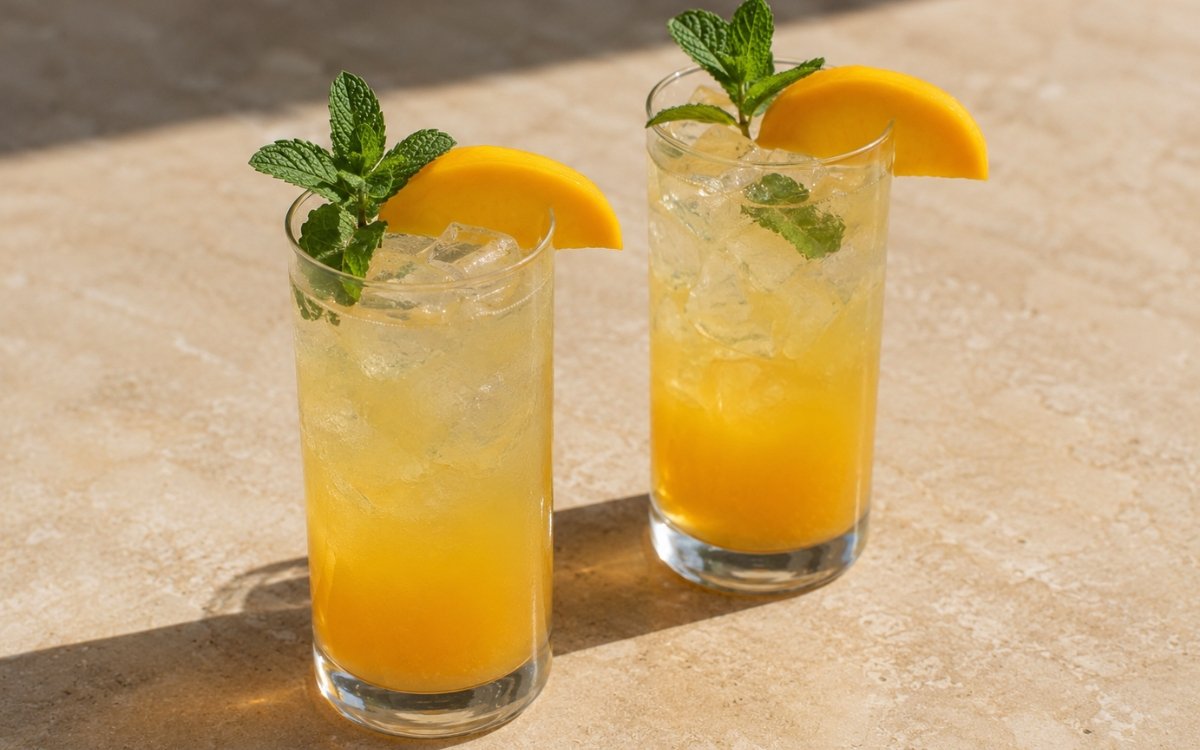
- Fill eight glasses generously with ice cubes. Pour the chilled mango green tea base into each glass until approximately half full — approximately 100ml per glass. The mango tea goes in first because it is the denser, more viscous component; the lemonade poured over it will naturally seek the interface between the denser mango tea below and the lighter lemonade above, creating the gradient. Slowly pour the lemonade over the ice — either directly against the side of the glass in a controlled, gentle pour that allows the lemonade to settle on top of the mango tea rather than immediately mixing; or over the back of a bar spoon or regular spoon held just above the mango tea surface, the spoon dispersing the lemonade's energy as it arrives and preventing the force of the pour from stirring the layers together. The gradient will be most vivid immediately after pouring — the golden-orange mango tea below gradually transitioning to the pale, clear lemonade above. Garnish with a fresh mint sprig and an optional mango wedge. Serve immediately for the most vivid gradient.
Notes
The layered presentation works because of the density difference between the mango tea and the lemonade: the mango purée adds dissolved solids that make the mango green tea slightly denser than the sugar syrup-based lemonade. This density differential is what allows the two components to maintain visible separation immediately after pouring before they inevitably mix as the drink is consumed. The gradient is not permanent — it exists in the first 2–3 minutes after pouring and is at its most vivid in the first 30 seconds. Serve immediately for the best visual impact.
The ripe mango variety most influences the finished drink's flavour. Alphonso mangoes — small, golden, intensely sweet and aromatic — produce the most specifically vivid, most intensely flavoured mango purée of any commonly available variety. Ataulfo (honey mango) produces a similarly excellent result. Tommy Atkins — the large, commercially dominant variety with a slightly fibrous flesh and milder, less specifically tropical flavour — produces an acceptable result but requires the straining step and has a less aromatic, less specifically mango-forward character.