
Raspberry Iced Black Tea
Raspberry Iced Black Tea takes a different technical approach from the warm-infusion raspberry preparations elsewhere in this collection — rather than steeping fresh raspberries directly in the warm tea, this recipe blends and strains them into a strained purée added cold at the very end, producing a more concentrated, more controllable raspberry contribution than infusion alone would give. The black tea base follows the same disciplined brewing used throughout this collection — 90–95°C, 2½–3 minutes maximum, bags removed without squeezing — producing a clean, structured backbone with none of the harsh tannin that longer steeping would introduce. Lemon peel infuses briefly and cold, contributing fragrance without acidity, in the same purely aromatic role it plays across this entire collection. The raspberry purée itself is the recipe’s defining technique: blended raspberries strained thoroughly through a fine-mesh sieve, with firm pressing specifically permitted here — unlike some of the gentler fruit syrups elsewhere in this collection — because raspberry’s relatively low pulp content compared to peach or strawberry means pressing extracts genuine juice rather than starchy cloudiness, provided the seeds and dry pulp are kept out. The purée is added in a measured 120–160ml range and tasted carefully, since the goal is for raspberry to lift the tea rather than dominate it. The result is bright, lightly fruity, and controlled — simple done right.

Prep Time : 15 min
Steep Time : 2½–3 min
Servings : 8
15 min
2½–3 min
8
Ingredients
For the Black Tea Base
• 1.65 litres water
• 5 black tea bags — Ceylon or light breakfast tea — this one on Amazon
For the Raspberry Purée
• 300g fresh raspberries — or thawed frozen raspberries
For the Citrus & Sweetening
• 2 strips lemon peel — yellow part only, no white pith
• 2–3 Tbsp mild honey — to taste; start with 2 Tbsp — this one on Amazon
For Serving
• Ice
• Fresh raspberries
• Lemon peel twists — optional
This post may contain affiliate links. As an Amazon Associate I earn from qualifying purchases, at no additional cost to you.
Directions
- Brew the Black Tea
Heat the water to 90–95°C. Add the black tea bags and steep for 2½–3 minutes maximum. Remove the tea bags without squeezing, since squeezing forces out the most concentrated, bitter fraction held inside them. Let the tea cool to lukewarm. - Sweeten While Warm
While the tea is still warm, stir in 2 tablespoons of honey until fully dissolved. Taste and add up to 1 additional tablespoon only if needed. This should stay lightly sweetened and controlled, not sweet — the raspberry purée added later will contribute its own natural sugar, so restraint here keeps the final balance correct. - Cool to Room Temperature
Let the tea cool fully to room temperature before adding the lemon peel. - Infuse the Lemon Peel
Add the lemon peel strips to the cooled tea and let infuse for 5 minutes only, just until a clean citrus aroma develops. Remove the peel promptly to avoid bitterness — this step is purely aromatic, contributing fragrance rather than any acidity. - Blend the Raspberries
Add the raspberries to a blender and blend briefly until smooth. There’s no need for extended blending here — a short pulse is enough to fully break down the berries before straining. - Strain the Raspberry Purée
Strain the raspberry purée through a fine-mesh sieve into a bowl or measuring jug. Press gently but firmly to extract the bright raspberry liquid. Do not force dry pulp or seeds through the sieve — the goal is a vivid, clean liquid free of the gritty texture and bitter tannin that raspberry seeds specifically introduce if pushed through. - Combine and Taste
Stir 120–160ml of the strained raspberry purée into the tea. Taste and adjust carefully — the raspberry should lift the tea, not dominate it. Start at the lower end of the range and add more only if the fruit character feels insufficiently present. - Chill
Refrigerate for 1–2 hours until fully cold and integrated. The cold rest allows the tea, lemon, and raspberry to settle into a single cohesive character. - Serve
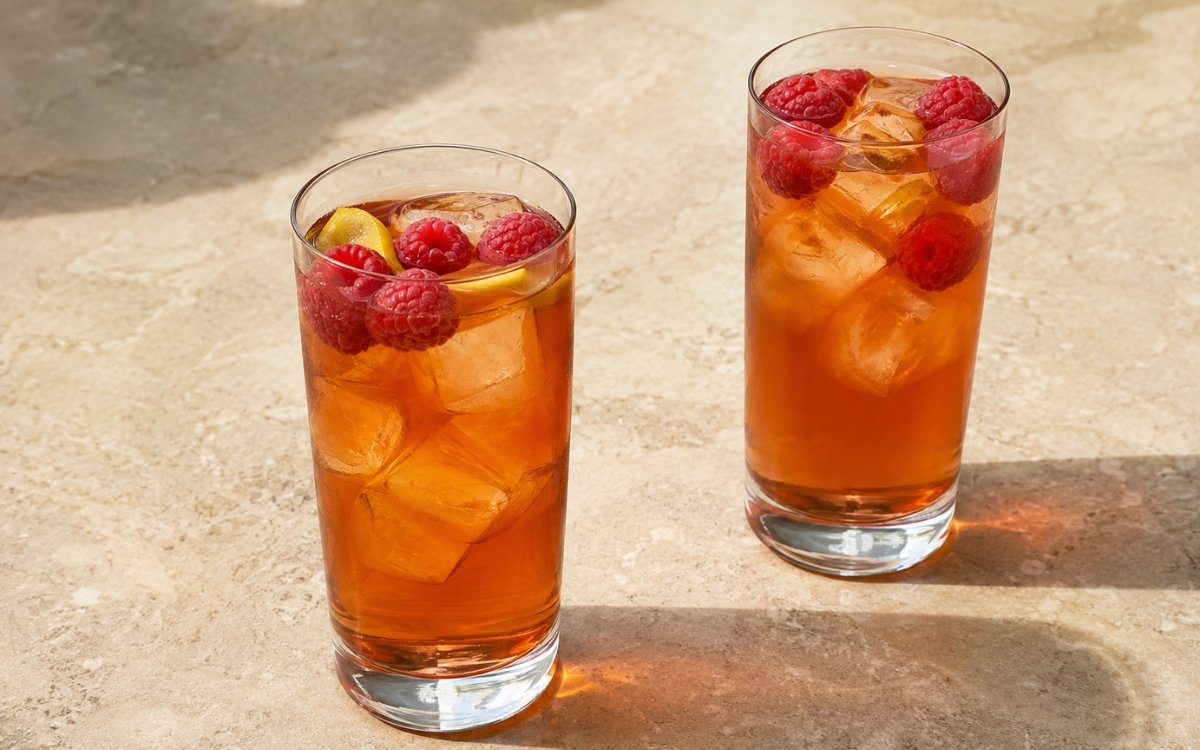
Fill glasses with ice, pour over the chilled raspberry iced black tea, and garnish with fresh raspberries and an optional twist of lemon peel. Serve cold, clean, lightly fruity, and tea-forward.
*Notes :
- This recipe’s blend-and-strain technique is specifically different from the warm-infusion approach used in the crowd-scale raspberry preparations elsewhere in this collection, where raspberries are gently cracked and steeped directly in warm tea. Both methods are valid, but they produce noticeably different results: the warm infusion technique produces a more integrated, gentler raspberry presence, while this blended-and-strained approach produces a more concentrated, more precisely controllable fruit contribution that can be measured and adjusted to taste with more accuracy.
- Pressing the raspberry purée firmly during straining is specifically appropriate here, unlike with peach or strawberry syrups elsewhere in this collection where pressing is discouraged. Raspberry’s relatively low pulp content compared to stone fruit or strawberries means firm pressing extracts genuine juice without introducing significant starchy cloudiness — the only material to keep out is the seeds and any dry pulp residue.
- Frozen raspberries, fully thawed before blending, work just as well as fresh and are often more convenient and more consistently priced outside of peak raspberry season. The pre-ruptured cell walls from freezing mean thawed raspberries blend even more smoothly than fresh ones.
Why This Recipe Works
This recipe works because the black tea is brewed precisely enough to provide a clean structural backbone for the raspberry to sit against. Lemon peel contributes a brief, purely aromatic lift without disturbing the tea’s clarity.
The raspberry purée is blended and strained thoroughly, with firm pressing extracting maximum juice while seeds and pulp stay out, producing a concentrated fruit addition that can be measured precisely.
And the purée is added gradually and tasted, keeping the tea genuinely tea-forward rather than letting the fruit take over.
Ingredient Breakdown
Black Tea Brewed at 90–95°C for 2½–3 Minutes
The clean, structured backbone — the foundation the raspberry sits against rather than competes with.
Lemon Peel, Infused Cold for 5 Minutes
The background aromatic lift — fragrance only, no acidity.
Raspberry Purée, Blended and Firmly Strained
The concentrated fruit contribution — firm pressing specifically appropriate here due to raspberry’s low pulp content, with seeds kept strictly out.
120–160ml Purée, Tasted and Adjusted
The measured, controllable fruit addition — calibrated to lift rather than dominate.
Flavor Structure Explained
This Raspberry Iced Black Tea follows a layered balance model:
- Structured tea core (black tea)
- Bright berry character (raspberry)
- Gentle balancing sweetness (honey)
- Subtle citrus aromatics (lemon peel)
- Clean tea-forward finish (balanced fruit integration)
Black tea defines the foundation with warm depth and gentle tannic structure, providing a clear backbone that remains the drink’s dominant identity. Raspberry contributes a measured layer of bright fruitiness and fresh berry aromatics, adding lift and vibrancy while allowing the tea to remain at the forefront. Lemon peel introduces a faint citrus fragrance that quietly enhances the overall aroma without becoming a recognizable citrus flavor. Honey smooths the profile and softens the transitions between tea and fruit, remaining subtle enough that it is perceived as balance rather than sweetness. The result is an iced tea that stays unmistakably tea-forward while gaining freshness, brightness, and elegance from restrained raspberry and citrus accents.
Common Mistakes to Avoid
- Steeping the Black Tea Beyond 3 Minutes – Introduces harsh tannin that competes with the raspberry. Always set a timer.
- Leaving the Lemon Peel In Too Long – Risks pith bitterness. Always remove at 5 minutes.
- Forcing Seeds and Dry Pulp Through the Sieve – Introduces gritty texture and bitter tannin. Always press only the juicy purée through, leaving seeds and pulp behind.
- Adding the Full 160ml Without Tasting – Risks the raspberry overwhelming the tea’s own structure. Always start at the lower end and adjust gradually.
- Using Underripe Raspberries – Produces a thin, less vivid purée. Always use ripe fresh berries or fully thawed frozen ones.
Variations
With Strawberry
Replace the raspberries with an equal weight of fresh strawberries, blended and strained the same way, for a softer, sweeter direction, in the spirit of the Strawberry Iced Black Tea.
With Blueberry
Replace the raspberries with blueberries for a deeper colour and a milder, less tart fruit character, as in the Blueberry Black Iced Tea.
Crowd Pitcher Version
Scale the recipe up using the warm-infusion technique instead, as in the Raspberry Iced Tea Pitcher, for serving a larger gathering.
With Mint
Add a small handful of lightly clapped fresh mint during the final chill for a cooler, brighter finish.
Storage & Make-Ahead
Strained raspberry purée can be refrigerated in a sealed container for up to 2 days.
Brewed and sweetened black tea, before the raspberry purée is added, can be refrigerated for up to 2 days.
Once assembled, the tea is best enjoyed within 24 hours, when the raspberry’s bright flavor and aroma are at their most vibrant.
Frequently Asked Questions
Why blend and strain the raspberries here instead of infusing them directly in the tea?
Blending and straining produces a more concentrated, more precisely measurable raspberry contribution than warm infusion does. This technique gives more direct control over exactly how much raspberry character ends up in the finished tea, which suits a smaller-batch, more deliberately calibrated preparation like this one.
Why is pressing the raspberry purée specifically recommended?
Raspberry has comparatively little pulp relative to its juice content compared to peach or strawberry. Firm pressing during straining extracts genuine juice rather than introducing significant starchy cloudiness — the only material that genuinely needs to stay out is the seeds and any dry pulp fragments, which a fine-mesh sieve catches effectively.
Can frozen raspberries be used instead of fresh?
Yes, and they work very well here. Fully thawed frozen raspberries have already had their cell walls ruptured by freezing, which means they blend even more smoothly than fresh berries and produce an equally vivid, equally flavourful purée.
What other raspberry and tea preparations share this approach?
The Strawberry Iced Black Tea shares the identical blend-and-strain technique with strawberry’s softer, sweeter fruit character in place of raspberry’s brighter tartness. The Blueberry Black Iced Tea shares the same purée technique on a black tea base with blueberry’s deeper colour and milder character. The Raspberry Iced Tea Pitcher shares raspberry and black tea at crowd scale using the warm-infusion technique rather than the blended-purée approach used here.
Nutrition Facts
( per serving )
Calories
~35 kcal
Protein
0 g
Fat
0 g
Carbs
9 g
Calories
~35 kcal
Protein
0 g
Fat
0 g
Carbs
9 g
Related Recipes
Related Recipes

Fresh Citrus Green Iced Tea
Green tea at 75–80°C for 2–3 minutes, thin peel-on citrus slices cold-infused 15–20 minutes — strained promptly, honey, chilled. Light, bright, and clean.
Orange Jasmine Iced Tea
Jasmine tea at 75–80°C for 2–3 minutes, orange peel infused cold 5 minutes — fresh orange juice to soften and brighten, chilled. Floral, citrusy, restrained.
Mango Iced Green Tea
Green tea at 75–80°C for 2–3 minutes, mango simmered into a light unreduced syrup, deseeded chili infused cold 3–5 minutes — chilled. Bright, tropical, gently edged.



You might also like
You might also like
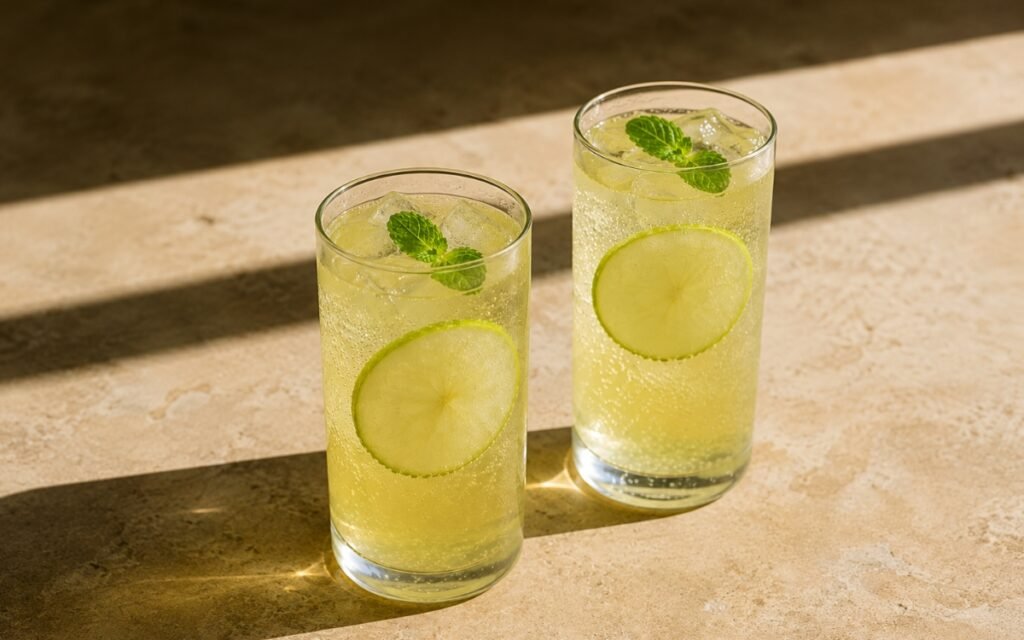
Green Apple Ginger Mint Fizz Mocktail
Skin-on green apples pressed with lime, raw ginger cold-infused in honey — topped with club soda. Sharp, pale green, and crisp.
White Sangria Mocktail
Citrus-forward white sangria mocktail with honey and verjus, light, aromatic, refreshingly dry, and wine-like.
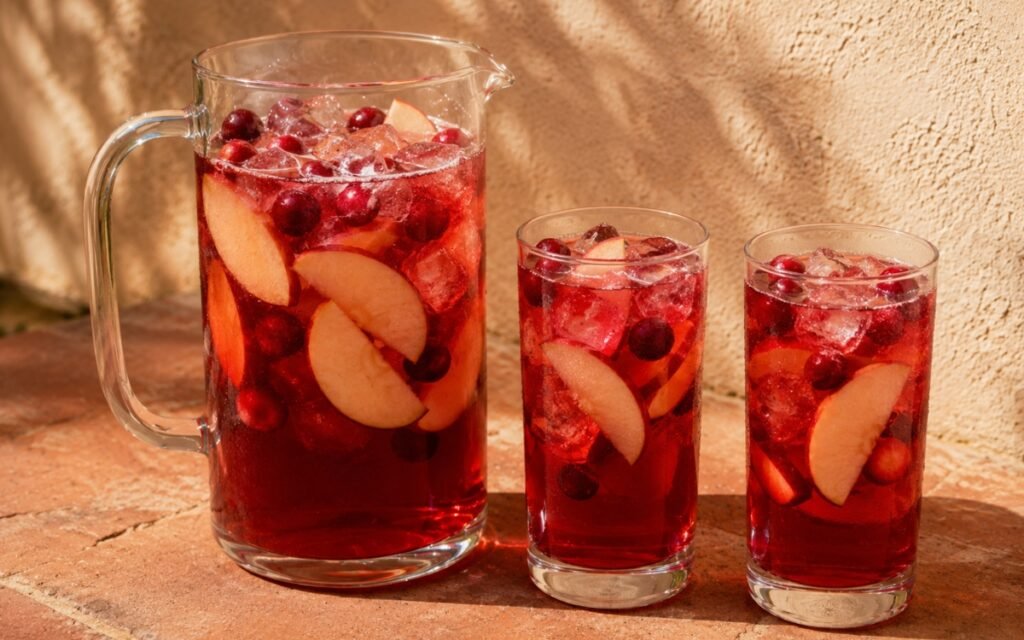
Apple Cranberry Pitcher Drink
Ruby-red apple and cranberry pitcher drink infused with cinnamon, with crisp apple slices and fresh cranberries.

Raspberry Iced Black Tea
Ingredients
Method
- Heat the water to 90–95°C. Add the black tea bags and steep for 2½–3 minutes maximum. Remove the tea bags without squeezing, since squeezing forces out the most concentrated, bitter fraction held inside them. Let the tea cool to lukewarm.
- While the tea is still warm, stir in 2 tablespoons of honey until fully dissolved. Taste and add up to 1 additional tablespoon only if needed. This should stay lightly sweetened and controlled, not sweet — the raspberry purée added later will contribute its own natural sugar, so restraint here keeps the final balance correct.
- Let the tea cool fully to room temperature before adding the lemon peel.
- Add the lemon peel strips to the cooled tea and let infuse for 5 minutes only, just until a clean citrus aroma develops. Remove the peel promptly to avoid bitterness — this step is purely aromatic, contributing fragrance rather than any acidity.
- Add the raspberries to a blender and blend briefly until smooth. There’s no need for extended blending here — a short pulse is enough to fully break down the berries before straining.
- Strain the raspberry purée through a fine-mesh sieve into a bowl or measuring jug. Press gently but firmly to extract the bright raspberry liquid. Do not force dry pulp or seeds through the sieve — the goal is a vivid, clean liquid free of the gritty texture and bitter tannin that raspberry seeds specifically introduce if pushed through.
- Stir 120–160ml of the strained raspberry purée into the tea. Taste and adjust carefully — the raspberry should lift the tea, not dominate it. Start at the lower end of the range and add more only if the fruit character feels insufficiently present.
- Refrigerate for 1–2 hours until fully cold and integrated. The cold rest allows the tea, lemon, and raspberry to settle into a single cohesive character.
- Fill glasses with ice, pour over the chilled raspberry iced black tea, and garnish with fresh raspberries and an optional twist of lemon peel. Serve cold, clean, lightly fruity, and tea-forward.