
Raspberry Iced Tea Pitcher — For a Crowd
Raspberry iced tea pitcher is the most specifically fruit-aromatic of the crowd tea preparations — combining black tea’s warm, structured tannin backbone with raspberry’s vivid, volatile ester aromatic character in a preparation where the tea specifically provides the structural identity and the raspberry provides the specifically bright, fresh, floral-fruity dimension that makes the tea more interesting. The technique is specifically parallel to the Peach Iced Tea Pitcher’s warm-fruit-in-tea approach: the raspberries are added to the tea 5 minutes after brewing, when the temperature has dropped from the 90–95°C of tea extraction to the 70–75°C range that preserves the raspberry’s pleasant aromatic ester fraction ahead of the jam-adjacent cooked-berry character. The 8–10 minute steep in the warm tea is the same window used across the raspberry preparation collection for warm-medium extraction — long enough for vivid colour and aromatic release, specifically short enough to avoid the cooked register. The seed management note is specifically more urgent here than in the peach preparation because raspberry seeds specifically continue extracting bitter tannin compounds into any liquid they remain in contact with beyond the straining point — removing all seeds through straining is the critical quality step. The lemon juice is specifically optional correction in this preparation rather than the structural component it is in the Lemon Iced Tea Pitcher — raspberry’s own natural tartness provides the brightening dimension that makes the tea specifically refreshing, and lemon juice is only needed if the specific batch of raspberries is particularly mild.
Prep Time : 15 min
Steep Time : 12 min
Servings : 16
15 min
12 min
16
Ingredients
For the Raspberry Tea Extract
• 1 litre water
• 8–9 black tea bags — Ceylon or light breakfast tea — this one on Amazon
• 100–120g light brown sugar — start with 100g — this one on Amazon
• 300g fresh raspberries — gently cracked, not mashed into paste
• Zest of 1 lemon — yellow part only, no white pith
For the Final Build
• 1.8–2.2 litres ice-cold water — start with 1.8 litres; adjust after tasting
• 30–60ml fresh lemon juice — optional; only if the finished pitcher tastes flat
For Serving
• Ice cubes
• Fresh raspberries
• Lemon peel twists — optional
This post may contain affiliate links. As an Amazon Associate I earn from qualifying purchases, at no additional cost to you.
Directions
- Brew the Black Tea
Heat 1 litre of water to 90–95°C. Add 8 or 9 black tea bags. Steep for exactly 3 minutes. Remove all bags simultaneously without squeezing. The same temperature and timing principles from the Lemon Iced Tea and Peach Iced Tea crowd preparations apply here — 90–95°C for 3 minutes produces the desirable warm, structured tea character ahead of the harsh tannin fraction. The specific note about 9 bags in 500ml applies here as in the peach preparation: the concentration calibration is 8–9 bags in 1 litre, producing an extract that is stronger than drinking-strength but not bitterly over-extracted, specifically designed to remain vivid at crowd scale after 1.8–2.2L of diluting water is added. - Dissolve the Sugar
Stir 100g of light brown sugar into the hot tea immediately after bag removal until completely dissolved. The lower sugar quantity compared to the Lemon Iced Tea Pitcher (140–180g) reflects raspberry’s own natural sweetness contributing to the perceived sweetness of the finished pitcher — the same quantity of added sugar at raspberry’s natural fructose contribution produces a specifically sweeter result than at lemon’s very low natural sugar. - Cool and Add Raspberries and Lemon Zest
Allow the sweetened tea to cool for 5 minutes. Add the 300g of raspberries and the lemon zest simultaneously. The raspberry handling requires specific care: using a fork or the back of a spoon, gently crack each berry once — applying sufficient pressure to split the skin and release the vivid juice and aromatic compounds from the outer flesh without crushing the berry into a paste and without applying pressure to the seeds. Cracked berries release their pleasant volatile ester aromatic compounds — particularly α-ionone and various furanones — into the warm tea medium; crushed berry paste with broken seeds releases seed tannins simultaneously. The lemon zest’s role alongside the raspberries is the same aromatic bridge function as in the Peach Iced Tea Pitcher — the citrus peel’s volatile oil compounds in the warm tea providing a specifically clean, bright bridge between the tea’s tannin warmth and the raspberry’s vivid, bright fruitiness. Cover and steep for 8–10 minutes. At this temperature range (approximately 70–80°C at 5 minutes post-brew, cooling progressively through the 8–10 minute steep), the raspberry’s pleasant aromatic compounds and vivid anthocyanin pigments extract into the warm tea. The cooling temperature through the steep period means the later minutes of the infusion are at a lower temperature than the initial minutes — this progressive cooling is specifically beneficial, capturing the volatile ester fraction efficiently in the first minutes while the temperature moderates the jam-adjacent cooked character that sustained high heat would develop. - Strain — The Critical Quality Step
Strain through a fine-mesh sieve, pressing gently but firmly on the combined raspberry and lemon zest solids. The raspberry seeds are the specific quality concern: press until the raspberry mass has yielded its vivid, flavoured liquid — stop before the seeds begin pushing through the mesh with resistance. The correctly strained extract should be completely seed-free, vivid raspberry-red, and specifically clear-looking despite its vivid colour. Do not leave any seeds in the strained extract. Unlike the mild tannin contribution of small amounts of raspberry seed material pressed through a sieve in small-batch preparations, 300g of raspberry seeds at crowd scale that continue extracting into the pitcher after straining produce a specifically detectable bitter note that develops over the refrigerator rest period. Always ensure complete removal. Allow to cool completely. - Build and Chill
Pour the cooled raspberry tea extract into the large pitcher. Add 1.8 litres of ice-cold water. Stir gently. Taste with the raspberry-iced-tea crowd assessment: the tea should be the structural primary impression — warm, amber, specifically tea-character — with raspberry’s vivid, bright, slightly tart-fruity aromatic clearly layered over it. The raspberry in correctly made raspberry iced tea is a specifically different aromatic register from the same raspberry in lemonade: where raspberry lemonade has the citric acid’s bright sharpness as the structural backdrop for the berry, raspberry iced tea has the black tea’s tannin warmth — producing a specifically more complex, more specifically interesting result. Add the optional lemon juice (30–60ml) only if the combined raspberry-tea character tastes flat despite the raspberry’s natural tartness — mild, out-of-season, or lower-quality raspberries specifically benefit from the additional acid lift; vivid, fresh, peak-season raspberries typically do not require it. - Chill and Serve
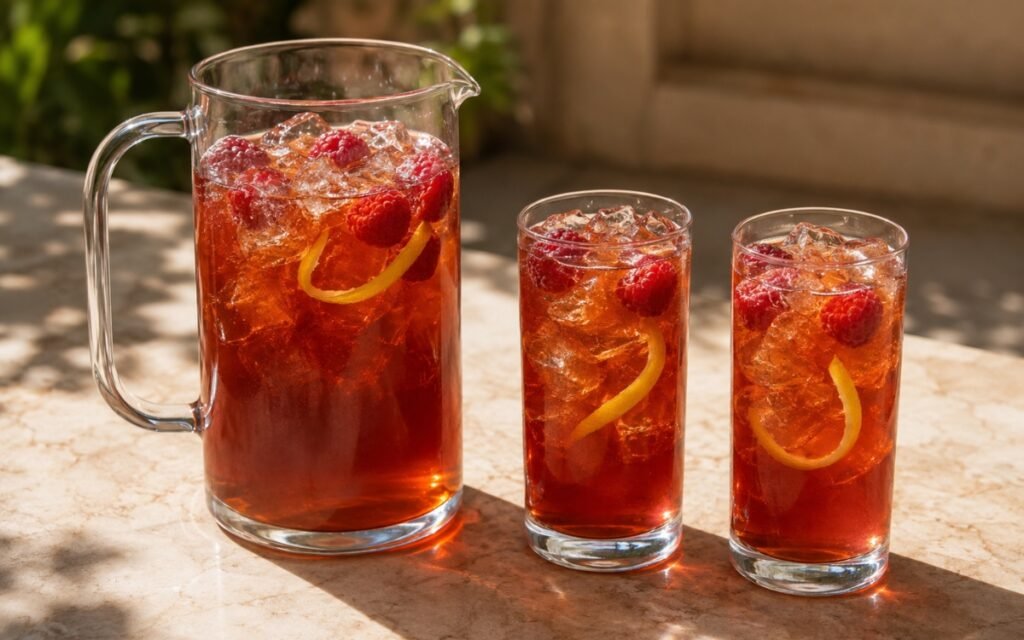
Cover and refrigerate for 1–2 hours. Stir once before the first pour. Garnish each glass with 2–3 fresh raspberries resting on the ice and an optional lemon peel twist at the rim. Serve cold.
*Notes :
- The 24-hour best-use window is more specifically important for this preparation than for the apple-cranberry or grapefruit-orange crowd pitchers. Raspberry’s primary aromatic volatile ester compounds diminish progressively once extracted into liquid — the vivid, fresh, specifically fruity character that makes raspberry iced tea specifically beautiful is most present within the first 12–18 hours after straining. Beyond 24 hours the colour remains vivid but the aromatic freshness is noticeably less specifically present.
- Frozen raspberries are an excellent and specifically practical substitute for fresh — the pre-ruptured cell walls produce immediate, vivid colour and aromatic release into the warm tea from the first moment, often with more vivid colour than fresh. At 300g of frozen raspberries, the cracking step is unnecessary — add directly to the warm tea.
Why This Recipe Works
This recipe works because the raspberries are added at the correct warm-not-hot temperature to capture the pleasant volatile aromatic fraction. The seeds are completely removed during straining to prevent continued tannin extraction in the pitcher.
The lemon zest provides the aromatic bridge rather than structural acid. And the lemon juice is held back as an optional correction rather than a structural component, reflecting raspberry’s own natural tartness providing the brightening function.
Ingredient Breakdown
Raspberries Cracked Not Crushed (Seed Tannin Prevention)
The quality-specific technique — skin-crack releases pleasant volatile aromatics; seed crushing releases bitter tannins; always the former only.
Warm Tea Medium for Raspberry Infusion (70–80°C)
The volatile-ester-preservation temperature — above the threshold for efficient extraction, below the jam-character conversion threshold.
Complete Seed Removal (Most Critical Step)
The crowd-scale tannin-management requirement — 300g of seeds continuing to extract into 3L pitcher over the refrigerator rest produces a detectable bitter note.
Optional Lemon Juice (Correction Not Structure)
The raspberry-tartness confidence — raspberry’s own organic acid typically sufficient; juice only if specific batch is mild.
Lemon Zest as Aromatic Bridge
The warm-tea-to-vivid-berry aromatic connector.
Flavor Structure Explained
This Raspberry iced tea pitcher follows a layered balance model:
- Structured tea core (Ceylon black tea)
- Bright fruit character (raspberry)
- Citrus aromatic bridge (lemon zest)
- Light tannic backbone (black tea)
- Clean refreshing finish (tea-fruit balance)
Ceylon black tea defines the foundation with warm depth, gentle tannins, and the classic amber character that gives the drink its identity as iced tea rather than fruit punch. Raspberry contributes vivid berry aromatics, subtle floral notes, and a bright fruit character that adds freshness and seasonal appeal without overwhelming the tea. Lemon zest provides a connecting layer of citrus oils that links the tea’s warmth with the raspberry’s brightness, helping the flavors feel integrated and cohesive. The result is a pitcher drink where structured tea remains at the center while fruit and citrus aromatics add complexity, freshness, and a distinctly summery character.
Common Mistakes to Avoid
- Crushing the Raspberries Into Paste – Seed tannin extraction begins immediately under sustained pressure. Always crack only.
- Leaving Seeds in the Extract – 300g of raspberry seeds at crowd scale produce detectable bitterness over the refrigerator rest. Always completely strain.
- Adding Lemon Juice as a Standard Ingredient – Raspberry’s natural tartness typically provides the needed brightness. Only add if the specific batch is demonstrably flat.
- Brewing at 100°C – Harsh tannin extraction. Always 90–95°C.
- Not Waiting 5 Minutes Before Adding Raspberries – Raspberry added to 90–95°C tea begins converting to cooked-jam character immediately. Always wait.
Variations
With Mint
Add 20 lightly clapped fresh mint leaves to the completed pitcher before chilling — steep cold for 20 minutes then remove. The Light Raspberry Mint Iced Tea direction at crowd scale.
With Hibiscus
Add 2 tsp of food-grade dried hibiscus flowers alongside the raspberries during the 8–10 minute warm steep — removed during straining. The hibiscus’s additional tartness and vivid colour amplify the raspberry’s own direction.
With Peach
Add 2 ripe peaches (skin on, thinly sliced) alongside the raspberries — the two fruits infusing together producing a raspberry-peach iced tea with a more complex, warmer fruity character.
Sparkling Version
Build without still water; refrigerate; add sparkling water right before serving.
Storage & Make-Ahead
Raspberry tea extract can be refrigerated in a sealed container for up to 24 hours. Its delicate aromatic compounds are at their most vibrant within the first 12 hours after preparation.
Once assembled, the pitcher is best enjoyed within 24 hours. Stir well before each pour to redistribute any settled ingredients and maintain a consistent flavor.
Frequently Asked Questions
Why are the seeds removed so specifically in this preparation compared to the raspberry lemonade pitcher?
In the Raspberry Lemonade Pitcher, the preparation is consumed within a relatively short service period and the acid medium from lemon juice moderates some of the seed tannin extraction. In the Iced Tea Pitcher, the tea’s own tannin content means the drink already has a tannin dimension; raspberry seeds continuing to extract tannins in the pitcher over the 1–2 hour refrigerator rest and subsequent service period produce a specifically detectable cumulative bitterness at 300g of seeds that would not develop as prominently at smaller scales or shorter rest periods.
Why is lemon juice specifically optional in this preparation?
Raspberry provides its own natural organic acid content — a combination of citric acid, malic acid, and ellagic acid — that performs the brightening and refreshing structural function that lemon juice provides in the Lemon Iced Tea. The raspberry’s tartness at 300g in 3 litres is typically sufficient. The optional 30–60ml of lemon juice is available specifically for batches where mild, out-of-season, or lower-quality raspberries produce insufficient natural acid.
Why add the raspberries to slightly cooled tea rather than at the start of brewing?
Raspberry’s pleasant volatile ester aromatic compounds — α-ionone, furanones, and various fruity esters — begin converting to cooked-jam character above approximately 80°C. Added to tea at 90–95°C, the raspberry would begin this conversion within minutes. At 70–80°C (5 minutes after brewing), the extraction is still efficient for the pleasant compounds while the conversion threshold is approached more slowly, allowing the full 8–10 minutes of infusion to capture the fresh-fruity character.
What other raspberry and iced tea preparations share this direction?
The Raspberry Lemonade Pitcher Drink shares raspberry at crowd scale in the inverted hierarchy — lemonade primary, raspberry the fruit component. The Raspberry Iced Black Tea shares the raspberry-in-black-tea direction in a single-batch format. The Light Raspberry Mint Iced Tea shares raspberry in iced tea with mint’s cool herbal freshness as the additional aromatic dimension.
Nutrition Facts
( per serving )
Calories
~50 kcal
Protein
0 g
Fat
0 g
Carbs
13 g
Calories
~50 kcal
Protein
0 g
Fat
0 g
Carbs
13 g
Related Recipes
Related Recipes

Raspberry Orange Infused Water
Orange pulp and raspberries very lightly pressed — whole fruit cold-infused in 3L water for 1–4 hours, removed. Warm coral-pink, fragrant, and hydrating.
Strawberry Lime Infused Water
Strawberries lightly mashed and cold-infused with lime slices in 3L water — removed after 4 hours before lime peel turns bitter. Fresh, vivid, and hydrating.
Iced Tea Lemonade Pitcher
Ceylon tea at 90–95°C for 3 minutes, dual lemon and lime zest off heat — 180ml each lemon and lime juice, cold water, chilled. Lemonade leads, tea supports.



You might also like
You might also like
Basil Mango White Iced Tea
White tea at 75–80°C for 3–4 minutes, mango blended with basil and strained — lemon peel, light honey, chilled. Tropical, green, and clean.
Peach White Tea Spritzer Mocktail
Peaches simmered in thin slices, white tea steeped at 70–85°C with thyme — honey dissolved while warm, topped with club soda. Light, floral, and refined.
Basil Blueberry Sparkling Herbal Cooler
Concentrated white tea, basil blended into blueberries and strained — combined with the tea, finished with gentle club soda, chilled. Herbal and lively.


Raspberry Iced Tea Pitcher for a Crowd
Ingredients
Method
- Heat 1 litre of water to 90–95°C. Add 8 or 9 black tea bags. Steep for exactly 3 minutes. Remove all bags simultaneously without squeezing. The same temperature and timing principles from the Lemon Iced Tea and Peach Iced Tea crowd preparations apply here — 90–95°C for 3 minutes produces the desirable warm, structured tea character ahead of the harsh tannin fraction. The specific note about 9 bags in 500ml applies here as in the peach preparation: the concentration calibration is 8–9 bags in 1 litre, producing an extract that is stronger than drinking-strength but not bitterly over-extracted, specifically designed to remain vivid at crowd scale after 1.8–2.2L of diluting water is added.
- Stir 100g of light brown sugar into the hot tea immediately after bag removal until completely dissolved. The lower sugar quantity compared to the Lemon Iced Tea Pitcher (140–180g) reflects raspberry’s own natural sweetness contributing to the perceived sweetness of the finished pitcher — the same quantity of added sugar at raspberry’s natural fructose contribution produces a specifically sweeter result than at lemon’s very low natural sugar.
- Allow the sweetened tea to cool for 5 minutes. Add the 300g of raspberries and the lemon zest simultaneously. The raspberry handling requires specific care: using a fork or the back of a spoon, gently crack each berry once — applying sufficient pressure to split the skin and release the vivid juice and aromatic compounds from the outer flesh without crushing the berry into a paste and without applying pressure to the seeds. Cracked berries release their pleasant volatile ester aromatic compounds — particularly α-ionone and various furanones — into the warm tea medium; crushed berry paste with broken seeds releases seed tannins simultaneously. The lemon zest’s role alongside the raspberries is the same aromatic bridge function as in the Peach Iced Tea Pitcher — the citrus peel’s volatile oil compounds in the warm tea providing a specifically clean, bright bridge between the tea’s tannin warmth and the raspberry’s vivid, bright fruitiness. Cover and steep for 8–10 minutes. At this temperature range (approximately 70–80°C at 5 minutes post-brew, cooling progressively through the 8–10 minute steep), the raspberry’s pleasant aromatic compounds and vivid anthocyanin pigments extract into the warm tea. The cooling temperature through the steep period means the later minutes of the infusion are at a lower temperature than the initial minutes — this progressive cooling is specifically beneficial, capturing the volatile ester fraction efficiently in the first minutes while the temperature moderates the jam-adjacent cooked character that sustained high heat would develop.
- Strain through a fine-mesh sieve, pressing gently but firmly on the combined raspberry and lemon zest solids. The raspberry seeds are the specific quality concern: press until the raspberry mass has yielded its vivid, flavoured liquid — stop before the seeds begin pushing through the mesh with resistance. The correctly strained extract should be completely seed-free, vivid raspberry-red, and specifically clear-looking despite its vivid colour. Do not leave any seeds in the strained extract. Unlike the mild tannin contribution of small amounts of raspberry seed material pressed through a sieve in small-batch preparations, 300g of raspberry seeds at crowd scale that continue extracting into the pitcher after straining produce a specifically detectable bitter note that develops over the refrigerator rest period. Always ensure complete removal. Allow to cool completely.
- Pour the cooled raspberry tea extract into the large pitcher. Add 1.8 litres of ice-cold water. Stir gently. Taste with the raspberry-iced-tea crowd assessment: the tea should be the structural primary impression — warm, amber, specifically tea-character — with raspberry’s vivid, bright, slightly tart-fruity aromatic clearly layered over it. The raspberry in correctly made raspberry iced tea is a specifically different aromatic register from the same raspberry in lemonade: where raspberry lemonade has the citric acid’s bright sharpness as the structural backdrop for the berry, raspberry iced tea has the black tea’s tannin warmth — producing a specifically more complex, more specifically interesting result. Add the optional lemon juice (30–60ml) only if the combined raspberry-tea character tastes flat despite the raspberry’s natural tartness — mild, out-of-season, or lower-quality raspberries specifically benefit from the additional acid lift; vivid, fresh, peak-season raspberries typically do not require it.
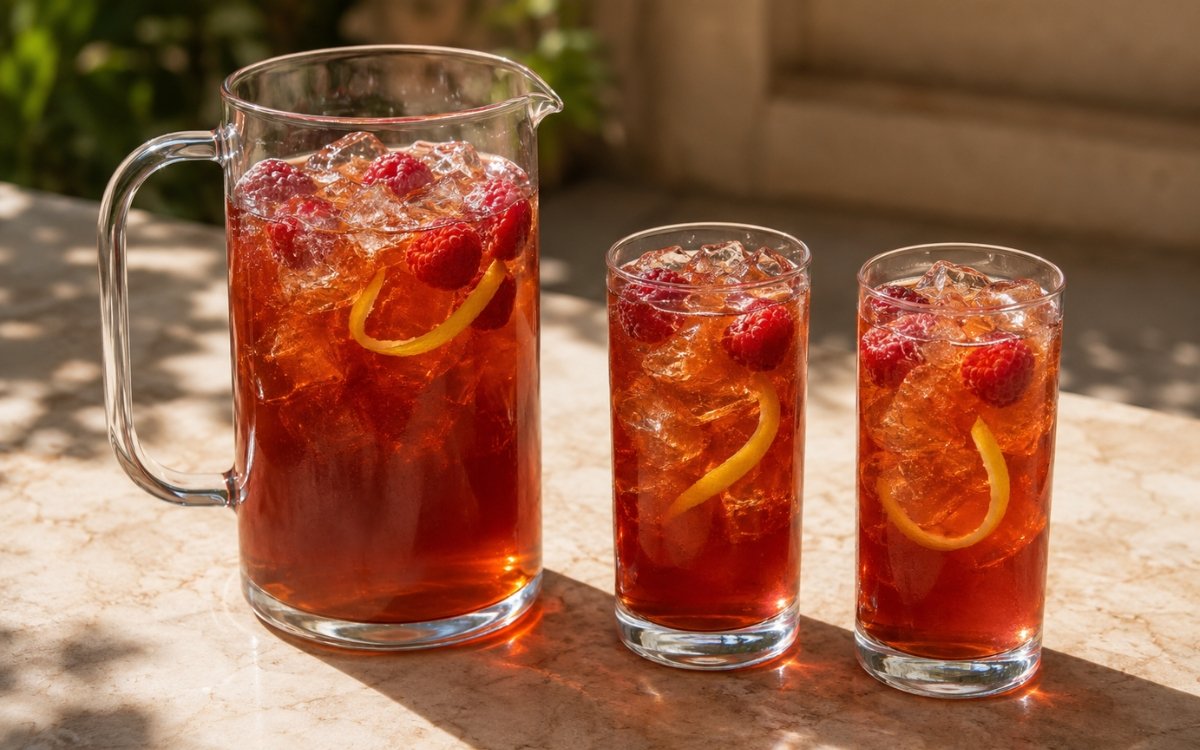
- Cover and refrigerate for 1–2 hours. Stir once before the first pour. Garnish each glass with 2–3 fresh raspberries resting on the ice and an optional lemon peel twist at the rim. Serve cold.