
Thyme Orange Iced Tea
Thyme Orange Iced Tea brings a softer, warmer herbal character to the black tea base than sage or rosemary — thyme’s aromatic compounds are gentler and more forgiving than either, which is part of why this preparation reads as approachable rather than assertively botanical. The black tea brews under the same precise discipline as every preparation in this collection: 90–95°C, no more than 2½–3 minutes, bags removed without squeezing, because harsh tannins from over-steeping would specifically compete with both the herbal and citrus notes rather than simply adding strength. The thyme infuses cold, clapped rather than crushed, and removed as soon as a fresh herbal aroma becomes noticeable — thyme is more forgiving than sage or rosemary, but extended contact still produces a medicinal bitterness that flattens the drink’s overall freshness. Orange contributes in two distinct stages, as lemon does throughout this collection: peel first, for fragrant citrus oils that brighten the aroma without heaviness, removed promptly to avoid pith bitterness; then fresh orange juice, which provides both sweetness and acidity simultaneously in a way lemon juice alone cannot, meaning no additional sugar is needed if the fruit is properly ripe. The result is lightly sweet, subtly dry, and deeply aromatic — refined rather than sugary or diluted.

Prep Time : 15 min
Cook Time : 5 min
Servings : 8
15 min
5 min
8
Ingredients
For the Black Tea Base
• 1.65 litres water
• 5 black tea bags — Ceylon or light breakfast tea — this one on Amazon
For the Botanical & Citrus Flavoring
• 8–10 fresh thyme sprigs
• 2 strips orange peel — orange part only, no white pith
• ¾–1 cup (180–240ml) fresh orange juice — to taste; start with 180ml
For Serving
• Ice
• Fresh thyme sprigs
• Orange wedges
This post may contain affiliate links. As an Amazon Associate I earn from qualifying purchases, at no additional cost to you.
Directions
- Brew the Black Tea Precisely
Heat the 1.65 litres of water to 90–95°C. Add the 5 black tea bags and steep for no more than 2½–3 minutes. Remove the bags gently without squeezing, then allow the tea to cool to lukewarm. Proper brewing here ensures structure without harsh bitterness — the foundation the thyme and orange will sit on top of. - Activate the Thyme Aroma
Rinse the thyme sprigs thoroughly and lightly clap them between your hands to release their essential oils. Avoid chopping or crushing at any point — damaged thyme releases bitter, medicinal notes that overpower the rest of the drink in a way that’s difficult to walk back. - Short Herbal Infusion
Add the thyme sprigs to the cooled tea and refrigerate for 6–10 minutes. Taste after 6 minutes and remove the sprigs as soon as a fresh herbal aroma becomes noticeable. This controlled infusion keeps the flavour clean and botanical rather than heavy — thyme is gentler than sage or rosemary, but it still benefits from the same tasting discipline rather than a blind fixed timer. - Add Orange Peel for Aroma
Add the orange peel strips to the tea and allow them to infuse for about 5 minutes only. Remove promptly. Orange peel contributes fragrant citrus oils that brighten the drink without introducing excess acidity or bitterness — but only within that brief window, before any white pith beneath it has a chance to leach into the liquid. - Balance With Fresh Orange Juice
Stir in ¾ cup (180ml) of fresh orange juice and taste. Add up to 1 cup (240ml) total only if needed. The juice should provide gentle sweetness and brightness while still allowing the tea and herbs to remain the dominant character — this is not meant to taste like orange juice with tea added to it. - Chill Fully
Refrigerate for 1–2 hours until the tea is completely cold and the flavours are integrated. Proper chilling sharpens the structure and enhances the overall sense of refreshment. - Serve
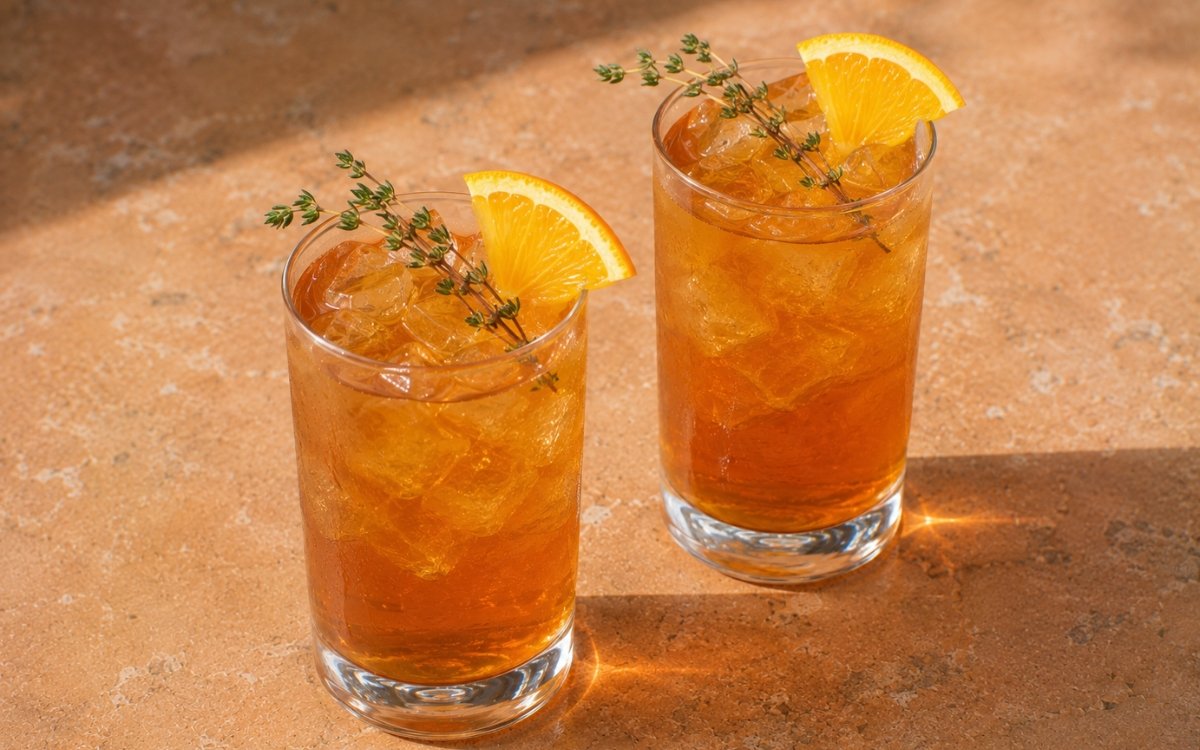
Fill glasses with ice, pour over the chilled thyme orange iced tea, and garnish with fresh thyme sprigs and orange wedges. Serve immediately while aromatic and crisp.
*Notes :
- Black tea must be brewed briefly to avoid harsh tannins that compete with both the herbal and citrus notes layered on top of it. This is the same foundational discipline that governs every black tea preparation in this collection, and it matters just as much here.
- Thyme infusion time is critical, even though thyme is gentler than sage or rosemary. Extended contact still produces a medicinal bitterness that flattens the drink’s freshness rather than deepening it.
- Orange peel should be removed quickly once its aromatic oils are released, to prevent any pith bitterness from developing. Five minutes is the right window — longer risks undoing the fragrance it was meant to contribute.
- Fresh orange juice provides both sweetness and acidity simultaneously. No additional sugar is required if the fruit is properly ripe — this is one of the few preparations in this collection where the citrus juice does double duty rather than needing a separate sweetener.
- This iced tea is designed to feel dry-leaning and structured rather than juicy or sweet. If it starts tasting like sweetened orange juice with tea in it, the orange juice quantity has likely run too high.
Why This Recipe Works
This recipe works because the black tea is brewed precisely enough to avoid any bitterness that would compete with the softer thyme and the orange. Thyme is clapped and tasted during its cold infusion rather than left on a rigid timer, even though its margin for error is wider than sage’s or rosemary’s.
Orange peel provides fragrance and is removed before any pith bitterness develops. And fresh orange juice provides both sweetness and acid in one step, keeping the preparation from needing any added sugar.
Ingredient Breakdown
Black Tea Brewed at 90–95°C for 2½–3 Minutes
The structured backbone — gentle tannin depth without bitterness that would compete with the herb and citrus.
Thyme Clapped, Infused Cold and Tasted
The soft herbal lift — gentler than sage or rosemary, but still removed at the first sign of full development.
Orange Peel (Aroma) and Orange Juice (Sweetness and Acid)
The two-stage citrus contribution — fragrance without heaviness, then natural sweetness and brightness in a single step.
No Added Sugar
The fruit-forward calibration — ripe orange juice alone provides sufficient sweetness and acidity.
Flavor Structure Explained
This Thyme Orange Iced Tea follows a layered balance model:
- Structured tea core (black tea)
- Gentle botanical character (thyme)
- Bright citrus warmth (orange zest and juice)
- Light natural sweetness (orange and honey)
- Dry refreshing finish (tea-herb-citrus balance)
Black tea defines the foundation with gentle tannins, warm depth, and a clear structural backbone that gives the drink its identity. Thyme contributes a subtle herbal layer, offering fresh botanical complexity that feels softer and more approachable than the stronger personalities of rosemary or sage. Orange provides brightness in two forms: zest contributes fragrant citrus oils and aromatic lift, while the juice adds both mild sweetness and refreshing acidity. Together they lighten the tea without turning the drink into a fruit-forward preparation. The result is an iced tea that remains dry and structured, balanced by gentle herbal freshness and restrained citrus warmth.
Common Mistakes to Avoid
- Steeping the Black Tea Beyond 3 Minutes – Harsh tannins compete with the herbal and citrus notes. Always set a timer.
- Chopping or Crushing the Thyme – Releases bitter, medicinal notes. Always clap gently instead.
- Leaving the Thyme Past the First Clear Aroma – Even thyme’s gentler character flattens with extended contact. Always taste from the 6-minute mark.
- Leaving the Orange Peel In Too Long – Risks pith bitterness leaching into the tea. Always remove at 5 minutes.
- Adding Too Much Orange Juice – Pushes the drink toward sweetened orange juice rather than tea. Always start at 180ml and add only if needed.
Variations
With Lemon
Add a strip of lemon peel alongside the orange for a more layered citrus aroma, in the spirit of the Thyme Lemon Orange Green Tea Cooler.
With Grapefruit
Replace the orange with grapefruit juice and peel for a drier, more bitter direction, as in the Thyme Grapefruit Sparkling Cooler.
With Peach
Add a few slices of ripe peach during the chilling period for a warmer, fruitier finish, in the direction of the Peach Thyme Iced Tea.
Sparkling Version
Build the tea at a slightly higher concentration, chill, and top with cold sparkling water just before serving.
Storage & Make-Ahead
The brewed black tea base, before the thyme infusion is added, can be refrigerated for up to 2 days.
Once assembled, the tea can be refrigerated for up to 2 days. For the brightest flavor and aroma, it is best enjoyed within 24 hours, when the thyme and orange notes are at their most vibrant.
Frequently Asked Questions
Why is thyme treated with the same careful timing as sage or rosemary if it’s described as gentler?
Thyme’s margin for error is wider than sage’s or rosemary’s, but it still shifts toward a medicinal, flattening bitterness with extended contact. Tasting from the 6-minute mark rather than relying on a blind fixed timer is simply good practice across every herb in this collection, even the more forgiving ones.
Why no added sugar in this recipe when most other iced teas in this collection include honey?
Fresh orange juice provides both sweetness and acidity in a single ingredient, unlike lemon or lime juice, which contribute primarily acid. As long as the oranges are properly ripe, this dual contribution is enough to balance the tea and herb without needing a separate sweetener.
Why remove the orange peel so quickly compared to how long the thyme infuses?
The peel’s aromatic oils release within a few minutes, and any further contact risks the white pith beneath it leaching bitterness into the tea — a five-minute window captures the fragrance without that risk.
What other thyme and citrus iced tea preparations share this approach?
The Thyme Lemon Orange Green Tea Cooler shares the thyme-and-citrus combination on a green tea base with both lemon and orange for a more layered citrus profile. The Thyme Grapefruit Sparkling Cooler shares thyme’s soft herbal character with grapefruit’s drier bitterness in a sparkling format. The Peach Thyme Iced Tea shares the thyme-forward direction with peach’s warm fruitiness in place of orange’s brightness.
Nutrition Facts
( per serving )
Calories
~35 kcal
Protein
0 g
Fat
0 g
Carbs
9 g
Calories
~35 kcal
Protein
0 g
Fat
0 g
Carbs
9 g
Related Recipes
Related Recipes

Basil Lemon Iced Tea
Ceylon black tea at 90–95°C for 2½–3 minutes, basil clapped and infused cold 10–15 minutes — lemon peel and juice, honey, chilled. Dry, green, and fresh.
Thyme Grapefruit Sparkling Cooler
Thyme and grapefruit peel infused 8–10 minutes in boiled water — grapefruit juice once cooled, honey, club soda added last. Dry, botanical, crisp.
Hibiscus Peach White Iced Tea
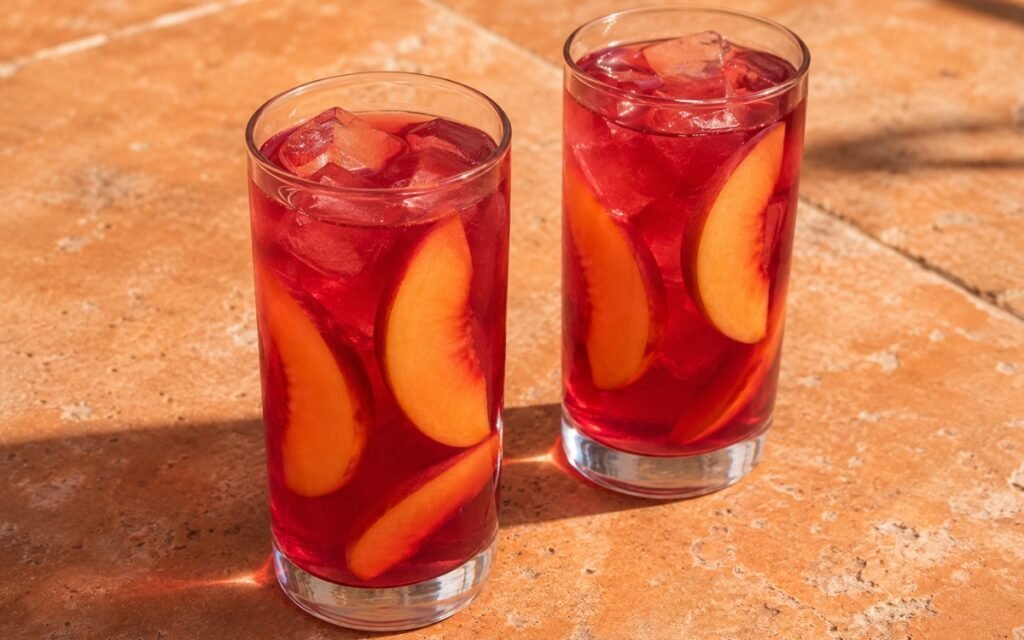
White tea at 75–80°C for 3–4 minutes, hibiscus infused 6–8 minutes for vivid ruby color, light peach syrup made separately and strained — chilled. Floral and softly fruity.


You might also like
You might also like
Orange Cold Brew Iced Tea
Black tea cold brewed 8–12 hours in cold filtered water — orange peel infused 10–12 minutes, fresh orange juice. Ultra-smooth and gently citrusy.
Pomegranate Iced Green Tea
Green tea at 75–80°C for 2–3 minutes, lemon peel infused cold, pomegranate arils gently fork-pressed and lightly strained — chilled. Bright, crisp, lightly fruity.
Classic Fresh Lemonade
Pale-yellow still lemonade made with a light homemade syrup, fresh lemon juice and a pinch of salt, served very cold over ice.



Thyme Orange Iced Tea
Ingredients
Method
- Heat the 1.65 litres of water to 90–95°C. Add the 5 black tea bags and steep for no more than 2½–3 minutes. Remove the bags gently without squeezing, then allow the tea to cool to lukewarm. Proper brewing here ensures structure without harsh bitterness — the foundation the thyme and orange will sit on top of.
- Rinse the thyme sprigs thoroughly and lightly clap them between your hands to release their essential oils. Avoid chopping or crushing at any point — damaged thyme releases bitter, medicinal notes that overpower the rest of the drink in a way that’s difficult to walk back.
- Add the thyme sprigs to the cooled tea and refrigerate for 6–10 minutes. Taste after 6 minutes and remove the sprigs as soon as a fresh herbal aroma becomes noticeable. This controlled infusion keeps the flavour clean and botanical rather than heavy — thyme is gentler than sage or rosemary, but it still benefits from the same tasting discipline rather than a blind fixed timer.
- Add the orange peel strips to the tea and allow them to infuse for about 5 minutes only. Remove promptly. Orange peel contributes fragrant citrus oils that brighten the drink without introducing excess acidity or bitterness — but only within that brief window, before any white pith beneath it has a chance to leach into the liquid.
- Stir in ¾ cup (180ml) of fresh orange juice and taste. Add up to 1 cup (240ml) total only if needed. The juice should provide gentle sweetness and brightness while still allowing the tea and herbs to remain the dominant character — this is not meant to taste like orange juice with tea added to it.
- Refrigerate for 1–2 hours until the tea is completely cold and the flavours are integrated. Proper chilling sharpens the structure and enhances the overall sense of refreshment.
- Fill glasses with ice, pour over the chilled thyme orange iced tea, and garnish with fresh thyme sprigs and orange wedges. Serve immediately while aromatic and crisp.