
Thyme Lemon Orange Green Tea Cooler
Thyme Lemon Orange Green Tea Cooler is the only preparation in this collection’s thyme series built on a green tea base rather than black or white, and the temperature discipline shifts accordingly — green tea brewed above 80°C turns bitter and flat in a way that undermines every other element layered on top of it, which is why this recipe holds firmly to the 75–80°C range used throughout the green tea preparations in this collection. The dual citrus structure is the recipe’s other defining decision: orange and lemon are not interchangeable here, and the drink is specifically built so that neither stands alone. Orange juice goes in first, contributing natural sweetness, body, and soft acidity that rounds out the tea and the thyme; lemon juice follows, adding the sharper brightness and structural acid that orange alone cannot provide. Thyme infuses cold and briefly, clapped rather than crushed, within the same narrow window that governs every herb in this collection — a few minutes between aromatic and medicinal, monitored by taste rather than trusted to a fixed timer. The result is bright, citrusy, and lightly herbal — clean rather than sweet, and naturally low in calories.

Prep Time : 15 min
Cook Time : 5 min
Servings : 8
15 min
5 min
8
Ingredients
For the Green Tea Base
• 1.65 litres water
• 6–7 green tea bags — Sencha or China Green — this one on Amazon
For the Botanical & Citrus Flavoring
• 8–10 fresh thyme sprigs
• ½ cup (120ml) fresh orange juice — strained
• 2–3 Tbsp fresh lemon juice — to taste; start with 2 Tbsp
• 2–3 Tbsp mild honey — to taste; start with 2 Tbsp — this one on Amazon
For Serving
• Ice
• Fresh thyme sprigs
• Lemon slices
• Orange slices
This post may contain affiliate links. As an Amazon Associate I earn from qualifying purchases, at no additional cost to you.
Directions
- Brew the Green Tea Carefully
Heat the 1.65 litres of water to 75–80°C. Do not allow the water to boil — green tea brewed at too high a temperature turns bitter and flat, which will undermine every other element in this drink. Add the 6–7 green tea bags and steep for exactly 2–3 minutes. Remove the bags gently without squeezing, which releases harsh tannins. Allow the tea to cool to lukewarm before continuing. - Sweeten While Warm
While the tea is still warm, stir in 2 tablespoons of mild honey until completely dissolved. Taste carefully and add up to 1 additional tablespoon only if necessary. The honey should soften the tea’s natural bitterness slightly and provide a smooth base — not make the drink taste sweet. Allow the tea to cool fully to room temperature before moving to the next step. - Prepare the Thyme
Rinse the thyme sprigs thoroughly under cold water and shake off excess moisture. Gently clap each sprig between your palms once or twice to crack the stems lightly and release the essential oils. Do not chop, bruise, or crush the thyme — aggressive handling releases bitter, heavy compounds that will overpower the delicate green tea base and ruin the drink’s clean character. - Short Controlled Thyme Infusion
Add the prepared thyme sprigs to the cooled tea. Refrigerate and allow the infusion to develop for 6–10 minutes, checking at the 6-minute mark. As soon as a fresh, clean herbal aroma is clearly noticeable in the liquid, remove all thyme sprigs immediately. This window is narrow — extended infusion pushes the flavour from botanical and bright into medicinal and heavy, which is very difficult to correct once it happens. - Build the Citrus Layer
Add the fresh orange juice first and stir gently. Orange juice contributes natural sweetness, body, and soft acidity that rounds the green tea and herbal notes. Next, stir in 2 tablespoons of fresh lemon juice. Taste the drink and assess the balance — it should feel bright and structured. Add up to 1 additional tablespoon of lemon juice only if more sharpness is needed. Both juices must be fresh-squeezed; bottled juice lacks the aromatic lift that makes the citrus layer feel alive in this recipe. - Chill Fully Before Serving
Refrigerate the finished tea for 1–2 hours until completely cold and the flavours are fully integrated. Proper chilling is not optional — serving this drink warm or only partially cold flattens the aroma, dulls the citrus brightness, and makes the herbal notes feel heavy rather than refreshing. - Serve
Fill glasses generously with ice. Pour the chilled cooler over the ice and garnish with fresh thyme sprigs, lemon slices, and orange slices. Serve immediately while the aroma is at its peak.
*Notes :
- Green tea temperature control is the single most important technical step in this recipe. Water above 80°C extracts harsh, bitter compounds from green tea that cannot be masked by honey or citrus afterward. Use a thermometer if possible, or allow freshly boiled water to rest uncovered for 4–5 minutes before brewing.
- Thyme infusion time is critical and must be monitored closely. The window between perfectly aromatic and unpleasantly medicinal is short — typically just a few minutes. Err on the side of shorter rather than longer, and always taste as you go rather than relying purely on the clock.
- Orange and lemon play distinct and complementary roles in this drink. Orange provides softness, natural sweetness, and body. Lemon provides sharpness, brightness, and structural acidity. They are not interchangeable — do not attempt to build the citrus layer using only one or the other, as the balance will collapse.
- Honey should be mild and neutral in character, such as acacia or clover honey. Strongly flavoured honeys like buckwheat will compete with the thyme and citrus rather than supporting them. Add conservatively — this drink is designed to lean dry, not sweet.
- This iced tea is best consumed within 24 hours of preparation. Green tea loses its fresh, grassy character quickly, and the thyme aroma fades noticeably after the first day. Make it fresh the morning or evening before serving for the best results.
Why This Recipe Works
This recipe works because green tea is brewed at the precise low temperature its delicate character demands, avoiding the bitterness that higher heat would lock in permanently. Thyme is clapped rather than crushed and infused cold within a narrow, carefully tasted window.
The dual citrus structure — orange for softness and body, lemon for sharpness and structure — provides a more complete and more balanced brightness than either fruit could deliver alone. And the honey stays conservative, supporting rather than sweetening.
Ingredient Breakdown
Green Tea Brewed at 75–80°C for 2–3 Minutes
The clean, grassy backbone — protected from the bitterness higher heat would introduce.
Thyme Clapped, Infused Cold for 6–10 Minutes
The fresh herbal depth — pulled the moment its aroma turns clean and clear, before it shifts heavy.
Orange Juice First, Lemon Juice Second
The two-role citrus structure — softness and body from orange, sharpness and acid from lemon, neither replacing the other.
2–3 Tbsp Mild Honey
The conservative sweetener — softening bitterness without making the drink taste sweet.
Flavor Structure Explained
This Thyme Lemon Orange Green Tea Cooler follows a layered balance model:
- Fresh tea core (green tea)
- Gentle herbal character (thyme)
- Layered citrus structure (orange and lemon)
- Subtle balancing sweetness (honey)
- Clean refreshing finish (tea-herb-citrus harmony)
Green tea defines the foundation with delicate grassy notes, light herbal freshness, and a clean structure that gives the drink its identity. Thyme contributes a subtle aromatic layer, adding green botanical depth that makes the profile more interesting and distinctive than a standard citrus iced tea. The citrus component is deliberately divided between two roles: orange provides softness, roundness, and gentle sweetness, while lemon contributes brightness and sharper acidity. Together they create a more complete and balanced citrus character than either fruit could achieve alone. Honey smooths the transitions between tea, herb, and citrus, remaining almost invisible as a flavor while contributing balance and texture. The result is a cooler built around clarity, freshness, and quiet complexity.
Common Mistakes to Avoid
- Boiling the Water for Green Tea – Extracts harsh, bitter compounds that no amount of honey or citrus can mask. Always 75–80°C.
- Crushing or Chopping the Thyme – Releases bitter, heavy compounds. Always clap gently instead.
- Leaving the Thyme Past Its Window – Pushes the flavour from botanical to medicinal. Always check at 6 minutes and taste as you go.
- Using Only Orange or Only Lemon Juice – The balance collapses without both. Always build the citrus layer using both fruits.
- Using Bottled Juice – Lacks the aromatic lift fresh-squeezed juice provides. Always use fresh fruit.
Variations
With Mint
Replace the thyme with fresh mint, clapped the same way, for a cooler, more menthol-forward finish.
With Ginger
Add a few thin slices of fresh ginger alongside the thyme for a gentle warming note underneath the citrus.
With Berries
Add a small handful of lightly mashed blueberries during the final chill for a fruitier, more colourful direction, in the spirit of the Blueberry Lemon Thyme Spritzer Mocktail.
Sparkling Version
Build the tea at a slightly higher concentration, chill, and top with cold sparkling water just before serving.
Storage & Make-Ahead
The brewed and sweetened green tea base, before the thyme infusion is added, can be refrigerated for up to 1 day.
Once assembled, the tea is best enjoyed within 24 hours. Both the fresh, grassy character of the green tea and the aromatic qualities of the thyme begin to fade noticeably after the first day, resulting in a less vibrant flavor.
Frequently Asked Questions
Why is green tea’s temperature control treated as the single most important step in this recipe?
Green tea’s bitter compounds extract aggressively above 80°C, and once they’re in the liquid, no amount of honey or citrus added afterward can mask them. Every other careful step in this recipe — the thyme timing, the dual citrus balance — only matters if the tea base itself is clean to begin with.
Why use both orange and lemon juice instead of just one?
Orange and lemon contribute different things: orange provides softness, natural sweetness, and body, while lemon provides sharpness, brightness, and structural acidity. Using only one leaves the drink either flat and round without enough edge, or sharp and thin without enough body. Both are needed together for the citrus layer to feel complete.
Why does the thyme infusion need to be watched so closely even though thyme is considered a milder herb?
The window between thyme’s clean, fresh aroma and a heavier, more medicinal character is genuinely short — often just a few minutes. Tasting as you go, rather than trusting a fixed timer alone, is the only reliable way to catch the right moment consistently.
What other thyme and citrus iced tea preparations share this approach?
The Thyme Orange Iced Tea shares the thyme-and-orange combination on a black tea base, with orange juice alone providing both sweetness and acid rather than splitting the role with lemon. The Blueberry Lemon Thyme Spritzer Mocktail shares the lemon-and-thyme pairing in a sparkling, berry-forward format. The Orange Lemonade shares the same dual-citrus philosophy — orange for primary flavour and lemon for structural acid — in a tea-free lemonade format.
Nutrition Facts
( per serving )
Calories
~35 kcal
Protein
0 g
Fat
0 g
Carbs
9 g
Calories
~35 kcal
Protein
0 g
Fat
0 g
Carbs
9 g
Related Recipes
Related Recipes

Raspberry Basil Limeade
Raspberries blended with lime juice, strained — honey no-cook syrup, basil and mint steeped cold 5–10 minutes, club soda right before serving. Vivid red and tart.
Light Lemon Mint Iced Black Tea
Black tea at 90–95°C for 2½–3 minutes, mint clapped and lemon zest infused cold 10–15 minutes — lemon juice and honey added lukewarm, chilled. Crisp and bright.
Thyme Grapefruit Sparkling Cooler
Thyme and grapefruit peel infused 8–10 minutes in boiled water — grapefruit juice once cooled, honey, club soda added last. Dry, botanical, crisp.



You might also like
You might also like
Raspberry Iced Black Tea
Black tea at 90–95°C for 2½–3 minutes, lemon peel infused cold, raspberries blended and firmly strained — combined and tasted, chilled. Bright and tea-forward.
Strawberry Iced Black Tea
Black tea at 90–95°C for 2½–3 minutes, strawberries simmered into a light unreduced syrup, lemon peel infused cold 5 minutes — chilled. Fresh, crisp, restrained.
Apple Cranberry Pitcher Drink
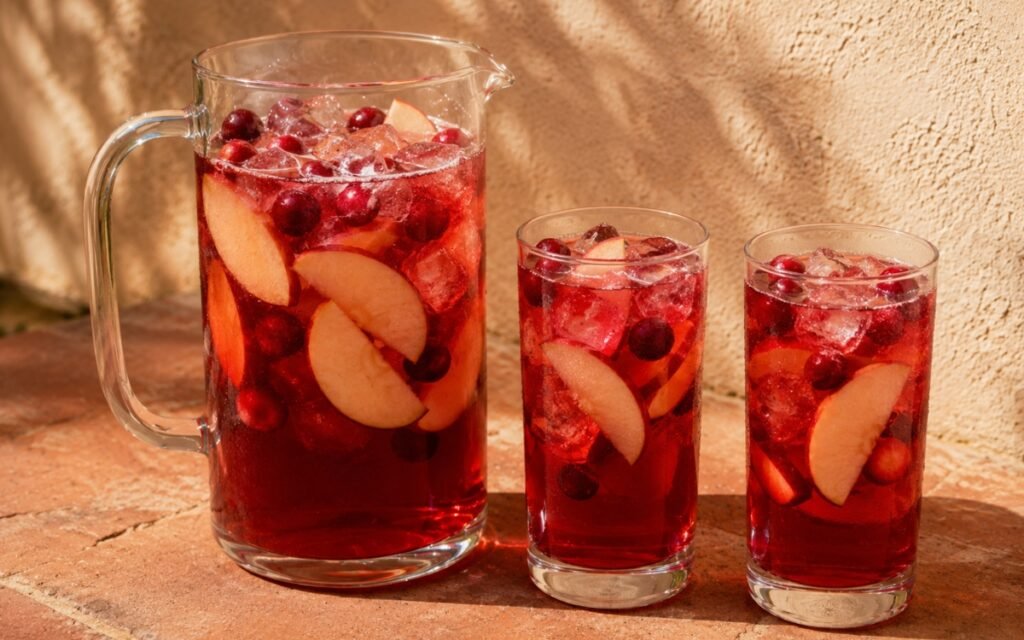
Ruby-red apple and cranberry pitcher drink infused with cinnamon, with crisp apple slices and fresh cranberries.



Thyme Lemon Orange Green Tea Cooler
Ingredients
Method
- Heat the 1.65 litres of water to 75–80°C. Do not allow the water to boil — green tea brewed at too high a temperature turns bitter and flat, which will undermine every other element in this drink. Add the 6–7 green tea bags and steep for exactly 2–3 minutes. Remove the bags gently without squeezing, which releases harsh tannins. Allow the tea to cool to lukewarm before continuing.
- While the tea is still warm, stir in 2 tablespoons of mild honey until completely dissolved. Taste carefully and add up to 1 additional tablespoon only if necessary. The honey should soften the tea’s natural bitterness slightly and provide a smooth base — not make the drink taste sweet. Allow the tea to cool fully to room temperature before moving to the next step.
- Rinse the thyme sprigs thoroughly under cold water and shake off excess moisture. Gently clap each sprig between your palms once or twice to crack the stems lightly and release the essential oils. Do not chop, bruise, or crush the thyme — aggressive handling releases bitter, heavy compounds that will overpower the delicate green tea base and ruin the drink’s clean character.
- Add the prepared thyme sprigs to the cooled tea. Refrigerate and allow the infusion to develop for 6–10 minutes, checking at the 6-minute mark. As soon as a fresh, clean herbal aroma is clearly noticeable in the liquid, remove all thyme sprigs immediately. This window is narrow — extended infusion pushes the flavour from botanical and bright into medicinal and heavy, which is very difficult to correct once it happens.
- Add the fresh orange juice first and stir gently. Orange juice contributes natural sweetness, body, and soft acidity that rounds the green tea and herbal notes. Next, stir in 2 tablespoons of fresh lemon juice. Taste the drink and assess the balance — it should feel bright and structured. Add up to 1 additional tablespoon of lemon juice only if more sharpness is needed. Both juices must be fresh-squeezed; bottled juice lacks the aromatic lift that makes the citrus layer feel alive in this recipe.
- Refrigerate the finished tea for 1–2 hours until completely cold and the flavours are fully integrated. Proper chilling is not optional — serving this drink warm or only partially cold flattens the aroma, dulls the citrus brightness, and makes the herbal notes feel heavy rather than refreshing.
- Fill glasses generously with ice. Pour the chilled cooler over the ice and garnish with fresh thyme sprigs, lemon slices, and orange slices. Serve immediately while the aroma is at its peak.