
homemade white tea iced tea
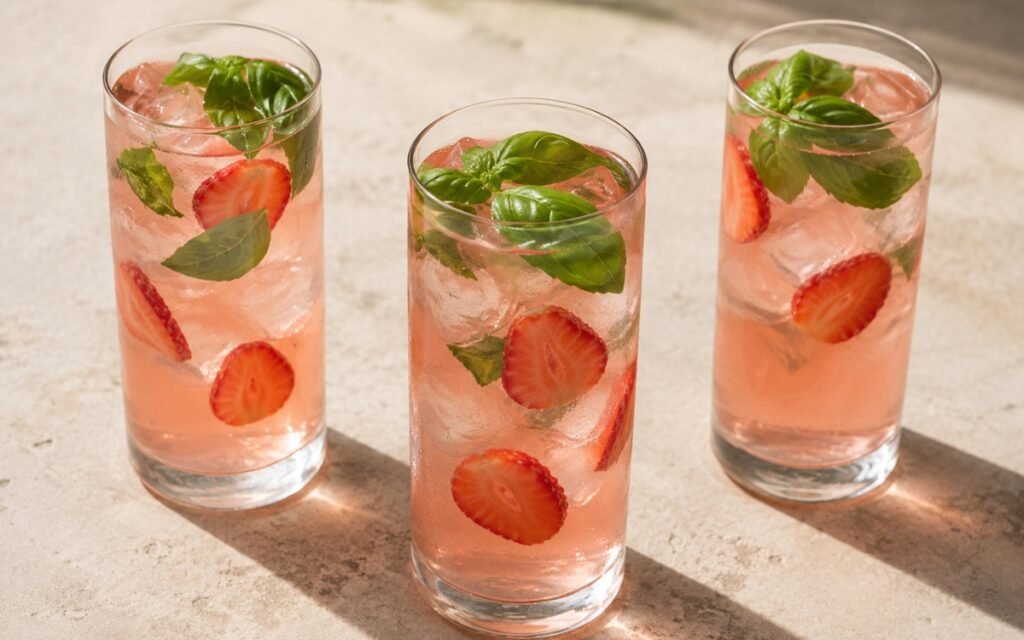
Basil Strawberry White Iced Tea layers two of the most delicate flavour contributions in this collection — fresh strawberry syrup and a brief basil infusion — over a white tea base that must be brewed with the same low-temperature discipline as every white tea preparation here. The strawberry syrup is made with a specific, deliberate addition: a small pinch of fine sea salt, which enhances the fruit’s natural sweetness and aromatic presence without tasting salty, allowing the syrup to use less added sugar while still delivering a clear, vivid strawberry character. The basil goes in last and stays only briefly — clapped rather than muddled, infused for 5–8 minutes and removed promptly, because basil left in the tea through the chilling period develops a vegetal dullness that specifically overwhelms the fruit it’s meant to complement. The white tea variety choice is more consequential here than in most preparations: Pai Mu Tan (White Peony) has enough body to remain noticeable behind both the strawberry and the basil, while a more delicate variety like Silver Needle can disappear entirely if the syrup quantity or basil infusion runs even slightly long. Every element is calibrated to contribute clarity rather than dominance — the result is a drink that feels refined rather than simply flavoured.
Prep Time : 10 min
Cook Time : 0 min
Servings : 8
10 min
0 min
8
Ingredients
For the White Tea Base
• 1.65 litres water
• 6 white tea bags — Pai Mu Tan (White Peony) specifically recommended; or approximately 12g loose-leaf white tea — this one on Amazon
For the Light Strawberry Syrup
• 300g fresh strawberries — hulled and halved
• ¼ cup (50g) white sugar
• ¾ cup (180ml) water
• Pinch of fine sea salt — about ⅛ tsp
For the Basil Finish
• ½ packed cup fresh basil leaves — about 12–15g
For Serving
• Ice
• Fresh strawberry slices
• Fresh basil leaves
This post may contain affiliate links. As an Amazon Associate I earn from qualifying purchases, at no additional cost to you.
Directions
- Brew the White Tea Carefully
Heat the 1.65 litres of water to 75–80°C — avoid boiling, which introduces bitterness and dulls white tea’s characteristic floral sweetness. If working without a thermometer, rest freshly boiled water for 4–5 minutes before using. Add the 6 tea bags (or approximately 12g of loose-leaf white tea) and steep for 3–4 minutes. Remove the bags gently without squeezing, which would force out the most concentrated and least pleasant compounds held inside them. Allow the tea to cool to lukewarm before proceeding. - Make the Light Strawberry Syrup
In a small saucepan, simmer the hulled and halved strawberries with the sugar, water, and the pinch of fine sea salt for 8–10 minutes, until the berries have softened and the liquid is fragrant. Keep the heat gentle throughout — this is extraction, not reduction, and pushing the temperature higher to speed things up produces a jammy result rather than the thin, bright syrup the preparation calls for. - Strain the Syrup
Strain the syrup through a fine sieve without pressing the solids, which would push cloudy pulp and seeds into the otherwise clear liquid. Discard the strained fruit and allow the syrup to cool completely. Properly prepared syrup should look clear, lightly pink, and smell fresh rather than cooked. - Sweeten the Tea Base
Stir 120ml of the cooled syrup into the slightly warm tea and taste. Add up to 40ml more only if needed — the drink should stay delicate and restrained rather than tipping toward sweet. Keep in mind that the full sweetness perception will soften further once the basil is infused, so it’s worth tasting with that in mind rather than over-correcting at this stage. - Add the Basil
Lightly clap the basil leaves between the palms to release their aroma, then add them to the tea and infuse for 5–8 minutes, tasting early. Remove the leaves promptly once a clean herbal note appears. Leaving the basil in the tea through the chilling period causes a vegetal dullness that specifically overwhelms the fruit rather than complementing it — this is not a step to leave to chance. - Chill Fully
Refrigerate for 1–2 hours until completely cold. Proper chilling is what allows the strawberry’s softness, the basil’s lift, and the white tea’s own quiet structure to integrate into a single balanced profile rather than sitting as separate layers. - Serve
Pour over ice and garnish with fresh strawberry slices and basil leaves. Serve immediately, while the aroma and colour are at their most vivid.
*Notes :
- The small pinch of sea salt in the syrup is doing real work, not just seasoning. It enhances the fruit’s sweetness and aromatic presence without tasting salty, which allows the recipe to use less sugar overall while still achieving a clearer, more vivid strawberry character than sugar alone would provide.
- Strawberry ripeness strongly affects the outcome here. Peak-season berries create vivid colour and genuine fruit depth; under-ripe fruit produces a thin, sugary syrup that lacks real character. Fully thawed frozen berries are often a better off-season substitute than mediocre fresh ones.
- White tea choice matters more in this preparation than it might seem. Pai Mu Tan (White Peony) provides enough body to remain noticeable behind both the fruit and the herb. A very delicate variety like Silver Needle can disappear entirely if the syrup quantity or the basil infusion timing runs even slightly long — there’s less margin for error with the most fragile teas.
Why This Recipe Works
This recipe works because the white tea is brewed at the correct low temperature to preserve its delicate character. The salt in the syrup amplifies the strawberry’s natural sweetness without requiring more sugar.
The basil is clapped and infused only briefly, then removed promptly, avoiding the vegetal dullness that extended contact would cause.
And the tea variety — Pai Mu Tan rather than a more fragile white tea — is specifically chosen to hold its own against the fruit and herb without disappearing.
Ingredient Breakdown
White Tea Brewed at 75–80°C for 3–4 Minutes
The delicate floral backbone — low temperature protecting compounds that bitterness destroys at higher heat.
Strawberries Simmered Gently With a Pinch of Salt
The clear, vivid fruit syrup — salt amplifying sweetness and aroma while allowing less added sugar.
Basil Clapped, Infused Briefly, Removed Promptly
The clean herbal lift — short contact preventing the vegetal dullness that extended infusion causes.
Pai Mu Tan Rather Than Silver Needle
The tea-body calibration — enough structure to remain present behind the fruit and herb.
Flavor Structure Explained
This Basil Strawberry White Iced Tea follows a restrained balance model:
- Delicate tea core (white tea)
- Bright fruit character (strawberry)
- Fresh herbal lift (basil)
- Flavor-enhancing salinity (pinch of salt)
- Clean harmonious finish (balanced flavor integration)
White tea defines the foundation with soft floral notes and a quiet, refined structure that supports the drink without demanding attention. Strawberry contributes gentle sweetness and bright fruit aromatics, providing clarity and freshness rather than a heavy berry presence. Basil adds a clean herbal lift, bringing freshness and complexity while remaining restrained enough to avoid becoming grassy or vegetal. A small amount of salt subtly intensifies the strawberry’s natural flavor, making the fruit taste more vivid without altering the drink’s delicate balance. The result is an iced tea built around clarity and proportion, where tea, fruit, and herb work together seamlessly without any single element dominating the profile.
Common Mistakes to Avoid
- Boiling the Water for White Tea – Introduces bitterness and dulls the floral sweetness. Always 75–80°C.
- Pressing the Strawberry Syrup Solids – Pushes cloudy pulp into the otherwise clear syrup. Always strain without pressing.
- Leaving Basil in the Tea Through Chilling – Causes a vegetal dullness that overwhelms the fruit. Always remove promptly after the brief infusion.
- Using a Very Delicate White Tea Variety – Can disappear entirely behind the fruit and herb. Always Pai Mu Tan or a comparable body.
- Using Under-Ripe Strawberries – Produces a thin, sugary syrup with weak character. Always peak-season or properly thawed frozen berries.
Variations
With Rosemary
Replace the basil with a small rosemary sprig for the Strawberry Rosemary White Tea direction — drier, more piney, less sweet-leaning.
With Hibiscus
Add a teaspoon of dried hibiscus to the syrup during the simmer for a more tart, more vividly coloured result, in the spirit of the Hibiscus Peach White Iced Tea.
With Mint
Replace the basil with fresh mint, clapped the same way, for a cooler, more menthol-forward finish.
Sparkling Version
Build the tea at a slightly higher syrup concentration, chill, and top with cold sparkling water just before serving.
Storage & Make-Ahead
Light strawberry syrup can be refrigerated in a sealed jar for up to 3 days.
Unsweetened brewed white tea can be refrigerated for up to 2 days.
Once assembled, the tea is best enjoyed within 24 hours, when the strawberry and basil aromas are at their brightest and most vibrant.
Frequently Asked Questions
Why is there salt in the strawberry syrup?
Salt at this small quantity specifically amplifies the strawberry’s natural sweetness and aromatic presence without tasting salty itself. It allows the syrup to use less sugar while still producing a clearer, more vivid strawberry character than sugar alone would achieve.
Why does the basil need to come out so promptly rather than steeping through the chill?
Basil’s pleasant aromatic oils release within the first several minutes of contact. Beyond that window, and especially through an extended cold rest, the herb develops a vegetal dullness that specifically overwhelms the strawberry’s brighter character rather than complementing it.
Why does the specific white tea variety matter so much here?
This preparation layers two delicate flavours — fruit syrup and a brief herbal infusion — over the tea base. A very fragile variety like Silver Needle has so little inherent body that it can be completely masked if the syrup quantity or basil timing runs even slightly over. Pai Mu Tan’s slightly fuller character gives it enough presence to remain part of the final balance.
What other strawberry and white tea preparations share this approach?
The White Tea Strawberry Pitcher shares the same white tea and strawberry foundation at crowd scale, without basil. The Hibiscus Peach White Iced Tea shares the white tea base with peach and hibiscus in place of strawberry and basil, for a more tart, more vividly coloured direction. The Strawberry Rosemary White Tea shares the strawberry-and-white-tea combination with rosemary’s drier, more herbal lift in place of basil’s sweeter green note.
Nutrition Facts
( per serving )
Calories
~35 kcal
Protein
0 g
Fat
0 g
Carbs
9 g
Calories
~35 kcal
Protein
0 g
Fat
0 g
Carbs
9 g
Related Recipes
Related Recipes

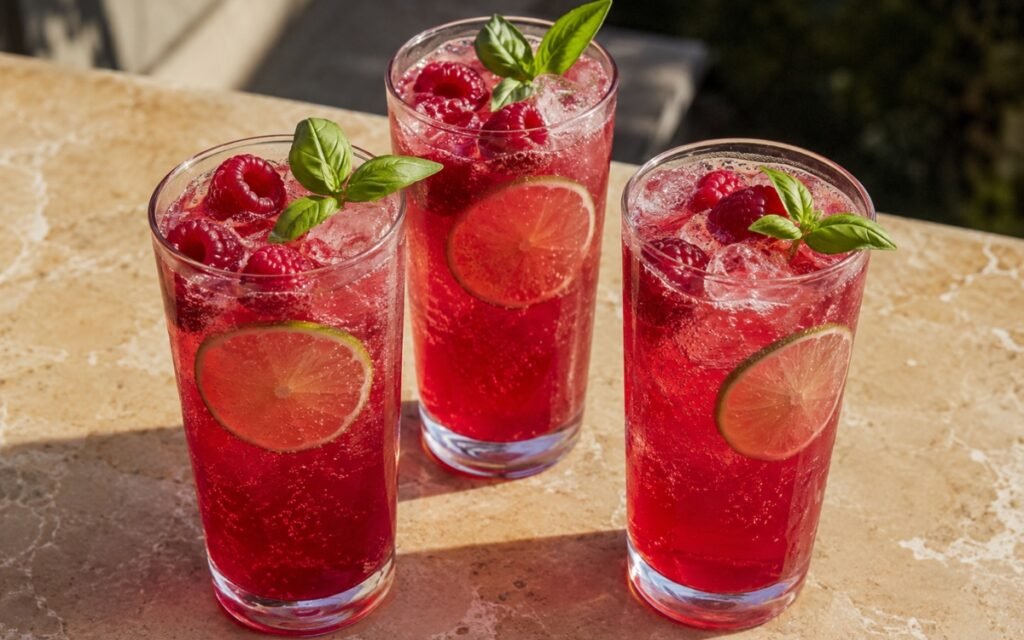
Raspberry Basil Limeade
Raspberries blended with lime juice, strained — honey no-cook syrup, basil and mint steeped cold 5–10 minutes, club soda right before serving. Vivid red and tart.
Basil Mango White Iced Tea
White tea at 75–80°C for 3–4 minutes, mango blended with basil and strained — lemon peel, light honey, chilled. Tropical, green, and clean.
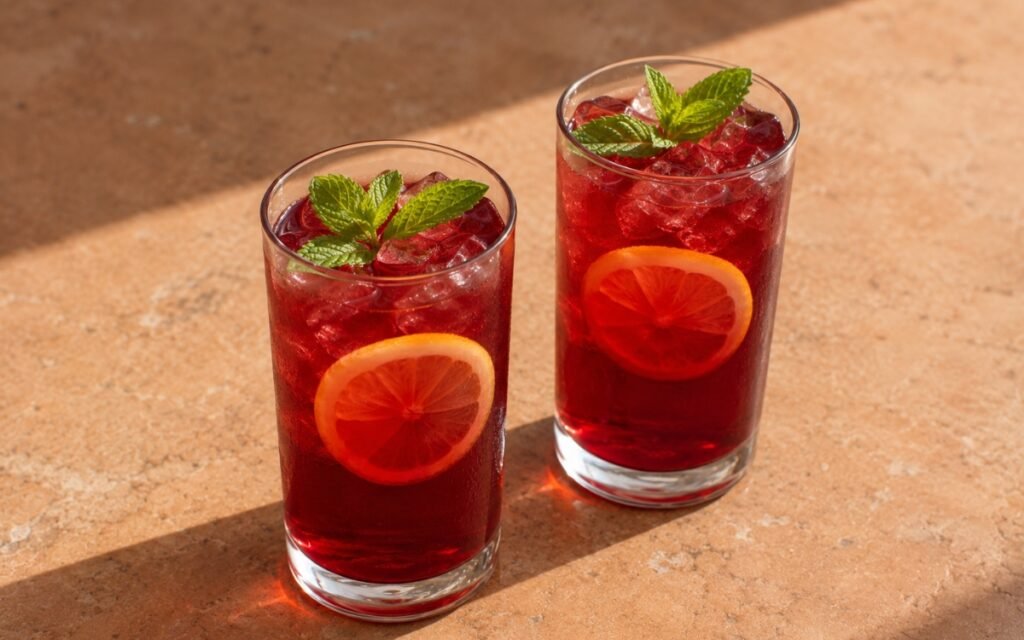
Light Hibiscus Mint Cooler
Hibiscus steeped at 95°C, honey while warm, exactly 1 tsp orange blossom water — mint cold-infused 10–15 minutes, chilled. Vivid ruby and floral.

You might also like
You might also like
Fig Jasmine Iced Tea
Jasmine tea at 75–80°C for 2–3 minutes, lemon peel infused cold, figs gently mashed and directly infused 10–15 minutes, lightly strained — chilled. Floral and softly fruity.
Orange Cold Brew Iced Tea
Black tea cold brewed 8–12 hours in cold filtered water — orange peel infused 10–12 minutes, fresh orange juice. Ultra-smooth and gently citrusy.
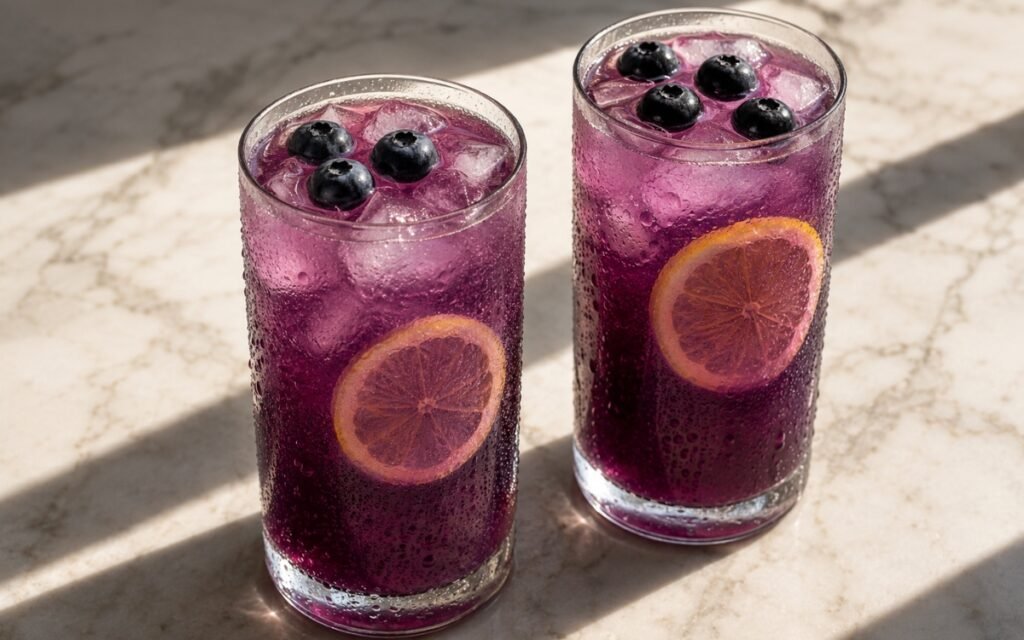
Fresh Blueberry Lemonade
Blueberries simmered with lemon zest and salt for extraction — vivid purple syrup pressed and combined with fresh lemon juice cold. Deeply coloured and tart.


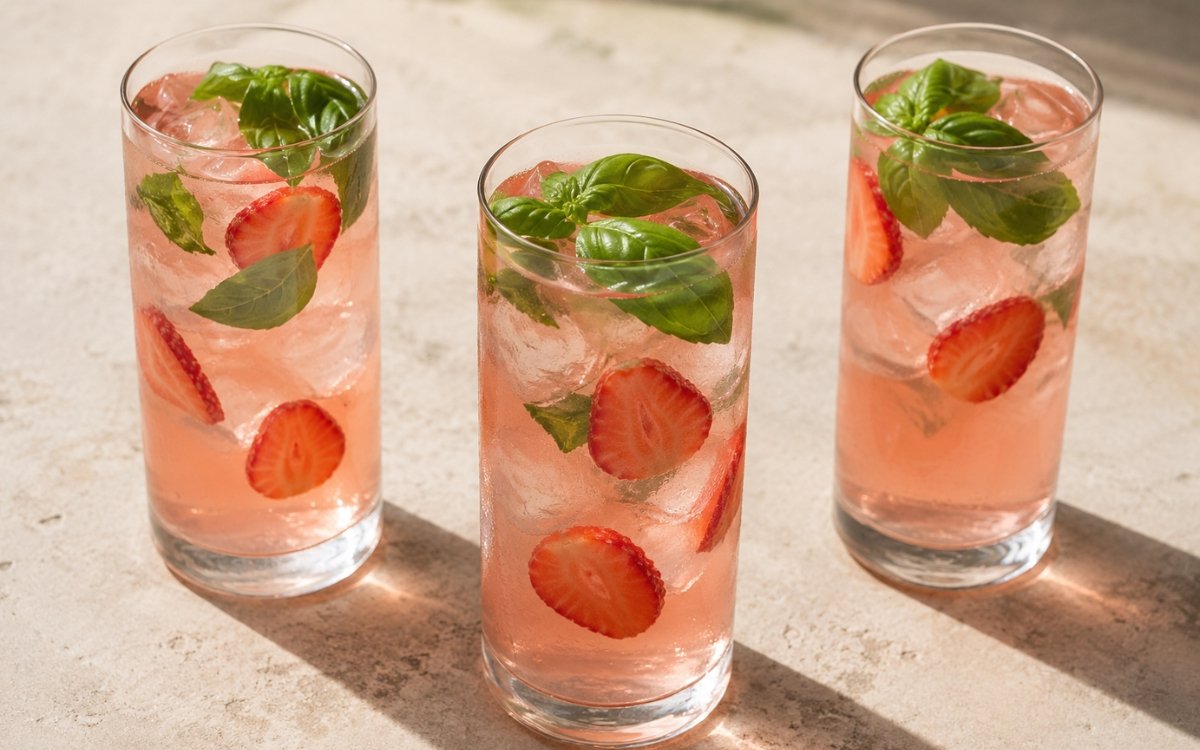
Basil Strawberry White Iced Tea
Ingredients
Method
- Heat the 1.65 litres of water to 75–80°C — avoid boiling, which introduces bitterness and dulls white tea’s characteristic floral sweetness. If working without a thermometer, rest freshly boiled water for 4–5 minutes before using. Add the 6 tea bags (or approximately 12g of loose-leaf white tea) and steep for 3–4 minutes. Remove the bags gently without squeezing, which would force out the most concentrated and least pleasant compounds held inside them. Allow the tea to cool to lukewarm before proceeding.
- In a small saucepan, simmer the hulled and halved strawberries with the sugar, water, and the pinch of fine sea salt for 8–10 minutes, until the berries have softened and the liquid is fragrant. Keep the heat gentle throughout — this is extraction, not reduction, and pushing the temperature higher to speed things up produces a jammy result rather than the thin, bright syrup the preparation calls for.
- Strain the syrup through a fine sieve without pressing the solids, which would push cloudy pulp and seeds into the otherwise clear liquid. Discard the strained fruit and allow the syrup to cool completely. Properly prepared syrup should look clear, lightly pink, and smell fresh rather than cooked.
- Stir 120ml of the cooled syrup into the slightly warm tea and taste. Add up to 40ml more only if needed — the drink should stay delicate and restrained rather than tipping toward sweet. Keep in mind that the full sweetness perception will soften further once the basil is infused, so it’s worth tasting with that in mind rather than over-correcting at this stage.
- Lightly clap the basil leaves between the palms to release their aroma, then add them to the tea and infuse for 5–8 minutes, tasting early. Remove the leaves promptly once a clean herbal note appears. Leaving the basil in the tea through the chilling period causes a vegetal dullness that specifically overwhelms the fruit rather than complementing it — this is not a step to leave to chance.
- Refrigerate for 1–2 hours until completely cold. Proper chilling is what allows the strawberry’s softness, the basil’s lift, and the white tea’s own quiet structure to integrate into a single balanced profile rather than sitting as separate layers.
- Serve
- Pour over ice and garnish with fresh strawberry slices and basil leaves. Serve immediately, while the aroma and colour are at their most vivid.