
White Tea Strawberry Pitcher — For a Crowd
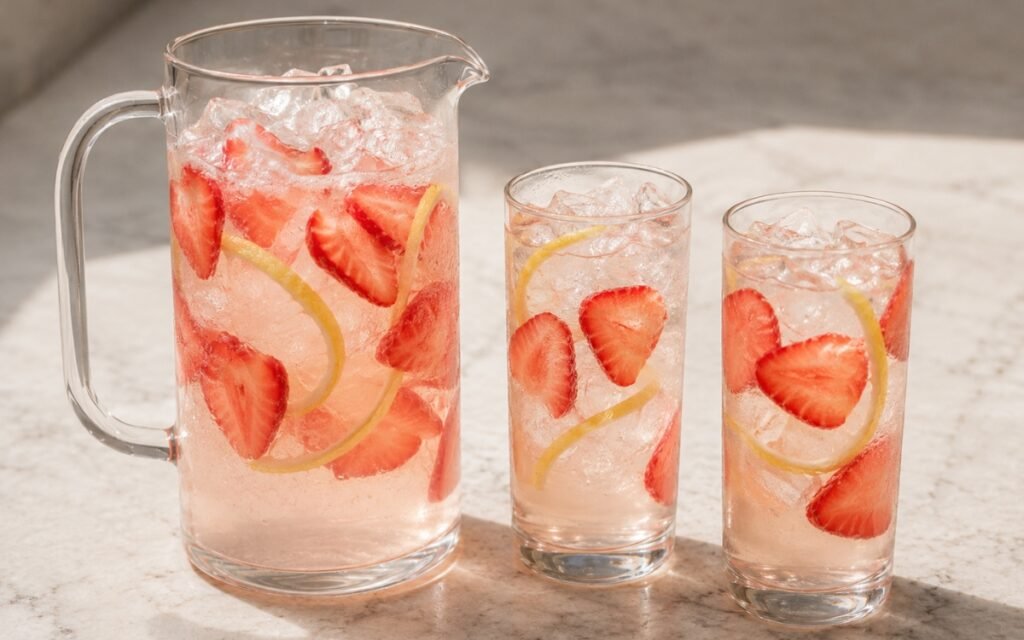
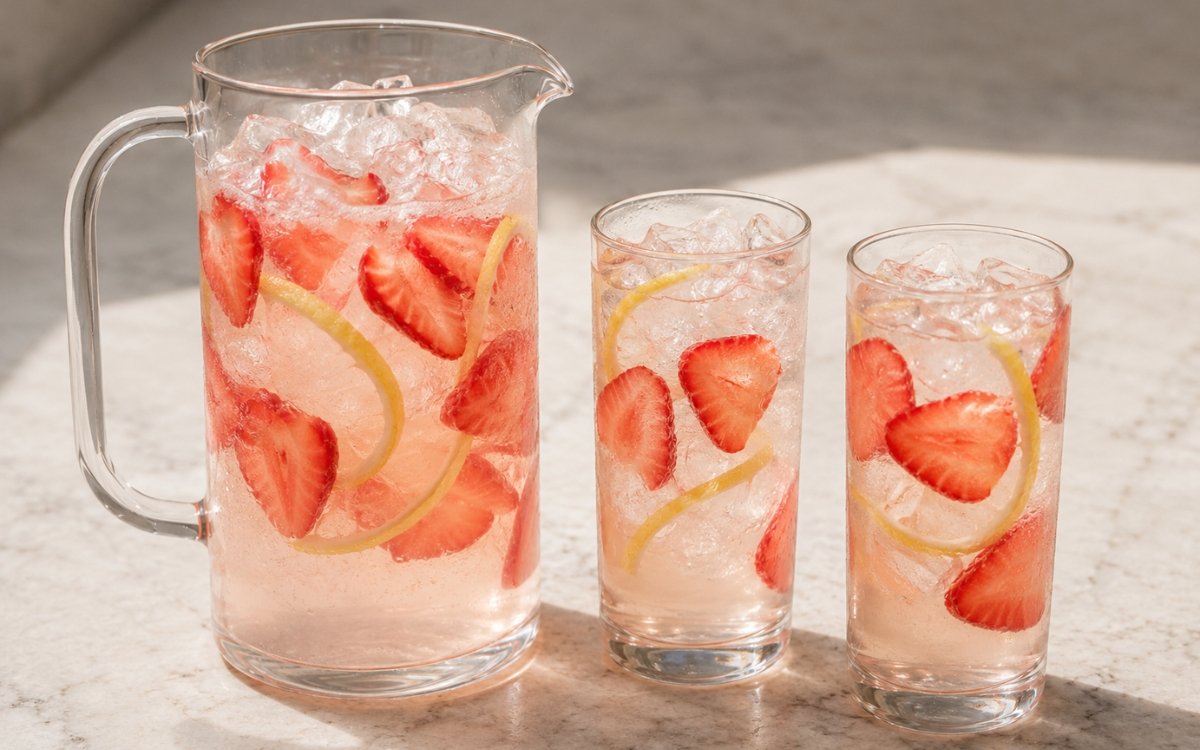
White tea strawberry pitcher is a pale, delicate crowd drink built from low-temperature white tea, fresh strawberries, lemon zest, and cold water. It is lighter and more restrained than juice-based pitchers, with white tea setting the tone and strawberry adding a soft fresh-fruit aroma. White tea needs gentle heat because its floral, faintly honeyed character is easy to lose at higher temperatures. Strawberries are used as an aromatic infusion rather than a juice base, so the drink stays clear, subtle, and tea-forward instead of turning into a strawberry drink with tea in the background. This pitcher has no juice in the final build. The finished drink comes from the steeped tea extract, the warm strawberry infusion, and cold water only. That restraint is the point: white tea stays at the center, while the strawberries give a pale blush color and a quiet summer-fruit fragrance.
Prep Time : 15 min
Steep Time : 12 min
Servings : 16
15 min
12 min
16
Ingredients
For the Strawberry White Tea Extract
• 1 litre water
• 8–9 white tea bags — Silver Needle, Bai Mu Dan, or quality white tea — this one on Amazon
• 80–100g light brown sugar — start with 80g — this one on Amazon
• 450g fresh strawberries — hulled and thinly sliced
• Zest of 1 lemon — yellow part only, no white pith
For the Final Build
• 1.8–2.2 litres ice-cold water — start with 1.8 litres; adjust after tasting
For Serving
• Ice cubes
• Fresh sliced strawberries — prepared immediately before service
• Lemon peel twists — optional
This post may contain affiliate links. As an Amazon Associate I earn from qualifying purchases, at no additional cost to you.
Directions
- Brew the White Tea
Heat 1 litre of water to 70–75°C. This lower temperature protects white tea’s delicate floral and honeyed notes. If the water is too hot, the tea can turn papery, dull, and lightly astringent within the steeping window. If the water is too cool, the tea will not release enough character in 3–4 minutes. Add 8 or 9 white tea bags. Steep for 3–4 minutes. This slightly longer window works because white tea extracts more gently than green tea at a lower temperature. Remove all bags at the same time without squeezing. Squeezing the bags can push a papery note from the concentrated liquid back into the pitcher. - Dissolve Sugar and Cool
Heat 1 litre of water to 70–75°C. This lower temperature protects white tea’s delicate floral and honeyed notes. If the water is too hot, the tea can turn papery, dull, and lightly astringent within the steeping window. If the water is too cool, the tea will not release enough character in 3–4 minutes. Add 8 or 9 white tea bags. Steep for 3–4 minutes. This slightly longer window works because white tea extracts more gently than green tea at a lower temperature. Remove all bags at the same time without squeezing. Squeezing the bags can push a papery note from the concentrated liquid back into the pitcher. - Infuse the Strawberry and Lemon Zest
Add the thinly sliced strawberries and lemon zest at the same time. Press the strawberry slices once with the back of a spoon, just enough to release a little juice and aroma without turning them into a mash. In this pitcher, strawberry is not meant to dominate the drink. It adds fragrance, a pale blush color, and a gentle fresh-fruit note. The warm tea, cooling from about 65–70°C through the infusion, draws out that aroma without pushing the strawberries toward a cooked or jammy flavor. Cover and steep for 8–10 minutes. The extract should be pale blush-pink and lightly fragrant, with strawberry sitting beside the white tea rather than covering it. Do not go past 10 minutes. As the mixture cools, extraction slows, and the less pleasant inner-cell flavors from the strawberries can start to come through. - Strain Completely
Strain through a fine-mesh sieve, pressing gently but firmly on the strawberry and zest solids. Keep all strawberry pulp and seeds out of the strained extract. This matters because white tea is clear and delicate. Leftover pulp can cloud the drink, dull the pale color, and keep changing the flavor as the pitcher rests in the refrigerator. A clean strain keeps the finished drink light, clear, and fresh. Let the extract cool completely. - Build the Pitcher
Pour the cooled strawberry white tea extract into a large pitcher. Add 1.8 litres of ice-cold water. Stir gently. This pitcher uses no juice in the final build. The only liquid components are the infused tea extract and cold water. That keeps the drink tea-forward and subtle. Adding strawberry juice would turn it into a fruit drink with tea in the background, which is a different style altogether. Taste the pitcher. It should be pale, lightly fragrant, and clean, with a soft strawberry aroma and a faint white tea background. If the strawberry is barely noticeable, the infusion may have been too short or the strawberries may have been mild; a longer cold rest can help the flavor develop. If the tea seems very quiet after dilution, that is normal for this style. It should read as delicacy and clarity rather than strong tea flavor. - Chill and Serve
Cover and refrigerate for 1–2 hours. Prepare fresh strawberry slices immediately before service. Stir once before the first pour. Garnish each glass with 2–3 fresh strawberry slices and an optional lemon peel twist. Serve cold.
*Notes :
- The sweetener choice matters in this pitcher because the drink is so restrained. Light brown sugar adds a faint warmth that can be pleasant with white tea, but it is also the most noticeable sweetener option. For a cleaner version suited to brunch, afternoon tea, or a more elegant summer drink, use white sugar or mild honey. For a casual gathering where a little warmth is welcome, light brown sugar works well.
- The 24-hour best-use window matters more here than for any other drink in the crowd collection. White tea’s most volatile aromatic compounds — the delicate, faintly floral, honeyed fraction — diminish rapidly once extracted and diluted. The preparation’s defining quality is its freshness and delicacy; both are most present within the first 12 hours and clearly diminished at 36 hours.
Why This Recipe Works
This recipe works because every part of the preparation is set up for white tea’s extreme delicacy: the lowest temperature in the collection (70–75°C), the lowest sugar quantity, no juice in the final build, a gentle strawberry infusion rather than a vivid extraction, and the most thorough straining requirement.
The result is the most refined, most elegant crowd drink in this collection — a preparation that reveals the most interesting possible character of an ingredient that is beautiful rather than assertive.
Ingredient Breakdown
70–75°C, 3–4 Minutes (White Tea’s Specific Window)
The fragile aromatic preservation — the lowest temperature and the longest relative window of any tea in this collection; both protect white tea’s most volatile pleasant compounds.
No Juice in Final Build
The character-preservation restraint — juice addition shifts the primary register from tea-and-aroma to fruit-with-background-tea; the infusion-only approach preserves white tea as the structural primary.
Gentle Strawberry Press (Aroma Not Extraction)
Strawberry adds fragrance here rather than acting as the main flavour.
80g Starting Sugar (Lowest in Collection)
The delicacy-appropriate sweetness — the preparation’s restraint in sweetener reflecting its overall philosophy.
Complete Straining
The clarity and character preservation — pulp in white tea pitcher dulls both the visual and the flavour quality.
Flavor Structure Explained
The flavor structure is deliberately light:
- Delicate tea core (white tea)
- Gentle fruit aromatics (strawberry)
- Soft floral refinement (white tea character)
- Light summery freshness (strawberry infusion)
- Clean elegant finish (subtle flavor integration)
White tea defines the foundation with faint floral notes, soft honey-like warmth, and a delicate character that functions more as refinement than as a clearly identifiable tea flavor. Rather than dominating the drink, it creates a sense of elegance, clarity, and smoothness. Strawberry contributes gentle fruit aromatics and a subtle summer-fruit fragrance that adds interest without overpowering the tea’s delicacy. The two elements work in harmony, with the fruit enhancing the tea’s softness and the tea giving structure to the fruit’s sweetness. The result is a pitcher drink built around subtlety, where freshness, refinement, and light aromatics are more important than intensity.
Common Mistakes to Avoid
- Brewing Above 75°C – White tea at black tea’s 90–95°C range produces a papery, dull, harshly astringent result that bears no resemblance to the correct preparation. Always 70–75°C strictly.
- Squeezing the White Tea Bags – White tea bags hold a concentrated papery note in their retained liquid. Always remove without squeezing.
- Adding Strawberry Juice or Any Juice to the Final Build – The preparation’s defining restraint is the infusion-only approach. Juice addition fundamentally alters the character.
- Incomplete Straining – Strawberry pulp in the pitcher dulls both visual clarity and flavour character. Always strain completely.
- Serving After 24 Hours – White tea’s volatile aromatic compounds fade faster than those of any other drink in this collection. Always within 24 hours.
Variations
With Fresh Basil
Add 12 lightly clapped fresh basil leaves alongside the strawberries during the 8–10 minute warm steep — the Basil Strawberry White Iced Tea direction at crowd scale. Removed during straining.
With Rosemary
Add 1 small rosemary sprig alongside the strawberries — removed during straining. The Strawberry Rosemary White Tea direction at crowd scale.
With Peach
Replace the strawberries with 300g of thinly sliced skin-on peach — the peach’s warm, floral lactone character alongside white tea’s own florality producing the most delicate version.
With Honey Instead of Sugar
Replace all sugar with 60–80g of mild acacia or clover honey — the honey’s floral compounds amplifying white tea’s own faint florality.
Storage & Make-Ahead
Strawberry white tea extract can be refrigerated for 12 to 18 hours. Its delicate aromatic character is at its most vibrant within the first 12 hours after preparation.
Once assembled, the pitcher is best enjoyed within 12 to 18 hours. This is the most delicate and time-sensitive preparation in the collection, with its flavor and aroma declining more quickly than the others. For the freshest and most expressive result, serve it as soon as possible after preparation.
Frequently Asked Questions
Why is the temperature specifically 70–75°C rather than the green tea’s 75–80°C?
White tea is more delicate than green tea. At 75–80°C, it can start to pull out papery, flat flavors along with its pleasant floral notes. The 70–75°C range keeps the tea soft, clean, and fragrant.
Why no juice in the final build?
Juice would change the drink from tea with strawberry aroma into a strawberry drink with tea in the background. This pitcher is meant to stay light, pale, and tea-forward, so the final build uses only the strained tea extract and cold water.
Why 8–10 minutes for the strawberry steep when the Raspberry Iced Tea uses the same time?
The strawberries are infused in warm tea that gradually cools during the 8–10 minute window. That gives enough time to pull out fresh strawberry aroma without turning the fruit cooked or jammy. The single gentle press helps release fragrance while keeping the drink clear.
What other white tea and strawberry preparations share this direction?
The Strawberry Rosemary White Tea shares the white tea and strawberry combination with rosemary’s herbal depth as the aromatic bridge — the most directly comparable single-serve preparation. The Hibiscus Peach White Iced Tea shares the white tea base with hibiscus’s tartness and peach’s warmth — a more complex, more assertive direction. The Basil Strawberry White Iced Tea shares the strawberry and white tea combination with basil’s warm herbal dimension.
Nutrition Facts
( per serving )
Calories
~40 kcal
Protein
0 g
Fat
0 g
Carbs
10 g
Calories
~40 kcal
Protein
0 g
Fat
0 g
Carbs
10 g
Related Recipes
Related Recipes

Mango Pineapple Pitcher Drink
Macerated, strained mango-lime base combined with pineapple and a second infusion of fresh mango, pineapple, and lime wheels.
Orange Mint Infused Water
Orange pulp mashed, mint clapped in two stages — orange slices and fresh leaves cold-infused in 3L water for 1–4 hours, removed. Warm citrus and cool mint.
Apple Cinnamon Infused Water
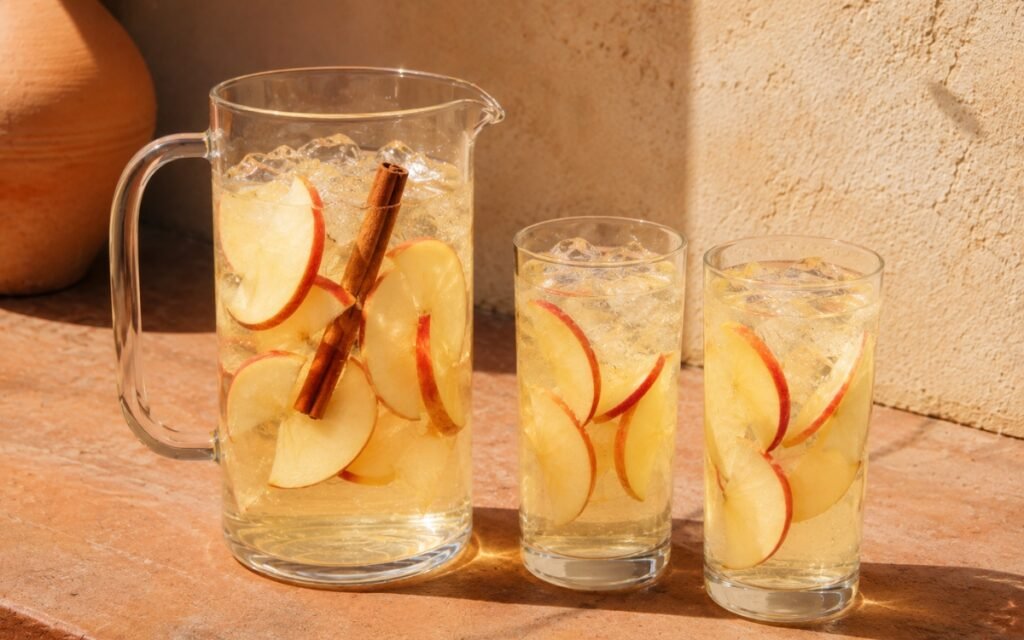
Apples skin-on and lightly mashed with 1–2 cinnamon sticks cold-infused in 3L water — removed after 4 hours before cinnamon escalates. Crisp and warm-spiced.


You might also like
You might also like
Fresh Peach Lemonade
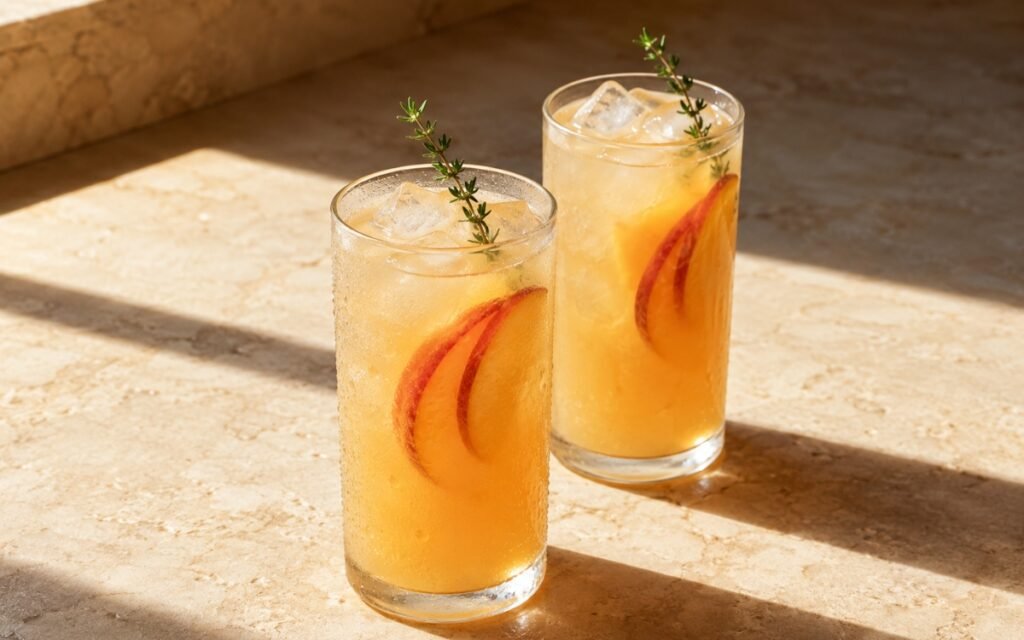
Ripe peaches simmered with sugar for 10–12 minutes, pressed through a sieve — fresh lemon juice and cold water added, chilled. Sweet, tart, and intensely peachy.
Passion Fruit Mint Spritzer Mocktail
Raw passion fruit with lime, honey, and cold-infused mint over club soda — intensely tropical.
Mango Turmeric Tonic Mocktail
Tropical mango and earthy turmeric with thyme over tonic water — golden, warm, and bittersweet.

White Tea Strawberry Pitcher for a Crowd
Ingredients
Method
- Heat 1 litre of water to 70–75°C. This lower temperature protects white tea’s delicate floral and honeyed notes. If the water is too hot, the tea can turn papery, dull, and lightly astringent within the steeping window. If the water is too cool, the tea will not release enough character in 3–4 minutes. Add 8 or 9 white tea bags. Steep for 3–4 minutes. This slightly longer window works because white tea extracts more gently than green tea at a lower temperature. Remove all bags at the same time without squeezing. Squeezing the bags can push a papery note from the concentrated liquid back into the pitcher.
- Heat 1 litre of water to 70–75°C. This lower temperature protects white tea’s delicate floral and honeyed notes. If the water is too hot, the tea can turn papery, dull, and lightly astringent within the steeping window. If the water is too cool, the tea will not release enough character in 3–4 minutes. Add 8 or 9 white tea bags. Steep for 3–4 minutes. This slightly longer window works because white tea extracts more gently than green tea at a lower temperature. Remove all bags at the same time without squeezing. Squeezing the bags can push a papery note from the concentrated liquid back into the pitcher.
- Add the thinly sliced strawberries and lemon zest at the same time. Press the strawberry slices once with the back of a spoon, just enough to release a little juice and aroma without turning them into a mash. In this pitcher, strawberry is not meant to dominate the drink. It adds fragrance, a pale blush color, and a gentle fresh-fruit note. The warm tea, cooling from about 65–70°C through the infusion, draws out that aroma without pushing the strawberries toward a cooked or jammy flavor. Cover and steep for 8–10 minutes. The extract should be pale blush-pink and lightly fragrant, with strawberry sitting beside the white tea rather than covering it. Do not go past 10 minutes. As the mixture cools, extraction slows, and the less pleasant inner-cell flavors from the strawberries can start to come through.
- Strain through a fine-mesh sieve, pressing gently but firmly on the strawberry and zest solids. Keep all strawberry pulp and seeds out of the strained extract. This matters because white tea is clear and delicate. Leftover pulp can cloud the drink, dull the pale color, and keep changing the flavor as the pitcher rests in the refrigerator. A clean strain keeps the finished drink light, clear, and fresh. Let the extract cool completely.
- Pour the cooled strawberry white tea extract into a large pitcher. Add 1.8 litres of ice-cold water. Stir gently. This pitcher uses no juice in the final build. The only liquid components are the infused tea extract and cold water. That keeps the drink tea-forward and subtle. Adding strawberry juice would turn it into a fruit drink with tea in the background, which is a different style altogether. Taste the pitcher. It should be pale, lightly fragrant, and clean, with a soft strawberry aroma and a faint white tea background. If the strawberry is barely noticeable, the infusion may have been too short or the strawberries may have been mild; a longer cold rest can help the flavor develop. If the tea seems very quiet after dilution, that is normal for this style. It should read as delicacy and clarity rather than strong tea flavor.
- Cover and refrigerate for 1–2 hours. Prepare fresh strawberry slices immediately before service. Stir once before the first pour. Garnish each glass with 2–3 fresh strawberry slices and an optional lemon peel twist. Serve cold.