
Pineapple Mint Infused Water
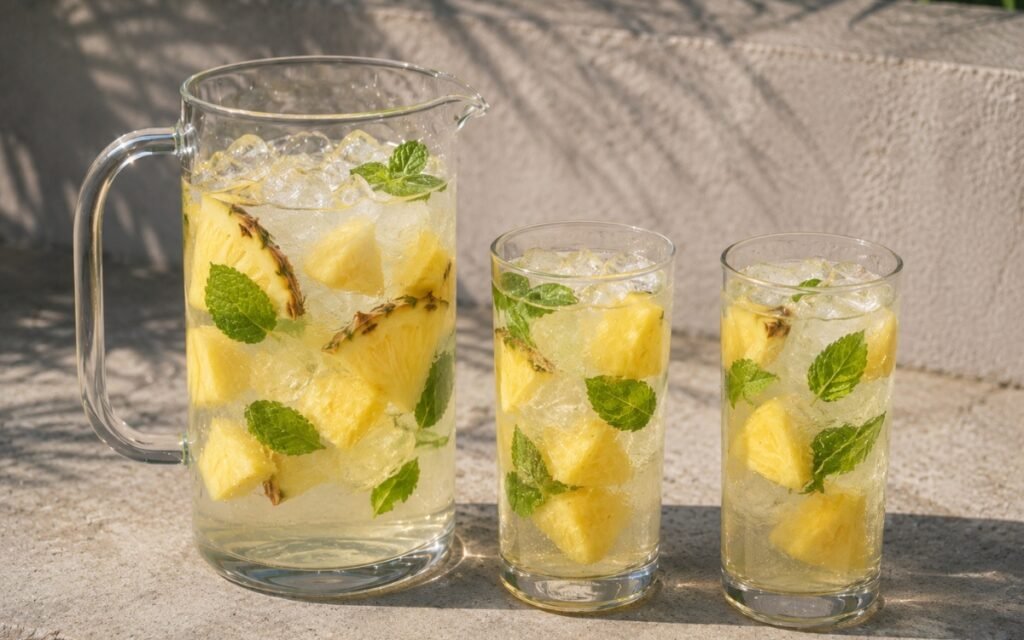
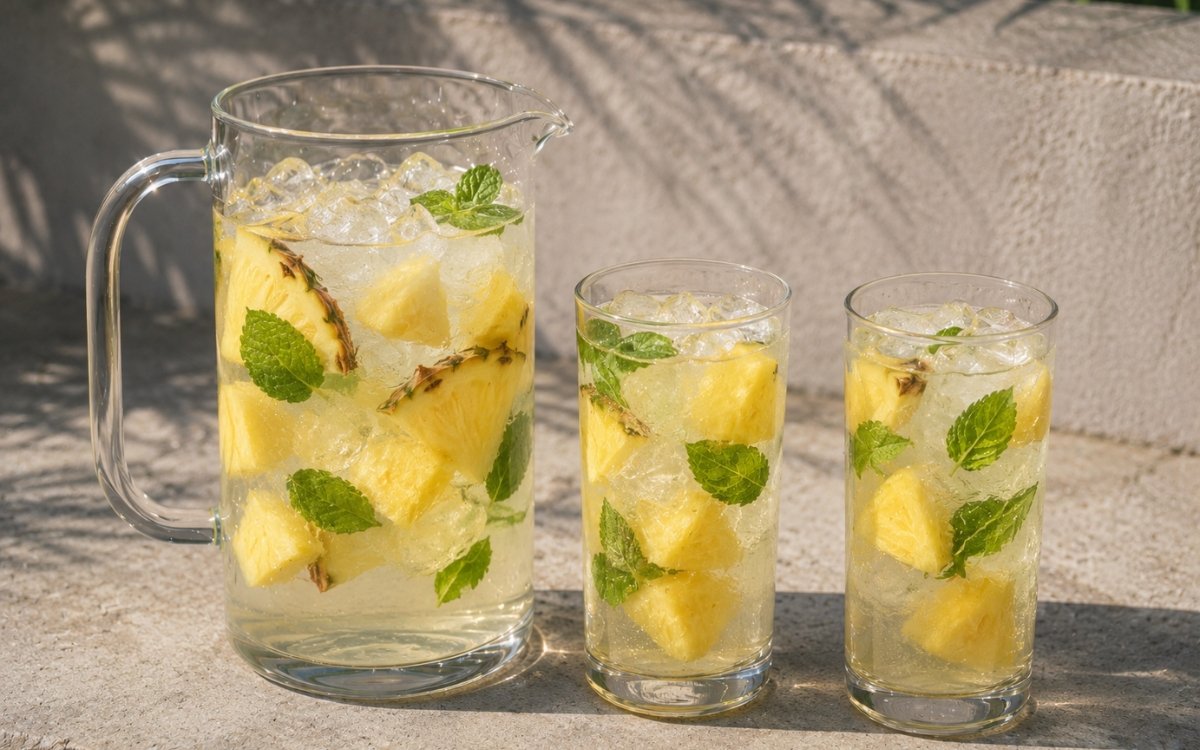
Pineapple mint infused water is the only preparation in this infused water collection that includes no citrus component — no lemon, lime, or orange rounds or juice alongside the primary fruit. The pairing is complete without citrus because mint specifically performs the aromatic-freshness function that citrus would otherwise provide: mint’s cool, menthol-adjacent, specifically clean aromatic character provides the brightening dimension that lifts pineapple’s warm, tropical sweetness in the same way lemon brightens orange or lime brightens strawberry. The combination of tropical warmth and herbal coolness in a neutral cold water medium is specifically more interesting than either alone and more refreshing than anything else in this collection’s infused water range. The fermentation warning is specific to pineapple and absent from other fruit preparations: pineapple’s natural bromelain enzyme activity and its relatively high natural sugar content mean that pineapple in water begins showing off-flavours — a slightly fermented, mildly sharp, slightly sour-adjacent note — faster than most other fruits at temperatures above refrigerator cold. The 4-hour maximum is specifically more urgent for pineapple than for the berry and citrus preparations — always keep the pitcher cold and remove the pineapple promptly. The mint’s grassy shift in neutral water is slower than in acidic mediums but still present beyond the 4-hour window.
Prep Time : 10 min
Infusion Time : 1–4 hr
Servings : 16
10 min
1–4 hr
16
Ingredients
For the Infusion Base
• 1 cup fresh pineapple — approximately 150g; cut into small chunks
• 20–30 fresh mint leaves — lightly clapped
• 15–30g honey — optional; must be pre-dissolvedt — this one on Amazon
• 1–2 small pinches fine sea sal
For the Final Build
• 3 litres ice-cold water
• 2 cups fresh pineapple — approximately 300g; slices or chunks
This post may contain affiliate links. As an Amazon Associate I earn from qualifying purchases, at no additional cost to you.
Directions
- Lightly Crush the Pineapple Base
Add the first cup of pineapple chunks to the large pitcher. Using the back of a spoon or a muddler, press each piece once — firmly enough to crack the dense pineapple flesh and release the vivid golden juice and aromatic compounds from the interior. Pineapple’s denser, more fibrous texture compared to watermelon or strawberry requires slightly more deliberate pressure than those fruits, but the same principle applies: enough to crack and release, not enough to reduce to a fibrous, pulpy mass that produces murky water rather than clean infusion. The correctly crushed pineapple pieces should be visibly cracked, releasing vivid juice, with their chunk integrity largely preserved. Pineapple’s primary aromatic compounds for cold infusion — ethyl 2-methylbutanoate and various tropical esters — are the same volatile compounds that make fresh pineapple specifically fragrant and are preserved by the cold process in the same way as in the fresh pineapple lemonade. These compounds release progressively into the surrounding cold water over the 1–4 hour infusion period, producing the specific tropical aromatic quality that makes pineapple infused water immediately identifiable. - Clap the Mint and Add to Base
Hold the 20–30 fresh mint leaves between both palms and bring together firmly in a single clap. The audible sound and immediately released menthol aroma indicate correct bruising of the surface aromatic cells. Add the clapped mint leaves to the pitcher immediately alongside the crushed pineapple. The clapped mint leaves begin infusing their menthol and menthone aromatic compounds into the pitcher medium simultaneously with the pineapple’s tropical esters — the two cold infusions occurring in parallel from the first moment rather than sequentially. The pineapple’s warm, tropical sweetness and the mint’s specifically cool, fresh aromatic freshness begin integrating in the same medium immediately. - Optional Honey and Salt
Pre-dissolve any honey in warm water. Add with the 1–2 small pinches of fine sea salt. Pineapple’s natural sugar content is the highest of any fruit used in the infused water preparations — when honey is added, the very minimal 15g quantity at the lower end of the range is the appropriate starting point, as pineapple’s natural sugars already provide more background sweetness than watermelon or cucumber. - Build and Infuse
Pour the 3 litres of ice-cold water into the pitcher. Add the 2 cups of pineapple slices or chunks. Stir gently once or twice. Cover and refrigerate for 1–4 hours. At 1 hour: a subtle, clean tropical freshness with barely perceptible mint coolness. At 2 hours: the pleasant mid-point where both pineapple and mint are more specifically present. At 4 hours: maximum of the pleasantly infused range — vivid tropical-fruit and cool-mint aromatic combination. The fermentation warning is the most specific quality management point of any infused water in this collection. Pineapple’s bromelain enzyme remains active in cold water and continues processing the surrounding sugar molecules over time; combined with pineapple’s high natural sugar content, extended contact begins producing a slightly off, vaguely sour-fermented note at temperatures above approximately 6–8°C. In a refrigerator held at 4°C this process is slower; in a warmer environment (a table at a party, for example) it is faster. Always keep the pitcher refrigerated when not serving, and always remove the pineapple pieces at the 4-hour mark. The mint’s grassy shift in neutral cold water is more gradual than in acidic mediums but is also present; always remove with the pineapple. Serve well chilled directly from the pitcher, or over ice.
*Notes :
- Fresh pineapple is specifically required — canned pineapple’s heat-processing specifically destroys the volatile aromatic esters responsible for pineapple’s tropical character, leaving a sweet, mildly pineapple-adjacent flavour without the vivid, specifically fresh-fruit aromatic quality that makes this infused water refreshing. The bromelain enzyme is also deactivated by the canning process, eliminating the fermentation risk alongside the fresh character simultaneously. Canned pineapple produces a functional but specifically less aromatic and less vivid result.
- The absence of citrus in this preparation is worth emphasising as a deliberate choice — the cool, aromatic freshness of the clapped mint leaves performs the brightening function that lemon, lime, or orange slices would provide in the other preparations. Adding citrus rounds to this pitcher is an option for those who specifically want the citrus dimension, but the preparation is specifically designed to work without it.
Why This Recipe Works
This recipe works because pineapple’s tropical aromatic compounds and mint’s cool herbal aromatics are specifically complementary — occupying opposite sensory registers (warm-tropical vs cool-herbal) while both infusing efficiently into cold neutral water over the 1–4 hour window.
The clapping technique preserves the mint’s clean character throughout. The fermentation removal protocol prevents the quality shift specific to pineapple’s high sugar and enzyme content. And the no-citrus design allows the pineapple-mint combination to be its complete, specific character.
Ingredient Breakdown
Pineapple Lightly Crushed (Two-Stage: Base + Visual)
The progressive aromatic release — dense pineapple flesh requiring deliberate press for cell disruption; whole pieces for visual presence and secondary infusion.
Clapped Mint (Same Technique as Orange Mint Water)
The herbal-coolness dimension — surface aromatic cell bruising for clean menthol release without inner cell chlorophyll.
No Citrus Component
The deliberate absence — mint performing the brightness function that citrus would otherwise provide; pineapple-mint complete without a third component.
4-Hour Maximum (Fermentation-Specific Urgency)
The pineapple-specific quality management — bromelain enzyme and high sugar content producing off-flavours faster than other fruits at any temperature above refrigerator cold.
Flavor Structure Explained
This Pineapple mint infused water follows a minimalist balance model:
- Warm tropical fruit core (pineapple)
- Cool herbal freshness (mint)
- Contrasting aromatic interplay (warm vs. cool)
- Clean infusion character (light extraction)
- Hydration-focused finish (cold water)
Pineapple and mint define the foundation together, creating a distinctive contrast between tropical warmth and cooling herbal freshness. Pineapple contributes sweet, fragrant tropical aromatics that feel bright and sunny, while mint introduces clean menthol-like freshness that provides immediate cooling lift. Because these flavors occupy different sensory spaces, they do not compete; instead, each makes the other feel more vivid and more clearly defined. The pineapple appears sweeter and more tropical against the mint, while the mint feels cooler and fresher against the pineapple. Despite this aromatic complexity, the primary experience remains the refreshment of cold water, making the drink both flavorful and highly hydrating.
Common Mistakes to Avoid
- Blending the Pineapple – Blending produces pineapple water with floating pulp — not infused water. Always a gentle single press.
- Leaving Pineapple Beyond 4 Hours at Any Temperature – The fermentation-adjacent off-flavour specifically develops with time and is more urgent at warmer serving temperatures. Always refrigerate the pitcher and remove at 4 hours.
- Muddling Rather Than Clapping the Mint – Muddling releases chlorophyll, producing a bitter, murky result. Always a single clap between the palms.
- Using Canned Pineapple – Heat-processed pineapple lacks the volatile aromatic compounds. Always fresh pineapple.
- Adding Honey at the Full 30g Quantity – Pineapple’s natural sugar content is the highest in this collection’s infused waters. Always start at the minimum honey quantity if using.
Variations
With Coconut Water
Replace 500ml of the cold water with coconut water — the coconut’s mild tropical sweetness alongside pineapple’s vivid tropical character produces a specifically more tropical result that moves toward the Pineapple Coconut Sparkling Mocktail direction in infused water format.
With Lime
Add 2 thinly sliced limes alongside the pineapple in the final build — lime’s sharp, tropical citrus character is the most specifically complementary citrus addition to pineapple’s own tropical register, adding brightness without competing.
With Ginger
Add 4–5 thin slices of fresh ginger to the base alongside the pineapple — the ginger’s subtle warming sharpness alongside pineapple’s tropical sweetness and mint’s cool freshness produces a more specifically complex, more warming direction.
With Cucumber
Add 8–10 thin cucumber slices alongside the pineapple in the final build — the cucumber’s cool, green freshness alongside pineapple’s warm tropical character and mint’s coolness produces the most specifically refreshing and most complex version.
Storage & Make-Ahead
Once the pineapple and mint have been removed, the infused water can be refrigerated in a sealed pitcher for up to 24 hours. The pineapple’s fresh aromatic character is at its most vibrant during the first 6 to 8 hours after the ingredients are removed.
Infused water should not be stored with the pineapple and mint still present for longer than 4 hours in the refrigerator, and for an even shorter time at room temperature. To maintain the best flavor and prevent over-extraction, remove the ingredients once the infusion period is complete.
Frequently Asked Questions
Why does pineapple get a specific fermentation warning that other fruits don’t?
Pineapple contains bromelain — a naturally occurring protease enzyme — alongside one of the highest natural sugar contents of any fruit used in this collection. In cold water over extended time, the enzyme’s activity combined with the high sugar content begins producing off-flavours with a slightly fermented, vaguely sour-sharp character that is specifically unpleasant and that develops faster than the bitterness problems of lime peel or the grassy shift of extended mint. Always remove pineapple at the 4-hour mark without exception.
Why is there no citrus component in this preparation?
Mint specifically performs the brightening and freshness function that citrus provides in the other infused water preparations. The cool, clean, menthol-adjacent aromatic character of clapped mint leaves provides the lift and crispness that makes the pineapple’s warm tropical sweetness taste specifically refreshing rather than simply sweet. Citrus can be added for those who specifically want it, but the preparation is designed to be complete without it.
Why fresh pineapple and not canned?
Pineapple’s primary pleasant aromatic compounds — the volatile tropical esters responsible for fresh pineapple’s vivid, immediately recognisable character — are destroyed by the heat-processing involved in canning. Canned pineapple infuses a sweet, mildly pineapple-flavoured water without the specific vivid tropical aromatic quality. Fresh pineapple is specifically required.
What other tropical and mint preparations share this direction?
The Watermelon Lime Infused Water shares the tropical-fruit infused water approach with watermelon’s cool, fresh character rather than pineapple’s warm tropical intensity — the closest structural comparison in a cooler fruit direction. The Orange Mint Infused Water shares the clapped mint technique with orange’s warm citrus character as the primary fruit — the most technically parallel preparation. The Mango Lime Pitcher Drink shares the tropical fruit character in a more specifically flavoured, less restrained pitcher preparation.
Nutrition Facts
( per serving )
Calories
~10 kcal
Protein
0 g
Fat
0 g
Carbs
2.5 g
Calories
~10 kcal
Protein
0 g
Fat
0 g
Carbs
2.5 g
Related Recipes
Related Recipes

Strawberry Lemonade Pitcher Drink
Bright pink strawberry lemonade with fresh lemon juice, honey-strawberry syrup, and juicy strawberry slices.
Raspberry Lemonade Pitcher Drink
Honey-raspberry syrup with lemon zest plus fresh raspberries cold-strained — combined with 300ml lemon juice for structural acid, salt, cold water. Vivid and crowd-ready.
Black Tea Orange Pitcher
Ceylon tea at 90–95°C for 3 minutes, dual citrus zest off heat — 750ml orange juice for warm rounded body, cold water, chilled. Tea-forward with orange lift.

You might also like
You might also like
Light Lemon Mint Iced Black Tea
Black tea at 90–95°C for 2½–3 minutes, mint clapped and lemon zest infused cold 10–15 minutes — lemon juice and honey added lukewarm, chilled. Crisp and bright.
Raspberry Iced Black Tea
Black tea at 90–95°C for 2½–3 minutes, lemon peel infused cold, raspberries blended and firmly strained — combined and tasted, chilled. Bright and tea-forward.
Basil Strawberry White Iced Tea
White tea at 75–80°C for 3–4 minutes, strawberry syrup with a pinch of salt, basil clapped and briefly infused — chilled. Delicate, clean, and softly fruity.

Pineapple Mint Infused Water
Ingredients
Method
- Add the first cup of pineapple chunks to the large pitcher. Using the back of a spoon or a muddler, press each piece once — firmly enough to crack the dense pineapple flesh and release the vivid golden juice and aromatic compounds from the interior. Pineapple’s denser, more fibrous texture compared to watermelon or strawberry requires slightly more deliberate pressure than those fruits, but the same principle applies: enough to crack and release, not enough to reduce to a fibrous, pulpy mass that produces murky water rather than clean infusion. The correctly crushed pineapple pieces should be visibly cracked, releasing vivid juice, with their chunk integrity largely preserved. Pineapple’s primary aromatic compounds for cold infusion — ethyl 2-methylbutanoate and various tropical esters — are the same volatile compounds that make fresh pineapple specifically fragrant and are preserved by the cold process in the same way as in the fresh pineapple lemonade. These compounds release progressively into the surrounding cold water over the 1–4 hour infusion period, producing the specific tropical aromatic quality that makes pineapple infused water immediately identifiable.
- Hold the 20–30 fresh mint leaves between both palms and bring together firmly in a single clap. The audible sound and immediately released menthol aroma indicate correct bruising of the surface aromatic cells. Add the clapped mint leaves to the pitcher immediately alongside the crushed pineapple. The clapped mint leaves begin infusing their menthol and menthone aromatic compounds into the pitcher medium simultaneously with the pineapple’s tropical esters — the two cold infusions occurring in parallel from the first moment rather than sequentially. The pineapple’s warm, tropical sweetness and the mint’s specifically cool, fresh aromatic freshness begin integrating in the same medium immediately.
- Pre-dissolve any honey in warm water. Add with the 1–2 small pinches of fine sea salt. Pineapple’s natural sugar content is the highest of any fruit used in the infused water preparations — when honey is added, the very minimal 15g quantity at the lower end of the range is the appropriate starting point, as pineapple’s natural sugars already provide more background sweetness than watermelon or cucumber.
- Pour the 3 litres of ice-cold water into the pitcher. Add the 2 cups of pineapple slices or chunks. Stir gently once or twice. Cover and refrigerate for 1–4 hours. At 1 hour: a subtle, clean tropical freshness with barely perceptible mint coolness. At 2 hours: the pleasant mid-point where both pineapple and mint are more specifically present. At 4 hours: maximum of the pleasantly infused range — vivid tropical-fruit and cool-mint aromatic combination. The fermentation warning is the most specific quality management point of any infused water in this collection. Pineapple’s bromelain enzyme remains active in cold water and continues processing the surrounding sugar molecules over time; combined with pineapple’s high natural sugar content, extended contact begins producing a slightly off, vaguely sour-fermented note at temperatures above approximately 6–8°C. In a refrigerator held at 4°C this process is slower; in a warmer environment (a table at a party, for example) it is faster. Always keep the pitcher refrigerated when not serving, and always remove the pineapple pieces at the 4-hour mark. The mint’s grassy shift in neutral cold water is more gradual than in acidic mediums but is also present; always remove with the pineapple. Serve well chilled directly from the pitcher, or over ice.