
Peach Lemonade Pitcher — For a Crowd
Peach lemonade at crowd scale uses a single-extraction approach — deliberately different from the raspberry and strawberry crowd preparations’ dual-component method — because peach’s aromatic character behaves specifically differently under heat than berry fruit esters do. Peach’s primary pleasant aromatic compounds, the γ-decalactone and δ-decalactone lactones concentrated in the skin and outer flesh cells, are specifically more heat-stable than raspberry’s volatile esters or strawberry’s furanone compounds. They survive the gentle low-heat extraction window without significant evaporative loss, meaning the single cooked-syrup approach captures the full character of the fruit without requiring a separate cold-pressed component. The 900g of skin-on peaches provides the most concentrated single-syrup extraction possible: skin-on is non-negotiable because the outer skin cells are specifically where peach’s highest-concentration lactone compounds are located, and a peeled preparation at any scale produces a specifically less fragrant, less vividly peach-character result. The larger water range — 2.2 to 2.8 litres rather than the 2 to 2.5 litres of the berry crowd preparations — reflects peach’s richer, more concentrated syrup character at the same honey quantity. The structural lemon acid warning — specifically addressed in the notes — mirrors the raspberry preparation’s equivalent note about crowd-scale ice dilution: peach’s warm, sweet, soft character is specifically more vulnerable to ice dilution than raspberry’s vivid, tart brightness, making the 300–360ml of lemon juice even more essential here than in the berry version.

Prep Time : 20 min
Cook Time : 8–10 min
Servings : 16
20 min
8–10 min
16
Ingredients
For the Lemon Base
• Clean pulp or segments from 2–3 lemons — seeds and tough membranes removed; no white pith
For the Peach-Honey Syrup
• 900g ripe peaches — pitted, skin on, thinly sliced; approximately 5–6 large peaches
• 140–160g mild honey — start with 140g — this one on Amazon
• 240ml water
• Zest of 2 lemons — yellow part only; added off heat
For the Final Build
• 300–360ml fresh lemon juice — approximately 6–8 lemons
• 2.2–2.8 litres ice-cold water — start with 2.2 litres; adjust after tasting
• 2 pinches fine sea salt
For Serving
• Ice cubes
• Lemon slices
• Fresh peach slices — added immediately before service to prevent browning
This post may contain affiliate links. As an Amazon Associate I earn from qualifying purchases, at no additional cost to you.
Directions
- Make the Peach-Honey Syrup
Combine the 900g of thinly sliced skin-on peaches, 140g of honey, and 240ml of water in a large saucepan. The quantity requires a larger saucepan than the single-batch preparations — 900g of sliced peach, even thinly sliced, occupies significant volume before the fruit begins releasing juice and reducing in volume during cooking. Warm over medium-low heat, stirring gently, until the honey completely dissolves and the peaches begin softening and releasing juice. Simmer for 8–10 minutes at the lowest effective temperature — the specific low-heat protection is even more important at the crowd scale than at single-batch scale because the larger volume of fruit takes longer to reach the extraction point, increasing the temptation to raise the heat. The distinctive warm, floral, peachy aroma that correctly cooked peach produces at 8–10 minutes of gentle simmering is the accurate indicator of correct progress; a flat, cooked-fruit or jammy smell indicates too much heat. Remove from heat. Add the zest of 2 lemons immediately — off heat, for the integrated aromatic oil extraction into the warm peach-honey medium. Cover and steep for 5–8 minutes. Strain through a fine-mesh sieve into a large bowl or measuring jug. The 900g of cooked peach produces a larger volume of solids to press than the single-batch preparations — a wider sieve is helpful for efficiency. Press gently but firmly to extract the maximum golden-amber, peachy syrup without forcing the dry, fibrous pressed pulp through the mesh. Allow to cool completely. - Build the Pitcher
Prepare the lemon pulp from 2–3 lemons (seeds, membranes, pith removed; clean pulp) and add to the large pitcher. Muddle gently until juice is released and light citrus texture forms. Add the cooled peach-honey syrup, 300ml of fresh lemon juice, 2.2 litres of ice-cold water, and the 2 pinches of fine sea salt. Stir thoroughly. Taste with the peach-lemonade crowd assessment: the drink should be immediately and specifically peachy — the warm, floral, vivid stone-fruit character that good ripe peaches provide — with the lemon’s bright acidity clearly present as the element that makes it specifically lemonade rather than peach juice. The balance point for peach lemonade is specifically different from raspberry lemonade: peach’s warm sweetness needs slightly more lemon’s acid to achieve the refreshing lemonade registration, which is why the lemon juice range extends to 360ml when needed. If the lemon acid is insufficient and the drink reads as peach water — add lemon juice in 30ml increments up to 360ml. If too acidic — a small amount of peach syrup (held back before combining, if anticipated) or additional cold water corrects the balance. If the peach character seems muted — the peaches were likely under-ripe; the preparation is best made with the most fragrant, most fully ripe peaches available. - Chill, Stir, and Serve
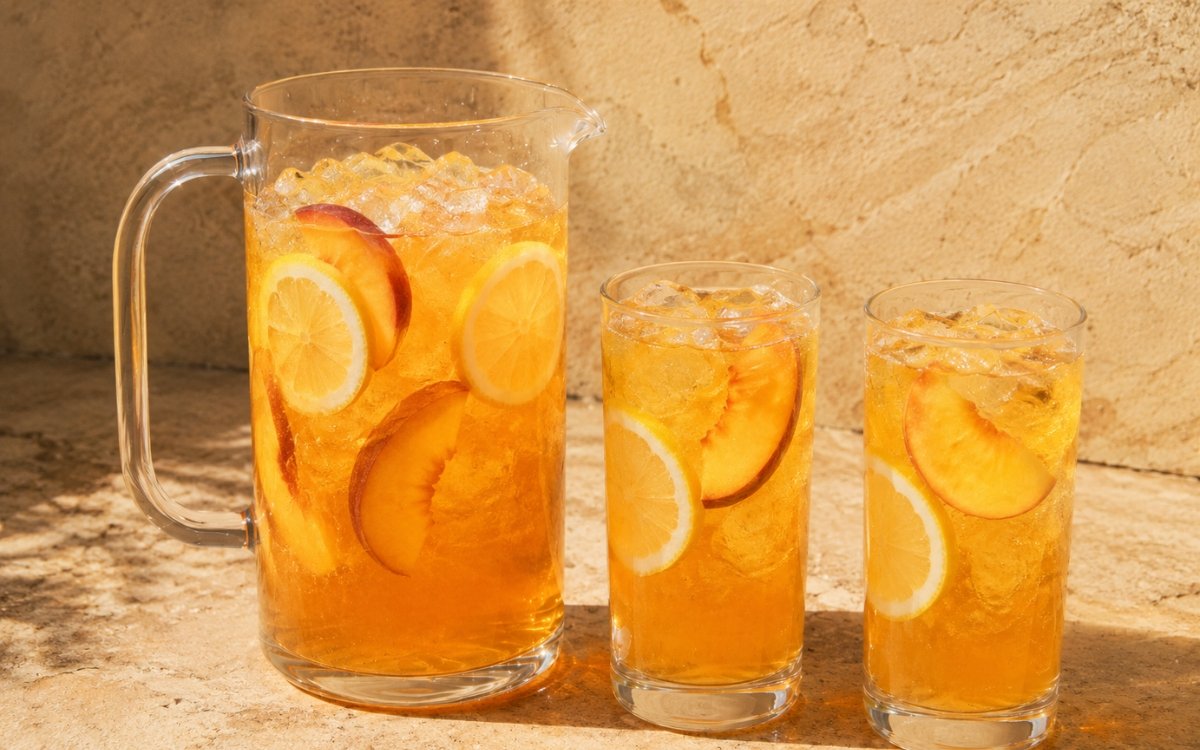
Cover and refrigerate for 1–2 hours. The cold rest specifically benefits peach lemonade at crowd scale — the lactone aromatic compounds distribute through the combined cold liquid during refrigerator rest, producing a specifically more cohesive, more integrated peach-and-lemon character than the immediately combined room-temperature result. Stir once before service. Prepare the peach garnish slices immediately before service — peach browning is the fastest of any fruit in this collection’s crowd preparations, and slices prepared more than 10–15 minutes before service will have visibly oxidised to an unappealing brown. A small bowl of cold water with a squeeze of lemon juice holds freshly sliced peach for up to 20 minutes before browning begins. Fill glasses with ice. Pour the chilled peach lemonade over the ice. Garnish with a lemon slice and fresh peach slices. Serve immediately.
*Notes :
- Peach variety at 900g specifically matters for crowd preparation: the fragrance and lactone concentration of the specific peaches used determine whether the finished pitcher is vivid and specifically peachy or muted and merely sweet. The most fragrant, most deeply golden, most specifically aromatic peaches available — at full ripeness — produce the best result. Flat, hard, or under-ripe supermarket peaches at 900g produce a significantly milder, less characterful syrup that neither honey nor lemon can fully compensate.
- For advance preparation, the peach-honey syrup can be made and refrigerated up to 48 hours before service — it improves slightly over the first 24 hours as the lactone compounds continue integrating with the honey. Build the full pitcher no more than 24 hours before service.
Why This Recipe Works
This recipe works because the skin-on approach maximises lactone compound access at the syrup stage. The single-extraction method is specifically appropriate for peach’s heat-stable aromatic character. The low heat specifically protects the delicate floral-peachy quality throughout the longer cooking period.
The lemon juice at 300–360ml specifically provides the structural acid for crowd-scale ice dilution. And the mild honey avoids competing with peach’s specific floral aromatic character at the 140–160g scale.
Ingredient Breakdown
Skin-On 900g Peaches
The lactone concentration maximisation — skin-on access to the highest-concentration aromatic cells; larger quantity for the single-extraction crowd yield.
Single Extraction (Not Dual)
The heat-stability advantage — peach’s lactones survive gentle heat without significant loss; single cooked syrup captures the full character.
2.2L Starting Water (More Than Berry Versions)
The richer-syrup calibration — peach’s concentrated lactone character requires slightly more dilution than raspberry or strawberry.
300–360ml Lemon Juice Range
The structural acid provision — peach’s warm, sweet character specifically more vulnerable to ice dilution than berry tartness; upper range available for when additional lemon is needed.
Peach Garnish Immediately Before Service
The browning-prevention requirement — fastest oxidising fruit in this collection’s crowd preparations.
Flavor Structure Explained
This Peach lemonade Pitcher follows a layered balance model:
- Warm stone-fruit core (peach)
- Bright citrus backbone (lemon juice)
- Floral rounded sweetness (honey)
- Summery aromatic depth (peach lactones)
- Clean refreshing finish (fruit-acid balance)
Peach defines the foundation with soft sweetness, floral aromatics, and the unmistakable warmth of ripe stone fruit. Its naturally fragrant character gives the lemonade an immediately recognizable summer identity and a gentler profile than berry-based versions. Lemon juice provides the structural acidity that transforms the peach mixture into true lemonade, supplying the brightness needed to maintain freshness even when the drink is served over ice. Honey complements the peach particularly well, adding floral sweetness that reinforces the fruit’s own aromatic qualities rather than competing with them. The result is a large-format lemonade that feels elegant, fragrant, and refreshing while remaining distinctly peach-forward.
Common Mistakes to Avoid
- Peeling the Peaches – The skin contains the highest-concentration lactone cells. Always skin-on for the syrup.
- Using Under-Ripe Peaches – Insufficient lactone concentration produces a muted, flat result. Always the most fragrant, most fully ripe peaches.
- Insufficient Lemon Juice – Peach lemonade without structural acid becomes peach water after ice dilution. Always 300ml minimum; extend to 360ml if needed.
- Starting at 2.8L Water – Always start at 2.2L and taste before adding more.
- Using Strong Honey – At 140–160g in the pitcher, assertive honey specifically dominates peach’s delicate florality. Always mild honey.
- Preparing Peach Garnish in Advance – Peach browns faster than any other fruit in this collection. Always cut immediately before service.
Variations
With Thyme
Add 5 fresh thyme sprigs to the saucepan alongside the peaches during the off-heat steep — removed during straining. The thyme-and-peach combination is one of the most specifically beautiful in this collection, producing the most aromatic version.
With Ginger
Add 15g of thinly sliced fresh ginger to the saucepan alongside the peaches during the gentle simmer — removed during straining. The ginger’s warmth alongside peach produces a more assertive, more specifically interesting direction.
Sparkling Version
Build without water; refrigerate; add ice-cold sparkling water right before serving at the same total volume.
With Basil
Add 15 lightly clapped fresh basil leaves to the completed pitcher before chilling — steep cold for 20 minutes then remove. Basil’s anise-adjacent warmth alongside peach is a specifically Mediterranean, more complex crowd version.
Storage & Make-Ahead
Peach-honey syrup can be refrigerated for up to 48 hours. Its flavor is often at its best 12 to 24 hours after preparation, once the ingredients have had time to fully integrate.
Once assembled, the pitcher can be refrigerated for up to 2 days. For the freshest flavor and aroma, it is best enjoyed within 24 hours.
Frequently Asked Questions
Why single extraction when the berry crowd preparations use dual extraction?
Peach’s primary pleasant aromatic compounds — γ-decalactone and δ-decalactone — are specifically more heat-stable than raspberry’s volatile esters or strawberry’s furanone aromatics. They survive the gentle 8–10 minute simmer at low heat without significant evaporative loss, meaning the single cooked-syrup approach captures the complete character of the fruit. The dual extraction is specifically required when the most pleasant aromatic compounds are heat-sensitive; peach’s are not.
Why skin-on for 900g of peaches?
Peach skin contains a higher concentration of the lactone aromatic compounds than the underlying flesh. At 900g of skin-on sliced peach, the total surface area of skin cells in contact with the honey-water medium during gentle simmering provides significantly more lactone extraction than an equivalent weight of peeled peach.
Why does peach specifically need the lemon juice more than berry preparations?
Peach’s warm, sweet, soft aromatic character has less natural acidity and less natural tartness than raspberry or strawberry to counteract the diluting effect of ice over a service period. Without sufficient lemon acid backbone, peach lemonade served over ice across 16 glasses loses its lemonade registration faster than berry versions and becomes specifically sweet, flat, and water-adjacent.
What other peach and crowd-format preparations share this direction?
The Peach Iced Tea Pitcher Drink shares the peach as primary fruit in a crowd-scale tea-based format. The Peach Lemon Infused Water shares peach and lemon at the most restrained, most water-like end of the spectrum — the same fruit and citrus combination at minimum flavour concentration. The Strawberry Lemonade Pitcher Drink shares the crowd-format lemonade structure with the dual-extraction approach that peach specifically does not require.
Nutrition Facts
( per serving )
Calories
~80 kcal
Protein
0 g
Fat
0 g
Carbs
21 g
Calories
~80 kcal
Protein
0 g
Fat
0 g
Carbs
21 g
Related Recipes
Related Recipes

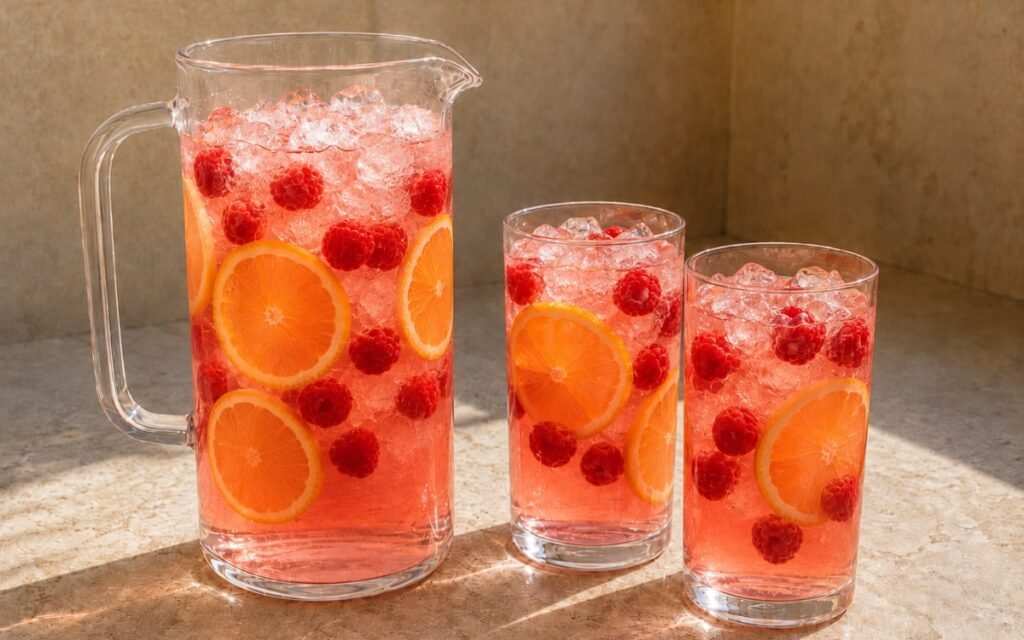
Raspberry Orange Infused Water
Orange pulp and raspberries very lightly pressed — whole fruit cold-infused in 3L water for 1–4 hours, removed. Warm coral-pink, fragrant, and hydrating.
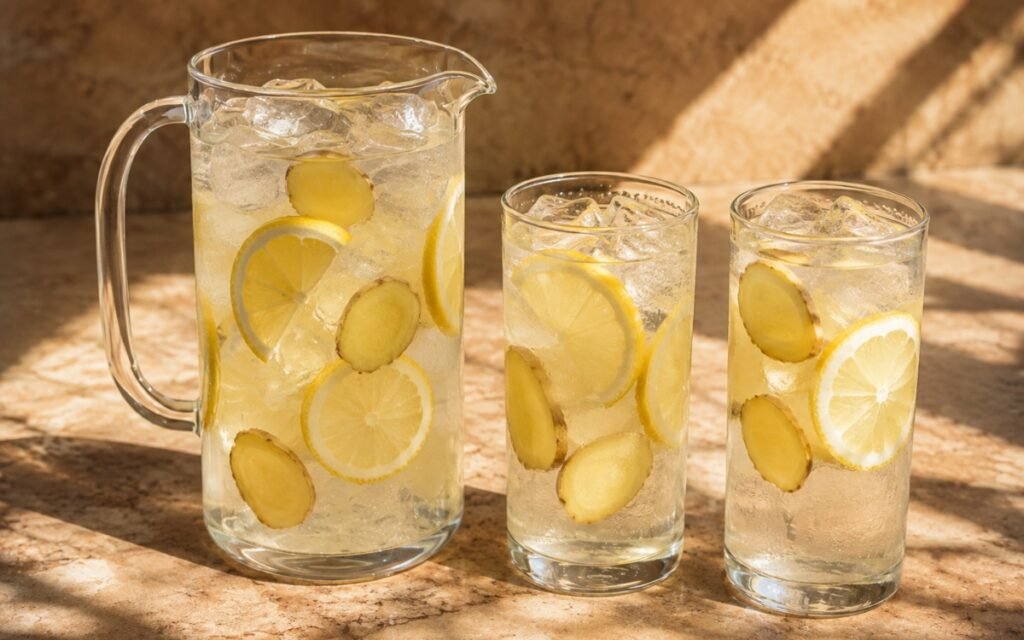
Lemon Ginger Infused Water
Thin lemon slices and very thinly sliced fresh ginger infused cold for a nearly clear, clean, gently warming water.
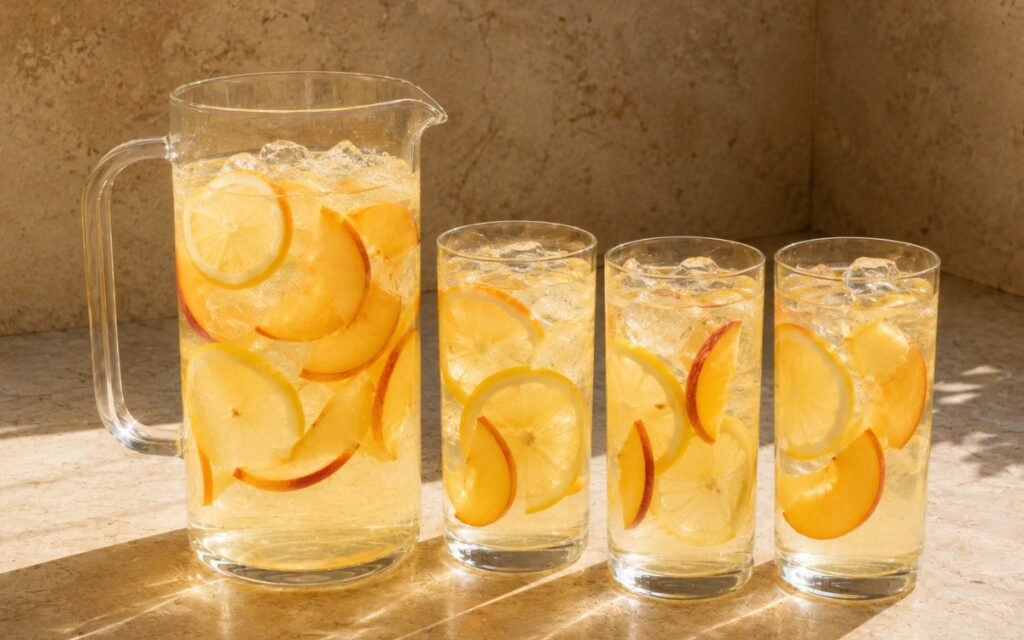
Peach Lemon Infused Water
Ripe peaches skin-on and lightly muddled, sliced peaches and lemon rounds cold-infused in 3L water — removed after 4 hours. Warm, fragrant, and peachy.
You might also like
You might also like
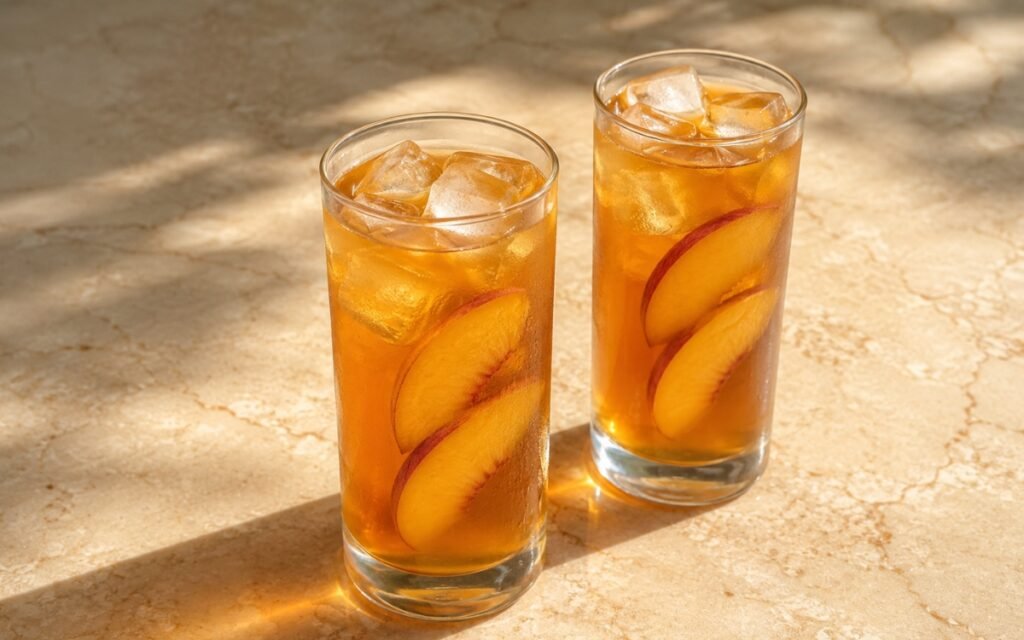
Fresh Peach Iced Tea
Black tea at 90–95°C for 2½–3 minutes, raw peach slices cold-infused 45–60 minutes — strained cleanly, honey, chilled. Bright, fresh, fruit-forward.
Peach White Tea Spritzer Mocktail
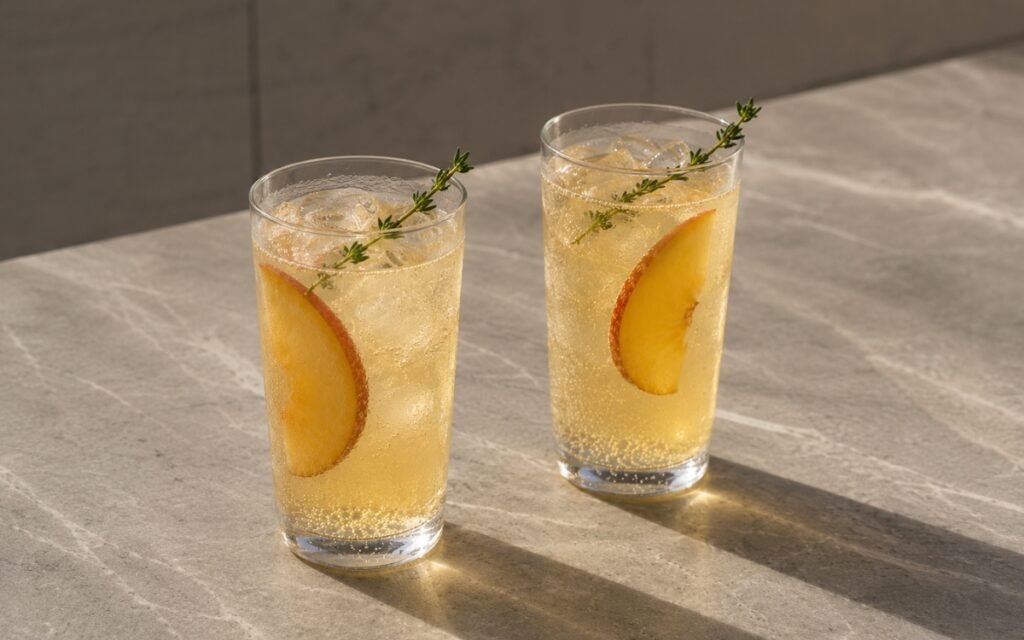
Peaches simmered in thin slices, white tea steeped at 70–85°C with thyme — honey dissolved while warm, topped with club soda. Light, floral, and refined.
Lychee Rose Spritzer Mocktail
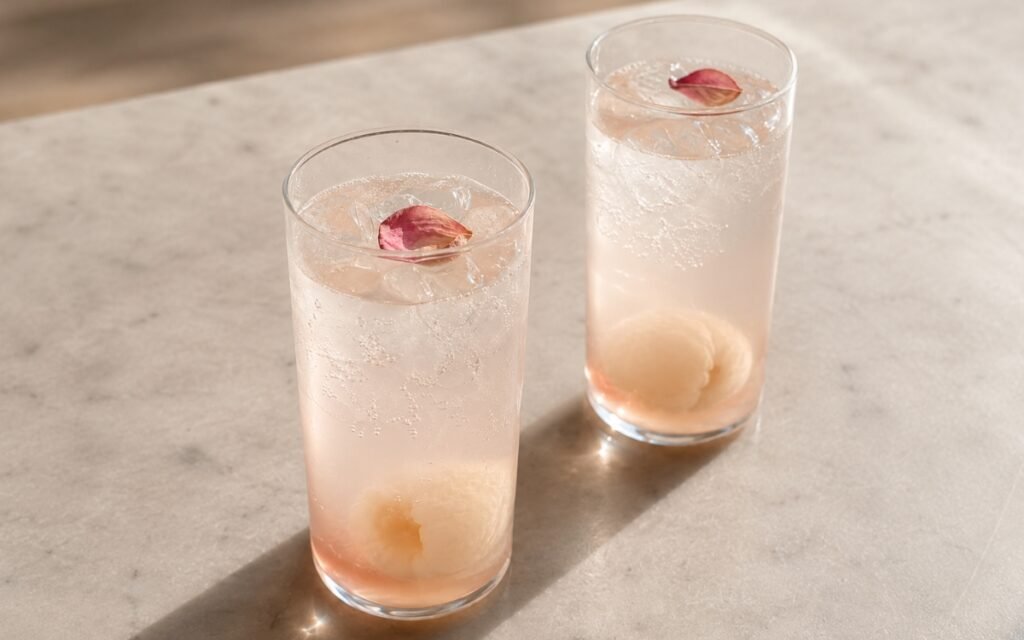
Rose-infused lychee base with honey over club soda — pale pink, floral, and intensely elegant.
Peach Lemonade Pitcher for a Crowd
Ingredients
Method
- Combine the 900g of thinly sliced skin-on peaches, 140g of honey, and 240ml of water in a large saucepan. The quantity requires a larger saucepan than the single-batch preparations — 900g of sliced peach, even thinly sliced, occupies significant volume before the fruit begins releasing juice and reducing in volume during cooking. Warm over medium-low heat, stirring gently, until the honey completely dissolves and the peaches begin softening and releasing juice. Simmer for 8–10 minutes at the lowest effective temperature — the specific low-heat protection is even more important at the crowd scale than at single-batch scale because the larger volume of fruit takes longer to reach the extraction point, increasing the temptation to raise the heat. The distinctive warm, floral, peachy aroma that correctly cooked peach produces at 8–10 minutes of gentle simmering is the accurate indicator of correct progress; a flat, cooked-fruit or jammy smell indicates too much heat. Remove from heat. Add the zest of 2 lemons immediately — off heat, for the integrated aromatic oil extraction into the warm peach-honey medium. Cover and steep for 5–8 minutes. Strain through a fine-mesh sieve into a large bowl or measuring jug. The 900g of cooked peach produces a larger volume of solids to press than the single-batch preparations — a wider sieve is helpful for efficiency. Press gently but firmly to extract the maximum golden-amber, peachy syrup without forcing the dry, fibrous pressed pulp through the mesh. Allow to cool completely.
- Prepare the lemon pulp from 2–3 lemons (seeds, membranes, pith removed; clean pulp) and add to the large pitcher. Muddle gently until juice is released and light citrus texture forms. Add the cooled peach-honey syrup, 300ml of fresh lemon juice, 2.2 litres of ice-cold water, and the 2 pinches of fine sea salt. Stir thoroughly. Taste with the peach-lemonade crowd assessment: the drink should be immediately and specifically peachy — the warm, floral, vivid stone-fruit character that good ripe peaches provide — with the lemon's bright acidity clearly present as the element that makes it specifically lemonade rather than peach juice. The balance point for peach lemonade is specifically different from raspberry lemonade: peach's warm sweetness needs slightly more lemon's acid to achieve the refreshing lemonade registration, which is why the lemon juice range extends to 360ml when needed. If the lemon acid is insufficient and the drink reads as peach water — add lemon juice in 30ml increments up to 360ml. If too acidic — a small amount of peach syrup (held back before combining, if anticipated) or additional cold water corrects the balance. If the peach character seems muted — the peaches were likely under-ripe; the preparation is best made with the most fragrant, most fully ripe peaches available.
- Cover and refrigerate for 1–2 hours. The cold rest specifically benefits peach lemonade at crowd scale — the lactone aromatic compounds distribute through the combined cold liquid during refrigerator rest, producing a specifically more cohesive, more integrated peach-and-lemon character than the immediately combined room-temperature result. Stir once before service. Prepare the peach garnish slices immediately before service — peach browning is the fastest of any fruit in this collection’s crowd preparations, and slices prepared more than 10–15 minutes before service will have visibly oxidised to an unappealing brown. A small bowl of cold water with a squeeze of lemon juice holds freshly sliced peach for up to 20 minutes before browning begins. Fill glasses with ice. Pour the chilled peach lemonade over the ice. Garnish with a lemon slice and fresh peach slices. Serve immediately.