
Pomegranate Ginger Sparkler Mocktail
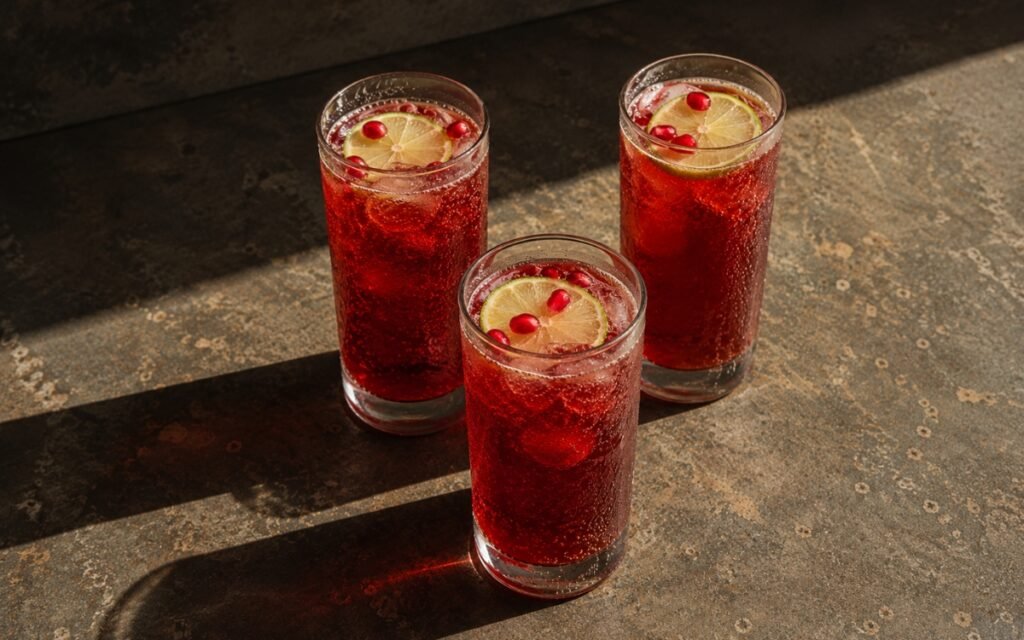
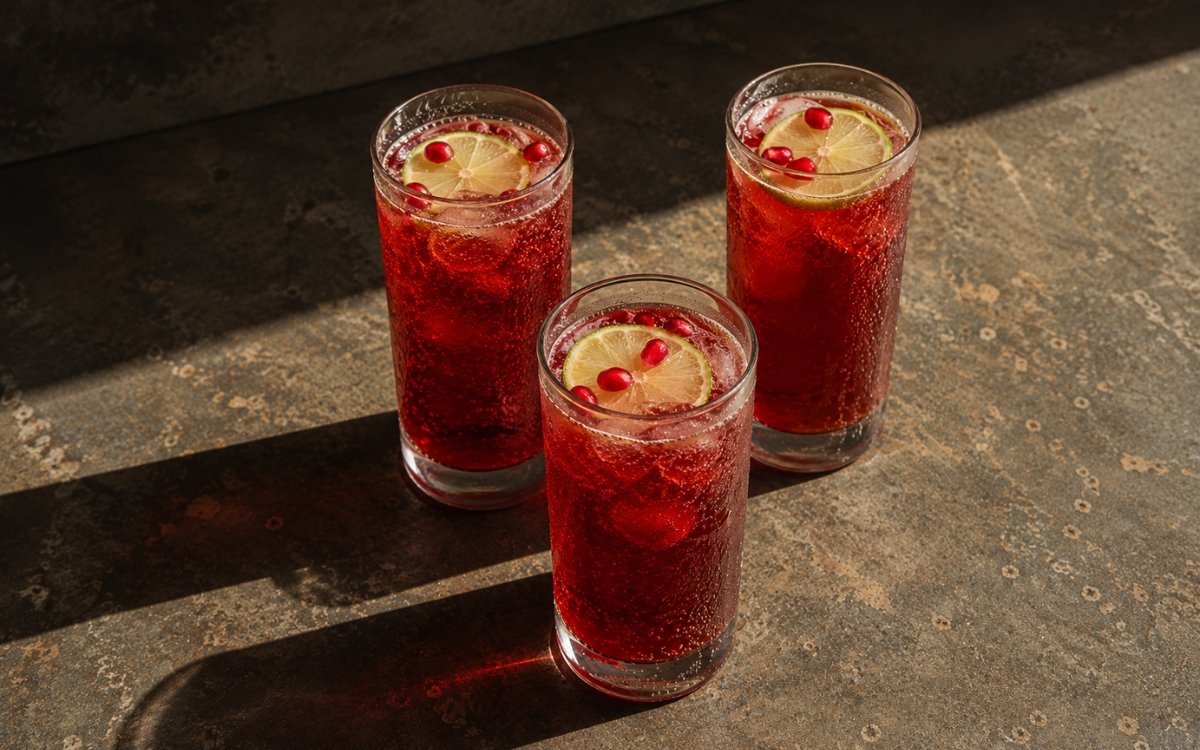
The most dramatically coloured drink in this collection — deep, vivid ruby-red from the pomegranate seeds mashed directly into warm syrup off heat, their juice releasing into the surrounding ginger-brown sugar base at the specific temperature that extracts the bright, fresh anthocyanin-rich colour and tart flavour without the muted, jammy quality of cooked pomegranate. The ginger simmered into the syrup for the full 8–10 minutes rather than steeped off heat — ginger’s primary flavour compounds (gingerols and shogaols) are specifically more heat-stable than elderflower or mint aromatics and require the full simmer to soften from sharp, raw pungency into the warm, rounded, building heat that is ginger’s most pleasant contribution to a drink. Lime zest added to the simmer as a background citrus thread. Strained completely, chilled, and poured over ice with club soda — pomegranate seeds and a lime slice scattered across the surface. The sparkler that makes every other drink on the table look quiet.
Prep Time : 10 min
Cook Time : 8–10 min
Servings : 4
10 min
8–10 min
4
Ingredients
For the Pomegranate Ginger Syrup
• 250ml water
• 70g light brown sugar — this one on Amazon
• 30g fresh ginger, thinly sliced
• Zest of ¼ lime
• 150g fresh pomegranate seeds
For the Garnish
• Lime slices
• Fresh pomegranate seeds
This post may contain affiliate links. As an Amazon Associate I earn from qualifying purchases, at no additional cost to you.
Directions
- Build the Ginger Syrup
Add the 250ml of water, 70g of light brown sugar, 30g of thinly sliced fresh ginger, and the zest of ¼ lime to a small saucepan. The ginger should be sliced approximately 3–4mm thick rather than roughly chopped or grated — thin slices provide sufficient surface area for flavour extraction without producing a fibre-clouded syrup that requires aggressive straining to clear. Place over medium-low heat and bring to a gentle simmer, stirring until the brown sugar has completely dissolved. Continue simmering for 8–10 minutes, stirring occasionally. Unlike the mint in the watermelon fizz or the elderflower in the cucumber tonic — both of which require off-heat steeping at protected temperatures to preserve delicate volatile aromatics — ginger’s primary flavour compounds (gingerols and their heat-converted derivatives, shogaols) are relatively heat-stable and specifically improve with sustained gentle cooking. Raw ginger added directly to cold liquid is sharp, pungent, and slightly harsh. Ginger simmered for 8–10 minutes in sugar syrup undergoes a partial conversion of its harsher pungent compounds into the warmer, more rounded, building heat that is ginger’s most pleasant contribution in a drink context — present as a warm back-of-the-throat warmth rather than an aggressive sting. The brown sugar’s molasses adds a caramel-adjacent warmth that is specifically complementary to the ginger’s heat, producing a deeper, more interesting base than white sugar at the same quantity. - Mash the Pomegranate Seeds into the Warm Syrup Off Heat
Remove the saucepan from the heat. Immediately add the 150g of fresh pomegranate seeds to the warm syrup. Using a muddler, the back of a sturdy spoon, or a potato masher, press firmly on the pomegranate seeds — not a gentle press but a decisive mashing that ruptures the majority of the arils and releases their juice fully into the surrounding syrup. The pomegranate seeds are added off heat specifically: the warm syrup (approximately 75–80°C at the moment of removal from the heat) is sufficient to draw additional colour, juice, and flavour from the broken arils during the steeping period without the active boiling that would drive off the fresh, bright, slightly tart volatile character of the pomegranate juice and replace it with a flat, jam-like cooked note. Allow the mashed pomegranate and ginger syrup to steep together for 10 minutes — the warm syrup progressively deepening in colour from a pale amber to the deep ruby-red of the fully extracted pomegranate juice. The temperature declines through this window, ensuring the extraction occurs at progressively lower temperatures rather than sustained high heat. The finished mixture should be a vivid, deeply ruby-coloured liquid with the mashed pomegranate solids and ginger slices suspended throughout. - Strain and Chill
Strain the syrup through a fine-mesh sieve over a clean jug, pressing lightly on the pomegranate solids to extract as much liquid as possible without pressing so hard that the pomegranate skin’s slightly bitter compounds over-extract into the syrup. Discard the ginger slices, lime zest, and mashed pomegranate solids. The finished strained syrup should be a clear, vivid, deep ruby-red — intensely coloured from the pomegranate’s anthocyanins, specifically the same pigment family as the hibiscus fizz but producing a distinctly different, more wine-adjacent depth of colour. Allow to cool to room temperature for 10–15 minutes, then transfer to the refrigerator and chill completely before assembly — a minimum of 30 minutes. - Assemble and Serve
Fill four tall glasses generously with ice cubes. Divide the chilled pomegranate ginger syrup evenly among the four glasses — approximately 65–70ml per glass. Stir briefly against the ice to further chill the syrup. Top each glass with approximately 125ml of chilled club soda, pouring gently down the inner side of the glass. The ruby syrup and the clear club soda meet briefly as two distinct layers before combining — the visual moment before the gentle stir is one of the preparation’s most striking aspects. Stir gently once or twice to combine. Garnish each glass with a thin lime slice placed against the inner glass surface or across the rim. Scatter a small amount of fresh pomegranate seeds directly over the ice surface — the jewel-like ruby arils floating on the sparkling surface providing the visual counterpoint to the clear glass and the ice. For additional brightness, squeeze the lime slice directly into the drink immediately before serving and give one final gentle stir — the fresh lime juice’s acidity lifting the pomegranate’s tartness into something more specifically vivid. Serve immediately.
*Notes :
- Pomegranate’s colour comes from anthocyanins — the same water-soluble pigment family present in hibiscus, red cabbage, blueberries, and blackberries. In acidic environments (like a lime-brightened syrup) anthocyanins display vivid red-to-pink hues; in more alkaline environments they shift toward purple-blue. The lime zest and the optional lime squeeze at serving maintain the syrup’s acidity and preserve the specific ruby-red rather than allowing the colour to shift toward darker, more purple-adjacent tones over time in storage.
- Fresh pomegranate seeds are specifically the correct ingredient for this preparation — bottled pomegranate juice lacks the fresh brightness and the specific slightly tart, slightly wine-like complexity of freshly mashed seeds. If fresh pomegranate seeds are unavailable, bottled 100% pomegranate juice at 120ml added to the strained ginger syrup after straining and before chilling provides an acceptable substitute that requires no mashing or steeping step.
Why This Mocktail Works
This recipe works because the ginger is cooked fully into the syrup for the rounded, warming depth that raw ginger cannot provide; the pomegranate is added off heat and mashed directly into the warm syrup so it extracts colour and fresh flavour from its own warmth rather than active cooking; and the lime at serving preserves the anthocyanin’s vivid ruby colour by maintaining the acidic environment that keeps the pigments in their red rather than purple state.
Ingredient Breakdown
Ginger (Simmered Full 8–10 Minutes)
The warm spiced depth — heat-stable gingerols converting from harsh pungency to rounded, warming background heat through the full simmer.
Brown Sugar (Rather Than White)
The flavour contribution beyond sweetness — molasses producing caramel-adjacent warmth specifically complementary to ginger’s heat.
Pomegranate Seeds (Mashed Off Heat, Warm Syrup)
The colour, tartness, and flavour — off-heat mashing extracting anthocyanin-rich juice at a temperature that preserves fresh brightness over cooked jamminess.
Lime Zest (In Simmer) and Lime Slice (At Serving)
Dual citrus contributions — zest as subtle aromatic background in the syrup; fresh lime squeezed at serving for acidity that brightens the pomegranate and preserves the ruby colour.
Fresh Pomegranate Seeds as Garnish
The visual finishing element — jewel-like arils on the sparkling surface completing the drama of the drink’s presentation.
Flavor Structure Explained
This Pomegranate ginger sparkler follows a layered balance model:
- Tart fruit core (pomegranate)
- Warm spiced depth (ginger)
- Rounded sweet balance (brown sugar)
- Bright citrus lift (lime)
- Crisp sparkling finish (club soda)
Pomegranate defines the foundation with deep tartness, rich berry-like fruit character, and a complexity that feels more mature than many fruit-based drinks. Ginger adds a warm, lingering spice that builds gradually and gives the drink depth beyond simple refreshment. Brown sugar softens both the tart fruit and the spice with gentle caramel notes, creating a more rounded and integrated flavor profile. Lime sharpens the entire composition with fresh acidity, making the pomegranate taste even more vivid and energetic. Club soda finishes the structure with clean carbonation that lightens the richer flavors and delivers a crisp, refreshing finish.
Common Mistakes to Avoid
- Not Fully Simmering the Ginger – Under-simmered ginger remains sharp and aggressively pungent. Always the full 8–10 minute simmer for the rounded, warming depth.
- Adding Pomegranate Seeds While the Syrup Is Still on the Heat – Direct boiling produces a flat, jammy pomegranate note. Always remove from heat before adding and mashing the seeds.
- Pressing the Pomegranate Solids Too Aggressively During Straining – Forceful pressing extracts slightly bitter compounds from the pomegranate skin. Always press lightly.
- Skipping the Lime at Serving – Without the lime’s acidity, the pomegranate’s colour can shift slightly toward purple-adjacent tones over time and the flavour lacks the vivacity the acid provides.
- Not Chilling Completely Before Assembly – Warm syrup flattens the club soda’s carbonation on contact. Always chill thoroughly.
Variations
With Orange Zest
Replace the lime zest in the syrup with orange zest — the orange’s warmer, more rounded citrus character produces a slightly softer, more autumnal flavour direction alongside the pomegranate and ginger.
With Star Anise
Add 1 star anise to the saucepan with the ginger and brown sugar — the star anise’s specifically sweet, slightly liquorice-adjacent character alongside the ginger and pomegranate produces a festive, warming version specifically appropriate for cold-weather entertaining.
With Hibiscus
Add 5g of dried hibiscus flowers to the saucepan with the ginger during the simmer for an additional layer of floral tartness and an even deeper, more vivid ruby colour.
Spicier Version
Increase the ginger to 45g and add a pinch of cayenne to the syrup during the final 2 minutes of simmering — the building heat becomes notably more assertive and the drink feels warmer from the first sip.
Storage & Make-Ahead
Pomegranate ginger syrup can be refrigerated in a sealed jar for up to 5 days. Its vibrant color remains stable during storage, while the sharp warmth of the ginger softens slightly over the first 24 hours, creating a more rounded and integrated flavor. It is an excellent component to prepare 1 to 2 days in advance for parties or gatherings.
Once assembled, the drinks are not suitable for storage and should be served immediately.
Frequently Asked Questions
Why simmer the ginger rather than steep it off heat?
Ginger’s primary flavour compounds — gingerols and their heat-converted derivatives, shogaols — are significantly more heat-stable than the delicate volatile aromatics of elderflower or mint. Raw or briefly steeped ginger has a sharp, pungent, slightly harsh character. Ginger simmered for 8–10 minutes converts a portion of its harsh gingerols into the softer, warmer, more rounded shogaols — producing the building, warming depth that is ginger’s most pleasant drinking character. The full simmer is specifically required.
Why mash the pomegranate seeds off heat rather than simmering them in the syrup?
Simmering pomegranate juice over direct heat produces a flat, jammy, slightly concentrated note that loses the fresh, tart, wine-adjacent brightness that makes pomegranate specifically appealing in a sparkling drink. The warm off-heat syrup extracts the colour and juice from the mashed seeds at a declining temperature that preserves the fresh character while still efficiently drawing the anthocyanins and flavour compounds from the ruptured arils.
Why is the lime important at serving?
Pomegranate’s anthocyanin pigments are pH-sensitive — vivid ruby-red in acidic environments, shifting toward purple in neutral or alkaline conditions. The fresh lime juice squeezed at serving maintains the syrup’s acidity and preserves the specific ruby-red colour that makes the drink visually dramatic. It also brightens the pomegranate’s tartness into a more vivid, more immediate flavour character.
Can I use bottled pomegranate juice instead of fresh seeds?
Yes — add 120ml of bottled 100% pomegranate juice to the strained, slightly cooled ginger syrup before chilling, skipping the mashing and steeping step. The result is good but the specific fresh, bright tartness of freshly mashed seeds is somewhat lost. Fresh seeds are the correct ingredient when available.
What other tart, fruit-forward mocktails share this flavour direction?
The Cranberry Spritzer Mocktail shares the same tart-sweet balance and jewel-toned colour palette — slightly less complex but similarly vivid and crowd-pleasing. The Pomegranate Lemonade uses the same primary flavour — pomegranate’s deep tartness — in a still rather than sparkling format with lemon providing the acid rather than lime, producing a softer, more broadly appealing version of the same flavour profile.
Nutrition Facts
( per serving )
Calories
~90 kcal
Protein
0 g
Fat
0 g
Carbs
23 g
Calories
~90 kcal
Protein
0 g
Fat
0 g
Carbs
23 g
Related Recipes
Related Recipes

Peach Rosemary Sparkling Mocktail
Sweet golden peach, rosemary depth, and lemon zest over sparkling water — warm and refreshing.
Blackcurrant Rose Fizz Mocktail
Rose-infused blackcurrant base with honey and lemon over club soda — vivid purple and tart.
Non-Alcoholic Limoncello Spritz Mocktail
Bright, aromatic spritz built around lemon oleo saccharum, fresh lemon juice, and crisp club soda.
You might also like
You might also like
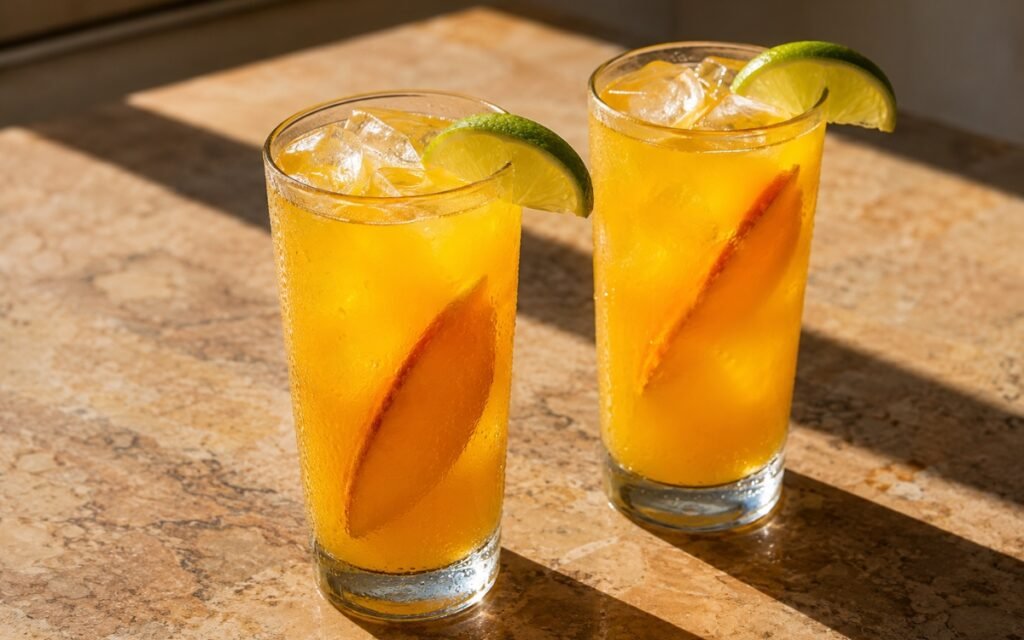
Fresh Mango Lemonade
Mango simmered at medium-low heat with lime zest, ginger off heat exactly 2 minutes — lemon and lime juice added cold, chilled. Tropical, golden, and bright.
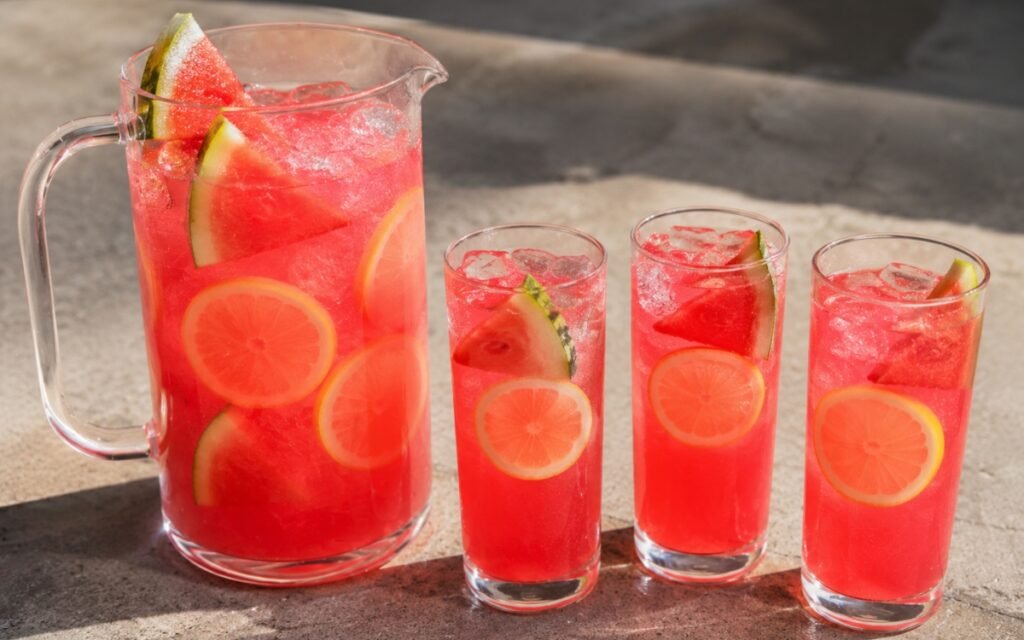
Watermelon Lemonade Pitcher Drink
One kilogram of watermelon blended as the primary liquid — lemon-honey syrup, 240–300ml lemon juice for structural acid, 1L water, salt, chilled. Juicy and vivid.
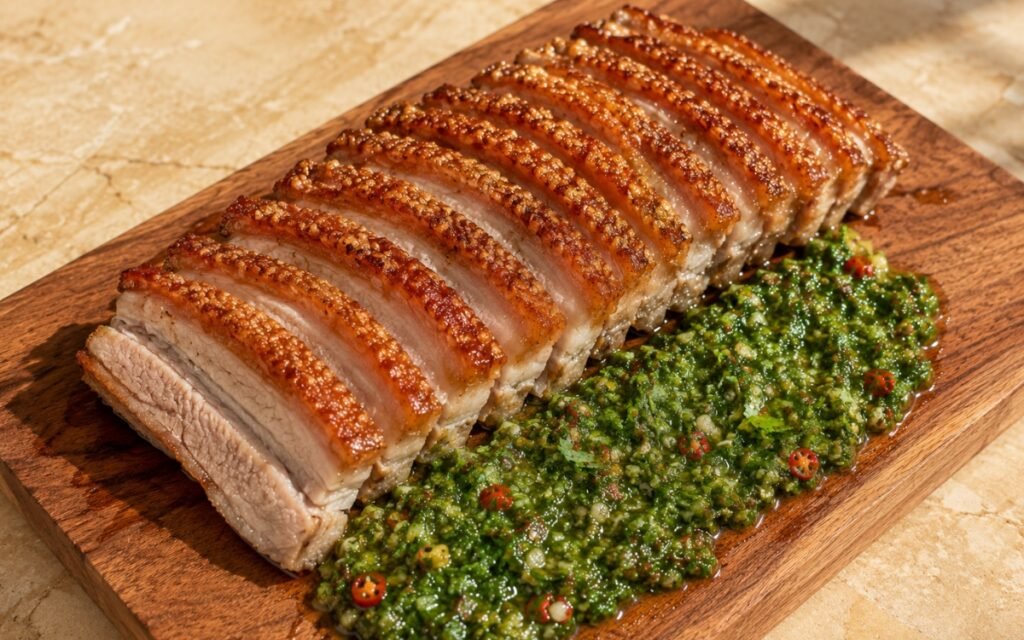
Steam-Roasted Pork Belly with Vietnamese-ish Herb Sauce
Skin-on pork belly steam-roasted for tender meat, finished hot for deep crackling, sliced thick and served with a sharp herb sauce.
Pomegranate Ginger Sparkler Mocktail
Ingredients
Method
- Add the 250ml of water, 70g of light brown sugar, 30g of thinly sliced fresh ginger, and the zest of ¼ lime to a small saucepan. The ginger should be sliced approximately 3–4mm thick rather than roughly chopped or grated — thin slices provide sufficient surface area for flavour extraction without producing a fibre-clouded syrup that requires aggressive straining to clear. Place over medium-low heat and bring to a gentle simmer, stirring until the brown sugar has completely dissolved. Continue simmering for 8–10 minutes, stirring occasionally. Unlike the mint in the watermelon fizz or the elderflower in the cucumber tonic — both of which require off-heat steeping at protected temperatures to preserve delicate volatile aromatics — ginger’s primary flavour compounds (gingerols and their heat-converted derivatives, shogaols) are relatively heat-stable and specifically improve with sustained gentle cooking. Raw ginger added directly to cold liquid is sharp, pungent, and slightly harsh. Ginger simmered for 8–10 minutes in sugar syrup undergoes a partial conversion of its harsher pungent compounds into the warmer, more rounded, building heat that is ginger’s most pleasant contribution in a drink context — present as a warm back-of-the-throat warmth rather than an aggressive sting. The brown sugar’s molasses adds a caramel-adjacent warmth that is specifically complementary to the ginger’s heat, producing a deeper, more interesting base than white sugar at the same quantity.
- Remove the saucepan from the heat. Immediately add the 150g of fresh pomegranate seeds to the warm syrup. Using a muddler, the back of a sturdy spoon, or a potato masher, press firmly on the pomegranate seeds — not a gentle press but a decisive mashing that ruptures the majority of the arils and releases their juice fully into the surrounding syrup. The pomegranate seeds are added off heat specifically: the warm syrup (approximately 75–80°C at the moment of removal from the heat) is sufficient to draw additional colour, juice, and flavour from the broken arils during the steeping period without the active boiling that would drive off the fresh, bright, slightly tart volatile character of the pomegranate juice and replace it with a flat, jam-like cooked note. Allow the mashed pomegranate and ginger syrup to steep together for 10 minutes — the warm syrup progressively deepening in colour from a pale amber to the deep ruby-red of the fully extracted pomegranate juice. The temperature declines through this window, ensuring the extraction occurs at progressively lower temperatures rather than sustained high heat. The finished mixture should be a vivid, deeply ruby-coloured liquid with the mashed pomegranate solids and ginger slices suspended throughout.
- Strain the syrup through a fine-mesh sieve over a clean jug, pressing lightly on the pomegranate solids to extract as much liquid as possible without pressing so hard that the pomegranate skin’s slightly bitter compounds over-extract into the syrup. Discard the ginger slices, lime zest, and mashed pomegranate solids. The finished strained syrup should be a clear, vivid, deep ruby-red — intensely coloured from the pomegranate’s anthocyanins, specifically the same pigment family as the hibiscus fizz but producing a distinctly different, more wine-adjacent depth of colour. Allow to cool to room temperature for 10–15 minutes, then transfer to the refrigerator and chill completely before assembly — a minimum of 30 minutes.
- Fill four tall glasses generously with ice cubes. Divide the chilled pomegranate ginger syrup evenly among the four glasses — approximately 65–70ml per glass. Stir briefly against the ice to further chill the syrup. Top each glass with approximately 125ml of chilled club soda, pouring gently down the inner side of the glass. The ruby syrup and the clear club soda meet briefly as two distinct layers before combining — the visual moment before the gentle stir is one of the preparation’s most striking aspects. Stir gently once or twice to combine. Garnish each glass with a thin lime slice placed against the inner glass surface or across the rim. Scatter a small amount of fresh pomegranate seeds directly over the ice surface — the jewel-like ruby arils floating on the sparkling surface providing the visual counterpoint to the clear glass and the ice. For additional brightness, squeeze the lime slice directly into the drink immediately before serving and give one final gentle stir — the fresh lime juice’s acidity lifting the pomegranate’s tartness into something more specifically vivid. Serve immediately.