
Apricot Vanilla Sparkling Mocktail
The temperature in this recipe is the most carefully managed of any preparation in this collection — approximately 40°C throughout the 15–20 minute cooking period, which is warm enough to soften the apricot flesh progressively and draw its juice into the surrounding honey-water medium but specifically below the threshold where apricot’s primary volatile aromatic compounds begin evaporating rapidly. Apricot shares with pear and melon the specific quality of having its most characteristic aroma concentrated in volatile ester compounds that are simultaneously responsible for its specifically floral, warm, stone-fruit character and for its fragility under heat. The vanilla extract added in the final 5 minutes of the 15–20 minute cooking period rather than at the start — its primary aromatic compound, vanillin, is relatively heat-stable but the dozens of secondary aromatic compounds in pure vanilla extract that contribute its specifically complex warm-sweet character are more volatile and are preserved most completely by the shortest possible heat exposure. The finished base: golden, warm, specifically floral from the apricot, vanilla-fragrant, honey-sweet, and brightened by the lemon zest’s aromatic thread. The most unexpected sparkling mocktail combination — and, served in a wine glass over ice with club soda, one of the most elegant.
Prep Time : 10 min
Cook Time : 15–20 min
Servings : 4
10 min
15–20 min
4
Ingredients
For the Apricot Vanilla Base
• 4 ripe apricots — approximately 250g total, cut into small 1.5cm cubes
• 80g honey — this one on Amazon
• 150ml water
• Zest of ½ lemon
• 1 tsp pure vanilla extract — added in the final 5 minutes— this one on Amazon
For the Garnish
• 4 thin apricot wedges, slipped into each glass
This post may contain affiliate links. As an Amazon Associate I earn from qualifying purchases, at no additional cost to you.
Directions
- Select and Prepare the Apricots
Ripe apricots are the specific requirement — as with the honeydew melon in the agua fresca and the pear in the pear ginger sparkler, this preparation has no heat concentration to compensate for under-ripe, mildly flavoured fruit. A ripe apricot should yield clearly to gentle thumb pressure, produce a specifically sweet, floral, warm stone-fruit aroma from a few centimetres away, and show a deep golden-orange blush extending across at least half the surface. Under-ripe apricots have a pale yellow-green tinge, firm resistance to pressing, and a specifically mild, slightly astringent flavour without the floral warmth that makes apricot a compelling mocktail ingredient. At the very low heat used in this preparation, there is no cooking-down concentration that would amplify a mild fruit’s character — the base will taste exactly as the raw apricots taste in terms of intensity. Cut the apricots in half to remove the stone, then cut each half into 4–6 rough cubes of approximately 1.5cm. The skin is left on — consistent with the kiwi lime, peach rosemary, and pear preparations in this collection — as the apricot skin’s concentrated aromatic compounds contribute a depth to the finished base that peeled apricot cannot. - Build the Base at the Lowest Possible Heat
Combine the 80g of honey, 150ml of water, cubed apricots, and the zest of ½ lemon in a small saucepan. Place over the absolute lowest available heat. Stir gently to begin dissolving the honey into the water — the combination of warm water and continued stirring will dissolve it fully within the first 3–5 minutes of the preparation. The temperature target throughout the 15–20 minute cooking period is approximately 40°C — meaning the liquid should feel comfortably warm, not hot, when a clean finger is dipped briefly. No visible steam should rise from the surface; the liquid should not show any simmering movement. At 40°C the apricot’s cell walls begin softening progressively, releasing juice and the flavour compounds bound within the fruit’s matrix into the surrounding honey-water medium. The honey’s reduced viscosity at this temperature also facilitates the absorption of the aromatic compounds into the sugar matrix — the same principle as the pear ginger sparkler where the honey’s sugar specifically absorbs fruit aromatic compounds more efficiently than plain water. This temperature is specifically protective of apricot’s volatile esters: the lactone compounds (primarily γ-decalactone and δ-decalactone) responsible for apricot’s characteristic warm, peach-adjacent, specifically floral stone-fruit aroma begin evaporating at temperatures above approximately 60°C. Maintaining below this threshold for the full cooking period preserves the majority of these compounds in the base. Cook for 10–15 minutes, stirring occasionally, until the apricots have visibly softened — yielding easily to spoon pressure — and are beginning to break down at their edges. The surrounding liquid should be golden, fragrant, and noticeably thicker from the apricot’s pectin and natural sugars. - Add Vanilla Extract and Complete the Cooking
In the final 5 minutes of the cooking period, add the 1 tsp of pure vanilla extract. Stir gently to distribute. Pure vanilla extract is a complex mixture of hundreds of aromatic compounds — vanillin (the primary aromatic, responsible for vanilla’s characteristic sweet-warm note) is relatively heat-stable; the dozens of secondary compounds (including various phenols, aldehydes, and organic acids) that produce vanilla’s full complex character are progressively more volatile and more heat-sensitive. Adding the vanilla in the final 5 minutes rather than at the beginning reduces the heat exposure of these secondary compounds from the full 15–20 minutes to 5 minutes — preserving a meaningfully larger proportion of the complex aromatic character that makes a good pure vanilla extract smell specifically more interesting than vanillin alone. - Mash, Strain, and Chill
Remove the saucepan from the heat. Using the back of a large spoon or a potato masher, press firmly on the softened apricot cubes — working them against the pan’s surface until they are fully broken down and the maximum juice is extracted. The apricots after 15–20 minutes at this very low temperature are softened and yielding but not fully collapsed — the mashing provides the mechanical extraction that completes the juice release that the gentle heat alone does not produce. Strain through a fine-mesh sieve over a clean jug, pressing firmly on the apricot and lemon zest solids to extract as much flavoured liquid as possible. Discard the strained solids. The finished strained base should be a clear-to-slightly-hazy golden colour — warm amber from the apricot and honey — with a specifically fragrant, warm stone-fruit and vanilla aroma. Chill completely in the refrigerator — a minimum of 30 minutes. - Assemble and Serve
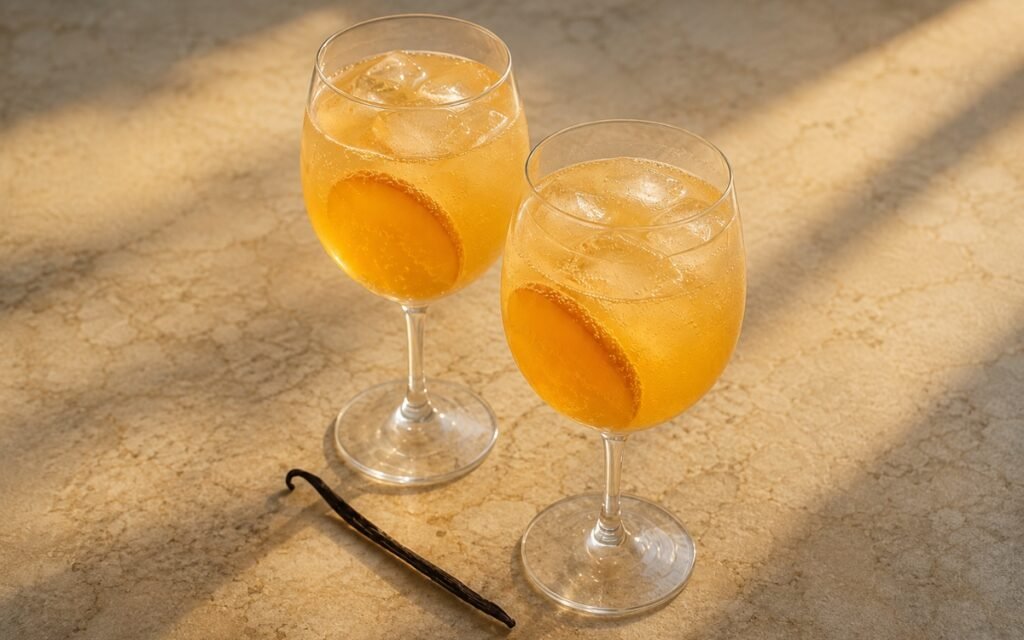
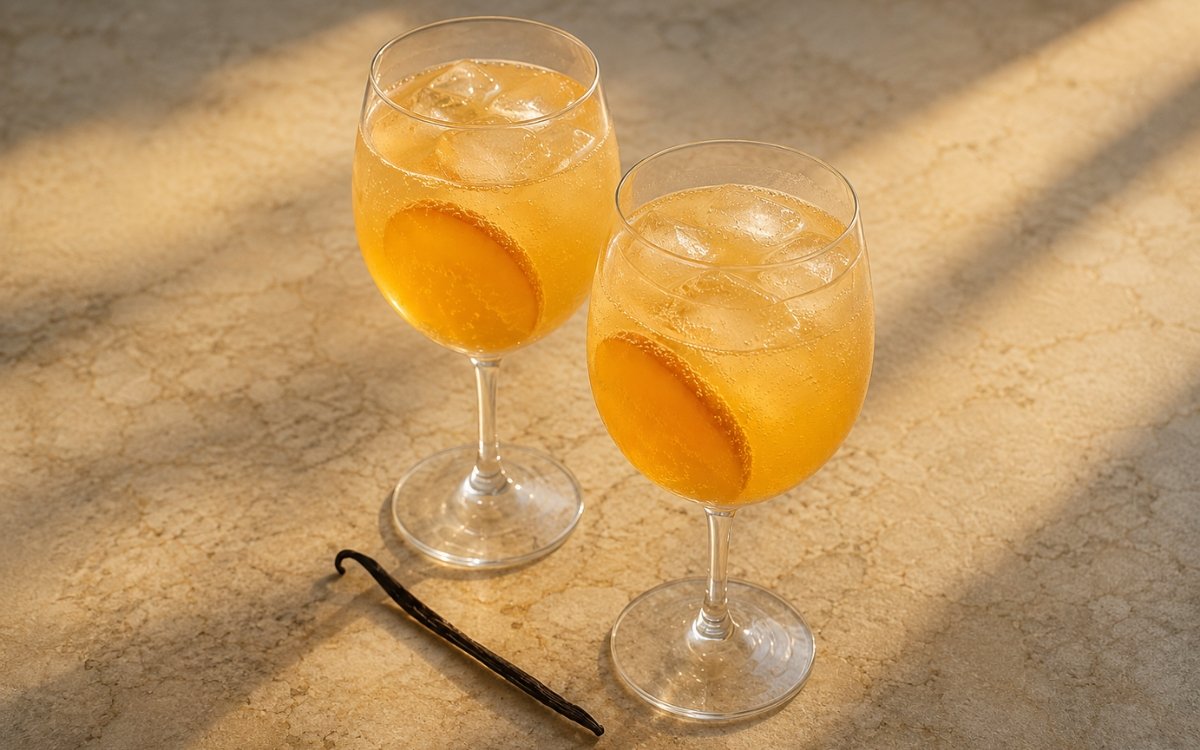
Fill four wine glasses generously with ice cubes. The wine glass format is appropriate to this mocktail’s warm, elegant character — the wide bowl showing the golden colour and providing the space for the apricot wedge garnish to be displayed cleanly. Divide the chilled apricot vanilla base evenly — approximately 70–75ml per glass. Stir briefly against the ice. Top each glass with approximately 125ml of chilled club soda, poured gently down the inner side of the glass. Stir once or twice gently. Prepare the garnish: cut 4 thin wedges from the remaining apricot — approximately 3–4mm thick — and slip each wedge into a glass against the ice so the golden-orange flesh and skin are visible through the drink. Serve immediately.
*Notes :
- Pure vanilla extract is specifically required rather than vanilla flavouring or imitation vanilla. Pure vanilla extract is produced by macerating vanilla beans (Vanilla planifolia pods) in alcohol, extracting the hundreds of naturally occurring aromatic compounds. Imitation vanilla flavouring contains primarily synthetic vanillin — the primary aromatic compound — without the secondary compounds responsible for vanilla’s full complex character. In a preparation where vanilla is a primary flavour note rather than a background accent, the difference between pure extract and imitation flavouring is specifically noticeable.
- The apricot-vanilla combination is a classic European patisserie pairing — appearing in tarts, jams, glazes, and confectionery throughout French, Austrian, and Italian pastry traditions. The specific resonance between apricot’s lactone aromatics and vanilla’s vanillin-and-benzaldehyde aromatic profile produces a combination that is specifically more than the sum of its parts: the two warm, sweet aromatic characters amplifying each other rather than competing, producing the specifically complex, warm, unexpectedly elegant character that makes this mocktail more interesting than either ingredient alone would suggest.
Why This Mocktail Works
This recipe works because the temperature is maintained below 40°C throughout the cooking period, protecting apricot’s heat-sensitive lactone aromatics. The vanilla is added only in the final 5 minutes to reduce its heat exposure and preserve its complex secondary aromatic compounds.
And the combination of apricot’s warm stone-fruit character and vanilla’s specifically sweet-warm aromatic profile produces the amplifying resonance that makes both ingredients more vivid in combination than in isolation.
Ingredient Breakdown
Ripe Apricots Skin-On (Below 40°C Throughout)
The primary warm, floral stone-fruit flavour — heat-sensitive lactone aromatics protected by the specifically low temperature throughout the entire cooking period.
Honey (Absorbs Aromatic Compounds at Low Temperature)
The floral sweetener — specifically chosen over white sugar for its ability to absorb fruit aromatic compounds into its sugar matrix at low temperature.
Vanilla Extract (Final 5 Minutes Only)
The warm aromatic amplifier — added late to protect the secondary aromatic compounds from heat; the specific combination of apricot and vanilla providing a warm, complex resonance.
Lemon Zest (Cooked In From the Start)
The aromatic brightness thread — cooked into the base for an integrated citrus character that lifts the warm apricot and vanilla.
Very Low Heat Throughout (Below 40°C)
The temperature protection technique — the most carefully managed cooking temperature in this collection, specifically protective of apricot’s volatile lactone aromatics.
Flavor Structure Explained
This Apricot vanilla sparkling mocktail follows a layered balance model:
- Warm stone-fruit core (apricot)
- Sweet aromatic depth (vanilla)
- Floral sweet bridge (honey)
- Bright citrus lift (lemon zest)
- Crisp sparkling finish (club soda)
Apricot defines the foundation with soft sweetness, floral aromatics, and the distinctive warmth characteristic of stone fruits. Vanilla reinforces those qualities, adding sweet aromatic depth that enhances the apricot rather than competing with it. Honey acts as the bridge between the two, contributing rounded floral sweetness that unifies the flavor profile. Lemon zest provides a subtle but important citrus brightness that prevents the warm, sweet notes from feeling heavy or overly rich. Club soda completes the structure with clean carbonation, bringing lightness and elegance to the drink and transforming the rich aromatic base into something refreshing and refined.
Common Mistakes to Avoid
- Using Under-Ripe Apricots – Firm, pale, mild apricots produce a mild, slightly flat base. Always fully ripe, fragrant apricots that yield to gentle thumb pressure.
- Exceeding 40–50°C During Cooking – Even gentle simmering at 70–80°C will evaporate the lactone aromatic compounds responsible for apricot’s most characteristic warmth. Always the lowest possible heat throughout.
- Adding Vanilla at the Start of Cooking – 15–20 minutes of heat exposure diminishes vanilla extract’s secondary aromatics significantly. Always add in the final 5 minutes.
- Not Mashing the Apricots After Cooking – The very low temperature does not fully collapse the fruit — the mechanical mashing is essential for complete juice extraction.
- Not Pressing the Solids Firmly During Straining – The mashed apricot solids retain proportion of the golden, flavoured liquid. Always press firmly.
Variations
With Cardamom
Add 3 lightly crushed cardamom pods to the saucepan from the beginning of the cooking period — the cardamom’s warm, slightly floral depth is among the most specifically complementary spice pairings for apricot and vanilla in Middle Eastern and South Asian confectionery traditions.
With Thyme
Add 2 small fresh thyme sprigs alongside the lemon zest at the start of cooking — the thyme’s subtle herbal warmth extracted at the very low temperature provides a background complexity that is specifically well-suited to apricot.
With Rose Water
Add 5ml of rose water alongside the vanilla in the final 5 minutes — the rose’s floral character alongside the apricot’s own florality and vanilla’s warmth produces a specifically more complex, more Middle Eastern-influenced aromatic direction.
With Tonic Water
Replace the club soda with tonic water at assembly — the quinine’s dry, bittersweet finish providing the adult counterpoint that makes the warm, sweet apricot-vanilla base taste specifically more sophisticated.
Storage & Make-Ahead
Apricot vanilla base can be refrigerated in a sealed jar for up to 3 days. The delicate aroma of the apricot gradually fades during storage, so the base is best used within 24 hours for the fullest fruit flavor and fragrance. The vanilla flavor remains stable throughout the storage period.
Once assembled, the drinks are not suitable for storage and should be served immediately after preparation.
Frequently Asked Questions
Why specifically below 40°C during cooking?
Apricot’s most characteristic aromatic compounds — primarily γ-decalactone and δ-decalactone, the warm, peach-adjacent, floral lactone compounds that give ripe apricot its specifically warm stone-fruit character — begin evaporating at temperatures above approximately 60°C. Maintaining below this threshold throughout the full cooking period preserves a significantly larger proportion of these compounds in the base than any simmering preparation would.
Why add vanilla only in the final 5 minutes?
Pure vanilla extract contains hundreds of aromatic compounds beyond vanillin — the secondary phenols, aldehydes, and organic acids that produce its full complex aromatic character are progressively more volatile than vanillin itself and are diminished by sustained heat. Adding in the final 5 minutes reduces heat exposure from the full 15–20 minutes to 5 minutes — preserving meaningfully more of the complex character that makes pure extract specifically worth using.
Why pure vanilla extract rather than vanilla flavouring?
Pure vanilla extract is produced from actual vanilla beans and contains the full complement of naturally occurring aromatic compounds. Imitation vanilla flavouring contains primarily synthetic vanillin — the primary aromatic — without the secondary compounds responsible for vanilla’s complex warmth. In a preparation where vanilla is a primary flavour note, the difference is specifically detectable.
Why the specific apricot-vanilla combination?
Apricot and vanilla is a classic European patisserie pairing — the apricot’s lactone aromatics and vanilla’s vanillin profile produce a specific aromatic resonance where both warm, sweet aromatic characters amplify each other rather than competing. It is one of the most harmonious aromatic pairings in stone-fruit confectionery.
What other delicate, elegant sparkling mocktails share this character?
The Pear Ginger Sparkler shares the same commitment to very low heat for the preservation of a heat-sensitive fruit’s delicate aromatic character — pear’s esters protected the same way as apricot’s lactones, with a differently spiced contrasting element. The Elderflower Cucumber Spritz Mocktail shares the specifically elegant, delicate aromatic character — a different botanical-and-fruit combination but the same specifically refined, minimal-complexity approach.
Nutrition Facts
( per serving )
Calories
~90 kcal
Protein
0 g
Fat
0 g
Carbs
24 g
Calories
~90 kcal
Protein
0 g
Fat
0 g
Carbs
24 g
Related Recipes
Related Recipes

Virgin Mojito Mocktail
Fresh mint, bright lime, and lively bubbles deliver crisp structure with a subtle tart finish, unmistakably adult.
Cucumber Agua Fresca
Ultra-refreshing cucumber agua fresca with lime and subtle jalapeño heat, light, crisp, deeply hydrating green refreshment.
Lychee Rose Spritzer Mocktail
Rose-infused lychee base with honey over club soda — pale pink, floral, and intensely elegant.
You might also like
You might also like
Strawberry Lemonade Pitcher Drink
Honey-strawberry syrup with lemon zest plus fresh strawberries cold-strained — both combined with lemon juice, salt, cold water, fully strained for the crowd pitcher. Bright and vivid.
Light Strawberry Rosemary Iced White Tea
White tea at 75–80°C, strawberries blended with tea and strained — rosemary syrup added gradually to taste, chilled 2–4 hours. Pale pink and botanical.
Rose Lemonade
Edible rose petals steeped in warm syrup exactly 6–8 minutes, strained with light pressing — fresh lemon juice, salt, cold water, chilled. Lemon first, rose warmly behind.
Apricot Vanilla Sparkling Mocktail
Ingredients
Method
- Ripe apricots are the specific requirement — as with the honeydew melon in the agua fresca and the pear in the pear ginger sparkler, this preparation has no heat concentration to compensate for under-ripe, mildly flavoured fruit. A ripe apricot should yield clearly to gentle thumb pressure, produce a specifically sweet, floral, warm stone-fruit aroma from a few centimetres away, and show a deep golden-orange blush extending across at least half the surface. Under-ripe apricots have a pale yellow-green tinge, firm resistance to pressing, and a specifically mild, slightly astringent flavour without the floral warmth that makes apricot a compelling mocktail ingredient. At the very low heat used in this preparation, there is no cooking-down concentration that would amplify a mild fruit’s character — the base will taste exactly as the raw apricots taste in terms of intensity. Cut the apricots in half to remove the stone, then cut each half into 4–6 rough cubes of approximately 1.5cm. The skin is left on — consistent with the kiwi lime, peach rosemary, and pear preparations in this collection — as the apricot skin’s concentrated aromatic compounds contribute a depth to the finished base that peeled apricot cannot.
- Combine the 80g of honey, 150ml of water, cubed apricots, and the zest of ½ lemon in a small saucepan. Place over the absolute lowest available heat. Stir gently to begin dissolving the honey into the water — the combination of warm water and continued stirring will dissolve it fully within the first 3–5 minutes of the preparation. The temperature target throughout the 15–20 minute cooking period is approximately 40°C — meaning the liquid should feel comfortably warm, not hot, when a clean finger is dipped briefly. No visible steam should rise from the surface; the liquid should not show any simmering movement. At 40°C the apricot’s cell walls begin softening progressively, releasing juice and the flavour compounds bound within the fruit’s matrix into the surrounding honey-water medium. The honey’s reduced viscosity at this temperature also facilitates the absorption of the aromatic compounds into the sugar matrix — the same principle as the pear ginger sparkler where the honey’s sugar specifically absorbs fruit aromatic compounds more efficiently than plain water. This temperature is specifically protective of apricot’s volatile esters: the lactone compounds (primarily γ-decalactone and δ-decalactone) responsible for apricot’s characteristic warm, peach-adjacent, specifically floral stone-fruit aroma begin evaporating at temperatures above approximately 60°C. Maintaining below this threshold for the full cooking period preserves the majority of these compounds in the base. Cook for 10–15 minutes, stirring occasionally, until the apricots have visibly softened — yielding easily to spoon pressure — and are beginning to break down at their edges. The surrounding liquid should be golden, fragrant, and noticeably thicker from the apricot’s pectin and natural sugars.
- In the final 5 minutes of the cooking period, add the 1 tsp of pure vanilla extract. Stir gently to distribute. Pure vanilla extract is a complex mixture of hundreds of aromatic compounds — vanillin (the primary aromatic, responsible for vanilla’s characteristic sweet-warm note) is relatively heat-stable; the dozens of secondary compounds (including various phenols, aldehydes, and organic acids) that produce vanilla’s full complex character are progressively more volatile and more heat-sensitive. Adding the vanilla in the final 5 minutes rather than at the beginning reduces the heat exposure of these secondary compounds from the full 15–20 minutes to 5 minutes — preserving a meaningfully larger proportion of the complex aromatic character that makes a good pure vanilla extract smell specifically more interesting than vanillin alone.
- Remove the saucepan from the heat. Using the back of a large spoon or a potato masher, press firmly on the softened apricot cubes — working them against the pan’s surface until they are fully broken down and the maximum juice is extracted. The apricots after 15–20 minutes at this very low temperature are softened and yielding but not fully collapsed — the mashing provides the mechanical extraction that completes the juice release that the gentle heat alone does not produce. Strain through a fine-mesh sieve over a clean jug, pressing firmly on the apricot and lemon zest solids to extract as much flavoured liquid as possible. Discard the strained solids. The finished strained base should be a clear-to-slightly-hazy golden colour — warm amber from the apricot and honey — with a specifically fragrant, warm stone-fruit and vanilla aroma. Chill completely in the refrigerator — a minimum of 30 minutes.
- Fill four wine glasses generously with ice cubes. The wine glass format is appropriate to this mocktail’s warm, elegant character — the wide bowl showing the golden colour and providing the space for the apricot wedge garnish to be displayed cleanly. Divide the chilled apricot vanilla base evenly — approximately 70–75ml per glass. Stir briefly against the ice. Top each glass with approximately 125ml of chilled club soda, poured gently down the inner side of the glass. Stir once or twice gently. Prepare the garnish: cut 4 thin wedges from the remaining apricot — approximately 3–4mm thick — and slip each wedge into a glass against the ice so the golden-orange flesh and skin are visible through the drink. Serve immediately.