
Peach Lemon Infused Water
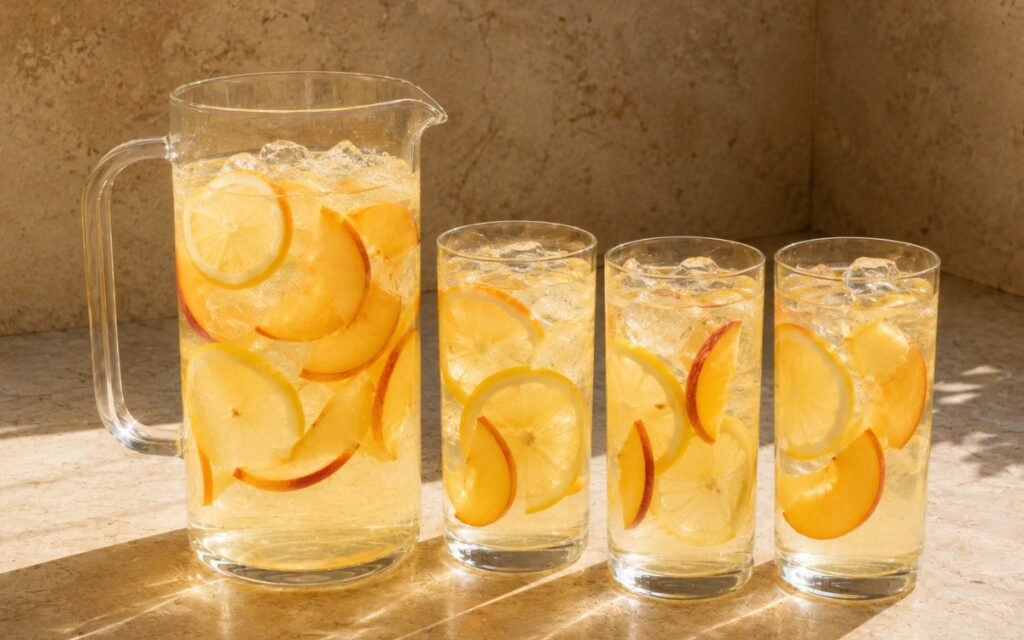
Peach lemon infused water is the most summery and the most specifically fragrant of the stone-fruit infused water preparations — peach’s primary aromatic compounds, the lactone esters (γ-decalactone and δ-decalactone) responsible for its characteristically warm, floral, vivid stone-fruit aroma, are specifically effective at cold-water infusion because they are present in the peach skin’s outer cells at particularly high concentration and release progressively into the surrounding cold water when the flesh is gently disrupted. The skin-on approach for both the muddled base cubes and the sliced final-build pieces is specifically important: peach skin contains a higher concentration of the characteristic lactone aromatic compounds than the flesh, and a preparation using peeled peach produces a specifically less fragrant, less vividly peach-character water than an equivalent preparation with the skin left intact. The lemon slices and optional juice provide the brightening dimension that lifts peach’s warm, sweet character into the refreshing register — the same lemon-lifting-peach principle applied throughout this collection’s peach preparations, here at the minimal concentration appropriate for infused water rather than lemonade. Ripe peaches are specifically required: the lactone concentration that gives peach its characteristic aroma increases dramatically with ripeness, and under-ripe peaches produce a mild, slightly astringent water without the vivid fragrance that makes this preparation specifically worth making.
Prep Time : 10 min
Infusion Time : 1–4 hr
Servings : 16
10 min
1–4 hr
16
Ingredients
For the Infusion Base
• 2–3 ripe peaches — washed, skin on and pitted
• 30–45ml fresh lemon juice — optional
• 15–30g honey — optional; must be pre-dissolved — this one on Amazon
• 1–2 small pinches fine sea salt
For the Final Build
• 3 litres ice-cold water
• 2–3 ripe peaches — thinly sliced; skin on
• 2 lemons — thinly sliced
This post may contain affiliate links. As an Amazon Associate I earn from qualifying purchases, at no additional cost to you.
Directions
- Muddle the Peach Base
Add the 2–3 ripe peaches’ worth of cubed flesh to the large pitcher — skin on, pitted, cut into rough 2–3cm cubes. Using a muddler or the back of a large spoon, press firmly on each cube once — a deliberate downward press that cracks the peach flesh and the skin surface, releasing the warm, fragrant juice and beginning the cell-disruption that initiates the aromatic compound release into the surrounding medium. The peach’s softer flesh compared to watermelon or pineapple requires slightly lighter pressure — each cube should be visibly cracked and juice-releasing with the skin split at the press point, without the entire cube being reduced to a pulp. The quantity — 2–3 whole peaches for the base alone — is specifically larger than any other fruit’s base quantity in this collection’s infused waters. This reflects peach’s relatively lower aromatic compound release rate compared to berries: peach’s lactone compounds are present at meaningful concentration in the skin and outer flesh cells, but their cold-water infusion rate from intact or minimally disrupted fruit is slower than raspberry or blueberry’s anthocyanin and ester release. The skin-on approach maximises the lactone availability at the fruit’s surface for extraction into the cold water. - Optional Honey and Lemon Juice
Pre-dissolve any honey in warm water. Add to the pitcher with optional lemon juice (30–45ml in 3 litres — a barely perceptible brightness that specifically lifts the peach’s warm character into a more refreshing register without producing any lemon flavour) and the 1–2 small pinches of fine sea salt. The salt’s amplifying function is particularly specific in peach infused water — peach’s lactone aromatic compounds respond to sodium at sub-threshold concentration in the same way noted for watermelon’s aldehyde aromatics: the salt makes the peach’s warm, fragrant character taste more specifically of itself, more vivid, and more clearly present in the cold water. - Build and Infuse
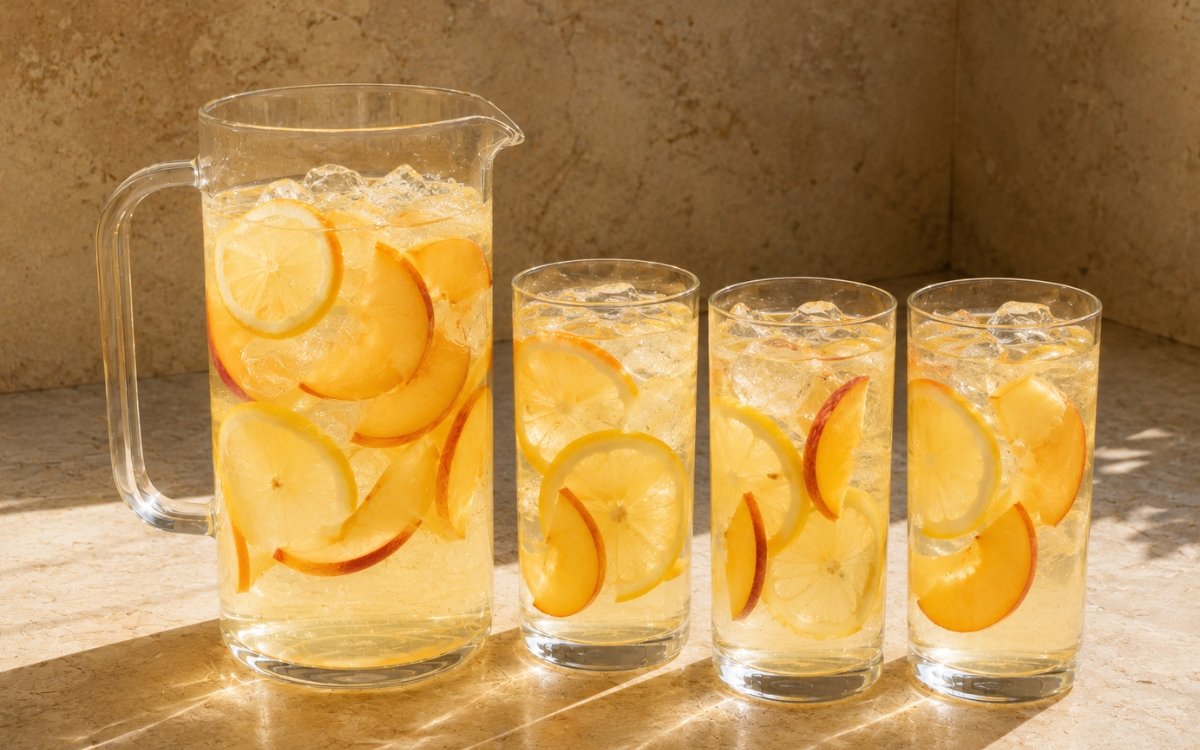
Pour the 3 litres of ice-cold water into the pitcher. Add the thinly sliced peaches — skin on, providing both the visual presence of warm gold-and-pink fruit slices throughout the pitcher and the progressive surface aromatic release from the skin’s lactone-rich outer cells as they slowly release compounds into the cold water. Add the thinly sliced lemons. Stir gently once or twice. Cover and refrigerate for 1–4 hours. Peach’s aromatic infusion develops relatively slowly in cold water — at 1 hour the peach character is soft and subtle; at 2 hours it is more specifically present; at 4 hours the water is at its most vividly peach-fragrant within the clean infused-water range. The “peach loses clarity fast” note from the preparation brief refers to a specific quality issue with peach in cold water beyond the infusion window: peach’s pectin breaks down progressively once the fruit is cut and submerged, and beyond approximately 4 hours the flesh begins to turn the water slightly cloudy and produces a slightly different, more cooked, less specifically fresh aromatic character as the cellular structure further breaks down. Combined with lemon peel’s progressive bitterness extraction, the 4-hour removal is specifically important. After 4 hours, remove all peach pieces and lemon slices.
*Notes :
- Peach variety selection produces meaningful differences in the finished infused water, as noted throughout this collection’s peach preparations. Yellow peaches — the most common commercial variety — produce a specifically vivid, warm, classic peach aromatic infusion. White peaches — lighter coloured, lower acid, more specifically floral in their aromatic profile — produce a more delicate, more specifically floral water with a less vivid colour contribution. Nectarines are a direct substitute — smoother skin (still left on), comparable lactone aromatic profile, similar extraction behaviour.
- The skin-on approach is worth specifically noting as counter-intuitive for some preparations: many recipes call for peeled fruit in water-based preparations to avoid potential bitterness from the skin. Peach skin does not contain significant bitter compounds — it contains the highest concentration of the pleasant lactone aromatics and a small amount of natural astringency from tannins in the skin cells, but the cold-water infusion does not extract the astringent tannins at meaningful concentration within the 1–4 hour window.
Why This Recipe Works
This recipe works because the skin-on approach maximises access to the lactone-rich outer cells. The 2–3 peach quantity for both the base and the visual build compensates for peach’s slower cold-infusion rate compared to berries.
The salt specifically amplifies the lactone aromatic character. And the removal at 4 hours prevents both lemon peel bitterness and peach’s clarity-losing cellular breakdown from affecting the water quality.
Ingredient Breakdown
Skin-On Peaches (Both Base and Sliced)
The lactone concentration maximisation — skin cells contain higher aromatic compound density than the flesh; skin-on approach necessary for the most vivid, most specifically peachy water.
2–3 Peaches Per Stage (Larger Than Berry Preparations)
The slow-infusion compensation — peach’s cold-water aromatic release is slower than berries; more fruit mass required for equivalent infusion impact.
Sub-Threshold Salt (Lactone Amplification)
The peach-character enhancement — sodium specifically amplifying the lactone aromatic compounds’ perceived vividness.
4-Hour Maximum (Pectin Breakdown and Bitterness)
The dual quality-management limit — lemon peel bitterness and peach clarity loss both developing beyond this point.
Flavor Structure Explained
This Peach lemon infused water follows a minimalist balance model:
- Warm fruit core (peach)
- Subtle citrus brightness (lemon)
- Flavor-enhancing salinity (pinch of salt)
- Clean aromatic infusion (light extraction)
- Hydration-focused finish (cold water)
Peach defines the foundation with soft sweetness, floral aromatics, and the distinctive warm fragrance associated with ripe summer fruit. At infusion strength, it lightly perfumes the water rather than creating a strong fruit flavor, giving the drink a gentle but recognizable peach character. Lemon contributes a faint citrus brightness that lifts the peach and keeps the profile feeling fresh and refreshing instead of merely sweet. A small amount of salt subtly intensifies both the fruit aromatics and the citrus freshness, making the flavors feel clearer and more expressive. The result is an infused water built around hydration, delicate fruit fragrance, and effortless summer freshness.
Common Mistakes to Avoid
- Peeling the Peaches – The skin contains the highest concentration of the pleasant lactone aromatic compounds. Always skin-on for both stages.
- Using Under-Ripe Peaches – The lactone concentration increases dramatically with ripeness. Under-ripe peaches produce a mild, slightly astringent water. Always fully ripe, fragrant peaches.
- Leaving Ingredients Beyond 4 Hours – Peach’s cellular breakdown produces cloudiness and a less fresh character; lemon peel bitterness develops. Always remove at 4 hours.
- Not Adding Salt – Peach’s lactone compounds are specifically amplified by sub-threshold sodium. Always include the pinch.
- Over-Muddling the Base Peaches – Peach’s softer flesh breaks down faster than harder fruits under pressure. Always a single firm press per cube only.
Variations
With Fresh Thyme
Add 3 small fresh thyme sprigs to the pitcher alongside the peaches — the thyme’s warm herbal character alongside peach’s lactone warmth is one of the most specifically beautiful herb-fruit pairings, consistent with the Peach Thyme Iced Tea preparation.
With Mint
Add 12 lightly clapped fresh mint leaves — mint’s cool freshness alongside peach’s warm character produces a specifically contrasting, specifically refreshing result.
With Ginger
Add 4–5 thin slices of fresh ginger — the ginger’s subtle warming sharpness alongside peach’s warm sweetness produces a more specifically assertive, more warming direction.
With Raspberry
Add ½ cup of fresh raspberries alongside the peaches — raspberry’s vivid tartness and bright colour alongside peach’s warm sweetness produces a more assertively fruity, more visually vibrant water.
Storage & Make-Ahead
Once the ingredients have been removed, the infused water can be refrigerated in a sealed pitcher for up to 24 hours. The peach’s fresh aromatic character is at its most vibrant during the first 6 to 8 hours after the ingredients are removed.
Infused water should not be stored with the ingredients still present for longer than 4 hours. To maintain the best flavor and prevent over-extraction, remove the ingredients once the infusion period is complete.
Frequently Asked Questions
Why skin-on for peaches specifically?
Peach skin contains a higher concentration of the γ-decalactone and δ-decalactone aromatic compounds responsible for peach’s characteristic warm, vivid aroma than the underlying flesh. These lactone compounds are concentrated in the skin’s outer cell layer and release into cold water during infusion. Peeled peach produces a specifically less fragrant, less vivid infused water.
Why 2–3 peaches per stage when other fruits use only 1 cup for the base?
Peach’s cold-water aromatic release rate is slower than berry fruits’ — berries’ anthocyanins and esters infuse rapidly once the cell walls are disrupted, while peach’s lactone compounds infuse more gradually even with disruption. More fruit mass provides more surface area and more total aromatic compound for the cold water to extract over the infusion period.
What is “peach loses clarity fast” referring to?
Peach’s pectin structure begins breaking down progressively once cut fruit is submerged in water. Beyond approximately 4 hours, this breakdown makes the water slightly cloudy and produces a less specifically fresh aromatic character as cellular contents continue releasing. Combined with lemon peel’s bitterness extraction, the 4-hour removal is specifically important for maintaining the water’s clean, vivid quality.
What other peach preparations share this aromatic approach
The Mango Lime Pitcher Drink shares the tropical-warm-fruit-in-pitcher approach in a more specifically flavoured, less restrained format. The Cucumber Lemon Infused Water shares the lemon-brightened infused water format in a completely different — cooler, greener — aromatic direction. The Peach Lemonade Pitcher Drink shares the peach and lemon combination in the larger, specifically lemonade format rather than the restrained infused-water approach.
How long does it stay fresh after mixing?
Once carbonation is added, the drink is best within 1–2 hours. After that it will still taste good but lose texture and aromatic lift.
Nutrition Facts
( per serving )
Calories
~10 kcal
Protein
0 g
Fat
0 g
Carbs
2.5 g
Calories
~10 kcal
Protein
0 g
Fat
0 g
Carbs
2.5 g
Related Recipes
Related Recipes

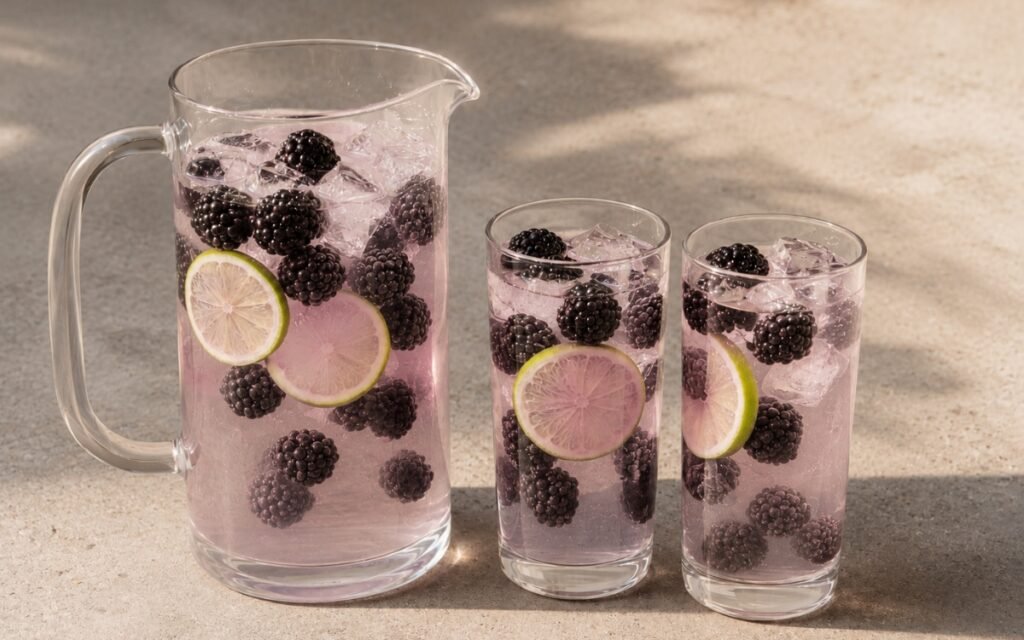
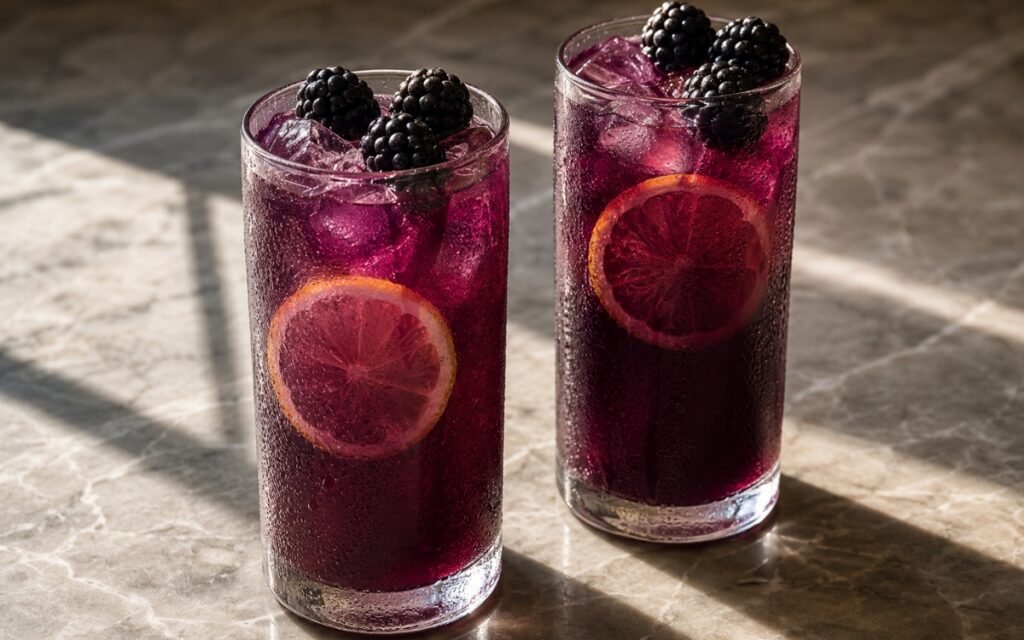
Blackberry Lime Infused Water
Blackberries mashed by cracking the skin without crushing seeds, whole blackberries and lime slices cold-infused in 3L water — removed after 4 hours. Dark purple and quietly complex.
Lemon Iced Tea Pitcher Drink
Ceylon tea at 90–95°C for 3 minutes, lemon zest off heat for aromatic oils — cold lemon juice for structural acid, cold water, chilled. Tea-forward and lemon-bright.
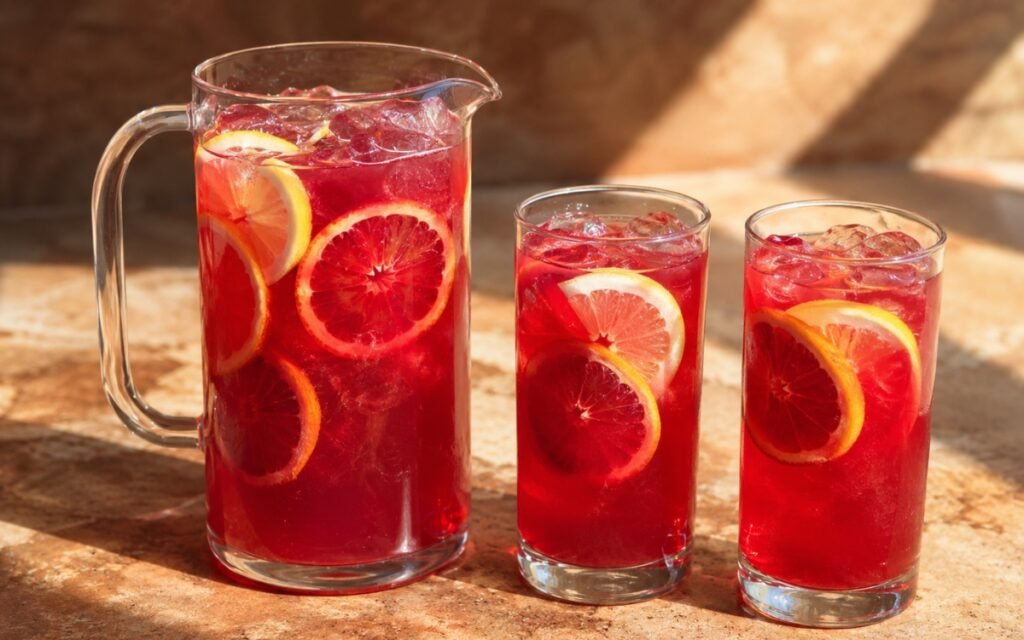
Blood Orange Citrus Pitcher
Deep ruby blood orange pitcher drink with fresh lemon juice, fragrant citrus zest, and lightly sweetened brown sugar syrup.

You might also like
You might also like
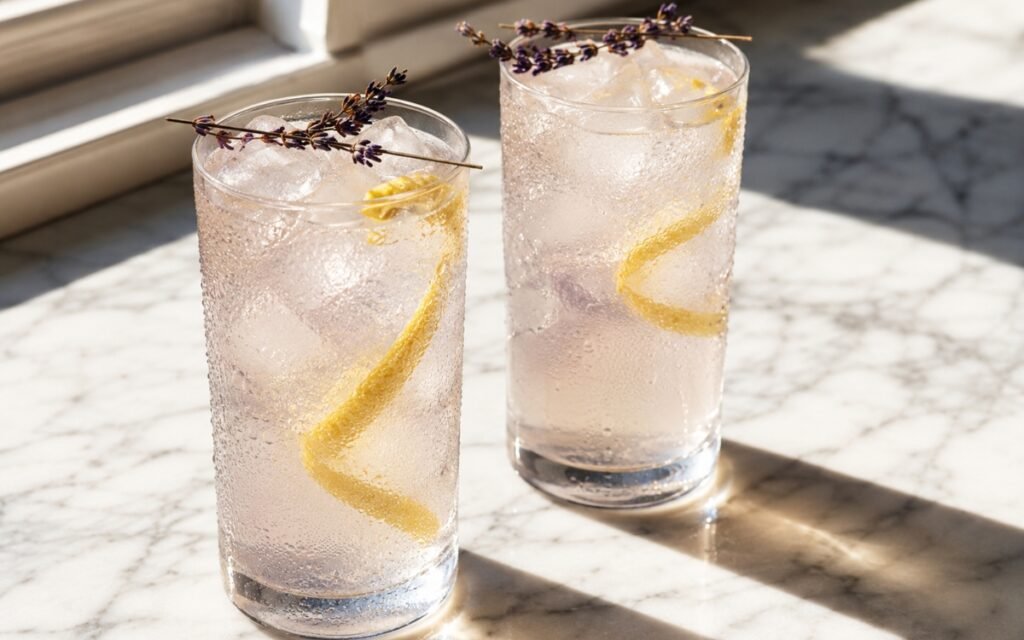
Lavender Lemonade
Lavender steeped in warm syrup exactly 6–8 minutes before camphor develops — lemon pulp, juice, salt, cold water, chilled. Citrus first, floral behind.
Lemon Balm Strawberry Green Iced Tea
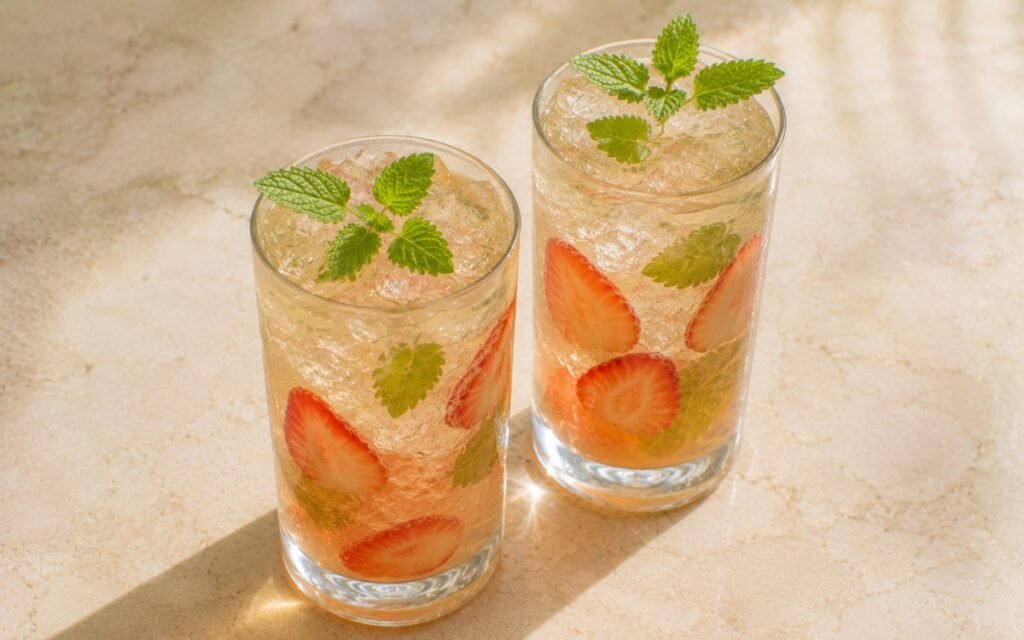
Delicate green iced tea with strained strawberry syrup and fresh lemon balm, chilled and served with strawberry slices.
Blackberry Lemonade
Honey-blackberry syrup at low heat with lemon zest off heat, fresh blackberries cold-strained lightly — both combined with lemon, salt, cold water. Deep, dark-purple, and wine-adjacent.
Peach Lemon Infused Water
Ingredients
Method
- Add the 2–3 ripe peaches’ worth of cubed flesh to the large pitcher — skin on, pitted, cut into rough 2–3cm cubes. Using a muddler or the back of a large spoon, press firmly on each cube once — a deliberate downward press that cracks the peach flesh and the skin surface, releasing the warm, fragrant juice and beginning the cell-disruption that initiates the aromatic compound release into the surrounding medium. The peach’s softer flesh compared to watermelon or pineapple requires slightly lighter pressure — each cube should be visibly cracked and juice-releasing with the skin split at the press point, without the entire cube being reduced to a pulp. The quantity — 2–3 whole peaches for the base alone — is specifically larger than any other fruit’s base quantity in this collection’s infused waters. This reflects peach’s relatively lower aromatic compound release rate compared to berries: peach’s lactone compounds are present at meaningful concentration in the skin and outer flesh cells, but their cold-water infusion rate from intact or minimally disrupted fruit is slower than raspberry or blueberry’s anthocyanin and ester release. The skin-on approach maximises the lactone availability at the fruit’s surface for extraction into the cold water.
- Pre-dissolve any honey in warm water. Add to the pitcher with optional lemon juice (30–45ml in 3 litres — a barely perceptible brightness that specifically lifts the peach’s warm character into a more refreshing register without producing any lemon flavour) and the 1–2 small pinches of fine sea salt. The salt’s amplifying function is particularly specific in peach infused water — peach’s lactone aromatic compounds respond to sodium at sub-threshold concentration in the same way noted for watermelon’s aldehyde aromatics: the salt makes the peach’s warm, fragrant character taste more specifically of itself, more vivid, and more clearly present in the cold water.
- Pour the 3 litres of ice-cold water into the pitcher. Add the thinly sliced peaches — skin on, providing both the visual presence of warm gold-and-pink fruit slices throughout the pitcher and the progressive surface aromatic release from the skin’s lactone-rich outer cells as they slowly release compounds into the cold water. Add the thinly sliced lemons. Stir gently once or twice. Cover and refrigerate for 1–4 hours. Peach’s aromatic infusion develops relatively slowly in cold water — at 1 hour the peach character is soft and subtle; at 2 hours it is more specifically present; at 4 hours the water is at its most vividly peach-fragrant within the clean infused-water range. The “peach loses clarity fast” note from the preparation brief refers to a specific quality issue with peach in cold water beyond the infusion window: peach’s pectin breaks down progressively once the fruit is cut and submerged, and beyond approximately 4 hours the flesh begins to turn the water slightly cloudy and produces a slightly different, more cooked, less specifically fresh aromatic character as the cellular structure further breaks down. Combined with lemon peel’s progressive bitterness extraction, the 4-hour removal is specifically important. After 4 hours, remove all peach pieces and lemon slices.