Ingredients
Method
Muddle the Peach Base
- Add the 2–3 ripe peaches' worth of cubed flesh to the large pitcher — skin on, pitted, cut into rough 2–3cm cubes. Using a muddler or the back of a large spoon, press firmly on each cube once — a deliberate downward press that cracks the peach flesh and the skin surface, releasing the warm, fragrant juice and beginning the cell-disruption that initiates the aromatic compound release into the surrounding medium. The peach's softer flesh compared to watermelon or pineapple requires slightly lighter pressure — each cube should be visibly cracked and juice-releasing with the skin split at the press point, without the entire cube being reduced to a pulp. The quantity — 2–3 whole peaches for the base alone — is specifically larger than any other fruit's base quantity in this collection's infused waters. This reflects peach's relatively lower aromatic compound release rate compared to berries: peach's lactone compounds are present at meaningful concentration in the skin and outer flesh cells, but their cold-water infusion rate from intact or minimally disrupted fruit is slower than raspberry or blueberry's anthocyanin and ester release. The skin-on approach maximises the lactone availability at the fruit's surface for extraction into the cold water.
Optional Honey and Lemon Juice
- Pre-dissolve any honey in warm water. Add to the pitcher with optional lemon juice (30–45ml in 3 litres — a barely perceptible brightness that specifically lifts the peach's warm character into a more refreshing register without producing any lemon flavour) and the 1–2 small pinches of fine sea salt. The salt's amplifying function is particularly specific in peach infused water — peach's lactone aromatic compounds respond to sodium at sub-threshold concentration in the same way noted for watermelon's aldehyde aromatics: the salt makes the peach's warm, fragrant character taste more specifically of itself, more vivid, and more clearly present in the cold water.
Build and Infuse
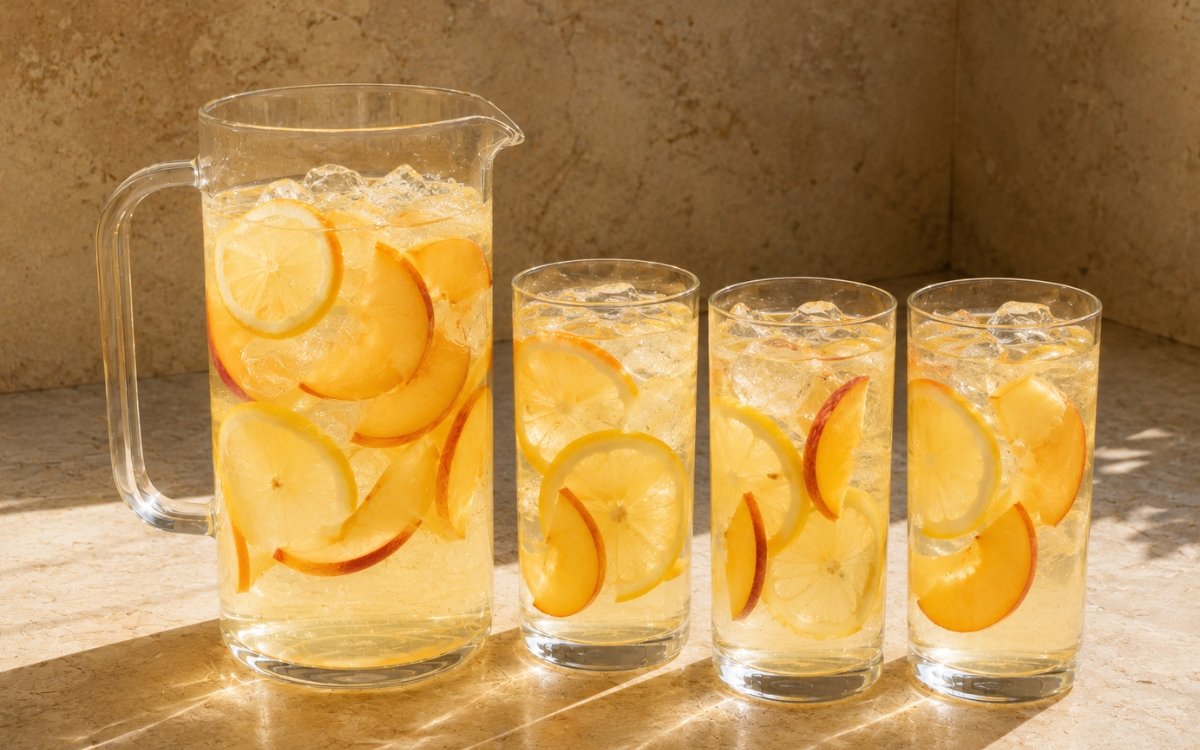
- Pour the 3 litres of ice-cold water into the pitcher. Add the thinly sliced peaches — skin on, providing both the visual presence of warm gold-and-pink fruit slices throughout the pitcher and the progressive surface aromatic release from the skin's lactone-rich outer cells as they slowly release compounds into the cold water. Add the thinly sliced lemons. Stir gently once or twice. Cover and refrigerate for 1–4 hours. Peach's aromatic infusion develops relatively slowly in cold water — at 1 hour the peach character is soft and subtle; at 2 hours it is more specifically present; at 4 hours the water is at its most vividly peach-fragrant within the clean infused-water range. The "peach loses clarity fast" note from the preparation brief refers to a specific quality issue with peach in cold water beyond the infusion window: peach's pectin breaks down progressively once the fruit is cut and submerged, and beyond approximately 4 hours the flesh begins to turn the water slightly cloudy and produces a slightly different, more cooked, less specifically fresh aromatic character as the cellular structure further breaks down. Combined with lemon peel's progressive bitterness extraction, the 4-hour removal is specifically important. After 4 hours, remove all peach pieces and lemon slices.
Notes
Peach variety selection produces meaningful differences in the finished infused water, as noted throughout this collection's peach preparations. Yellow peaches — the most common commercial variety — produce a specifically vivid, warm, classic peach aromatic infusion. White peaches — lighter coloured, lower acid, more specifically floral in their aromatic profile — produce a more delicate, more specifically floral water with a less vivid colour contribution. Nectarines are a direct substitute — smoother skin (still left on), comparable lactone aromatic profile, similar extraction behaviour.
The skin-on approach is worth specifically noting as counter-intuitive for some preparations: many recipes call for peeled fruit in water-based preparations to avoid potential bitterness from the skin. Peach skin does not contain significant bitter compounds — it contains the highest concentration of the pleasant lactone aromatics and a small amount of natural astringency from tannins in the skin cells, but the cold-water infusion does not extract the astringent tannins at meaningful concentration within the 1–4 hour window.