
Mango Lime Pitcher Drink — For a Crowd
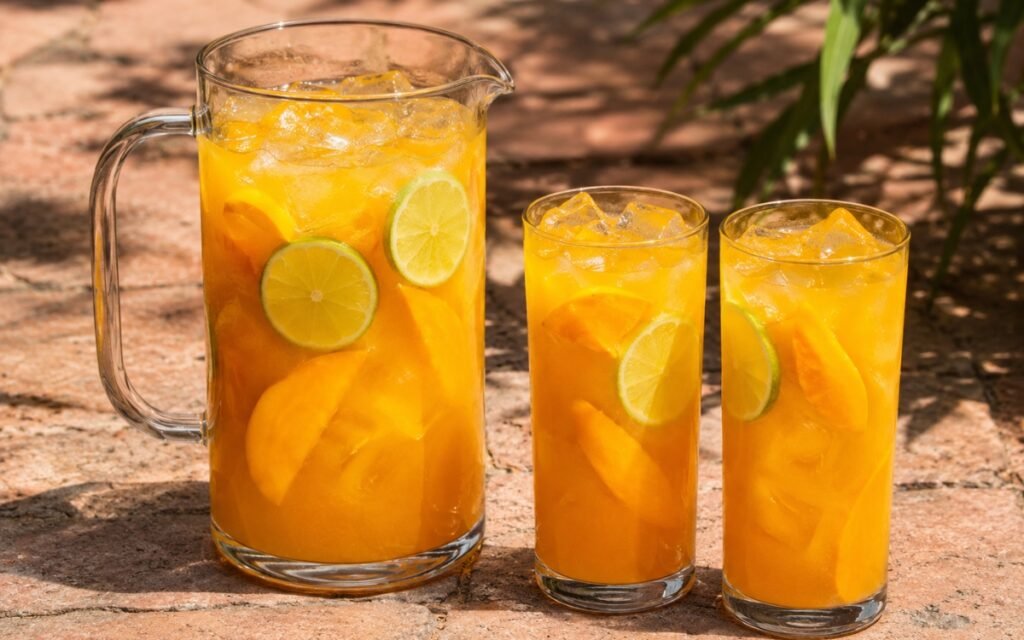
The mango lime crowd preparation is the most specifically tropical and the most specifically complex of the pitcher drink collection — introducing both the chili lift and the brown sugar base that distinguish it from the cleaner, less assertive character of the lemon-honey crowd preparations. Light brown sugar rather than honey or white sugar is specifically the correct sweetener for mango at crowd scale: the trace molasses in light brown sugar adds a specific warm, caramel-adjacent depth that resonates with mango’s own warm tropical aromatic compounds in a way that white sugar’s neutrality specifically cannot and dark brown sugar’s dominant molasses character specifically overwhelms. The chili flakes steeped off-heat with the lime zest are specifically optional but specifically recommended: the mechanism is the same one that makes the Mango Chili Lime Spritzer Mocktail‘s chili component more effective than the alternative of chili-forward preparations — the capsaicin’s warming effect alongside mango’s sweet, rich tropical character and lime’s sharp acid produces a specifically more refreshing result than the same drink without it, because the mild warmth amplifies the perception of cold and makes each glass feel more specifically alive. The lime is specifically the correct citrus for mango rather than lemon: mango’s primary aromatic compounds — primarily various esters and the apocarotenoid-derived compounds responsible for its complex tropical character — are more specifically complemented by lime’s sharper, more tropical acid register than by lemon’s cleaner, more Mediterranean citrus.
Prep Time : 20 min
Cook Time : 8–10 min
Servings : 16
20 min
8–10 min
16
Ingredients
For the Mango Syrup
• 450–500g ripe mango flesh — peeled and cut into small 1–2cm cubes
• 90–120g light brown sugar — not dark brown — this one on Amazon
• 240ml water
• Zest of 2 limes — green part only, no white pith; added off heat
• ½–1 tsp crushed red chili flakes — optional — this one on Amazon
For the Final Build
• 180–240ml fresh lime juice — approximately 5–7 limes
• 2.2–2.8 litres ice-cold water — start with 2.2 litres; adjust after tasting
• 2 pinches fine sea salt
For Serving
• Ice cubes
• Fresh mango slices
• Lime slices
This post may contain affiliate links. As an Amazon Associate I earn from qualifying purchases, at no additional cost to you.
Directions
- Make the Mango Syrup
Combine the 450–500g of cubed mango flesh, 90g of light brown sugar, and 240ml of water in a saucepan over medium-low heat. Stir gently until the sugar dissolves and the mango begins releasing juice and warming through. Simmer for 8–10 minutes, stirring occasionally and pressing softened mango pieces gently against the pan’s side to encourage juice release without producing a uniform purée in the pan. The mango selection is the preparation’s most important single quality variable: ripe but structurally intact mango at full aromatic development — the point where the flesh is completely golden, yields to a firm press, and smells specifically of ripe mango at the skin — produces a vivid, specifically tropical, aromatic syrup. Overripe mango — collapsing flesh, fermented-adjacent aroma — produces a heavier, muddier, less specifically fresh result that the recipe brief accurately describes. Under-ripe mango produces a muted, slightly astringent, specifically less tropical syrup. At 450–500g the quality of the mango is the preparation’s most consequential variable. The light brown sugar’s molasses fraction specifically contributes a warm, slightly caramel-adjacent depth that integrates with mango’s own warm aromatic compounds. This integration is specifically different from white sugar’s neutral sweetness — it makes the mango taste warmer and more specifically complex. Dark brown sugar’s more substantial molasses content at 90–120g would compete with the mango’s aromatic character rather than amplifying it. Remove from heat. Add the lime zest and chili flakes simultaneously. The lime zest’s aromatic oils extract into the warm mango-sugar medium during the off-heat steep; the chili flakes’ capsaicin and capsaicin-adjacent compounds extract at this temperature without the aggressive heat extraction that active simmering with chili would produce. Cover and steep for 5–8 minutes. Strain through a fine-mesh sieve, pressing firmly on the cooked mango solids. Firm pressing is specifically important here — the recipe brief’s note against “no pressing” is accurate: the cooked mango’s softened flesh retains a substantial proportion of its syrup-soaked aromatic character at light pressure and releases it fully under firm pressing. A well-pressed mango syrup is significantly more concentrated, more vivid, and more specifically mango-aromatic than a lightly pressed one. Press until the solids are noticeably drier and the yielded liquid has substantially increased. Discard solids. Allow to cool completely. - Build the Pitcher
Pour the cooled mango syrup into the large pitcher. Add 180ml of fresh lime juice, 2.2 litres of ice-cold water, and the 2 pinches of fine sea salt. Stir thoroughly. The absence of a lemon pulp base in the pitcher is deliberate — this preparation is specifically a mango lime drink rather than a mango lemonade in the classic pulp-and-citrus structural sense. The lime juice provides all the required structural acid; the mango syrup provides all the required fruit character; the pitcher structure is specifically cleaner and more unified without additional pulp components. Taste with the mango-lime crowd assessment: the drink should be immediately and specifically tropical — the warm, rich, vivid mango character present alongside lime’s sharp, tropical brightness. The chili, if used, should be perceptible as a warm lift at the back of the sip rather than as a specific heat — a quality that makes each sip feel more alive without producing discomfort. If the chili is too specific, more cold water moderates it. If it is not perceptible, the chili quantity was at the lower end of the range with mild flakes; this is fine. Additional lime juice up to 240ml sharpens the acid balance if the mango’s sweetness is too dominant. More syrup (if held back) deepens the mango character if the mango seems muted. More water (up to 2.8L) dilutes if the concentration is too intense. - Chill, Stir, and Serve
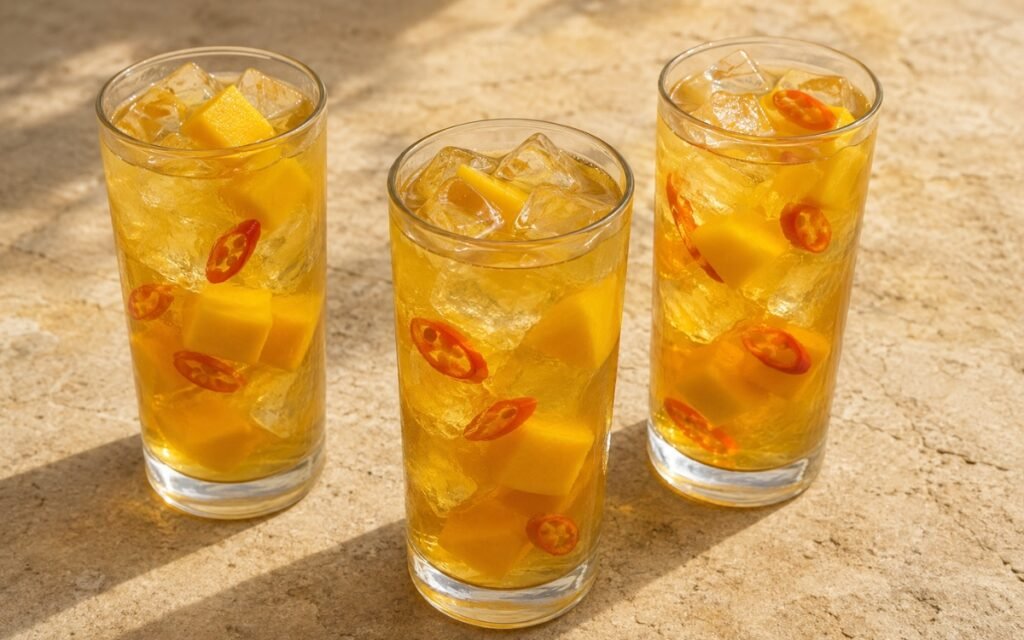
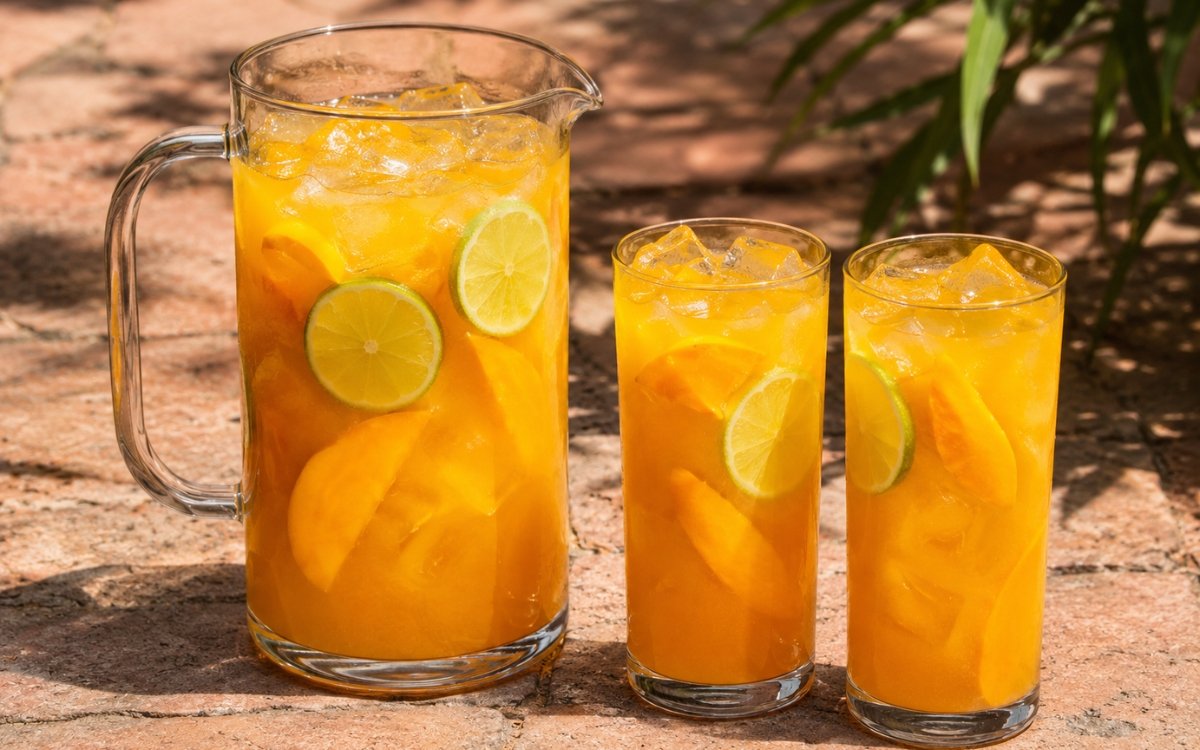
Cover and refrigerate for 1–2 hours. Stir once before the first pour and between subsequent pours — mango’s denser components settle during the refrigerator rest in the same way as watermelon and other blended fruit preparations. Add freshly sliced mango and lime rounds to glasses or the pitcher at service. Serve cold.
*Notes :
- Mango variety produces meaningful differences at 450–500g. Alphonso — available in specialist South Asian markets in season — is the most specifically aromatic, most deeply flavoured mango variety and produces the most vivid, most complex syrup. Ataulfo (Honey mango, Champagne mango) — small, yellow, creamy and very sweet — produces the smoothest, most honey-like syrup. Tommy Atkins and Kent varieties — the most common in Western supermarkets — produce a good, consistent result with slightly less specific aromatic intensity than Alphonso or Ataulfo.
- The chili flakes’ specific variety affects the result: standard mild crushed red pepper flakes provide the warm lift without significant heat. Aleppo pepper flakes produce a more specifically fruity, less aggressively spiced result that is specifically complementary to mango’s own fruity warmth. Thai chili flakes produce a more assertively hot result — use at the lower quantity only.
Why This Recipe Works
This recipe works because the light brown sugar’s molasses specifically resonates with mango’s warm tropical aromatic compounds at this concentration. The chili extracts at off-heat temperature, providing the warming lift without aggressive capsaicin extraction.
The firm pressing specifically maximises the syrup’s aromatic yield from the cooked mango solids. Lime’s tropical acid register is specifically more complementary to mango than lemon’s. And the 2.2L starting water preserves the preparation’s tropical intensity.
Ingredient Breakdown
Light Brown Sugar (Not White, Not Dark)
The molasses-resonance sweetener — warm caramel-adjacent depth amplifying mango’s own tropical warmth without competing with it.
Chili Flakes Off Heat (Optional but Recommended)
The refreshment amplifier — capsaicin’s TRPV1 activation alongside cold temperature making each glass feel more specifically alive; extracted at moderate temperature without harshness.
Firm Pressing of Mango Solids
The yield maximisation — softened cooked mango retains substantial flavoured liquid under light pressure; firm pressing specifically more important here than for any other fruit in this collection.
Lime Rather Than Lemon
The tropical citrus calibration — lime’s tropical acid register specifically more complementary to mango’s own tropical character.
2.2L Starting Water
The concentration preservation — mango’s rich character diluted to crowd-drinking strength without losing its tropical identity.
Flavor Structure Explained
This Mango lime pitcher drink follows a layered balance model:
- Rich tropical fruit core (mango)
- Bright tropical acidity (lime)
- Subtle warming lift (chili)
- Warm resonant sweetness (brown sugar)
- Lively refreshing finish (sweet-acid-spice balance)
Mango defines the foundation with dense tropical sweetness, floral aromatics, and a rich fruit character that gives the drink more weight and intensity than lighter fruit-based pitchers. Lime provides the essential counterbalance, supplying sharp acidity that cuts through the richness and keeps the drink bright and refreshing. A restrained amount of chili adds a gentle warming sensation that increases energy and liveliness without introducing obvious heat, making each sip feel more vibrant. Brown sugar contributes warmth and depth that naturally reinforce the mango’s tropical character rather than simply adding sweetness. The result is a pitcher drink built around tropical richness, balanced by acidity and subtle spice to remain refreshing and dynamic.
Common Mistakes to Avoid
- Using Overripe Mango – Fermented-adjacent, heavy, muddy result. Always ripe-but-firm.
- Dark Brown Sugar – The dominant molasses specifically competes with mango at 90–120g. Always light brown.
- Light Pressing of the Mango Solids – The preparation’s largest yield loss. Always press firmly until the solids are noticeably dry.
- Starting at 2.8 Litres of Water – The mango character at 2.8L is specifically diluted. Always start at 2.2L and taste.
- Not Stirring Before Service – Mango’s denser components settle during refrigerator rest. Always stir before each pour.
Variations
With Coconut Water
Replace 500ml of the cold water with coconut water — the coconut’s tropical sweetness alongside mango produces the most specifically tropical, most specifically warm-weather direction.
Without Chili
The preparation is fully functional without chili for gatherings where spice is unwelcome — vivid, tropical, and specifically refreshing without it.
With Ginger
Add 15g of thinly sliced fresh ginger to the saucepan alongside the mango during cooking — removed during straining. Ginger’s warmth alongside mango and lime is a specifically interesting alternative to the chili direction.
Sparkling Mango Lime Pitcher
Build without water; refrigerate; add ice-cold sparkling water right before serving.
Storage & Make-Ahead
Mango syrup can be refrigerated for up to 3 days. Its flavor and aroma are at their most vibrant within the first 48 hours.
Once assembled, the pitcher is best enjoyed within 24 to 36 hours. Stir before each pour to redistribute any settled ingredients and ensure a consistent flavor.
Frequently Asked Questions
Why light brown sugar specifically?
Light brown sugar’s trace molasses content contributes a warm, slightly caramel-adjacent depth that specifically resonates with mango’s own warm tropical aromatic compounds — the two warming registers amplifying each other. White sugar’s neutrality provides sweetness without this amplification; dark brown sugar’s more substantial molasses at 90–120g is present at a concentration where it competes with the mango.
Why is firm pressing specifically important for the mango solids?
Cooked mango flesh at 450–500g retains a substantial proportion of the syrup-soaked aromatic liquid within its softened cell structure under light pressure. Unlike harder-skinned berry fruits where the relevant liquid releases at moderate pressure, cooked mango’s soft, fibrous structure requires sustained firm pressing to fully yield its flavoured liquid. The difference in syrup volume between light and firm pressing of 450g of cooked mango is specifically meaningful.
Why chili specifically for a crowd preparation?
The chili’s capsaicin activates TRPV1 heat receptors in combination with the cold drink temperature’s activation of the same receptors — producing the specific sensation of each sip feeling more alive and more refreshing than the same drink without chili. At the ½ tsp quantity in 2.2+ litres the capsaicin is below the threshold of specific heat for most people while remaining specifically present as a quality that makes the drink feel more interesting.
What other tropical and mango preparations share this direction?
The Mango Chili Lime Spritzer Mocktail shares the mango-chili-lime combination in a sparkling single-serve format — the most directly comparable preparation at smaller scale. The Fresh Mango Lemonade shares the mango-and-citrus lemonade direction in the single-batch 8-serving format. The Pineapple Mint Infused Water shares the tropical-fruit-in-pitcher approach at the most restrained, most water-like end of the spectrum.
Nutrition Facts
( per serving )
Calories
~70 kcal
Protein
0 g
Fat
0 g
Carbs
18 g
Calories
~70 kcal
Protein
0 g
Fat
0 g
Carbs
18 g
Related Recipes
Related Recipes

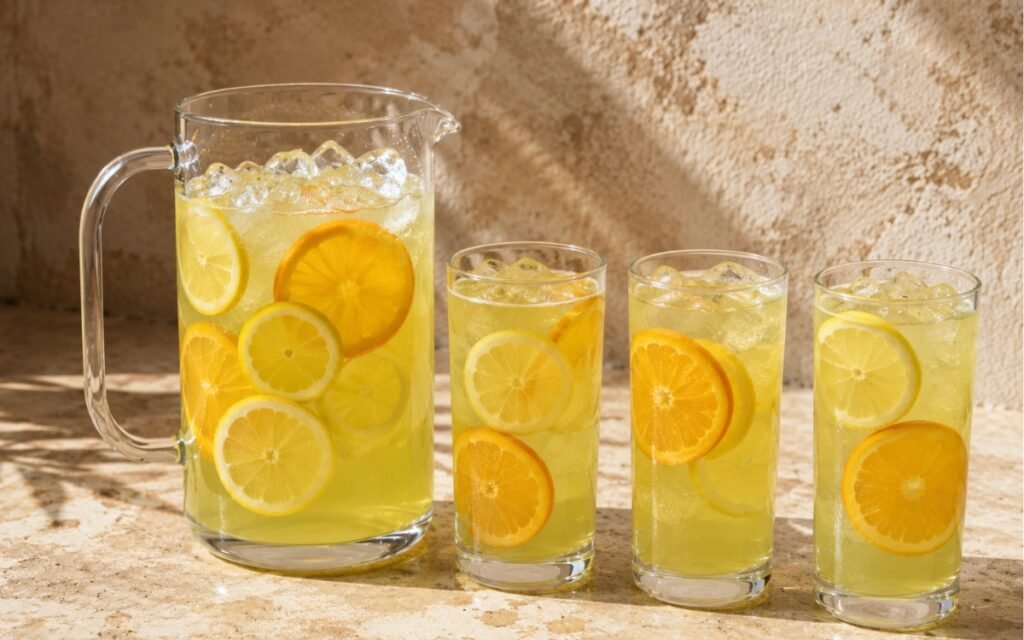
Green Tea Citrus Pitcher
Green tea at 75–80°C for 2–2½ minutes, dual citrus zest off heat — 500ml orange juice for body, lemon juice, salt, cold water, chilled. Delicate and citrus-bright.
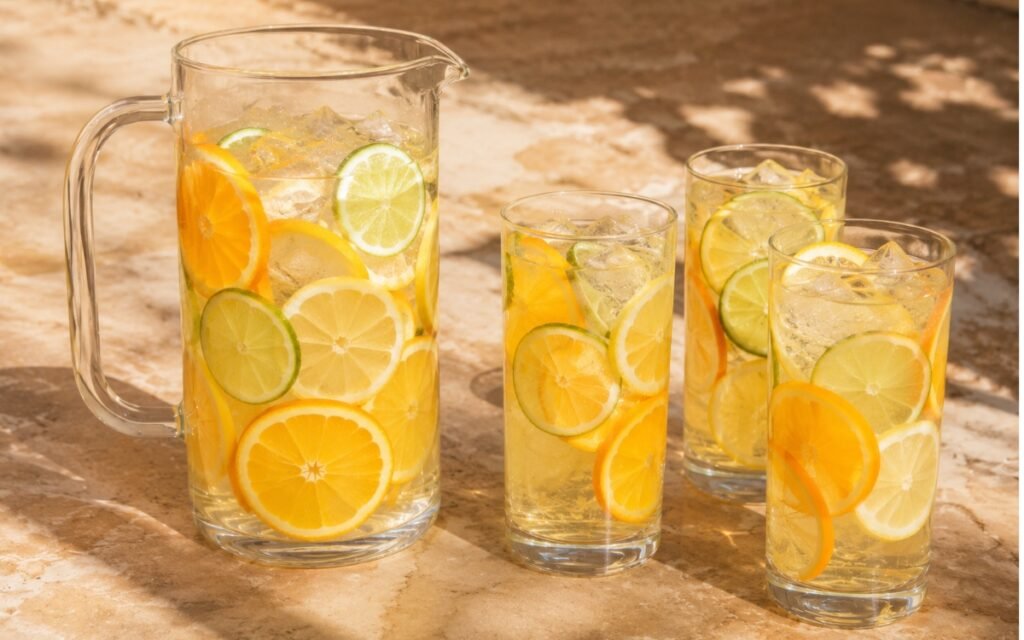
Citrus Medley Infused Water
Orange, lemon, and lime at 1:½:½ pith-free in pitcher — three citrus rounds cold-infused in 3L water for 1–4 hours, removed. Layered citrus warmth, brightness, and edge.
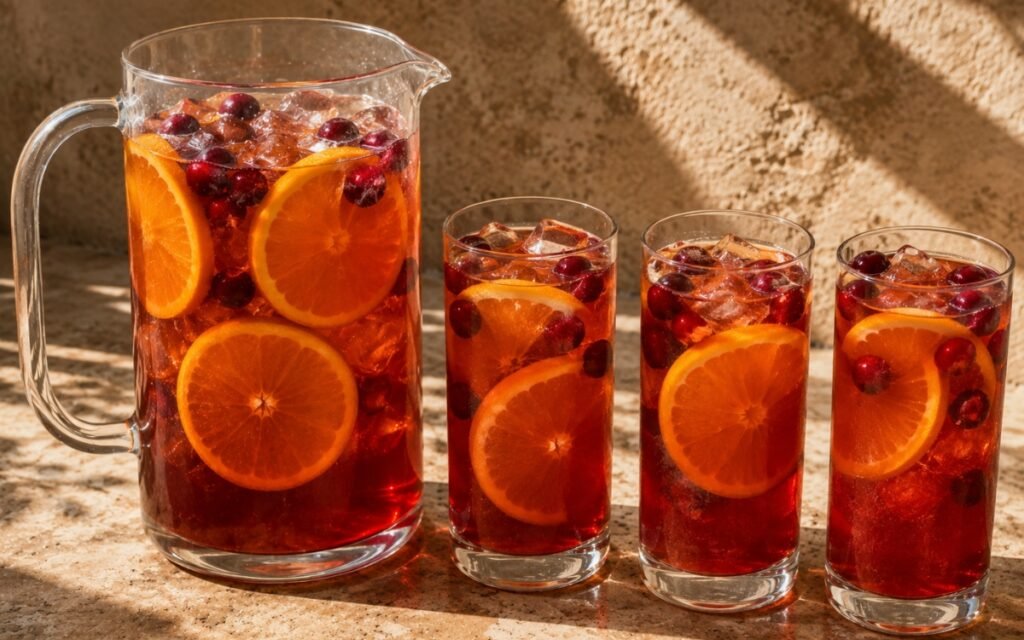
Cranberry Orange Iced Tea Pitcher
Strong black tea combined with lightly crushed, cold-macerated cranberries, orange zest and juice, and a second infusion of orange slices and split whole cranberries.
You might also like
You might also like
Lavender Lemonade
Lavender steeped in warm syrup exactly 6–8 minutes before camphor develops — lemon pulp, juice, salt, cold water, chilled. Citrus first, floral behind.
Basil Strawberry White Iced Tea
White tea at 75–80°C for 3–4 minutes, strawberry syrup with a pinch of salt, basil clapped and briefly infused — chilled. Delicate, clean, and softly fruity.
Mango Iced Green Tea
Green tea at 75–80°C for 2–3 minutes, mango simmered into a light unreduced syrup, deseeded chili infused cold 3–5 minutes — chilled. Bright, tropical, gently edged.
Mango Lime Pitcher Drink for a Crowd
Ingredients
Method
- Combine the 450–500g of cubed mango flesh, 90g of light brown sugar, and 240ml of water in a saucepan over medium-low heat. Stir gently until the sugar dissolves and the mango begins releasing juice and warming through. Simmer for 8–10 minutes, stirring occasionally and pressing softened mango pieces gently against the pan’s side to encourage juice release without producing a uniform purée in the pan. The mango selection is the preparation’s most important single quality variable: ripe but structurally intact mango at full aromatic development — the point where the flesh is completely golden, yields to a firm press, and smells specifically of ripe mango at the skin — produces a vivid, specifically tropical, aromatic syrup. Overripe mango — collapsing flesh, fermented-adjacent aroma — produces a heavier, muddier, less specifically fresh result that the recipe brief accurately describes. Under-ripe mango produces a muted, slightly astringent, specifically less tropical syrup. At 450–500g the quality of the mango is the preparation’s most consequential variable. The light brown sugar’s molasses fraction specifically contributes a warm, slightly caramel-adjacent depth that integrates with mango’s own warm aromatic compounds. This integration is specifically different from white sugar’s neutral sweetness — it makes the mango taste warmer and more specifically complex. Dark brown sugar’s more substantial molasses content at 90–120g would compete with the mango’s aromatic character rather than amplifying it. Remove from heat. Add the lime zest and chili flakes simultaneously. The lime zest’s aromatic oils extract into the warm mango-sugar medium during the off-heat steep; the chili flakes’ capsaicin and capsaicin-adjacent compounds extract at this temperature without the aggressive heat extraction that active simmering with chili would produce. Cover and steep for 5–8 minutes. Strain through a fine-mesh sieve, pressing firmly on the cooked mango solids. Firm pressing is specifically important here — the recipe brief’s note against “no pressing” is accurate: the cooked mango’s softened flesh retains a substantial proportion of its syrup-soaked aromatic character at light pressure and releases it fully under firm pressing. A well-pressed mango syrup is significantly more concentrated, more vivid, and more specifically mango-aromatic than a lightly pressed one. Press until the solids are noticeably drier and the yielded liquid has substantially increased. Discard solids. Allow to cool completely.
- Pour the cooled mango syrup into the large pitcher. Add 180ml of fresh lime juice, 2.2 litres of ice-cold water, and the 2 pinches of fine sea salt. Stir thoroughly. The absence of a lemon pulp base in the pitcher is deliberate — this preparation is specifically a mango lime drink rather than a mango lemonade in the classic pulp-and-citrus structural sense. The lime juice provides all the required structural acid; the mango syrup provides all the required fruit character; the pitcher structure is specifically cleaner and more unified without additional pulp components. Taste with the mango-lime crowd assessment: the drink should be immediately and specifically tropical — the warm, rich, vivid mango character present alongside lime’s sharp, tropical brightness. The chili, if used, should be perceptible as a warm lift at the back of the sip rather than as a specific heat — a quality that makes each sip feel more alive without producing discomfort. If the chili is too specific, more cold water moderates it. If it is not perceptible, the chili quantity was at the lower end of the range with mild flakes; this is fine. Additional lime juice up to 240ml sharpens the acid balance if the mango’s sweetness is too dominant. More syrup (if held back) deepens the mango character if the mango seems muted. More water (up to 2.8L) dilutes if the concentration is too intense.
- Cover and refrigerate for 1–2 hours. Stir once before the first pour and between subsequent pours — mango’s denser components settle during the refrigerator rest in the same way as watermelon and other blended fruit preparations. Add freshly sliced mango and lime rounds to glasses or the pitcher at service. Serve cold.