Ingredients
Method
Make the Mango Syrup
- Combine the 450–500g of cubed mango flesh, 90g of light brown sugar, and 240ml of water in a saucepan over medium-low heat. Stir gently until the sugar dissolves and the mango begins releasing juice and warming through. Simmer for 8–10 minutes, stirring occasionally and pressing softened mango pieces gently against the pan's side to encourage juice release without producing a uniform purée in the pan. The mango selection is the preparation's most important single quality variable: ripe but structurally intact mango at full aromatic development — the point where the flesh is completely golden, yields to a firm press, and smells specifically of ripe mango at the skin — produces a vivid, specifically tropical, aromatic syrup. Overripe mango — collapsing flesh, fermented-adjacent aroma — produces a heavier, muddier, less specifically fresh result that the recipe brief accurately describes. Under-ripe mango produces a muted, slightly astringent, specifically less tropical syrup. At 450–500g the quality of the mango is the preparation's most consequential variable. The light brown sugar's molasses fraction specifically contributes a warm, slightly caramel-adjacent depth that integrates with mango's own warm aromatic compounds. This integration is specifically different from white sugar's neutral sweetness — it makes the mango taste warmer and more specifically complex. Dark brown sugar's more substantial molasses content at 90–120g would compete with the mango's aromatic character rather than amplifying it. Remove from heat. Add the lime zest and chili flakes simultaneously. The lime zest's aromatic oils extract into the warm mango-sugar medium during the off-heat steep; the chili flakes' capsaicin and capsaicin-adjacent compounds extract at this temperature without the aggressive heat extraction that active simmering with chili would produce. Cover and steep for 5–8 minutes. Strain through a fine-mesh sieve, pressing firmly on the cooked mango solids. Firm pressing is specifically important here — the recipe brief's note against "no pressing" is accurate: the cooked mango's softened flesh retains a substantial proportion of its syrup-soaked aromatic character at light pressure and releases it fully under firm pressing. A well-pressed mango syrup is significantly more concentrated, more vivid, and more specifically mango-aromatic than a lightly pressed one. Press until the solids are noticeably drier and the yielded liquid has substantially increased. Discard solids. Allow to cool completely.
Build the Pitcher
- Pour the cooled mango syrup into the large pitcher. Add 180ml of fresh lime juice, 2.2 litres of ice-cold water, and the 2 pinches of fine sea salt. Stir thoroughly. The absence of a lemon pulp base in the pitcher is deliberate — this preparation is specifically a mango lime drink rather than a mango lemonade in the classic pulp-and-citrus structural sense. The lime juice provides all the required structural acid; the mango syrup provides all the required fruit character; the pitcher structure is specifically cleaner and more unified without additional pulp components. Taste with the mango-lime crowd assessment: the drink should be immediately and specifically tropical — the warm, rich, vivid mango character present alongside lime's sharp, tropical brightness. The chili, if used, should be perceptible as a warm lift at the back of the sip rather than as a specific heat — a quality that makes each sip feel more alive without producing discomfort. If the chili is too specific, more cold water moderates it. If it is not perceptible, the chili quantity was at the lower end of the range with mild flakes; this is fine. Additional lime juice up to 240ml sharpens the acid balance if the mango's sweetness is too dominant. More syrup (if held back) deepens the mango character if the mango seems muted. More water (up to 2.8L) dilutes if the concentration is too intense.
Chill, Stir, and Serve
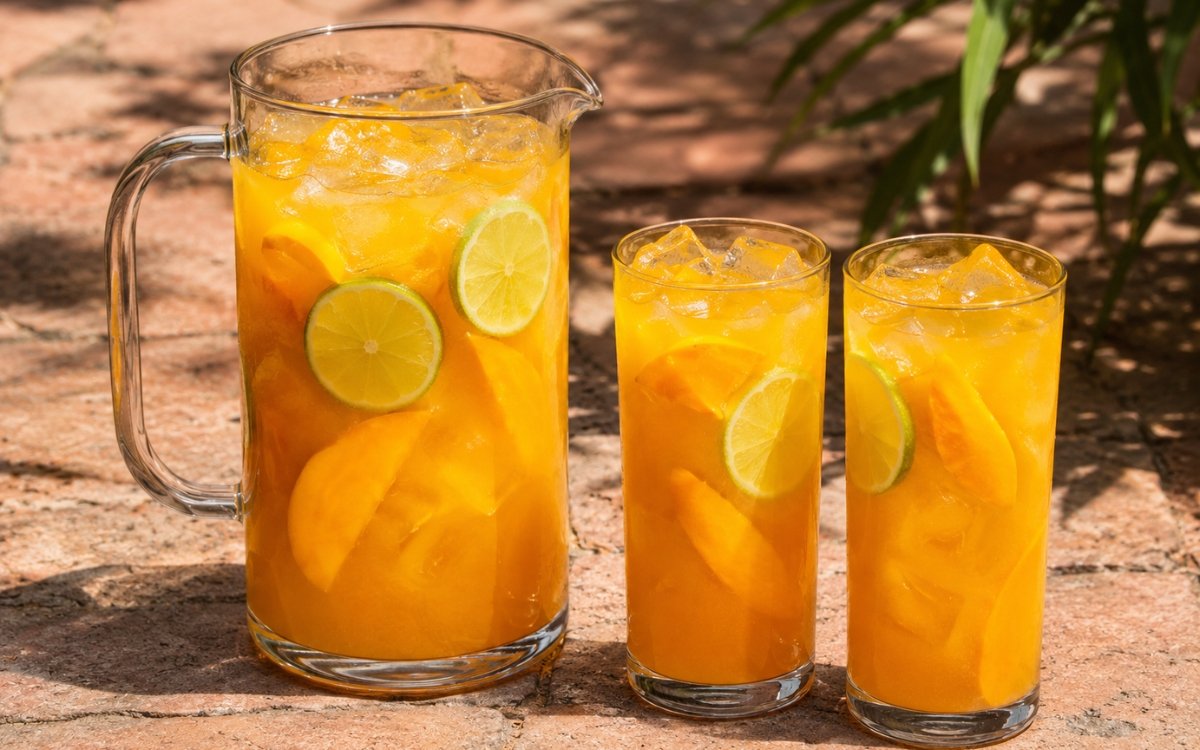
- Cover and refrigerate for 1–2 hours. Stir once before the first pour and between subsequent pours — mango's denser components settle during the refrigerator rest in the same way as watermelon and other blended fruit preparations. Add freshly sliced mango and lime rounds to glasses or the pitcher at service. Serve cold.
Notes
Mango variety produces meaningful differences at 450–500g. Alphonso — available in specialist South Asian markets in season — is the most specifically aromatic, most deeply flavoured mango variety and produces the most vivid, most complex syrup. Ataulfo (Honey mango, Champagne mango) — small, yellow, creamy and very sweet — produces the smoothest, most honey-like syrup. Tommy Atkins and Kent varieties — the most common in Western supermarkets — produce a good, consistent result with slightly less specific aromatic intensity than Alphonso or Ataulfo.
The chili flakes' specific variety affects the result: standard mild crushed red pepper flakes provide the warm lift without significant heat. Aleppo pepper flakes produce a more specifically fruity, less aggressively spiced result that is specifically complementary to mango's own fruity warmth. Thai chili flakes produce a more assertively hot result — use at the lower quantity only.