
Pineapple Orange Pitcher Drink — For a Crowd
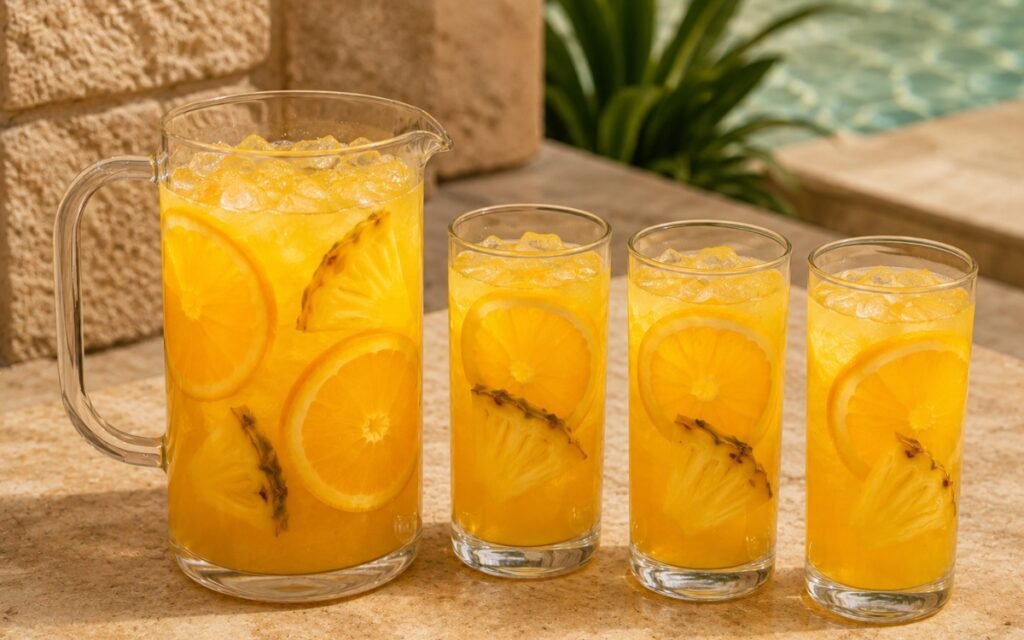
Pineapple orange is the most structurally different of the crowd pitcher preparations — not built on a cooked fruit extraction like the peach, mango, strawberry, and raspberry versions, but on high-quality juices combined with a specifically simple brown sugar citrus syrup. The distinction is deliberate: pineapple and orange both produce significantly better results as fresh-pressed or high-quality not-from-concentrate juice than as cooked extractions at the crowd scale. Pineapple’s volatile tropical ester compounds evaporate faster than almost any other fruit’s pleasant aromatic fraction during cooking, and orange’s characteristic bright, round citrus character similarly diminishes under heat. The 5-minute cook time in this preparation is specifically for the syrup only — the fruit character comes from juice components added cold. The brown sugar citrus syrup with orange and lemon zest provides three specific functions simultaneously: the light brown sugar’s warm caramel-adjacent sweetness bridges the pineapple’s tropical character and the orange’s warm sweetness; the orange zest’s aromatic oils provide the concentrated peel-depth that cold orange juice lacks; and the lemon zest’s brighter aromatic compounds provide the lift that distinguishes this preparation from a simple juice combination. The optional lemon juice is described with characteristic accuracy in the brief: it is not there to make the drink taste lemony — it is there to prevent pineapple and orange’s combined warmth and sweetness from tasting specifically soft, flat, and lazy without an acid dimension.
Prep Time : 15 min
Cook Time : 5 min
Servings : 16
15 min
5 min
16
Ingredients
For the Citrus Base
• Clean pulp or segments from 2 oranges — seeds and tough membranes removed; no white pith
For the Brown Sugar Citrus Syrup
• 100–120g light brown sugar — this one on Amazon
• 240ml water
• Zest of 1 orange — orange layer only, no white pith; added off heat
• Zest of 1 lemon — yellow layer only, no white pith; added off heat
For the Final Build
• 500ml fresh pineapple juice — or high-quality one
• 250ml fresh orange juice — approximately 3–4 oranges
• 60–90ml fresh lemon juice — optional
• 1.5–2 litres ice-cold water — start with 1.5 litres; adjust after tasting
• 2 pinches fine sea salt
For Serving
• Ice cubes
• Orange slices
• Fresh pineapple slices — prepared immediately before service
This post may contain affiliate links. As an Amazon Associate I earn from qualifying purchases, at no additional cost to you.
Directions
- Make the Brown Sugar Citrus Syrup
Combine the 100g of light brown sugar and 240ml of water in a small saucepan over low heat. Stir until the sugar completely dissolves and the liquid is clear — the light brown sugar’s slight colour from its molasses fraction will give the syrup a warm golden-amber appearance. Remove from the heat immediately. Add the orange and lemon zest simultaneously. Cover and steep for 5–8 minutes. The dual-zest infusion provides the most specific and most important aromatic contribution to this preparation: orange zest’s concentrated limonene, valencene, and various warm citrus esters; and lemon zest’s specifically brighter citral and limonene fractions. The two together in the warm syrup produce a specifically unified, complex citrus-peel aromatic depth that is more layered than either zest alone and that specifically bridges the pineapple juice’s tropical character and the orange juice’s warm sweetness. Strain the zest. Allow to cool completely. - Build the Pitcher
Add the clean orange pulp from 2 oranges (seeds, membranes, and pith removed) to the large pitcher. Muddle gently — the orange pulp providing the same natural citrus texture and additional peel-adjacent aromatic complexity that the pulp component adds in the orange lemonade preparation, with slightly more body than lemon pulp and a specifically warmer orange-citrus character. Add the cooled brown sugar citrus syrup, 500ml of pineapple juice, 250ml of fresh orange juice, 60ml of fresh lemon juice, 1.5 litres of ice-cold water, and the 2 pinches of fine sea salt. Stir thoroughly. The pineapple juice quality is the preparation’s most consequential ingredient decision. Fresh-pressed pineapple juice — from a whole pineapple processed through a juicer — produces the most vivid, most volatile, most specifically aromatic result. High-quality not-from-concentrate pineapple juice from a reputable brand (Tropicana, Innocent, or comparable) produces a good, consistent, specifically tropical result. Low-quality canned pineapple juice or pineapple concentrate dissolved in water produces the flat, metallic, specifically processed result that the recipe brief accurately describes. Taste with the pineapple-orange crowd assessment: the drink should be specifically tropical and specifically bright — pineapple’s vivid, aromatic, warm-tropical character and orange’s round, sweet citrus note together producing a specifically summery, endlessly drinkable combination. The lemon juice’s function is specifically not to add lemon flavour but to provide the sub-threshold acid sharpening that prevents the combined pineapple-and-orange warmth from sitting flat. At 60ml in 2.3 litres the lemon is below the perception threshold as a distinct flavour; it is present specifically as a quality that makes the pineapple and orange taste more vivid and more precisely themselves. If the combined preparation tastes specifically sweet and flat despite the lemon juice — the pineapple juice may be lower quality or the oranges under-ripe; add lemon juice in 15ml increments up to 90ml. If too intense — more cold water up to 2 litres. - Chill, Stir, and Serve
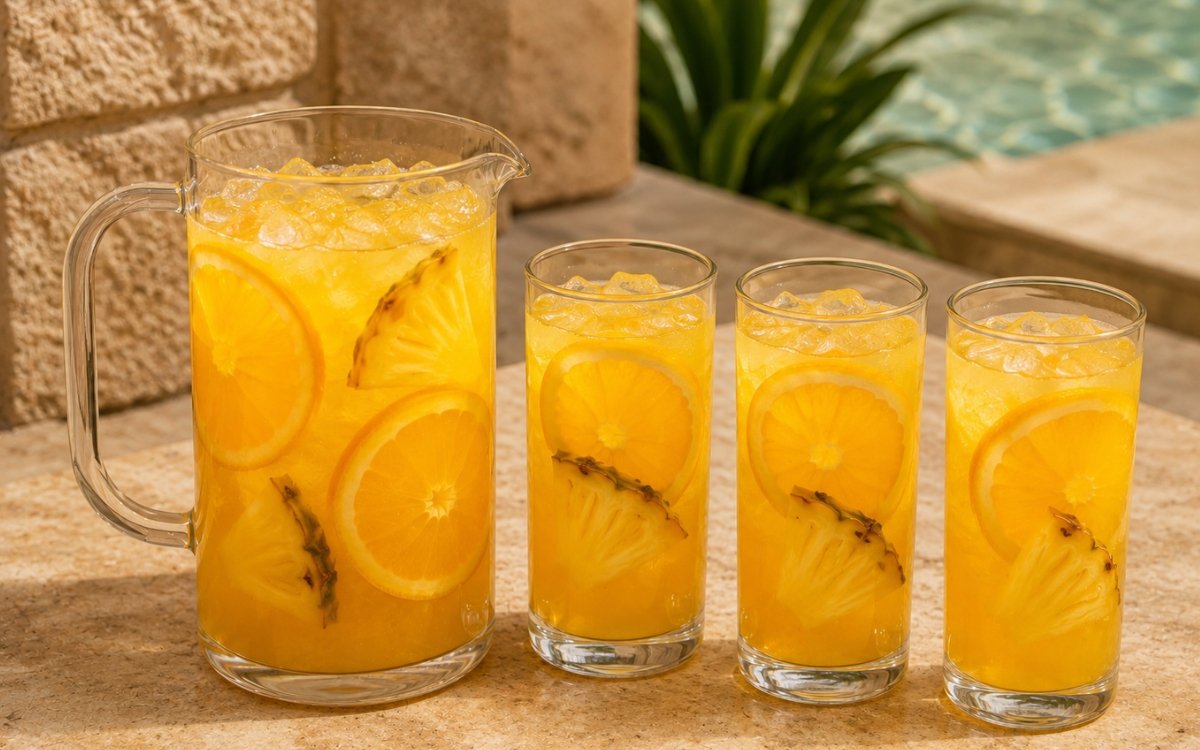
Cover and refrigerate for 1–2 hours. Stir once before the first pour and between pours. Add orange and pineapple garnish pieces immediately before service — prepared pineapple slices hold their visual quality for approximately 20 minutes before browning at the cut surfaces. Serve cold over ice.
*Notes :
- Fresh pineapple juice from a whole pineapple specifically requires strain through a fine-mesh sieve after juicing — pineapple’s bromelain-rich fibrous fraction produces a very cloudy, textured juice that clarifies to a cleaner appearance after straining. For a crowd pitcher where visual clarity is important, always strain fresh pineapple juice before using.
- The orange pulp base is from 2 oranges — the same two-orange pulp quantity as the orange lemonade’s single-batch preparation at the crowd level. This reflects the orange’s larger size relative to the lemon and the fact that orange pulp’s contribution — warmer, larger-segment texture compared to lemon’s finer pulp — is visible and specifically appealing in a crowd pitcher at higher quantity.
Why This Recipe Works
This recipe works because the juice components provide better pineapple and orange character than cooked extractions at this scale. The brown sugar citrus syrup’s dual-zest infusion provides the peel-depth aromatic complexity that cold juice alone lacks. The orange pulp base adds textural presence and aromatic warmth.
The lemon juice at sub-flavour concentration prevents the warm-sweet pineapple-orange combination from tasting flat. And the light brown sugar’s caramel-adjacent warmth specifically resonates with pineapple’s tropical character.
Ingredient Breakdown
Juice-Based Rather Than Cooked-Extraction
The heat-sensitivity management — pineapple’s volatile esters and orange’s characteristic aromatics both diminish more than they benefit from cooking; juice-based construction specifically preserves both.
Dual Zest (Orange + Lemon) Off Heat
The peel-depth complexity — concentrated aromatic oils from both citrus peels providing the depth that cold juice lacks; two zests bridging pineapple and orange simultaneously.
Lemon Juice as Anti-Flat Mechanism
The sub-flavour acid function — not lemon-flavour, specifically preventing the warm-sweet combination from tasting soft and lazy.
Light Brown Sugar (Molasses-Resonant With Pineapple)
The warm caramel-adjacent sweetener — same molasses-tropical resonance as the mango crowd preparation.
Orange Pulp Base (2 Oranges)
The textural presence and orange-adjacent aromatic warmth.
Flavor Structure Explained
This Pineapple orange pitcher drink follows a layered balance model:
- Tropical citrus core (pineapple and orange)
- Bright acid structure (lemon juice)
- Deep citrus aromatic layer (dual-zest syrup)
- Warm rounded sweetness (brown sugar)
- Clean summery finish (fruit-acid balance)
Pineapple and orange define the foundation together, creating a tropical-citrus profile that is fuller and more complex than either fruit alone. Pineapple contributes vivid tropical aromatics and lively fruit intensity, while orange adds sweetness, warmth, and a softer citrus depth that rounds the blend. Lemon juice provides the structural acidity that sharpens both fruits, increasing their clarity and freshness without drawing attention to itself as a separate flavor. The dual-zest brown sugar syrup adds concentrated citrus oils and aromatic complexity, giving the drink a deeper layer beneath the fresh juice character. The result is a bright, summery pitcher drink that balances tropical richness, citrus freshness, and aromatic depth.
Common Mistakes to Avoid
- Using Low-Quality Canned Pineapple Juice – The preparation’s quality ceiling is the pineapple juice quality. Always fresh or high-quality not-from-concentrate.
- Skipping the Lemon Juice – Pineapple and orange without acid sharpening tastes specifically soft and flat at crowd dilution. Always 60ml minimum.
- Starting at 2L Water – The juice components already provide 750ml of flavoured liquid. Always start at 1.5L and taste.
- Over-Steeping the Zest – Both orange and lemon zest infuse bitter compounds beyond 8 minutes in the warm syrup. Always strain within 8 minutes.
- Using Dark Brown Sugar – The molasses content dominates the orange and pineapple’s aromatic character. Always light brown.
Variations
With Coconut Water
Replace 500ml of the cold water with coconut water — the coconut’s tropical sweetness alongside pineapple and orange produces the most specifically Hawaiian-adjacent, most indulgent direction.
With Ginger
Add 15g of thinly sliced fresh ginger to the syrup during the off-heat zest steep — removed during straining. The ginger’s warmth alongside pineapple and orange is a specifically more complex direction.
With Mint
Add 20 lightly clapped fresh mint leaves to the completed pitcher before chilling — steep cold for 20 minutes then remove. The Pineapple Mint Infused Water direction at full lemonade intensity.
Sparkling Version
Build without still water; refrigerate; add ice-cold sparkling water right before serving.
Storage & Make-Ahead
Brown sugar citrus syrup can be refrigerated for up to 2 weeks, making it an excellent component to prepare well in advance.
Once assembled, the pitcher is best enjoyed within 24 hours. Although the drink remains pleasant for up to 48 hours, the pineapple’s bromelain enzymes continue to act in the cold liquid, gradually changing its character over time. For the brightest flavor and freshest tropical aroma, it is best consumed within the first 24 hours.
Frequently Asked Questions
Why juices rather than cooked fruit at crowd scale?
Pineapple and orange both produce better results as fresh-pressed or not-from-concentrate cold juice than as cooked extractions at this scale. Pineapple’s volatile tropical ester compounds — the primary aromatic fraction responsible for fresh pineapple’s vivid character — evaporate rapidly during cooking. Orange’s characteristic bright, round citrus character similarly diminishes under heat. The cold juice construction specifically preserves both.
What function does the lemon juice serve if it’s not intended to make the drink taste lemony?
Pineapple and orange’s combined warm, sweet, tropical character has sufficient natural sweetness and tropical depth but insufficient natural acid brightness — the two fruits together taste specifically rich and tropical but without the acid dimension that makes a drink feel specifically refreshing. At 60–90ml in 2.3 litres, lemon juice is below the flavour-threshold for distinctly lemon taste but above the threshold where its citric acid specifically sharpens the pineapple and orange flavours into more vivid, more precisely themselves expression.
Why light brown sugar rather than honey in this preparation?
Honey’s aromatic compounds specifically complement stone fruit (peach), berry (raspberry, strawberry), and single tropical fruit (mango) more specifically than they complement the pineapple-orange combination. Light brown sugar’s molasses-adjacent warmth provides the same thermal resonance with tropical fruit character without honey’s specific floral compounds competing with the pineapple’s and orange’s own aromatic profiles.
What other tropical and pineapple preparations share this direction?
The Pineapple Mint Infused Water shares pineapple as the primary fruit in the most restrained, most water-like format. The Pineapple Lemonade shares the pineapple-and-citrus structure in the single-batch 8-serving lemon-led format. The Mint Pineapple White Tea Cooler shares the pineapple alongside tea and mint in a specifically more complex, more herbally aromatic direction.
Nutrition Facts
( per serving )
Calories
~75 kcal
Protein
0 g
Fat
0 g
Carbs
19 g
Calories
~75 kcal
Protein
0 g
Fat
0 g
Carbs
19 g
Related Recipes
Related Recipes

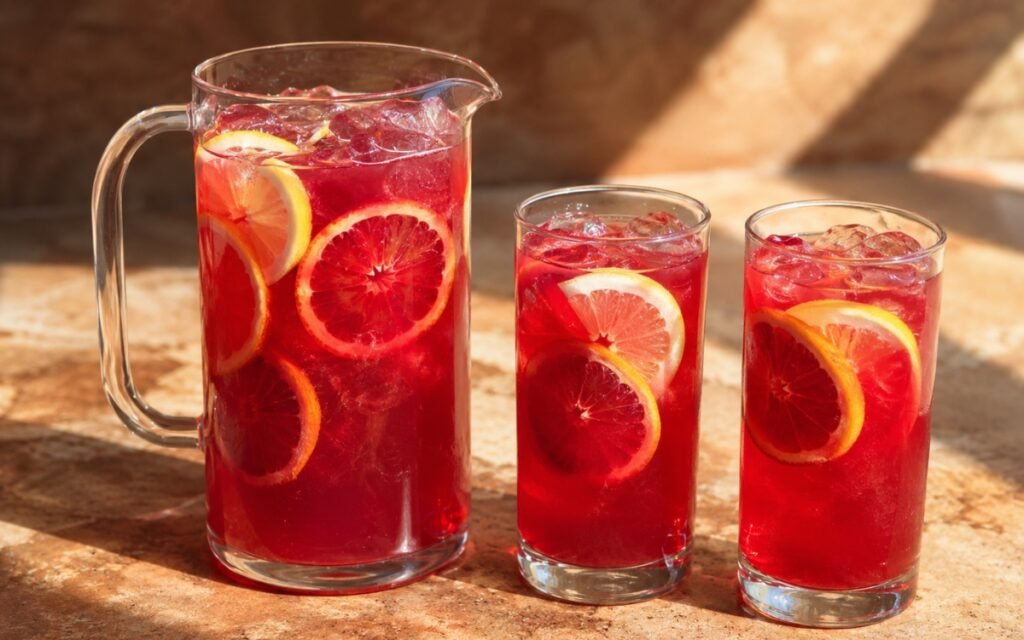
Blood Orange Citrus Pitcher
Deep ruby blood orange pitcher drink with fresh lemon juice, fragrant citrus zest, and lightly sweetened brown sugar syrup.
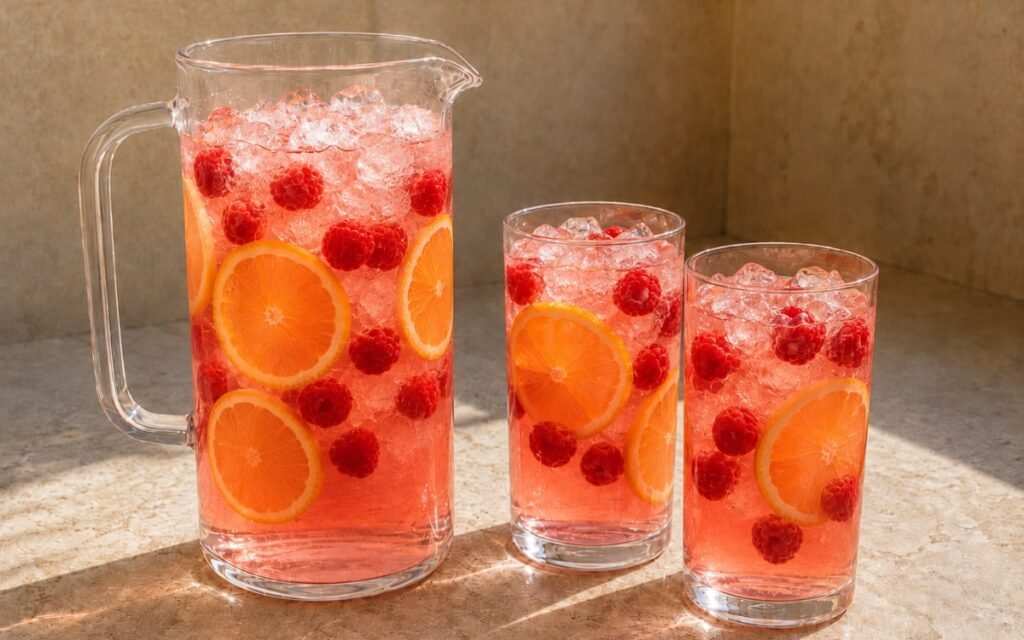
Raspberry Orange Infused Water
Orange pulp and raspberries very lightly pressed — whole fruit cold-infused in 3L water for 1–4 hours, removed. Warm coral-pink, fragrant, and hydrating.
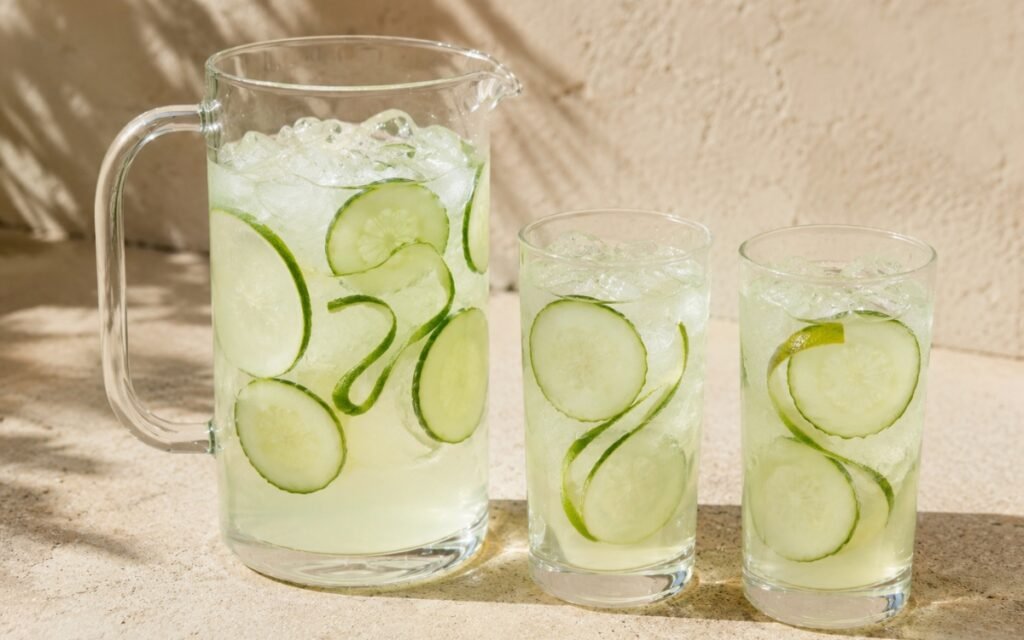
Green Tea Cucumber Pitcher
Green tea at 75–80°C for 2–2½ minutes, lime zest 4–6 minutes — 750g cucumber blended with lime juice, strained, combined with tea and cold water, chilled. Cool and pale.
You might also like
You might also like
Blackberry Jasmine Iced Tea
Jasmine tea at 75–80°C for 2–3 minutes, lemon peel infused cold, blackberries blended and firmly strained — added with restraint, chilled. Floral and softly fruity.
Pear Lemonade
Ripe pears at low heat with honey, lemon zest off heat — 150ml lemon only so pear leads, salt, cold water, chilled. Pale, delicate, and pear-forward.
Lemon Balm Strawberry Green Iced Tea
Delicate green iced tea with strained strawberry syrup and fresh lemon balm, chilled and served with strawberry slices.
Pineapple Orange Pitcher Drink for a Crowd
Ingredients
Method
- Combine the 100g of light brown sugar and 240ml of water in a small saucepan over low heat. Stir until the sugar completely dissolves and the liquid is clear — the light brown sugar’s slight colour from its molasses fraction will give the syrup a warm golden-amber appearance. Remove from the heat immediately. Add the orange and lemon zest simultaneously. Cover and steep for 5–8 minutes. The dual-zest infusion provides the most specific and most important aromatic contribution to this preparation: orange zest’s concentrated limonene, valencene, and various warm citrus esters; and lemon zest’s specifically brighter citral and limonene fractions. The two together in the warm syrup produce a specifically unified, complex citrus-peel aromatic depth that is more layered than either zest alone and that specifically bridges the pineapple juice’s tropical character and the orange juice’s warm sweetness. Strain the zest. Allow to cool completely.
- Add the clean orange pulp from 2 oranges (seeds, membranes, and pith removed) to the large pitcher. Muddle gently — the orange pulp providing the same natural citrus texture and additional peel-adjacent aromatic complexity that the pulp component adds in the orange lemonade preparation, with slightly more body than lemon pulp and a specifically warmer orange-citrus character. Add the cooled brown sugar citrus syrup, 500ml of pineapple juice, 250ml of fresh orange juice, 60ml of fresh lemon juice, 1.5 litres of ice-cold water, and the 2 pinches of fine sea salt. Stir thoroughly. The pineapple juice quality is the preparation’s most consequential ingredient decision. Fresh-pressed pineapple juice — from a whole pineapple processed through a juicer — produces the most vivid, most volatile, most specifically aromatic result. High-quality not-from-concentrate pineapple juice from a reputable brand (Tropicana, Innocent, or comparable) produces a good, consistent, specifically tropical result. Low-quality canned pineapple juice or pineapple concentrate dissolved in water produces the flat, metallic, specifically processed result that the recipe brief accurately describes. Taste with the pineapple-orange crowd assessment: the drink should be specifically tropical and specifically bright — pineapple’s vivid, aromatic, warm-tropical character and orange’s round, sweet citrus note together producing a specifically summery, endlessly drinkable combination. The lemon juice’s function is specifically not to add lemon flavour but to provide the sub-threshold acid sharpening that prevents the combined pineapple-and-orange warmth from sitting flat. At 60ml in 2.3 litres the lemon is below the perception threshold as a distinct flavour; it is present specifically as a quality that makes the pineapple and orange taste more vivid and more precisely themselves. If the combined preparation tastes specifically sweet and flat despite the lemon juice — the pineapple juice may be lower quality or the oranges under-ripe; add lemon juice in 15ml increments up to 90ml. If too intense — more cold water up to 2 litres.
- Cover and refrigerate for 1–2 hours. Stir once before the first pour and between pours. Add orange and pineapple garnish pieces immediately before service — prepared pineapple slices hold their visual quality for approximately 20 minutes before browning at the cut surfaces. Serve cold over ice.