
Strawberry Lime Infused Water
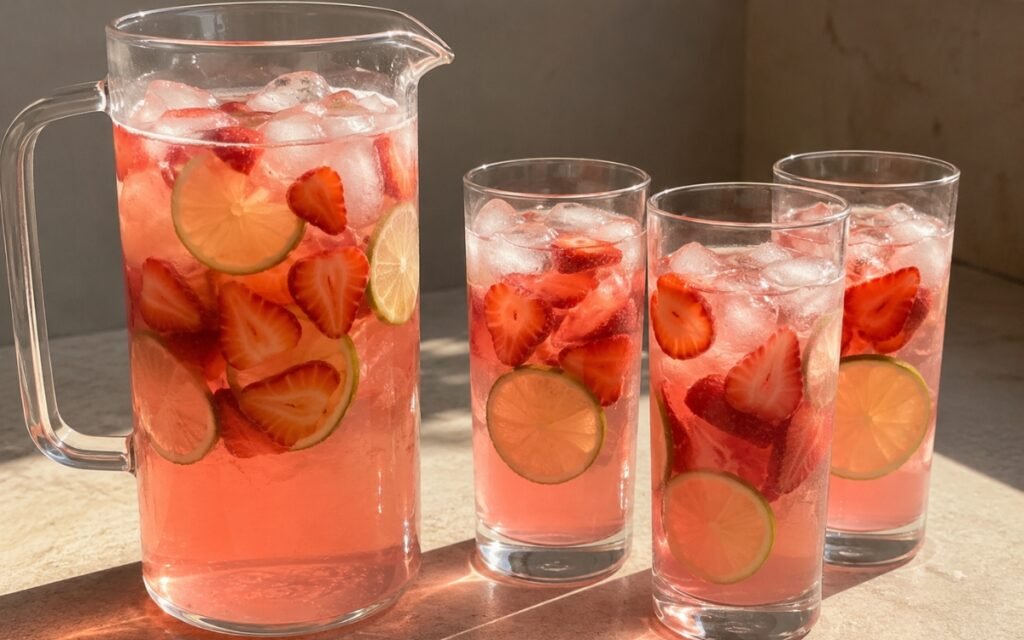
Strawberry and lime is the most vivid-coloured and most immediately identifiable of the fruit infused water combinations — the strawberry’s vivid red, the lime’s bright green — but the preparation philosophy is the same as the cucumber version: infused water, not strawberry limeade. The mashing technique for strawberries is slightly different from the cucumber’s light crush, reflecting the different cell structure: strawberry flesh is softer and more immediately fluid under pressure than cucumber’s denser, more fibrous texture. A light mash — enough to break the outer skin and release visible juice from approximately half the berry pieces — produces the ideal strawberry infusion rate for cold water. More aggressive mashing releases immediate, more intensely flavoured strawberry juice that produces a specifically different, darker, more concentrated result that begins approaching flavoured water rather than purely infused; this is fine for those who want a more present strawberry character but is a different drink from the specifically clean, subtle approach of the standard preparation. The lime is specifically noted as turning bitter faster than lemon in extended infusion — lime peel’s higher limonoid content and its thinner, more permeable skin means the compounds responsible for lime peel’s bitterness extract into cold water at a faster rate than lemon peel’s comparable compounds. The 4-hour maximum with ingredient removal is even more specifically important with lime than with the cucumber-lemon version.
Prep Time : 10 min
Infusion Time: 1–4 hr
Servings : 16
10 min
1–4 hr min
16
Ingredients
For the Infusion Base
• 1 cup fresh strawberries — approximately 150g
• 30–45ml fresh lime juice — optional
• 15–30g honey — optional — this one on Amazon
• 1–2 small pinches fine sea salt
For the Final Build
• 3 litres ice-cold water
• 2 cups fresh strawberries — approximately 300g; sliced
• 2 limes — thinly sliced
This post may contain affiliate links. As an Amazon Associate I earn from qualifying purchases, at no additional cost to you.
Directions
- Lightly Mash the Infusion Strawberries
Place 1 cup (approximately 150g) of hulled strawberries in a bowl or directly in the bottom of the pitcher. Using a fork or the back of a large spoon, mash lightly — pressing firmly enough to crack the skin and release visible juice from the outer layers of approximately half to two-thirds of the berry pieces, while leaving the remainder recognisably intact. The visual target is berries that are partially crushed with released juice pooling at the bottom, not a uniform pink purée. The mashing technique for strawberry infused water balances two competing requirements. Strawberry’s primary pleasant aromatic compounds — particularly mesifuran (the specifically warm, jam-adjacent, intensely fruity compound responsible for ripe strawberry’s characteristic aroma) and various fruity esters — are present in the outer cell layers and release readily at cold temperature when the cell walls are disrupted. A light mash disrupts sufficient outer cells to produce a meaningful cold infusion rate; the remaining intact berry pieces continue releasing their compounds progressively during the infusion period. An aggressive purée or full mash releases everything immediately but also releases more of the inner cell compounds including some slightly more vegetal, slightly more oxidation-prone fractions that produce a less clean result over time. Roughly chopped rather than puréed keeps the base clean. - Optional Honey and Build
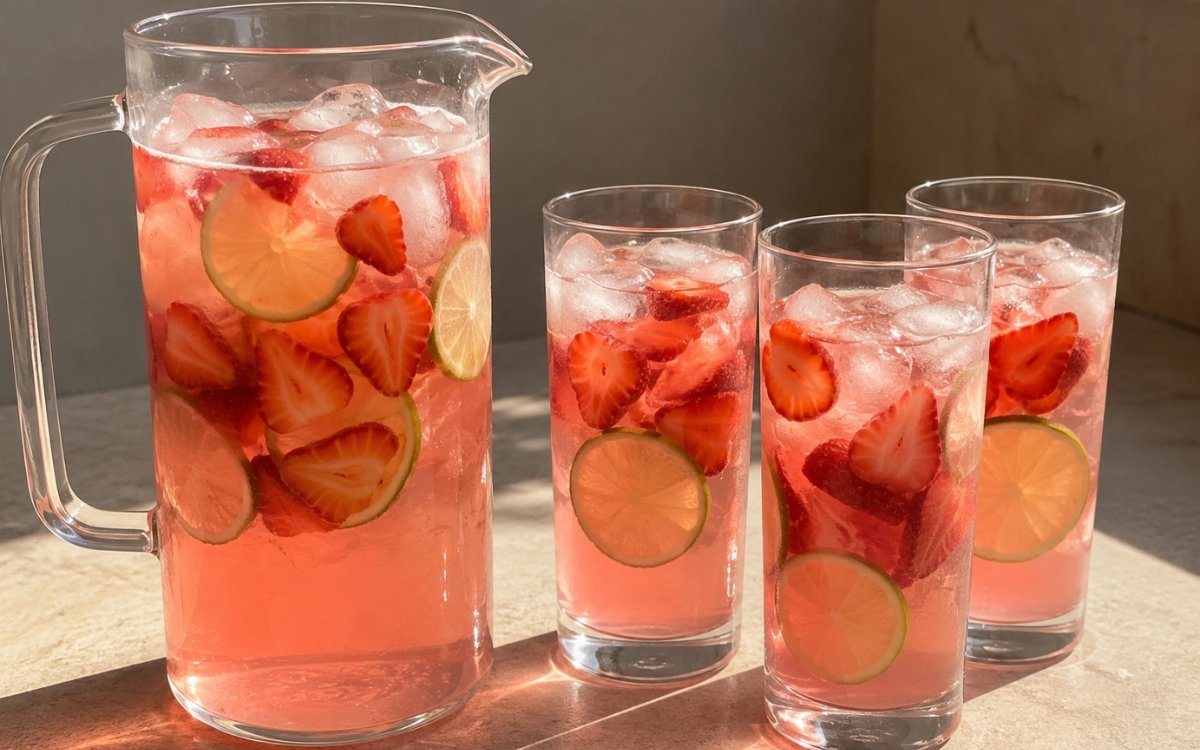
If using honey, pre-dissolve in 2–3 tablespoons of warm water until completely fluid and clear. Add the pre-dissolved honey, optional lime juice (30ml in 3 litres is specifically restrained — a barely-perceptible citrus brightness rather than any lime flavour), and the 1–2 pinches of fine sea salt to the pitcher with the mashed strawberries. Add the 3 litres of ice-cold water, the sliced strawberries (2 cups/approximately 300g), and the thinly sliced lime rounds. Stir gently once or twice. - Infuse and Time Carefully
Cover and refrigerate for 1–4 hours. The strawberry’s cold infusion produces a progressively deeper pink-red colour and increasingly present strawberry aroma from 1 to 4 hours. At 1 hour: specifically light, clean, and refreshing — a subtle suggestion of strawberry and lime. At 2 hours: the mid-point of pleasant intensity. At 4 hours: the maximum of the specifically clean range. The lime slices’ peel bitterness extraction in cold water is specifically faster than lemon peel’s — lime’s higher limonoid content and thinner, more permeable skin means the bitter compounds begin contributing more quickly. After 4 hours, remove all lime slices and strawberry pieces from the pitcher. The lime rounds specifically should be the priority removal: at 4 hours they are still providing brightness; beyond 4 hours they begin contributing a specifically bitter, astringent note that shifts the water’s clean fresh character toward something less pleasant. The strawberries additionally become visibly faded, soft, and waterlogged beyond this point — contributing a dulled, slightly flat fruit flavour rather than the fresh aromatic quality of the infusion period. Serve well chilled directly from the pitcher, or over ice if preferred. Add fresh sliced strawberry and lime to the pitcher or individual glasses at the time of serving for visual freshness if the original infusion pieces have been removed.
*Notes :
- Strawberry quality and ripeness are specifically more important in infused water than in cooked preparations where heat concentration can partially compensate for mild fruit. Cold infusion extracts exactly what is present in the berry’s aromatic compounds — a vivid, fragrant, specifically sweet-fruity ripe strawberry produces a vivid, aromatic, specifically refreshing water; a pale, mild, under-ripe strawberry produces a faintly flavoured, mildly pink, specifically less interesting water regardless of technique. Always the most fragrant, most deeply red strawberries available.
- Lime’s specific peel-bitterness extraction in cold water is faster than lemon’s for two reasons: lime peel’s limonoid content per unit area is higher than lemon’s; and lime skin is thinner and more permeable than lemon skin, allowing the limonoids to migrate into the surrounding cold water more rapidly. This is why the 4-hour maximum is applied with specific urgency to lime-containing infusions.
Why This Recipe Works
This recipe works because the strawberries are lightly mashed rather than puréed — disrupting the outer cells for progressive aromatic release during the infusion period rather than releasing everything immediately. The lime’s bitterness extraction timeline is respected with the 4-hour maximum removal.
The optional additions are all at sub-flavour concentration. And the cold temperature is maintained throughout for the specific refreshing quality that is infused water’s defining appeal.
Ingredient Breakdown
Light Mash Rather Than Purée
The infusion-rate calibration — outer cell disruption producing progressive mesifuran and ester release over 1–4 hours; inner cell compounds protected from immediate extraction.
1–4 Hour Window With Lime Prioritised for Removal
The lime-specific bitterness management — lime peel’s faster limonoid extraction requiring the 4-hour limit to be treated as a hard maximum.
Optional Lime Juice at Conservative Quantity
The barely-perceptible brightness — 30–45ml in 3 litres present as a clean citrus quality rather than any lime flavour.
Pre-Dissolved Honey
The cold-water dissolution requirement.
Sub-Threshold Salt
The aromatic-vividity amplifier at 1–2 pinches in 3 litres.
Flavor Structure Explained
This Strawberry lime infused water follows a minimalist balance model:
- Gentle fruit core (strawberry)
- Subtle citrus brightness (lime)
- Clean aromatic freshness (light infusion)
- Hydration-focused structure (cold water)
- Crisp refreshing finish (restraint-driven flavor)
Strawberry defines the foundation with soft fruit aromatics and a delicate sweetness that lightly perfumes the water rather than turning it into a fruit drink. Lime contributes a faint citrus brightness that sharpens the overall profile and makes the infused water feel fresher and more vibrant. Both ingredients are intentionally restrained, allowing their aromas to enhance the drinking experience without overwhelming it. The primary sensation remains the clean refreshment of cold water, with the fruit and citrus acting as subtle accents that increase interest and perceived freshness. The result is a drink built around hydration, clarity, and gentle natural flavor.
Common Mistakes to Avoid
- Puréeing the Strawberries – Full purée releases inner cell compounds that produce a more intensely flavoured, progressively less clean result. Always lightly mash with sections remaining intact.
- Leaving Lime Rounds Beyond 4 Hours – Lime peel’s bitterness extraction is faster than lemon’s. Always remove at the 4-hour maximum.
- Adding Honey Directly to Cold Water – Honey in cold water settles as undissolved deposits. Always pre-dissolve.
- Using Mild, Under-Ripe Strawberries – Cold infusion extracts exactly what the berry’s aromatic compounds contain. Always the most fragrant, most vividly ripe strawberries.
- Serving Warm – The refreshing character is specifically dependent on cold temperature. Always refrigerate completely.
Variations
With Basil
Add 8 lightly clapped fresh basil leaves alongside the strawberries — basil’s sweet, anise-adjacent aromatic character alongside strawberry is a specifically beautiful combination in the infused water format.
With Mint
Add 10 lightly clapped fresh mint leaves — the mint’s cool, menthol-adjacent freshness alongside strawberry and lime produces a specifically refreshing, multi-aromatic result.
With Cucumber
Add 10-12 thin cucumber slices alongside the strawberries — the cucumber’s cool green character alongside strawberry’s warm fruitiness produces a specifically interesting contrast in the same glass.
With Lemon Instead of Lime
Replace lime slices and lime juice with lemon — producing a softer, slightly less specifically tart result that removes the bitterness-timing urgency of lime peel’s faster extraction.
Storage & Make-Ahead
Once the ingredients have been removed, the infused water can be refrigerated in a sealed pitcher for up to 24 hours.
Infused water should not be stored with the ingredients still present for longer than 4 hours. To prevent over-extraction and preserve a clean, fresh flavor, remove the lime and strawberry pieces once the 4-hour infusion period has been reached.
Frequently Asked Questions
Why does lime turn bitter faster than lemon in cold water?
Lime peel contains a higher concentration of limonoid compounds per unit area than lemon peel, and lime’s skin is thinner and more permeable than lemon’s. Both factors accelerate the migration of bitter limonoids into the surrounding cold water compared to lemon peel’s equivalent compounds.
Why mash one cup of strawberries for the base rather than just slicing all of them?
The mashed base strawberries provide the initial cell-wall disruption that starts the infusion immediately; the sliced strawberries in the final build provide progressive aromatic release during the infusion period and visual presence throughout. The mashed fraction is the aromatic driver; the sliced fraction is both aromatic and visual. Using only sliced strawberries produces a lighter, slower infusion.
Why add lime juice separately from the lime slices?
The lime juice’s citric acid provides immediate, clean brightness in the cold water. The lime slices provide both visual presence and a slower progressive lime aromatic infusion from the pulp and peel surface. The two components provide different contributions simultaneously — juice for immediate brightness; slices for progressive fragrance.
What other fruit infused water preparations share this direction?
The Raspberry Orange Infused Water shares the berry-and-citrus infusion approach with raspberry’s more assertive tartness and orange’s warmer, sweeter citrus character — the most tonally similar combination to this preparation. The Blackberry Lime Infused Water shares the lime as the citrus component with blackberry’s deeper, more wine-adjacent berry character producing a more intensely coloured, more complex water. The Blueberry Lemon Infused Water shares the berry-infusion format with blueberry’s vivid anthocyanin colour and lemon rather than lime providing the citrus dimension.
Nutrition Facts
( per serving )
Calories
~8 kcal
Protein
0 g
Fat
0 g
Carbs
2 g
Calories
~8 kcal
Protein
0 g
Fat
0 g
Carbs
2 g
Related Recipes
Related Recipes

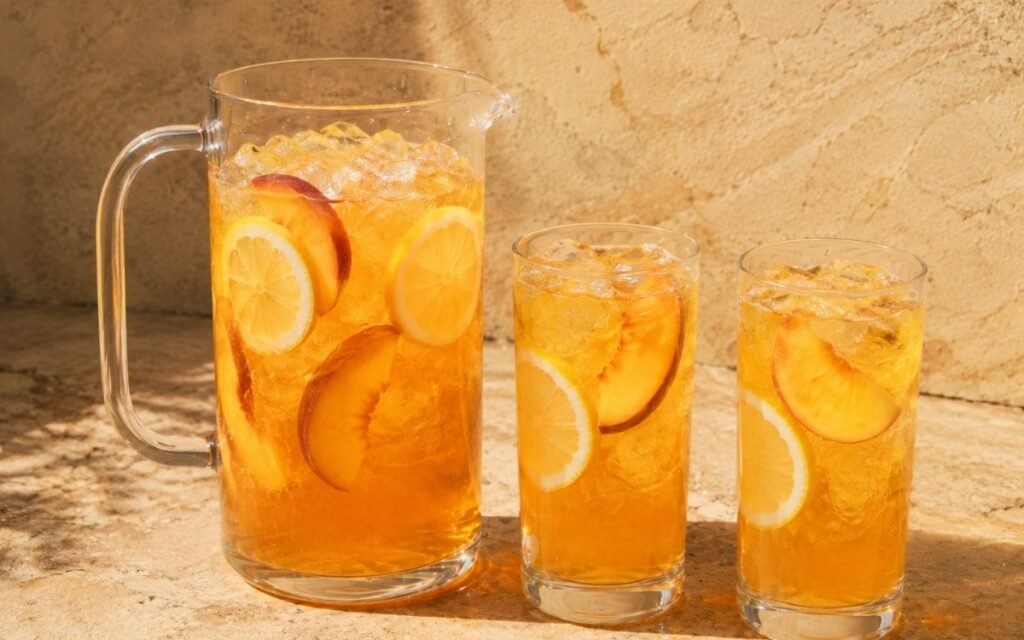
Peach Lemonade Pitcher Drink
900g skin-on ripe peaches in honey syrup with lemon zest off heat — combined with 300–360ml lemon juice, salt, cold water, chilled. Warm, floral, and crowd-ready.
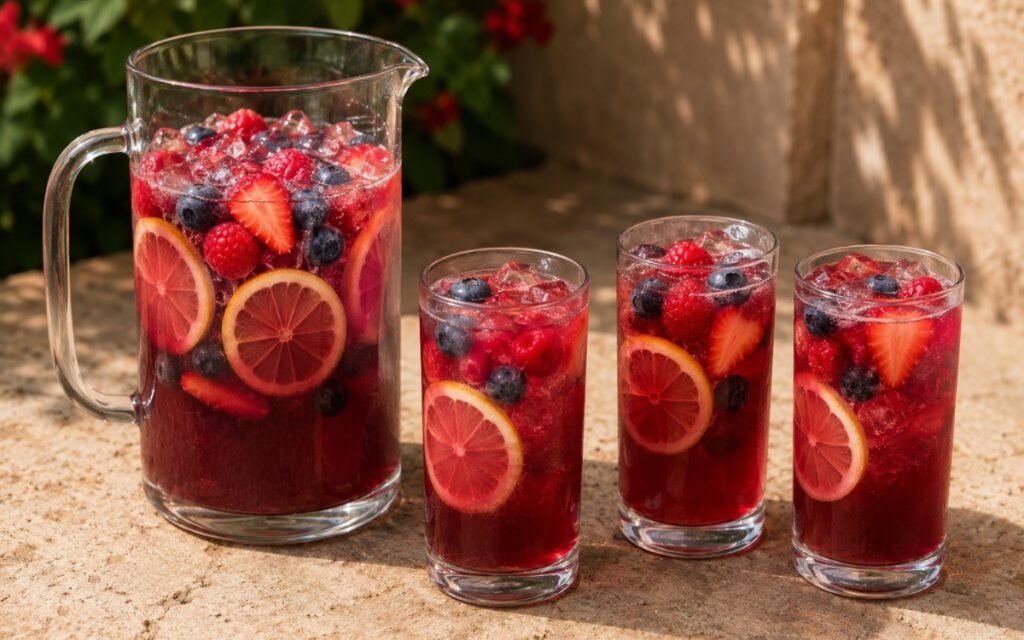
Mixed Berry Citrus Pitcher Drink
Three berries at 150g each warmed 2–3 minutes maximum in light brown sugar syrup — lemon zest off heat, combined with cold water, chilled. Vivid and multi-register.
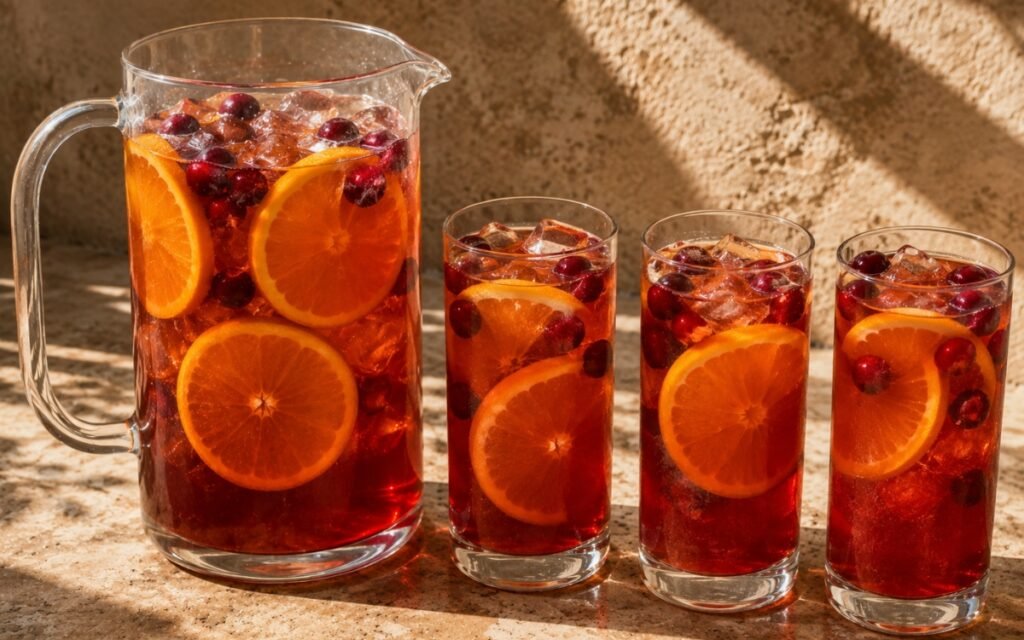
Cranberry Orange Iced Tea Pitcher
Strong black tea combined with lightly crushed, cold-macerated cranberries, orange zest and juice, and a second infusion of orange slices and split whole cranberries.
You might also like
You might also like
Pear White Iced Tea
White tea at 75–80°C for 3–4 minutes, Asian pear sliced thin and partly strained, cold-infused 30–45 minutes — minimal honey, chilled. Light, watery-fresh, calming.
Light Raspberry Mint Iced Tea
White tea at 75–80°C, raspberries blended with lemon and water — honey while warm, mint cold-infused 10–15 minutes, chilled. Pale blush-pink and clean.
Pomelo Green Iced Tea
Green tea at 75–80°C for 2–3 minutes, pomelo segments infused cold 15–20 minutes — honey and a pinch of salt, strained, chilled. Light, aromatic, complex.
Strawberry Lime Infused Water
Ingredients
Method
- Place 1 cup (approximately 150g) of hulled strawberries in a bowl or directly in the bottom of the pitcher. Using a fork or the back of a large spoon, mash lightly — pressing firmly enough to crack the skin and release visible juice from the outer layers of approximately half to two-thirds of the berry pieces, while leaving the remainder recognisably intact. The visual target is berries that are partially crushed with released juice pooling at the bottom, not a uniform pink purée. The mashing technique for strawberry infused water balances two competing requirements. Strawberry’s primary pleasant aromatic compounds — particularly mesifuran (the specifically warm, jam-adjacent, intensely fruity compound responsible for ripe strawberry’s characteristic aroma) and various fruity esters — are present in the outer cell layers and release readily at cold temperature when the cell walls are disrupted. A light mash disrupts sufficient outer cells to produce a meaningful cold infusion rate; the remaining intact berry pieces continue releasing their compounds progressively during the infusion period. An aggressive purée or full mash releases everything immediately but also releases more of the inner cell compounds including some slightly more vegetal, slightly more oxidation-prone fractions that produce a less clean result over time. Roughly chopped rather than puréed keeps the base clean.
- If using honey, pre-dissolve in 2–3 tablespoons of warm water until completely fluid and clear. Add the pre-dissolved honey, optional lime juice (30ml in 3 litres is specifically restrained — a barely-perceptible citrus brightness rather than any lime flavour), and the 1–2 pinches of fine sea salt to the pitcher with the mashed strawberries. Add the 3 litres of ice-cold water, the sliced strawberries (2 cups/approximately 300g), and the thinly sliced lime rounds. Stir gently once or twice.
- Cover and refrigerate for 1–4 hours. The strawberry’s cold infusion produces a progressively deeper pink-red colour and increasingly present strawberry aroma from 1 to 4 hours. At 1 hour: specifically light, clean, and refreshing — a subtle suggestion of strawberry and lime. At 2 hours: the mid-point of pleasant intensity. At 4 hours: the maximum of the specifically clean range. The lime slices’ peel bitterness extraction in cold water is specifically faster than lemon peel’s — lime’s higher limonoid content and thinner, more permeable skin means the bitter compounds begin contributing more quickly. After 4 hours, remove all lime slices and strawberry pieces from the pitcher. The lime rounds specifically should be the priority removal: at 4 hours they are still providing brightness; beyond 4 hours they begin contributing a specifically bitter, astringent note that shifts the water’s clean fresh character toward something less pleasant. The strawberries additionally become visibly faded, soft, and waterlogged beyond this point — contributing a dulled, slightly flat fruit flavour rather than the fresh aromatic quality of the infusion period. Serve well chilled directly from the pitcher, or over ice if preferred. Add fresh sliced strawberry and lime to the pitcher or individual glasses at the time of serving for visual freshness if the original infusion pieces have been removed.