
Sage Citrus Iced Tea
Sage Citrus Iced Tea is the most distinctly grown-up of the herbal black tea preparations in this collection — sage’s aromatic character is more assertive and more specifically resinous-adjacent than mint’s coolness or basil’s sweetness, which is exactly why its handling demands the same precision and the same restraint as every herb that risks tipping medicinal with too much contact. The black tea base follows the identical discipline as the rest of this collection: 90–95°C, 2½–3 minutes, bags removed without squeezing. The honey goes in while the tea is still warm, specifically because adding it to fully chilled tea makes even dissolution difficult and produces an uneven, layered sweetness rather than one folded smoothly into the whole. The sage infuses cold, briefly, and is tasted periodically rather than left on a fixed timer — a deliberate departure from some of the more predictable botanicals in this collection, because sage’s shift from clean and aromatic to heavy and medicinal can happen within a narrow window that varies slightly by leaf freshness and size. Lemon contributes in its now-familiar two-stage role: peel for fragrance, removed quickly to avoid pith bitterness, and a small amount of juice for lift rather than acidity. The result is herbal on the nose, citrus-bright on the palate, and lightly sweet — structured rather than sugary, and specifically the kind of iced tea that reads as composed rather than simply flavoured.

Prep Time : 15 min
Cook Time : 5 min
Servings : 8
15 min
5 min
8
Ingredients
For the Black Tea Base
• 1.65 litres water
• 5 black tea bags — Ceylon or light breakfast tea — this one on Amazon
For the Botanical & Citrus Flavoring
• 10–12 fresh sage leaves
• 2–3 Tbsp mild honey — to taste; start with 2 Tbsp — this one on Amazon
• 1 strip lemon peel — yellow part only, no white pith
• 1–2 Tbsp fresh lemon juice — for light acidity; start with 1 Tbsp
For Serving
• Ice
• Fresh sage leaves
• Lemon slices
This post may contain affiliate links. As an Amazon Associate I earn from qualifying purchases, at no additional cost to you.
Directions
- Brew the Black Tea Correctly
Heat the 1.65 litres of water to approximately 90–95°C. Add the 5 black tea bags and steep for exactly 2½–3 minutes only — longer steeping introduces a harsh bitterness that specifically overwhelms the herbal profile this tea is built around, rather than simply tasting stronger. Remove the bags gently without squeezing, and allow the tea to cool to lukewarm. - Dissolve the Honey While Warm
While the tea is still slightly warm, stir in 2 tablespoons of mild honey until fully dissolved. Taste and add up to one additional tablespoon only if necessary. The sweetness should remain subtle and supportive rather than dominant — this tea is not built to taste sweet. Allow the tea to cool fully to room temperature before moving on. - Prepare the Sage
Rinse the sage leaves and lightly clap them between the palms to release their aromatic oils. This activates the herbal aroma without bruising the leaves outright. Avoid chopping or crushing the sage at any point — damaged leaves release bitter compounds quickly, and sage’s margin for error here is narrower than basil’s or mint’s. - Short Sage Infusion
Add the sage leaves to the cooled tea and refrigerate for 6–10 minutes. Taste periodically rather than waiting for a fixed endpoint, and remove the leaves as soon as the herbal aroma becomes clearly noticeable. A properly timed infusion produces a clean botanical note; left even slightly too long, sage shifts toward a heavier, more medicinal character that specifically dominates rather than complements the rest of the drink. - Add Citrus Aroma
Add the strip of lemon peel to the tea and allow it to infuse for about 5 minutes, then remove it promptly. The peel’s job here is purely aromatic — it contributes citrus oils without introducing any acidity or bitterness, provided it is pulled before the white pith beneath it has any chance to leach into the liquid. - Adjust Acidity
Stir in 1 tablespoon of fresh lemon juice and taste. Add up to one additional tablespoon if the drink needs more brightness. The goal here is a gentle citrus lift, not lemonade-level acidity — the juice is a finishing adjustment, not a structural ingredient. - Chill the Tea
Refrigerate for 1–2 hours until fully cold and balanced. Proper chilling sharpens the overall structure and allows the herbal and citrus aromas to settle into something integrated rather than two separate impressions sitting side by side. - Serve
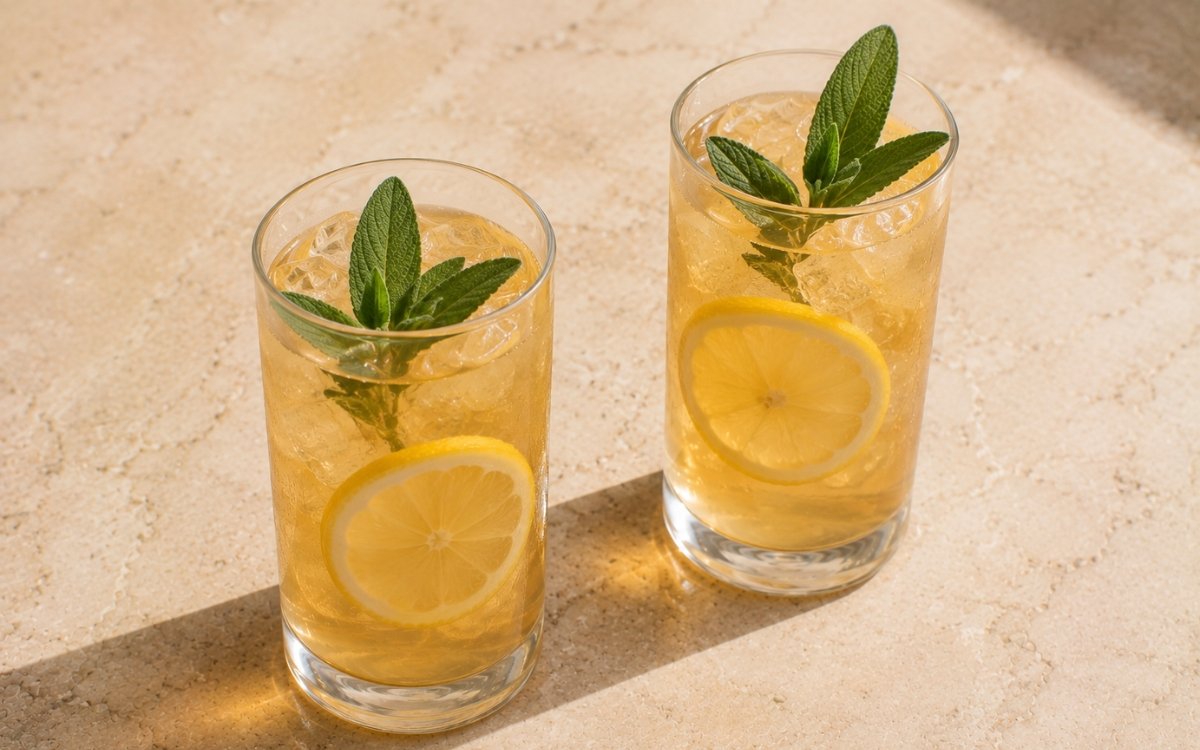
Fill glasses with ice, pour over the chilled sage citrus iced tea, and garnish with fresh sage leaves and lemon slices. Serve immediately while cold and aromatic.
*Notes :
- Black tea must be brewed briefly and precisely in this preparation specifically because over-steeping creates a bitterness that overwhelms both the honey and the herbal sage — there’s nowhere for that bitterness to hide once it’s there.
- Sage should be infused gently and only for a short time. Excessive contact time produces medicinal or piney flavours that dominate the drink in a way that’s difficult to correct after the fact, which is why tasting periodically during the infusion matters more here than a strict fixed timer would.
- Honey works best dissolved while the tea is still warm. Adding it to fully chilled tea makes even integration genuinely difficult, and the result is an uneven sweetness rather than one folded smoothly throughout.
- Lemon peel provides aroma rather than acidity, and it should be removed quickly — any lingering contact with the white pith beneath the peel introduces a bitterness this tea is specifically built to avoid.
- This drink relies on balance rather than sweetness throughout. The final result should feel refreshing and structured, not sugary — if it tastes sweet first and herbal second, something has gone slightly off the intended path.
Why This Recipe Works
This recipe works because the black tea is brewed at the correct temperature and removed at the precise time, leaving room for the herbal and citrus elements to register clearly rather than fighting through bitterness.
The sage is clapped rather than crushed and tasted periodically during its brief cold infusion, respecting its narrower margin for error compared to gentler herbs.
The honey dissolves while the tea is warm, integrating smoothly. And lemon’s two distinct roles — peel for fragrance, juice for lift — keep the citrus register precise rather than heavy-handed.
Ingredient Breakdown
Black Tea Brewed at 90–95°C for 2½–3 Minutes
The firm backbone — gentle tannin and depth without bitterness that would overwhelm the herb.
Sage Clapped, Tasted Periodically During Cold Infusion
The aromatic herbal layer — clean rather than heavy, removed at the first sign of full development rather than on a rigid clock.
Lemon Peel (Aroma) and Lemon Juice (Lift)
The two-stage citrus contribution — fragrance without acidity, then a small adjustment of brightness.
2–3 Tbsp Mild Honey, Dissolved Warm
The rounding sweetener — softening the tea’s natural bitterness without becoming the drink’s flavour.
Flavor Structure Explained
This Sage Citrus Iced Tea follows a layered balance model:
- Structured tea core (black tea)
- Assertive botanical character (sage)
- Bright citrus lift (zest and juice)
- Gentle balancing sweetness (honey)
- Refined mature finish (tea-herb-citrus balance)
Black tea defines the foundation with firm structure, gentle tannins, and enough depth to anchor the drink. Sage provides the defining botanical layer, contributing earthy, aromatic complexity that feels more robust and mature than lighter herbs such as mint or basil. Citrus works in two forms: zest supplies fragrant oils and aromatic freshness, while juice contributes measured acidity that sharpens the profile without turning it into a lemonade-style drink. Honey softens the tannins and integrates the flavors, functioning as texture and smoothness rather than as a noticeable sweet element. The result is an iced tea with a distinctly grown-up character, balancing herbal depth, citrus brightness, and tea structure in a composed and restrained way.
Common Mistakes to Avoid
- Steeping the Black Tea Beyond 3 Minutes – Introduces a harsh bitterness that overwhelms the herbal profile. Always set a timer.
- Chopping or Crushing the Sage – Releases bitter compounds quickly. Always clap gently instead.
- Letting the Sage Infuse on a Fixed Timer Without Tasting – Sage’s window for clean aroma versus medicinal heaviness is narrower than other herbs. Always taste periodically.
- Adding Honey to Fully Chilled Tea – Produces uneven, poorly integrated sweetness. Always dissolve while the tea is still warm.
- Leaving the Lemon Peel in Too Long – Risks pith bitterness leaching into the liquid. Always remove promptly at 5 minutes.
Variations
With Rosemary
Replace the sage with a small rosemary sprig for a similarly grown-up but more piney botanical direction.
With Lavender
Add a teaspoon of dried culinary lavender alongside the sage for a softer, more floral lift, in the spirit of the Lavender Lemon Iced Tea.
With Lemon Verbena
Add a few fresh lemon verbena leaves during the cold infusion alongside the sage for a more intensely citrus-herbal result.
Sparkling Version
Build the tea at a slightly higher concentration, chill, and top with cold sparkling water just before serving.
Storage & Make-Ahead
The sweetened tea base, before the sage infusion is added, can be refrigerated for up to 2 days.
Once assembled, the tea can be refrigerated for up to 2 days. For the freshest flavor and aroma, it is best enjoyed within 24 hours, when the sage and lemon notes are at their most vibrant.
Frequently Asked Questions
Why does the sage infusion call for tasting periodically rather than a fixed time?
Sage’s shift from clean and aromatic to heavy and medicinal happens within a narrower window than most other herbs in this collection, and that window can vary slightly with leaf freshness and size. Tasting periodically during the 6–10 minute range catches the right moment more reliably than a single fixed timer would.
Why dissolve the honey while the tea is still warm rather than after it’s fully chilled?
Honey integrates far more easily and evenly into warm liquid. Added to fully chilled tea, it resists smooth dissolution and tends to settle or layer unevenly, producing pockets of sweetness rather than a consistent profile throughout the drink.
Why is the lemon peel removed so quickly compared to how long it might infuse in other preparations?
The peel’s aromatic oils release quickly, but any lingering contact also risks the white pith beneath it leaching bitterness into the tea. Five minutes is enough time for the fragrance without that risk.
What other herbal black tea preparations share this approach?
The Lavender Lemon Iced Tea shares the same black tea base and citrus-lift structure with lavender’s softer floral character in place of sage’s more assertive herbal note. The Lemon Verbena Iced Tea shares the lemon-forward, herb-lifted direction with a more intensely citrus-herbal botanical. The Lemon Mint Iced Black Tea shares the identical black tea discipline and two-stage lemon technique with mint’s cooler, more menthol-forward character in place of sage.
Nutrition Facts
( per serving )
Calories
~30 kcal
Protein
0 g
Fat
0 g
Carbs
8 g
Calories
~30 kcal
Protein
0 g
Fat
0 g
Carbs
8 g
Related Recipes
Related Recipes

Light Lemon Verbena Iced Tea
Lemon verbena steeped exactly 10–15 minutes, honey dissolved warm, lemon juice added cold — chilled overnight. Floral, clean, and caffeine-free.
Thyme Orange Iced Tea
Black tea at 90–95°C for 2½–3 minutes, thyme clapped and infused cold, orange peel and fresh orange juice — chilled. Dry-leaning, aromatic, lightly sweet.
Rosemary Grapefruit White Tea Cooler
White tea at 75–80°C for 3–4 minutes, rosemary clapped and infused to taste — grapefruit juice added once cooled as sole acid, honey, chilled. Dry, aromatic, grown-up.



You might also like
You might also like
Grilled Peach Black Iced Tea
Black tea at 90–95°C for 2½–3 minutes, peaches grilled and simmered into a light unreduced syrup, warm lemon zest infusion — chilled. Warm and lightly smoky.
Strawberry Iced Black Tea
Black tea at 90–95°C for 2½–3 minutes, strawberries simmered into a light unreduced syrup, lemon peel infused cold 5 minutes — chilled. Fresh, crisp, restrained.
Grapefruit Cardamom Tonic Mocktail
Fresh grapefruit with cardamom warmth over tonic water — pale blush, bitter, and aromatic.



Sage Citrus Iced Tea
Ingredients
Method
- Heat the 1.65 litres of water to approximately 90–95°C. Add the 5 black tea bags and steep for exactly 2½–3 minutes only — longer steeping introduces a harsh bitterness that specifically overwhelms the herbal profile this tea is built around, rather than simply tasting stronger. Remove the bags gently without squeezing, and allow the tea to cool to lukewarm.
- While the tea is still slightly warm, stir in 2 tablespoons of mild honey until fully dissolved. Taste and add up to one additional tablespoon only if necessary. The sweetness should remain subtle and supportive rather than dominant — this tea is not built to taste sweet. Allow the tea to cool fully to room temperature before moving on.
- Rinse the sage leaves and lightly clap them between the palms to release their aromatic oils. This activates the herbal aroma without bruising the leaves outright. Avoid chopping or crushing the sage at any point — damaged leaves release bitter compounds quickly, and sage’s margin for error here is narrower than basil’s or mint’s.
- Add the sage leaves to the cooled tea and refrigerate for 6–10 minutes. Taste periodically rather than waiting for a fixed endpoint, and remove the leaves as soon as the herbal aroma becomes clearly noticeable. A properly timed infusion produces a clean botanical note; left even slightly too long, sage shifts toward a heavier, more medicinal character that specifically dominates rather than complements the rest of the drink.
- Add the strip of lemon peel to the tea and allow it to infuse for about 5 minutes, then remove it promptly. The peel’s job here is purely aromatic — it contributes citrus oils without introducing any acidity or bitterness, provided it is pulled before the white pith beneath it has any chance to leach into the liquid.
- Stir in 1 tablespoon of fresh lemon juice and taste. Add up to one additional tablespoon if the drink needs more brightness. The goal here is a gentle citrus lift, not lemonade-level acidity — the juice is a finishing adjustment, not a structural ingredient.
- Refrigerate for 1–2 hours until fully cold and balanced. Proper chilling sharpens the overall structure and allows the herbal and citrus aromas to settle into something integrated rather than two separate impressions sitting side by side.
- Fill glasses with ice, pour over the chilled sage citrus iced tea, and garnish with fresh sage leaves and lemon slices. Serve immediately while cold and aromatic.