
Lavender Lemon Iced Tea
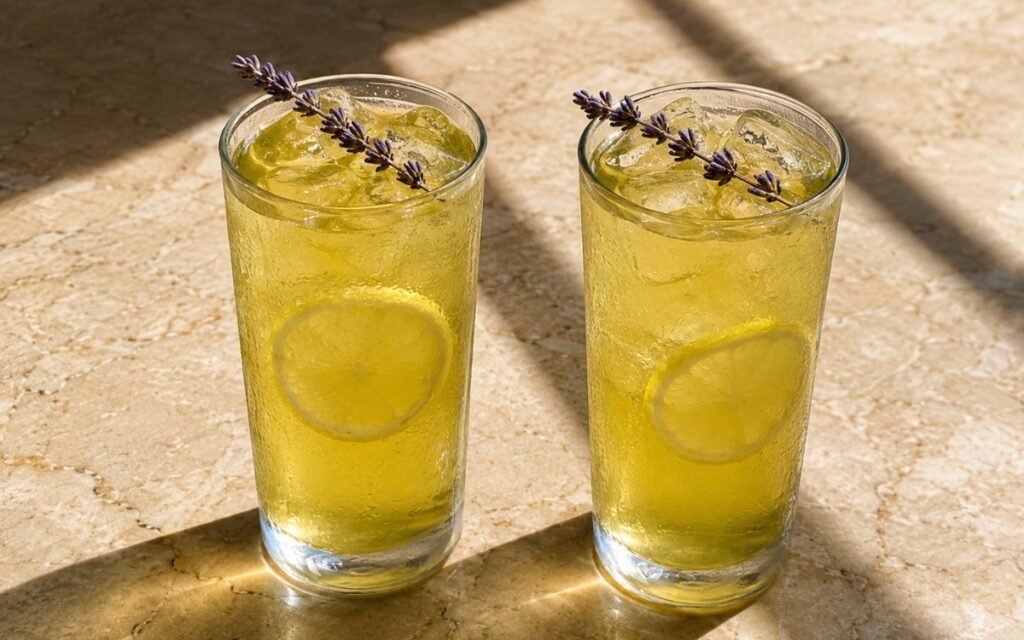
Lavender Lemon Iced Tea is an elegant iced black tea infused with delicate lavender and bright lemon peel aroma — lightly sweetened with honey and finished with gentle citrus acidity, floral, refined, and beautifully restrained. Lavender demands more precision than almost any other botanical used in this collection: a single teaspoon of dried buds is a small quantity by most standards, yet it is entirely capable of pushing the entire batch from elegantly floral into soapy and medicinal within just a couple of extra minutes. The black tea base follows the same disciplined brewing used throughout this collection — 90–95°C, 2½–3 minutes maximum, bags removed without squeezing — using a light Ceylon or breakfast blend specifically chosen to provide structure without the aggressive tannin depth that would compete with lavender’s fragile character. Lemon contributes in its now-familiar two-stage role: peel infused briefly for fragrance, removed before any pith bitterness can develop, and juice added last in carefully restrained amounts so the drink stays aromatic rather than sharp. The result is a tea that smells genuinely floral and tastes precisely balanced — never perfumed, never sour, just quietly elegant.

Prep Time : 15 min
Cook Time : 5 min
Servings : 8
15 min
5 min
8
Ingredients
For the Black Tea Base
• 1.65 litres water
• 5 black tea bags — Ceylon or light breakfast tea — this one on Amazon
For the Botanical & Citrus Flavoring
• 1 tsp dried culinary lavender buds — this one on Amazon
• 2 strips lemon peel — yellow part only, no white pith
• 2 Tbsp fresh lemon juice — for light acidity; start with 1 Tbsp
• 2–3 Tbsp mild honey — to taste; start with 2 Tbsp — this one on Amazon
For Serving
• Ice
• Fresh lavender sprig
• Lemon peel twists
This post may contain affiliate links. As an Amazon Associate I earn from qualifying purchases, at no additional cost to you.
Directions
- Brew the Black Tea
Heat the water to 90–95°C. Add the black tea bags and steep for 2½–3 minutes maximum. Remove the tea bags without squeezing and let the tea cool to lukewarm. - Sweeten While Warm
While the tea is still warm, stir in 2 tablespoons of honey until fully dissolved. Taste and add up to 1 additional tablespoon only if needed. Let the tea cool to room temperature. - Infuse the Lavender
Add the lavender buds (or fresh sprig) to the cooled tea. Refrigerate and let infuse for 5–7 minutes only, just until a soft floral aroma develops. Remove the lavender promptly — over-infusion turns soapy, and once it crosses that line, the base cannot be fully corrected. - Add Lemon Peel and Juice
Add the lemon peel strips and let infuse for 5 minutes, then remove. Stir in 1 tablespoon of lemon juice for light brightness, adding up to 1½ tablespoons only if needed. The drink should stay aromatic, not sharp — lemon juice here is a finishing adjustment, not the main flavour. - Chill and Serve
Continue chilling the tea for 1–2 hours until fully cold and integrated. Fill glasses with ice, pour over the chilled lavender lemon iced tea, and garnish with a fresh lavender sprig and a twist of lemon peel.
*Notes :
- Lavender demands more precision than almost any other botanical in this collection. One teaspoon of dried buds is a small quantity by most standards, and yet it is entirely capable of pushing the flavour from elegantly floral into soapy and medicinal within just a couple of extra minutes. Always use culinary-grade lavender — ornamental or craft lavender may carry chemical treatments and will produce an unpleasant, artificial flavour regardless of how carefully the timing is managed.
- Lemon peel and lemon juice serve genuinely distinct roles here. The peel contributes fragrance and aromatic brightness without touching acidity. The juice, added last, provides the structural lift that sharpens the finish. Using only one or the other leaves the drink either flat and floral or sharp and one-dimensional.
- A light Ceylon or breakfast blend is specifically the correct tea here — its mild tannin and clean body provide structure without competing with lavender’s delicate character the way a heavier, more tannic tea would.
- Full chilling is not optional. Served warm or only partially cold, the lavender feels heavy and perfumed rather than soft and clean — the cold rest is what lets everything settle into a cohesive, refined whole.
Why This Recipe Works
This recipe works because the black tea is brewed lightly enough to let lavender and lemon lead without resistance. Lavender is infused cold and briefly, tasted rather than timed blindly, respecting how narrow its window between floral and soapy really is.
Lemon’s two distinct contributions — peel for fragrance, juice for finishing acidity — provide a more complete citrus dimension than either alone. And honey stays restrained, present to round the tea’s tannin rather than to sweeten the drink outright.
Ingredient Breakdown
Black Tea Brewed at 90–95°C for 2½–3 Minutes
The light, clean backbone — Ceylon or breakfast blend specifically chosen to stay out of lavender’s way.
Lavender, Infused Cold for 5–7 Minutes
The defining floral character — the narrowest infusion window of any botanical in this collection, pulled promptly to avoid a soapy shift.
Lemon Peel (Fragrance) and Lemon Juice (Finishing Acidity)
The two distinct citrus contributions — neither replacing the other.
2–3 Tbsp Mild Honey
The restrained sweetener — smoothing tannin without making the drink taste sweet.
Flavor Structure Explained
This Lavender Lemon Iced Tea follows a restrained balance model:
- Light tea core (black tea)
- Delicate floral character (lavender)
- Bright citrus lift (lemon peel and juice)
- Gentle balancing sweetness (honey)
- Elegant refined finish (tea-floral-citrus harmony)
Black tea defines the foundation with a light, clean structure that provides support while allowing the more delicate aromatics to remain at the forefront. Lavender contributes the drink’s defining botanical character, adding soft floral notes that create its distinctive elegance without overwhelming the palate. Lemon works in two complementary roles: peel supplies fragrant citrus oils that brighten the aroma, while juice contributes measured acidity that gives the finish freshness and precision. Honey smooths the transitions between tea, floral notes, and citrus, providing balance without becoming a noticeable flavor in its own right. The result is an iced tea built around restraint and refinement, where floral delicacy, citrus brightness, and gentle tea structure remain in quiet harmony.
Common Mistakes to Avoid
- Steeping the Black Tea Beyond 3 Minutes – Introduces harsh tannins that compete with lavender’s delicate character. Always set a timer.
- Over-Infusing the Lavender – Even a couple of extra minutes shifts it from floral to soapy. Always remove promptly within the 5–7 minute window.
- Using Ornamental or Craft Lavender – May carry chemical treatments and produces an artificial flavour. Always culinary-grade.
- Leaving the Lemon Peel In Too Long – Risks pith bitterness leaching into the tea. Always remove at 5 minutes.
- Adding Too Much Lemon Juice – Pushes the drink from aromatic into sharp. Always start at 1 tablespoon and adjust gradually.
Variations
With Blueberry
Add a light blueberry syrup to the finished base for a softer, fruitier direction, in the spirit of the Lavender Blueberry Iced Tea.
As a Lemonade
Skip the tea entirely and build the lavender-and-lemon combination on a still lemonade base instead, as in the Lavender Lemonade.
With Mint
Add a small handful of lightly clapped fresh mint during the final chill for a cooler, brighter finish.
Sparkling Version
Build the tea at a slightly higher concentration, chill, and top with cold sparkling water just before serving.
Storage & Make-Ahead
The sweetened tea base, before the lavender infusion is added, can be refrigerated for up to 2 days.
Once assembled, the tea can be refrigerated for up to 2 days. For the freshest flavor and aroma, it is best enjoyed within 24 hours, when the lavender’s floral notes are at their most vibrant.
Frequently Asked Questions
Why does lavender need such careful timing compared to other herbs in this collection?
Lavender’s pleasant floral compounds give way to a soapy, perfumed character within a remarkably narrow window — often just a couple of minutes past the ideal point. Because the quantity used is so small, it’s easy to underestimate how quickly it can overwhelm an entire batch. Tasting from the 5-minute mark rather than trusting a fixed timer is the only reliable way to catch the right moment.
Why use both lemon peel and lemon juice instead of just one?
They contribute different things. Peel releases aromatic citrus oils that add fragrance without touching acidity. Juice, added last, provides the structural brightness that sharpens the finish. Using only one leaves the drink either flat and floral or sharp without aroma — both are needed together.
Can I use ornamental lavender if culinary lavender isn’t available?
No — ornamental or craft lavender may carry chemical treatments not intended for consumption, and will produce an unpleasant, artificial flavour regardless of how carefully the infusion is timed. Always source culinary-grade lavender labelled for food use.
What other lavender preparations share this approach?
The Lavender Lemonade shares the same lavender-and-lemon pairing in a tea-free, still lemonade format. The Lavender Blueberry Iced Tea shares the precisely timed lavender infusion on a black tea base with blueberry’s soft fruit sweetness in place of lemon’s brightness. The Blueberry Lavender Lemonade shares lavender and fruit in a tea-free lemonade format.
Nutrition Facts
( per serving )
Calories
~35 kcal
Protein
0 g
Fat
0 g
Carbs
13 g
Calories
~50 kcal
Protein
0 g
Fat
0 g
Carbs
35 g
Related Recipes
Related Recipes

Lavender Honey Green Iced Tea
Properly brewed green tea combined with a carefully extracted lavender-honey infusion for a pale golden-green, floral, lightly sweet iced tea.
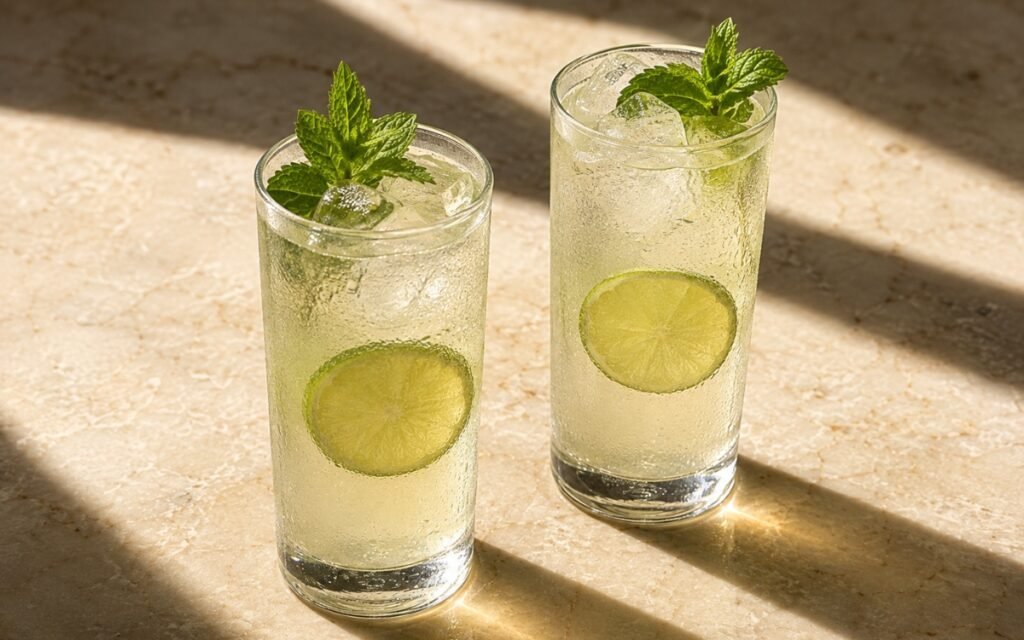
Mint Lime White Tea Cooler
Properly brewed white tea combined with a cold-style mint-lime infusion and fresh lime juice for a pale, clean, elegant iced tea cooler.
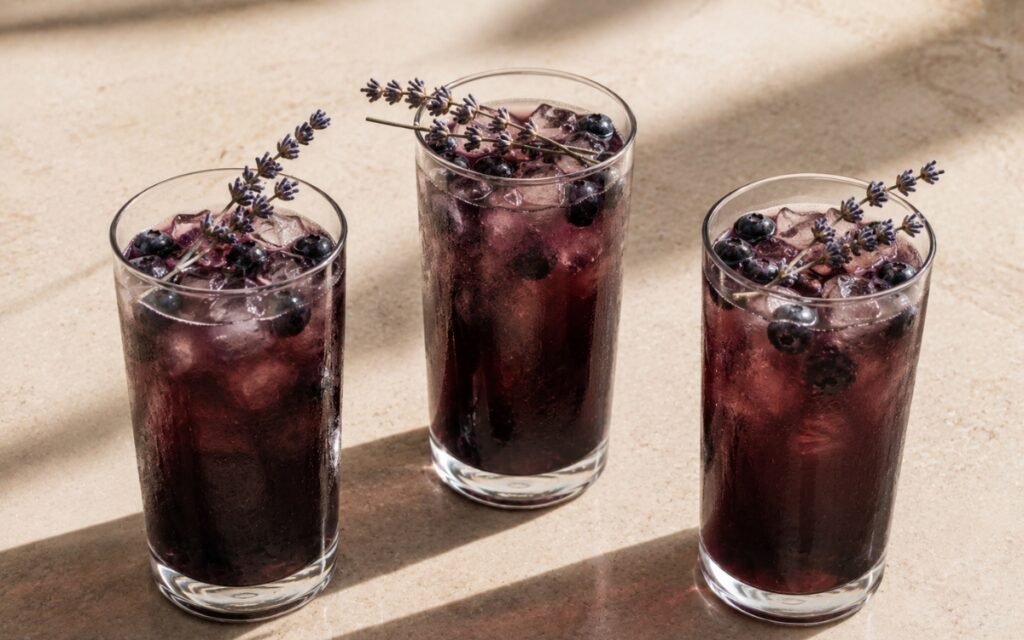
Lavender Blueberry Iced Tea
Light black tea at 90–95°C for 2½–3 minutes, lavender checked from 4 minutes, blueberry syrup made separately — chilled. Deep purple and elegant.
You might also like
You might also like
Hibiscus Strawberry Lemonade
Hibiscus tea steeped 5–7 minutes, strawberries blended with hibiscus tea — honey dissolved warm, lemon cold, rested 30 minutes. Vivid ruby, tart, and fruity.
Lemon Peel Black Iced Tea (No Juice)
Black tea at 90–95°C for 2½–3 minutes, three strips lemon peel infused cold 4–5 minutes — honey and a pinch of salt, no juice, chilled. Crisp, aromatic, acid-free.
Pear Ginger Sparkler Mocktail
Ripe pear with honey-rounded ginger over club soda — pale gold, delicate, and warmly elegant.


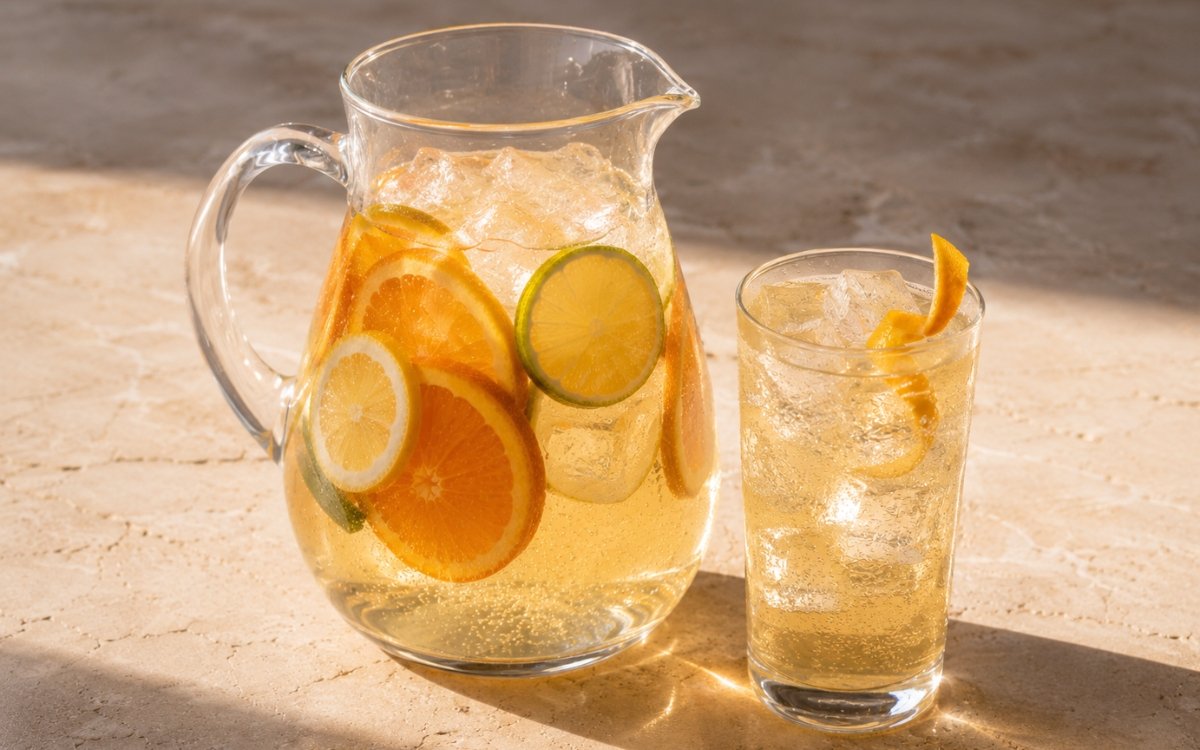
White Sangria Mocktail
Ingredients
Method
- Slice the oranges, lemon, and lime into thin, even rounds about 3–4 mm thick. Remove any visible seeds to prevent bitterness during infusion. Place the citrus into a large glass pitcher with enough space for stirring and chilling.
- Add the honey and a small pinch of fine sea salt directly over the citrus slices. Using a wooden spoon or muddler, press gently just until some juice is released and the honey begins dissolving. The goal is light extraction, not crushing — intact citrus structure keeps the drink clean and aromatic.
- Pour in the fresh orange juice followed by the white verjus. Stir slowly for about 10–15 seconds until everything is evenly combined. Avoid aggressive stirring, which can over-release citrus oils and create unwanted bitterness.
- Cover the pitcher and refrigerate for at least 1 hour, ideally 2–3 hours. During this time the citrus oils, acidity, mild tannins, and honey integrate into a balanced base. The liquid will become slightly deeper in aroma and more structured in taste.
- Just before serving, pour in the chilled club soda. Stir very gently once or twice to combine without flattening the bubbles. Proper carbonation should feel lively and lift the citrus aromatics.
- Fill serving glasses with fresh ice, pour the sangria over the ice, and garnish with orange peel twists or a fresh citrus slice. Serve immediately while the drink is vibrant and effervescent.