
Raspberry Orange Infused Water
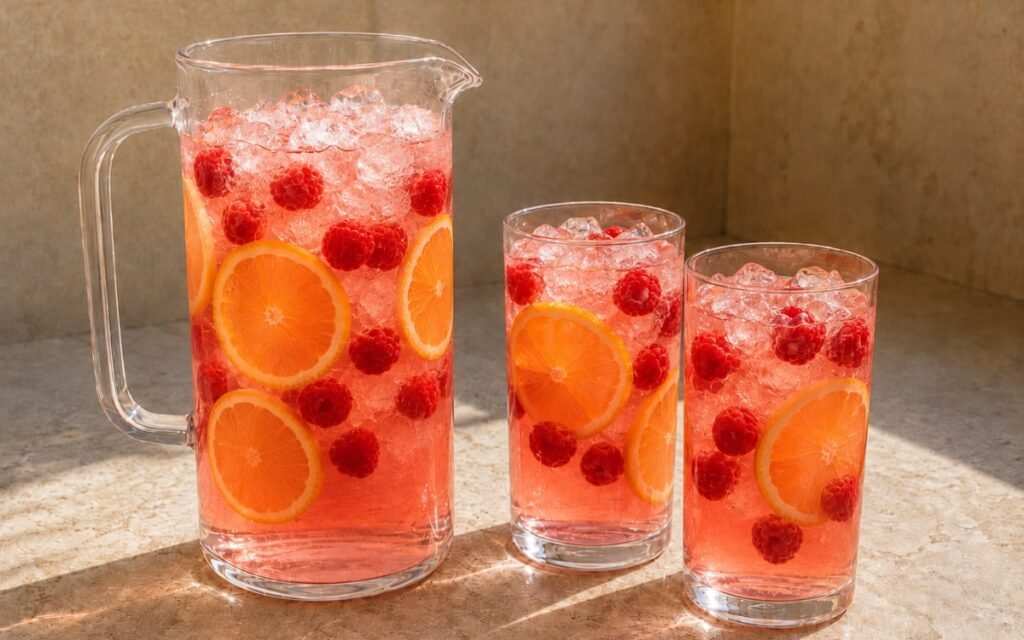
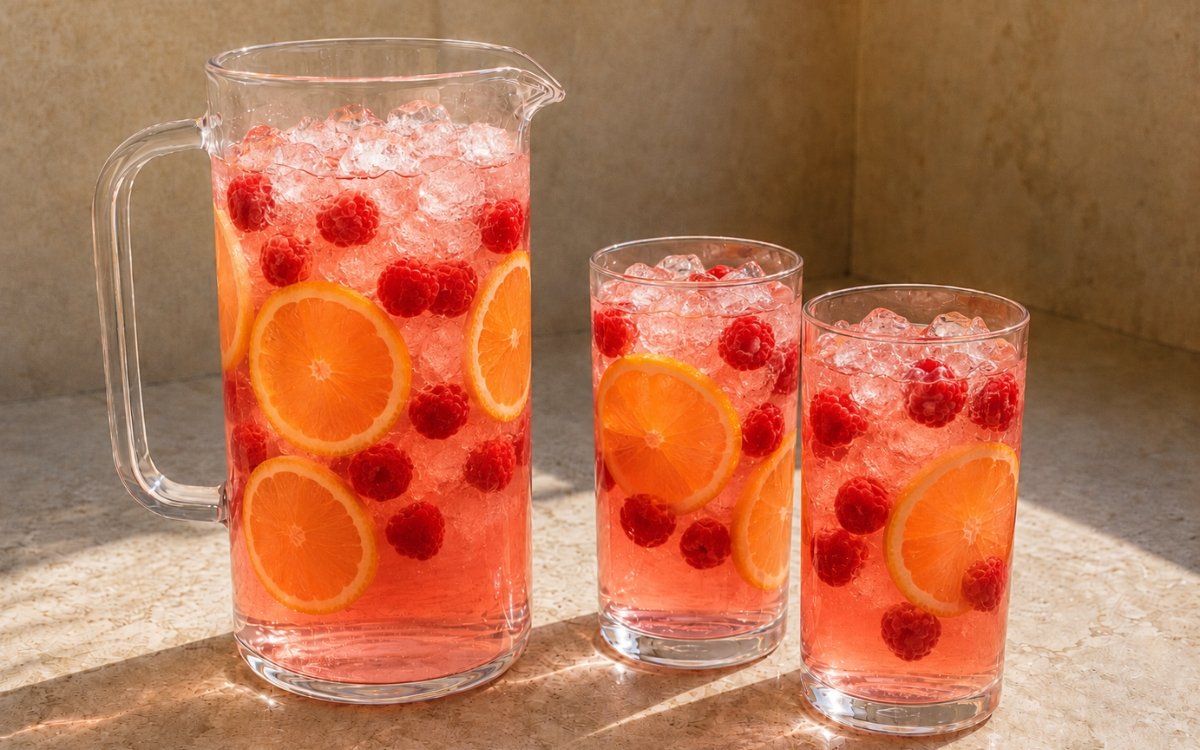
Raspberry orange infused water is the warmest-toned of the infused water preparations — orange’s specifically sweet, round, warm citrus character alongside raspberry’s vivid, bright, specifically tart fruitiness producing a combination that is more aromatic, more immediately identifiable, and more specifically fragrant than any other infused water in this collection. The preparation diverges from the blueberry and strawberry versions in one important technical point: raspberry’s small seeds and high seed-to-fruit ratio mean that pressing too firmly during the base preparation produces a murky, seed-filled water with a slightly tannic seed quality from the crushed seed material. The press for raspberry is specifically the lightest of any fruit in this collection — just enough to crack the outer skin and release the vivid juice from the outer flesh without crushing the seeds into the surrounding liquid. A few seeds inevitably escape and settle at the bottom of the pitcher during infusion; this is normal and does not affect the flavour quality. The combination specifically does not include added lemon or lime juice — orange’s own natural citric and malic acids provide sufficient brightness without additional citrus, and the specific appeal of raspberry-orange water is the warm, sweet, fragrant citrus note of orange rather than the sharper acid dimension of lemon or lime.
Prep Time : 10 min
Infusion Time: 1–4 hr
Servings : 16
10 min
1–4 hr
16
Ingredients
For the Infusion Base
• 1 cup fresh raspberries — approximately 125g
• Clean pulp or segments from 1 orange — seeds and tough membranes removed
• 15–30g honey — optional; must be pre-dissolved — this one on Amazon
• 1–2 small pinches fine sea salt
For the Final Build
• 3 litres ice-cold water
• 1 cup fresh raspberries — approximately 125g; left whole
• 2 oranges — thinly sliced
This post may contain affiliate links. As an Amazon Associate I earn from qualifying purchases, at no additional cost to you.
Directions
- Prepare the Orange Pulp and Press the Raspberries
Segment 1 orange, removing seeds and membranes with clean pulp retained. Place the orange pulp and the first cup of raspberries in the large pitcher together. Using the back of a spoon, press the fruit gently — the lightest pressing applied to any fruit in this collection’s infused water preparations. The raspberry pressing technique requires specific restraint for a reason not present with blueberries, strawberries, or cucumber: raspberries contain numerous small seeds that, under even moderate pressure, crack open and release bitter, more tannic seed compounds into the surrounding liquid. Beyond the seed bitterness, crushed seeds produce small particulate matter that makes the water murky and visually less appealing. The correct press is just sufficient to crack the skin of approximately half the raspberries, releasing the vivid pink-red juice from the outer flesh while the seeds remain largely intact. The raspberry pieces should be visibly cracked and juice-releasing but not significantly compressed. The orange pulp mashing alongside the raspberries is slightly firmer — orange’s membrane structure is less seed-problematic, and the pulp benefits from moderate pressing to release its juice and aromatic esters into the medium. The combined gentle press allows the orange and raspberry to begin infusing simultaneously from the first moment. - Optional Honey and Salt
Pre-dissolve any honey in warm water. Add to the pitcher with the 1–2 small pinches of fine sea salt. - Build and Infuse
Pour the 3 litres of ice-cold water into the pitcher. Add the whole raspberries — their intact skins will release colour and aromatic compounds progressively and specifically more slowly than the pressed base berries, providing both the visual presence of whole vivid red-pink spheres throughout the water and a secondary slower infusion. Add the thinly sliced oranges. Stir gently once or twice. The combination’s colour development during infusion is specifically warm and layered — raspberry’s pink-red anthocyanins blending with orange’s warm amber to produce a progressively deeper, specifically warm coral-pink as the infusion develops. The colour and aroma are most vivid at 2–4 hours. Cover and refrigerate for 1–4 hours. At 1 hour: pale, subtle, and specifically clean — the suggestion of raspberry and orange. At 4 hours: the deepest vivid coral-pink colour and the most specifically present raspberry-orange aromatic character within the clean infused-water range. After 4 hours, remove all orange slices and raspberry pieces. The orange peel’s limonoid compounds extract progressively; the raspberries become flat, seedy, and dull without the fresh aromatic quality of the infusion period. Serve immediately after removal or refrigerate the strained water for up to 24 hours.
*Notes :
- The raspberry-orange combination works specifically because of the complementary aromatic character of the two fruits. Raspberry’s primary pleasant aromatic compounds — furanones and various esters including α-ionone — are specifically warm-fruity in quality, sharing some aromatic space with orange’s own warm citrus esters. The combination produces a specifically more fragrant, more specifically summer-aromatic water than either fruit alone because the overlapping warm-fruity register amplifies rather than competes.
- A few raspberry seeds settling at the bottom of the pitcher during infusion are normal and do not affect quality. If a completely clear, seed-free result is preferred for serving, pouring through a fine sieve into a clean pitcher just before serving produces the clearest possible result.
Why This Recipe Works
This recipe works because the raspberry pressing is specifically restrained to prevent seed-bitterness extraction. The orange pulp provides the warm, sweet citrus dimension that specifically complements raspberry’s tart fruitiness without requiring additional citrus juice.
The two-stage fruit approach — pressed base plus whole visual — provides both immediate aromatic release and progressive visual presence. And the removal at 4 hours preserves the warm, vivid character before orange peel bitterness and raspberry dullness develop.
Ingredient Breakdown
Very Light Raspberry Pressing (Lighter Than Any Other Fruit)
The seed-bitterness prevention — raspberry seeds release bitter tannins and particulate matter under pressure; only skin-crack pressure applied.
Orange Pulp Rather Than Just Orange Slices
The warm citrus aromatic base — pulp provides immediate ester and juice release; slices provide progressive surface aromatic and visual presence.
No Added Lemon or Lime Juice
The orange-sufficient calibration — orange’s own natural acids provide the brightness without requiring additional citrus, preserving the specifically warm, sweet character of this combination.
Two-Stage Fruit (Pressed Base + Whole Visual)
The aromatic and visual optimisation — same approach as blueberry lemon water.
Flavor Structure Explained
This Raspberry orange infused water follows a minimalist balance model:
- Warm fruit core (orange and raspberry)
- Rounded citrus sweetness (orange)
- Bright berry freshness (raspberry)
- Clean aromatic infusion (light extraction)
- Hydration-focused finish (cold water)
Orange and raspberry define the foundation together, creating a fragrant fruit profile that feels fuller and more aromatic than either ingredient alone. Orange provides soft sweetness and warm citrus notes that form the drink’s rounded base. Raspberry contributes a lighter, fresher berry character that lifts the orange and adds a subtle sense of brightness. Because both fruits share complementary fruity aromatics, they reinforce one another rather than competing. Despite these flavor accents, the primary experience remains the refreshment of cold water, with the fruit functioning as a delicate aromatic enhancement rather than a dominant flavor source.
Common Mistakes to Avoid
- Pressing the Raspberries Too Firmly – Seed bitterness and murky water result from over-pressed raspberry seeds. Always the lightest possible press — just enough to crack the skin.
- Leaving Ingredients Beyond 4 Hours – Orange peel bitterness and raspberry dullness both develop. Always remove at the 4-hour maximum.
- Adding Lemon or Lime Juice – The preparation’s specific appeal is orange’s warm sweetness alongside raspberry’s bright tartness. Added citrus acid shifts the character toward a more conventionally tart direction that is a different drink.
- Not Pre-Dissolving Honey – Always pre-dissolve.
Variations
With Mint
Add 12 lightly clapped fresh mint leaves alongside the fruits — mint’s cool freshness provides a specifically contrasting dimension against the warm-fruity orange-raspberry combination.
With Rose Petals
Add 1 tsp of food-grade dried rose petals — the rose’s geraniol character alongside raspberry’s warm fruitiness and orange’s sweetness produces the most specifically aromatic, most fragrant version.
With Grapefruit
Replace one of the oranges with a grapefruit — the grapefruit’s dry, lightly bitter character adds complexity against the raspberry’s tartness.
With Vanilla
Add a split vanilla bean — vanilla’s warm aromatic sweetness alongside raspberry and orange produces a specifically more indulgent direction.
Storage & Make-Ahead
Once the ingredients have been removed, the infused water can be refrigerated in a sealed pitcher for up to 24 hours.
Infused water should not be stored with the ingredients still present for longer than 4 hours. For the best flavor and balance, remove the ingredients once the infusion period is complete.
Frequently Asked Questions
Why is the raspberry pressing specifically lighter than other fruits?
Raspberry contains numerous small seeds with a higher seed-to-fruit ratio than blueberry, strawberry, or any other berry used in these preparations. Under pressure, raspberry seeds crack and release bitter tannin compounds alongside particulate matter that makes the water murky. The lightest possible press — just enough to crack the skin and release the outer flesh juice — prevents both the bitterness and the cloudiness.
Why no added lemon or lime juice?
Orange’s own natural citric and malic acid content provides sufficient brightness without additional citrus. More importantly, the preparation’s specific character is the warm, sweet, fragrant dimension of orange alongside raspberry’s brightness — adding lemon or lime juice introduces a sharper acidity that specifically shifts the preparation’s character away from its warm, round appeal toward a more conventionally tart water that is a different drink.
What causes the vivid coral-pink colour?
Raspberry’s anthocyanin pigments (primarily cyanidin-3-sophoroside and cyanidin-3-glucoside) produce the vivid pink-red, and orange’s carotenoid pigments from the juice and peel surface contribute warm amber. The combination in cold water produces the specifically warm coral-pink of the finished infusion — neither pure berry-red nor citrus-amber but a specifically warm, vivid combination.
What other infused waters share this direction?
The Orange Mint Infused Water shares the orange as the primary citrus component with mint’s herbal coolness rather than raspberry’s fruity brightness — the most tonally comparable citrus water in a different herbal direction. The Strawberry Lime Infused Water shares the berry-and-citrus infusion approach with strawberry’s warmer fruitiness and lime’s sharper acid. The Blackberry Lime Infused Water shares the berry infusion with a darker, more wine-adjacent fruit character alongside lime’s sharp citrus.
Nutrition Facts
( per serving )
Calories
~8 kcal
Protein
0 g
Fat
0 g
Carbs
2 g
Calories
~8 kcal
Protein
0 g
Fat
0 g
Carbs
2 g
Related Recipes
Related Recipes

Cranberry Orange Iced Tea Pitcher
Strong black tea combined with lightly crushed, cold-macerated cranberries, orange zest and juice, and a second infusion of orange slices and split whole cranberries.
White Tea Strawberry Pitcher
White tea at 70–75°C for 3–4 minutes, strawberries gently infused 8–10 minutes — fully strained, cold water only (no juice), chilled. Pale, delicate, and refined.
Strawberry Lemonade Pitcher Drink
Bright pink strawberry lemonade with fresh lemon juice, honey-strawberry syrup, and juicy strawberry slices.
You might also like
You might also like
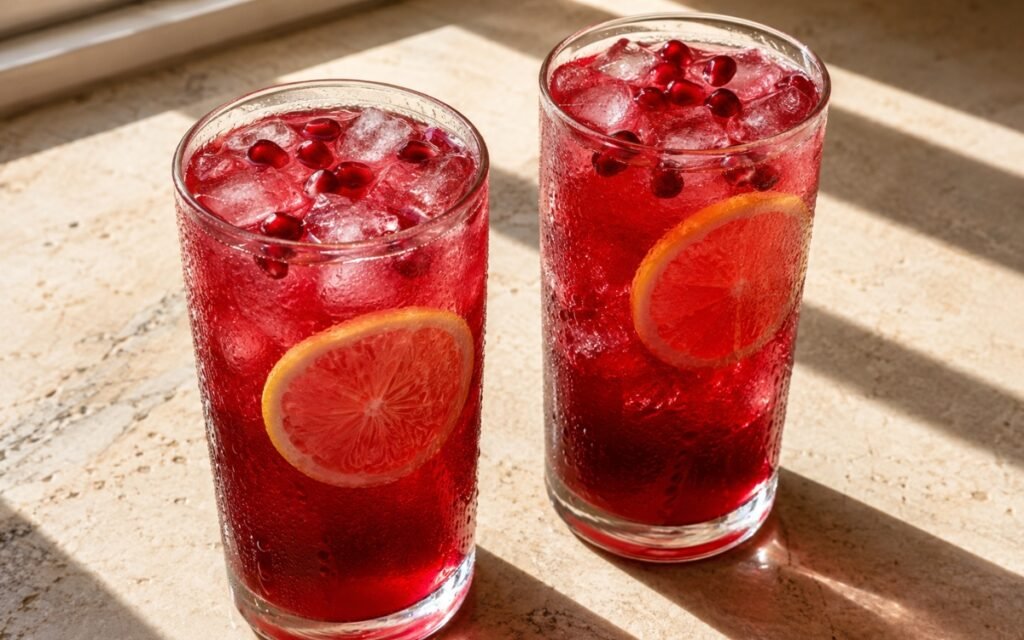
Pomegranate Lemonade
Honey-lemon syrup with zest off heat, 500ml pure pomegranate juice — fresh lemon, salt for anti-astringency, cold water, chilled. Ruby-red and grown-up.
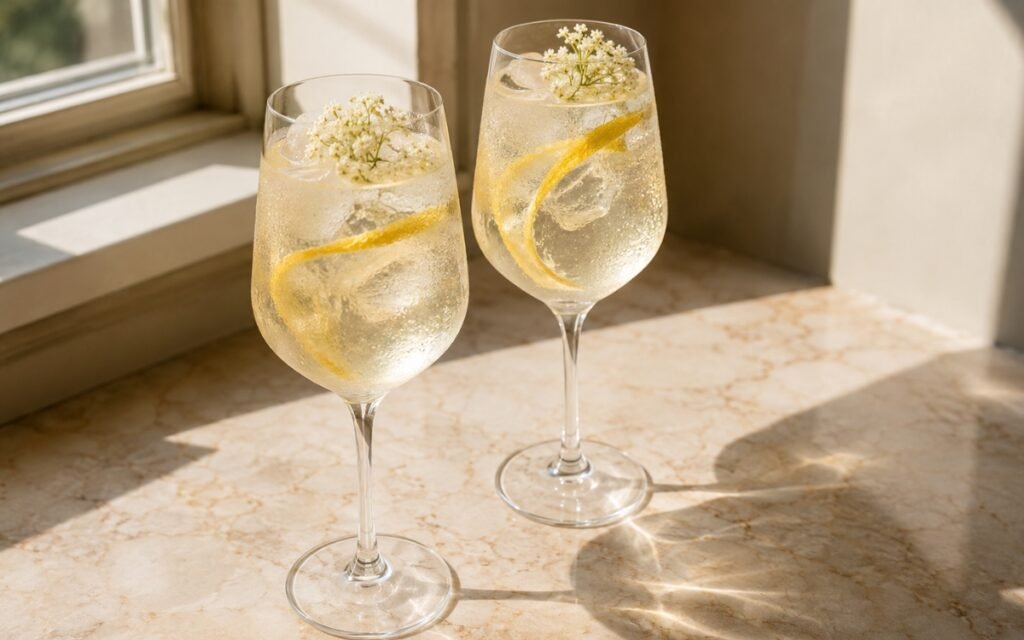
Elderflower Lemonade
Elderflower steeped in warm syrup exactly 6–8 minutes, lightly strained — fresh lemon juice, salt, cold water, chilled 1–2 hours. Honeyed-floral and elegantly clean.
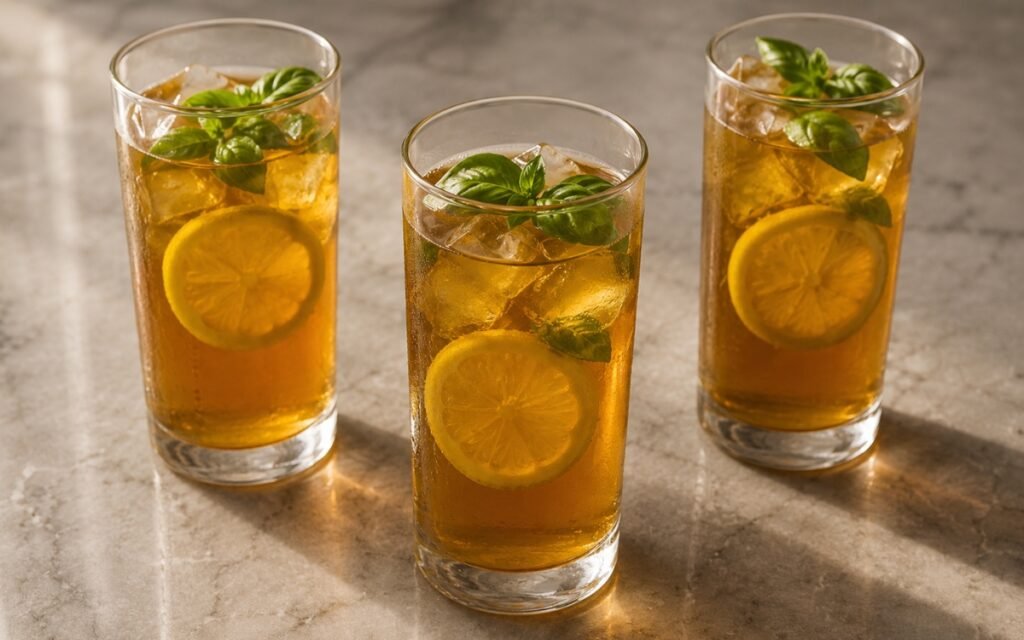
Basil Lemon Iced Tea
Ceylon black tea at 90–95°C for 2½–3 minutes, basil clapped and infused cold 10–15 minutes — lemon peel and juice, honey, chilled. Dry, green, and fresh.
Raspberry Orange Infused Water
Ingredients
Method
- Segment 1 orange, removing seeds and membranes with clean pulp retained. Place the orange pulp and the first cup of raspberries in the large pitcher together. Using the back of a spoon, press the fruit gently — the lightest pressing applied to any fruit in this collection’s infused water preparations. The raspberry pressing technique requires specific restraint for a reason not present with blueberries, strawberries, or cucumber: raspberries contain numerous small seeds that, under even moderate pressure, crack open and release bitter, more tannic seed compounds into the surrounding liquid. Beyond the seed bitterness, crushed seeds produce small particulate matter that makes the water murky and visually less appealing. The correct press is just sufficient to crack the skin of approximately half the raspberries, releasing the vivid pink-red juice from the outer flesh while the seeds remain largely intact. The raspberry pieces should be visibly cracked and juice-releasing but not significantly compressed. The orange pulp mashing alongside the raspberries is slightly firmer — orange’s membrane structure is less seed-problematic, and the pulp benefits from moderate pressing to release its juice and aromatic esters into the medium. The combined gentle press allows the orange and raspberry to begin infusing simultaneously from the first moment.
- Pre-dissolve any honey in warm water. Add to the pitcher with the 1–2 small pinches of fine sea salt.
- Pour the 3 litres of ice-cold water into the pitcher. Add the whole raspberries — their intact skins will release colour and aromatic compounds progressively and specifically more slowly than the pressed base berries, providing both the visual presence of whole vivid red-pink spheres throughout the water and a secondary slower infusion. Add the thinly sliced oranges. Stir gently once or twice. The combination’s colour development during infusion is specifically warm and layered — raspberry’s pink-red anthocyanins blending with orange’s warm amber to produce a progressively deeper, specifically warm coral-pink as the infusion develops. The colour and aroma are most vivid at 2–4 hours. Cover and refrigerate for 1–4 hours. At 1 hour: pale, subtle, and specifically clean — the suggestion of raspberry and orange. At 4 hours: the deepest vivid coral-pink colour and the most specifically present raspberry-orange aromatic character within the clean infused-water range. After 4 hours, remove all orange slices and raspberry pieces. The orange peel’s limonoid compounds extract progressively; the raspberries become flat, seedy, and dull without the fresh aromatic quality of the infusion period. Serve immediately after removal or refrigerate the strained water for up to 24 hours.