
Blood Orange Citrus Pitcher — For a Crowd
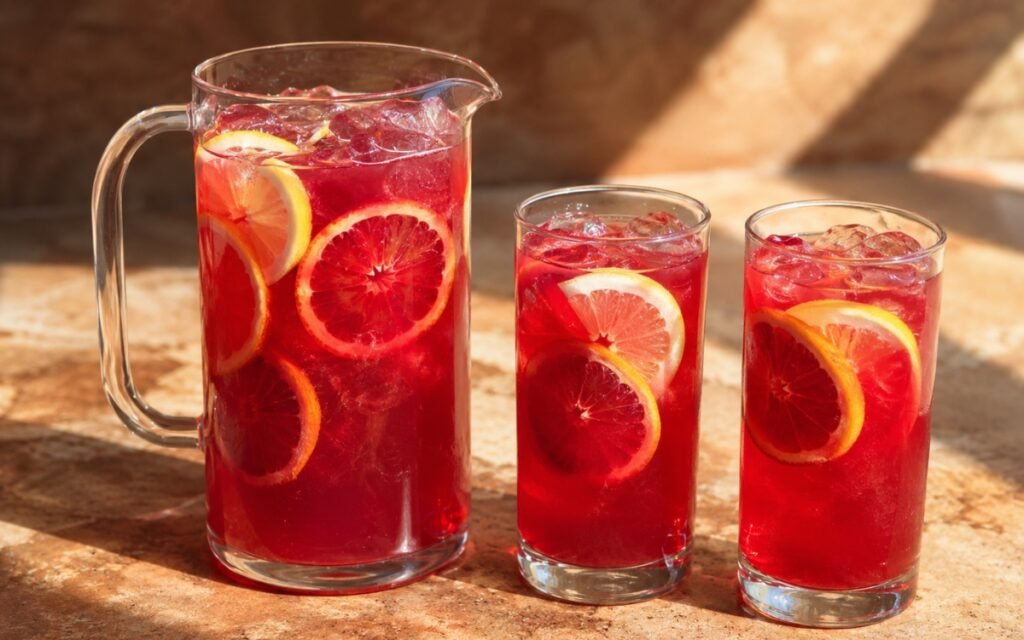
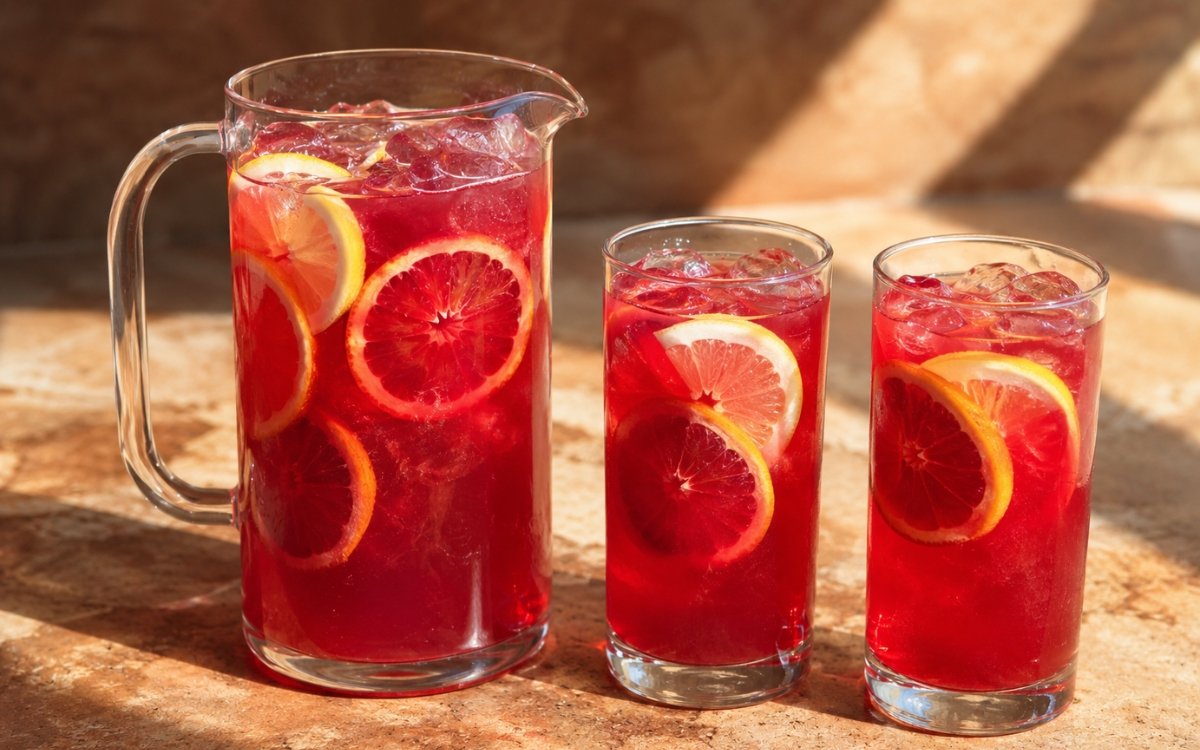
Blood orange citrus pitcher is the most specifically striking visual preparation in this crowd collection — blood orange’s vivid, deeply pigmented ruby-red juice producing a pitcher of a specific vivid crimson that no other citrus fruit in this preparation achieves. The structure is the cleanest of the juice-based crowd preparations: no cooked fruit, no pulp component, no complex dual-extraction. The preparation is built entirely on high-quality juice components brought together with a specifically simple brown sugar dual-zest syrup — blood orange’s concentrated anthocyanin-pigmented, specifically round, sweet-citrus juice alongside lemon’s structural citric acid in the proportions that make blood orange taste specifically lemonade-adjacent rather than simply juice. The lemon’s function at the crowd scale is the same concern addressed in the pineapple-orange and watermelon preparations: blood orange’s naturally higher sugar content and lower acid concentration than conventional lemon means a blood-orange-only preparation at dilution tastes specifically soft, rounded, and without the refreshing acid dimension that specifically makes citrus drinks indefinitely drinkable across refills. The 240ml of lemon juice — equivalent to the conventional 8-serving lemonade’s standard quantity at double scale — provides the structural backbone. The blood orange and lemon zest dual infusion in the brown sugar syrup provides the peel-aromatic depth that makes the combined preparation taste specifically more composed and more complex than the same juices combined with plain simple syrup.
Prep Time : 15 min
Cook Time : 5 min
Servings : 16
15 min
5 min
16
Ingredients
For the Brown Sugar Citrus Syrup
• 120g light brown sugar — this one on Amazon
• 240ml water
• Zest of ½ blood orange — outer coloured layer only, no white pith; added off heat
• Zest of 1 lemon — yellow layer only, no white pith; added off heat
For the Citrus Base
• 750ml fresh blood orange juice — approximately 8–12 blood oranges
• 240ml fresh lemon juice — approximately 5–6 lemons
For the Final Build
• 1.8–2 litres ice-cold water — start with 1.8 litres; adjust after tasting
• 2 pinches fine sea salt
For Serving
• Ice cubes
• Blood orange slices
• Lemon slices
This post may contain affiliate links. As an Amazon Associate I earn from qualifying purchases, at no additional cost to you.
Directions
- Make the Brown Sugar Dual-Zest Syrup
Combine the 120g of light brown sugar and 240ml of water in a small saucepan over low heat. Stir until completely dissolved — the light brown sugar’s trace molasses gives the syrup a warm, very slightly amber tint. Remove from the heat immediately. Add the blood orange zest (½ blood orange worth, coloured layer only) and the full lemon zest simultaneously. Cover and steep for 5–8 minutes. The combination of blood orange peel’s specific aromatic compounds — limonene, valencene, and the anthocyanin-adjacent aromatic fractions that give blood orange its slightly more complex, slightly darker peel character than standard sweet orange — alongside lemon zest’s brighter citral and limonene fraction produces a dual-zest syrup that is more specifically complex and more layered than either single zest alone. The blood orange zest at ½ fruit rather than a full fruit is specifically calibrated to keep the peel’s aromatic contribution in balance with the lemon zest’s brightness at this quantity — a full blood orange’s zest in 240ml of syrup at this concentration would specifically overwhelm the lemon zest’s contribution and produce an unbalanced peel-aromatic depth. Strain through a fine-mesh sieve. Allow to cool completely. - Build the Pitcher
Pour the cooled brown sugar citrus syrup into the large pitcher. Add the 750ml of fresh blood orange juice and 240ml of fresh lemon juice. Add the 2 pinches of fine sea salt. Stir until evenly combined. Add 1.8 litres of ice-cold water and stir gently. The total combined liquid at the starting quantity is approximately 3.03 litres — producing just over 190ml per serving before ice dilution brings it to the 200ml target. Blood orange juice is the preparation’s most consequential ingredient. Fresh-pressed blood orange juice — from peak-season Moro, Tarocco, or Sanguinello varieties at their full colour development — produces a specifically vivid, deeply ruby-red, complex, slightly raspberry-adjacent aromatic juice that is categorically different from conventional orange juice. Not-from-concentrate blood orange juice varies significantly in quality; always the most vivid, most specifically aromatic available. Blood orange’s naturally lower acid compared to conventional lemon means its juice alone at crowd scale produces the soft, rounded, specifically not-lemonade result that the brief describes — the 240ml of lemon juice is the specific provision that prevents this. Taste with the blood orange citrus crowd assessment: vivid blood orange sweetness and round citrus character as the primary impression, with lemon’s clean bright acid clearly present as the element that makes each sip specifically refreshing rather than simply pleasant. The balance should be specific: blood orange unmistakably first, lemon unmistakably providing structure beneath it. If the lemon disappears into the blood orange’s sweetness — the blood oranges are particularly sweet and the lemon juice should be supplemented toward 270–300ml. If the lemon is too prominently a separate flavour — the correct result; adjust by small additions of water. - Chill, Stir, and Serve
Cover and refrigerate for 1–2 hours. Blood orange juice’s anthocyanin pigments are pH-sensitive and will shift slightly in colour during the refrigerator rest as the combined pH of the juice, lemon, and salt equilibrates — this is normal and does not affect quality. The final colour after chill rest is specifically the most vivid, most deeply ruby-red presentation of the drink. Stir once before the first pour. The blood orange juice’s denser pigment-containing components settle slightly during refrigerator rest. Add blood orange rounds and lemon slices to the pitcher or individual glasses at service. Serve cold.
*Notes :
- Blood orange seasonality is specifically important for this preparation. Blood orange varieties in the Northern Hemisphere are at peak colour and flavour from December through March — the period when the cold night temperatures in growing regions (Sicily, California, Spain) trigger the anthocyanin pigment development that produces the characteristic ruby-red colour. Blood oranges purchased outside this window are often pale, minimally pigmented, and flavourless — producing a pitcher that is indistinguishable from conventional orange juice in both colour and flavour. Always use in season, and assess the juice colour before building the pitcher: vivid ruby-red juice, correctly built, produces a visually stunning pitcher; pale orange-red juice produces a specifically less impressive result.
- The preparation’s 24-hour best-use window reflects blood orange’s anthocyanin pigments’ tendency to shift progressively with extended pH and temperature exposure — the colour, while still vivid, changes character over 24+ hours.
Why This Recipe Works
This recipe works because the blood orange juice’s vivid anthocyanin-pigmented character is preserved in the no-cook juice-based construction. The dual-zest brown sugar syrup provides the peel-depth aromatic complexity that the cold juices alone lack.
The lemon juice at 240ml specifically provides the structural acid backbone that blood orange’s lower natural acidity cannot supply.
The blood orange zest at ½ fruit specifically balances with the full lemon zest in the syrup without overwhelming it. And the 1.8L starting water preserves the concentrated vivid character.
Ingredient Breakdown
750ml Fresh Blood Orange Juice
The colour, the primary flavour, and the visual drama — anthocyanin-pigmented vivid ruby-red; rounded, sweet, slightly berry-adjacent citrus character.
240ml Fresh Lemon Juice
The structural acid backbone — blood orange’s lower natural acid specifically requires the full standard lemonade-level lemon contribution to avoid softness at crowd scale.
Dual Zest (½ Blood Orange + 1 Lemon) Off Heat in Brown Sugar Syrup
The peel-aromatic complexity — blood orange peel’s deeper aromatic character alongside lemon peel’s brightness in balanced proportions.
Light Brown Sugar
The warm-resonant sweetener — same molasses-adjacent function as pineapple-orange and mango preparations.
1.8L Starting Water
The concentration preservation — 990ml of juice already in the pitcher means less additional water than the fruit-syrup-based crowd preparations.
Flavor Structure Explained
This Blood orange citrus pitcher follows a layered balance model:
- Complex citrus core (blood orange)
- Bright acidic backbone (lemon juice)
- Deep aromatic citrus oils (dual-zest syrup)
- Rounded citrus sweetness (blood orange)
- Clean refreshing finish (structured citrus balance)
Blood orange defines the foundation with rich citrus sweetness, floral depth, and subtle berry-like notes that make it more layered and distinctive than standard orange juice. Its vivid color and rounded flavor give the drink both visual impact and a fuller citrus character. Lemon juice provides the structural acidity that keeps the sweetness refreshing, transforming the drink from simple citrus juice into something closer to a lemonade-style refreshment. Dual-zest syrup contributes concentrated peel oils and aromatic complexity, creating a deeper citrus dimension beneath the bright juice flavors. The result is a pitcher drink built around vibrant citrus expression, balancing sweetness, brightness, and aromatic depth in every glass.
Common Mistakes to Avoid
- Using Out-of-Season Blood Oranges – Pale, flavourless blood oranges produce an indistinguishable result from conventional orange juice. Always peak-season, vivid-red juice.
- Insufficient Lemon Juice – Blood orange’s lower natural acid produces softness at crowd dilution without the full 240ml lemon structural acid. Always the full quantity.
- Using More Than ½ Blood Orange’s Worth of Zest – The blood orange peel’s aromatic character overwhelms the lemon zest at higher quantities in this syrup volume. Always ½ fruit’s zest maximum.
- Dark Brown Sugar – The molasses dominates the delicate blood orange aromatic character. Always light brown.
- Starting at 2L Water – The vivid blood orange character specifically thins toward that concentration for some batches. Always 1.8L first.
Variations
With Fresh Mint
Add 20 lightly clapped fresh mint leaves to the completed pitcher before chilling — steep cold for 20 minutes then remove. The mint’s cool freshness alongside blood orange’s vivid sweetness is specifically beautiful.
With Ginger
Add 15g of thinly sliced fresh ginger to the syrup during the off-heat steep alongside the citrus zests — removed during straining. The ginger’s warmth alongside blood orange and lemon is a more assertive, more adult direction.
With Rosemary
Add 2 fresh rosemary sprigs to the syrup during the off-heat steep — removed during straining. The rosemary’s piney herbal depth alongside blood orange produces the most specifically sophisticated version.
Sparkling Version
Build without still water; refrigerate; add ice-cold sparkling water right before serving.
Storage & Make-Ahead
Brown sugar citrus syrup can be refrigerated for up to 2 weeks, making it a convenient make-ahead component.
Once assembled, the pitcher is best enjoyed within 24 hours. Stir well before each pour to redistribute any settled ingredients and maintain a consistent flavor throughout.
Frequently Asked Questions
Why is peak-season blood orange so important compared to other citrus preparations?
Blood orange’s characteristic vivid ruby-red colour comes from anthocyanin pigments that develop specifically in response to cold night temperatures during the growing season. Out-of-season blood oranges lack the cold-temperature trigger and produce minimal anthocyanin development, resulting in juice that looks and tastes indistinguishable from conventional orange juice. The preparation’s most defining quality — its vivid colour — is entirely dependent on in-season fruit.
Why ½ blood orange’s worth of zest rather than a full fruit’s?
In 240ml of warm syrup at the 120g sugar concentration, a full blood orange’s peel would produce a more aggressively blood-orange-peel-aromatic syrup that specifically overwhelms the lemon zest’s bright contribution and produces an unbalanced result. The ½ fruit quantity specifically calibrates the two peel characters at equal aromatic influence in the syrup.
Why does lemon juice need to be present at the full 240ml given this is a blood orange drink?
Blood orange’s natural acid concentration is lower than conventional lemon — approximately pH 3.5–4 versus lemon’s 2.5–3. At crowd scale with 1.8–2L of additional water, this lower natural acid content produces a specifically soft, rounded, easily drinkable result that is pleasant as juice but lacks the refreshing structural brightness that makes a drink specifically enjoyable across multiple glasses. The 240ml of lemon juice provides this structure without making the drink taste specifically of lemon.
What other blood orange and citrus crowd preparations share this direction?
The Grapefruit Orange Pitcher Drink shares the two-citrus structure with grapefruit’s drier, more adult bitterness rather than blood orange’s sweeter, more vivid character. The Blood Orange Spritzer shares blood orange as the primary citrus in a sparkling single-serve format. The Blood Orange Lemonade shares the blood-orange-and-lemon combination in the single-batch 8-serving lemonade format.
Nutrition Facts
( per serving )
Calories
~70 kcal
Protein
0 g
Fat
0 g
Carbs
18 g
Calories
~70 kcal
Protein
0 g
Fat
0 g
Carbs
18 g
Related Recipes
Related Recipes

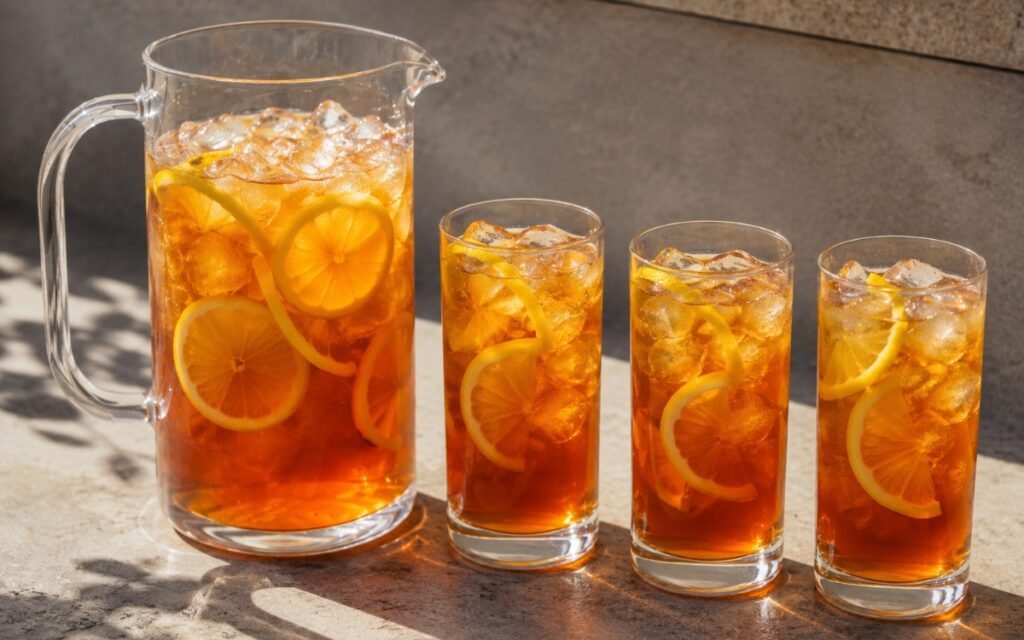
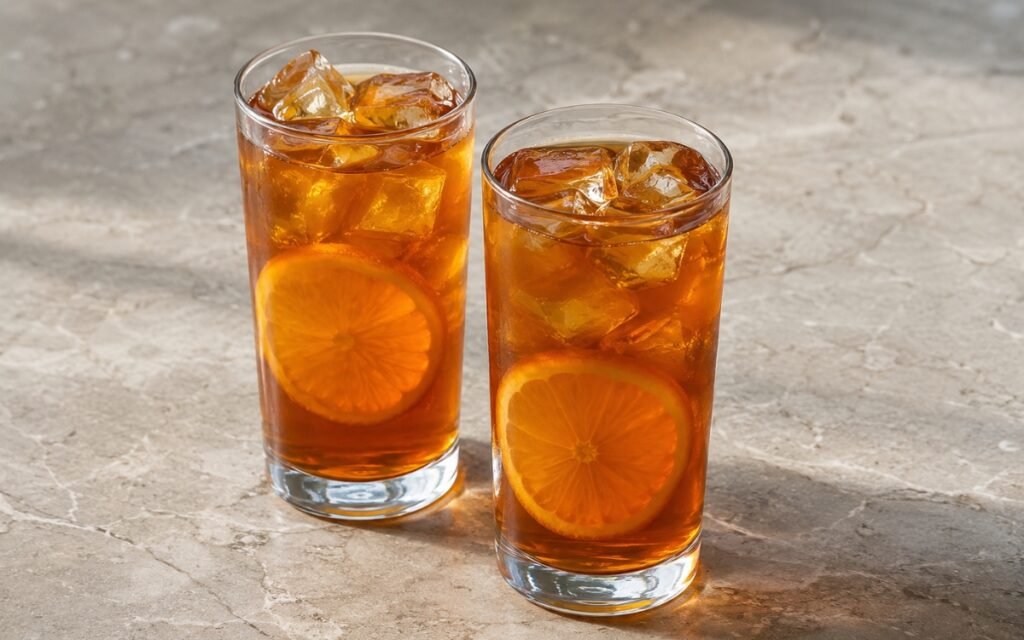
Lemon Iced Tea Pitcher Drink
Ceylon tea at 90–95°C for 3 minutes, lemon zest off heat for aromatic oils — cold lemon juice for structural acid, cold water, chilled. Tea-forward and lemon-bright.
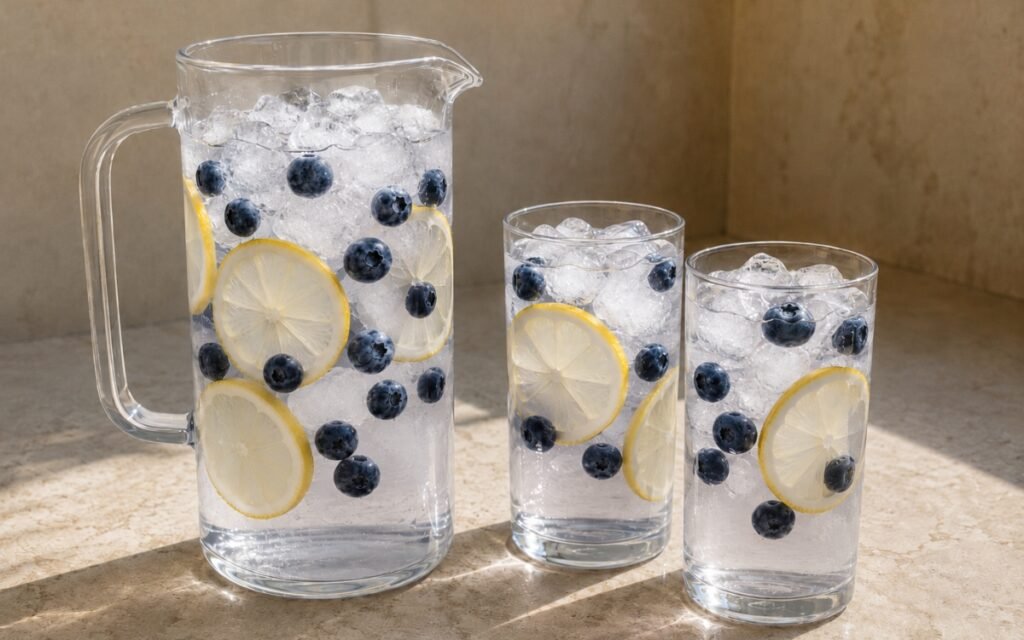
Blueberry Lemon Infused Water
Blueberries mashed for vivid colour, whole blueberries and lemon slices cold-infused in 3L water — removed after 4 hours. Vivid blue-purple to lavender and hydrating.
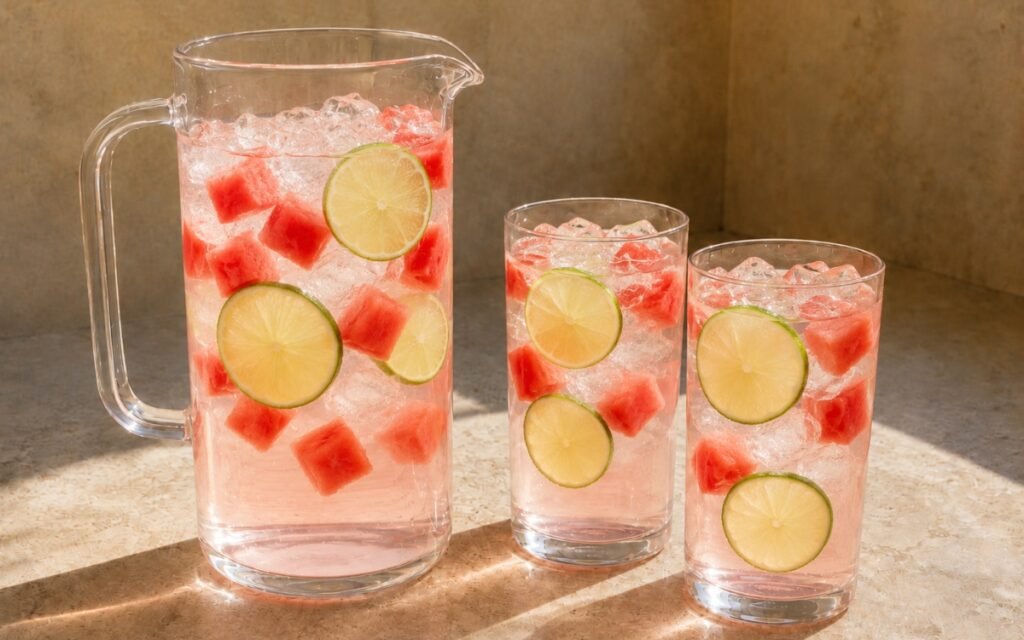
Watermelon Lime Infused Water
Watermelon lightly pressed and cold-infused with lime slices in 3L water — removed after 4 hours before lime peel turns bitter. Cool, fresh, and summer-aromatic.
You might also like
You might also like
Orange Cold Brew Iced Tea
Black tea cold brewed 8–12 hours in cold filtered water — orange peel infused 10–12 minutes, fresh orange juice. Ultra-smooth and gently citrusy.
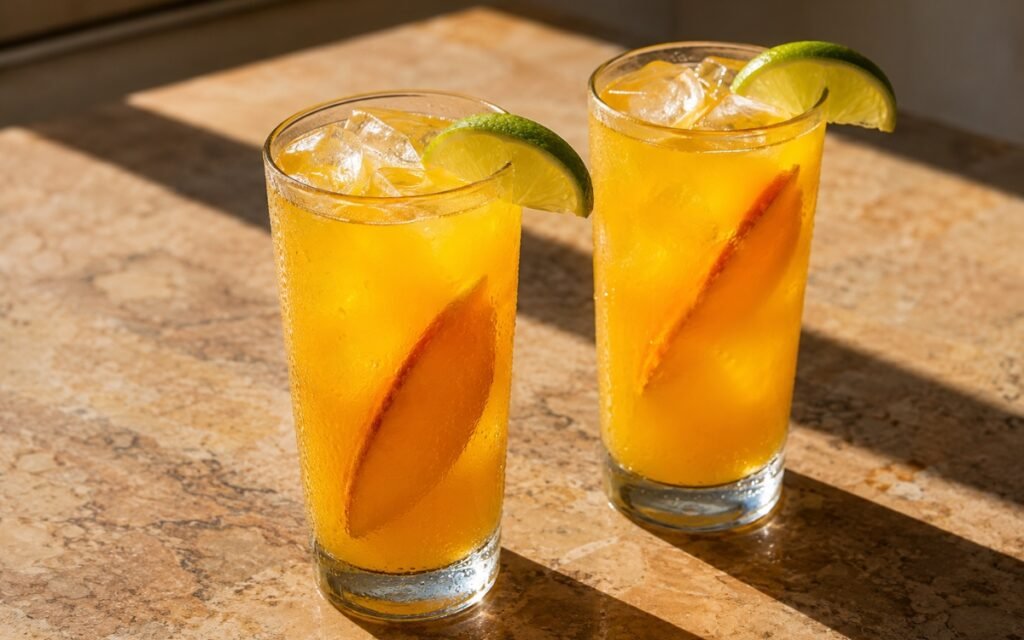
Fresh Mango Lemonade
Mango simmered at medium-low heat with lime zest, ginger off heat exactly 2 minutes — lemon and lime juice added cold, chilled. Tropical, golden, and bright.
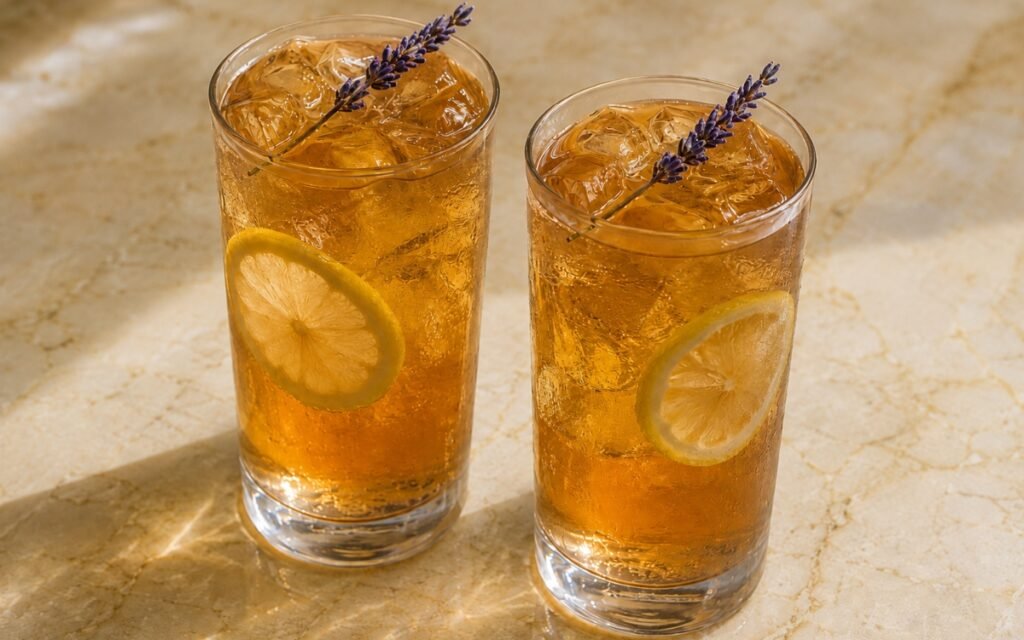
Lavender Lemon Iced Black Tea
Pale amber iced black tea with lavender and lemon peel, lightly honeyed, served over ice with a lavender sprig.
Blood Orange Citrus Pitcher for a Crowd
Ingredients
Method
- Combine the 120g of light brown sugar and 240ml of water in a small saucepan over low heat. Stir until completely dissolved — the light brown sugar’s trace molasses gives the syrup a warm, very slightly amber tint. Remove from the heat immediately. Add the blood orange zest (½ blood orange worth, coloured layer only) and the full lemon zest simultaneously. Cover and steep for 5–8 minutes. The combination of blood orange peel’s specific aromatic compounds — limonene, valencene, and the anthocyanin-adjacent aromatic fractions that give blood orange its slightly more complex, slightly darker peel character than standard sweet orange — alongside lemon zest’s brighter citral and limonene fraction produces a dual-zest syrup that is more specifically complex and more layered than either single zest alone. The blood orange zest at ½ fruit rather than a full fruit is specifically calibrated to keep the peel’s aromatic contribution in balance with the lemon zest’s brightness at this quantity — a full blood orange’s zest in 240ml of syrup at this concentration would specifically overwhelm the lemon zest’s contribution and produce an unbalanced peel-aromatic depth. Strain through a fine-mesh sieve. Allow to cool completely.
- Pour the cooled brown sugar citrus syrup into the large pitcher. Add the 750ml of fresh blood orange juice and 240ml of fresh lemon juice. Add the 2 pinches of fine sea salt. Stir until evenly combined. Add 1.8 litres of ice-cold water and stir gently. The total combined liquid at the starting quantity is approximately 3.03 litres — producing just over 190ml per serving before ice dilution brings it to the 200ml target. Blood orange juice is the preparation’s most consequential ingredient. Fresh-pressed blood orange juice — from peak-season Moro, Tarocco, or Sanguinello varieties at their full colour development — produces a specifically vivid, deeply ruby-red, complex, slightly raspberry-adjacent aromatic juice that is categorically different from conventional orange juice. Not-from-concentrate blood orange juice varies significantly in quality; always the most vivid, most specifically aromatic available. Blood orange’s naturally lower acid compared to conventional lemon means its juice alone at crowd scale produces the soft, rounded, specifically not-lemonade result that the brief describes — the 240ml of lemon juice is the specific provision that prevents this. Taste with the blood orange citrus crowd assessment: vivid blood orange sweetness and round citrus character as the primary impression, with lemon’s clean bright acid clearly present as the element that makes each sip specifically refreshing rather than simply pleasant. The balance should be specific: blood orange unmistakably first, lemon unmistakably providing structure beneath it. If the lemon disappears into the blood orange’s sweetness — the blood oranges are particularly sweet and the lemon juice should be supplemented toward 270–300ml. If the lemon is too prominently a separate flavour — the correct result; adjust by small additions of water.
- Cover and refrigerate for 1–2 hours. Blood orange juice’s anthocyanin pigments are pH-sensitive and will shift slightly in colour during the refrigerator rest as the combined pH of the juice, lemon, and salt equilibrates — this is normal and does not affect quality. The final colour after chill rest is specifically the most vivid, most deeply ruby-red presentation of the drink. Stir once before the first pour. The blood orange juice’s denser pigment-containing components settle slightly during refrigerator rest. Add blood orange rounds and lemon slices to the pitcher or individual glasses at service. Serve cold.