Ingredients
Method
Make the Brown Sugar Dual-Zest Syrup
- Combine the 120g of light brown sugar and 240ml of water in a small saucepan over low heat. Stir until completely dissolved — the light brown sugar's trace molasses gives the syrup a warm, very slightly amber tint. Remove from the heat immediately. Add the blood orange zest (½ blood orange worth, coloured layer only) and the full lemon zest simultaneously. Cover and steep for 5–8 minutes. The combination of blood orange peel's specific aromatic compounds — limonene, valencene, and the anthocyanin-adjacent aromatic fractions that give blood orange its slightly more complex, slightly darker peel character than standard sweet orange — alongside lemon zest's brighter citral and limonene fraction produces a dual-zest syrup that is more specifically complex and more layered than either single zest alone. The blood orange zest at ½ fruit rather than a full fruit is specifically calibrated to keep the peel's aromatic contribution in balance with the lemon zest's brightness at this quantity — a full blood orange's zest in 240ml of syrup at this concentration would specifically overwhelm the lemon zest's contribution and produce an unbalanced peel-aromatic depth. Strain through a fine-mesh sieve. Allow to cool completely.
Build the Pitcher
- Pour the cooled brown sugar citrus syrup into the large pitcher. Add the 750ml of fresh blood orange juice and 240ml of fresh lemon juice. Add the 2 pinches of fine sea salt. Stir until evenly combined. Add 1.8 litres of ice-cold water and stir gently. The total combined liquid at the starting quantity is approximately 3.03 litres — producing just over 190ml per serving before ice dilution brings it to the 200ml target. Blood orange juice is the preparation's most consequential ingredient. Fresh-pressed blood orange juice — from peak-season Moro, Tarocco, or Sanguinello varieties at their full colour development — produces a specifically vivid, deeply ruby-red, complex, slightly raspberry-adjacent aromatic juice that is categorically different from conventional orange juice. Not-from-concentrate blood orange juice varies significantly in quality; always the most vivid, most specifically aromatic available. Blood orange's naturally lower acid compared to conventional lemon means its juice alone at crowd scale produces the soft, rounded, specifically not-lemonade result that the brief describes — the 240ml of lemon juice is the specific provision that prevents this. Taste with the blood orange citrus crowd assessment: vivid blood orange sweetness and round citrus character as the primary impression, with lemon's clean bright acid clearly present as the element that makes each sip specifically refreshing rather than simply pleasant. The balance should be specific: blood orange unmistakably first, lemon unmistakably providing structure beneath it. If the lemon disappears into the blood orange's sweetness — the blood oranges are particularly sweet and the lemon juice should be supplemented toward 270–300ml. If the lemon is too prominently a separate flavour — the correct result; adjust by small additions of water.
Chill, Stir, and Serve
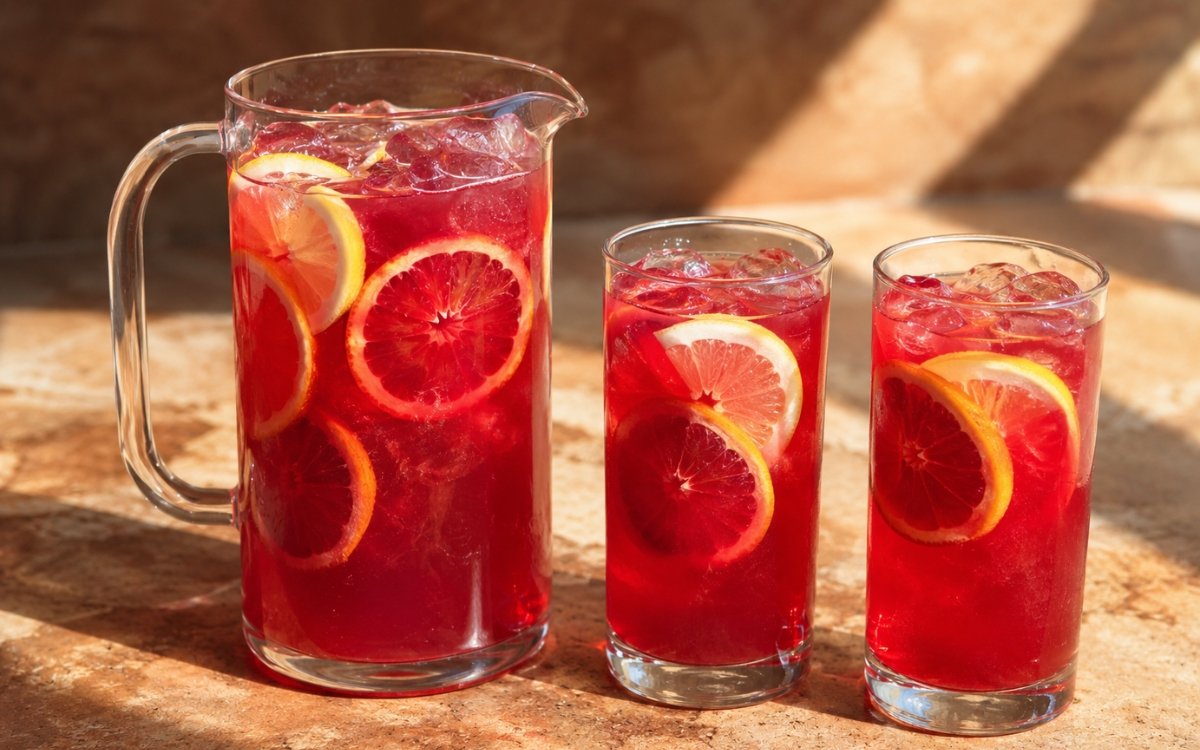
- Cover and refrigerate for 1–2 hours. Blood orange juice's anthocyanin pigments are pH-sensitive and will shift slightly in colour during the refrigerator rest as the combined pH of the juice, lemon, and salt equilibrates — this is normal and does not affect quality. The final colour after chill rest is specifically the most vivid, most deeply ruby-red presentation of the drink. Stir once before the first pour. The blood orange juice's denser pigment-containing components settle slightly during refrigerator rest. Add blood orange rounds and lemon slices to the pitcher or individual glasses at service. Serve cold.
Notes
Blood orange seasonality is specifically important for this preparation. Blood orange varieties in the Northern Hemisphere are at peak colour and flavour from December through March — the period when the cold night temperatures in growing regions (Sicily, California, Spain) trigger the anthocyanin pigment development that produces the characteristic ruby-red colour. Blood oranges purchased outside this window are often pale, minimally pigmented, and flavourless — producing a pitcher that is indistinguishable from conventional orange juice in both colour and flavour. Always use in season, and assess the juice colour before building the pitcher: vivid ruby-red juice, correctly built, produces a visually stunning pitcher; pale orange-red juice produces a specifically less impressive result.
The preparation's 24-hour best-use window reflects blood orange's anthocyanin pigments' tendency to shift progressively with extended pH and temperature exposure — the colour, while still vivid, changes character over 24+ hours.