
Grapefruit Orange Pitcher Drink — For a Crowd
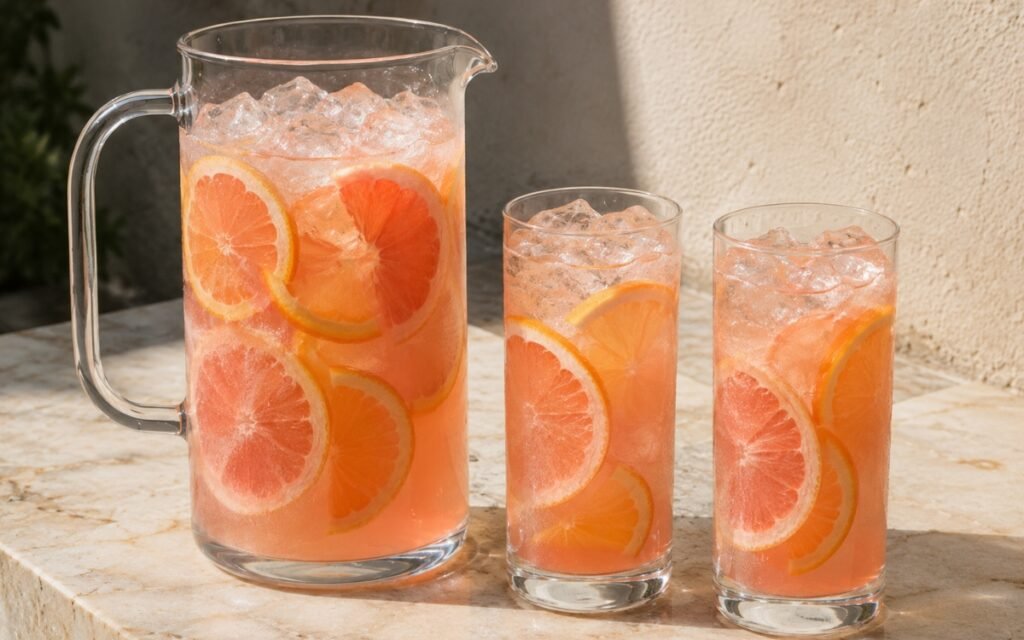
Grapefruit orange is the most specifically adult of the crowd pitcher preparations — building on grapefruit’s characteristic naringenin-driven bitterness and clean, dry, assertive citrus character rather than the sweet, approachable, warm-fruity profiles of the berry, peach, mango, and pineapple versions. The equal-volume juice structure — 500ml grapefruit alongside 500ml orange — is specifically calibrated for the flavour hierarchy established in the brief: grapefruit leads, orange softens the edge. The orange’s round, sweet, high-sugar citrus character provides the balance that makes grapefruit’s characteristic bitterness specifically refreshing rather than challenging across multiple glasses. Without the orange, grapefruit’s bitterness at crowd dilution becomes progressively more assertive and more specifically fatiguing; the orange’s sweetness specifically moderates that fatigue. The grapefruit zest’s infusion window is the strictest of all citrus zest infusions in the crowd pitcher collection — 5–6 minutes, up to 8 minutes maximum — because grapefruit peel’s naringin and limonoid bitter compounds extract at a faster rate per minute in concentrated warm syrup than any other citrus peel used in these preparations. The Pink Grapefruit Lemonade‘s comparative zest notes apply here with equivalent urgency. The salt is specifically important in this preparation as the brief notes — at the crowd scale with grapefruit’s bitterness as the primary register, sub-threshold salt specifically sharpens the citrus character and prevents the diluted bitterness from reading as flat rather than refreshingly bitter.
Prep Time : 15 min
Cook Time : 5 min
Servings : 16
15 min
5 min
16
Ingredients
For the Brown Sugar Citrus Syrup
• 120g light brown sugar — this one on Amazon
• 240ml water
• Zest of ½ orange — outer coloured layer only, no white pith; added off heat
• Zest of ½ grapefruit — outer coloured layer only, no white pith; added off heat
For the Citrus Base
• 500ml fresh orange juice — approximately 4–5 medium oranges
• 500ml fresh grapefruit juice — approximately 3–4 medium grapefruits
For the Final Build
• 1.6–2 litres ice-cold water — start with 1.6 litres; adjust after tasting
• 2 pinches fine sea salt
For Serving
• Ice cubes
• Orange slices
• Grapefruit slices
This post may contain affiliate links. As an Amazon Associate I earn from qualifying purchases, at no additional cost to you.
Directions
- Make the Brown Sugar Citrus Syrup
Combine the 120g of light brown sugar and 240ml of water in a small saucepan over low heat. Stir until completely dissolved. Remove from the heat immediately. Add the orange and grapefruit zest simultaneously. Cover and steep for 5–6 minutes. Taste the syrup at 5 minutes — if the grapefruit’s aromatic character is well present and the syrup smells specifically of fresh grapefruit and orange peel, strain immediately. If the character is still muted, extend to the 8-minute maximum. Do not extend beyond 8 minutes regardless of aromatic development. The grapefruit zest’s strict timing is the most specifically important technique point in this preparation. Grapefruit peel contains naringin and various limonoid compounds at higher concentration and in a more extractable form than any other citrus zest used across this collection. In concentrated warm simple syrup — higher dissolved solids, elevated temperature — these bitter compounds extract specifically faster than in plain warm water. The pleasant aromatic volatile oils responsible for grapefruit’s characteristically fresh, vivid, slightly floral citrus character extract within the first 5–6 minutes; the bitter fraction extracts progressively from that point forward. A syrup steeped for 10+ minutes in this medium will be specifically harsh and dominated by bitter compounds that no dilution can remove from the finished pitcher. Strain through a fine-mesh sieve. Allow to cool completely. - Build the Pitcher
Pour the cooled brown sugar citrus syrup into the large pitcher. Add the 500ml of fresh orange juice, 500ml of fresh grapefruit juice, and 2 pinches of fine sea salt. Stir until evenly combined. Add 1.6 litres of ice-cold water and stir gently. The total combined liquid at the starting quantities is approximately 2.84 litres — approximately 178ml per serving before ice dilution brings it to the 200ml target. Grapefruit variety affects the finished pitcher significantly at 500ml volume. Pink grapefruit — the most common commercial variety — has a specifically more approachable, less intensely bitter, slightly more aromatic character than white grapefruit and produces a more balanced result at the 1:1 ratio with orange. White grapefruit — less sweet, more aggressively bitter — produces a more adult, drier result; if using white grapefruit, the adjustment note in the brief applies: increase orange juice by approximately 100ml and reduce grapefruit by the same quantity. Ruby Red grapefruit — the sweetest, least bitter variety — produces the most accessible, most approachable result and may benefit from a reduction in orange juice to let the grapefruit character remain present. Taste with the grapefruit-orange crowd assessment: grapefruit’s characteristic dry, clean, lightly bitter citrus character as the unmistakable primary impression; orange’s round, sweet warmth present as the element that makes the bitterness refreshing rather than challenging. The salt’s contribution is specifically perceptible here — with salt, the grapefruit’s vivid citrus character is sharper and more precisely of itself; without salt, the diluted grapefruit bitterness reads as specifically flat and less refreshing. The two pinches in 2.84 litres are at the upper end of sub-threshold concentration in this context, given grapefruit’s bitterness requires more salt amplification than sweeter preparations. Add more water only after tasting — the 1.6L starting point is specifically lower than some other crowd preparations, reflecting the already-high total juice volume (1 litre of combined citrus). Starting at 1.6L preserves the vivid citrus character; 2L produces a lighter, more water-forward result. - Chill, Stir, and Serve
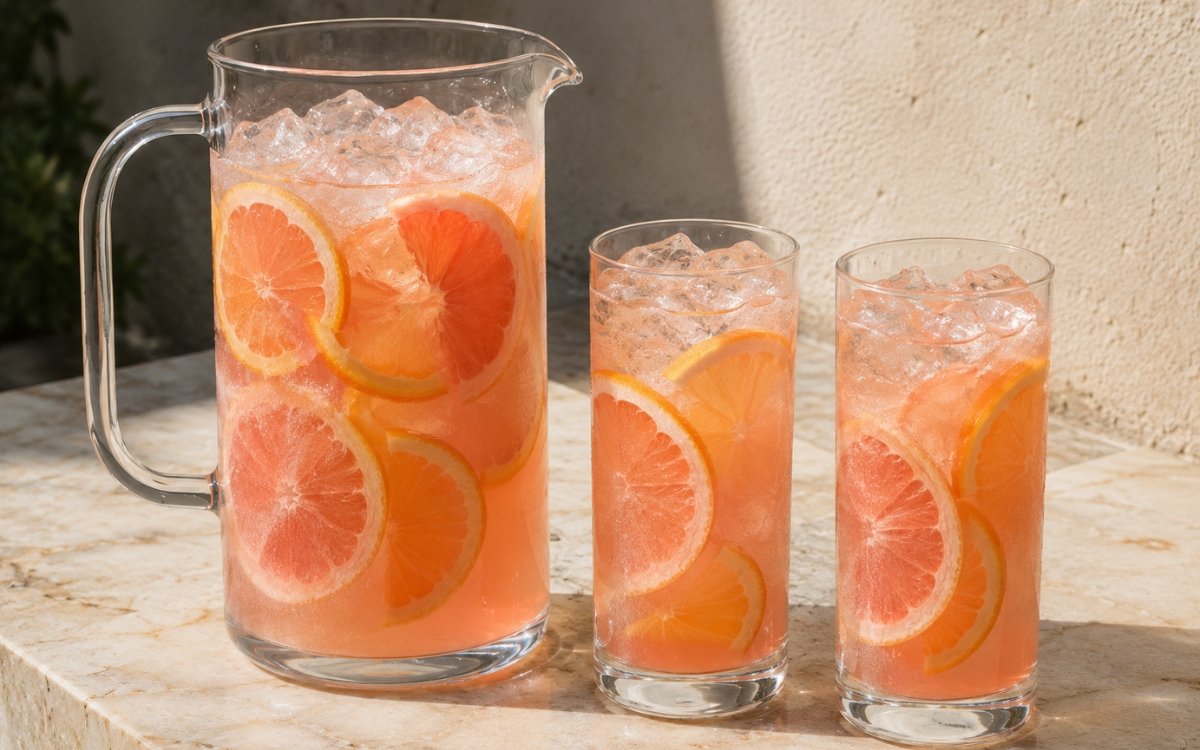
Cover and refrigerate for 1–2 hours. Stir once before the first pour. Add grapefruit and orange rounds to the pitcher or individual glasses at service. Serve cold over ice.
*Notes :
- The preparation specifically excludes lemon juice — different from the blood orange pitcher (which included 240ml of lemon for structural acid) and the pineapple-orange pitcher (which included optional lemon for brightness). The exclusion is deliberate: grapefruit’s naringenin and citric acid naturally provide the preparation’s structural acid character. Additional lemon in a grapefruit-orange pitcher would shift the primary acid dimension away from grapefruit’s characteristic flavour toward a more generic citrus-sour register that would compete with rather than amplify the grapefruit.
- The orange juice variety specifically matters at 500ml: Navel oranges (standard, sweet, widely available) produce the most reliably consistent result. Valencia oranges (more acidic, more complex) produce a slightly more interesting but slightly more variable result. Blood oranges at this quantity would shift the colour and flavour profile dramatically — that is specifically the Blood Orange Citrus Pitcher preparation.
Why This Recipe Works
This recipe works because the grapefruit-to-orange ratio at 1:1 specifically calibrates grapefruit’s bitterness against orange’s sweetness at the point where the bitterness is refreshing rather than fatiguing. The strict 5–8 minute zest infusion prevents the syrup from becoming bitter.
The salt specifically amplifies the grapefruit’s vivid citrus character at crowd dilution. And no lemon juice is added because grapefruit’s natural acid specifically provides the structural character.
Ingredient Breakdown
500ml:500ml Grapefruit:Orange (Equal Volume, Grapefruit Leads)
The bitterness-sweetness calibration — equal volumes but different character weights; grapefruit’s more assertive naringenin-driven bitterness dominates against orange’s passive sweetness.
5–6 Minute Grapefruit Zest Steep (Strictest in Collection)
The bitter-fraction prevention — grapefruit peel’s naringin and limonoids extract faster in concentrated warm syrup than any other citrus; strain before 8 minutes without exception.
No Lemon Juice
White verjus delivers gentle tannic grip and controlled acidity similar to young white wine. It creates depth and dryness without alcohol, preventing the drink from tasting like juice. This ingredient is crucial for authentic sangria-style balance.
Salt at the Amplifying-Not-Seasoning Level
The grapefruit-vividity specific function — sub-threshold sodium making the grapefruit’s citrus character more precisely itself against the dilution of crowd scale.
1.6L Starting Water
The vivid-character preservation — 1 litre of combined juice; starting lower than 2L preserves the grapefruit’s assertive character.
Flavor Structure Explained
This Grapefruit orange pitcher follows a layered balance model:
- Bright bittersweet citrus core (grapefruit)
- Rounded sweet citrus balance (orange)
- Flavor-enhancing salinity (pinch of salt)
- Clean refreshing citrus structure (high-acid profile)
- Dry sophisticated finish (bitterness-sweetness balance)
Grapefruit defines the foundation with vivid citrus brightness, gentle bitterness, and a dry finish that gives the drink a more mature character than sweeter fruit-based pitchers. Its assertive profile provides the identity of the drink and creates a refreshing edge that remains noticeable from the first sip to the last. Orange acts as the balancing element, contributing warmth, sweetness, and softer citrus notes that round out the grapefruit’s sharper character. A small amount of salt subtly intensifies both fruits, making the citrus flavors feel clearer, brighter, and more expressive even when served over ice. The result is a pitcher drink that balances bitterness and sweetness while maintaining a crisp, clean, and distinctly grown-up style.
Common Mistakes to Avoid
- Steeping Grapefruit Zest Beyond 8 Minutes – The bitterest and fastest-extracting citrus zest in this collection. Always strain within 8 minutes maximum.
- Using White Pith From Either Citrus – Both orange and grapefruit pith contribute bitter limonoids. Always coloured layer only.
- Skipping the Salt – Grapefruit at crowd dilution specifically needs salt’s amplification to stay vivid rather than flat. Always both pinches.
- Starting at 2L Water – The grapefruit’s assertive character specifically dilutes below the refreshing-bitter threshold at 2L in this preparation. Always start at 1.6L.
- Adding Lemon Juice – Lemon’s additional citric acid specifically shifts the primary acid-flavour away from grapefruit’s characteristic dimension.
Variations
With Rosemary
Add 3 fresh rosemary sprigs to the syrup during the off-heat steep alongside the citrus zests — removed during straining. The Grapefruit Rosemary Infused Water‘s specific aromatic combination at full crowd-lemonade intensity.
With Ginger
Add 15g of thinly sliced fresh ginger to the saucepan during the syrup off-heat steep — removed during straining. The ginger’s sharp warmth alongside grapefruit and orange produces the most assertive, most specifically adult direction.
More Orange-Forward
Increase orange juice to 600ml and reduce grapefruit to 400ml for a less bitter, more approachable result that maintains grapefruit’s character as a detectable note rather than the primary register.
Sparkling Version
Build without still water; refrigerate; add ice-cold sparkling water right before serving.
Storage & Make-Ahead
Brown sugar citrus syrup can be refrigerated for up to 2 weeks, making it an excellent make-ahead component.
Once assembled, the pitcher is best enjoyed within 24 hours. During the first 12 hours, the grapefruit juice’s naringenin compounds integrate more fully, creating a smoother and more balanced flavor. The drink gradually mellows over time, but its character remains bright and enjoyable for up to 48 hours.
Frequently Asked Questions
Why is the grapefruit zest infusion specifically the strictest in this collection?
Grapefruit peel contains naringin and limonoid compounds at higher concentration and in a more easily extractable form than other citrus peels. In concentrated warm sugar syrup — at the elevated dissolved-solids concentration and post-simmer temperature of the just-dissolved syrup — these compounds migrate out of the peel cells faster than in plain warm water. The 5–8 minute maximum specifically captures the pleasant volatile aromatic fraction ahead of the bitter fraction reaching an unpleasant threshold.
Why no lemon juice when the blood orange pitcher includes 240ml?
Blood orange’s naturally lower acid concentration (pH 3.5–4) requires external structural acid to make the drink specifically refreshing at crowd dilution. Grapefruit’s naringenin-driven bitterness and natural citric acid content provide their own structural refreshing dimension — adding lemon juice would compete with grapefruit’s own characteristic acid profile rather than supporting it.
Why is the grapefruit-to-orange ratio 1:1?
Equal volumes of grapefruit and orange specifically place grapefruit in the primary register because grapefruit’s naringenin bitterness is more assertive per unit volume than orange’s sweetness. At 1:1 the grapefruit clearly leads and the orange moderates; at less grapefruit than orange the orange begins to dominate; at more grapefruit than orange the bitterness becomes fatiguing. The 1:1 ratio is the specific calibration point where grapefruit leads without overwhelming.
What other citrus preparations share this direction?
The Pineapple Orange Pitcher Drink shares the juice-based crowd pitcher approach in a specifically warmer, sweeter, more tropical direction. The Blood Orange Citrus Pitcher shares the two-citrus structure with blood orange’s sweeter, more vivid, less bitter character. The Pink Grapefruit Lemonade shares grapefruit as the primary citrus in a single-batch lemonade format with a more complex peel-infusion and pulp-mash structure.
Nutrition Facts
( per serving )
Calories
~65 kcal
Protein
0 g
Fat
0 g
Carbs
17 g
Calories
~65 kcal
Protein
0 g
Fat
0 g
Carbs
17 g
Related Recipes
Related Recipes

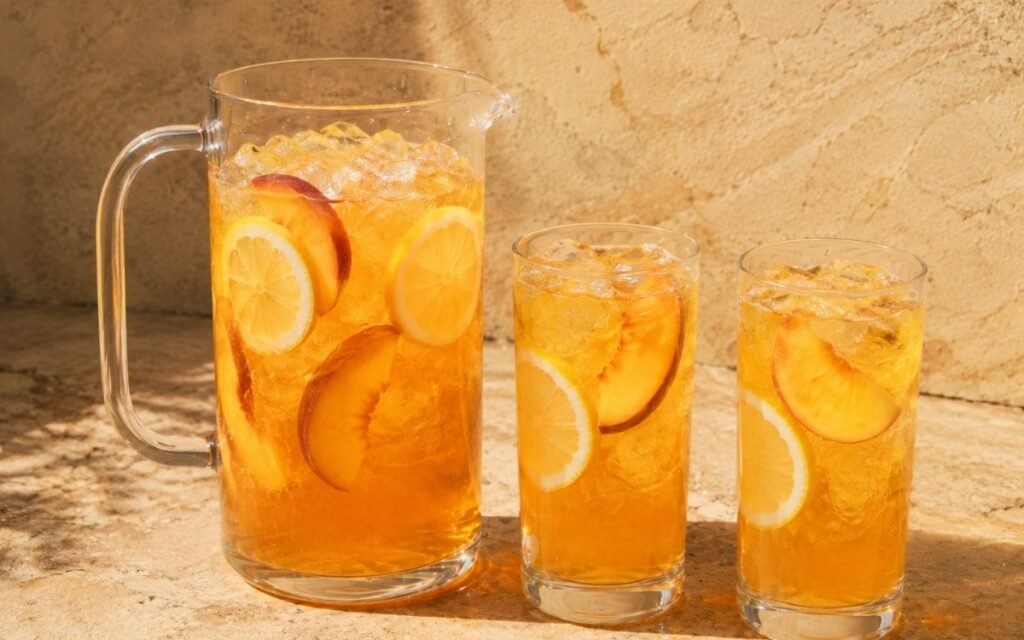
Peach Lemonade Pitcher Drink
900g skin-on ripe peaches in honey syrup with lemon zest off heat — combined with 300–360ml lemon juice, salt, cold water, chilled. Warm, floral, and crowd-ready.
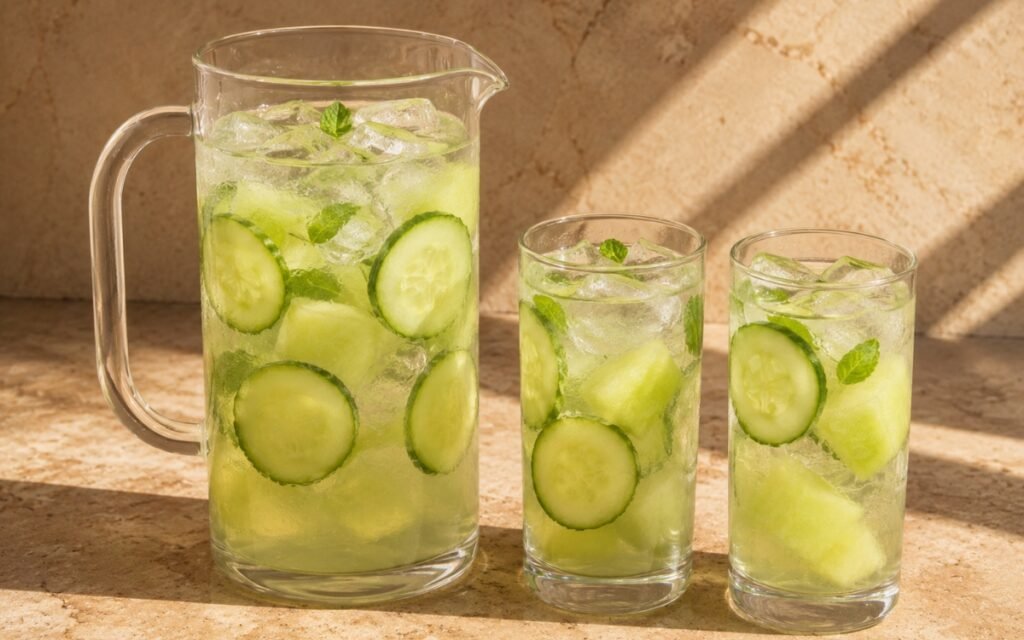
Cucumber Melon Infused Water
Unpeeled cucumber slices, ripe firm honeydew chunks, and lightly clapped mint infused cold for a clean, pale green-tinted spa-style water.
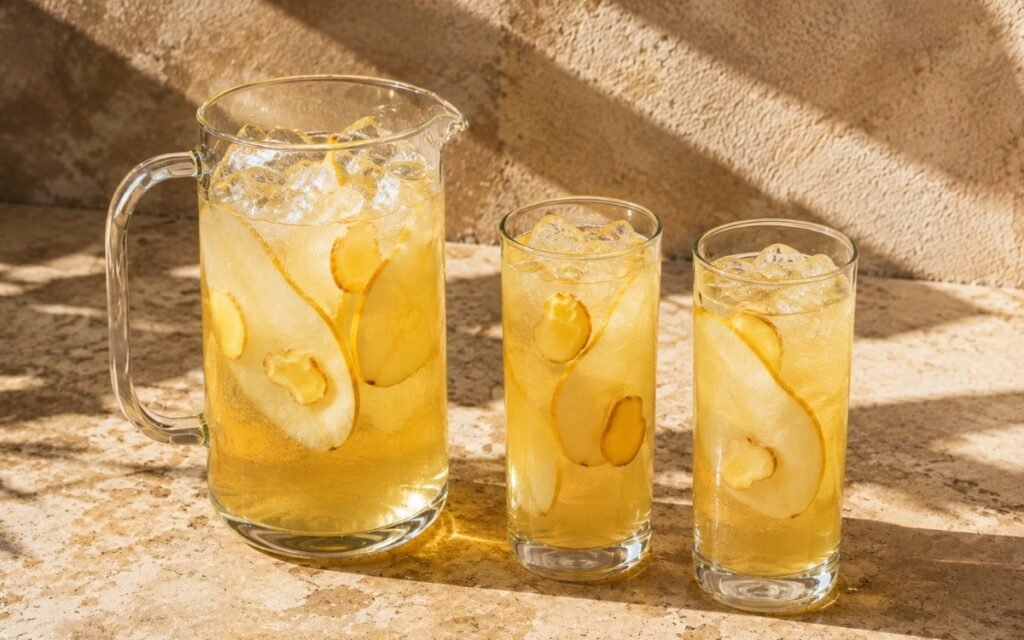
Pear Ginger Pitcher Drink
Cold-infused ripe pears and thinly sliced fresh ginger, both skin-on, with a touch of lemon juice for a pale golden, gently spiced pitcher drink.
You might also like
You might also like
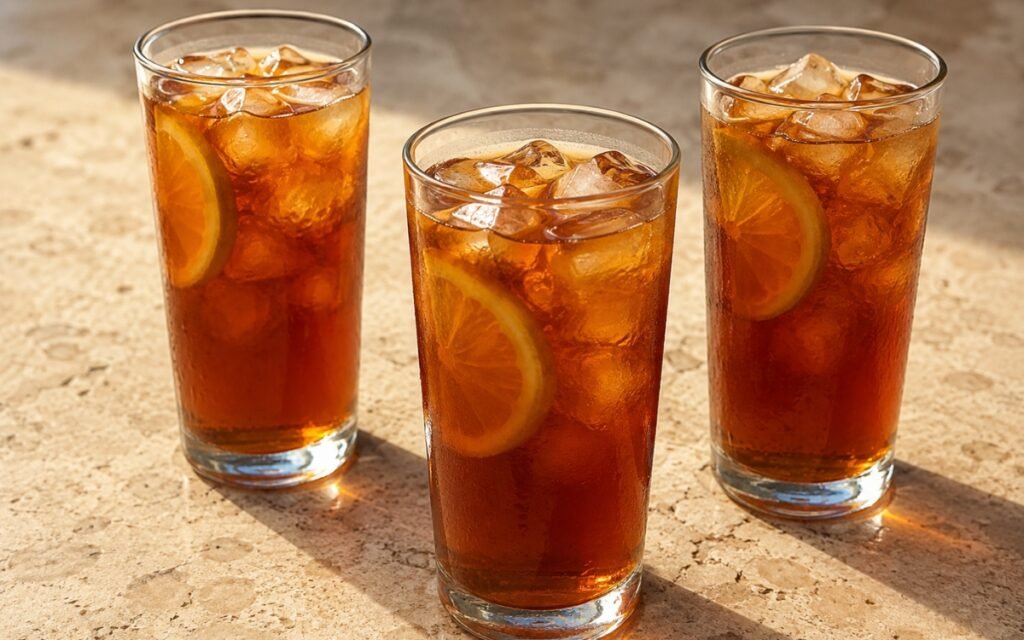
Southern Sweet Tea (Light Version)
Black tea at full boil for 5 minutes, white sugar dissolved into hot brew immediately — cooled, chilled 1–2 hours. Classic Southern character, lighter and more drinkable.
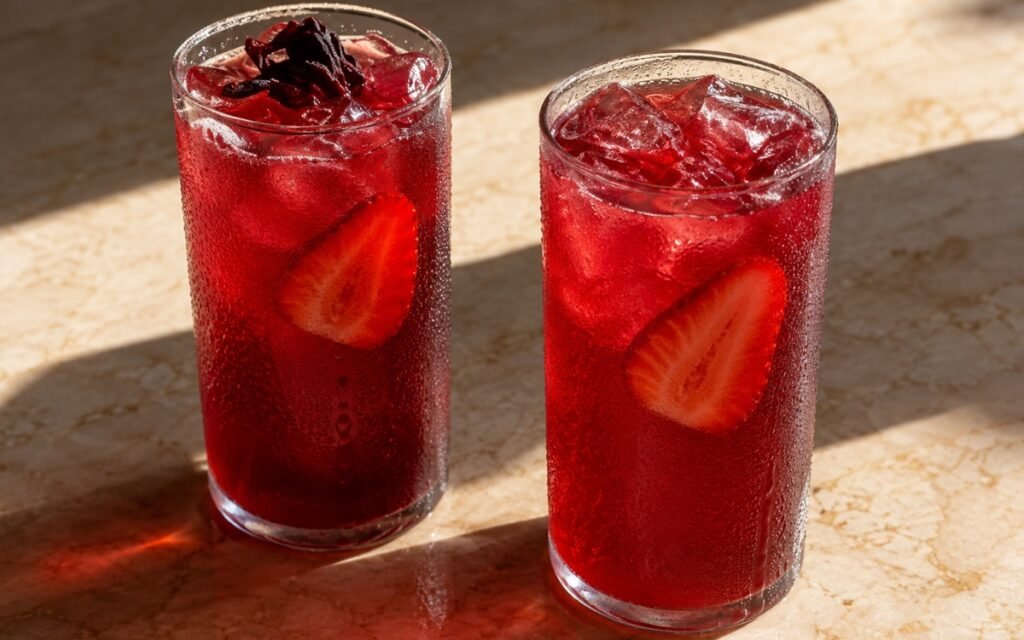
Hibiscus Strawberry Lemonade
Hibiscus tea steeped 5–7 minutes, strawberries blended with hibiscus tea — honey dissolved warm, lemon cold, rested 30 minutes. Vivid ruby, tart, and fruity.
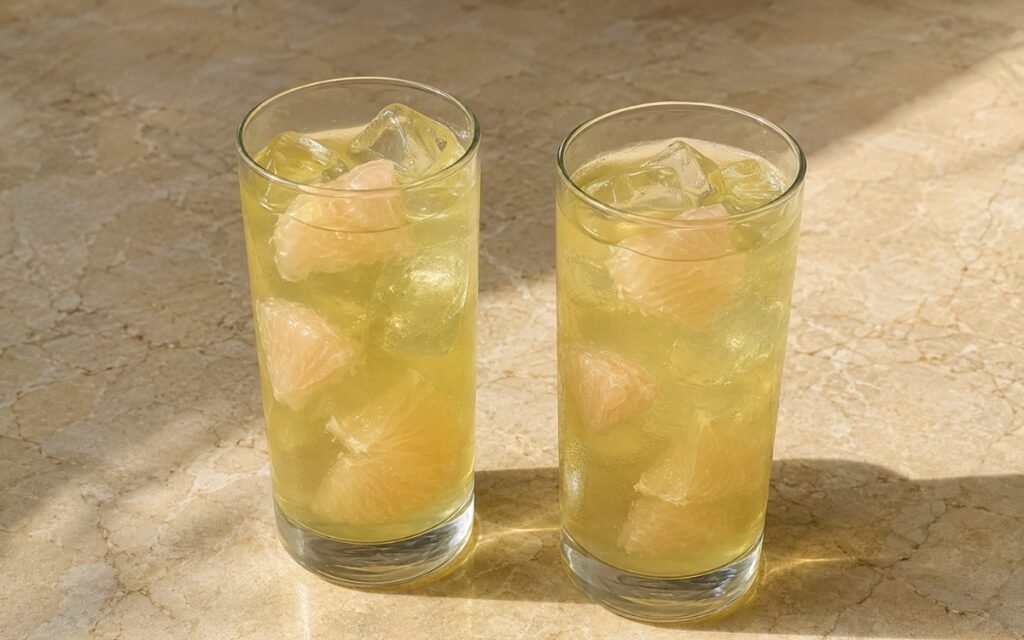
Pomelo Green Iced Tea
Green tea at 75–80°C for 2–3 minutes, pomelo segments infused cold 15–20 minutes — honey and a pinch of salt, strained, chilled. Light, aromatic, complex.
Grapefruit Orange Pitcher Drink for a Crowd
Ingredients
Method
- Combine the 120g of light brown sugar and 240ml of water in a small saucepan over low heat. Stir until completely dissolved. Remove from the heat immediately. Add the orange and grapefruit zest simultaneously. Cover and steep for 5–6 minutes. Taste the syrup at 5 minutes — if the grapefruit’s aromatic character is well present and the syrup smells specifically of fresh grapefruit and orange peel, strain immediately. If the character is still muted, extend to the 8-minute maximum. Do not extend beyond 8 minutes regardless of aromatic development. The grapefruit zest’s strict timing is the most specifically important technique point in this preparation. Grapefruit peel contains naringin and various limonoid compounds at higher concentration and in a more extractable form than any other citrus zest used across this collection. In concentrated warm simple syrup — higher dissolved solids, elevated temperature — these bitter compounds extract specifically faster than in plain warm water. The pleasant aromatic volatile oils responsible for grapefruit’s characteristically fresh, vivid, slightly floral citrus character extract within the first 5–6 minutes; the bitter fraction extracts progressively from that point forward. A syrup steeped for 10+ minutes in this medium will be specifically harsh and dominated by bitter compounds that no dilution can remove from the finished pitcher. Strain through a fine-mesh sieve. Allow to cool completely.
- Pour the cooled brown sugar citrus syrup into the large pitcher. Add the 500ml of fresh orange juice, 500ml of fresh grapefruit juice, and 2 pinches of fine sea salt. Stir until evenly combined. Add 1.6 litres of ice-cold water and stir gently. The total combined liquid at the starting quantities is approximately 2.84 litres — approximately 178ml per serving before ice dilution brings it to the 200ml target. Grapefruit variety affects the finished pitcher significantly at 500ml volume. Pink grapefruit — the most common commercial variety — has a specifically more approachable, less intensely bitter, slightly more aromatic character than white grapefruit and produces a more balanced result at the 1:1 ratio with orange. White grapefruit — less sweet, more aggressively bitter — produces a more adult, drier result; if using white grapefruit, the adjustment note in the brief applies: increase orange juice by approximately 100ml and reduce grapefruit by the same quantity. Ruby Red grapefruit — the sweetest, least bitter variety — produces the most accessible, most approachable result and may benefit from a reduction in orange juice to let the grapefruit character remain present. Taste with the grapefruit-orange crowd assessment: grapefruit’s characteristic dry, clean, lightly bitter citrus character as the unmistakable primary impression; orange’s round, sweet warmth present as the element that makes the bitterness refreshing rather than challenging. The salt’s contribution is specifically perceptible here — with salt, the grapefruit’s vivid citrus character is sharper and more precisely of itself; without salt, the diluted grapefruit bitterness reads as specifically flat and less refreshing. The two pinches in 2.84 litres are at the upper end of sub-threshold concentration in this context, given grapefruit’s bitterness requires more salt amplification than sweeter preparations. Add more water only after tasting — the 1.6L starting point is specifically lower than some other crowd preparations, reflecting the already-high total juice volume (1 litre of combined citrus). Starting at 1.6L preserves the vivid citrus character; 2L produces a lighter, more water-forward result.
- Cover and refrigerate for 1–2 hours. Stir once before the first pour. Add grapefruit and orange rounds to the pitcher or individual glasses at service. Serve cold over ice.